






Content ITV PRO
This is Itvedant Content department
Learning Outcomes
4
Understand the difference between organic content & paid ads
3
Explain different types of SMM channels
2
Identify major SMM platforms
1
Define Social Media Marketing (SMM)
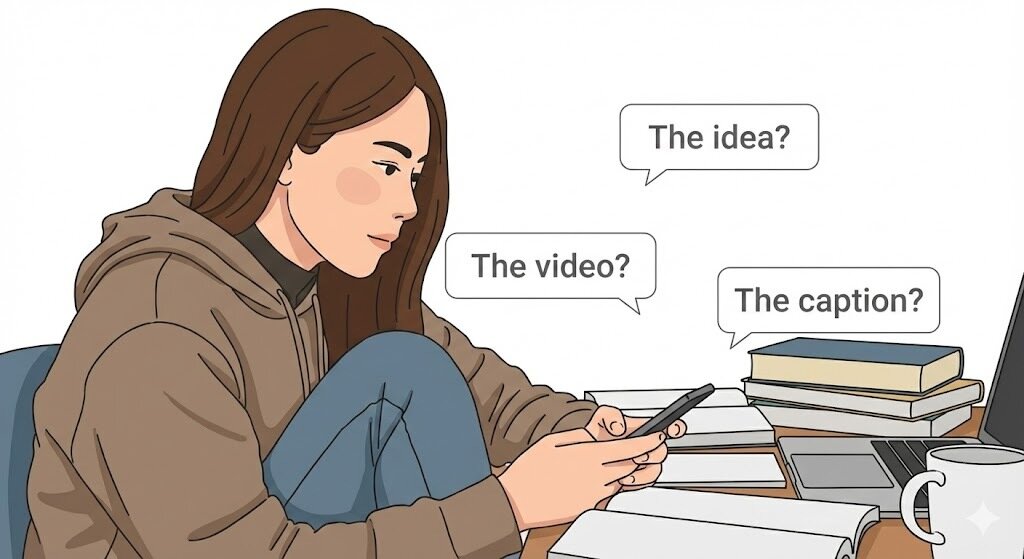
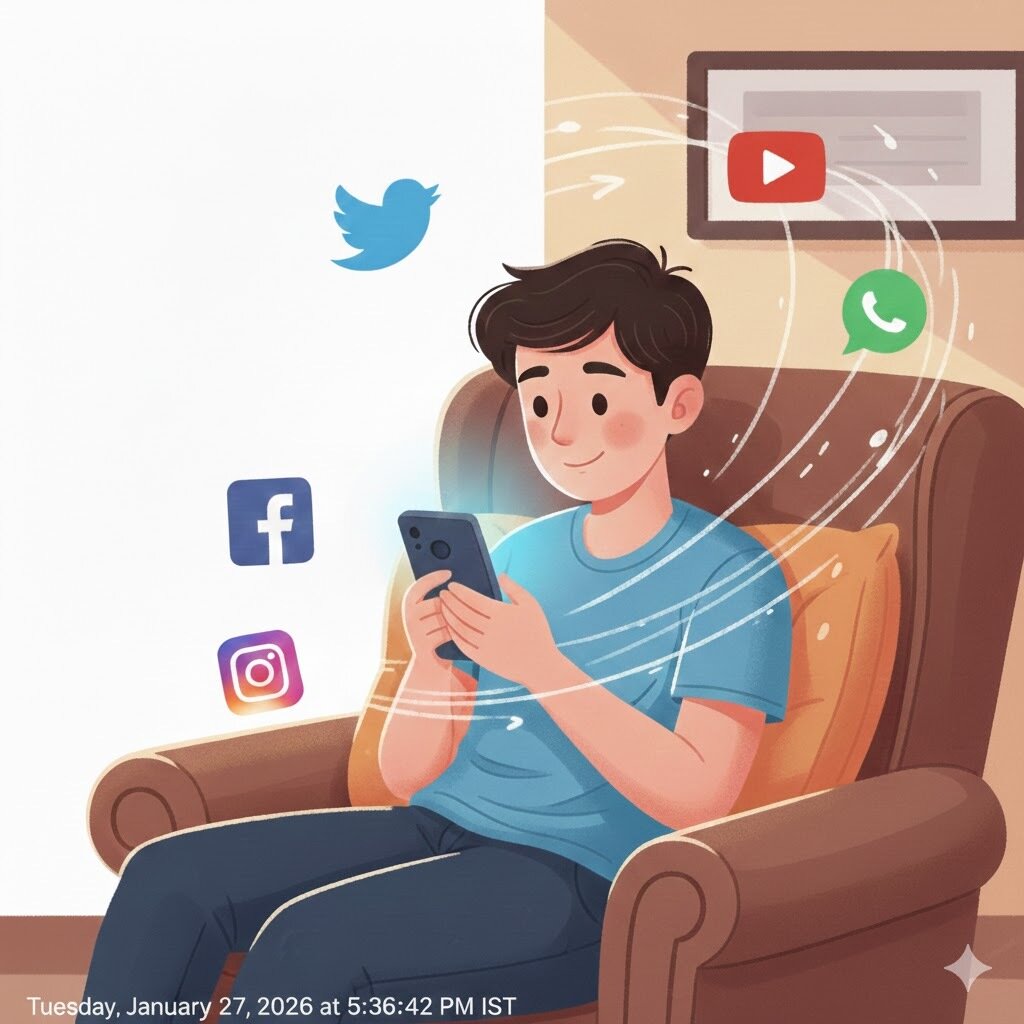
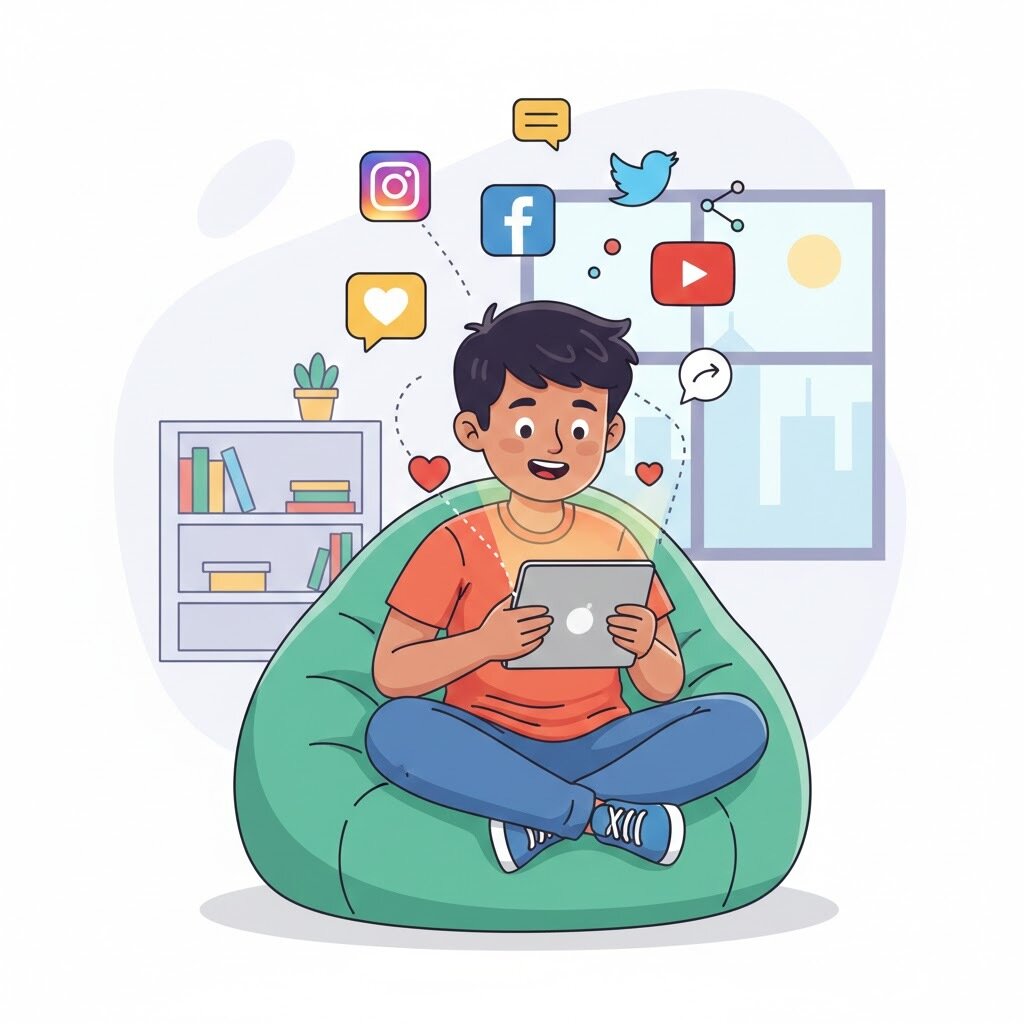
You scroll.
You stop.
You watch.
You remember.
Why did that post make you pause?
The video? The caption? The idea?
That pause is where attention begins.
That is Social Media Marketing for you.
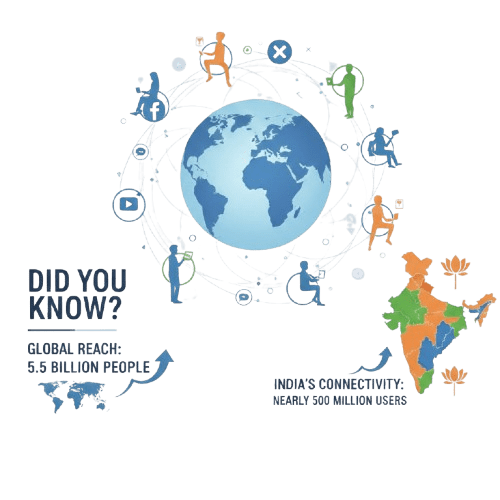
Did You Know? About 5.5 billion people globally and nearly 500 million in India use social media today!
Ads, Awareness, Sales
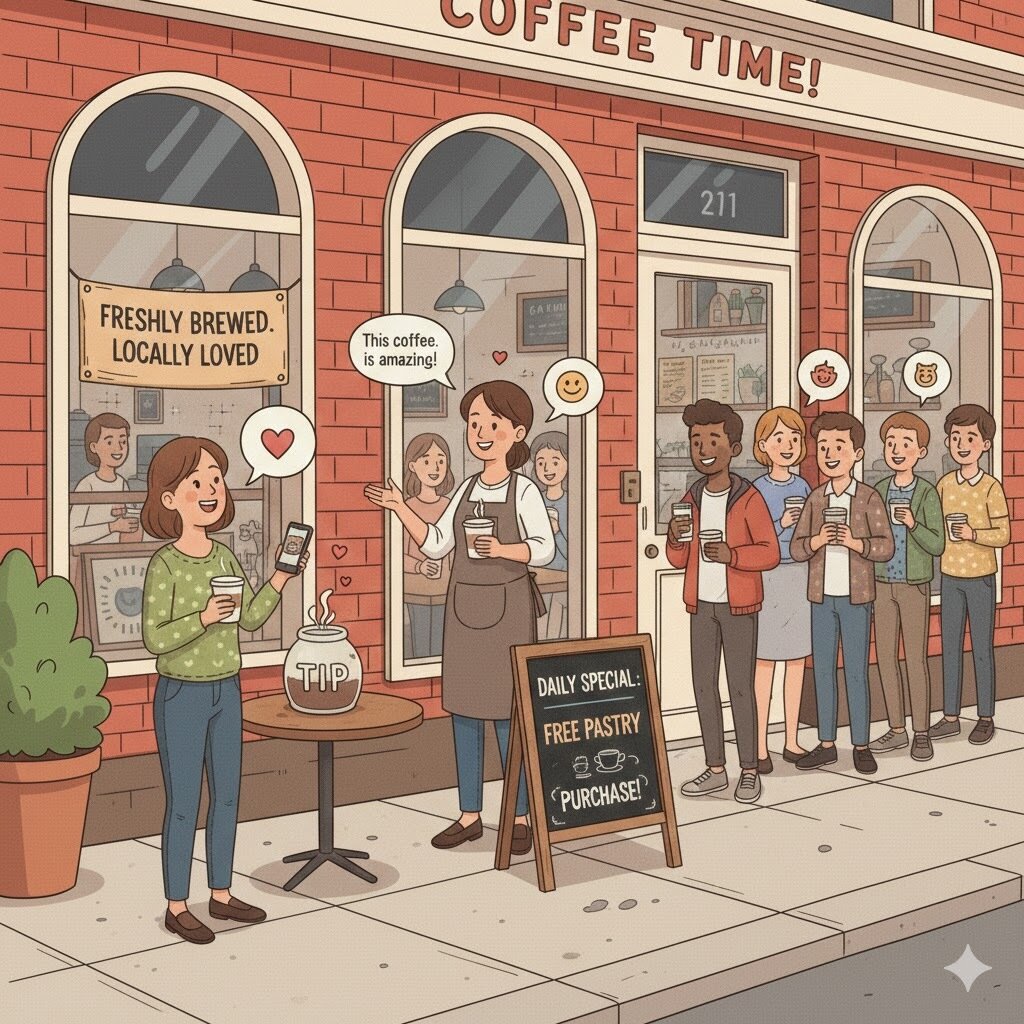
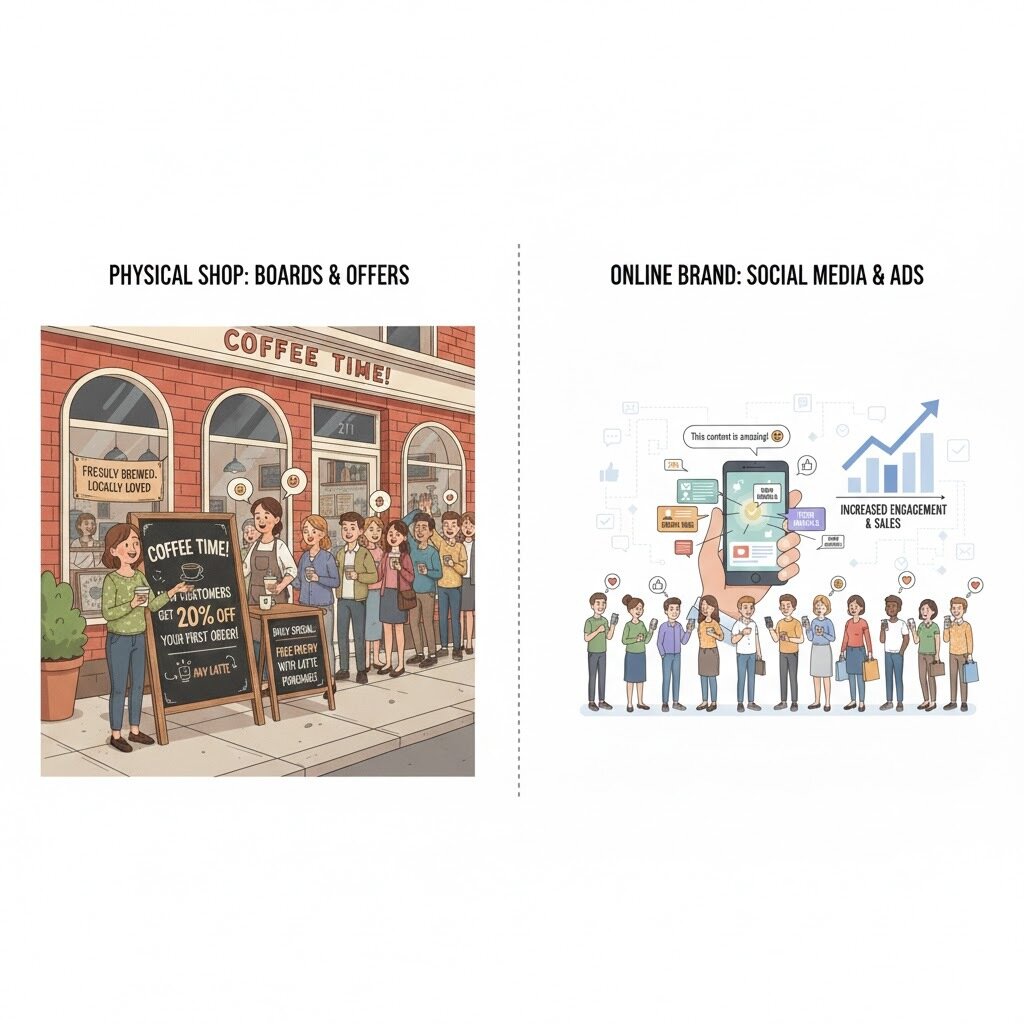
Slowly, people try the coffee, come back, and some even tell their friends, boosting sales.
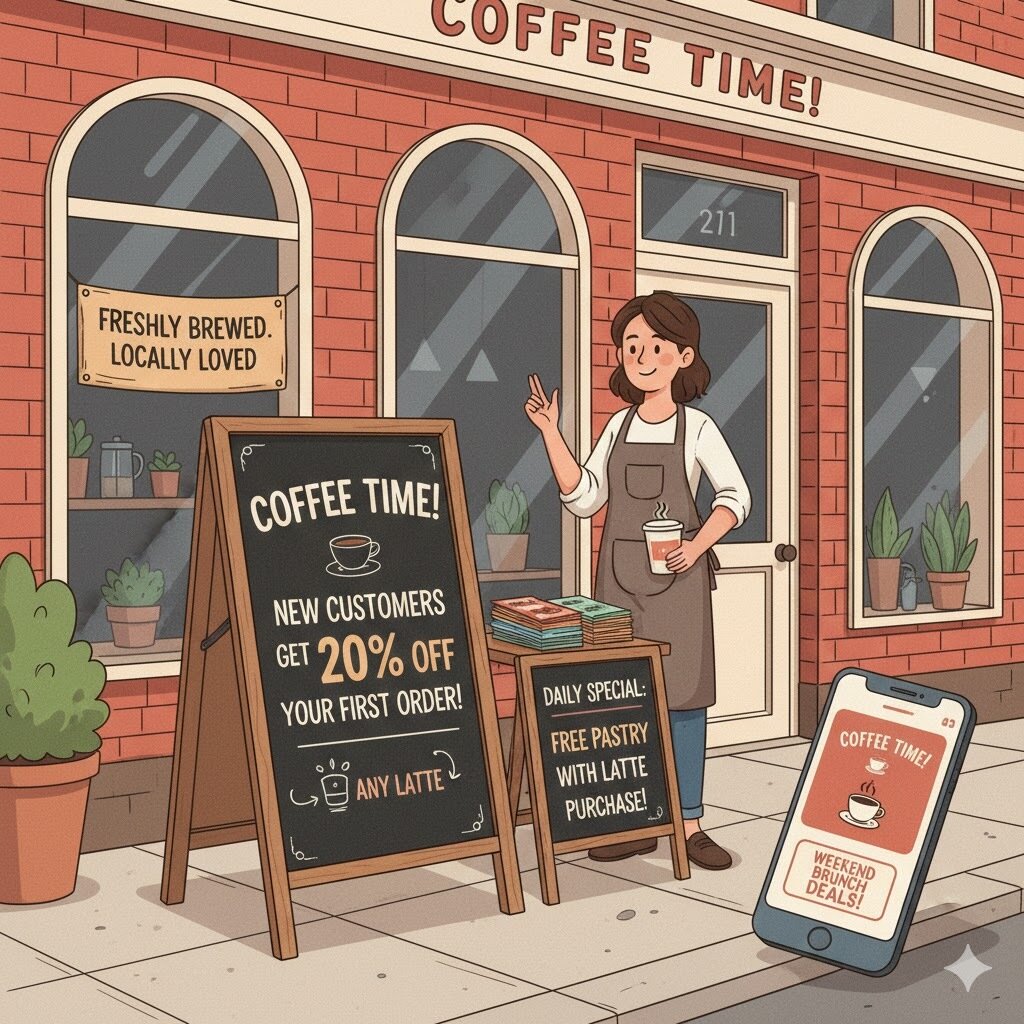
A coffee shop wants more customers. The owner puts up boards to create awareness, shares special offers, and runs small ads.
Ads, Awareness, Sales
Just like this, brands use social media to get noticed, run ads, create awareness, and turn followers into loyal customers, increasing engagement and sales online.
From Coffee Shop to Social Media
Just like a shop uses boards and offers to get customers, brands use social media posts and ads to attract people, engage them, and turn them into loyal followers.
Coffee shop puts up boards
Coffee shop shares offers
Visitors come back
Brand posts on social media
Brand runs ads
Followers engage
Happy customers tell friends
Followers share & buy
What is Social Media Marketing (SMM)?
Social Media Marketing, or SMM, is how brands use social media to connect with people, engage them, and drive sales.
SMM is important because your audience is already on social media, it can reach people globally and remotely, and it allows brands to communicate directly with people.
What is Social Media Marketing (SMM)?
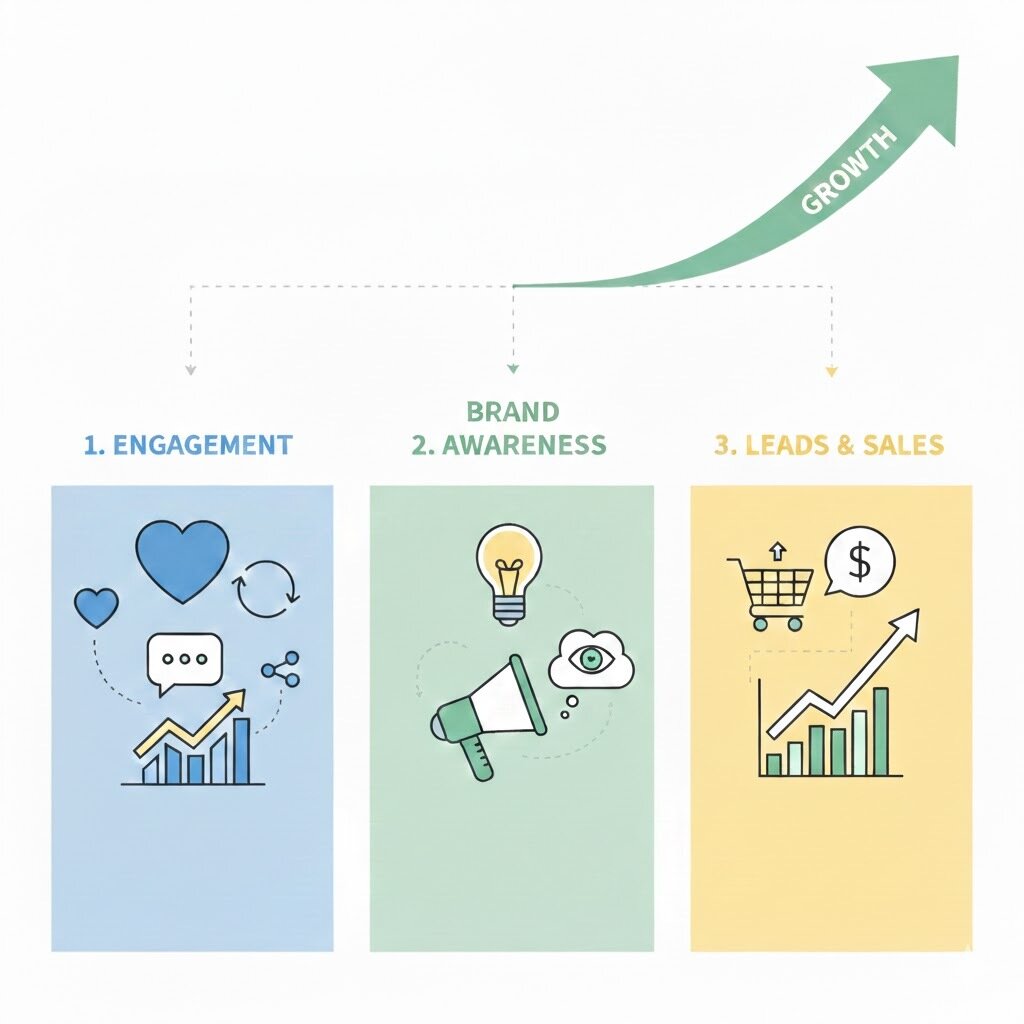
SMM focuses on three main things:
What is Social Media Marketing (SMM)?
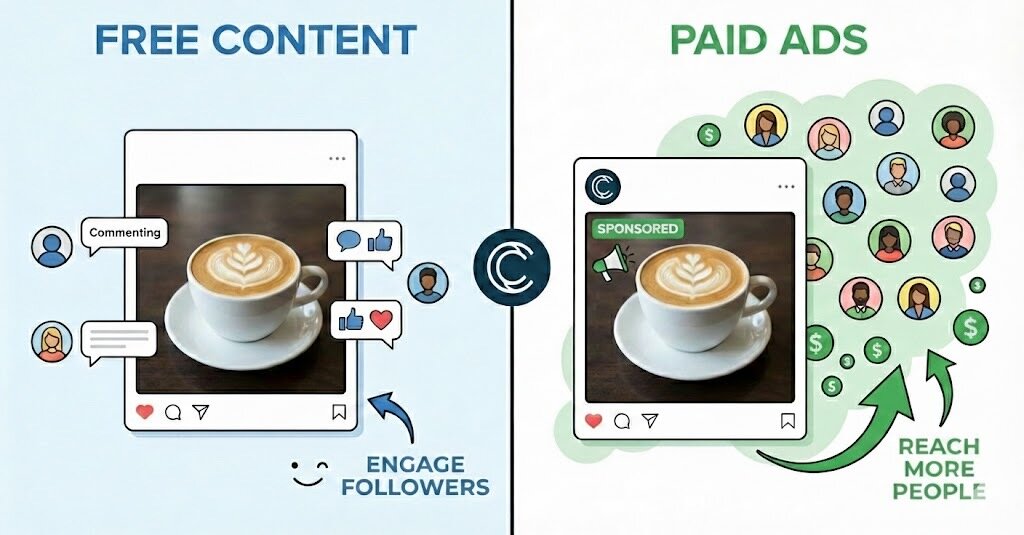
Brands can post for free or pay for ads (paid ads)
Different Types of Social Media Channels
Each platform is different. Brands pick the ones where their audience hangs out the most.
– Share photos and short videos to grab attention.
– Connect with people through groups, pages, and ads.
– Share work-related content and connect with professionals.
– Post quick updates and follow trending topics.
– Make videos to teach, show, or entertain people.
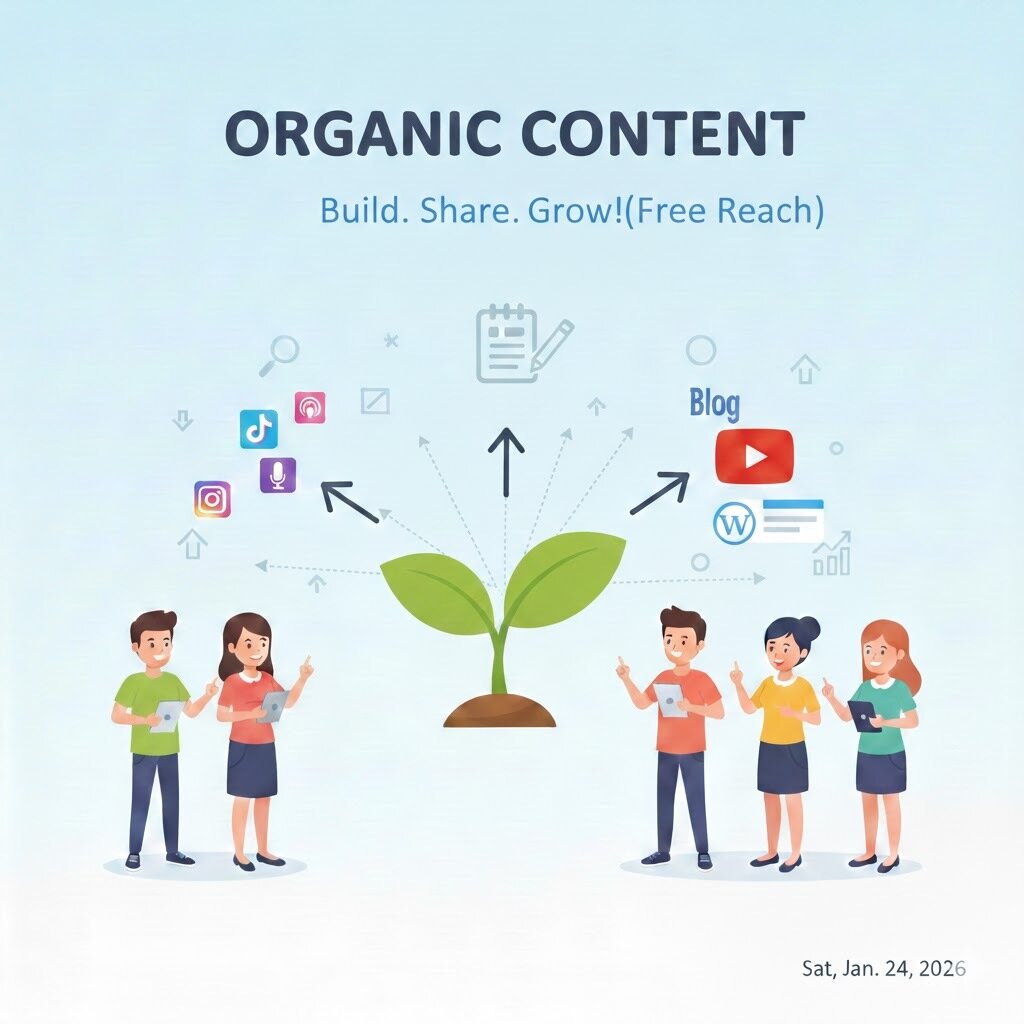
Organic Content (Free Reach)
You know? Organic content is free — it helps you stay visible to your followers without spending a dime!
What it is? Posts your followers see naturally.
Platforms Examples:
– Feed posts & reels
– Posts & community updates
– Company updates & articles
– Tweets & hashtags
– Videos on your channel
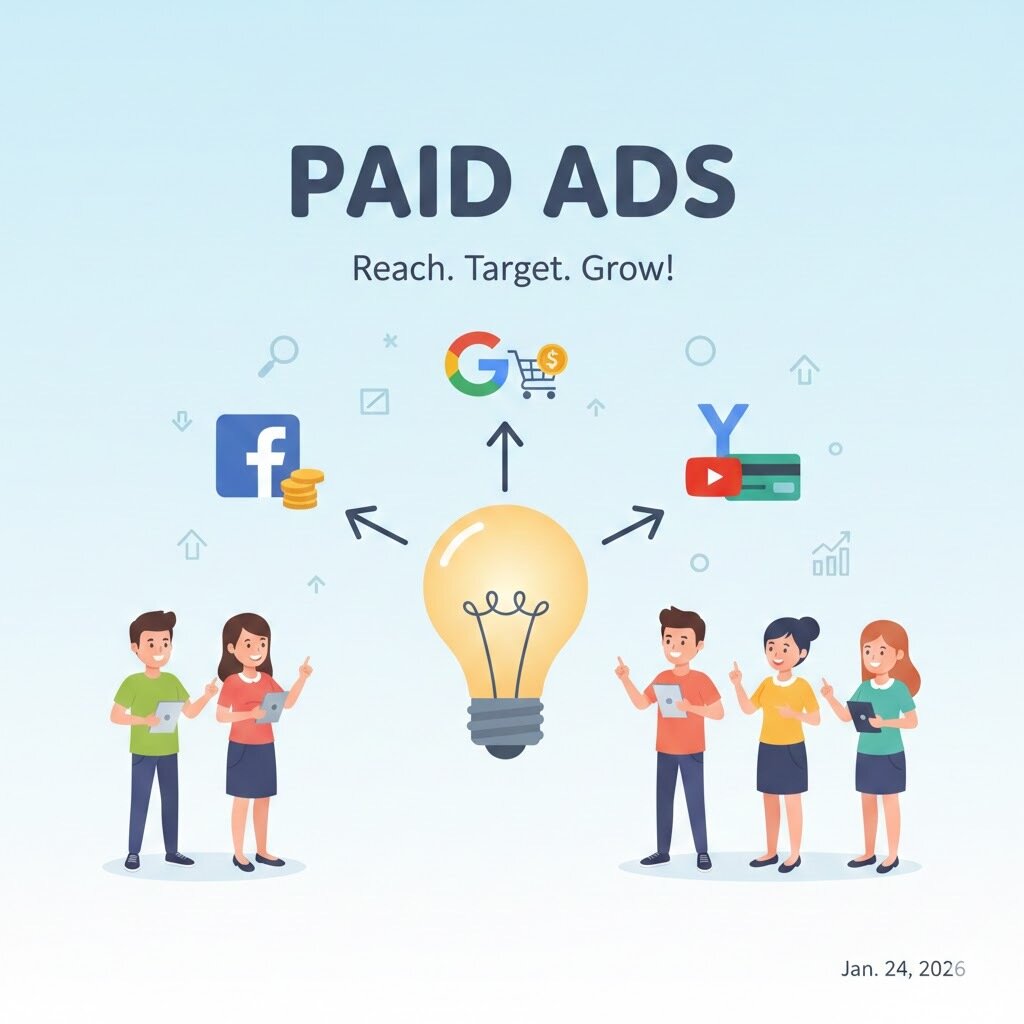
Paid Ads
You know? Paid ads help you reach more people quickly and get noticed beyond your followers!
What it is: Paid posts or ads to reach people beyond your followers.
Platforms Examples:
– Sponsored posts, story ads, reels
– Boosted posts, feed & story ads
– Sponsored posts, InMail
– Promoted tweets & trends
– Video ads before/during videos
Summary
5
Brands use posts, and videos to attract, engage, and retain audience.
4
Organic reaches followers for free, while paid ads increase visibility.
3
SMM focuses on engagement, brand awareness, and sales.
2
Different platforms reach different audiences.
1
SMM helps brands connect with people and boost sales.
MCQ Time
Which of the following best describes the primary goal of Social Media Marketing (SMM) for brands?
A. Posting cat videos every hour
B. Connect, engage, and drive sales
C. Typing random words in posts
D. Sharing pictures of your breakfast
MCQ Answer Time
Which of the following best describes the primary goal of Social Media Marketing (SMM) for brands?
A. Posting cat videos every hour
B. Connect, engage, and drive sales
C. Typing random words in posts
D. Sharing pictures of your breakfast
By Content ITV