




































Content ITV PRO
This is Itvedant Content department
Learning Outcome
5
Decide when denormalization is needed
4
Detect data redundancy and anomalies
3
Identify functional dependencies
2
Explain 1NF, 2NF, 3NF, and BCNF
1
Understand why Normalization is required
Recall
Tables need Primary Keys to uniquely identify records
Foreign Keys connect related tables
Composite Keys handle many-to-many relationships
Indexes improve read performance
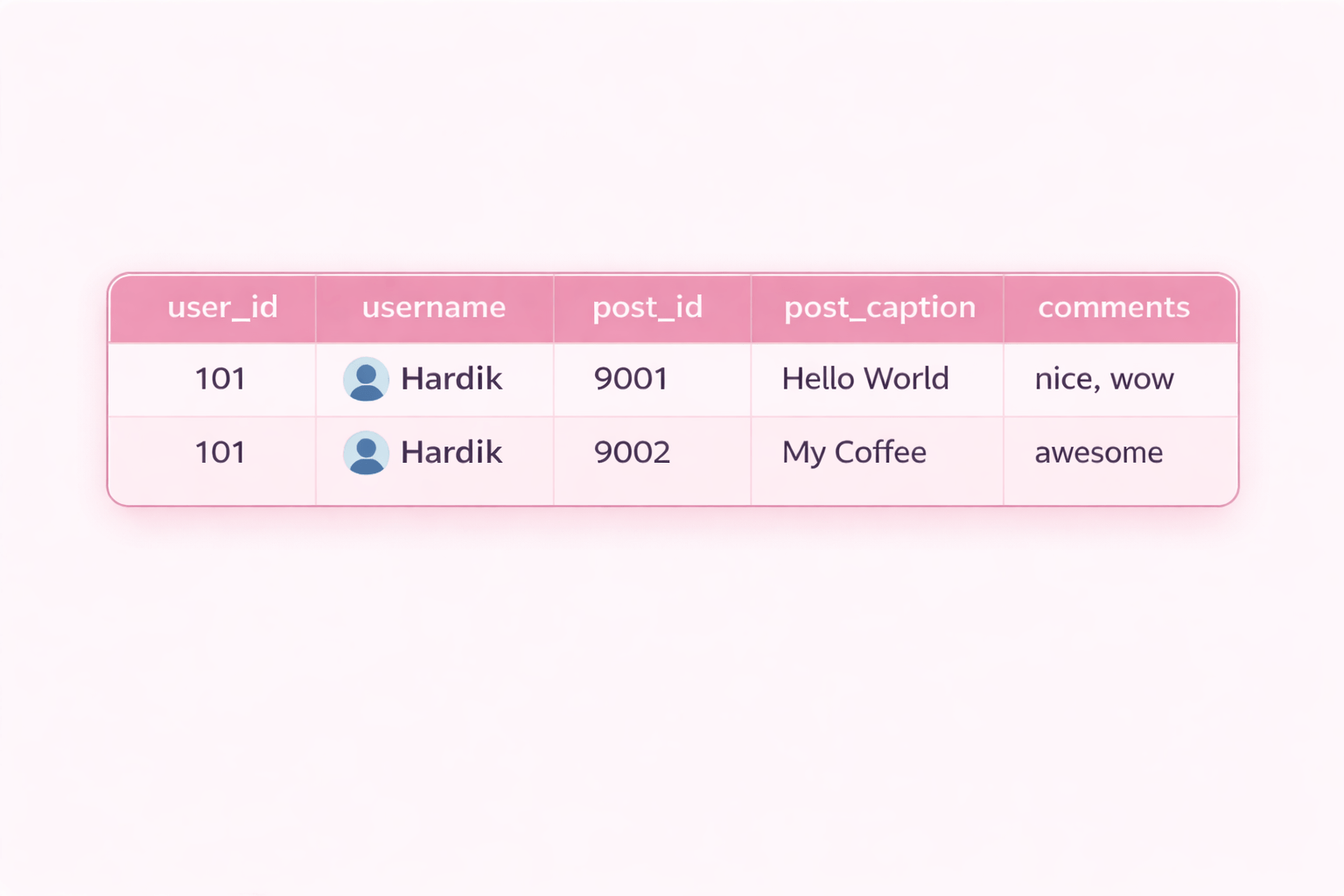
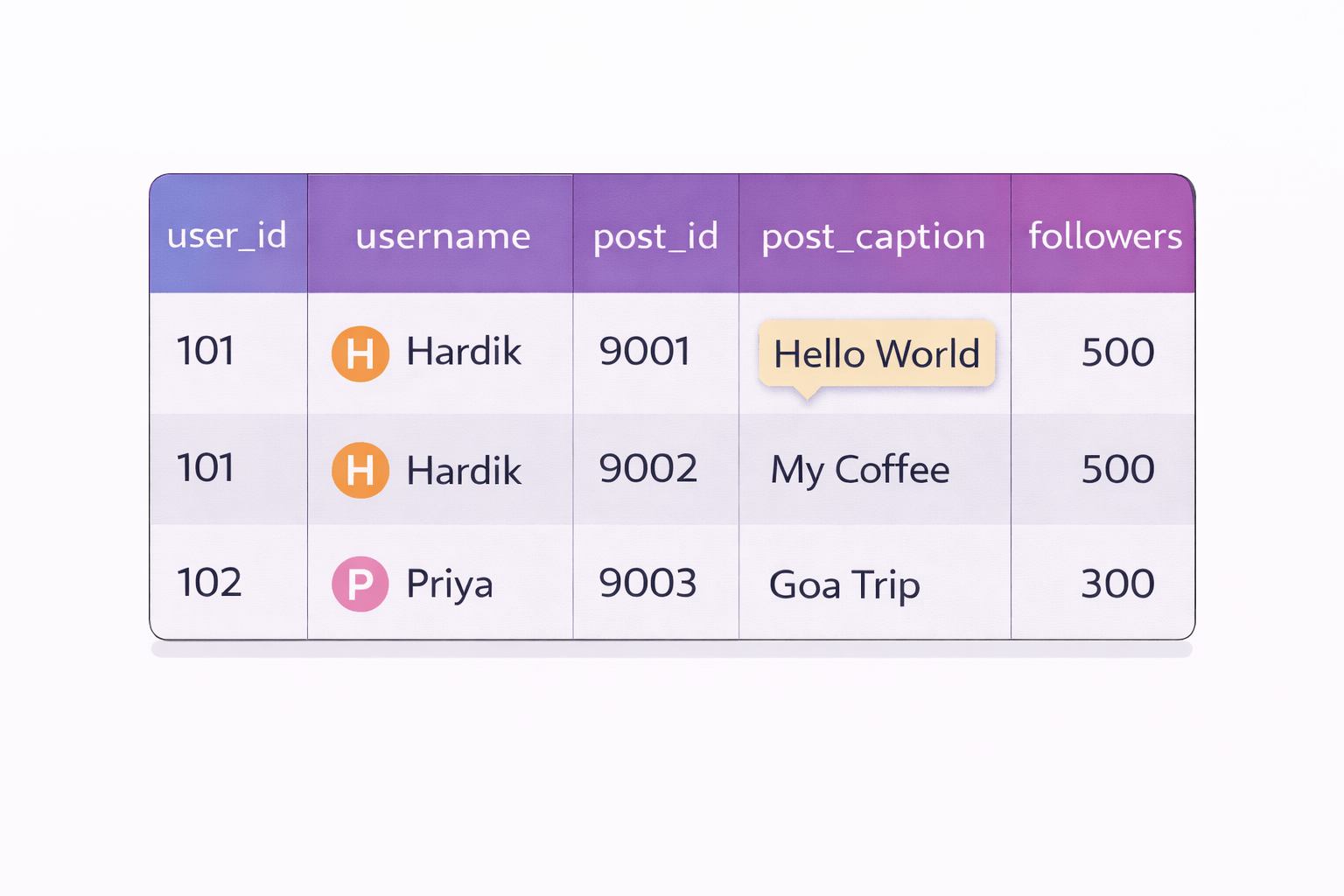
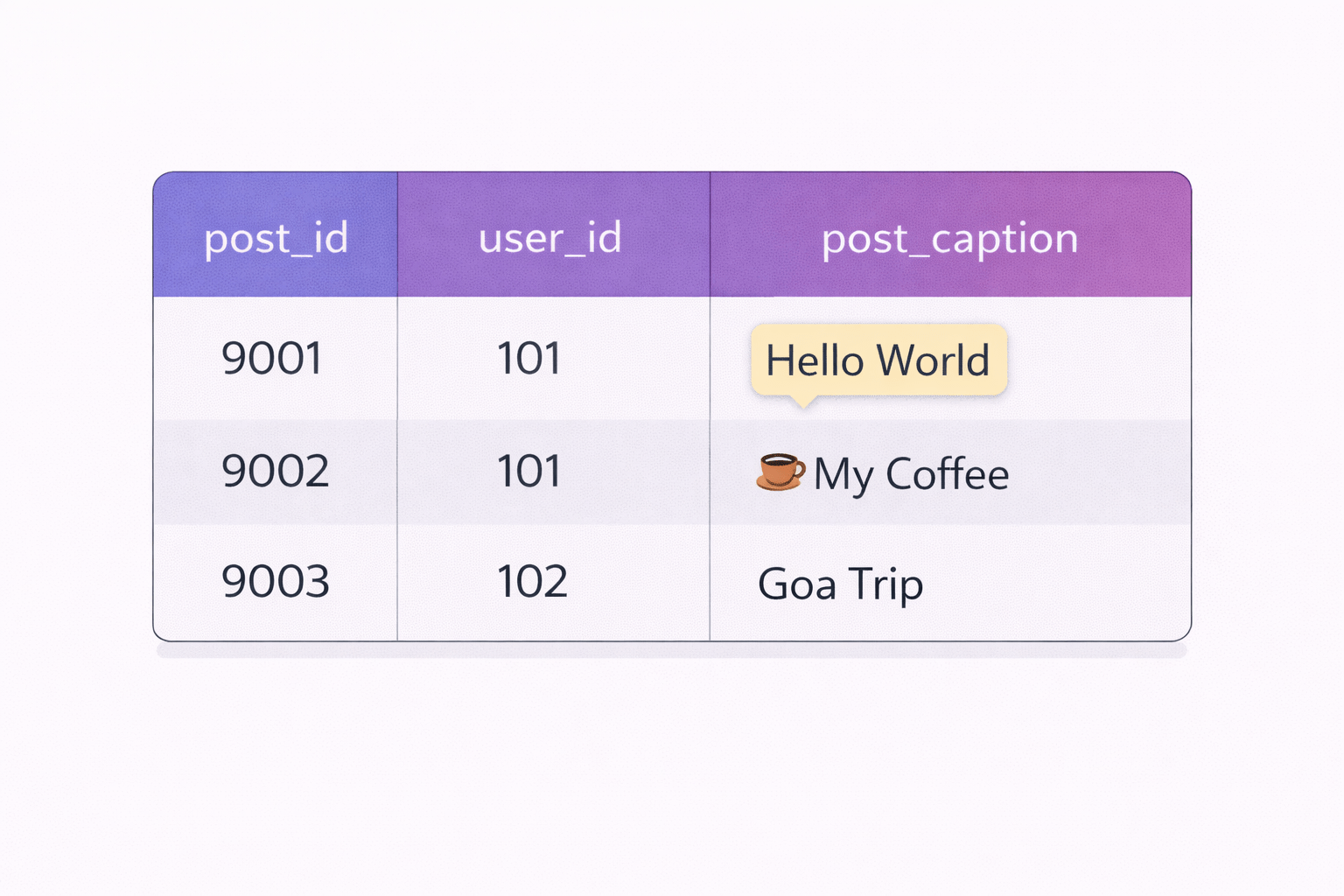
Instagram stored post data like this:
But the problem is
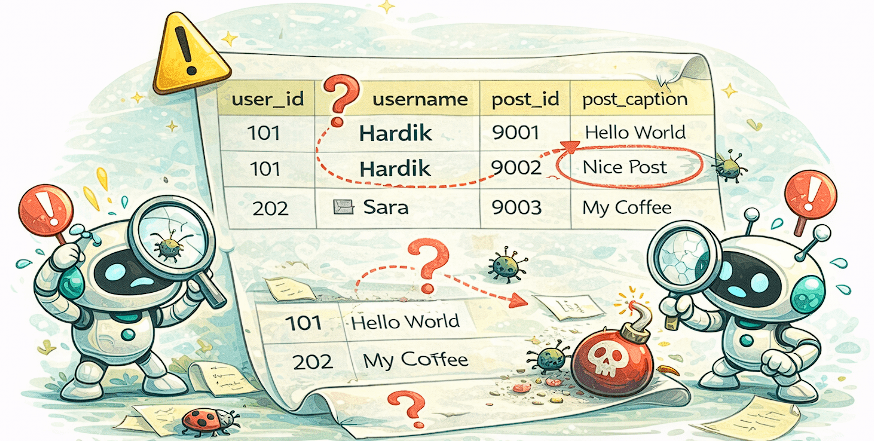
Risk of inconsistency and errors
Even with Primary & Foreign Keys, data can still be:
Databases need rules to:
These rules are called Normalization
Normalization
Normalization is the process of removing duplicate data from a table.
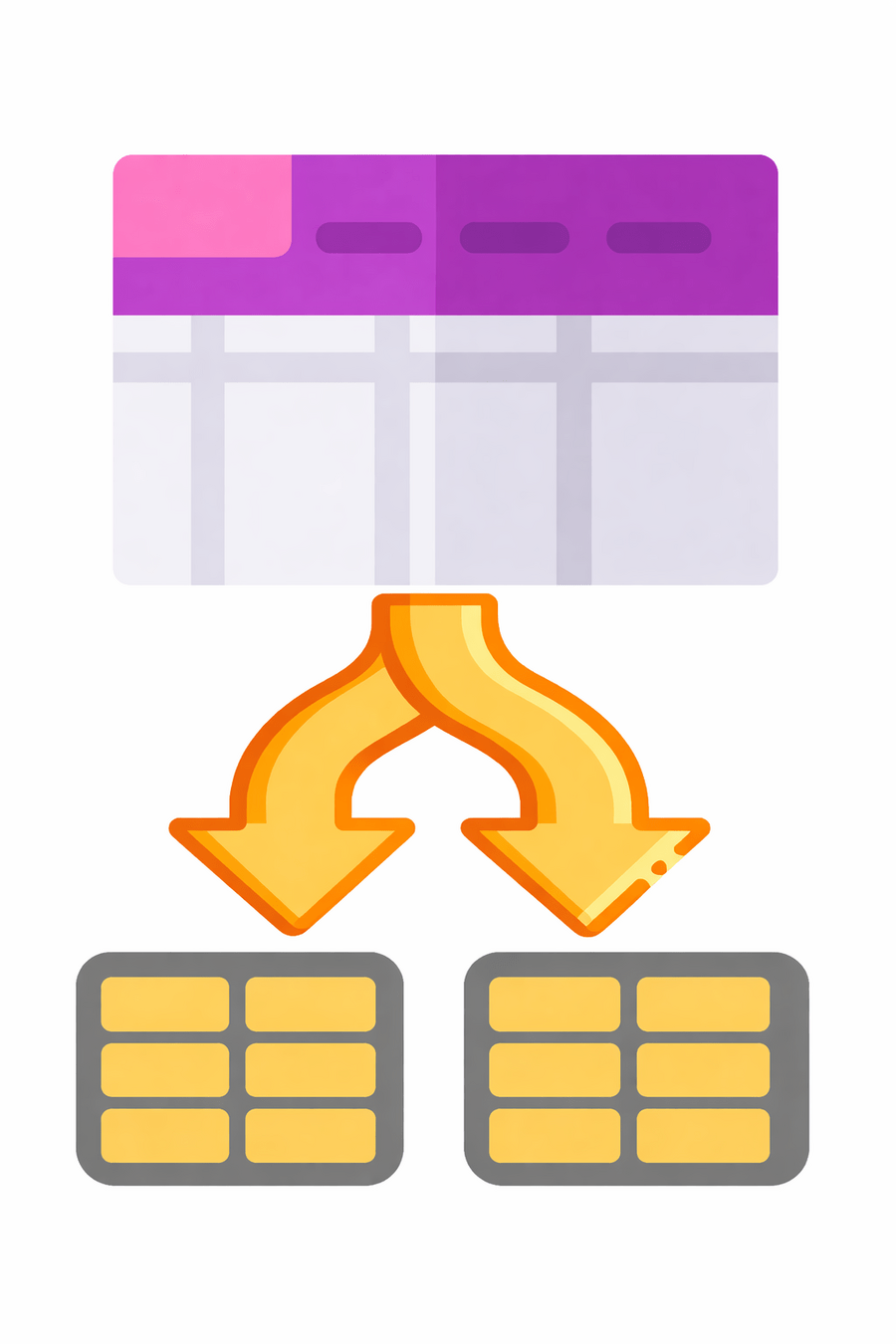
Normalization divides a large table into smaller tables and links them using relationships.
The main reason for normalization is removing anomalies.
Then ....
The side effect of duplicate data or large tables is called an anomaly.
Types of Anomalies
1. Insertion Anomaly
Insertion anomaly occurs when we cannot insert data due to missing required values.
2. Updation Anomaly
Update anomaly occurs when updating one value requires multiple updates.
3. Deletion Anomaly
Deletion anomaly occurs when deleting one record unintentionally deletes important data.
Example :
Imagine Instagram stores everything in ONE table:
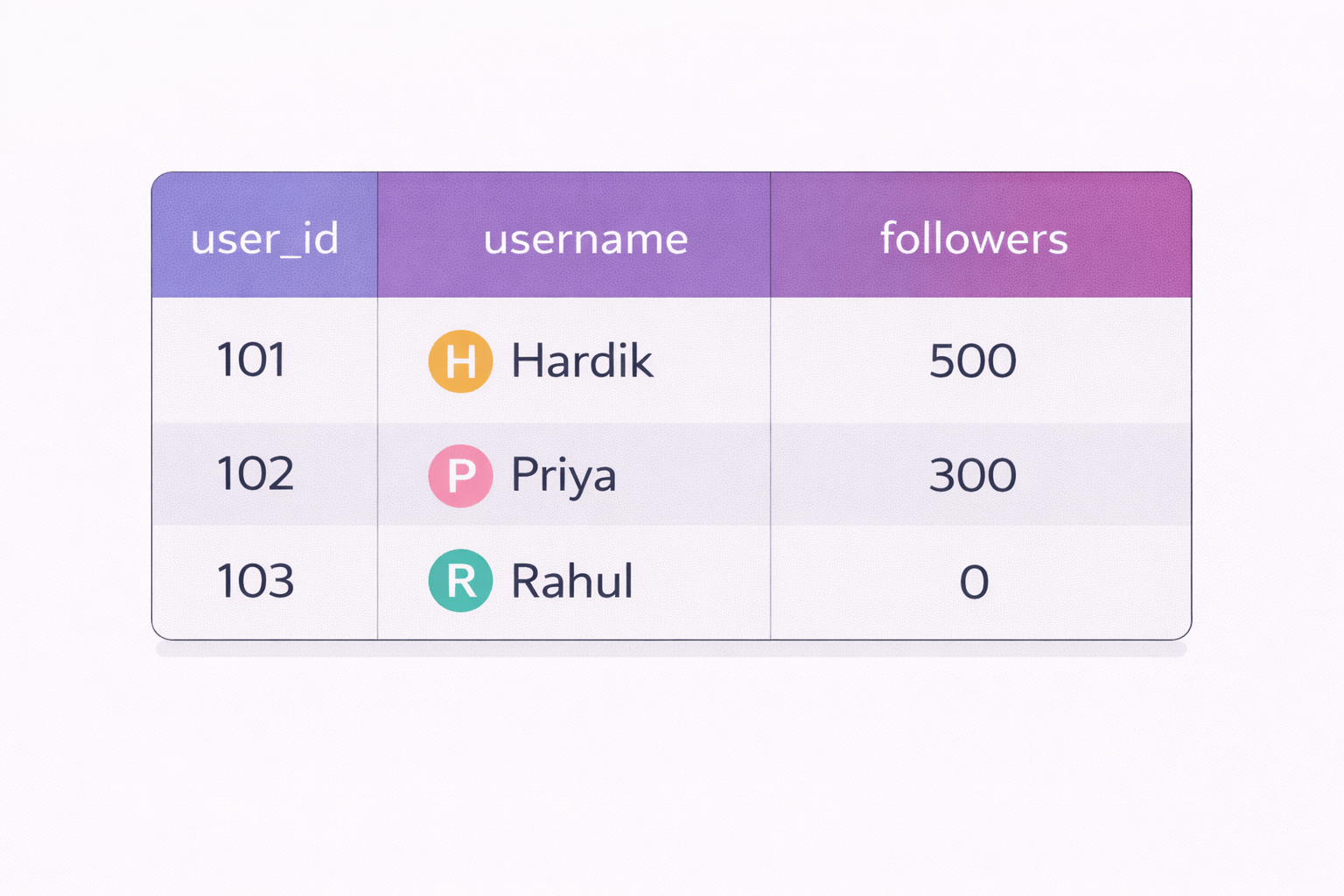
New user Rahul signs up.
He has no posts yet.
But this table requires:
post_id
post_caption
So you cannot insert Rahul unless you add fake/NULL post data.
That’s Insertion Anomaly
(You can't insert user without post.)
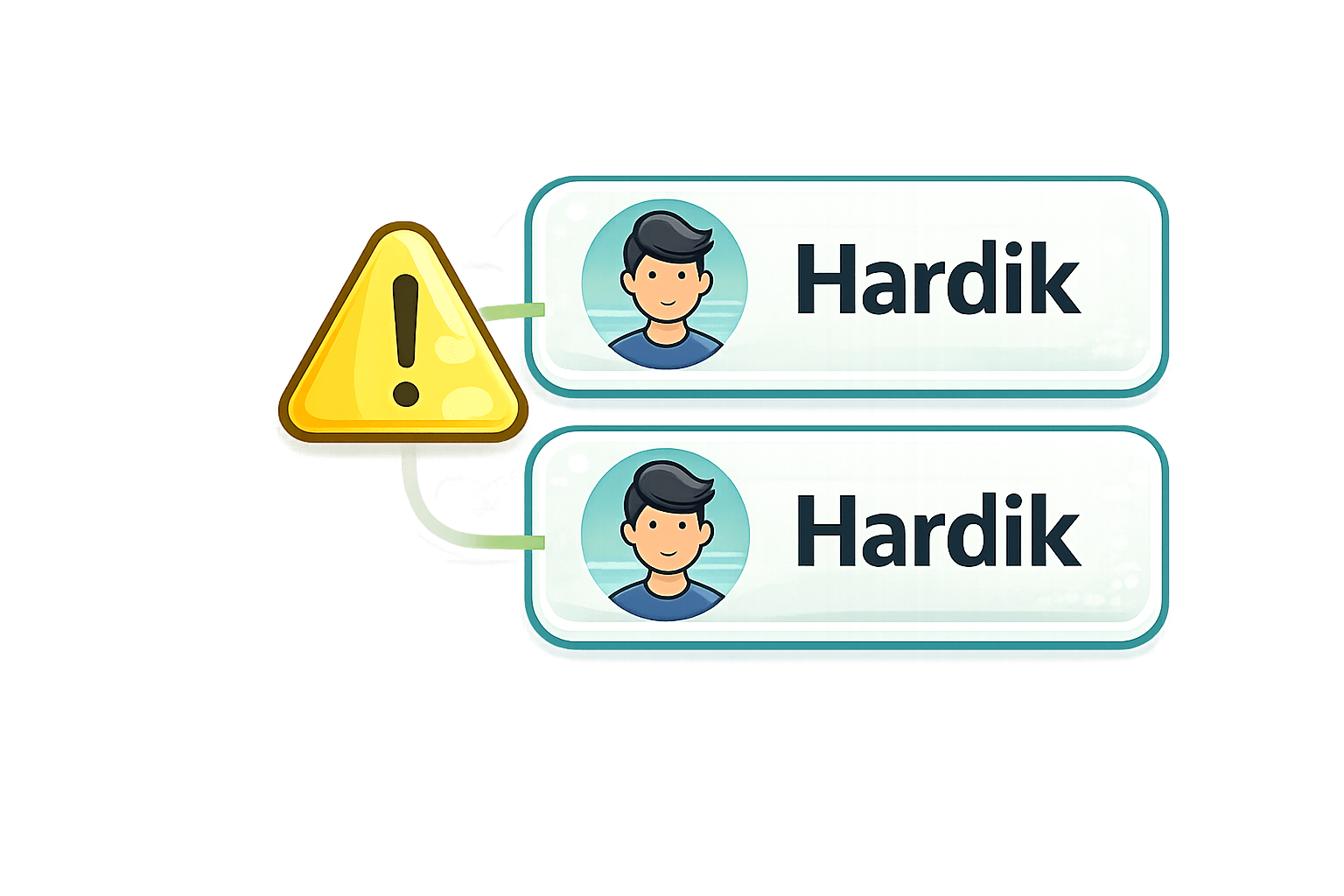
Hardik has 500 followers.
But his data appears in two rows.
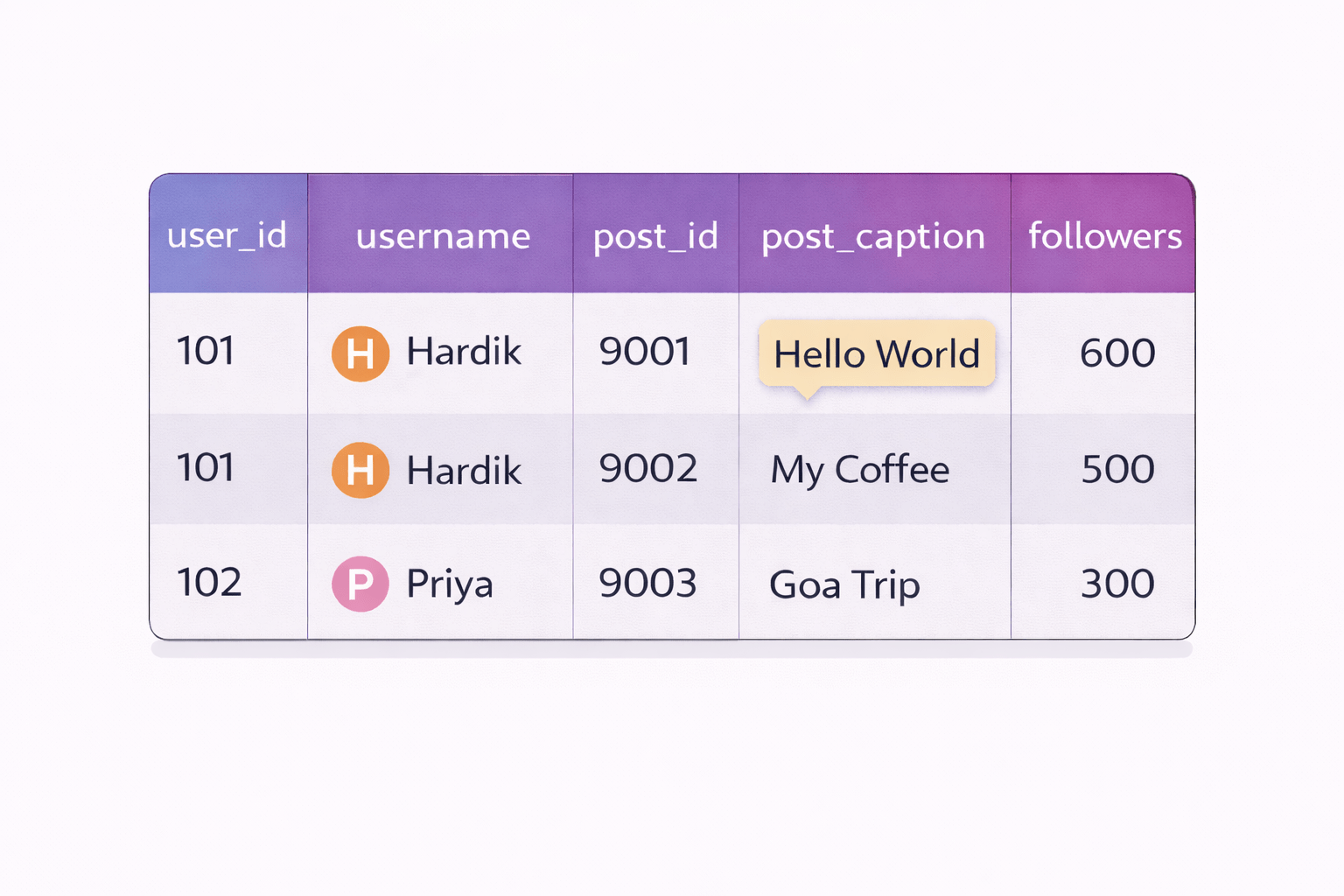
Now database becomes inconsistent
That’s Update Anomaly
(Same data stored in multiple places → risky updates.)
If his followers become 600,
you must update BOTH rows.
If you update only one row:
Suppose Priya deletes her post:
If this row is deleted...
We also lose:
Priya’s username
Her follower count
Even though we only wanted to delete her post.
That’s Deletion Anomaly
(Deleting one thing accidentally deletes important data.)
Solution:
To remove anomalies, we divide data into smaller tables.
Users Table
Posts Table
Less duplication
Better data integrity
This process is called Normalization
Types of Dependencies
Relationship between attributes where one attribute determines another.
1. Total Functional Dependency
If all non-key attributes depend on a single key attribute, it is a total functional dependency.
Instagram Example :
User(user_id,username, email, phone)
user_id → username
user_id → email
user_id → phone
All depend on Primary Key (user_id)
2. Partial Functional Dependency
Occurs when non-key attributes depend on part of a composite key.
Instagram Example :
Like(user_id, post_id, username)
Composite Key: (user_id, post_id)
username depends only on user_id ❌
This creates redundancy
3. Transitive Functional Dependency
Occurs when a non-key attribute depends on another non-key attribute.
Instagram Example :
User(user_id, city_id, city_name)
user_id → city_id
city_id → city_name
city_name indirectly depends on user_id
Normal Forms
1NF
2NF
3NF
First Normal Form
Second Normal Form
Third Normal Form
First Normal Form (1NF)
A table is in 1NF if:
It has Primary Key
No duplicate data
All values are atomic
Not 1NF
1NF
Example :
| post_id | comments |
|---|---|
| 5001 | nice, wow, cool |
| post_id | comments |
|---|---|
| 5001 | nice |
| 5001 | wow |
| 5001 | cool |
Second Normal Form (2NF)
A table is in 2NF if:
It is already in 1NF
It has no partial dependency
Not 2NF
2NF
Example :
| user_id | post_id | username |
|---|---|---|
| 101 | 9001 | Hardik |
| 101 | 9002 | Hardik |
| 102 | 9001 | Priya |
| user_id | username |
|---|---|
| 101 | Hardik |
| 102 | Priya |
| user_id | post_id |
|---|---|
| 101 | 9001 |
| 101 | 9002 |
| 102 | 9001 |
User Table
Like Table
Third Normal Form (3NF)
A table is in 3NF if:
It is already in 2NF
It has no transitive dependency
Not 3NF
3NF
Example :
| user_id | city_id | city_name |
|---|---|---|
| 101 | 1 | Mumbai |
| 102 | 2 | Pune |
| 103 | 1 | Mumbai |
| user_id | city_id |
|---|---|
| 101 | 1 |
| 102 | 2 |
| 103 | 1 |
| city_id | city_name |
|---|---|
| 1 | Mumbai |
| 2 | Pune |
User Table
City Table
BCNF (Boyce–Codd Normal Form)
Rule
Stronger version of 3NF
Every determinant must be a candidate key
When needed:
Multiple candidate keys exist
Complex business rules
What is Denormalization?
To improve performance
Example:
Avoid joins for fast reads
Used when:
Summary
5
Denormalization is a performance choice, not a mistake
4
BCNF → Strong dependency rules
3
3NF → No transitive dependency
2
1NF → Atomic values and 2NF → No partial dependency
1
Normalization organizes data logically
Quiz
A table is in First Normal Form (1NF) if:
A. It has no foreign keys
B. It has atomic values and a primary key
C. It has composite keys only
D. It allows multi-valued attributes
Quiz-Answer
A table is in First Normal Form (1NF) if:
A. It has no foreign keys
B. It has atomic values and a primary key
C. It has composite keys only
D. It allows multi-valued attributes
By Content ITV