










Content ITV PRO
This is Itvedant Content department
Learning Outcome
5
Communicate clearly and effectively in simple interactions.
4
Practice active listening skills.
3
Recognize the role of body language and tone.
2
Identify verbal, non-verbal, and written communication.
1
Understand the basics of effective communication.
You enter the room
In an interview, your first move isn’t your answer
one candidate walks in confidently
another looks unsure.
Who do you think creates a stronger impact instantly?
it’s your presence.
Same situation, different impact.
So communication is not just what you say, but how you show up.
That’s the foundation of Effective communication.
Why Communication Matters ?
1. Helps us share ideas clearly
2. Builds better relationships at work and life
3. Reduces misunderstandings and confusion
4. Improves teamwork and collaboration
5. Creates a positive impression
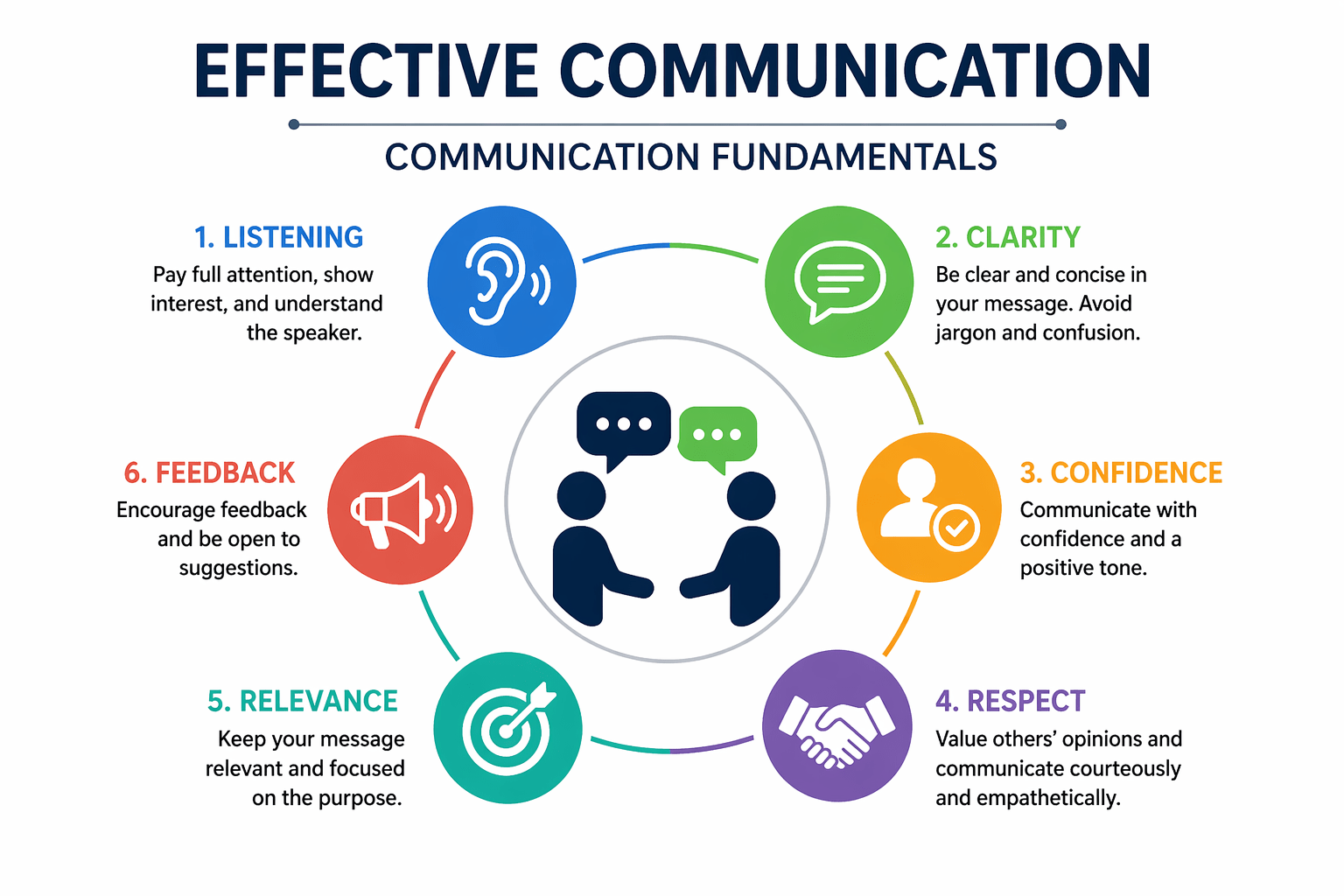
What is Effective Communication ?
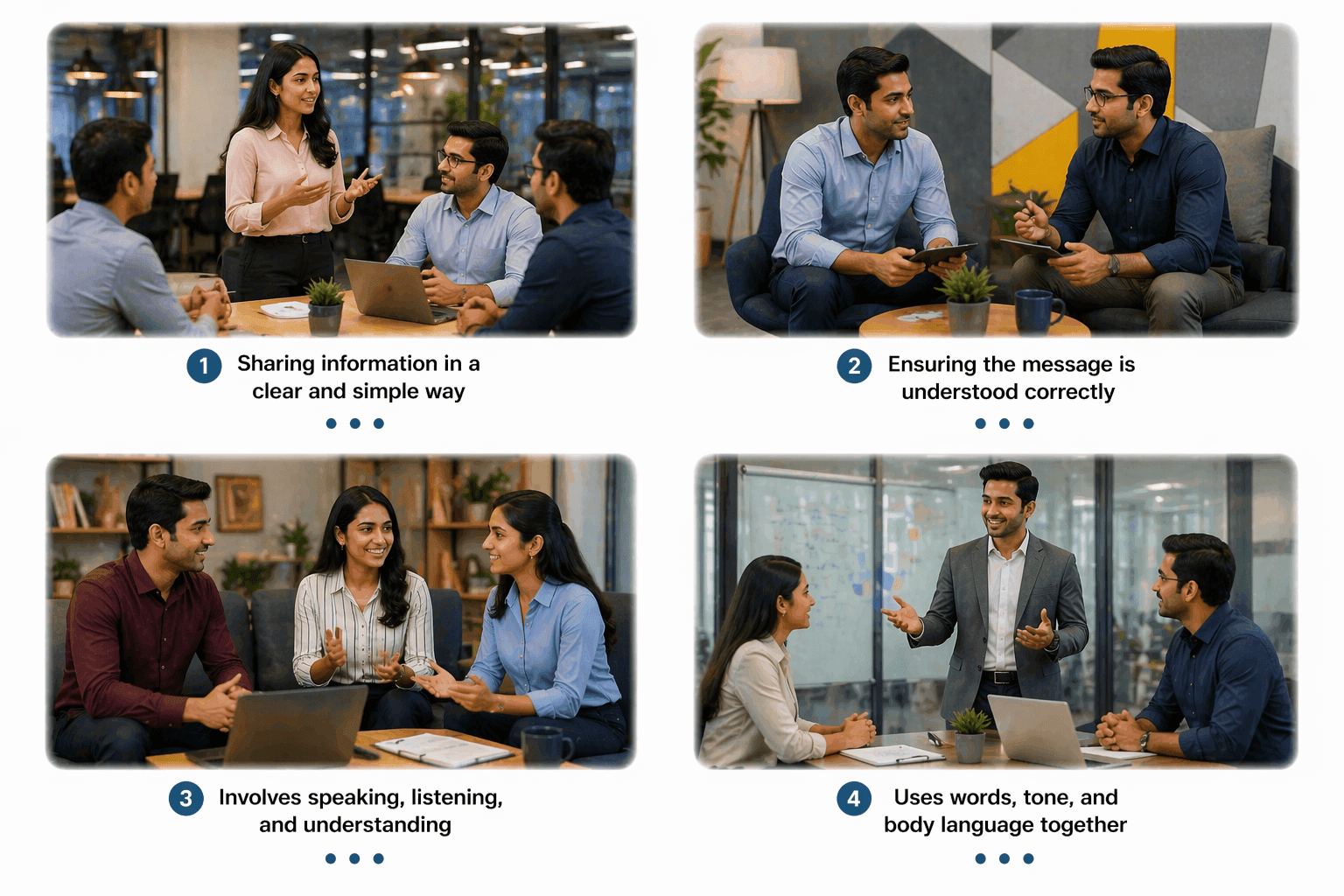
Effective communication is the process of sharing information in a way that is clear, understood correctly, and leads to the desired response or action.
That includes
1. Sharing information in a clear and simple way
4. Uses words, tone, and body language together
3. Involves speaking, listening, and understanding
2. Ensuring the message is understood correctly
What are the Types of Communication
1. Verbal Communication
2. Non-Verbal Communication
3. Written Communication
4. Visual Communication
1. Verbal Communication
This is communication through spoken words.
It can happen face-to-face, over phone calls, meetings, or presentations.
Example: A trainer explaining a concept in a session
2. Non-Verbal Communication
This involves body language, gestures, facial expressions, eye contact, and tone of voice.
No words are spoken, but meaning is still conveyed.
Example: Smiling to show friendliness or nodding to show agreement.
3. Written Communication
This is communication through written words such as emails, messages, reports, letters, and notes.
Example: Sending a formal email to a manager.
4. Visual Communication
This uses images, charts, graphs, symbols, or videos to convey information.
Example: A pie chart showing sales performance.
Why Listening is Important
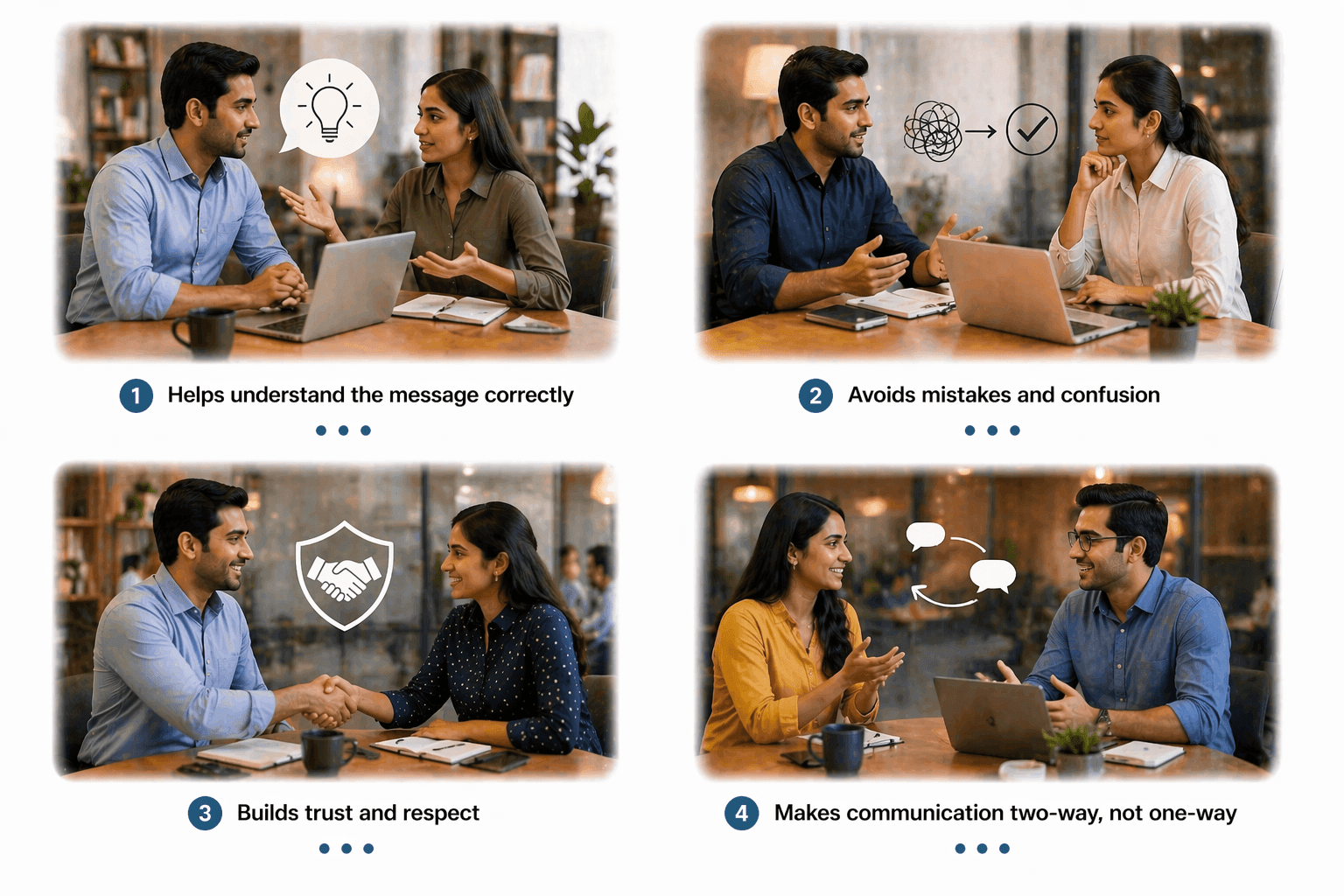
1.Helps understand the message correctly
2.Avoids mistakes and confusion
3.Builds trust and respect
4.Makes communication two-way, not one-way
What is Active Listening
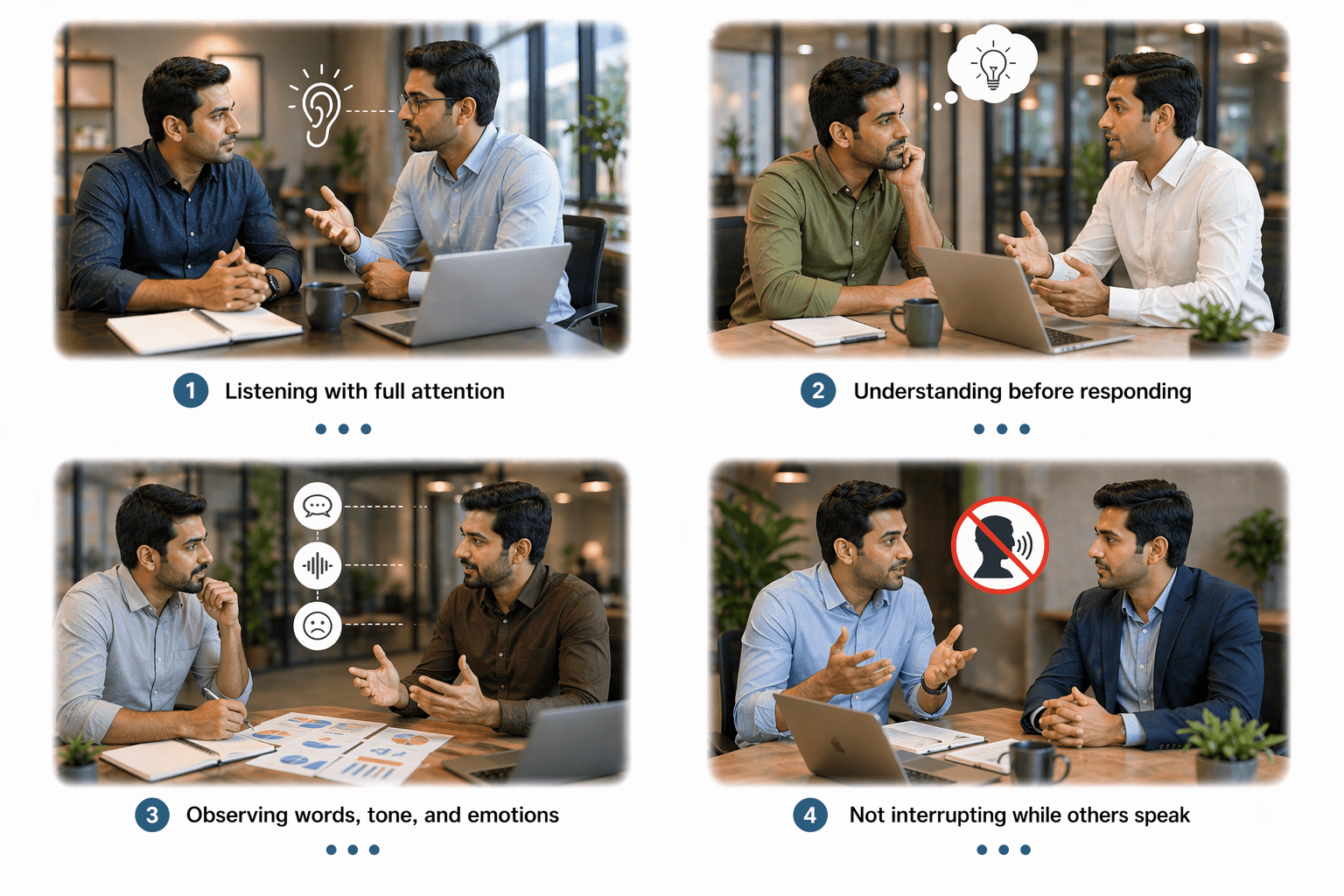
1.Listening with full attention
2.Understanding before responding
3.Observing words, tone, and emotions
4.Not interrupting while others speak
How to Communicate Effectively
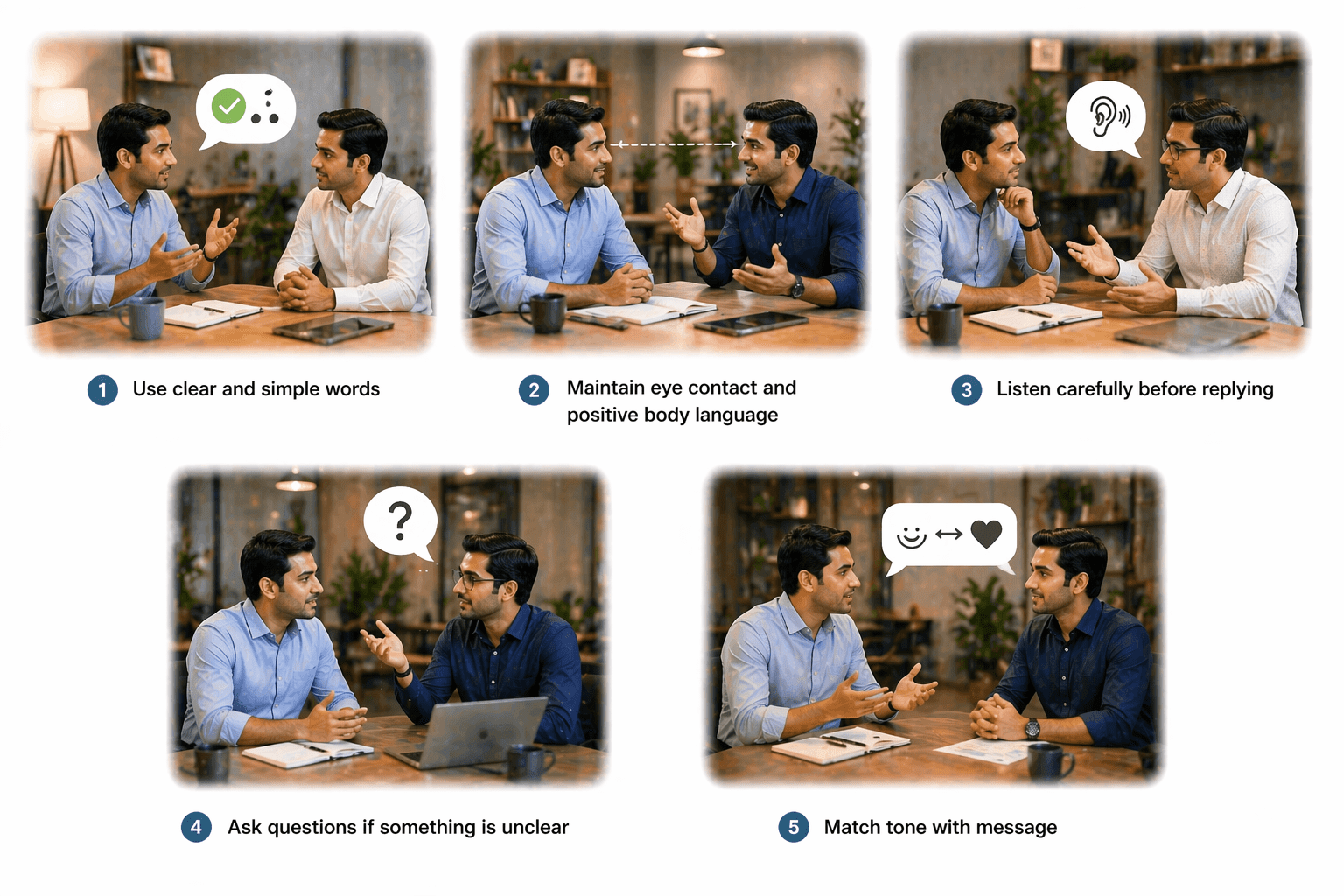
1.Use clear and simple words
2.Maintain eye contact and positive body language
3.Listen carefully before replying
4.Ask questions if something is unclear
5.Match tone with message
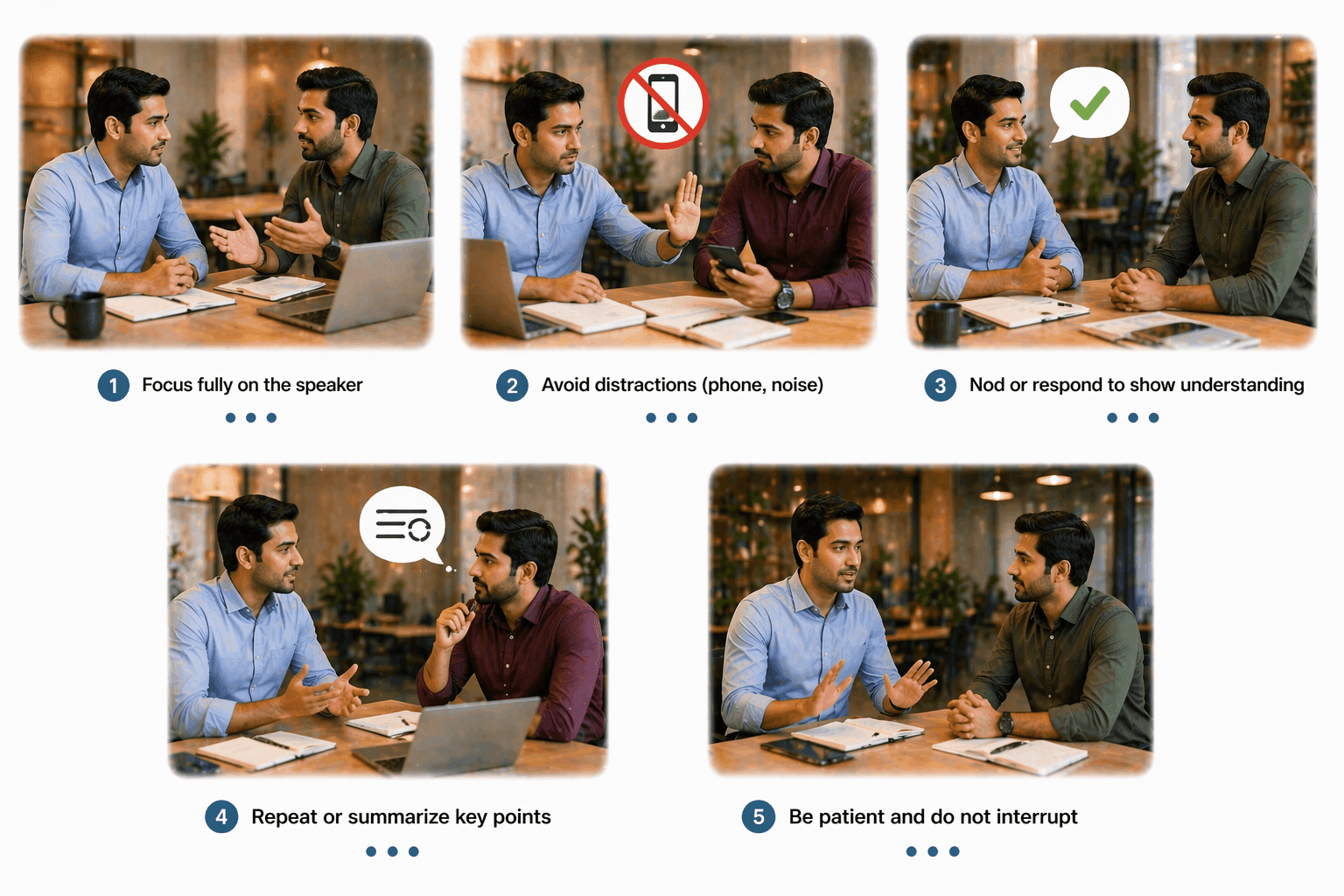
How to Practice Active Listening
1.Focus fully on the speaker
2.Avoid distractions (phone, noise)
3.Nod or respond to show understanding
4.Repeat or summarize key points
5.Be patient and do not interrupt
Inclass Activity
Activity 1 – Listening & Summarizing
Objective:
Improve active listening and understanding skills
Instructions:
Listen carefully to a short audio/story (played by trainer)
Do not write while listening
After listening, write a 3–5 line summary
Time:
Listening: 2–3 minutes
Writing: 5 minutes
Inclass Activity
Activity 2 – Speaking Practice
(Video Response)
Objective:
Build confidence and clarity in speaking
Tool Options:
Flipgrid
Napkin AI
Instructions:
Record a 1–2 minute video on a given topic
Example Topics:
“My Career Goal”
“A Skill I Want to Improve”
Summary
5
You learned how to communicate clearly and effectively
4
you practiced active listening skills
3
Recognized the importance of body language and tone
2
Learned the three types: verbal, non-verbal, and written
1
Understood the basics of effective communication
Quiz
What is the role of tone in communication?
A. It has no impact
B. It changes the meaning of the message
C. It is only for writing
D. It is not needed
Quiz-Answer
What is the role of tone in communication?
A. It has no impact
B. It changes the meaning of the message
C. It is only for writing
D. It is not needed
By Content ITV