










Content ITV PRO
This is Itvedant Content department
Learning Outcome
5
Explain how On-Page SEO improves search rankings
4
Recognize the role of SEO-friendly URLs and image optimization
3
Understand how structured content improves readability
2
Identify key page optimization elements (headings, keywords, links)
1
Understand the concept of On-Page SEO
Why Structure Matters
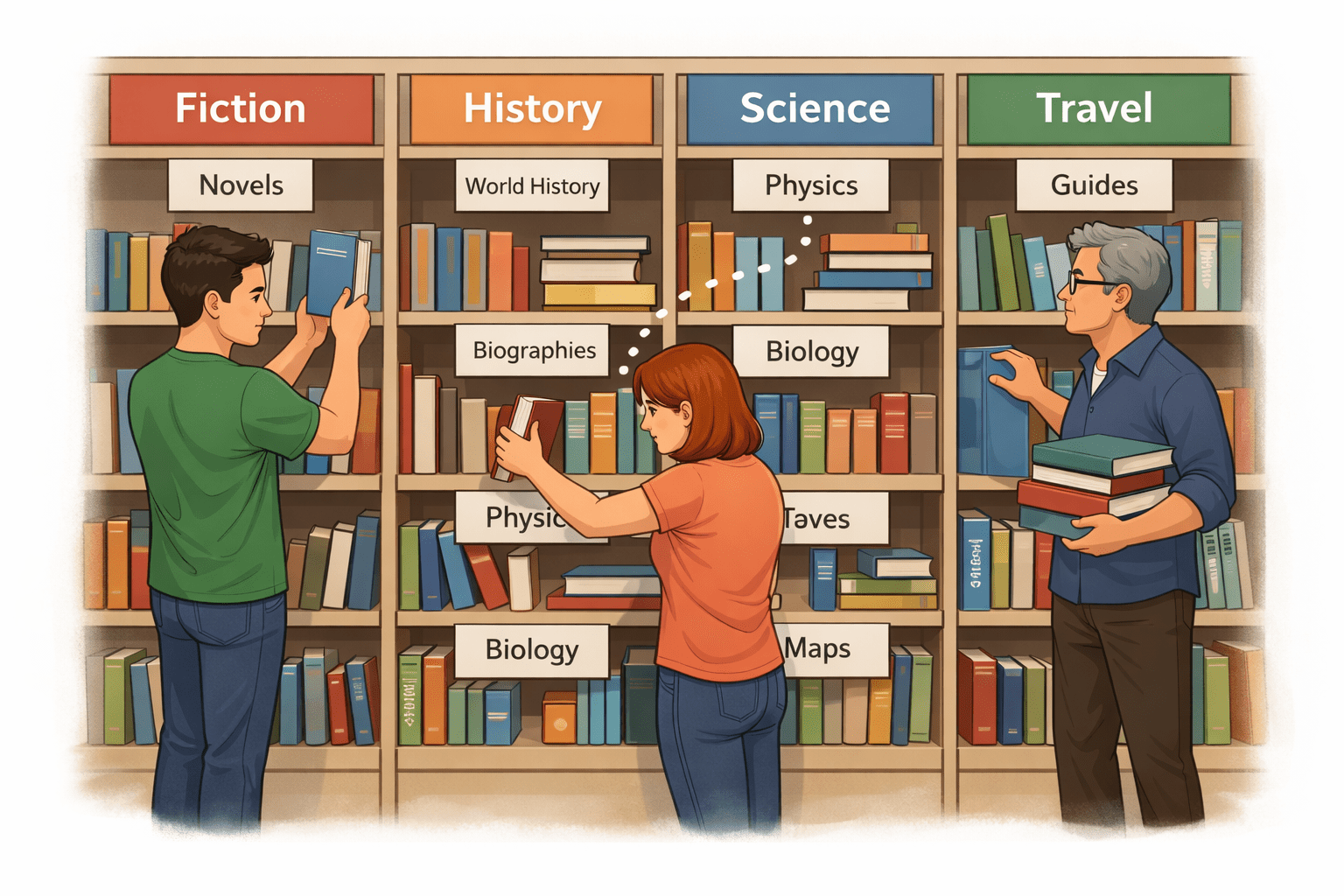
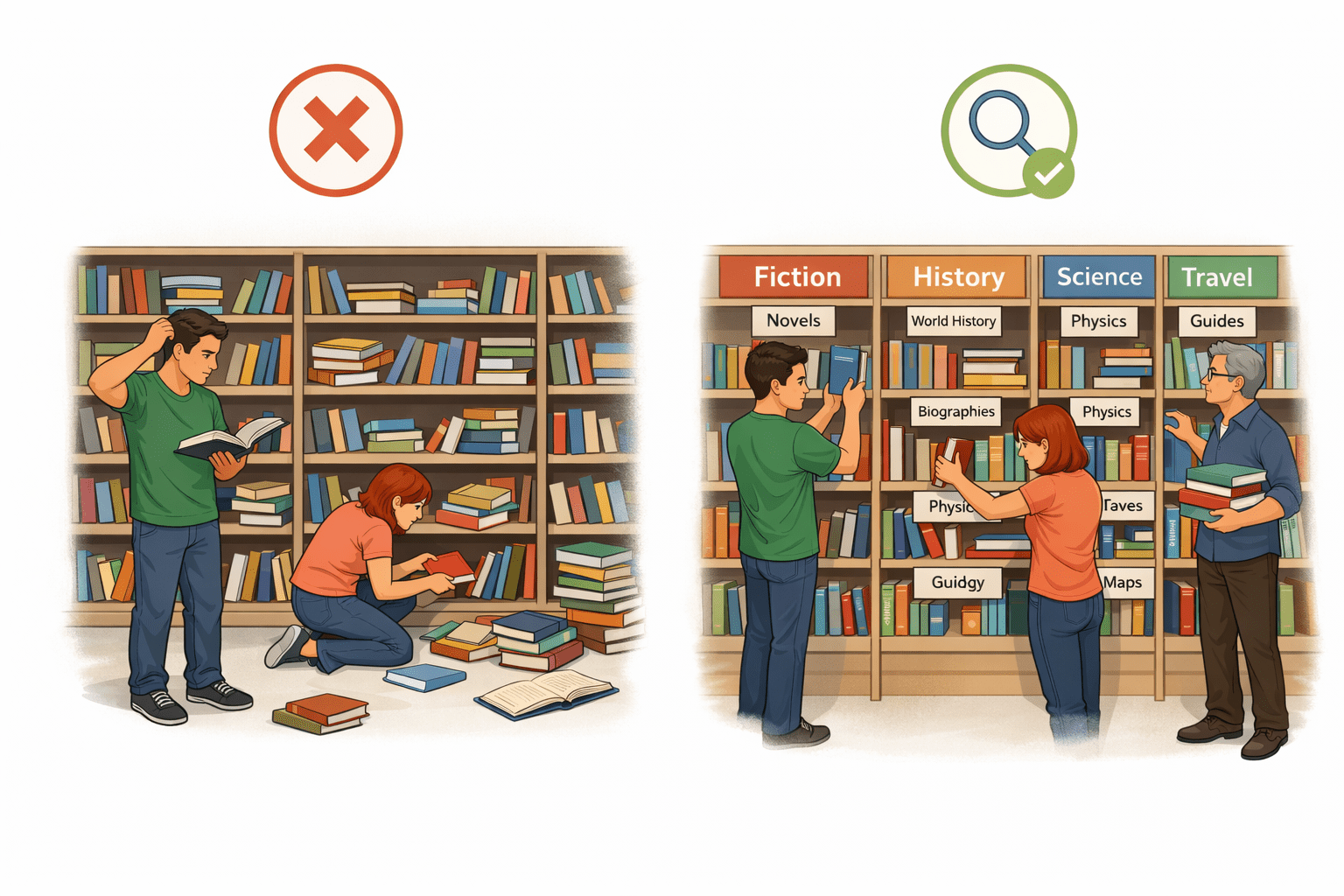
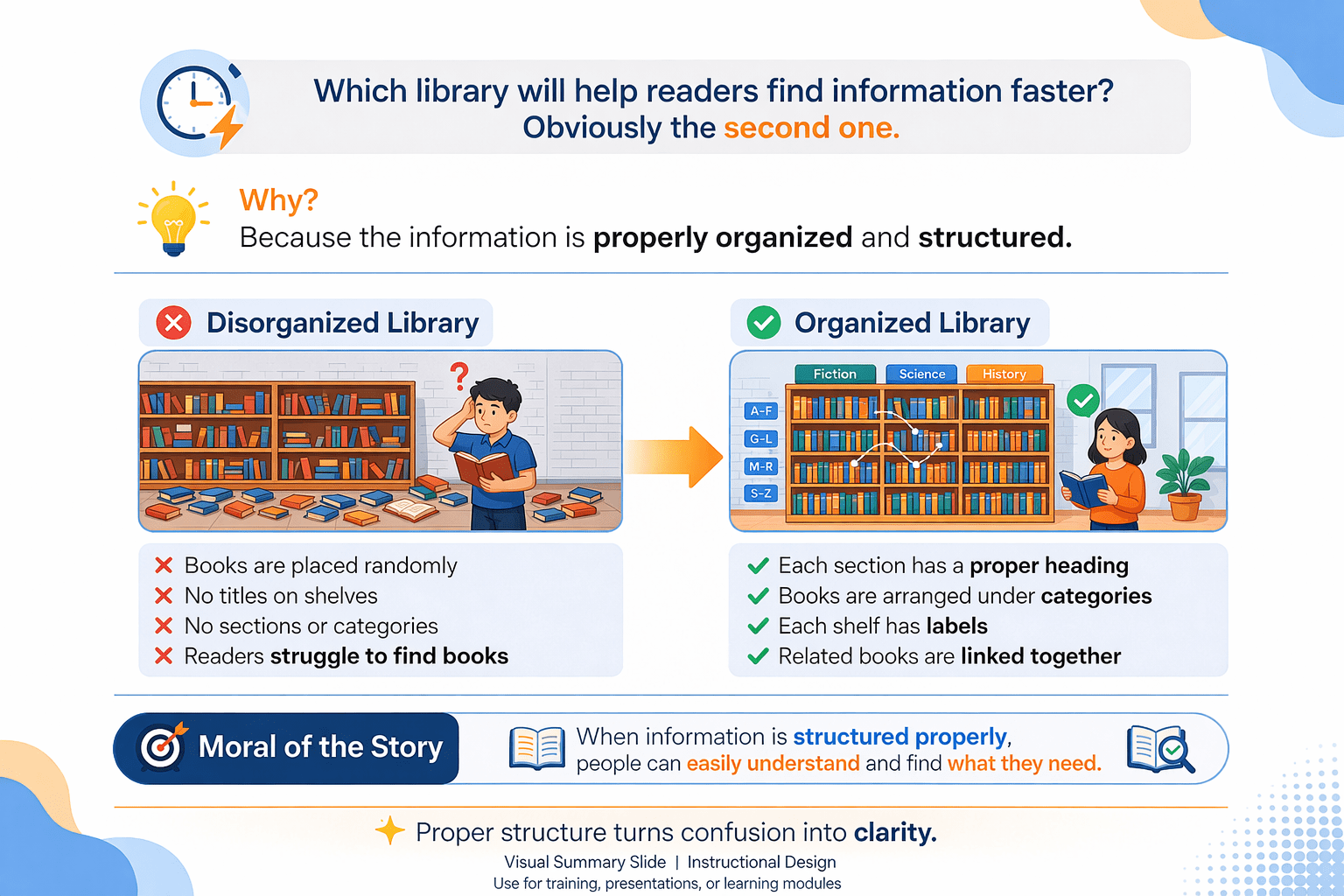
Imagine entering a large library
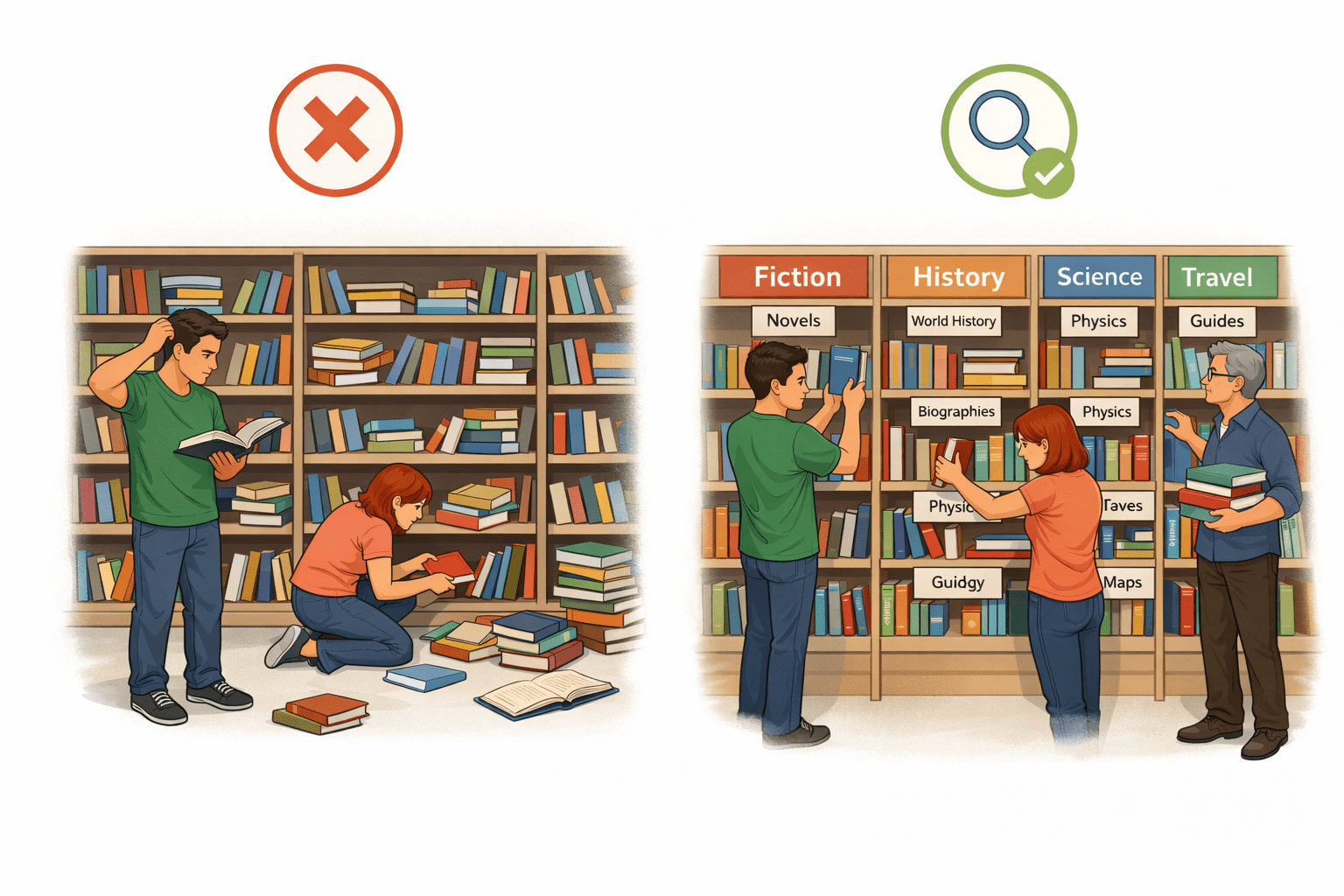
In the first library:
Books are placed randomly
No titles on shelves
No sections or categories
Readers struggle to find books
In the second library:
Each section has a proper heading
Books are arranged in categories
Each shelf has labels
Related books are linked together
Why Structure Matters
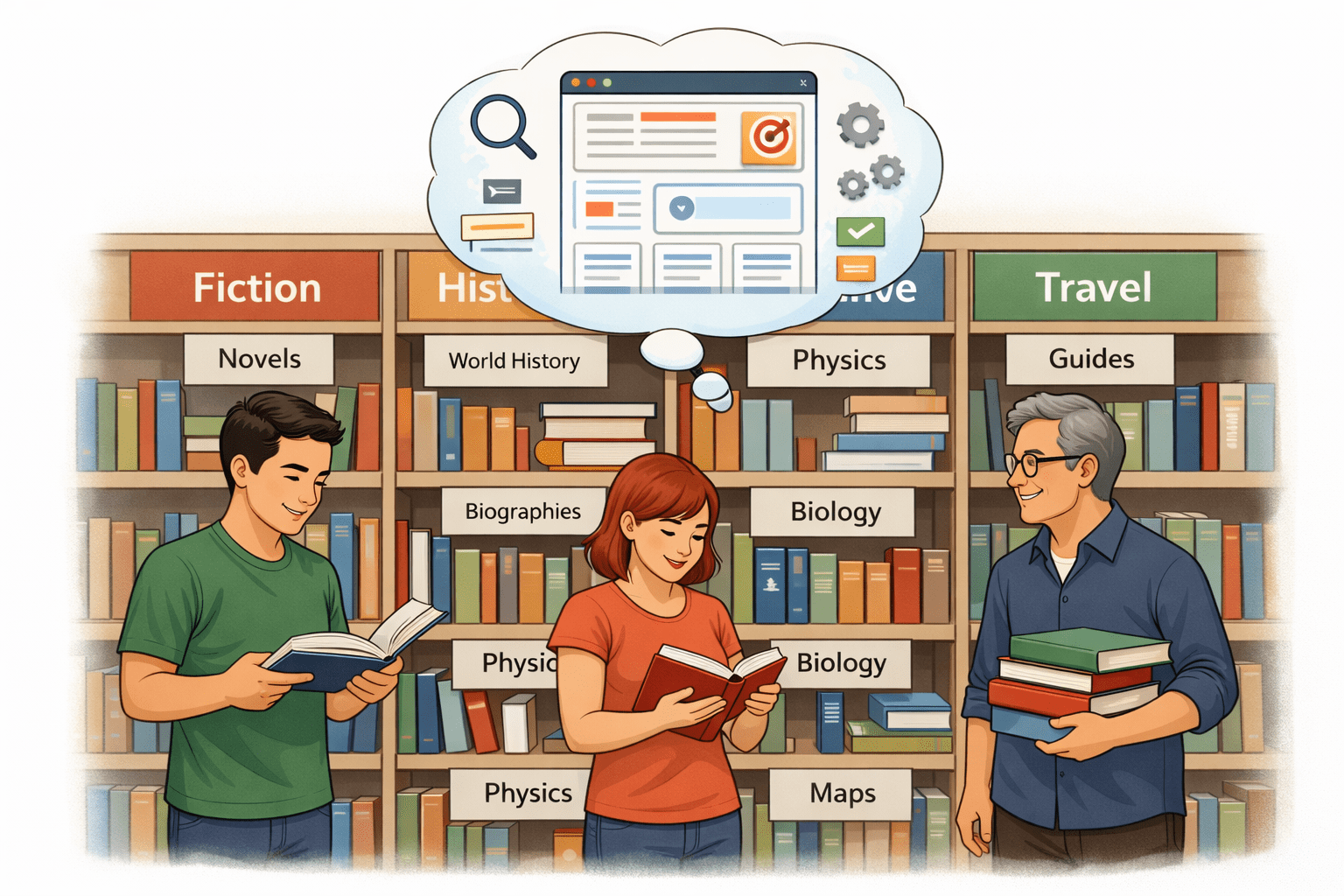
Because the information is properly organized and structured
Obviously the second one.
Which library will help readers find information faster?
Disorganized Library
Organized Library
Why Structure Matters
When information is structured properly, people can easily understand and find what they need
Understanding On-Page SEO in Practice
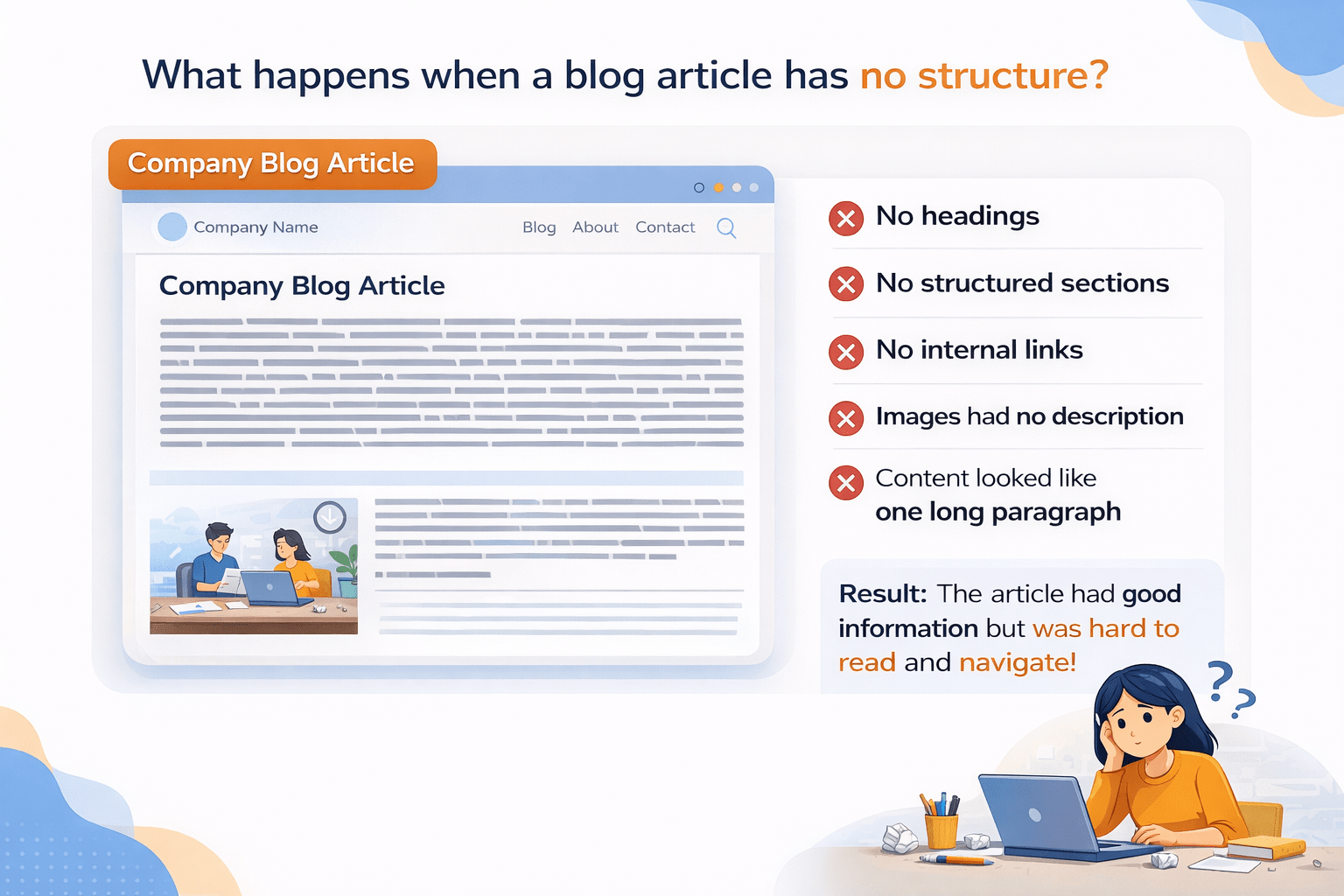
A company published a blog article on their website.
No headings
No structured sections
No internal links
Images had no description
Content looked like one long paragraph
The article had good information but:
Result
Search engines and users both struggled to understand the page
Understanding On-Page SEO in Practice
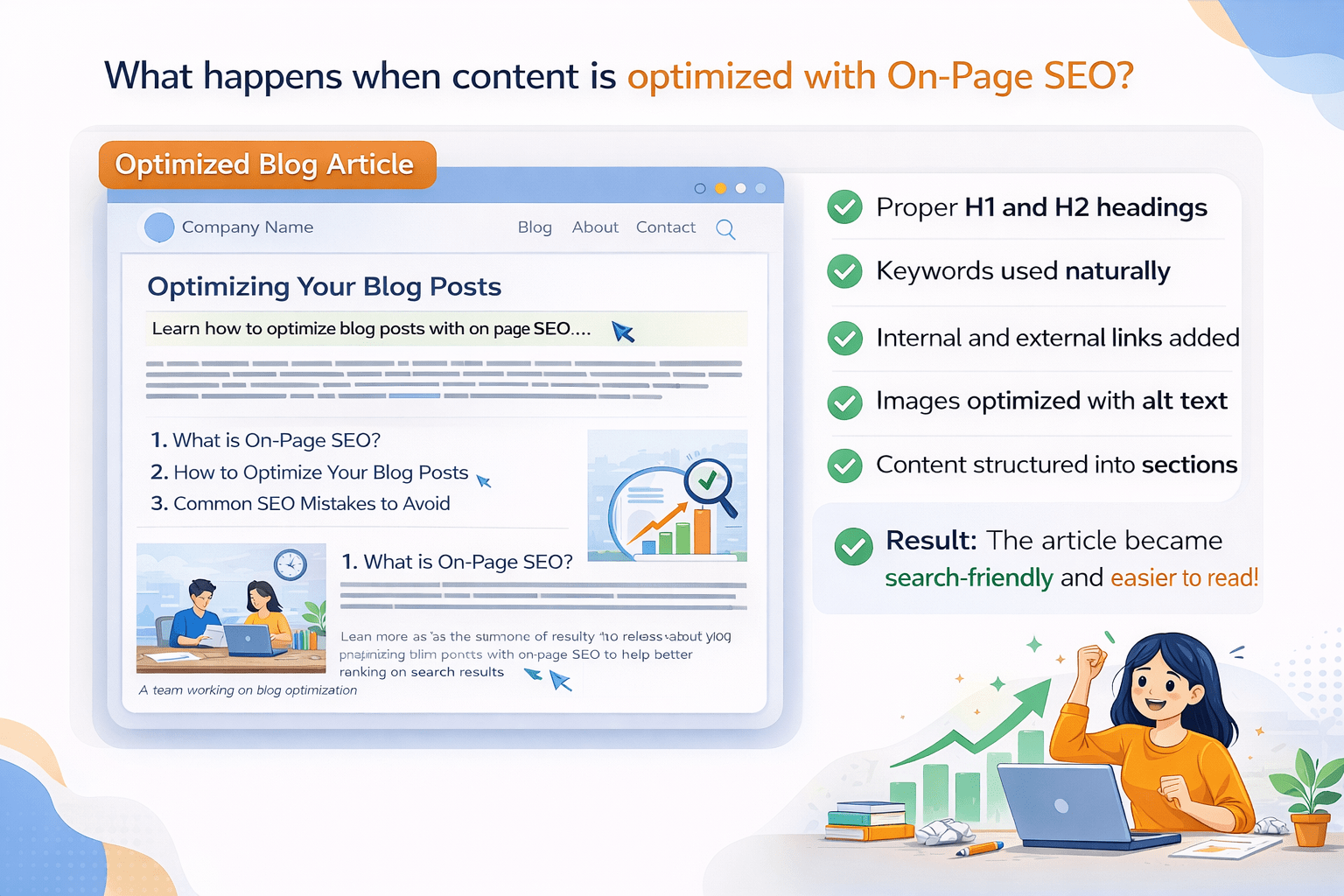
Later the content was optimized with On-Page SEO:
Proper H1 and H2 headings
Keywords used naturally
Internal and external links added
Images optimized with alt text
Content structured into sections
Result
Article became search friendly and easier to read
Understanding On-Page SEO in Practice
After these improvements:
The article became easier to read
Search engines understood the topic better
Search engines understood the topic better
Meaning of the Case
On-Page SEO organizes content for users and search engines.
What is the Foundation of SEO?
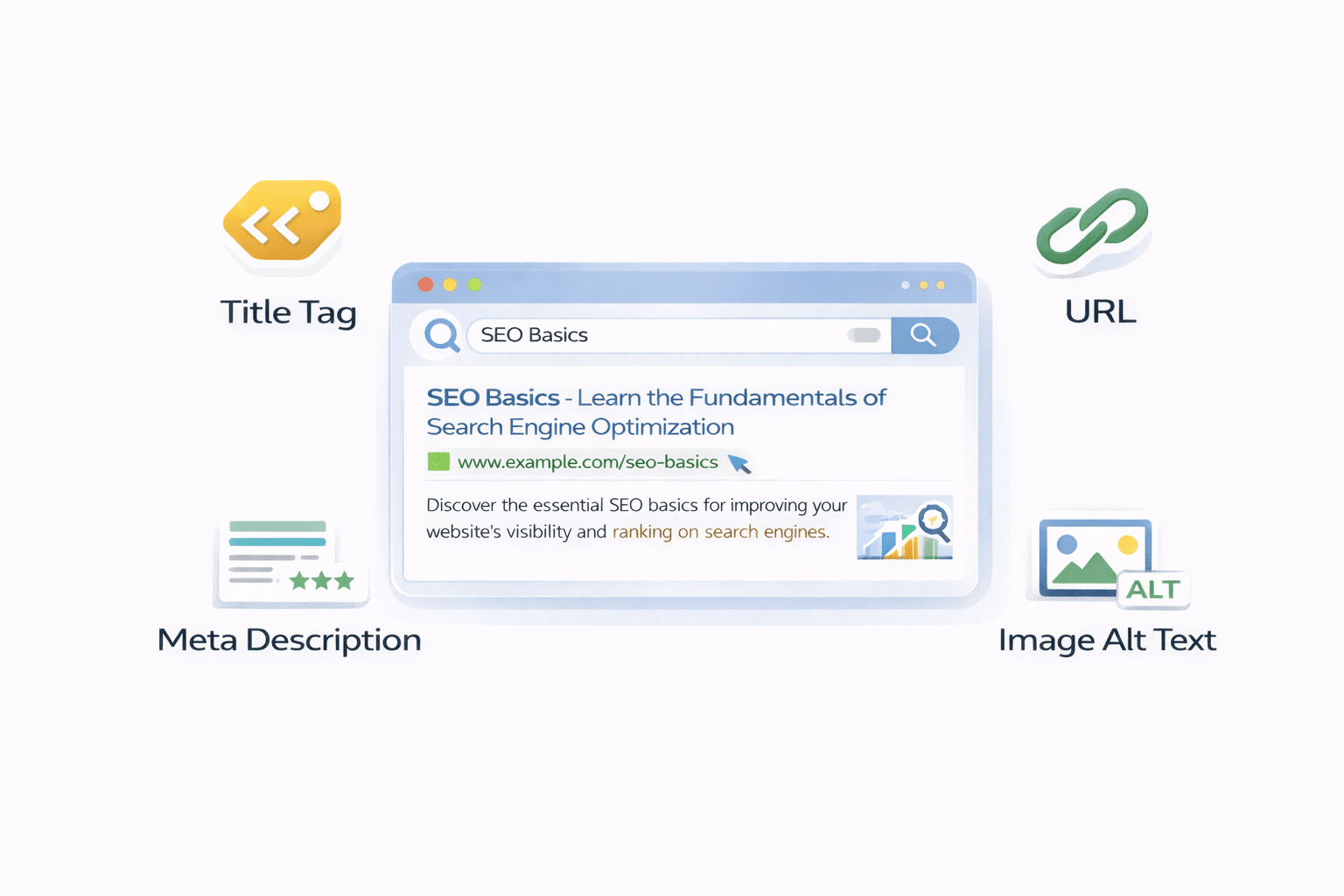
Foundation SEO refers to the basic elements that define how a webpage appears on the Search Engine Result Page (SERP).
These elements help users and search engines understand the page quickly
Image Alt Text
Title Tag
Meta Description
URL
Elements of Foundation SEO (SERP Appearance)
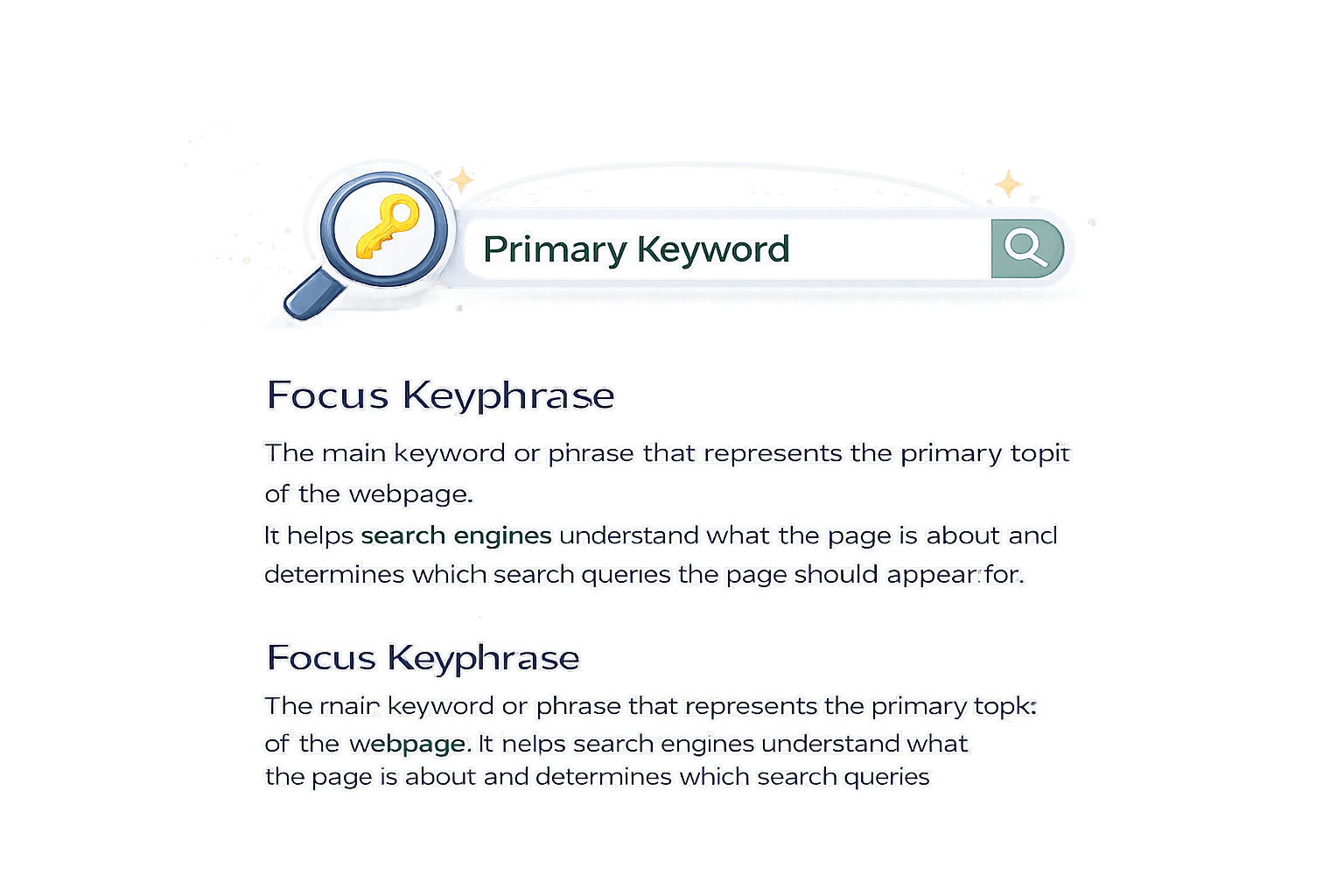
Focus Keyphrase
The main keyword represents the webpage’s primary topic and helps search engines understand the page
SEO Title / Meta Title
Title of the webpage that appears on search results
Elements of Foundation SEO (SERP Appearance)
Slug (URL)
The readable part of the webpage URL
Meta Description
Short description that explains the page content
Strategies to Implement the Foundation of SEO
SEO Title Strategy
Start the title with the focus keyword
Example :
Keyword: Digital Marketing Course
SEO Title: Digital Marketing Course | Learn Digital Marketing Skills
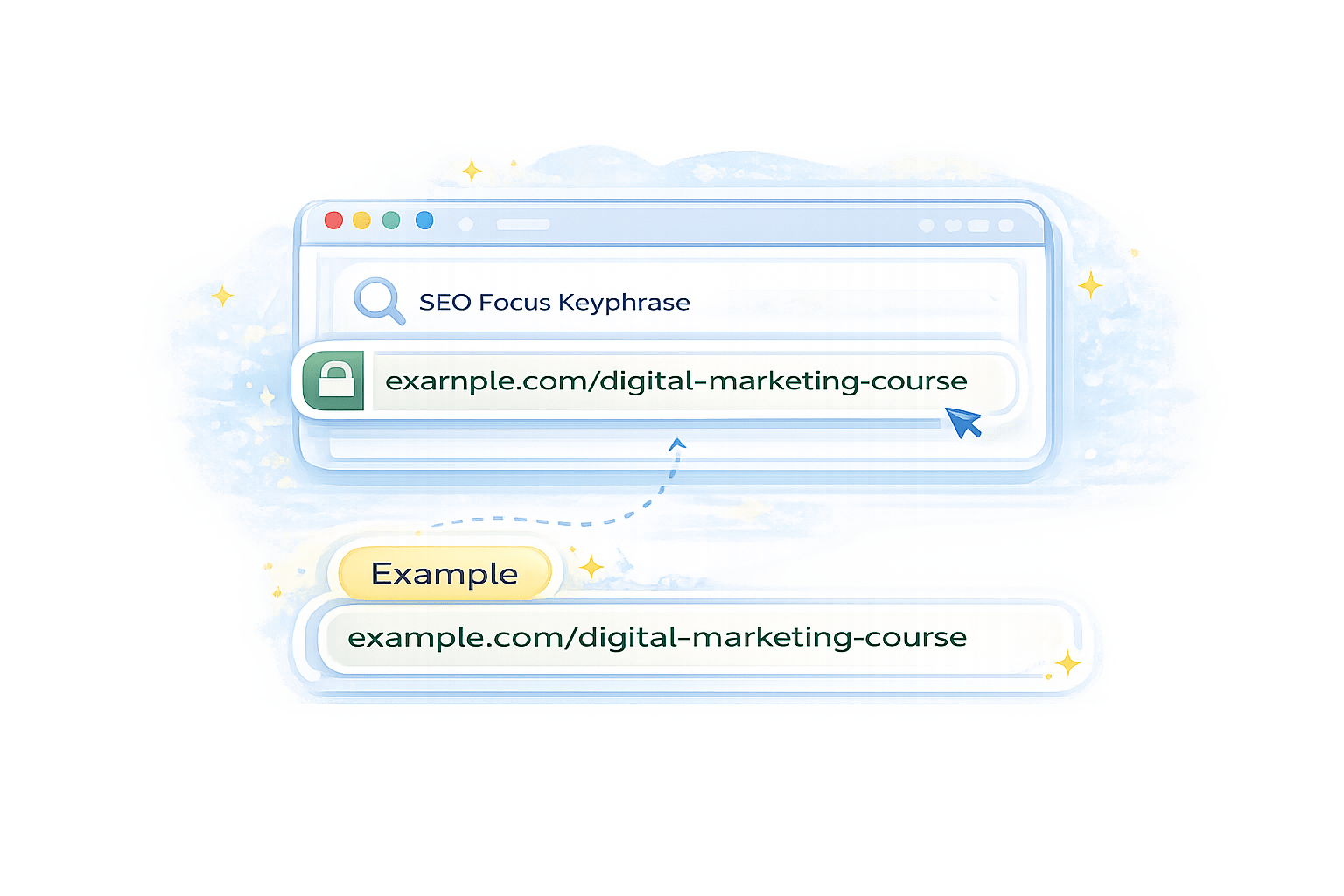
Slug should contain the Focus Keyphrase
Slug Strategy
Example :
Website URL
example.com/digital-marketing-course
Strategies to Implement the Foundation of SEO
Example :
Meta Description Strategy
Example :
Learn digital marketing courses with practical training and industry projects.
Strategies to Implement the Foundation of SEO
Example
Learn digital marketing courses with practical training and industry projects.
Implementing Foundation SEO Using Yoast SEO Plugin
Introduction to On-Page SEO
Strategies of On-Page SEO
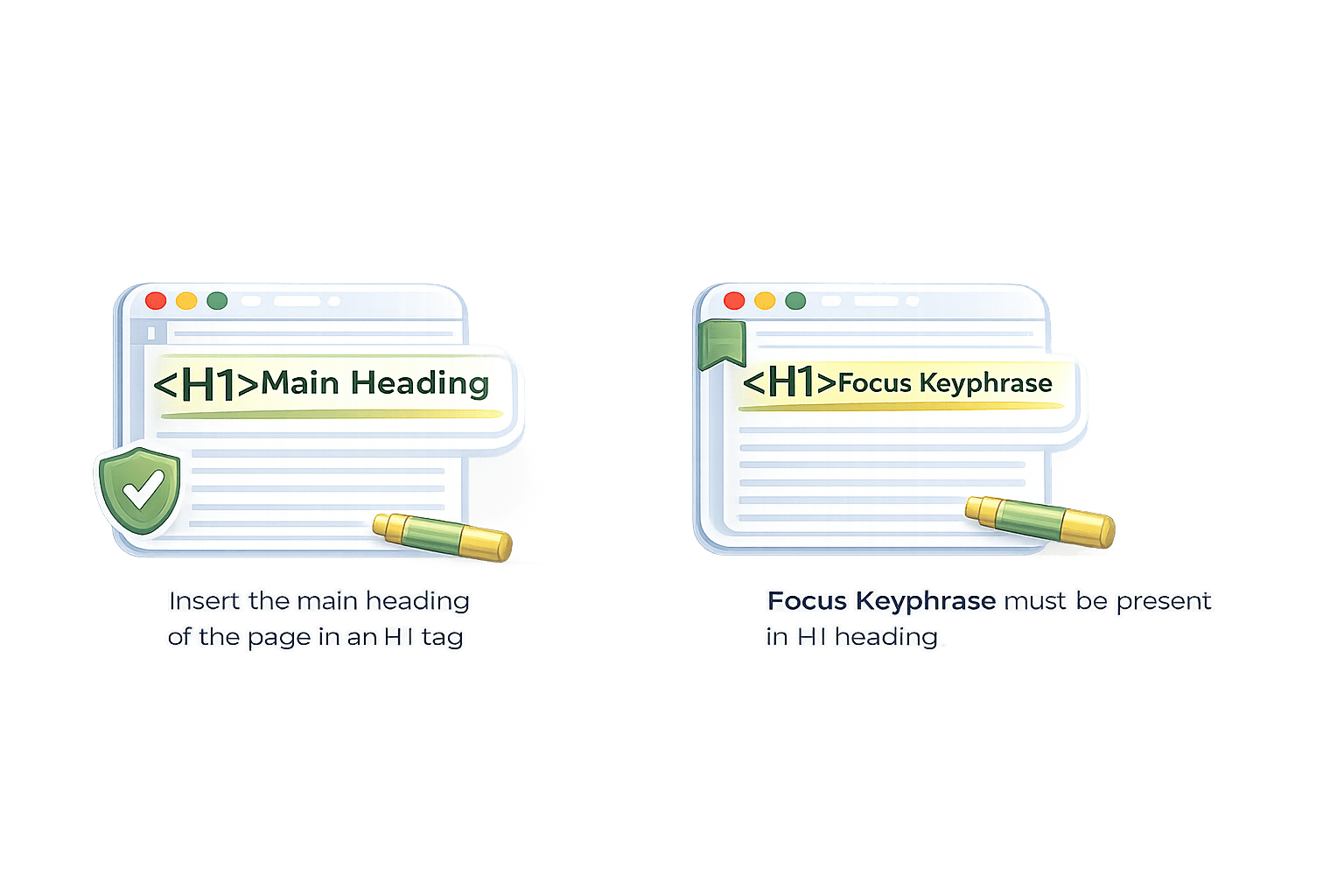
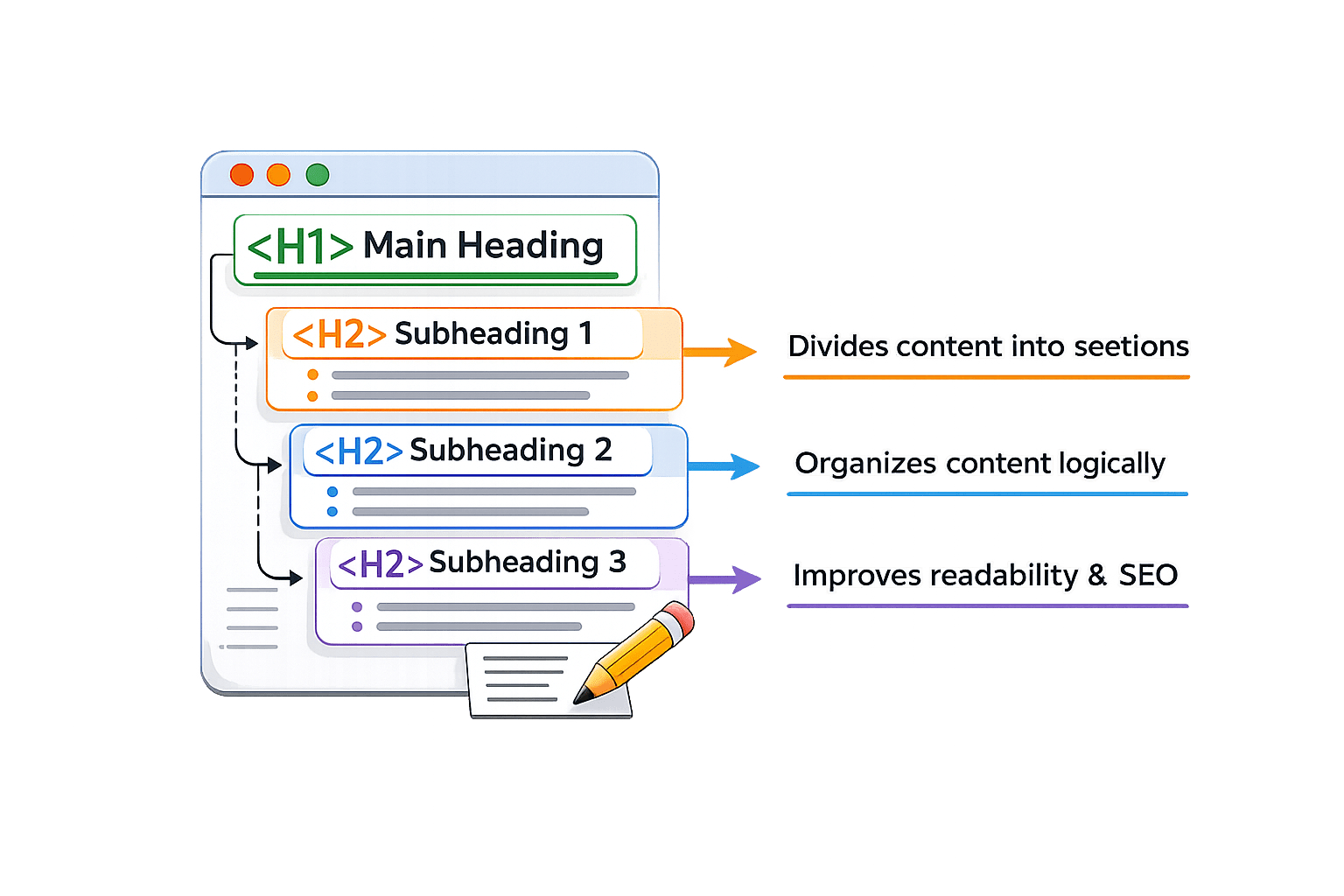
Heading Structure
Insert the main heading of the page in H1 tag
Focus Keyphrase must be present in H1 heading
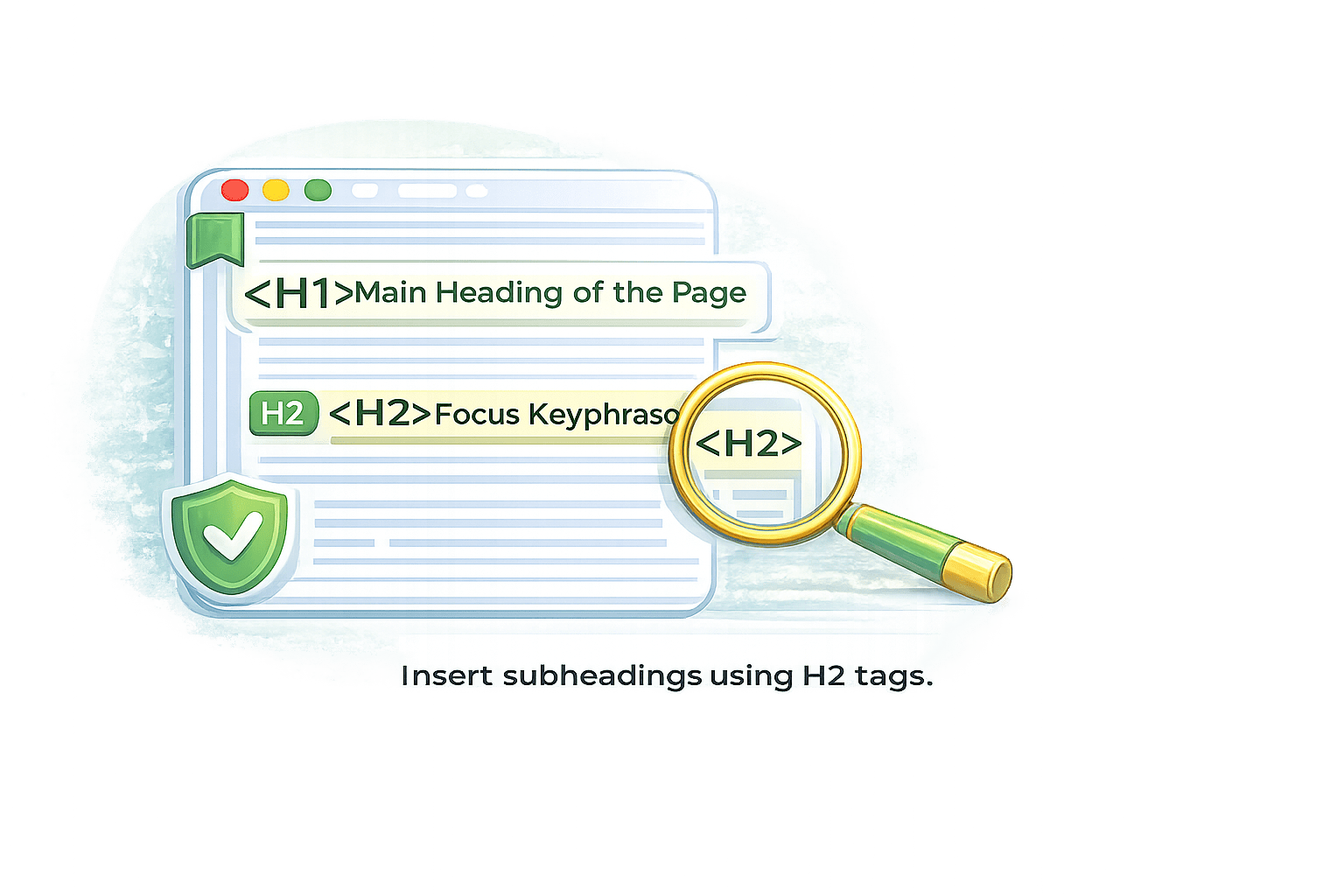
Subheading Optimization
Insert subheadings using H2 tags
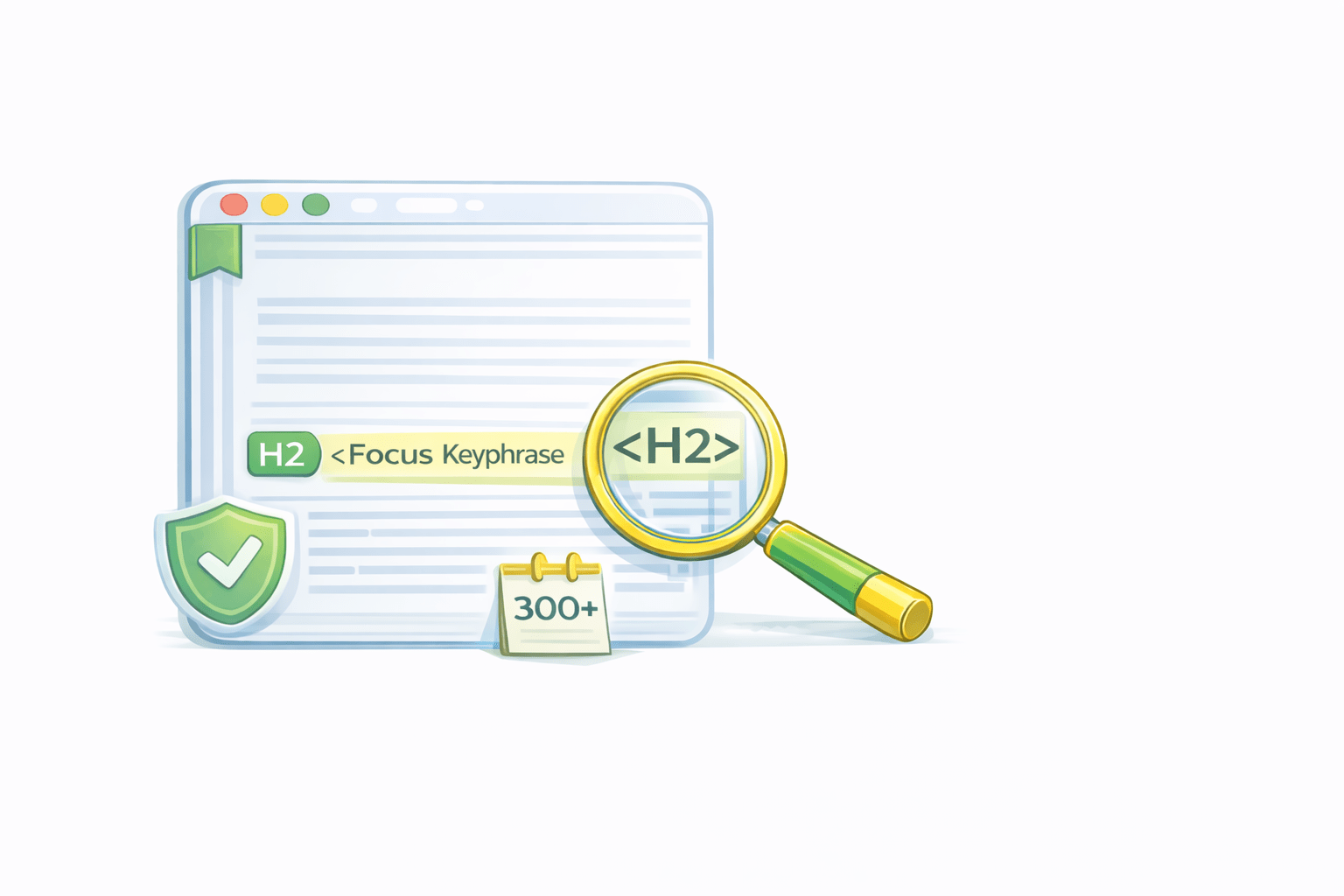
Focus Keyphrase should appear in H2 subheading
Content Optimization
Focus Keyphrase should appear in the page introduction
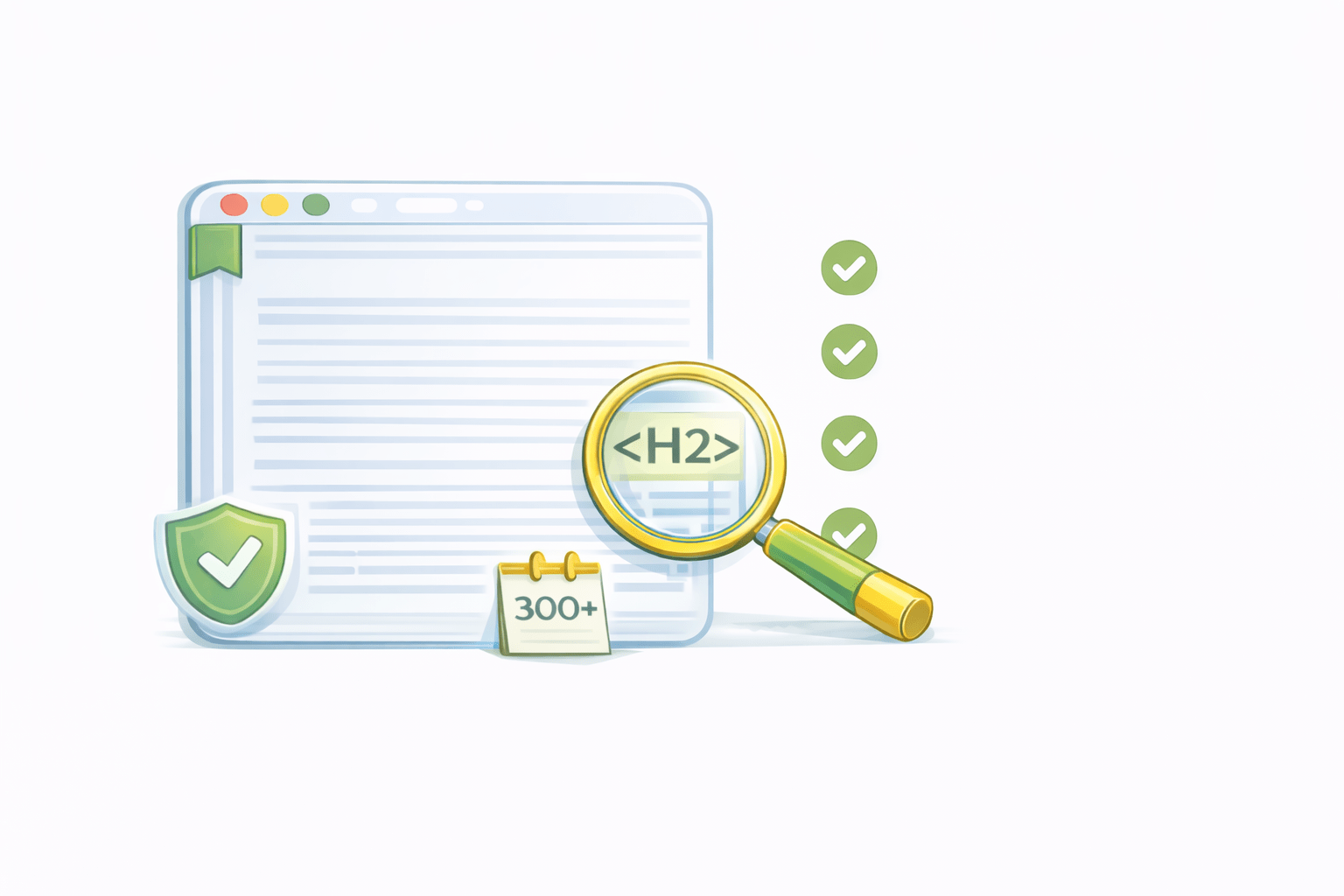
Each page should contain minimum 300 words
Keyword density should be maximum 3%
Use LSI keywords
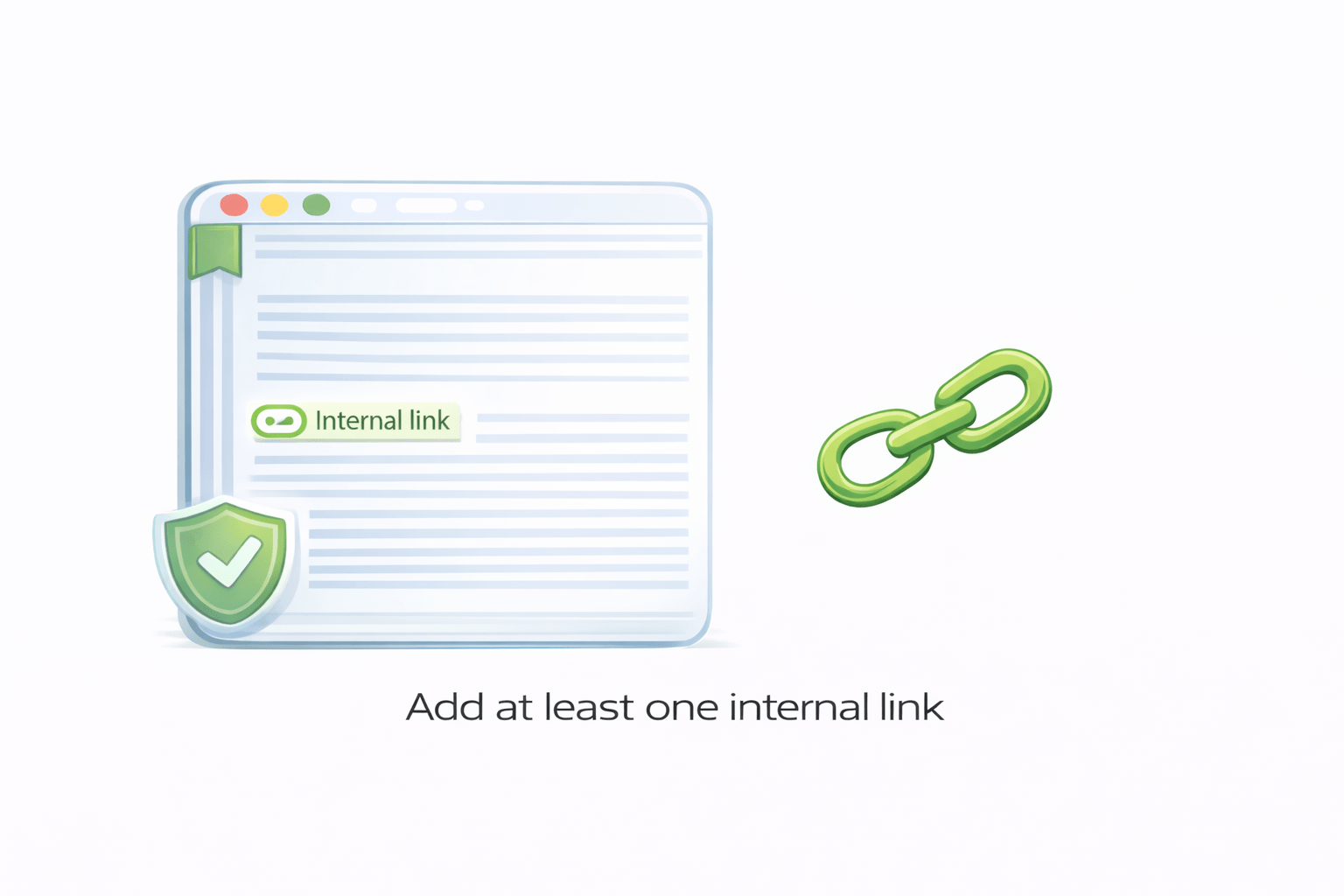
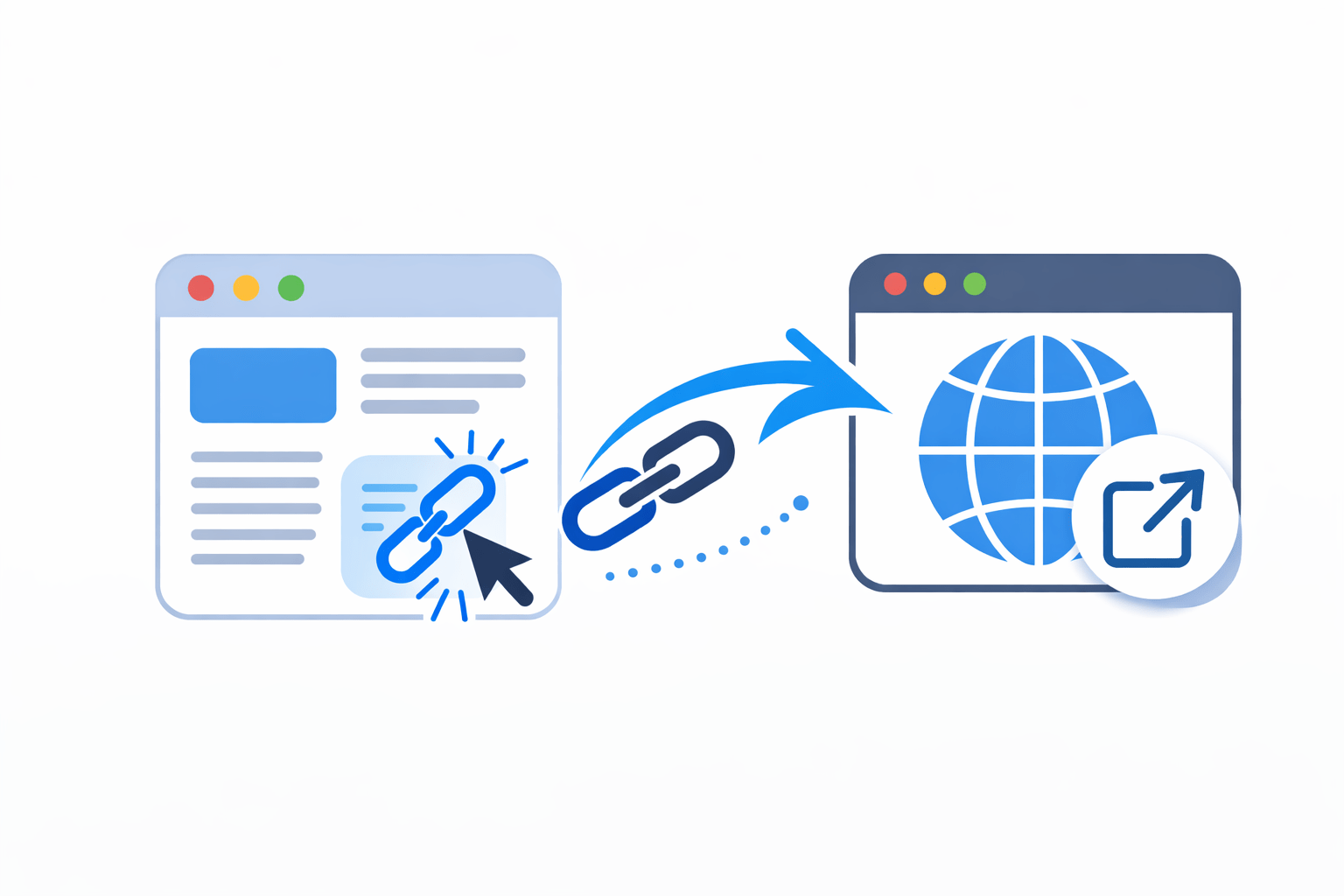
Link Optimization
Add at least one internal link
Add at least one external link
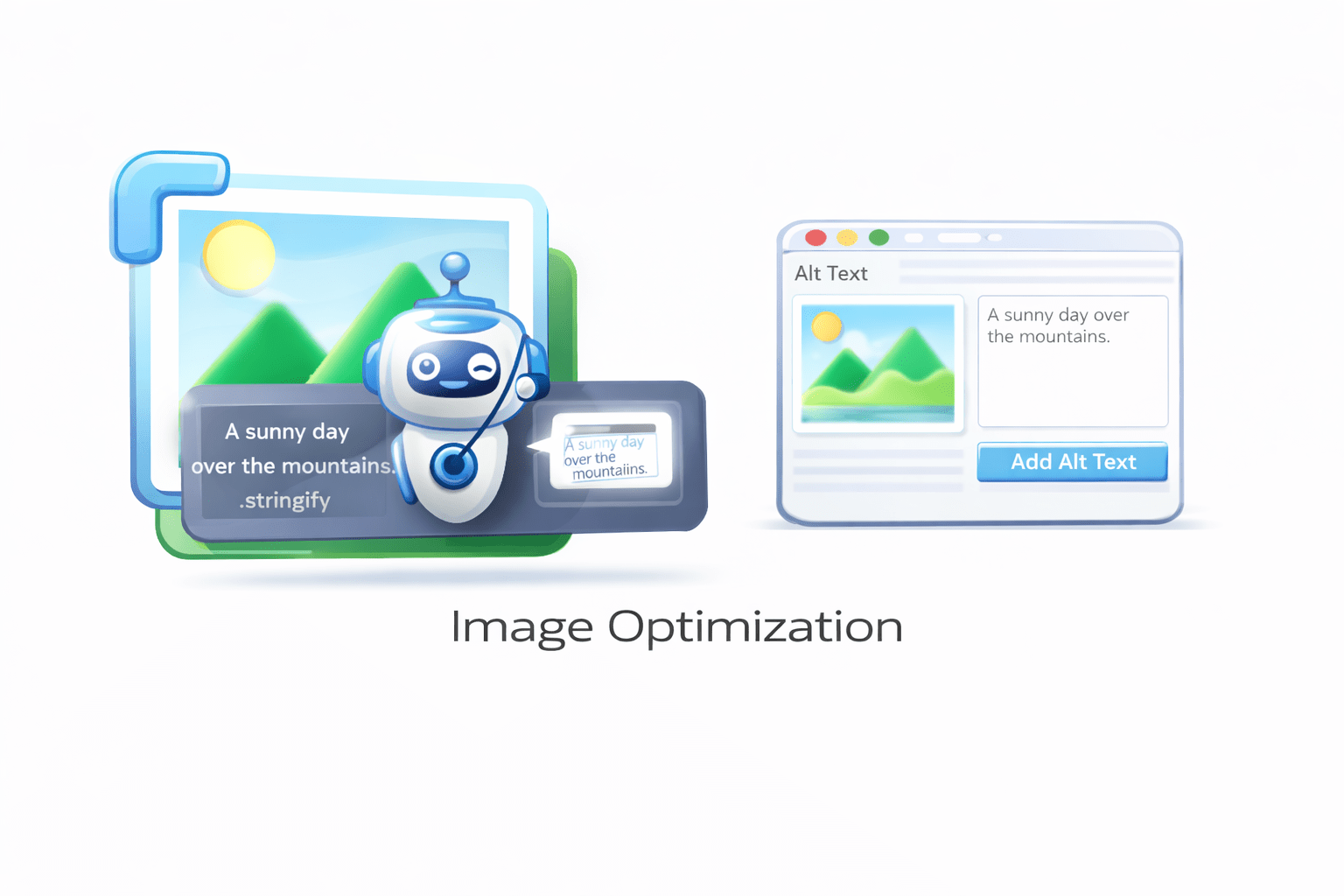
Image Optimization
Add Alt Text in images describing the image content
Adding simple descriptions (ALT text) to images so search engines can understand what the image shows
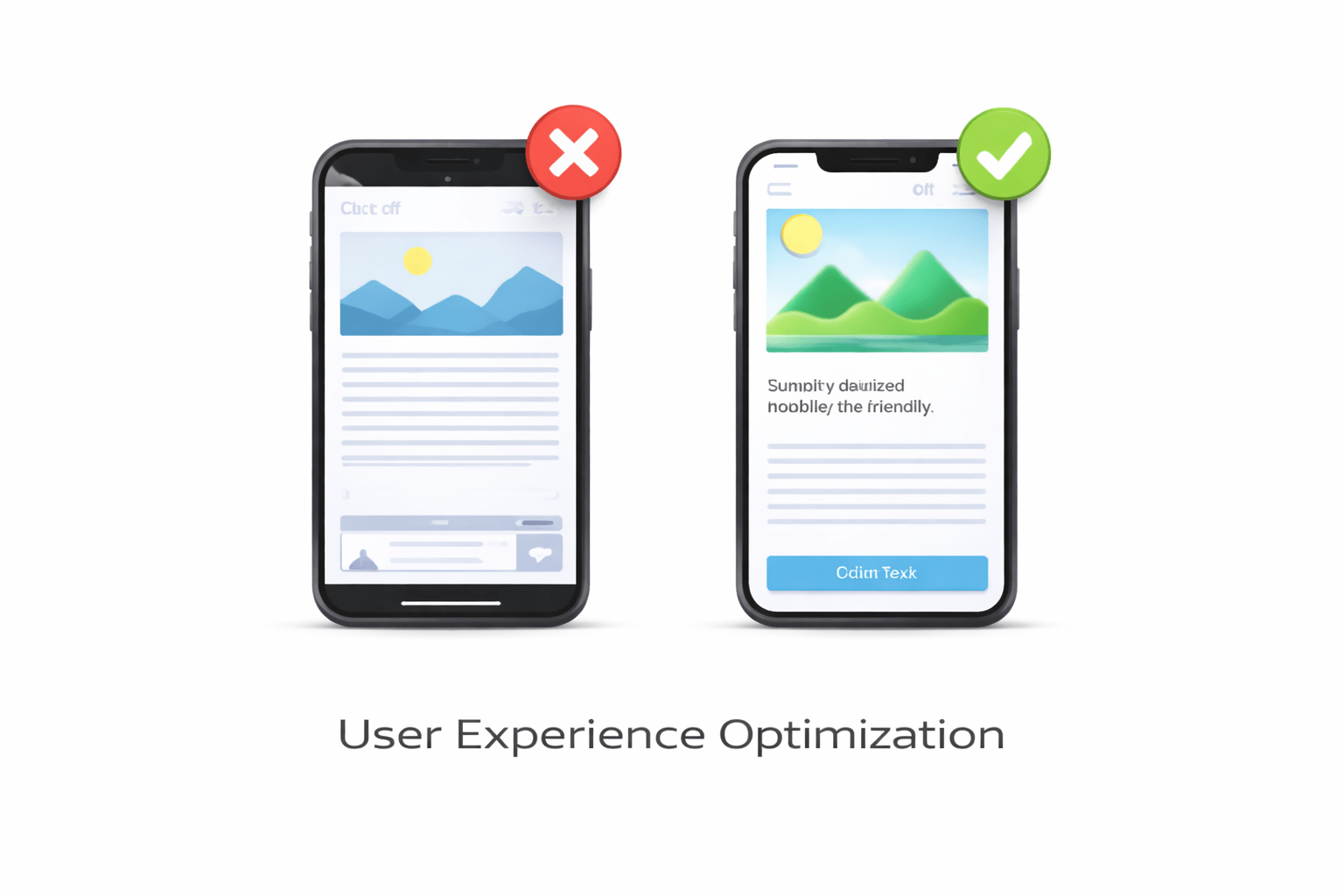
User Experience Optimization
Make sure the webpage works well and is easy to use on mobile phones
Ensure each page is mobile friendly
Summary
4
Helps search engines understand the page and improve rankings
3
Links, images, and mobile-friendly design support better SEO
2
Proper headings, keywords, and structure improve readability
1
On-Page SEO organizes webpage content for better understanding
Quiz
What is the recommended minimum content length for a webpage according to basic On-Page SEO practices?
A. 100 words
B. 200 words
C. 300 words
D. 50 words
Quiz
What is the recommended minimum content length for a webpage according to basic On-Page SEO practices?
A. 100 words
B. 200 words
C. 300 words
D. 50 words
By Content ITV