
















Content ITV PRO
This is Itvedant Content department
Learning Outcome
6
Understand statistical vs practical significance
5
Explain Type I and Type II errors
4
Interpret test statistics and p-values
3
Understand significance level (α)
2
Differentiate null and alternative hypotheses
1
Define hypothesis testing
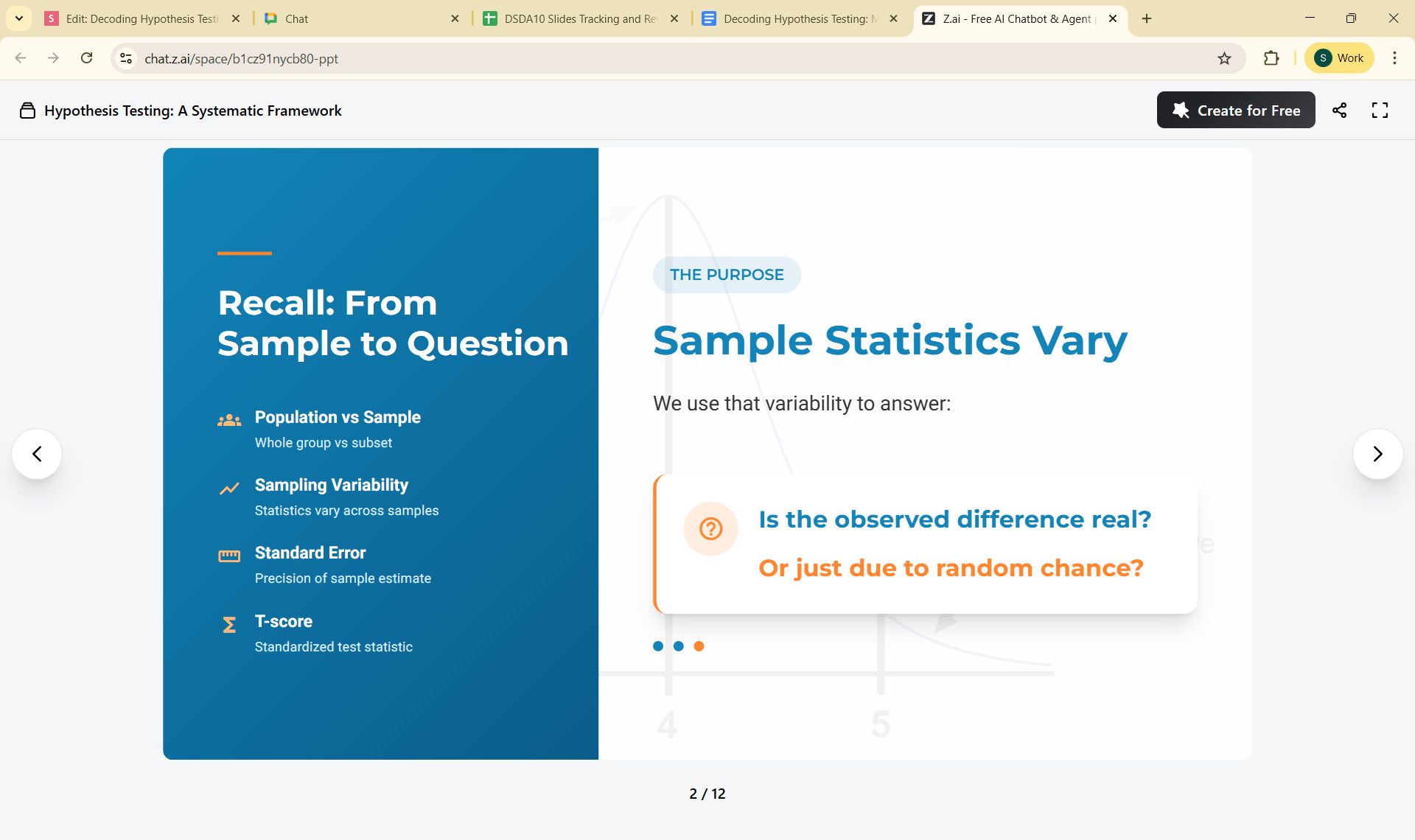
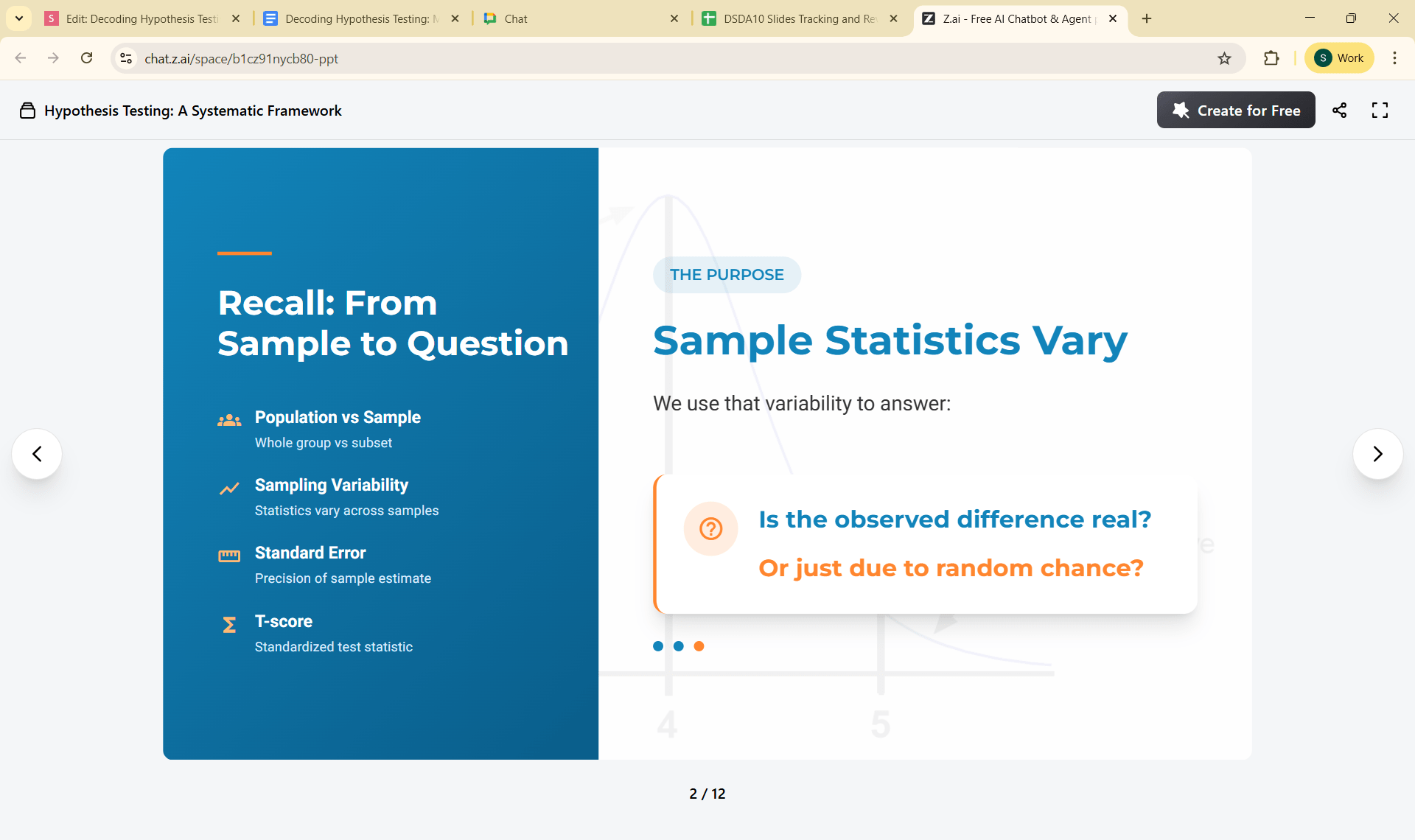
Lets recall...
We use sample variability to answer questions:
Hook/Story/Analogy(Slide 4)
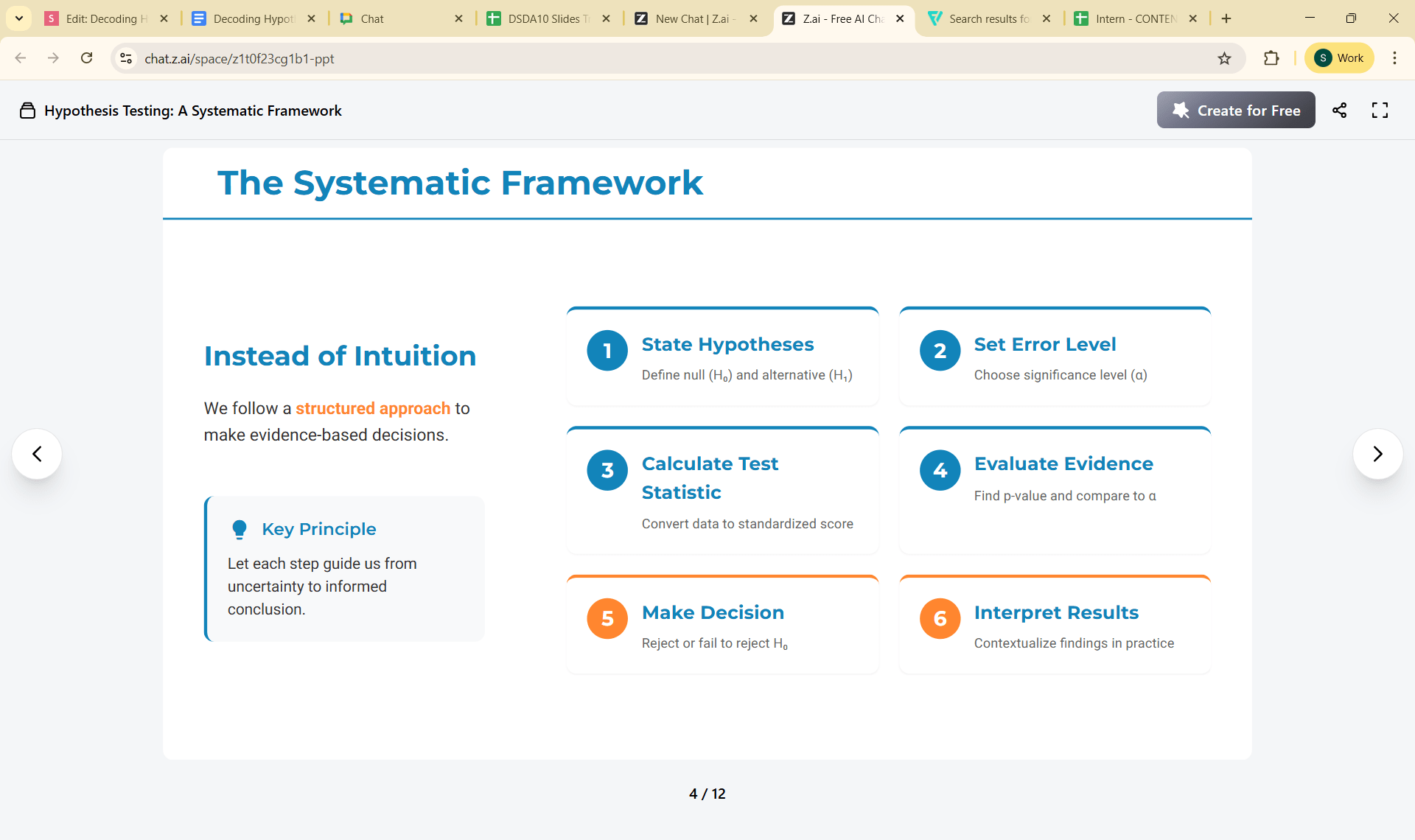
We follow a structured approach to make evidence-based decisions
Let us understand each step clearly....
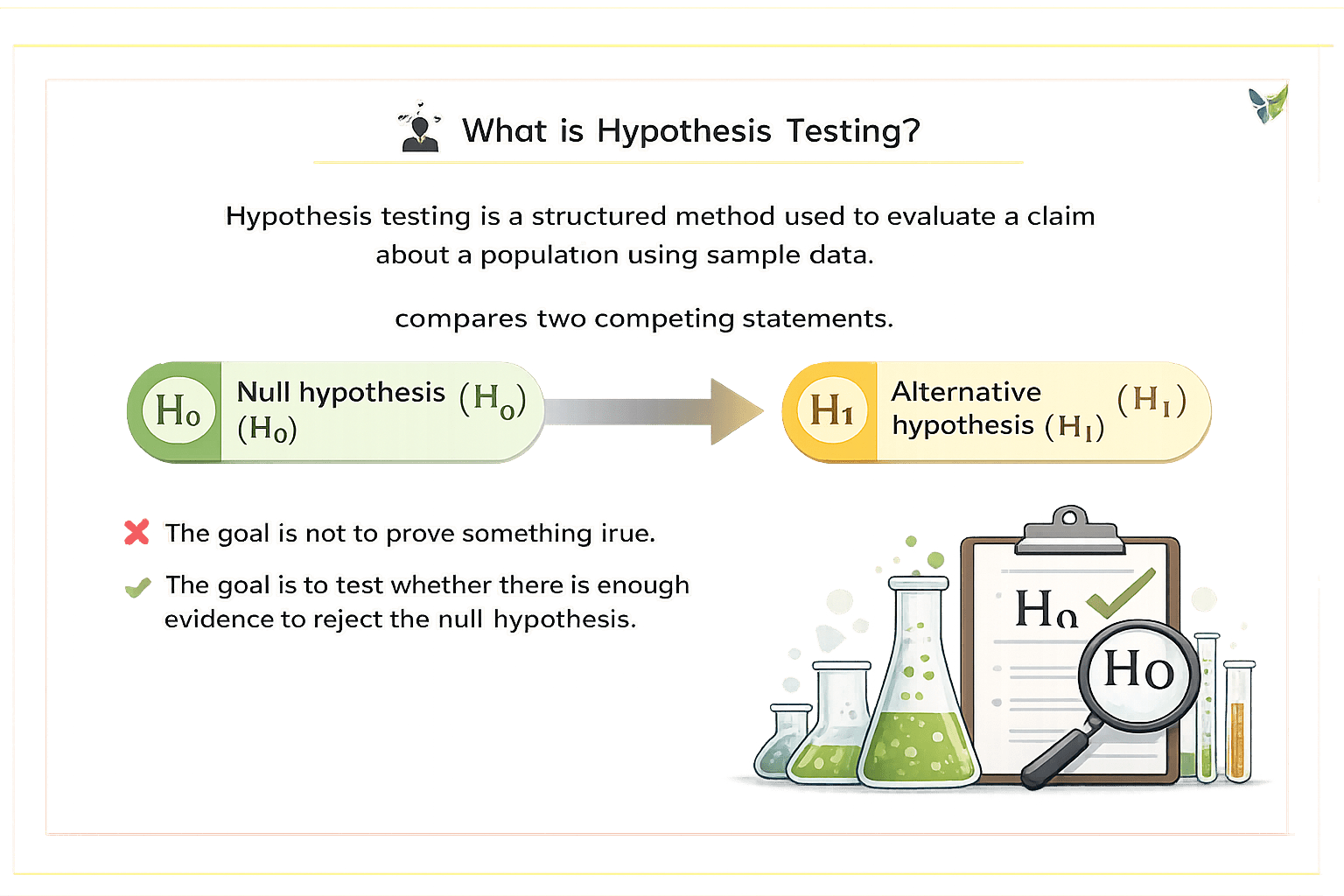
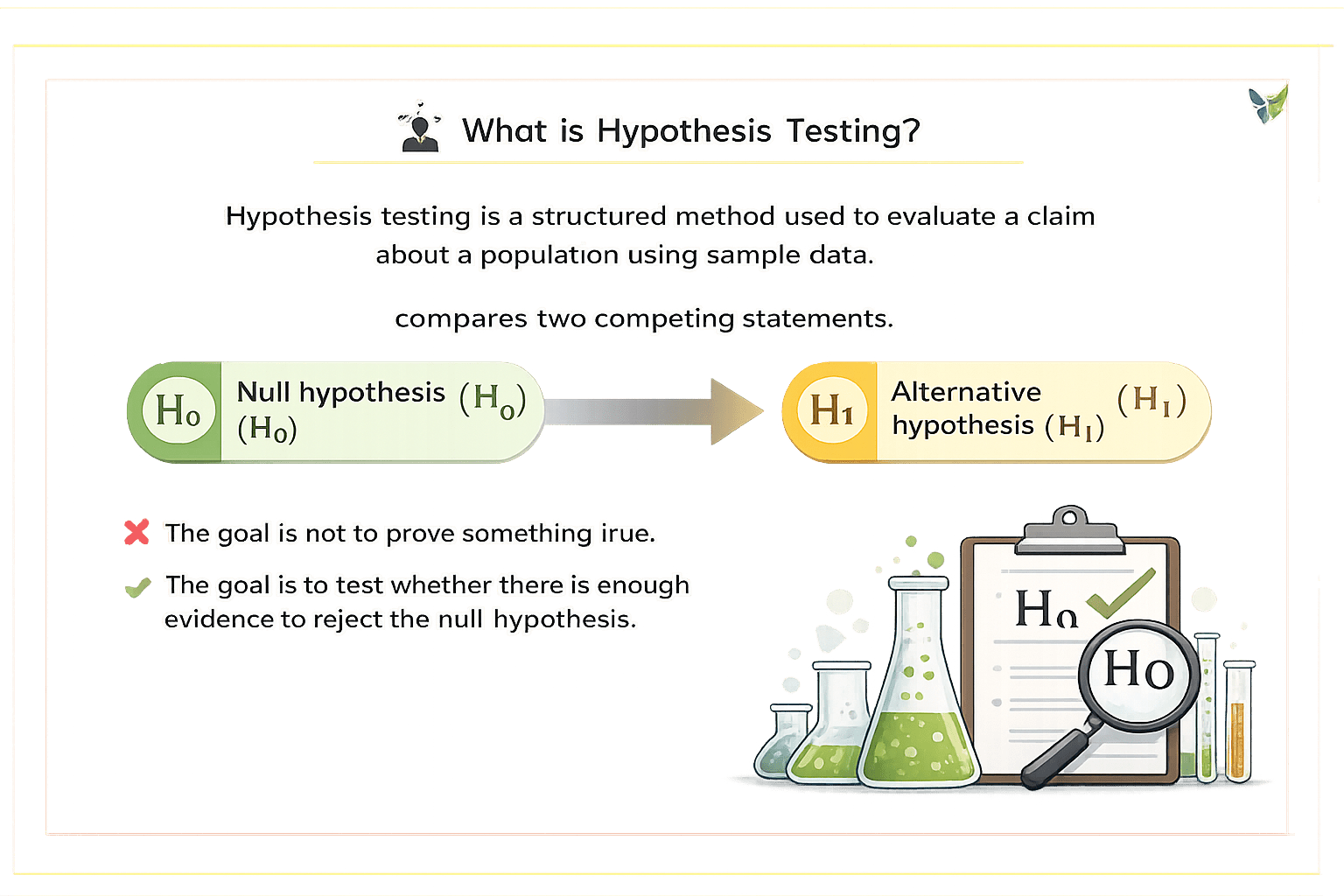
What is Hypothesis Testing?
Hypothesis testing is a structured method used to evaluate a claim about a population using sample data
It compares two competing statements:
The goal is not to prove something true
The goal is to test whether there is enough evidence to reject the null hypothesis
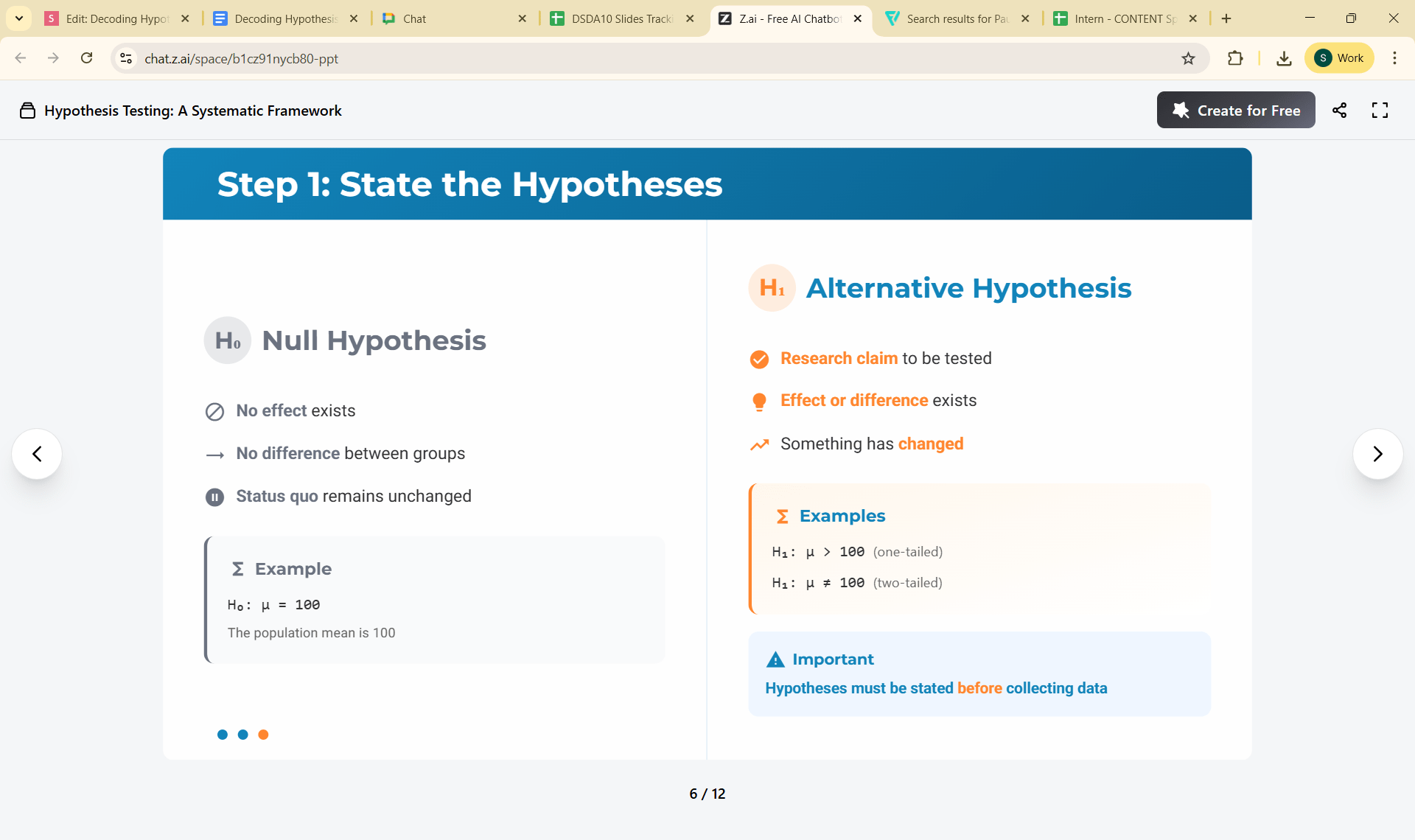
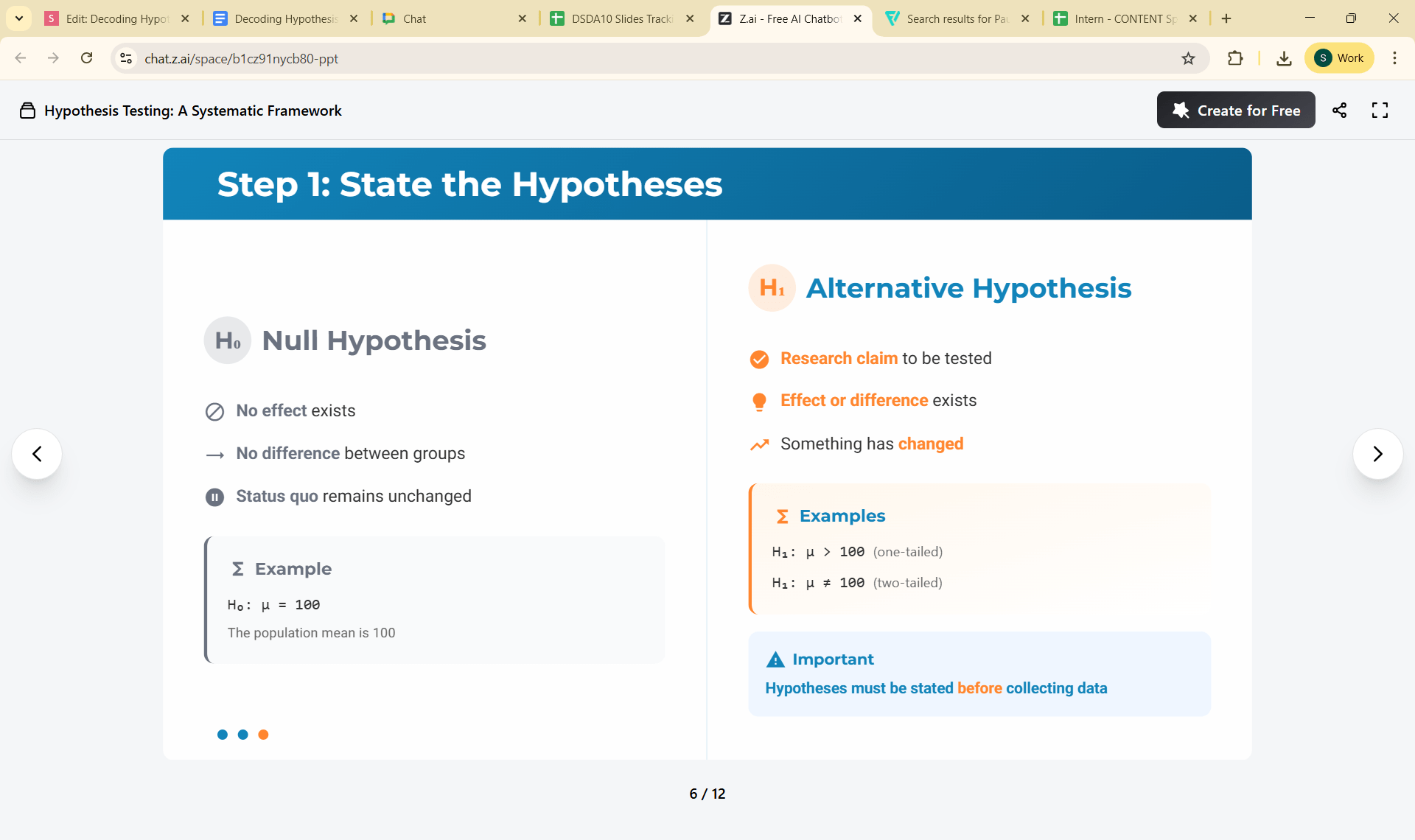
Step 1: State the Hypotheses
H₀
Null Hypothesis
No effect exists
No difference between groups
Status quo remains unchanged
Important:
Hypotheses must be stated before collecting data
Important:
Hypotheses must be stated before collecting data
Research claim
Effect or difference exists
Something has changed
Example
H₁: μ > 100 (one-tailed)
H₁: μ ≠ 100 (two-tailed)
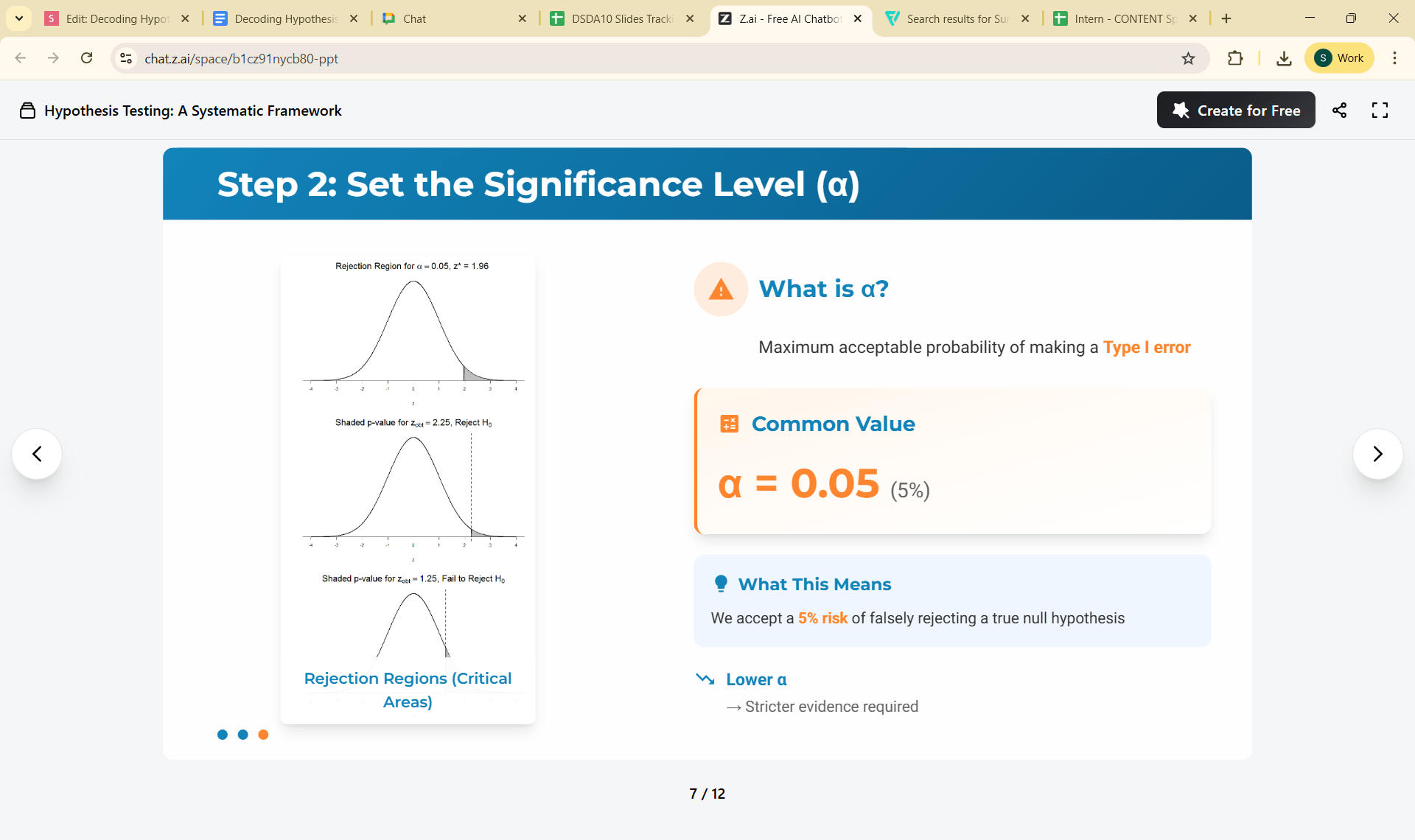
Step 2: Set the Significance Level (α)
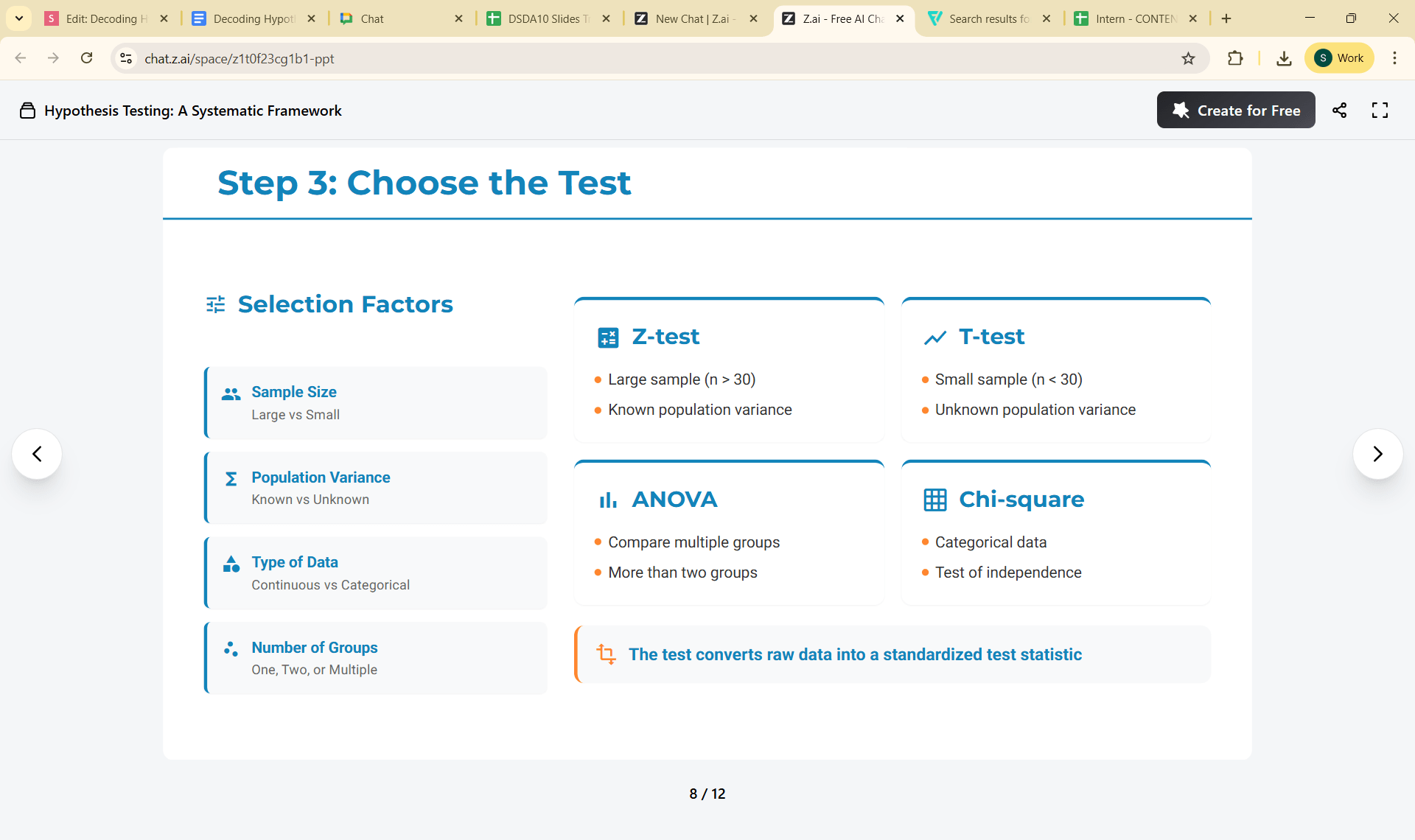
Step 3: Choose the Test
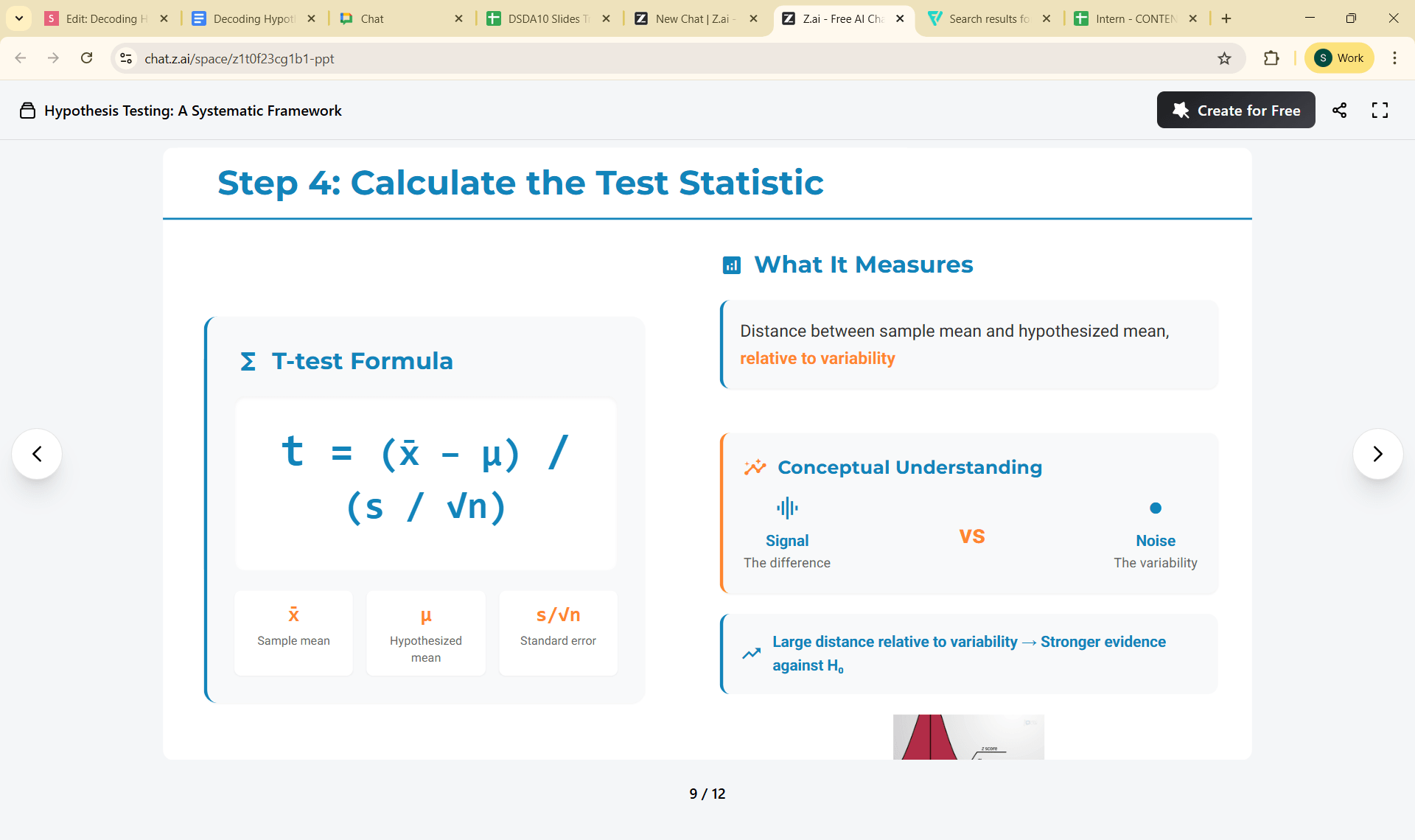
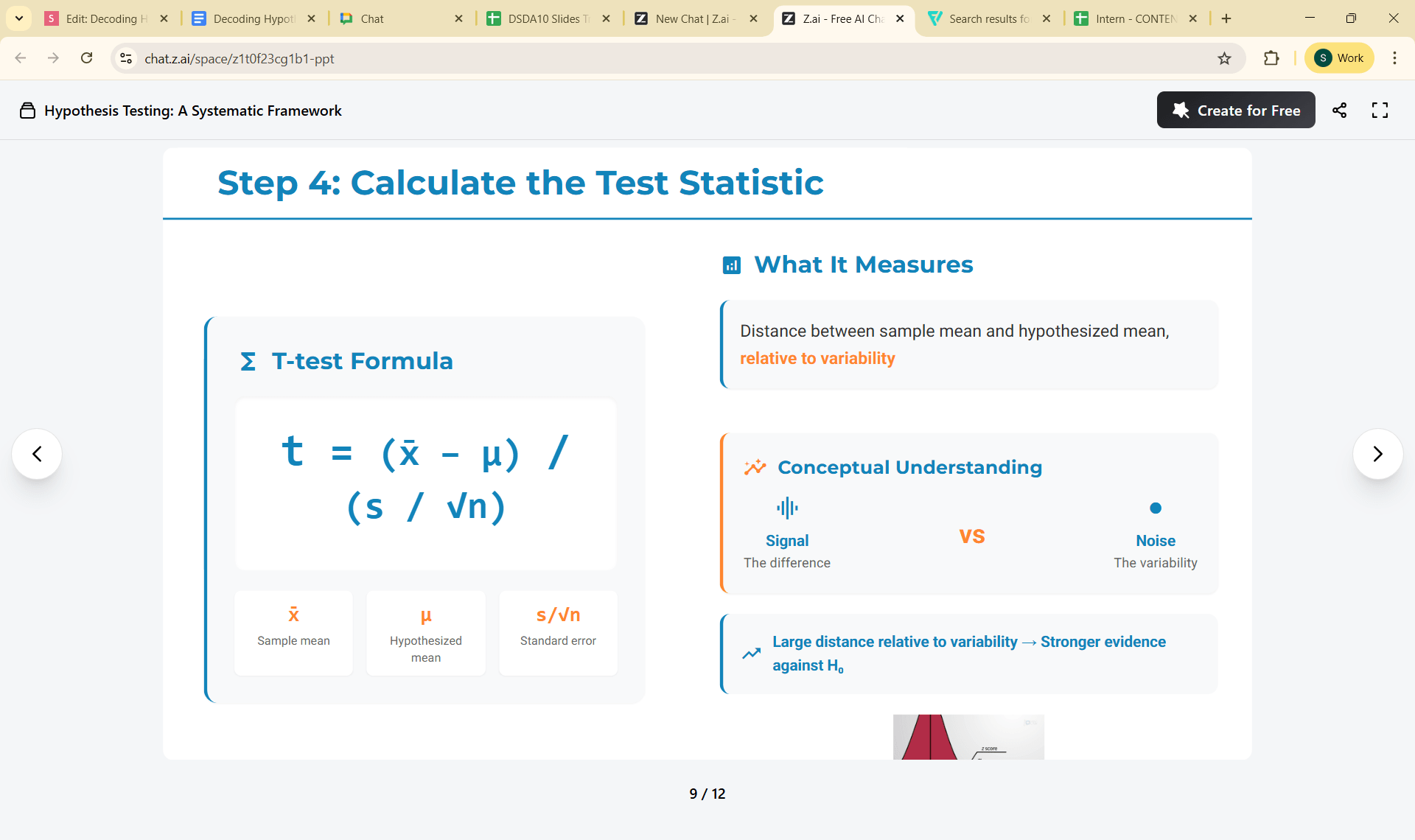
Step 4: Calculate the Test Statistic
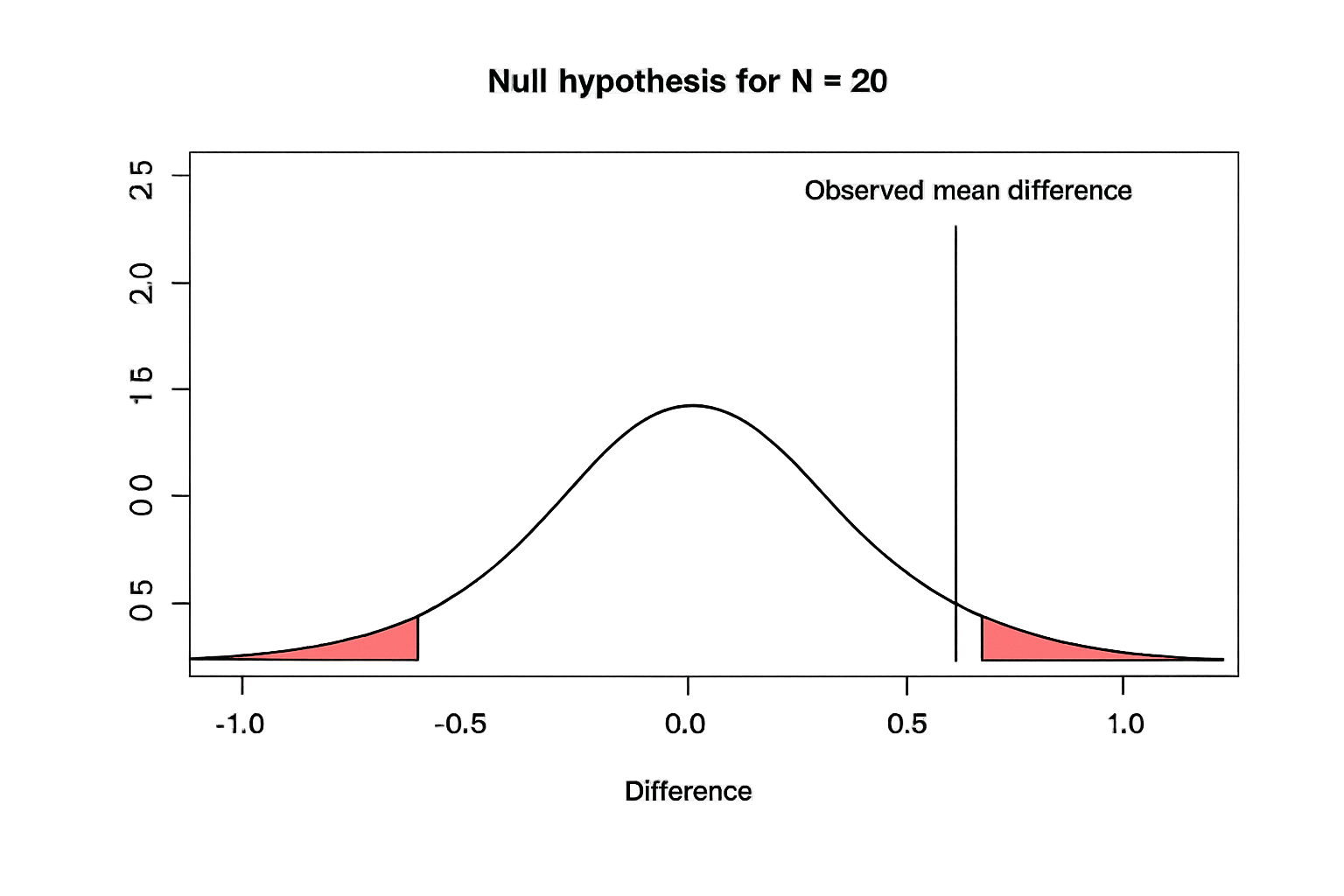
Measures how far the sample mean is from the hypothesized population mean
Large distance relative to variability → Stronger evidence against H₀
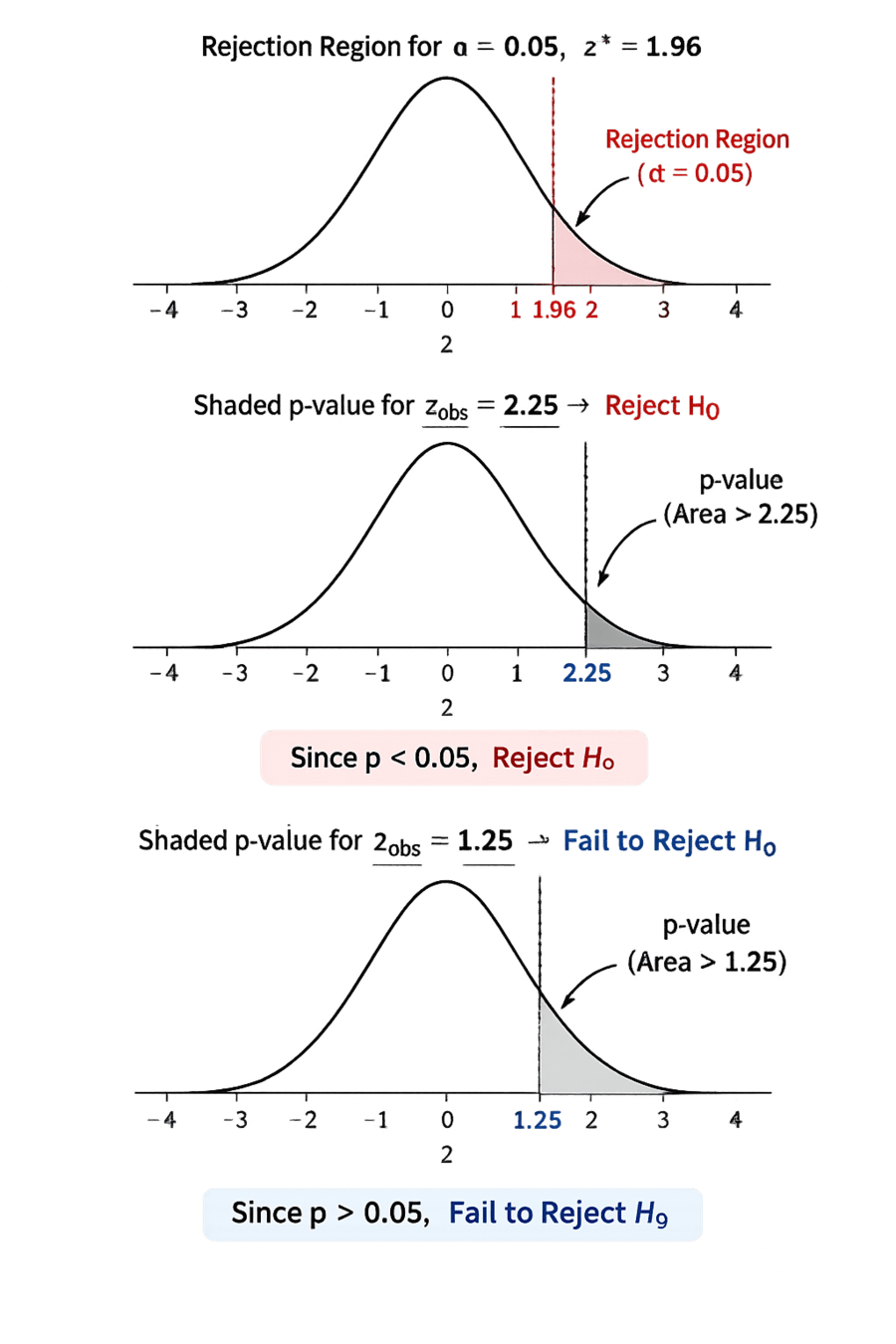
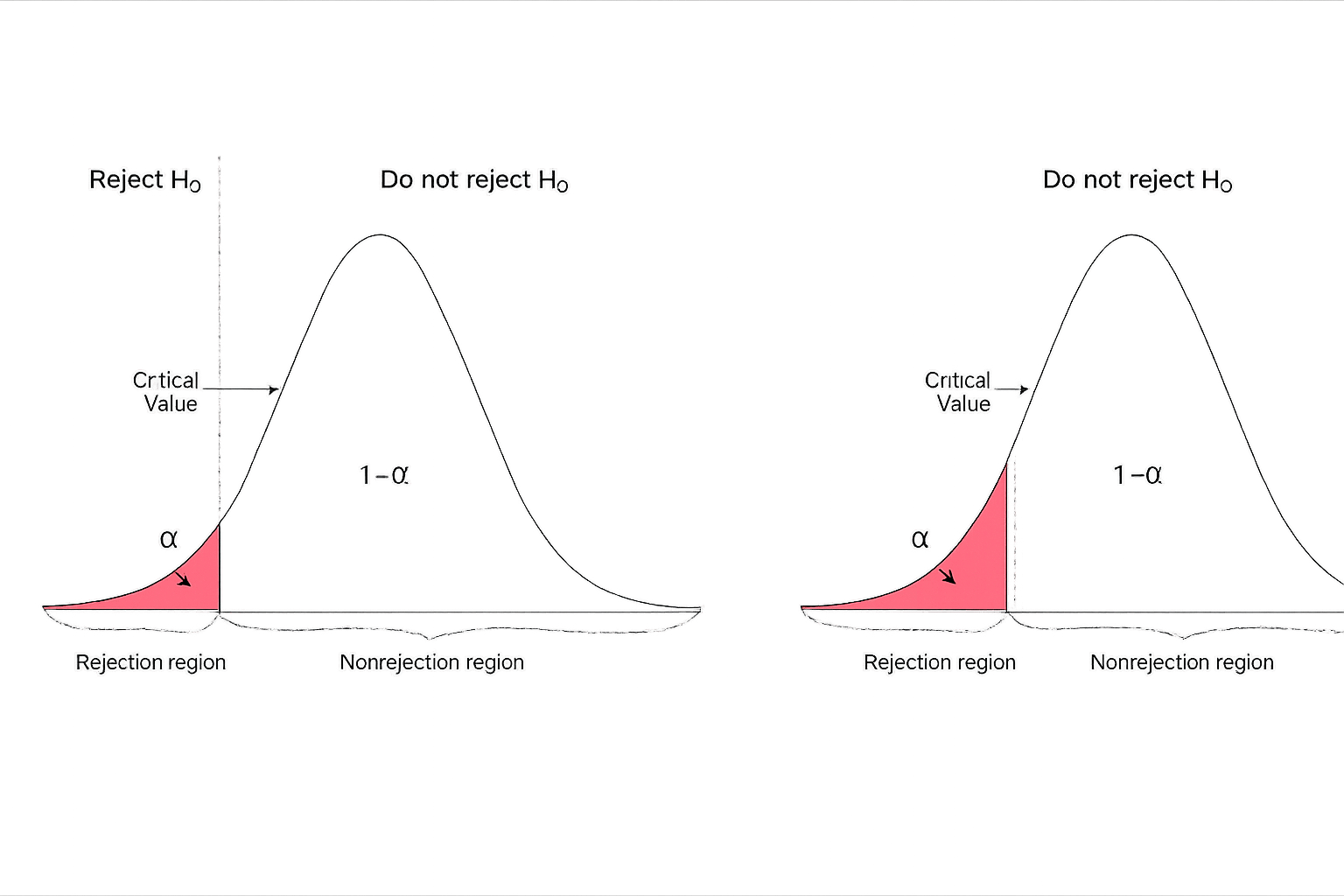
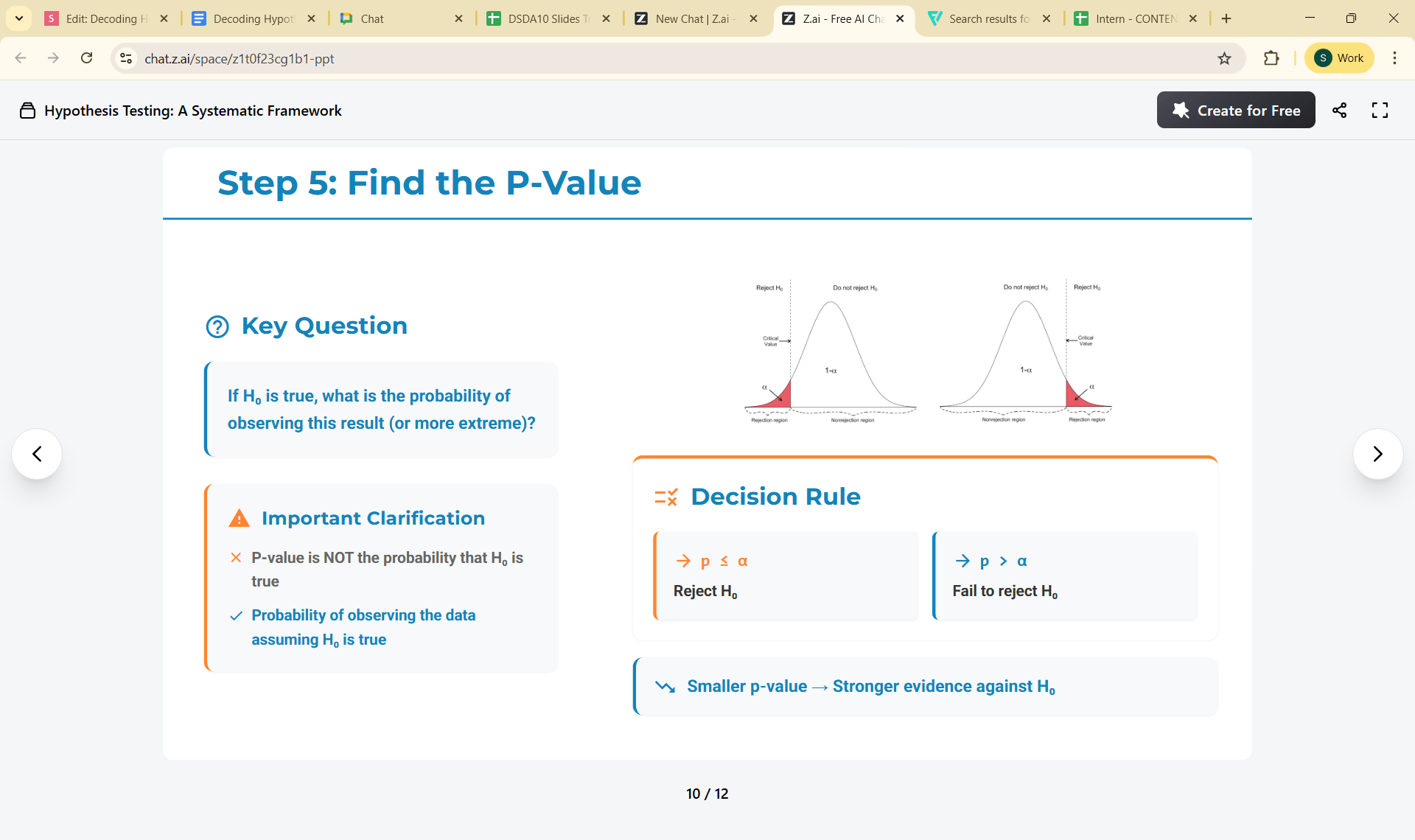
Step 5: Find the P-Value
If H₀ is true, what is the probability of observing this result (or more extreme)?
Smaller p-value → Stronger evidence against H₀
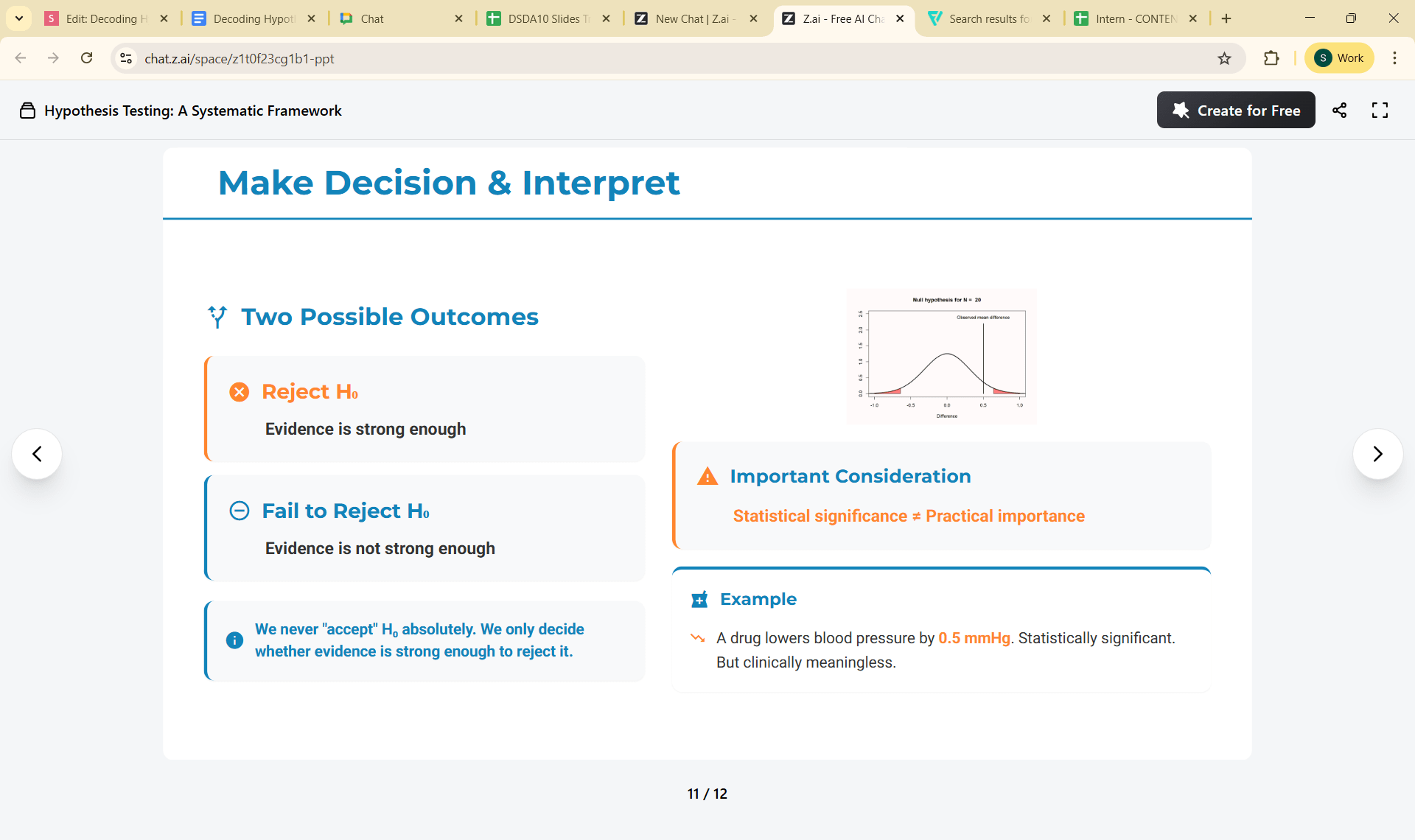
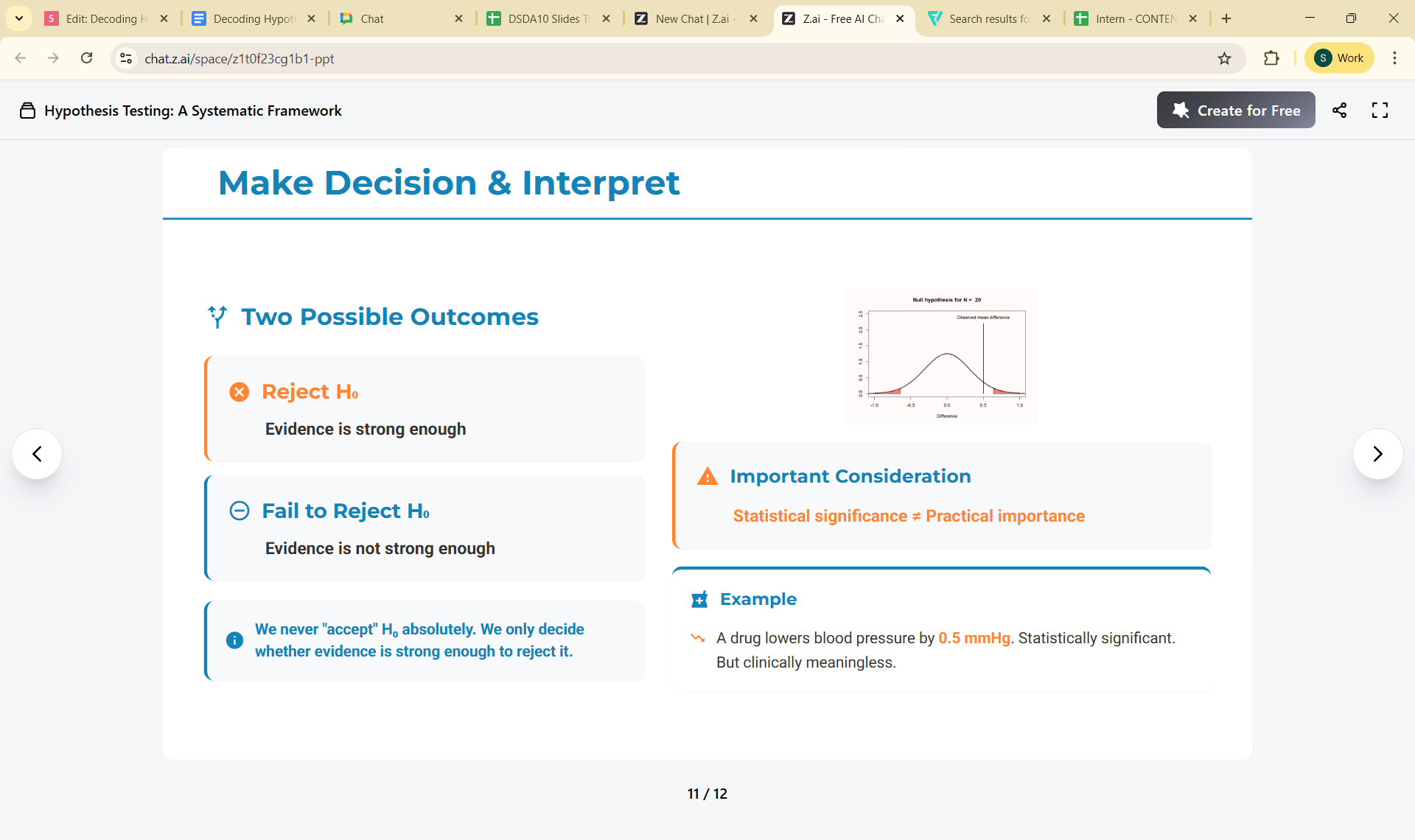
Step 6: Make Statistical Decision
We never “accept” H₀ absolutely
We only decide whether evidence is strong enough to reject it
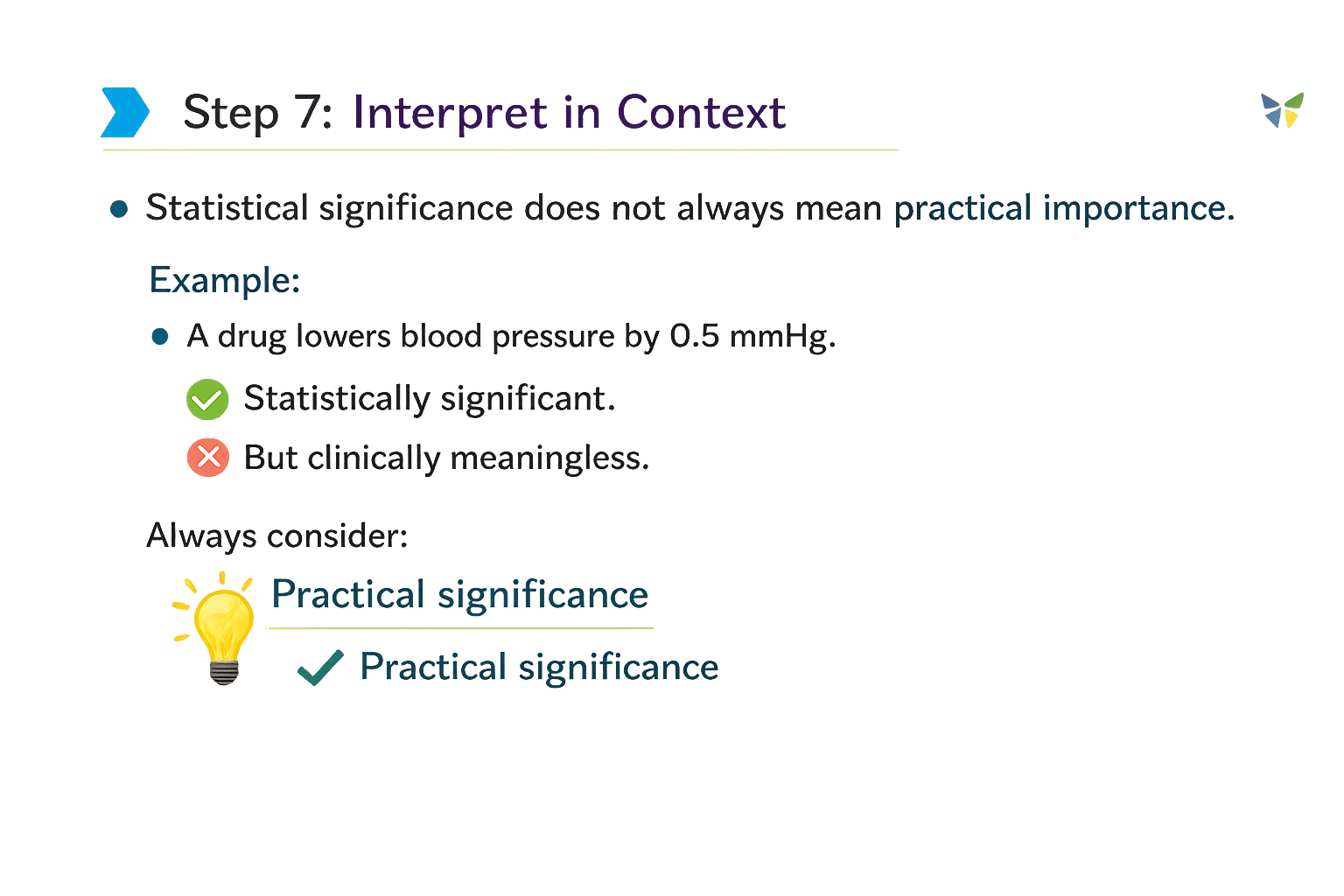
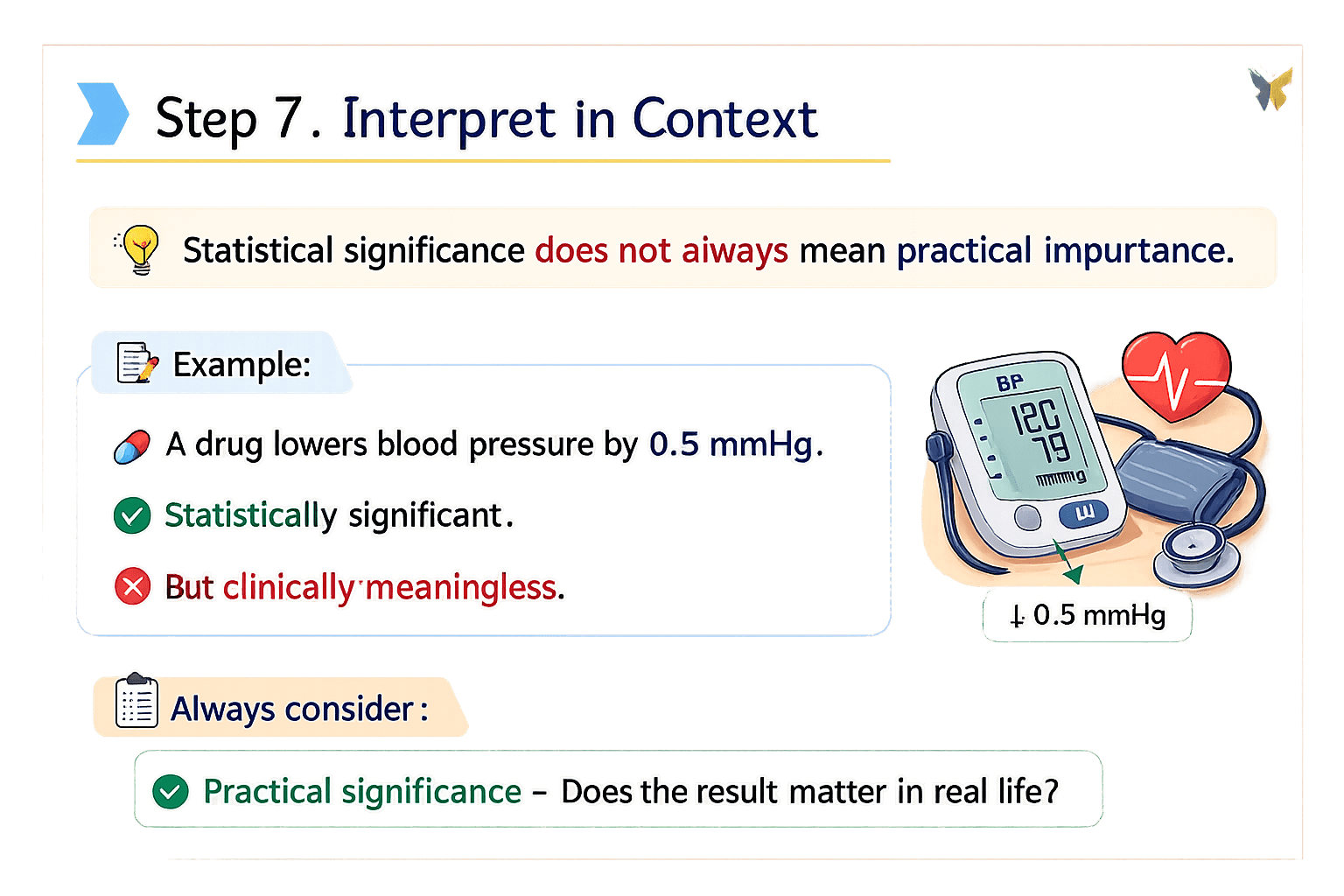
Statistical significance is not equal to Practical Importance
Step 7: Interpret in Context
Summary
5
Reject or fail to reject H₀ (consider Type I & II errors)
4
Test statistic and p-value measure evidence
3
α defines acceptable error risk
2
H₀: no effect; H₁: research claim
1
Hypothesis testing evaluates claims using sample data
Quiz
Null hypothesis usually represents:
A. Research claim
B. No effect
C. Large sample
D. True statement
Quiz-Answer
Null hypothesis usually represents:
A. Research claim
B. No effect
C. Large sample
D. True statement
By Content ITV