

















Content ITV PRO
This is Itvedant Content department
Learning Outcome
1
Understand the purpose of DISTINCT
2
Retrieve unique values from a table
3
Limit the number of records using LIMIT
4
Use LIMIT with OFFSET for pagination
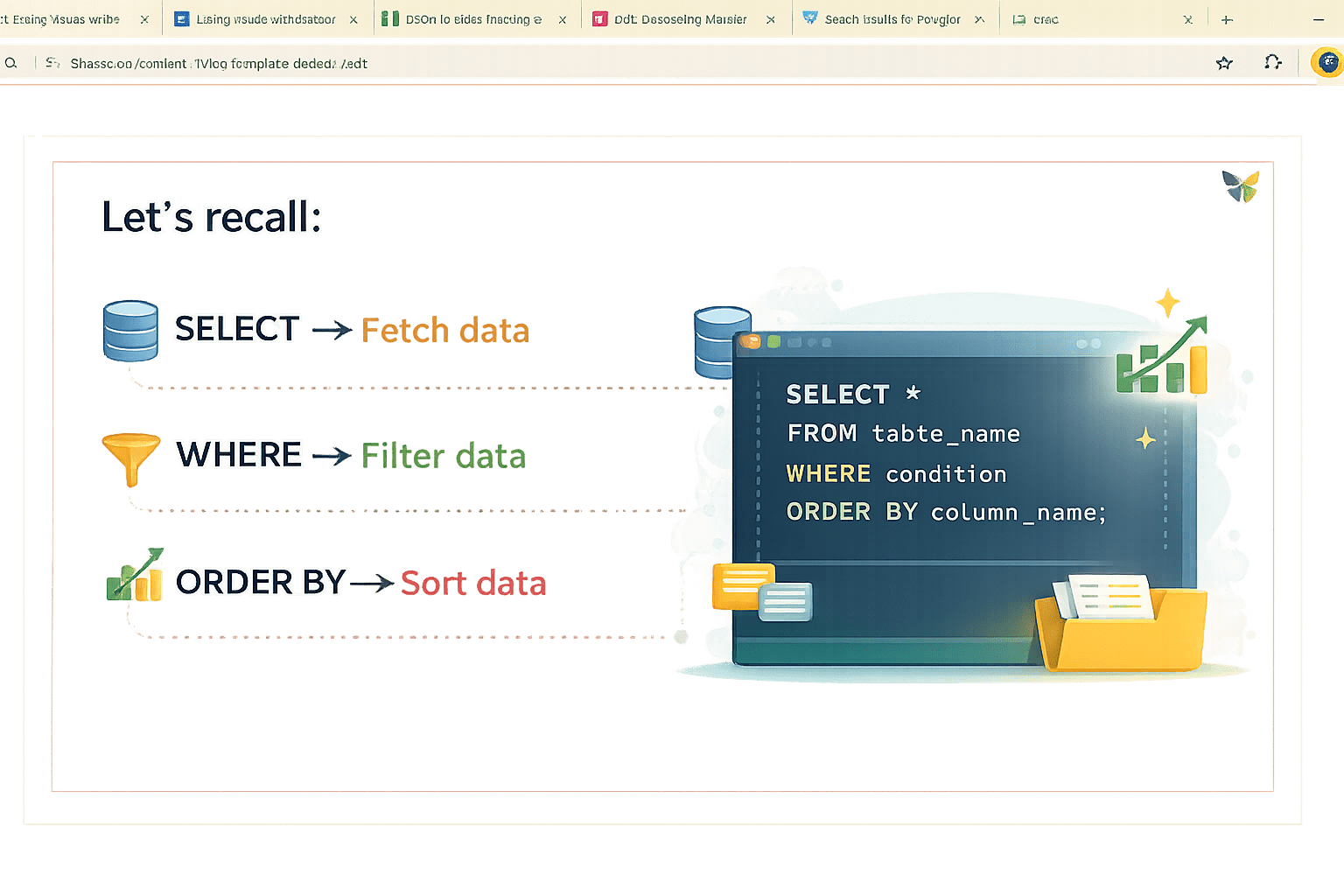
Let's recall.....
How does Instagram ensure unique hashtags, limit results to the top 5 posts, and display posts page by page during scrolling?
What concepts does it apply here?
When you open Instagram:
You see trending unique hashtags
Only limited posts load initially
More posts load when you scroll
Instagram does not show everything at once, instead it shows selected and controlled results
These features use DISTINCT and LIMIT concepts internally
Sometimes we need unique data
Sometimes we need limited records
Sometimes we need pagination
In such cases:
SQL provides special clauses:
DISTINCT
LIMIT
LIMIT with OFFSET
Lets understand them in detail....
What is Distinct?
DISTINCT keyword is used to remove duplicate values from the result set.
SELECT DISTINCT column_name FROM table_name;
Syntax:
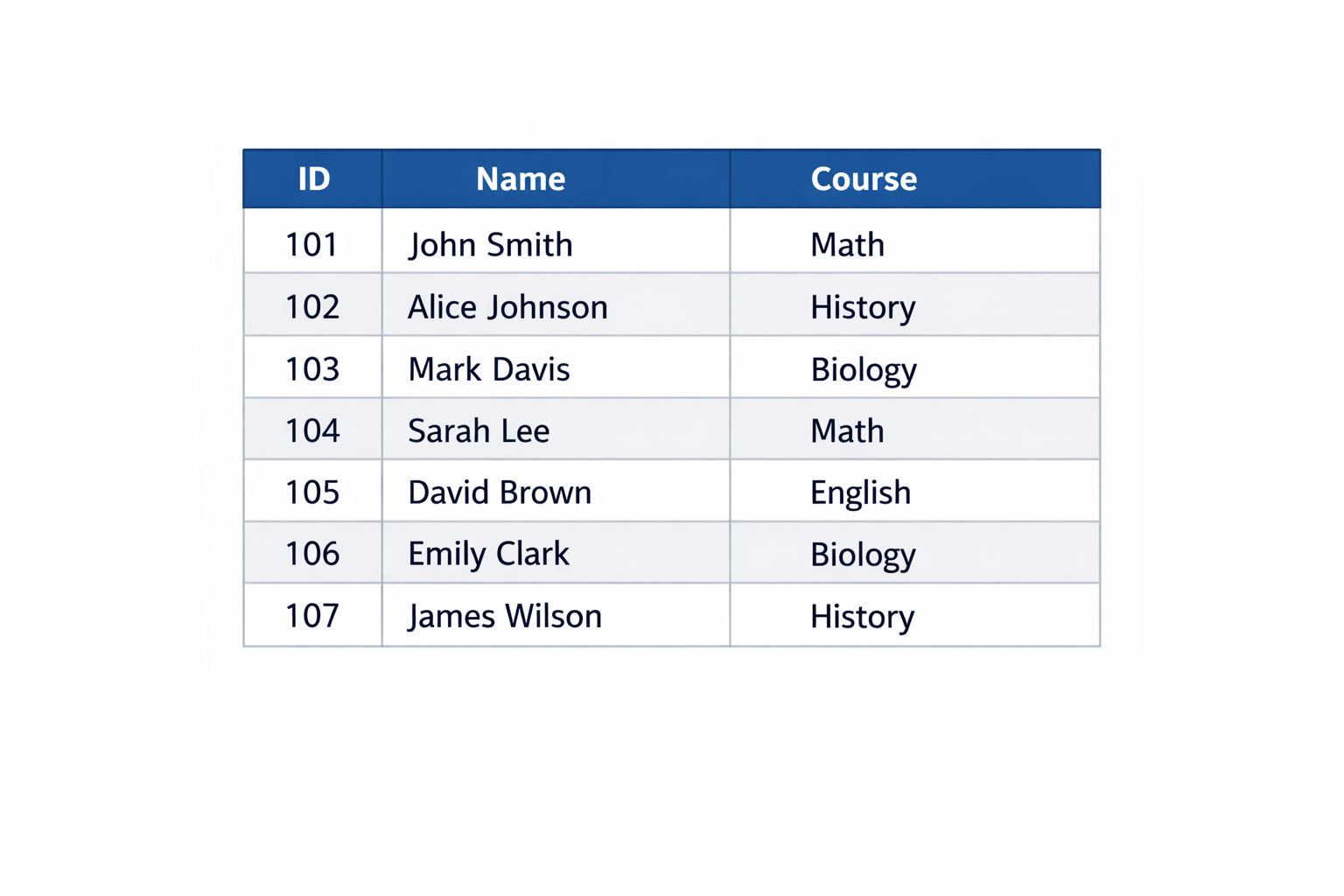
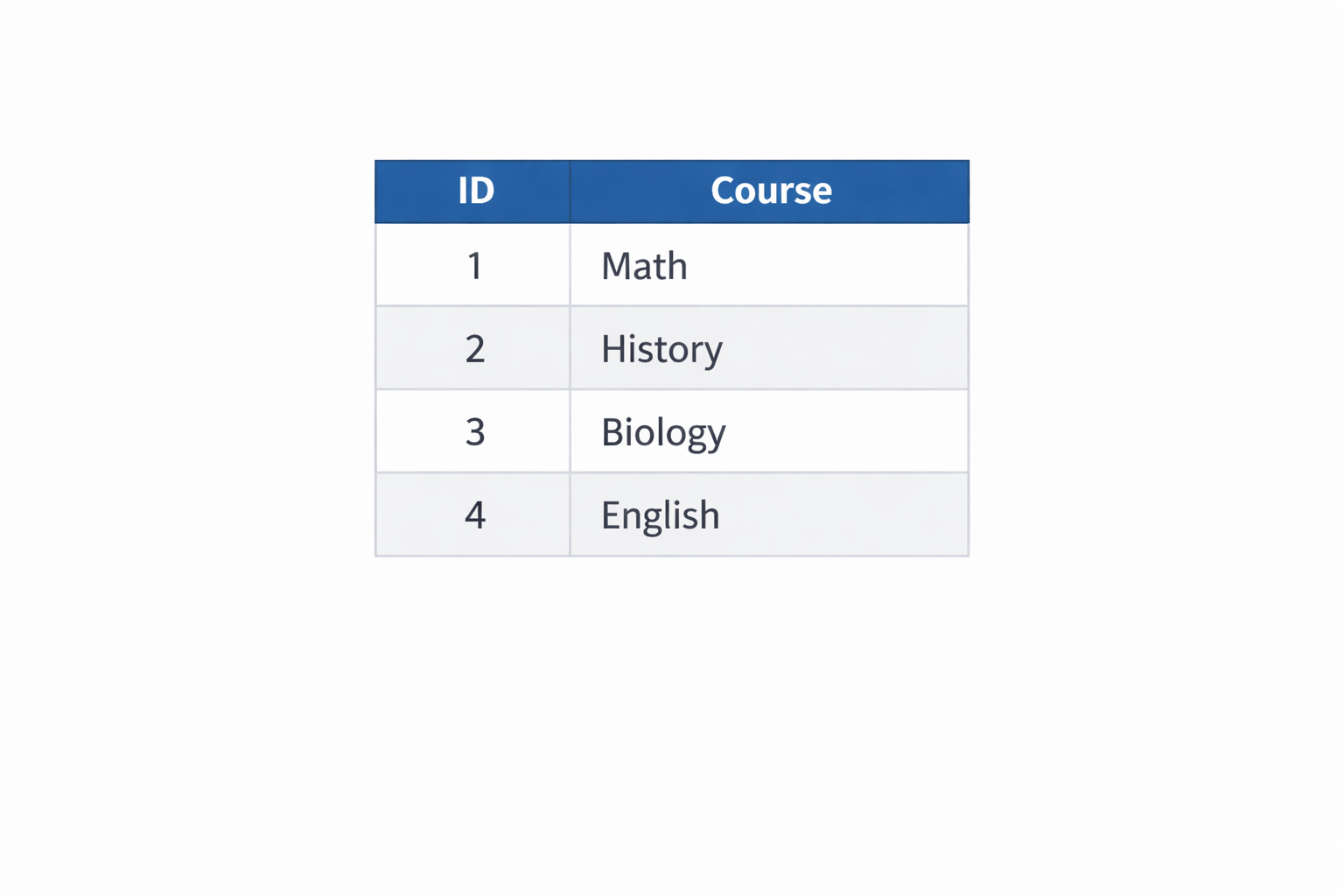
Example: Fetch the unique courses from students table
Select Distinct Course from Students;
DISTINCT on Multiple Columns
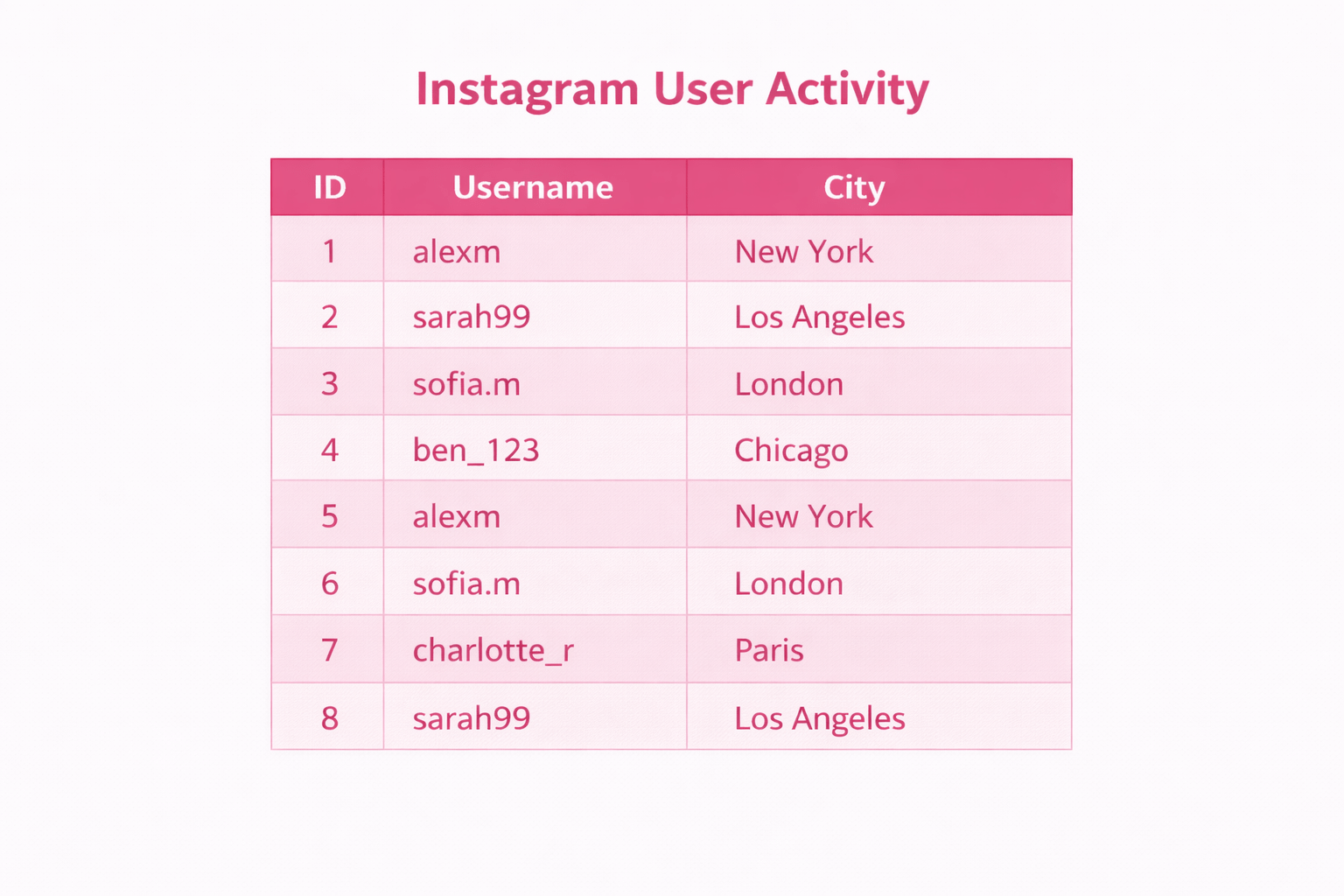
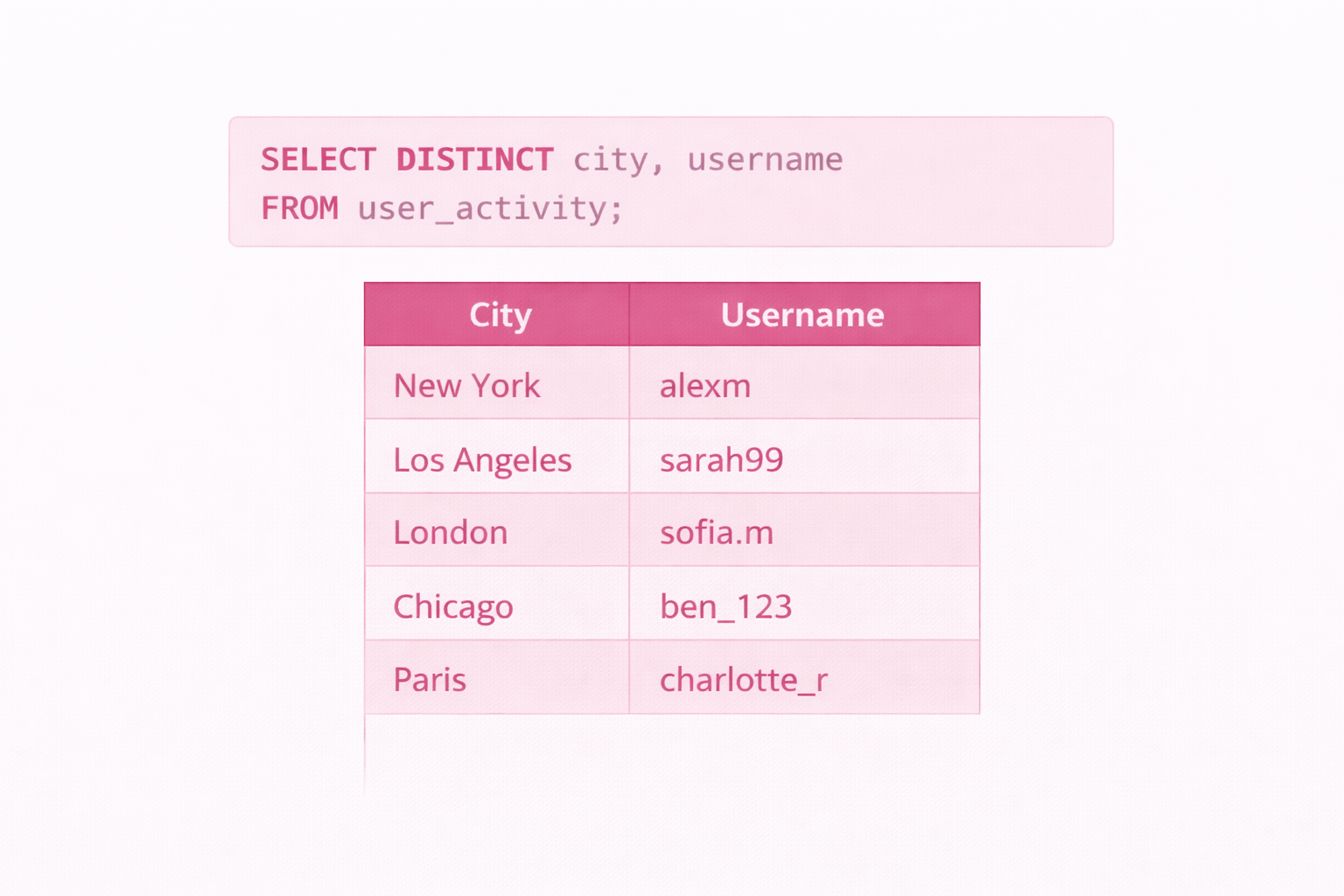
SELECT DISTINCT city, username
FROM user_activity;
User_Activity
Result
It will remove duplicates based on both columns together
Note: DISTINCT checks combination of columns
Query
Imagine a scenario where you want to fetch only the unique city and usernames from a table
What is LIMIT Clause?
LIMIT clause is used to restrict the number of records returned in SQL query result
Why we use limit?
To show limited data
To improve performance
For pagination
To avoid loading entire table
Syntax: SELECT column_name FROM table_name LIMIT number;
Example:
Imagine you open Instagram
On your home feed, you don’t see all posts at once.
You only see maybe 5–10 posts initially.
That is exactly how LIMIT works
SELECT * FROM posts
LIMIT 5;
Result: This will return only first 5 records
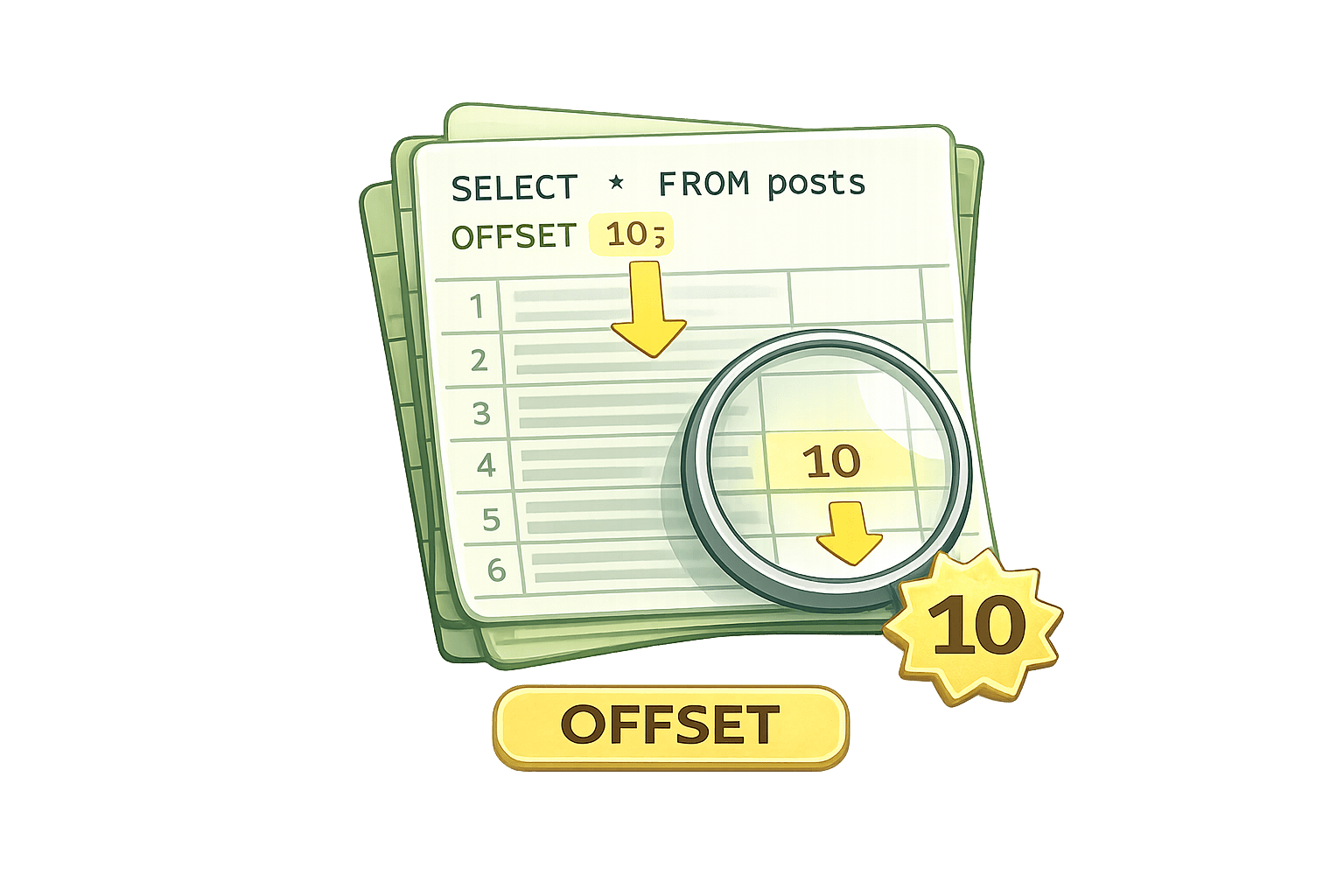
What is OFFSET?
OFFSET is used to skip a specific number of rows before starting to return rows
Why we use Offset?
For pagination
For “Load More” functionality
To fetch next set of records
Syntax:
SELECT column_name
FROM table_name
LIMIT number OFFSET skip_number;
Example:
When you scroll Instagram, posts load in batches
This is exactly how OFFSET works
SELECT post_id, username
FROM posts
LIMIT 10 OFFSET 10;
OFFSET 10 = Skip first 10 posts
LIMIT 10 = Show next 10 posts
Result → Shows posts 11–20
OFFSET is used to Skip rows
LIMIT is used to Show rows
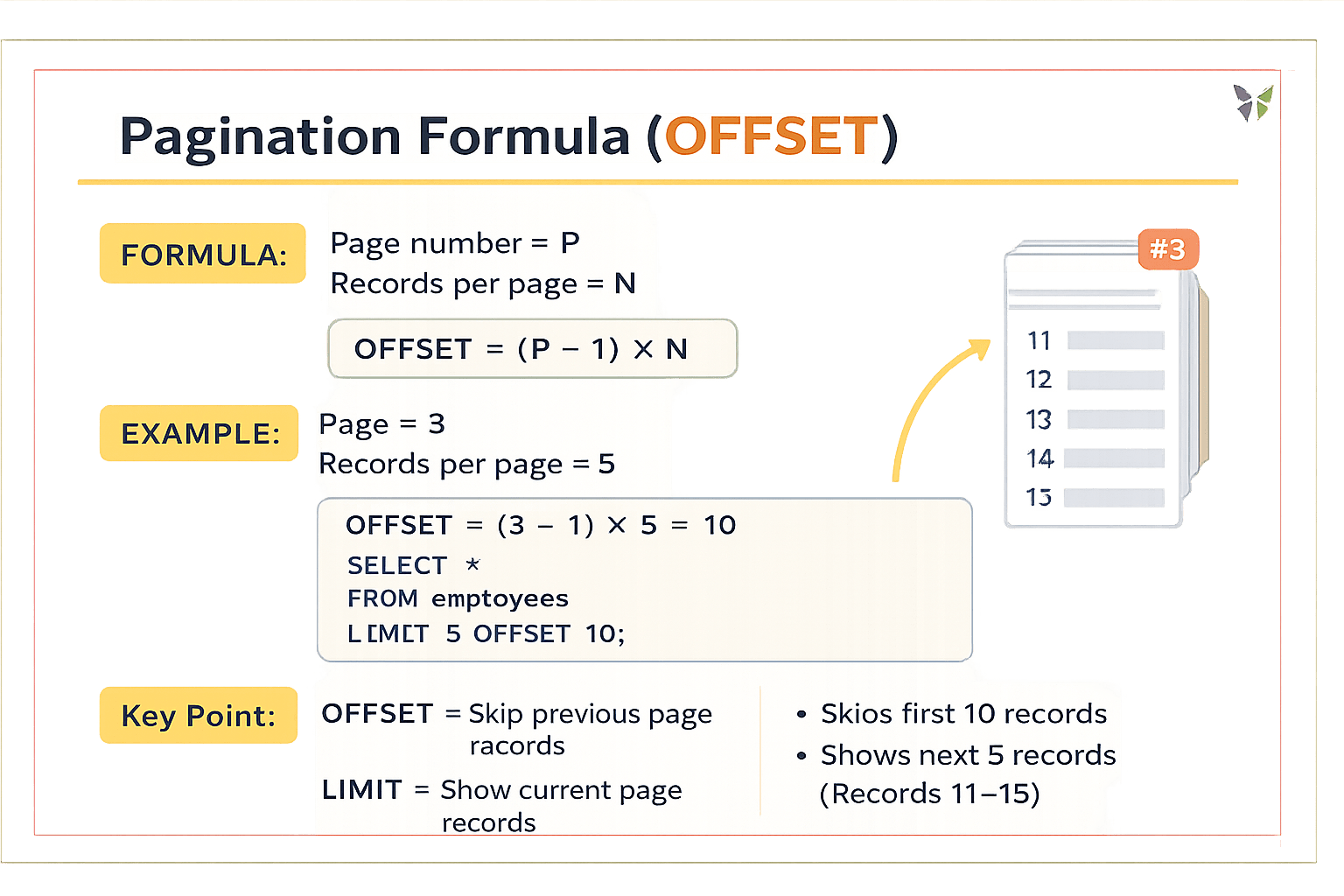
Pagination Formula
Formula
Example
Page number = P
Records per page = N
OFFSET = (P − 1) × N
Page = 3
Records per page = 5
OFFSET = (3 − 1) × 5 = 10
SELECT *
FROM employees
LIMIT 5 OFFSET 10;
Pagination is used to fetch records page-by-page
Summary
5
Does not modify actual table data
4
Used mainly for data display optimization
3
OFFSET skips specific rows
2
LIMIT restricts number of records
1
DISTINCT removes duplicate values
Quiz
Which clause is used to retrieve unique values?
A. LIMIT
B. DISTINCT
C. WHERE
D. ORDER BY
Quiz-Answer
Which clause is used to retrieve unique values?
A. LIMIT
B. DISTINCT
C. WHERE
D. ORDER BY
By Content ITV