




























Content ITV PRO
This is Itvedant Content department
Learning Outcome
5
Understand regulations and investor protection in India.
4
Learn their role in settlement and pledge of securities.
3
Understand the relationship between depositories, DPs, and investors.
2
Learn services like dematerialisation and rematerialisation.
1
Understand the role and purpose of depositories in securities markets.
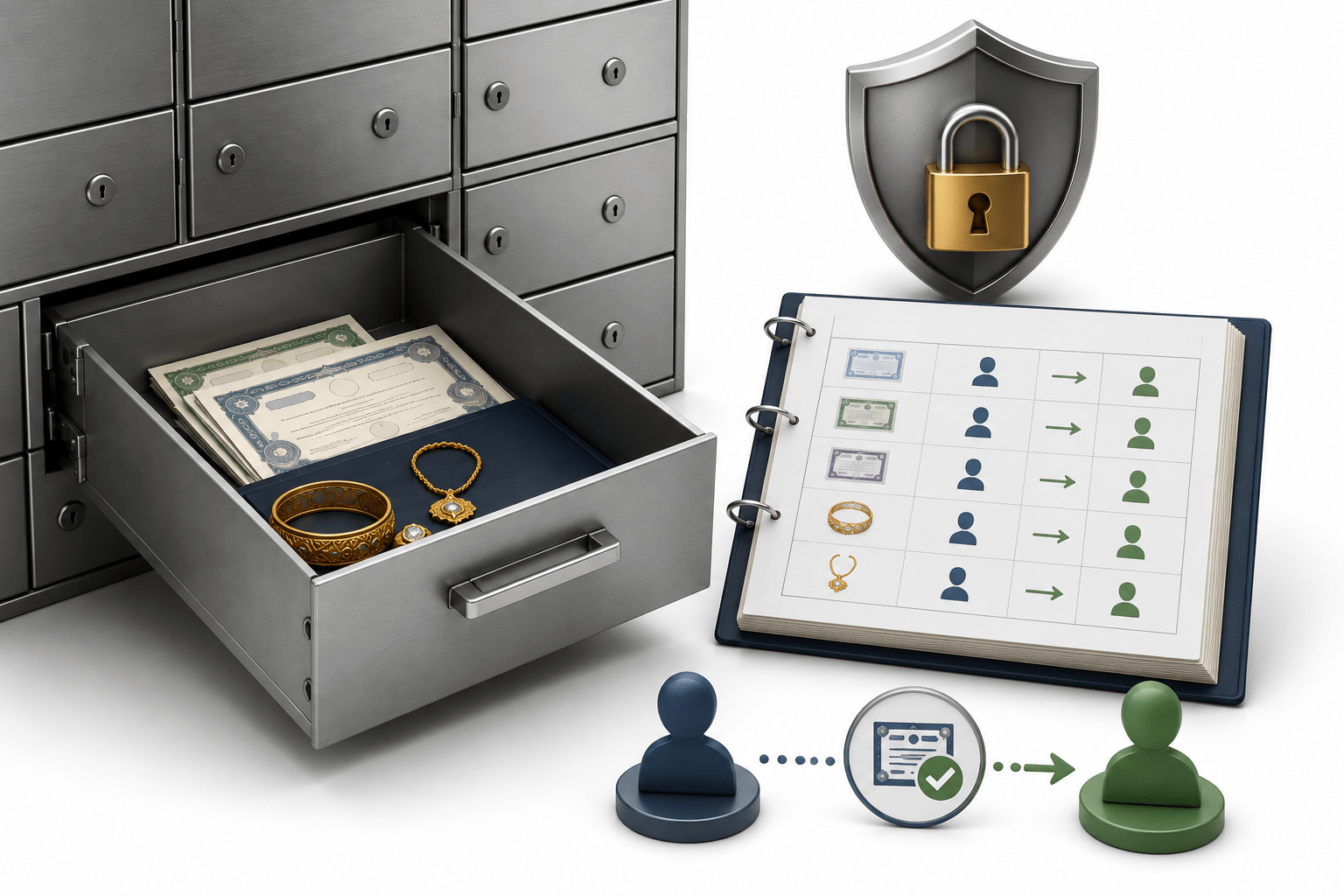
Analogy : Depositories as Bank Lockers
Investor (Customer)
Owns valuables like jewellery or important documents (shares, bonds, mutual funds).
Valuables (Securities)
Need safe storage and easy access.
Bank Locker (Depository)
Keeps valuables secure, records ownership, and allows smooth transfer without physically moving them.
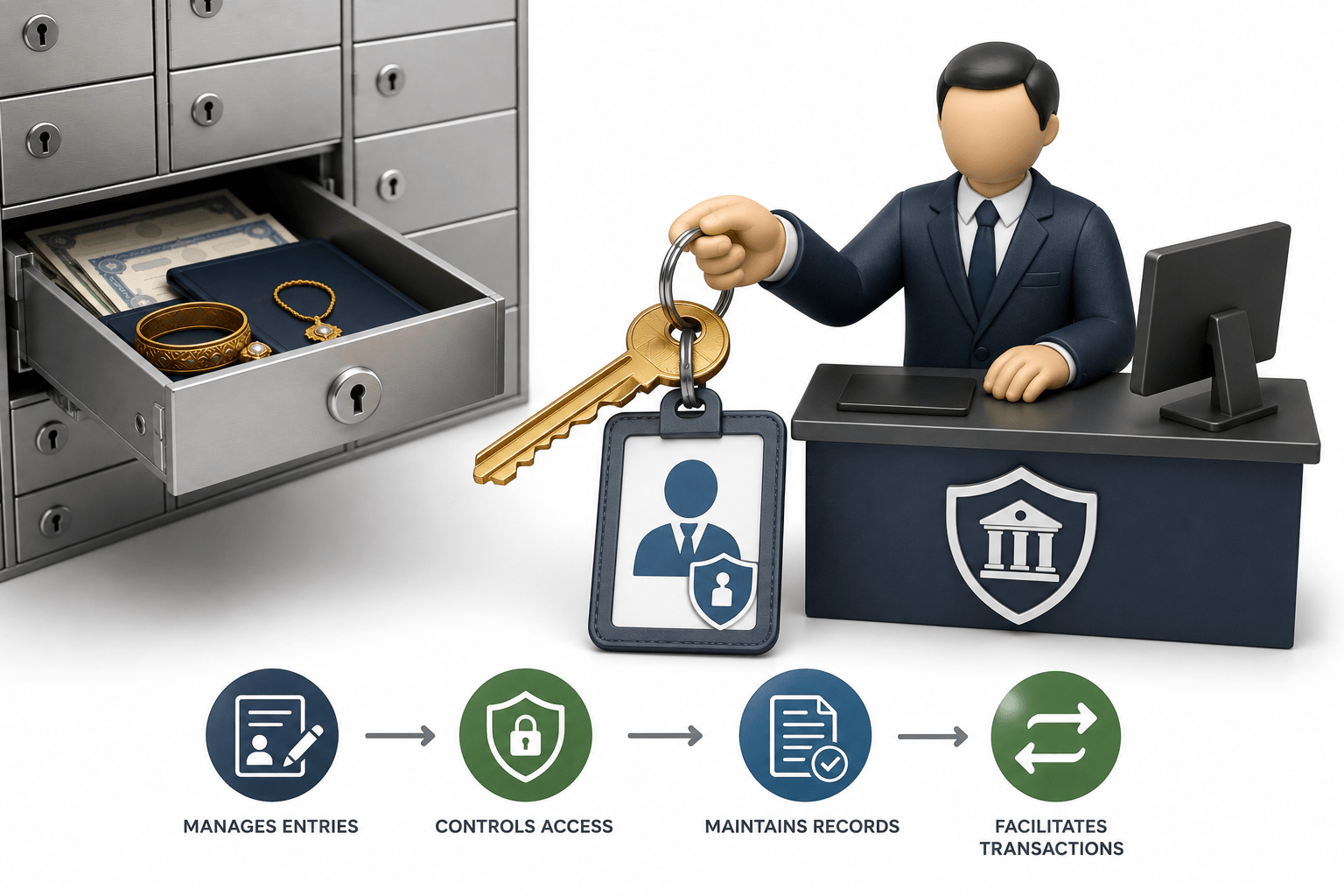
Locker Key (Depository Participant)
The agent who gives access, manages entries, and helps with transactions.
Security Guard (Regulators)
Ensure safety, fairness, and compliance.
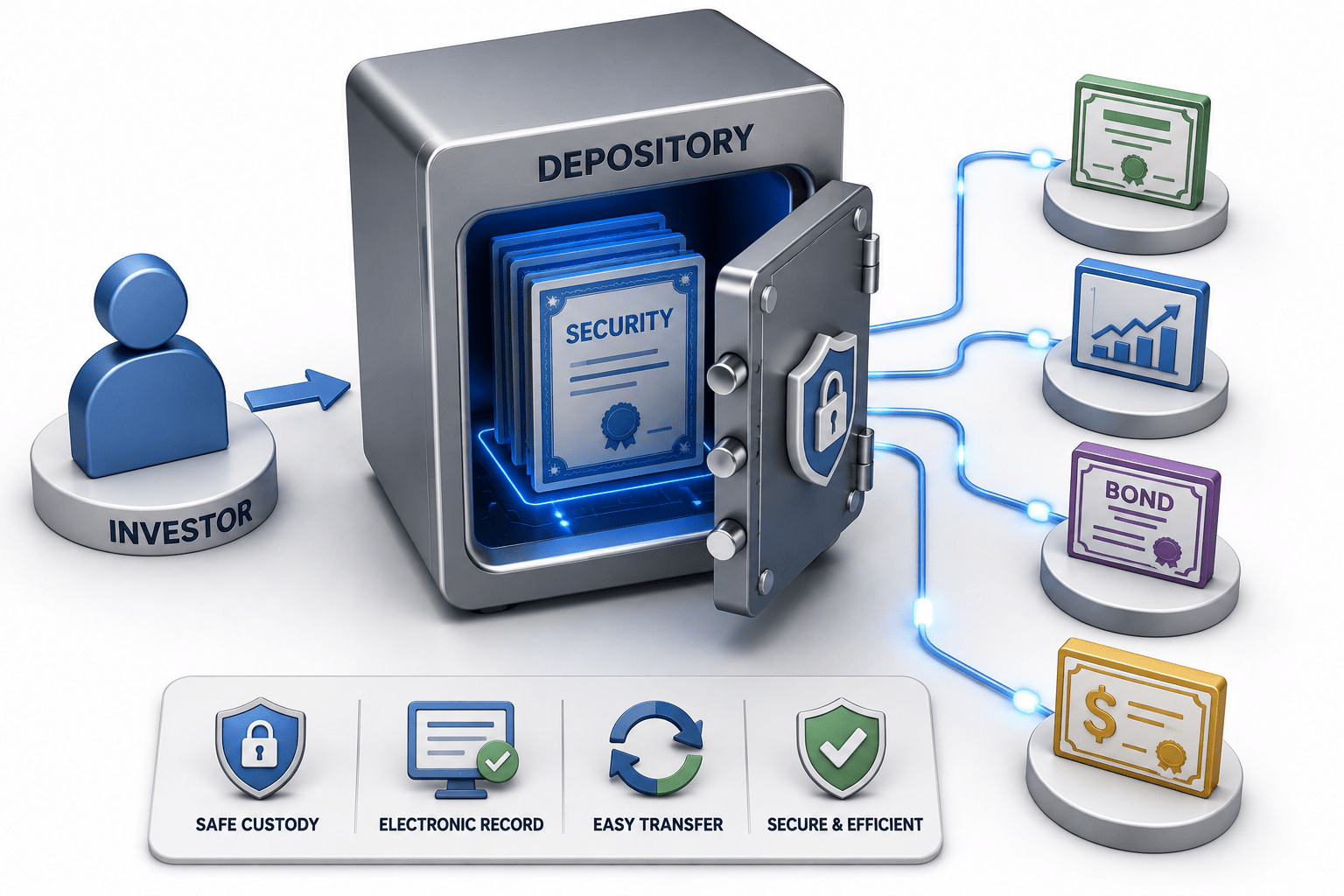
depositories act like digital bank lockers. They keep securities safe in electronic form and make trading smooth and secure.
Transition to concept
Depositories work like digital bank lockers for securities. Just as a bank locker safely stores valuables, depositories securely hold shares, bonds, and mutual funds in electronic form, allowing ownership transfers to happen quickly, safely, and without physical certificates.
What is a Depository?
A depository holds investor securities in electronic form.
It stores shares, bonds, debentures, and mutual fund units securely.
It provides services related to securities transactions.
Depositories in India are regulated by Securities and Exchange Board of India.
They operate under the Depositories Act, 1996.
Key Functions & Roles
Dematerialisation (Demat)
Dematerialisation converts physical share certificates into electronic form, making securities safer and eliminating risks like loss, theft, forgery, or damage.
Rematerialisation (Remat)
Reverse of demat converts electronic holdings back into physical certificates on investor request. Rarely used today.
Account Transfer / Settlement of Trades
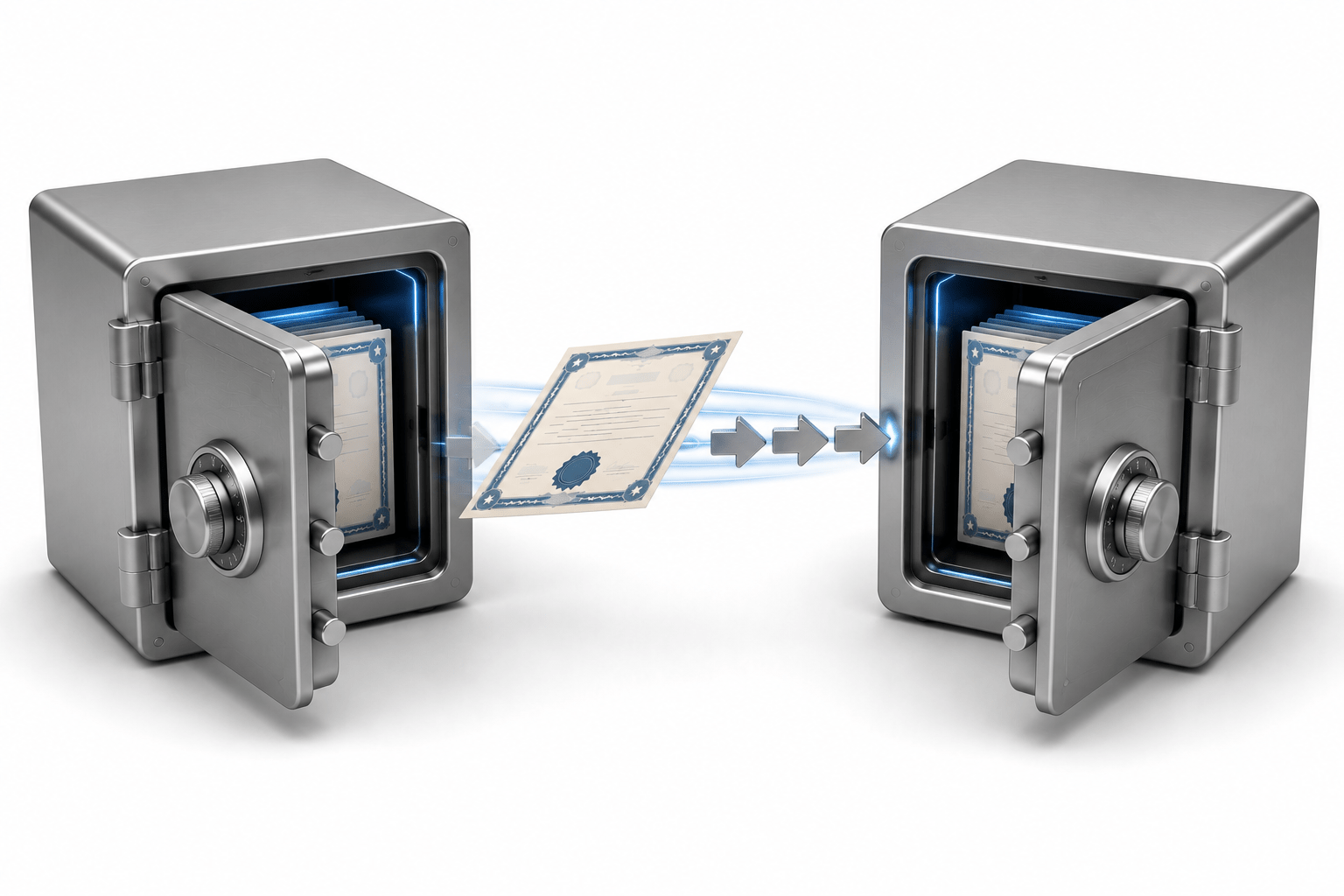
Electronically transfers securities between Demat accounts after trades under the T+1 settlement cycle.
Pledging and Hypothecation of Securities
Investors can pledge Demat securities as collateral for loans. The depository marks a lien on the securities, which is removed after repayment or invoked in case of default.
Automatically credits dividends, bonus shares, and stock splits to Demat accounts.
Corporate Action Processing
Transmission of Securities
Securities are transferred to the nominee or legal heir after the account holder’s death through the depository process.
Freezing / Locking of Accounts
Accounts can be frozen fully or partially (for debits or credits) at the investor's request, or under regulatory / court orders during legal proceedings.
Structure of Depository Ecosystem
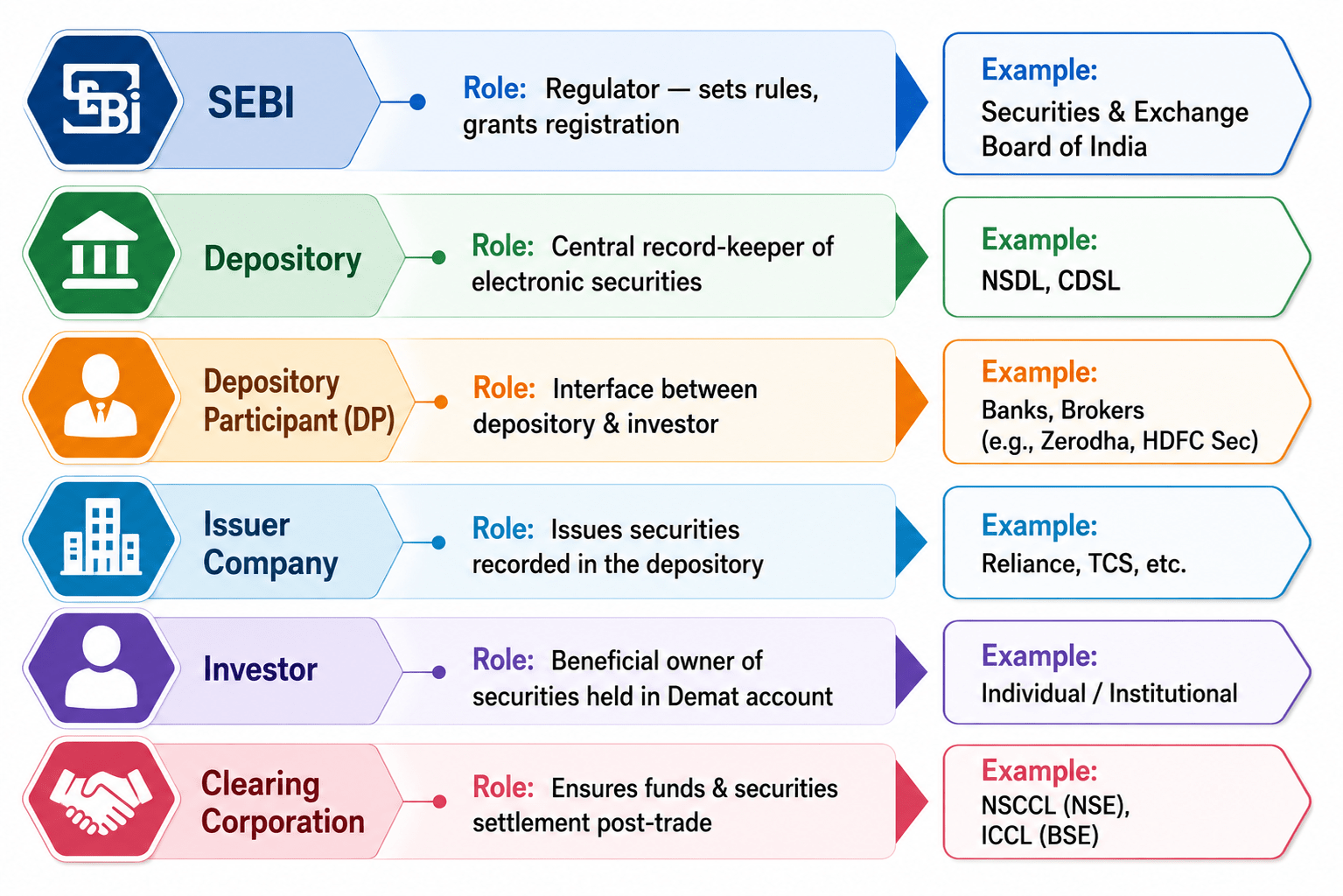
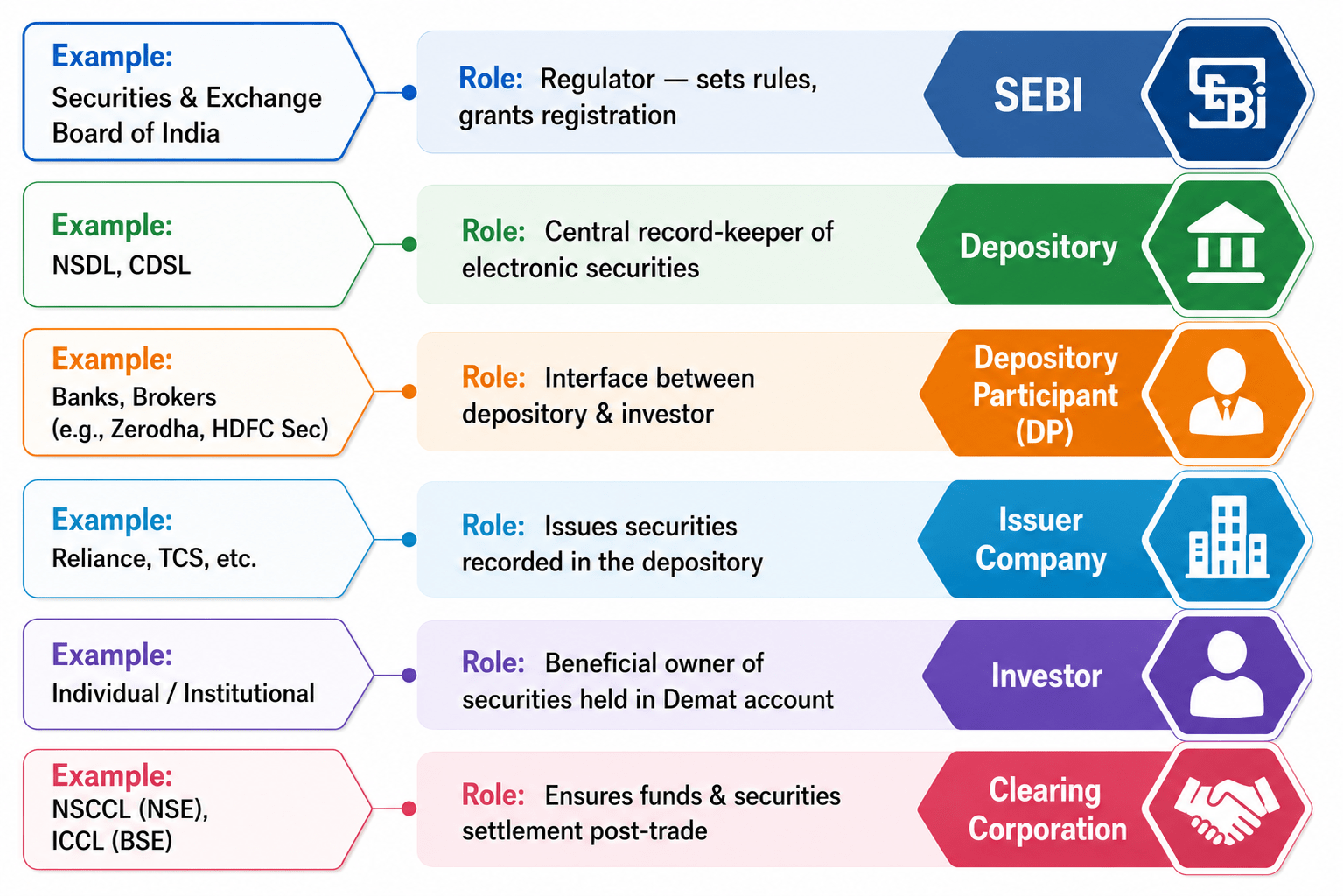
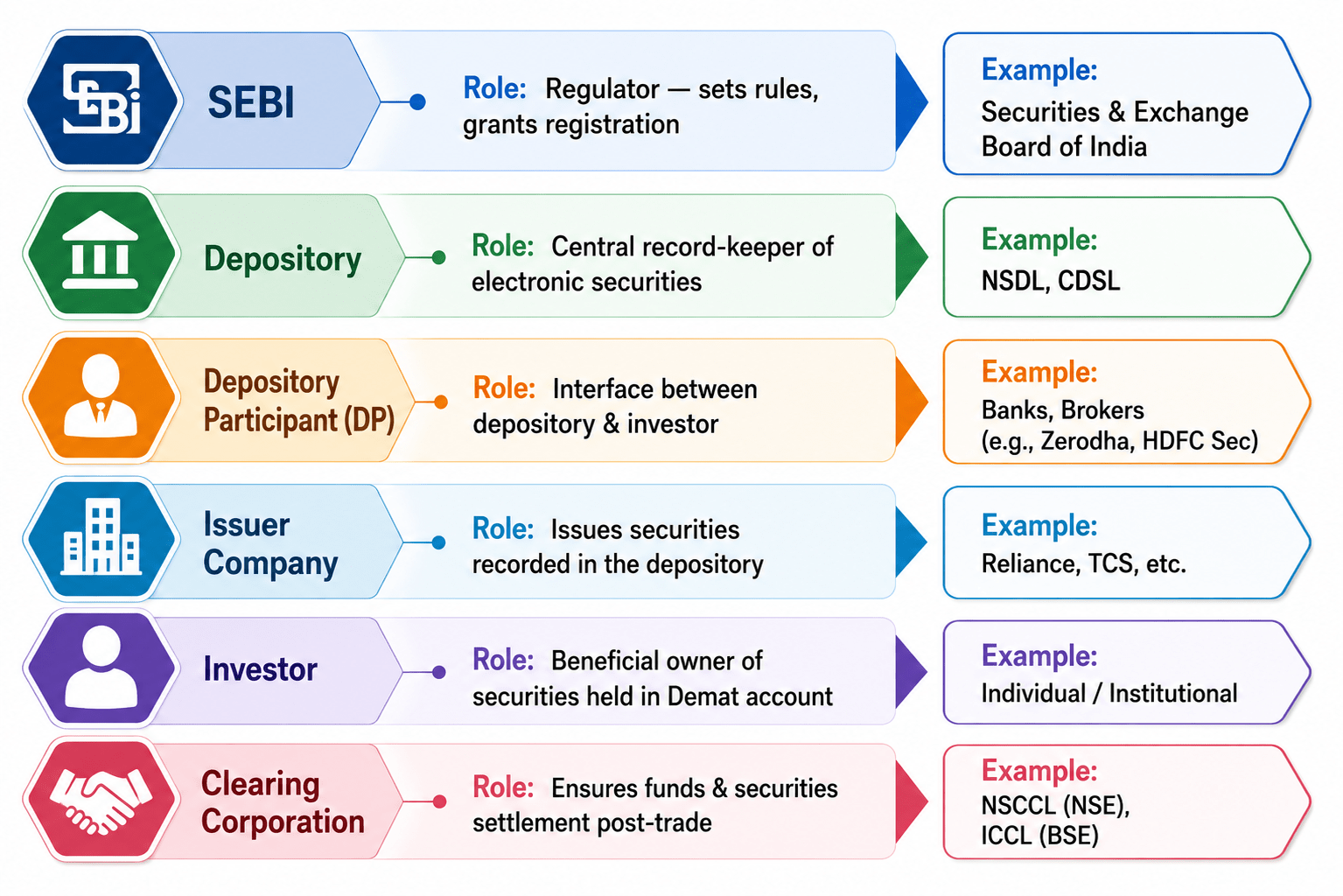
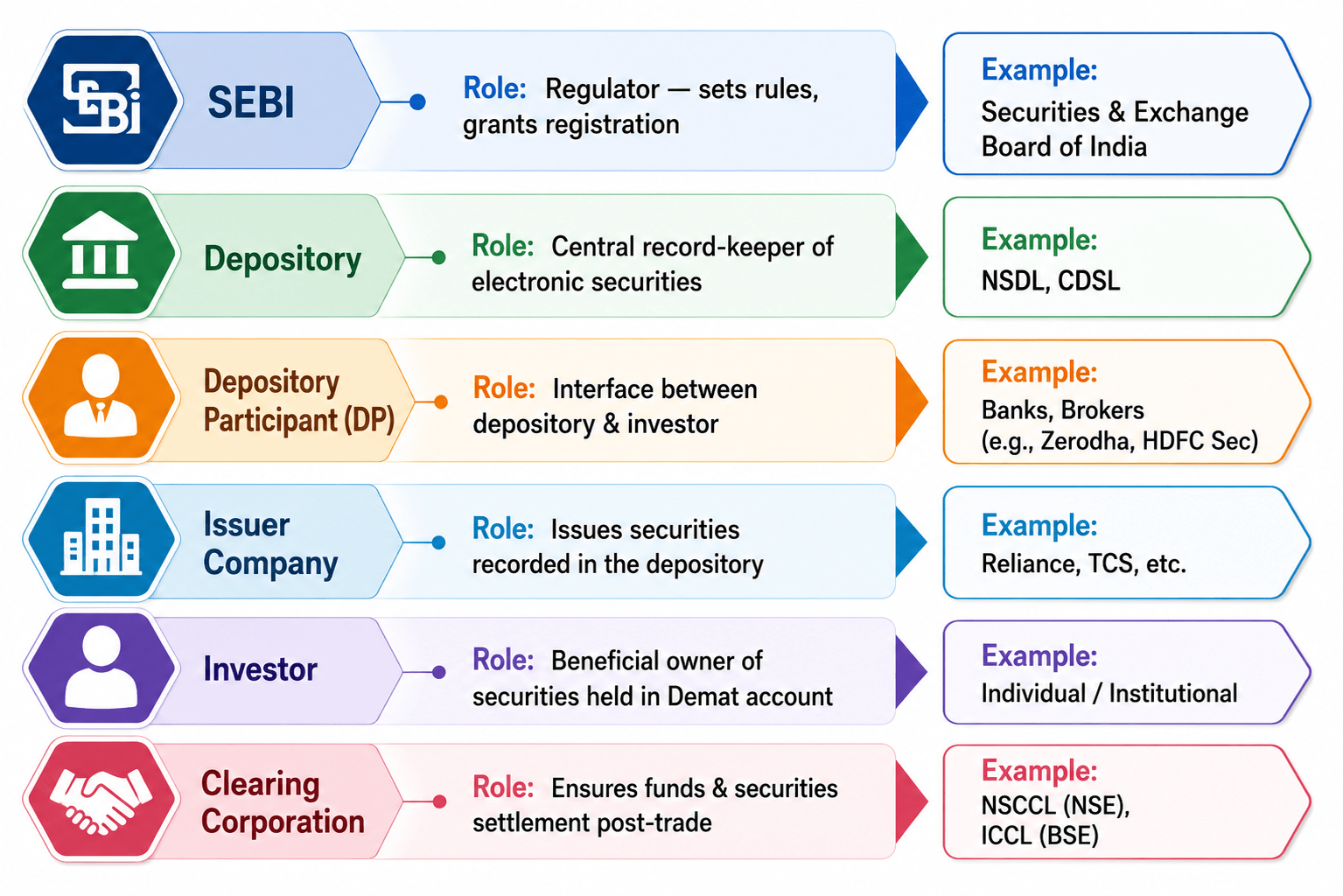
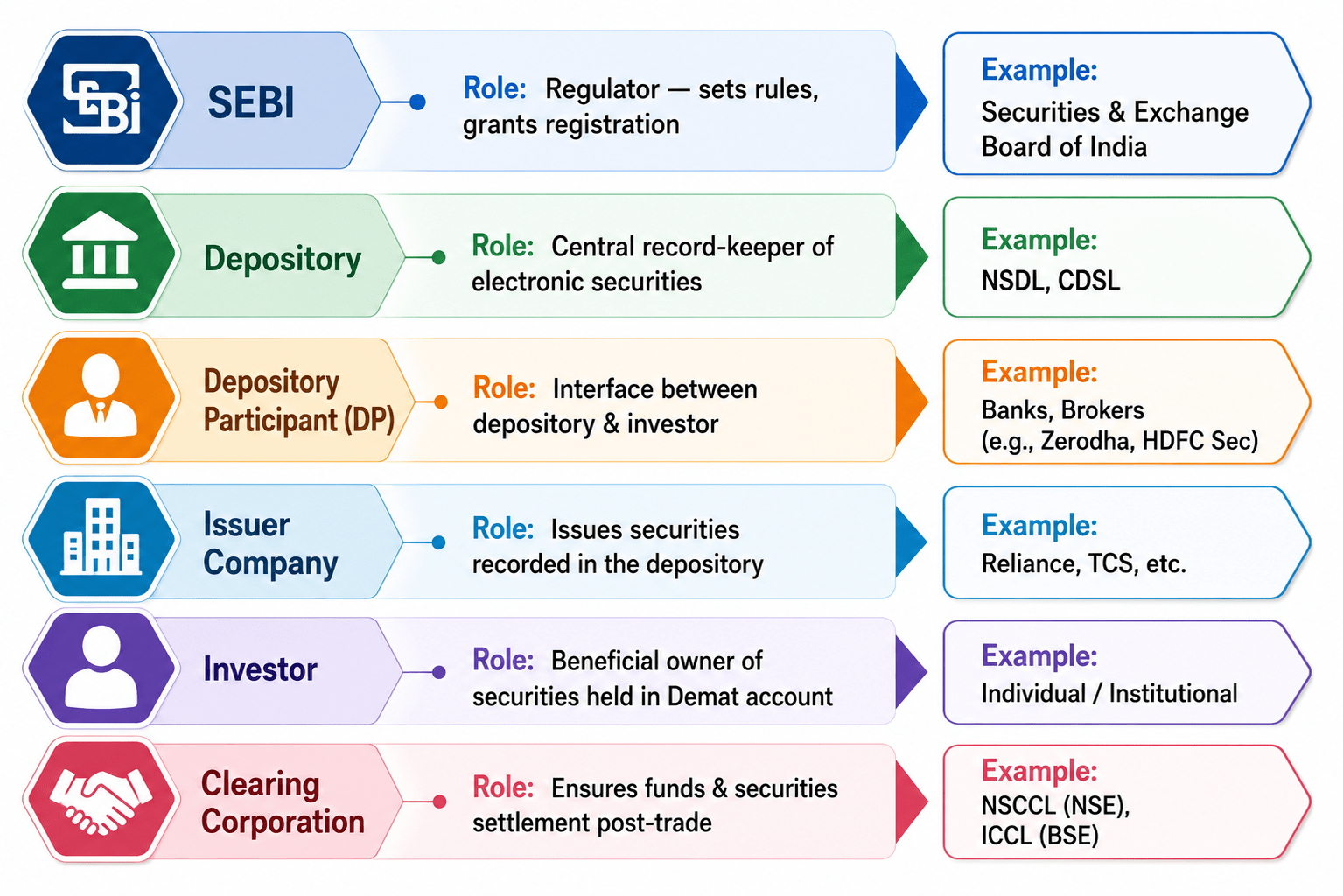
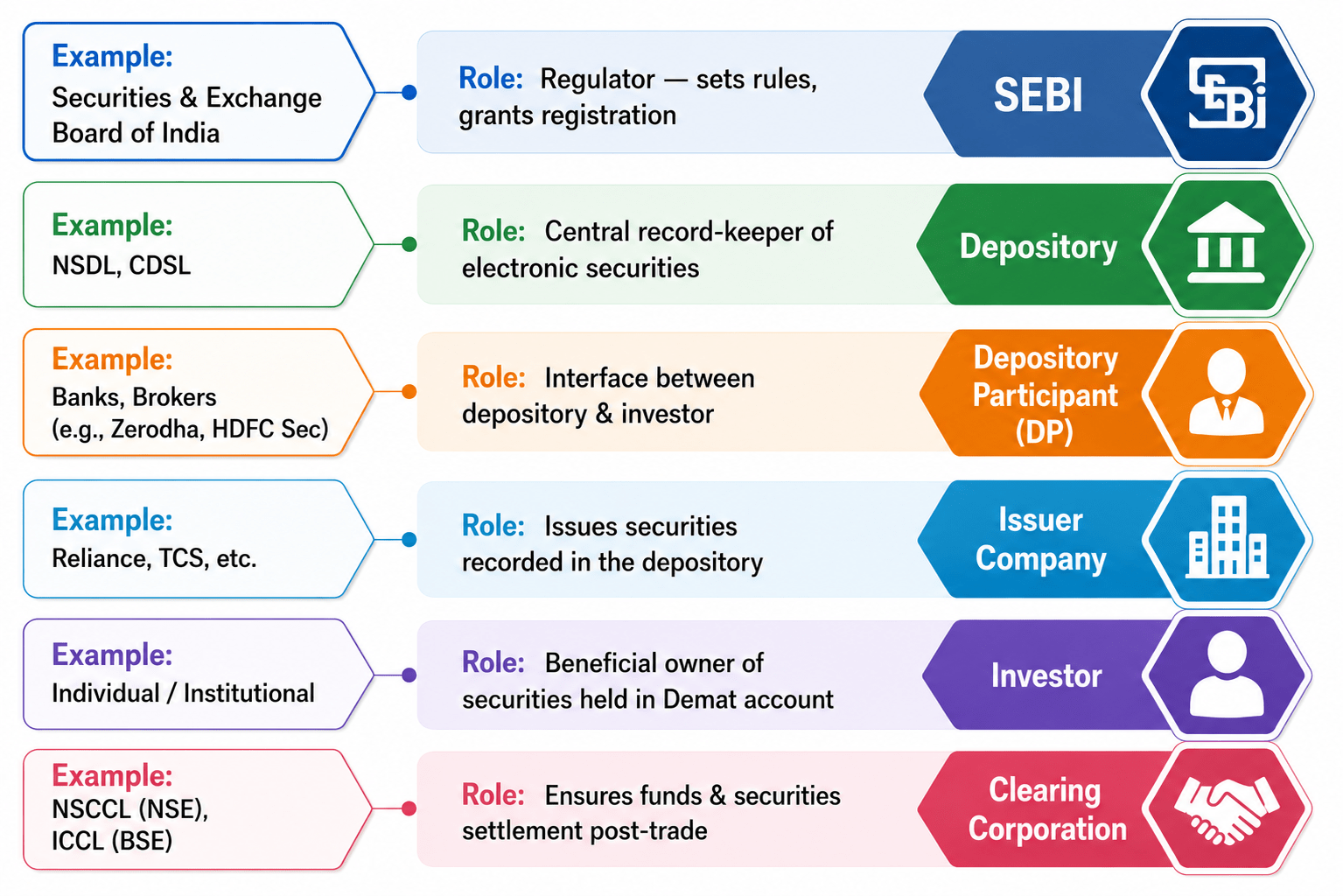
The depository does not interact with investors directly. It operates through a network of intermediaries called Depository Participants (DPs).
The flow of instructions
Investor → Depository Participant (DP) → Depository (NSDL / CDSL) → Stock Exchange / Clearing Corporation
NSDL vs CDSL — A Quick Comparison
| NSDL | Feature | CDSL |
|---|
| National Securities Depository Ltd. | Full Name | Central Depository Services (India) Ltd. |
|---|
| 1996 | Established | 1999 |
|---|
| NSE, banks, financial institutions | Promoted by | BSE, banks |
|---|
| 14-digit numeric (DP ID + Client ID) | Account ID | 16-digit numeric |
|---|
| SPEED-e / IDeAS | Investor Interface | easiest |
|---|
Benefits of the Depository System
Safety
Eliminates physical risks (fire, theft, damage) associated with paper certificates.
Speed
Transactions settle faster (T+1) compared to the old physical settlement system.
Cost efficiency
No stamp duty on transfer of dematerialised securities
Transparency
All holdings are digitally recorded, reducing scope for fraud.
Nomination facility
Easy transmission of securities in case of the investor's demise.
Convenience
Investors can view, manage, and transact in securities from a single Demat account.
Summary
5
Credits corporate benefits automatically to Demat accounts.
4
Allows pledging of securities for loans.
3
Facilitates quick transfer and T+1 settlement of trades.
2
Enables dematerialisation and rematerialisation of securities.
1
Safely holds securities in electronic form.
Quiz
Who acts as an intermediary between the depository and the investor?
A. SEBI
B. Stock Exchange
C. Clearing Corporation
D. Depository Participant (DP)
Quiz-Answer
Who acts as an intermediary between the depository and the investor?
A. SEBI
B. Stock Exchange
C. Clearing Corporation
D. Depository Participant (DP)
By Content ITV