Coercion and Democracy: Symbolic Role of Economic Sanctions in the US


ECPR General Conference

Innsbruck

23 August 2022


Dawid Walentek

University of Warsaw

Background

  • Rising popularity of economic sanctions
  • US is the most frequent user of economic coercion
  • Mean to achieve foreign policy objectives
  • ... and address the concerns of voters

Literature

  • Instrumental motivation
    • what are the conditions for success
    • very rich literature
    • Ang and Peksen, 2007; Bapat and Kwon, 2015; Jeong and Peksen, 2019; 2014; Giumelli, 2015; among others
  • Symbolic motivation
    • what is the return for expressing morality
    • limited scholarship
    • Whang, 2011; quantitative work
    • McLean and Roblyer, 2017; Heinrich et al., 2017; experimental research

My objective

  • Audience benefit
    • assesses whether US presidents observe a boost in popularity for imposition of economic sanctions
  • Audience cost
    • Establish whether US presidents observe a decrease in popularity for empty threats
  • Instrumental and Symbolic logic
    • Tests whether US voters are more likely to positively respond to a successful episodes of sanction imposition

Data & Methods

Data

  • Replication of the study of Whang
    • new data (TIES)
  • Twin problem of false conterfacutal
    • time trend
    • selection 

Data

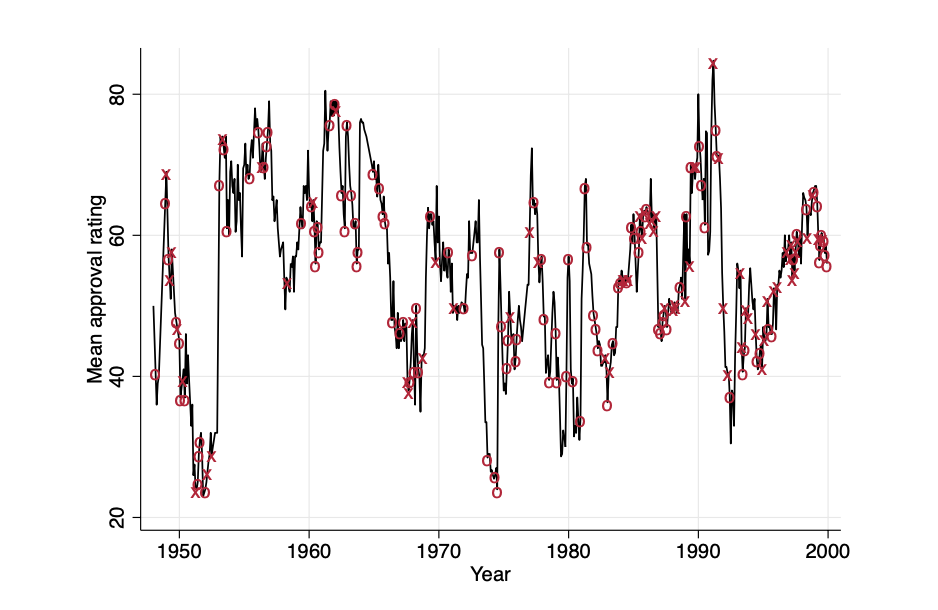
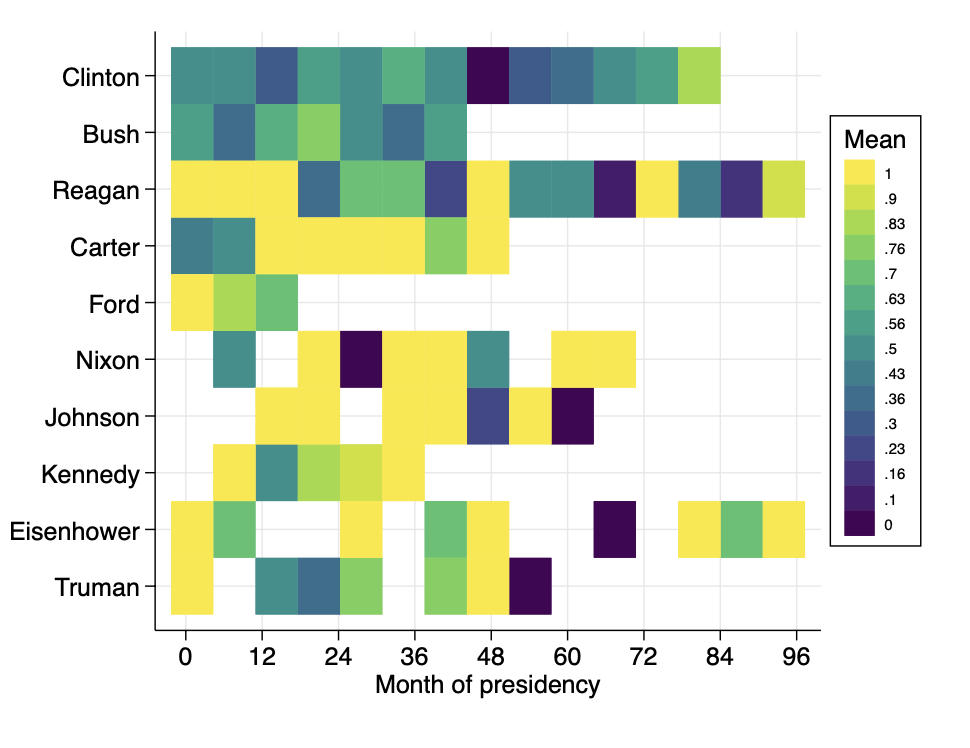
  • Unit of analysis
    • more than one event per month
    • different type of events per month
    • 624 presidency months
    • 558 policy decisions in 231 months
    • 393 months with neither an imposition nor a threat-only
    • 534 presidency months are either a lead or a lag
  • Threshold ratio of imposition and threats (and also for success) is 0.5

Methods

  • Diff-in-Diff with two-way fixed effect
    • president FE
    • electoral cycle FE
    • approval rating is the outcome variable
    • imposition is the treatment condition
    • threat-only is the control group
    • controls (unemployment, GDP growth & major war)
  • Formal test of trend and decay
    • treatment & lag interactions
    • treatment & lead interactions
    • following Autor, 2003
  • Diff-in-Diff-Diff for treatment heterogeneity resulting from successful imposition

Results & Discussion

Results at glance

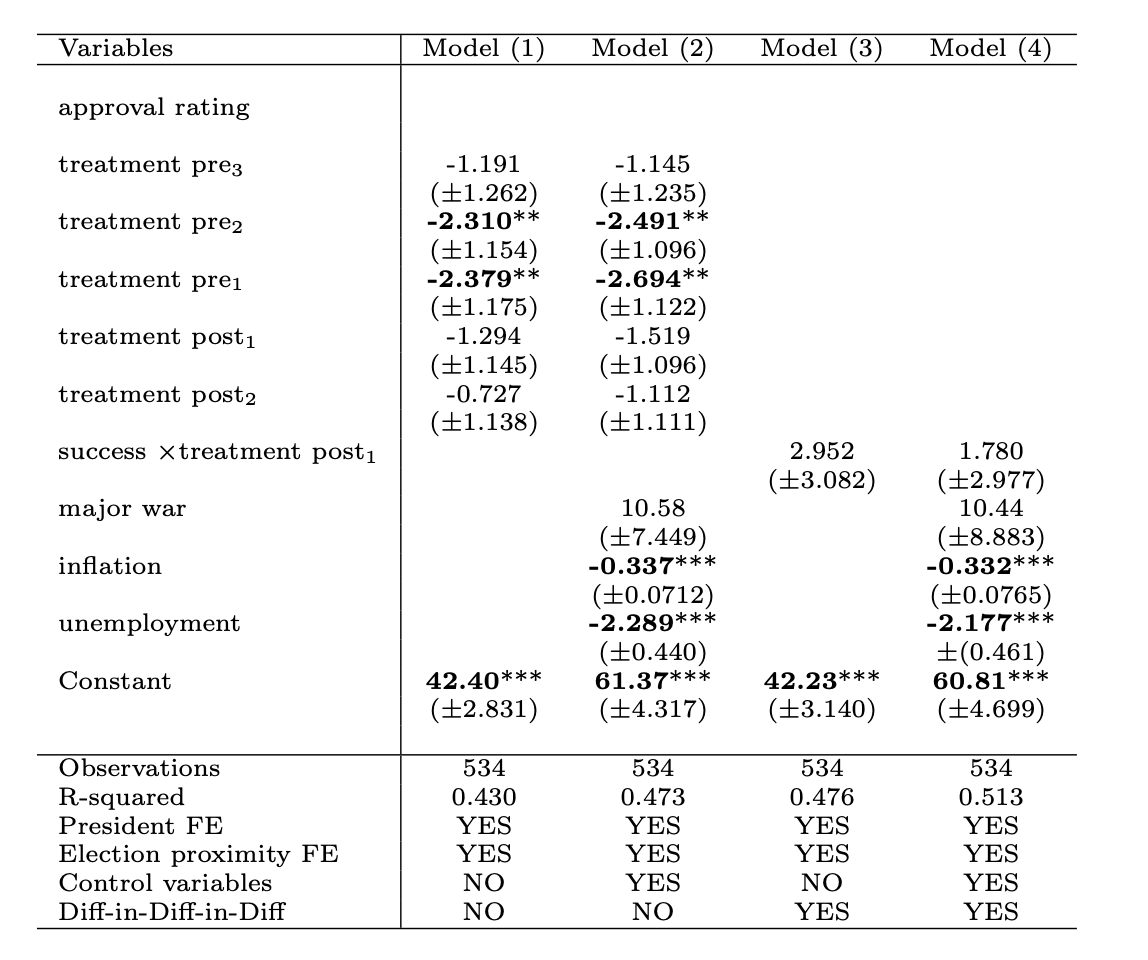
  • US presidents do not experience a boost in popularity after imposition of economic sanctions
  • I do not observe a decrease in the approval ratings of US presidents following empty threats
  • ​No additional benefit for successful imposition
  • US president behave as if they are likely to observe a boost in approval ratings for imposition of sanctions

Results 

Discussion

  • Limitations posed by the complex data structure
  • Empirical test of the underpinning mechanism

Thank you

Coercion and Democracy @ECPR

By Dawid Walentek

Coercion and Democracy @ECPR

  • 145