PySpark
Produtividade e poder de processamento
Quem?
github.com/felipecruz

@felipejcruz


Agenda
- Map-Reduce
- Pyspark
Maior oferta feita em uma semana na BOVESPA?
Motivação


highest_offer = max(offers)?
?
highest_offers_1 = max(offers_partition1)highest_offers_2 = max(offers_partition2)highest_offers_1 = max(offers_partition1)highest_offers_2 = max(offers_partition2)max(highest_offers_1, highest_offers_2)calma...

Map
Map

Reduce
Map-Reduce
não é divisão e conquista (que pode ser implementada com map-reduce)
Aplicações
- Filtragem
- Distintos
- Top K
- Por valor
- Sumarização
- Índice invertido
- Contagem de palavras
- Estruturação
- Ordenação
- Particionamento
- Embaralhamento
- Join
- Inner join
- Produto cartesiano
nosso exemplo K = 1
PySpark
Funcionalidades centrais
- Map-Reduce
-
RDD, DataFrames & SQL - MLlib
- Streaming
- GraphX
Map & Reduce
>>> prices = sc.textFile('s3n://prognoos-pyspark/*.gz') \
...            .filter(lambda x: x.count(';') > 14) \
...            .map(lambda x: [s.strip() for s in x.split(';')]) \
...            .map(lambda x: (x[1], x[8], x[15]))
...
>>> prices.take(2)
[(u'ABEVA70', u'000000000000.350000', u'000000000000008300'),
 (u'ABEVA70', u'000000000000.350000', u'000000000000007100')]
Map & Reduce
>>> prices = sc.textFile('ftp://*.gz') \
...            .filter(lambda x: x.count(';') > 14) \
...            .map(lambda x: [s.strip() for s in x.split(';')]) \
...            .map(lambda x: (x[1], float(x[8]), x[15]))
...
>>> sum_all = prices.map(lambda x: x[2])\
...                 .reduce(lambda x, y: x + y)
...
>>> sum_all
1532623750.0
from datetime import datetime

strpt = lambda x: datetime.strptime(x, '%H:%M:%S.%f')
f = float

negs   = sc.textFile('s3n://prognoos-pyspark/NEG/*.gz') \
           .filter(lambda x: x.count(';') > 14) \
           .map(lambda x: [s.strip() for s in x.split(';')]) \
           .map(lambda x: (strpt(x[5]), 'NEG', x[1], f(x[3]), f(x[16]), x[17]))

buys   = sc.textFile('s3n://prognoos-pyspark/CPA/*.gz') \
           .filter(lambda x: x.count(';') > 14) \
           .map(lambda x: [s.strip() for s in x.split(';')]) \
           .map(lambda x: (strpt(x[6]), 'CPA', x[1], f(x[8]), x[15], None))

sell   = sc.textFile('s3n://prognoos-pyspark/VDA/*.gz') \
           .filter(lambda x: x.count(';') > 14) \
           .map(lambda x: [s.strip() for s in x.split(';')]) \
           .map(lambda x: (strpt(x[6]), 'VDA', x[1], f(x[8]), None, x[15]))

all_operations = negs.union(buys).union(sell)
total = all_operations.count() # total = 52980676
... nem tudo são flores
data = sc.parallelize(['aa', 'bb', 'ab', 'bc'])

def _filter(data):
    sts = ['a', 'b']
    rets = []
    for st in sts:
        rets.append((st,
            data.filter(lambda x: x.startswith(st))))
    return rets

rdds = _filter(data)
for st, rdd in rdds:
    print((st, rdd.collect()))

# ('a', ['bb', 'bc'])
# ('b', ['bb', 'bc'])
Python - Anti-pattern - não faça!!
DataFrames & SQL
DataFrame
A distributed collection of data grouped into named columns
http://spark.apache.org/docs/latest/api/python/pyspark.sql.html#pyspark.sql.DataFrame
events = negs.union(buys).union(sell).toDF()

# API de DataFrame
total = events.count()

# Salva pra uso posterior
events.write.save('s3n://prognoos/events/',
                   format='parquet',
                   mode='Overwrite')
SparkSQL
http://spark.apache.org/docs/latest/api/python/pyspark.sql.html
>>> path = 's3n://prognoos-test/events'
>>> table_name = 'bovespa_events'
>>> events = sqlContext.read.parquet(path)
>>> events.registerTempTable(table_name)
>>> total_events = sqlContext.sql('''
    select count(*) from bovespa_events
''')
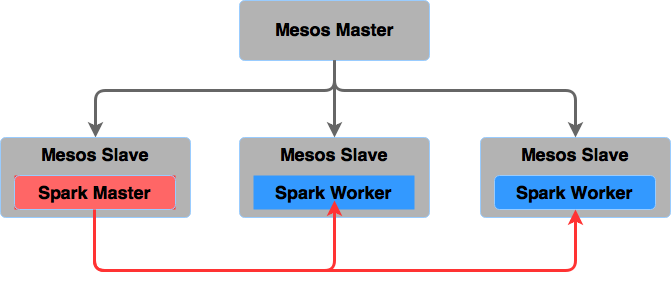
Spark em produção
- Standalone
- Hadoop/Yarn
- Mesos
Spark em produção

Dúvidas?
@felipejcruz
github.com/felipecruz
PySpark
By Felipe Cruz