INTRODUCTION TO FIRST-PRINCIPLES



Exploration and Understanding
COMPUTATIONAL STUDIES OF ELECTRON SYSTEMS
Zoltán Tajkov, PhD student

How does Science Work?
- Experiment
- Modelization
- Prediction
- Experiment
- Model refinement
How to use science to predict the behavior of materials?
Brute Force Always Works!
We already have the ultimate model to describe everything!
\hat{H}| \Psi(t) \rangle = i\hbar\frac{\partial |\Psi(t)\rangle}{\partial t}
Brute Force Always Works???
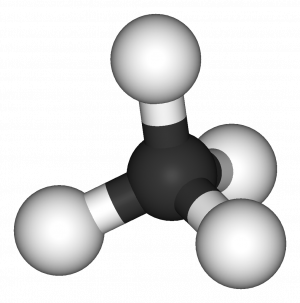
An example: methane
1 carbon atom + 1 hydrogen = 10 electrons
30 independent coordinates
100 points per coordinate
\( 100^{30}=10^{60} \) complex number
1 complex number in every atom
We can store the wave function in \( 10^{30} m^3 \)
How To Fix It
We can reduce the number of coordinates to 3!
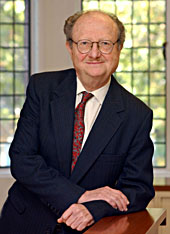
Pierre Hohenberg
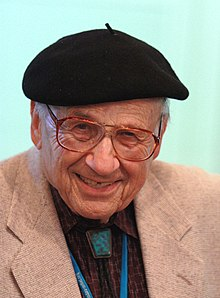
Walter Kohn
Hohenberg-Kohn theorems
Next lecture...
... it has something to do with the density of the electrons
What is Density Functional Theory?
Density \( \rightarrow \) density of electrons
Functional \( \rightarrow \) next lecture
Theory \( \rightarrow \) duh
It is a
- Reasonably accurate
- Versatile numerical method
There are a plenty of codes available...
ABINIT,ACES,ACE-Molecule,AMPAC,ADF,Atomistix ToolKit (ATK),BigDFT,BrianQC,CADPAC,CASINO QMC),CASTEP,CFOUR,COLUMBUS,CONQUEST,CP2K,CPMD,CRYSTAL,DACAPO,Dalton,deMon2k,DFTB+,DFT++ (succeeded by JDFTx),DIRAC,DMol3,ELK,Empire,EPW6,ErgoSCF,ERKALE,Exabyte.io,EXCITING,FLEUR,FHI-aims,FPLO13,FreeON,Firefly, PC GAMESS,GAMESS (UK),GAMESS(US),Gaussian,GPAW,HiLAPW,HelFEM,HORTON,HyperChem,Jaguar,JDFTx,LOWDIN,MADNESS,Maple Quantum Chemistry Toolbox,MISSTEP,MOLCAS,OpenMOLCAS,MolDS,MOLGW,MOLPRO,MONSTERGAUSS,MOPAC,MPQC,MRCC,NRLMOL,NTChem,NWChem,Octopus,ONETEP,OpenAtom,OpenMX,ORCA,phase0,PLATO,PQS,Priroda,PSI,PUPIL,PWmat,PWscf6,PyQuante,PySCF,Qbox,Q-Chem,QMCPACK (QMC),Quantemol-N,QSite,Quantum ESPRESSO,RMG,RSPt,SAMSON,Scigress,Spartan,Siam Quantum,SIESTA,TB-LMTO,TeraChem 8,TURBOMOLE,VASP,WIEN2k,xtb,Yambo Code
ABINIT,ACES,ACE-Molecule,AMPAC,ADF,Atomistix ToolKit (ATK),BigDFT,BrianQC,CADPAC,CASINO QMC),CASTEP,CFOUR,COLUMBUS,CONQUEST,CP2K,CPMD,CRYSTAL,DACAPO,Dalton,deMon2k,DFTB+,DFT++ (succeeded by JDFTx),DIRAC,DMol3,ELK,Empire,EPW6,ErgoSCF,ERKALE,Exabyte.io,EXCITING,FLEUR,FHI-aims,FPLO13,FreeON,Firefly, PC GAMESS,GAMESS (UK),GAMESS(US),Gaussian,GPAW,HiLAPW,HelFEM,HORTON,HyperChem,Jaguar,JDFTx,LOWDIN,MADNESS,Maple Quantum Chemistry Toolbox,MISSTEP,MOLCAS,OpenMOLCAS,MolDS,MOLGW,MOLPRO,MONSTERGAUSS,MOPAC,MPQC,MRCC,NRLMOL,NTChem,NWChem,Octopus,ONETEP,OpenAtom,OpenMX,ORCA,phase0,PLATO,PQS,Priroda,PSI,PUPIL,PWmat,PWscf6,PyQuante,PySCF,Qbox,Q-Chem,QMCPACK (QMC),Quantemol-N,QSite,Quantum ESPRESSO,RMG,RSPt,SAMSON,Scigress,Spartan,Siam Quantum,SIESTA,TB-LMTO,TeraChem 8,TURBOMOLE,VASP,WIEN2k,xtb,Yambo Code
something to think about...
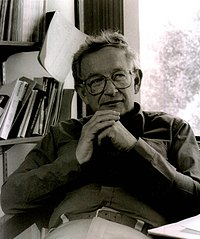
A simple model can shed more light on Nature's workings than a series of "ab initio" calculations of individual cases, which, even if correct, are so detailed that they hide reality instead of revealing it. ... A perfect computation simply reproduces Nature, it does not explain it.
(P.W. Anderson)
What is Density Functional Theory good for?
- Energy, forces, and stress for a given geometry
- Charge density, wave functions, band energies, and other low-level technical information
Usually the codes provide us the following information as output:
What is Density Functional Theory good for?
- Exploration and prediction, simulating experiments difficult or impossible in the laboratory.
- Clarification/complement of experimental information by means of the precise control of simulation conditions. (The computer is a perfect control machine)
- Design of materials with desired properties. Reduction of the “trial and error” loop.
- Parametrization of simpler models
What of Anderson's claim?
Do we understand more?
A SUCCESS story
Ammonia Synthesis
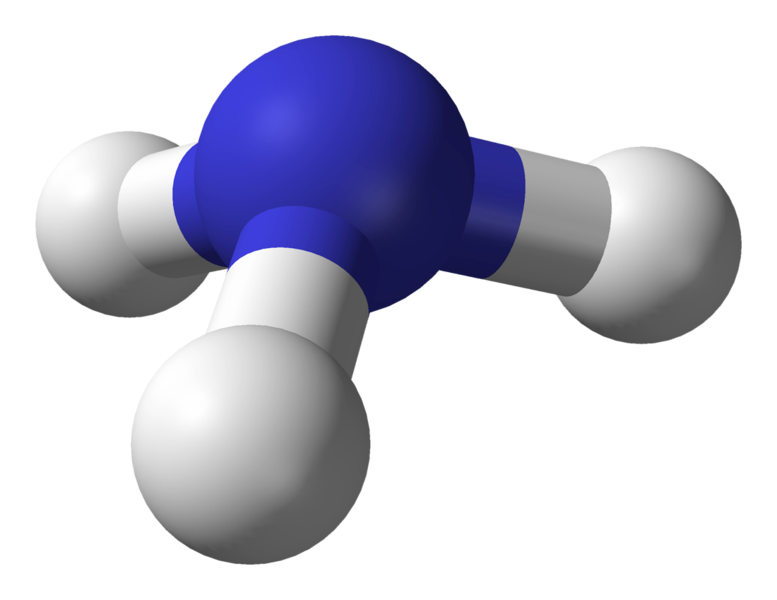
- More than 100 million tons each year
- \( N_2 + 3H_2 \rightarrow 2NH_3 \)
- High temperature and pressure + catalyst
- Sometimes the reaction fast, sometime slow
DFT showed us that the shape of the catalysts is important!
challenges
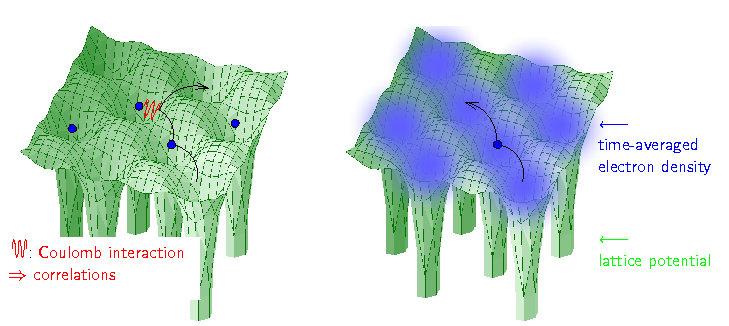
Strong electron-electron interaction
challenges
Avoided crossing

Introduction to First-Principles
By novidad21