


Neural Networks (Deep Learning)

Cornell CS 3/5780 · Spring 2026

(down arrow to see handout slides)

1. Nonlinear Methods

2. NN as Learned Features

3. NN Approximation

4. Fully Connected NN

5. NN Gradients

5. Training with SGD

1. Nonlinear Methods

1. Nonlinear Methods

  • Review: Kernels:
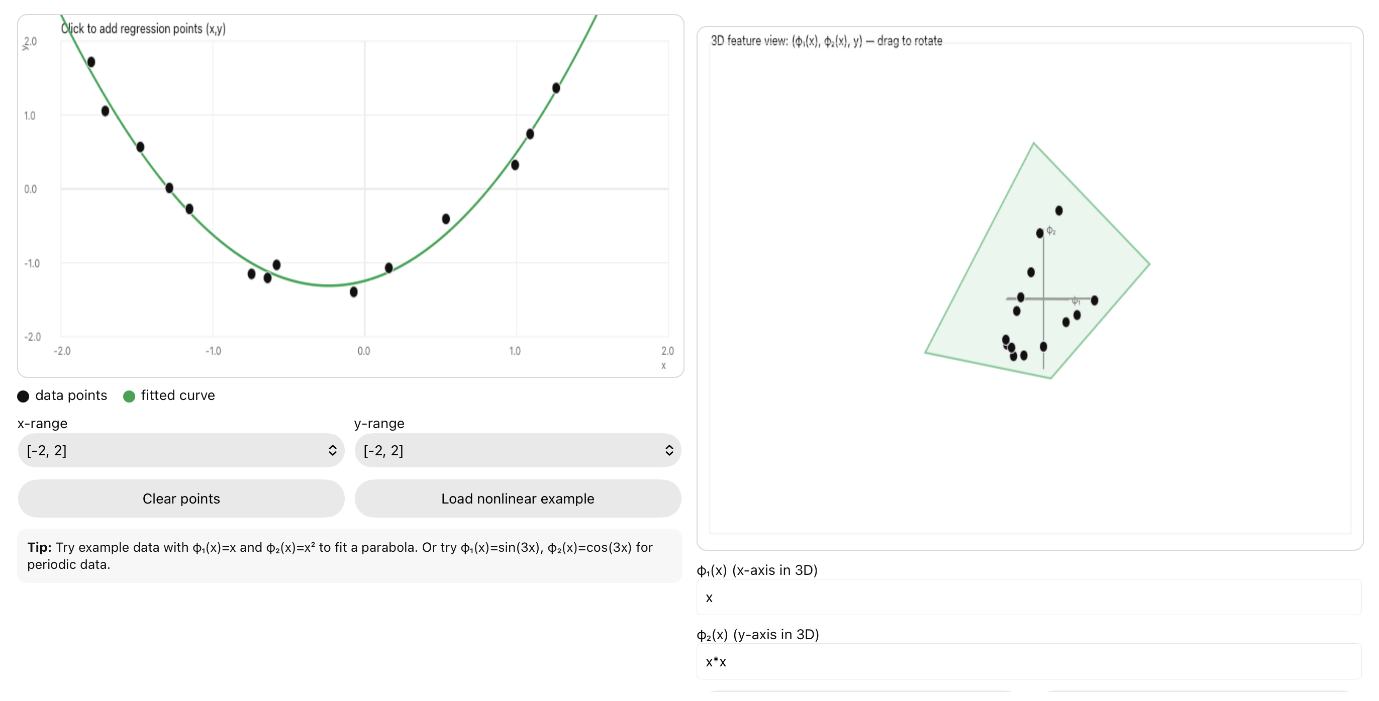
    • Kernel methods lift linear models into nonlinear predictors.
    • Nonlinear features: \( \phi(x) \), where \( \phi(x) \) is a feature map.
    • Kernel function: (feature map is implicit and high dimensional)
      $$ k(x, x') = \phi(x)^\top \phi(x') $$
    • Training complexity: \( > n^2 \) (kernel matrix) and test complexity: \( O(n) \).
  • Today: Neural Networks
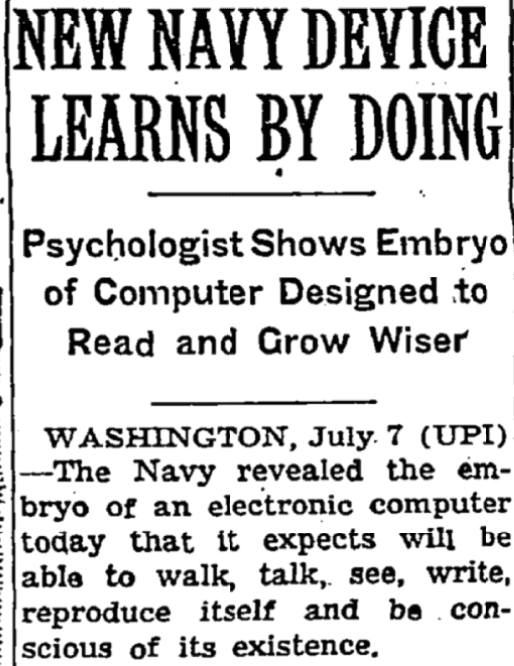
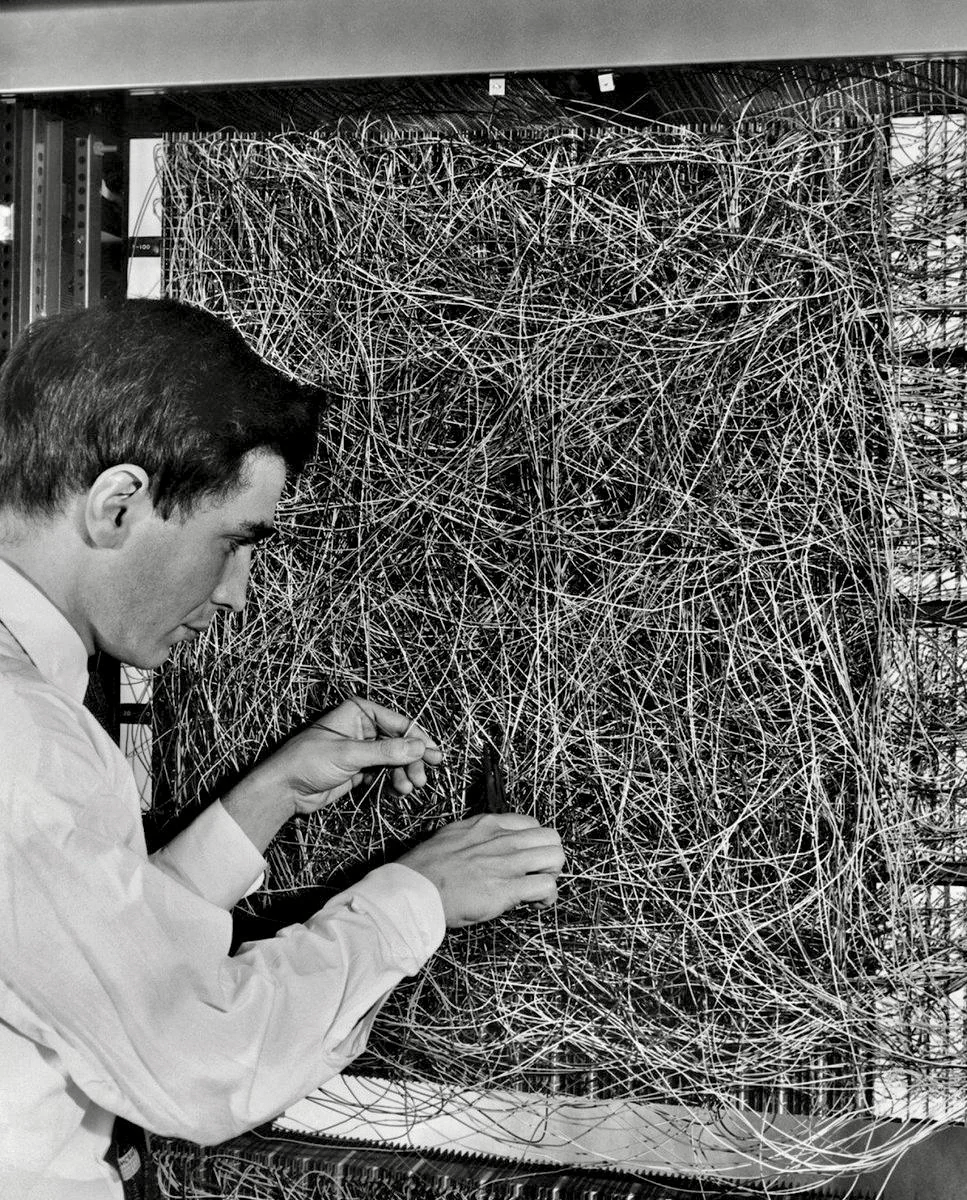
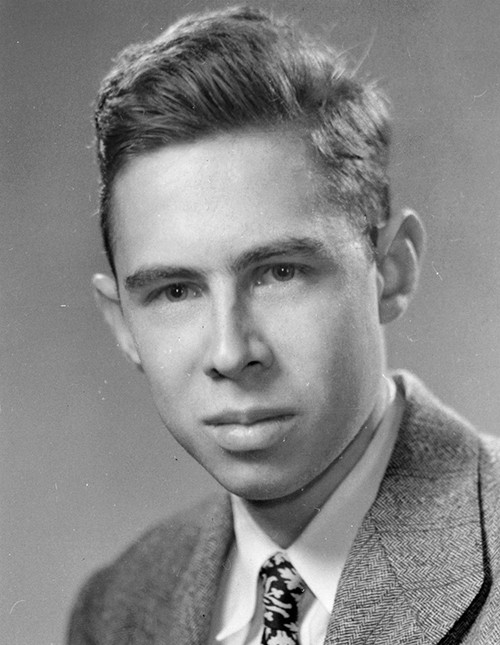
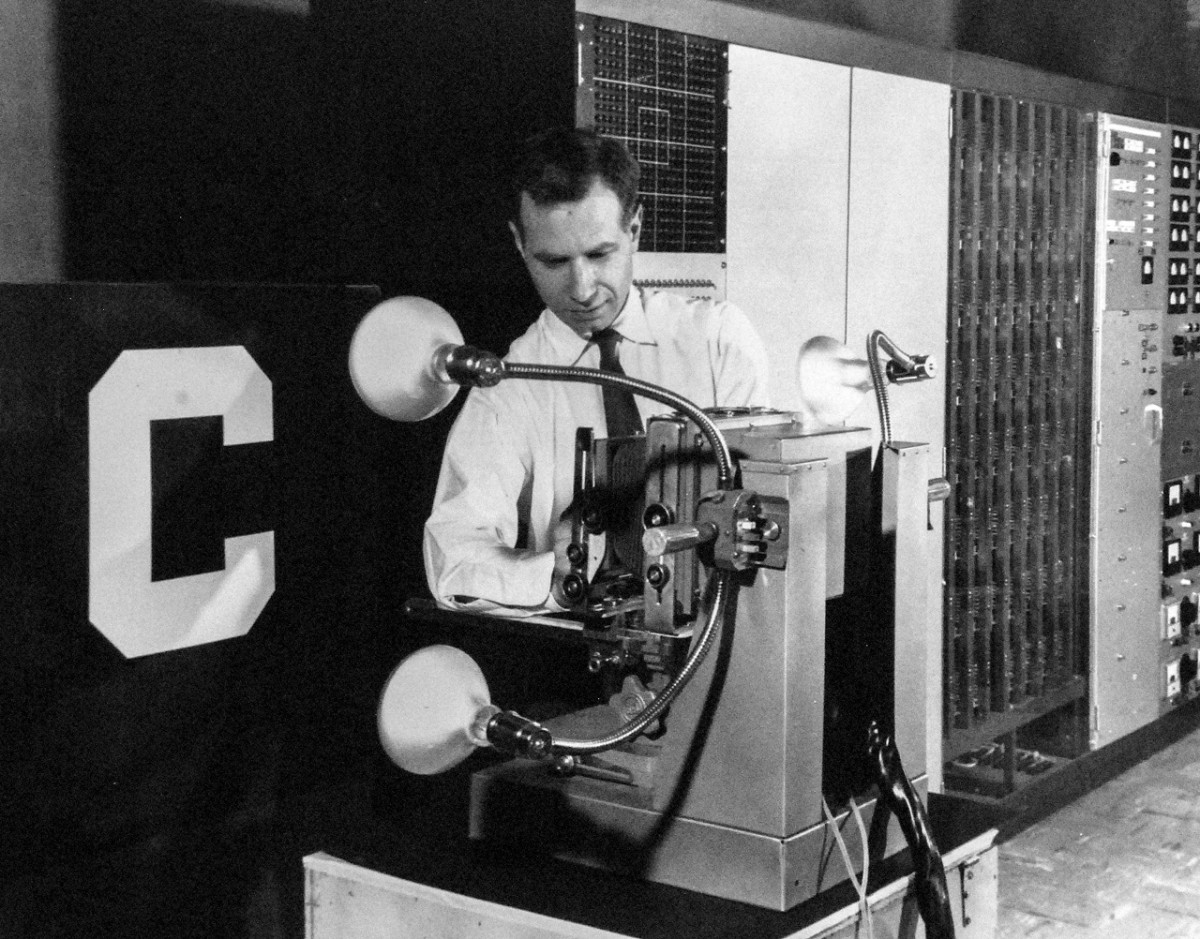
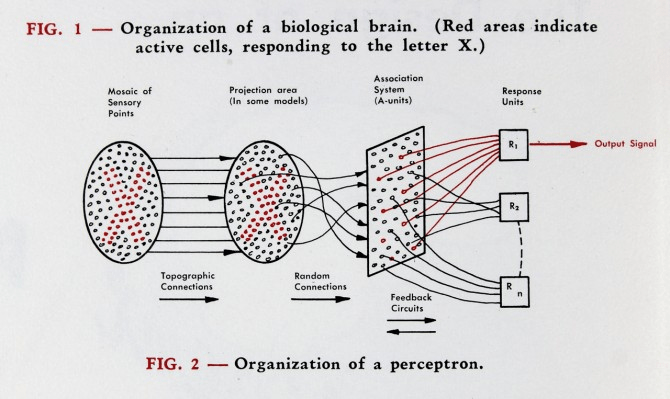
    • Multilayer Perceptron invented at Cornell by Frank Rosenblatt (1963)
    • Learns the feature mapping explicitly from data.
    • Can capture structure by stacking layers of "neurons".

Frank Rosenblatt

New York Times, 1958

IBM 704

MARK I
Perceptron, 1960

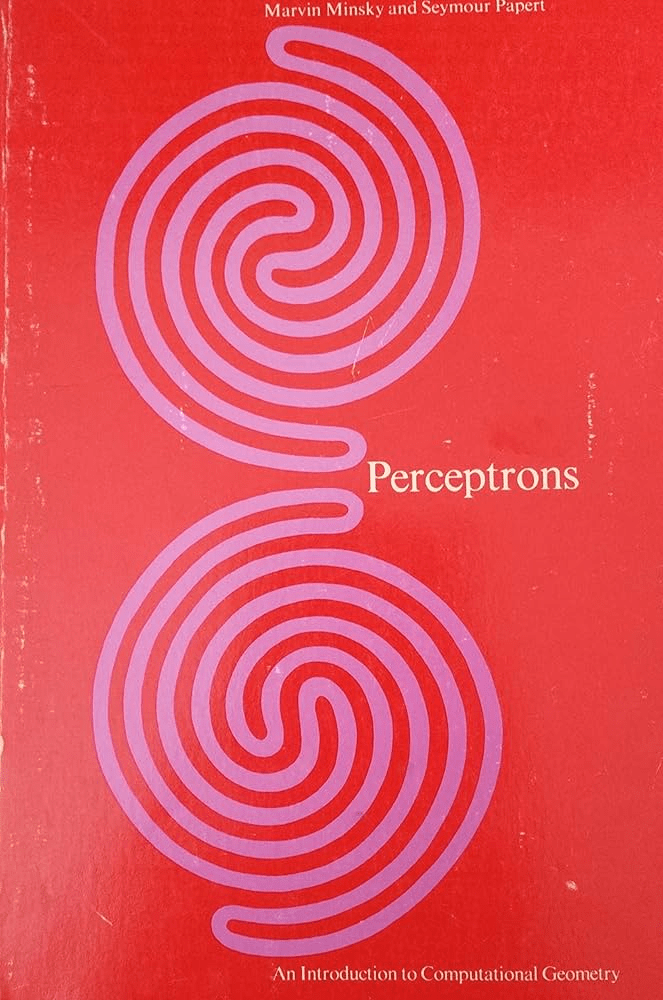
Minsky & Papert

Perceptrons, 1969

\(\underbrace{\quad\qquad\qquad}_{\vec x}\)

\(\underbrace{\qquad}_{h_{\vec w}}\)

\({\vec w}\)

\(\underbrace{\qquad}\)

updates
with \(\vec y\)

\(\underbrace{\qquad}\)

No good algorithm for multiple layers (yet)

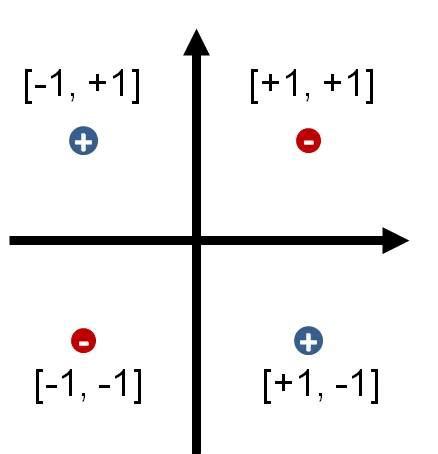
Fundamental limitations of linear classifiers (XOR)

2. Neural Networks as Learnable
Features

1. Nonlinear Methods

2. NN as Learned Features

3. NN Approximation

4. Fully Connected NN

5. NN Gradients

5. Training with SGD

2. Neural Networks as Learnable Features

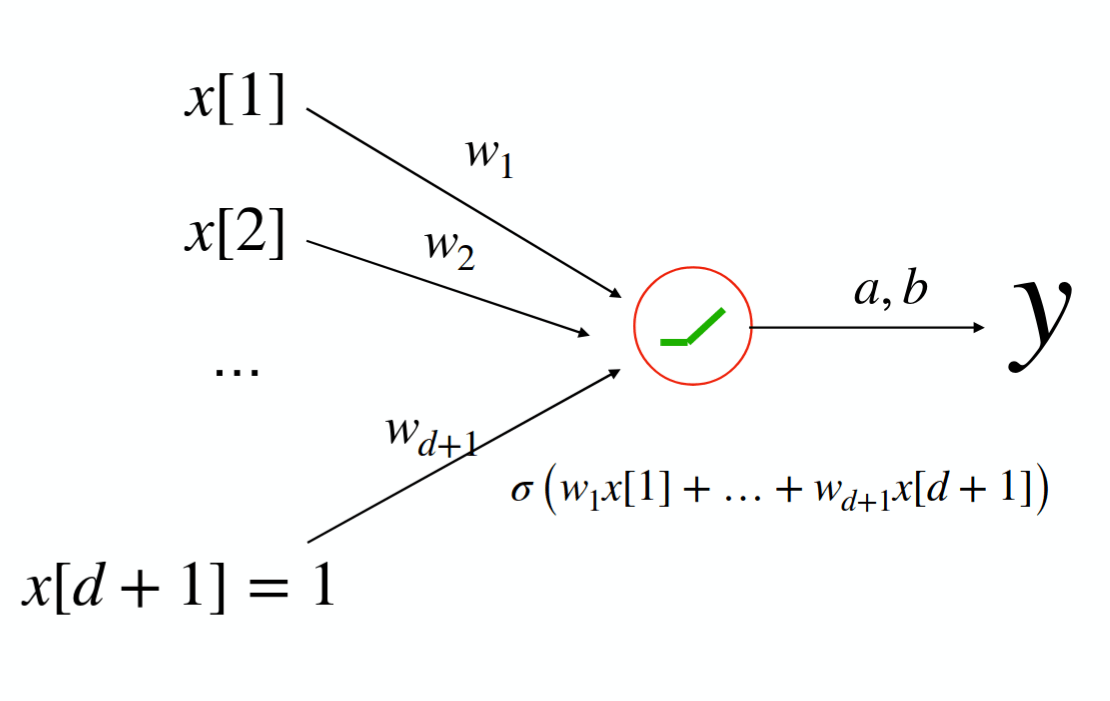
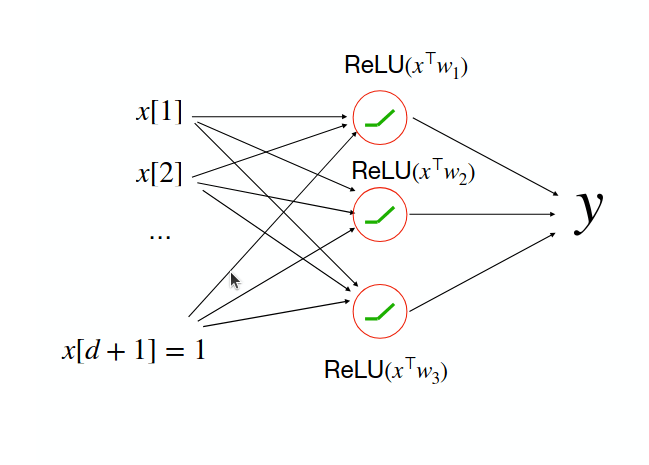
  • Single Neuron Network: Given input \(x \in \mathbb{R}^{d+1} \) with bias \(x[d+1] = 1 \): $$ y = a  \sigma(w^\top x) + b $$ where \(\sigma:\mathbb R\to\mathbb R\) is an activation function.
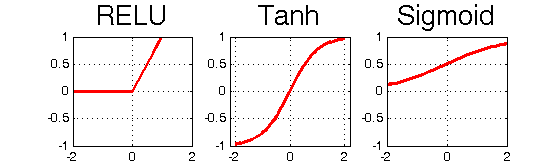
  • Common activations:
    • ReLU: \( \sigma(a) = \max(a, 0) \)
    • Sigmoid: \( \sigma(a) = \frac{e^a}{1 + e^a} \)
    • Tanh: \( \sigma(a) = \frac{e^a - e^{-a}}{e^a + e^{-a}} \)
  • Stacking Multiple Neurons
    • Example with \(K\) neurons: \(\displaystyle y = \sum_{i=1}^K a_i , \text{ReLU}(x^\top w_i) + b \)
    • Vectorized: Let \( W \in \mathbb{R}^{K \times d} \) and let \( a \in \mathbb{R}^K \) $$ y = a^\top \text{ReLU}(Wx) + b $$
  • This defines a learnable feature map \( \phi(x) = \text{ReLU}(Wx) \).

3. What Does a Neural Network Approximate?

1. Nonlinear Methods

2. NN as Learned Features

3. NN Approximation

4. Fully Connected NN

5. NN Gradients

5. Training with SGD

3. What Does a Neural Network Approximate?

  • For one hidden layer: $$ y = a^\top \text{ReLU}(Wx) + b $$
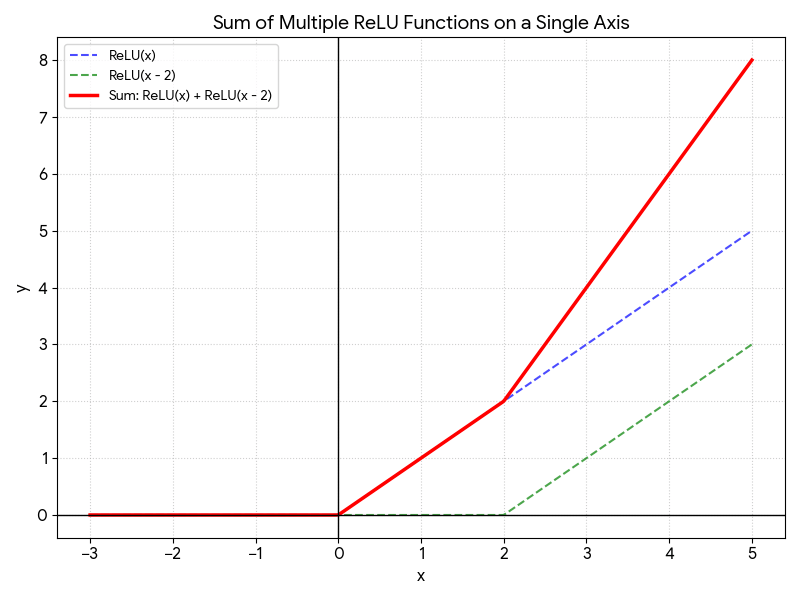
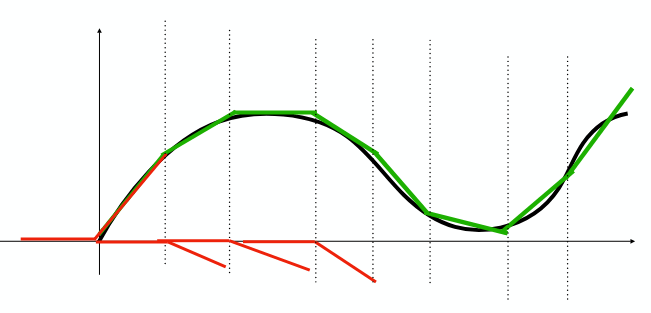
    • This is a piecewise linear function.
    • In 1D (with \( b = 0 \)): $$ y = a_1 \max(w_1 x + c_1, 0) + a_2 \max(w_2 x + c_2, 0) + \dots $$
  • Claim: A sufficiently wide one‑layer neural network can approximate any smooth function

4/5. Multi‑Layer Fully Connected
Neural Network & Gradients

1. Nonlinear Methods

2. NN as Learned Features

3. NN Approximation

4. Fully Connected NN

5. NN Gradients

5. Training with SGD

4. Multi‑Layer Fully Connected Neural Network

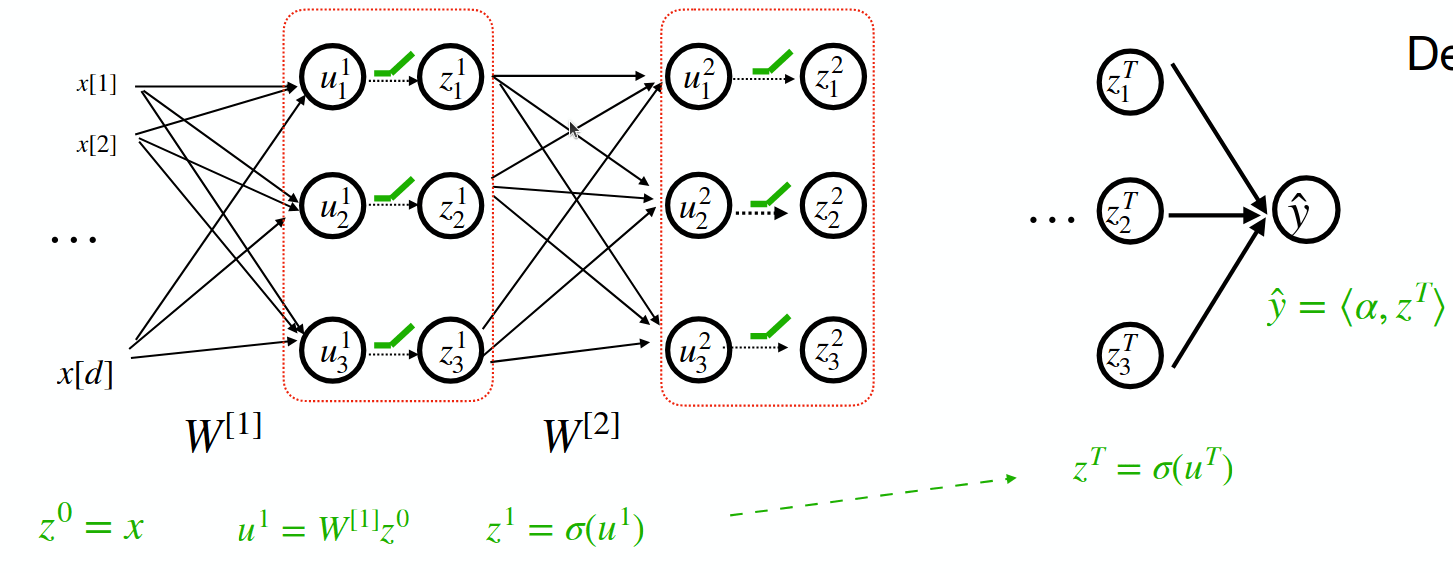
  • Going Deep: depth allows hierarchical feature composition.
    • Can represent complex functions without extremely wide layers.
  • Forward pass: 
    • Input: \( z^{(0)} = x \)
    • For layers \( t = 1 \dots T \): $$ u^{(t)} = W^{(t)} z^{(t-1)} \qquad \qquad \qquad $$ $$ z^{(t)} = \sigma(u^{(t)})  \qquad \qquad \qquad $$
    • Output: $$ y = a^\top z^{(T)} + b $$
  • Computation cost: Linear in number of edges + number of nodes.

5. Training Neural Networks with Gradients

  • Given model: \[ h(x) = a^\top \sigma(W^{(L)}\dots\sigma(W^{(2)} \sigma(W^{(1)} x))\dots) + b \]
  • Loss: for a single data point \( \ell(h(x), y) \)
  • Compute gradients:
    • \( \frac{\partial \ell}{\partial W_{ij}^{(k)}} \) (for all \(i,j,k\)), \(\frac{\partial \ell}{\partial a_j} \) (for all \(j\)), \( \frac{\partial \ell}{\partial b} \)
  • Basic idea: use the chain rule
    • Example: scalar feature, one layer, squared loss

      $$z = w x, \quad h = \sigma(z),\quad \hat{y} = a \cdot h + b,\quad \ell(\hat y, y)=(y-\hat y)^2$$

      What are \( \frac{\partial \ell}{\partial w}\), \(\frac{\partial \ell}{\partial a}\), \(\frac{\partial \ell}{\partial b}\)?

    • Next lecture: backpropagation, a more efficient algorithm.

6. Training Neural Networks with Mini‑Batch SGD

  • Parameters:    \(\theta = {W^{(1)}, W^{(2)}, \dots, W^{(L)}, a, b} \)
  • Procedure:
    1. Shuffle dataset.
    2. Split into batches of size \( B \).
    3. For each batch \( D_j \):  \[ \theta \leftarrow \theta - \eta \frac{1}{B} \sum_{(x,y)\in D_j} \nabla_\theta \ell(h(x), y) \]

1. Nonlinear Methods

2. NN as Learned Features

3. NN Approximation

4. Fully Connected NN

5. NN Gradients

5. Training with SGD

6. Training Neural Networks with Mini‑Batch SGD

  • Parameters:    \(\theta = {W^{(1)}, W^{(2)}, \dots, W^{(L)}, a, b} \)
  • Procedure:
    1. Shuffle dataset.
    2. Split into batches of size \( B \).
    3. For each batch \( D_j \):  \[ \theta \leftarrow \theta - \eta \frac{1}{B} \sum_{(x,y)\in D_j} \nabla_\theta \ell(h(x), y) \]
  • Practical notes:
    • Mini‑batches give unbiased gradient estimates.
    • Nonconvex optimization: solution depends on initialization.
    • Momentum helps escape saddle point, Adagrad also works well.
    • SGD/Adagrad generalize well even for large deep networks.

Lecture 21: Neural Networks (Deep Learning)

By Sarah Dean

Private

Lecture 21: Neural Networks (Deep Learning)