\text{Chapter II}
\text{Chapter II}
\text{Chapter II}
\text{Chapter II}
\text{Average velocity}
v_\text{avg}=\frac{\Delta x}{\Delta t}
\text{Average speed}
s_\text{avg}=\frac{\text{total distance}}{\Delta t}
\text{Average acceleration}
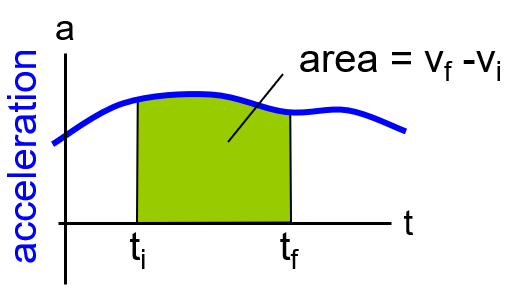
a_\text{avg}=\frac{\Delta v}{\Delta t}
v=v_0+a t
x-x_0=v_0 t+\frac{1}{2} a t^2
\text{Constant acceleration motion}
v^2=v_0^2+2 a\left(x-x_0\right)
x-x_0=\frac{1}{2}\left(v+v_0\right) t
x-x_0=v t-\frac{1}{2} a t^2
v_{\mathrm{avg}}=\frac{1}{2}\left(v+v_0\right)
\text{Free fall:}
\text{we take $a=-g$}
%The position of a particle $x(t)$ as a function of time $(t)$ is described by the equation: $x(t)=2.0+3.0 t-t^3$, where $x$ is in $\mathrm{m}$ and $\mathrm{t}$ is in $\mathrm{s}$. What is the maximum positive position of the particle on the $x$ axis?}
\begin{align*}
&\\
& \text{The position of a particle $x(t)$ as a function of time $(t)$ is described by}\\
& \text{the equation: $x(t) = 2.0 + 3.0t - t^{3}$, where $x$ is in m and $t$ is in s.}\\
& \text{What is the maximum positive position of the particle on the $x$ axis?}\\[1em]
& \text{A) $5.0 \ \mathrm{m}$}\\
& \text{B) $2.0 \ \mathrm{m}$}\\
& \text{C) $3.0 \ \mathrm{m}$}\\
& \text{D) $1.0 \ \mathrm{m}$}\\
& \text{E) $4.0 \ \mathrm{m}$}
\end{align*}
%The position of a particle $x(t)$ as a function of time $(t)$ is described by the equation: $x(t)=2.0+3.0 t-t^3$, where $x$ is in $\mathrm{m}$ and $\mathrm{t}$ is in $\mathrm{s}$. What is the maximum positive position of the particle on the $x$ axis?}
\text{An extremum (Maximum or minimum) appears when $f'(t)=0$}
\begin{align*}
&\\
& \text{The position of a particle $x(t)$ as a function of time $(t)$ is described by}\\
& \text{the equation: $x(t) = 2.0 + 3.0t - t^{3}$, where $x$ is in m and $t$ is in s.}\\
& \text{What is the maximum positive position of the particle on the $x$ axis?}\\[1em]
\end{align*}
\begin{align*}
&x'(t)=0 &\Rightarrow &3-3t^2=0\\
& &\Rightarrow& t=1, \text{ (t>0) }
\end{align*}
x(1)=4 \mathrm{~m}
\begin{align*}
& \text{Two cars are 150 km apart and traveling toward each other.}\\
& \text{One car is moving at } 60\,\mathrm{km/h} \text{ and the other is moving at } 40\,\mathrm{km/h}.\\
& \text{In how many hours will they meet?}\\[1em]
& \text{A) $1.5 \ \mathrm{h}$}\\
& \text{B) $2.0 \ \mathrm{h}$}\\
& \text{C) $1.9 \ \mathrm{h}$}\\
& \text{D) $2.5 \ \mathrm{h}$}\\
& \text{E) $1.2 \ \mathrm{h}$}
\end{align*}
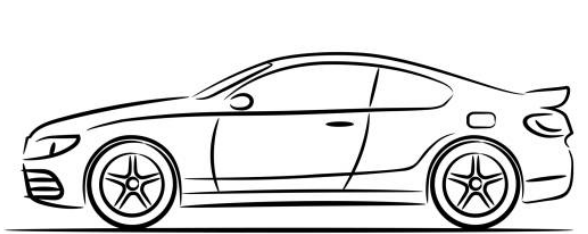
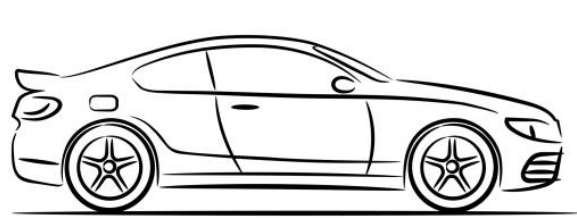
\begin{align*}
& \text{Two cars are 150 km apart and traveling toward each other.}\\
& \text{One car is moving at } 60\,\mathrm{km/h} \text{ and the other is moving at } 40\,\mathrm{km/h}.\\
& \text{In how many hours will they meet?}\\[1em]
\end{align*}
d_1
d_2
d=d_1+d_2=v_1t+v_2t=(v_1+v_2)t
\text{The total distance is:}
t=\frac{d}{v_1+v_2}=\frac{150}{60+40}=1.5 \mathrm{~h}
\begin{align*}
& \text{The coordinate of a particle in meters is given by } x(t)=16t-3.0\,t^{3}, \text{ where }\\
& \text{the time $t$ is in seconds.The particle is momentarily at rest at time=}\\[1em]
& \text{A) $9.3 \ \mathrm{s}$}\\
& \text{B) $1.3 \ \mathrm{s}$}\\
& \text{C) $5.3 \ \mathrm{s}$}\\
& \text{D) $7.3 \ \mathrm{s}$}\\
& \text{E) $0.75 \ \mathrm{s}$}
\end{align*}
\begin{align*}
& \text{The coordinate of a particle in meters is given by } x(t)=16t-3.0\,t^{3}, \text{ where }\\
& \text{the time $t$ is in seconds.The particle is momentarily at rest at time=}\\[1em]
& \text{A) $9.3 \ \mathrm{s}$}\\
& \text{B) $1.3 \ \mathrm{s}$}\\
& \text{C) $5.3 \ \mathrm{s}$}\\
& \text{D) $7.3 \ \mathrm{s}$}\\
& \text{E) $0.75 \ \mathrm{s}$}
\end{align*}
\text{Particule at momentarily at rest $\Rightarrow \dot{x}(t)=v(t)=0$}
\Rightarrow16-9t^2=0
\Rightarrow t=\sqrt{\frac{16}{9}}=1.3 \mathrm{~s}
\begin{align*}
& \text{The velocity as a function of time for a particle moving along the $x$-axis is shown in Fig.~1.}\\
& \text{The motion clearly has two different parts: the first part is from $t=0$ to $t=2.0\ \mathrm{s}$, and the}\\
& \text{second part is from $t=2.0\ \mathrm{s}$ to $t=6.0\ \mathrm{s}$. Which one of the following statements is correct?}\\[1em]
& \text{A) From $t=0$ to $t=6.0\ \mathrm{s}$, the displacement is $-20\ \mathrm{m}$}\\
& \text{B) At $t=4.0\ \mathrm{s}$ the acceleration is zero}\\
& \text{C) From $t=0$ to $t=6.0\ \mathrm{s}$, the displacement is zero}\\
& \text{D) At $t=4.0\ \mathrm{s}$ the acceleration is $-5.0\ \mathrm{m/s^{2}}$}\\
& \text{E) At $t=1.0\ \mathrm{s}$ the acceleration is $10\ \mathrm{m/s^{2}}$}
\end{align*}
\begin{align*}
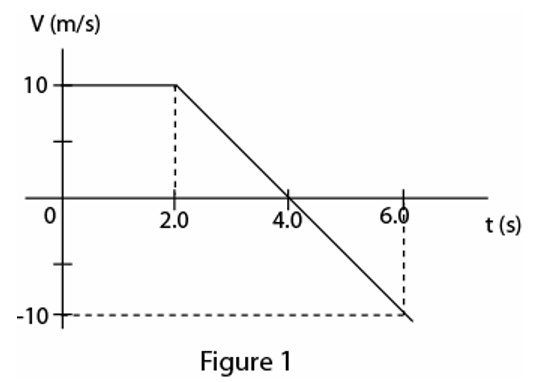
& \text{The velocity as a function of time for a particle moving along the $x$-axis is shown in Fig.~1.}\\
& \text{The motion clearly has two different parts: the first part is from $t=0$ to $t=2.0\ \mathrm{s}$, and the}\\
& \text{second part is from $t=2.0\ \mathrm{s}$ to $t=6.0\ \mathrm{s}$. Which one of the following statements is correct?}\\[1em]
& \text{A) From $t=0$ to $t=6.0\ \mathrm{s}$, the displacement is $-20\ \mathrm{m}$}\\
& \text{B) At $t=4.0\ \mathrm{s}$ the acceleration is zero}\\
& \text{C) From $t=0$ to $t=6.0\ \mathrm{s}$, the displacement is zero}\\
& \text{D) At $t=4.0\ \mathrm{s}$ the acceleration is $-5.0\ \mathrm{m/s^{2}}$}\\
& \text{E) At $t=1.0\ \mathrm{s}$ the acceleration is $10\ \mathrm{m/s^{2}}$}
\end{align*}
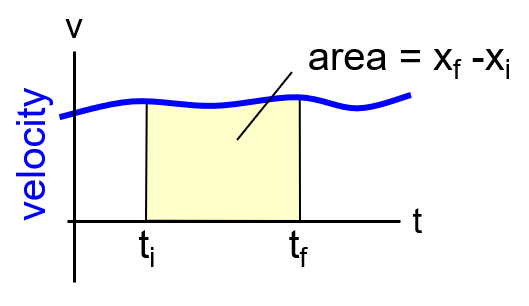
\text{The area under the curve \textcolor{red}{(with the sign)} gives the displacement}
\text{The area of the two triangles cancel each other}
\mathcal{A}=2\mathrm{~s}\times 10\mathrm{~m/s}=+20\mathrm{~m}
\text{The accelertion at $t=4\mathrm{~s}$}
a=\text{the slope}=\frac{v(4)-v(2)}{4-2}=-10/2=-5 \mathrm{~m/s}
\text{Answer D}
\begin{align*}
& \text{A particle moves along the $x$ axis. Its position is given by the equation } x=2.0+3.0t-t^{3} \\
& \text{with $x$ in meters and $t$ in seconds. The average acceleration from $t=0$ to $t=2.0\ \mathrm{s}$ is:}\\[1em]
& \text{A) $-6.0\ \mathrm{m/s^{2}}$}\\
& \text{B) $+3.0\ \mathrm{m/s^{2}}$}\\
& \text{C) $-2.0\ \mathrm{m/s^{2}}$}\\
& \text{D) $+4.0\ \mathrm{m/s^{2}}$}\\
& \text{E) $-5.0\ \mathrm{m/s^{2}}$}
\end{align*}
\begin{align*}
& \text{A particle moves along the $x$ axis. Its position is given by the equation } x=2.0+3.0t-t^{3} \\
& \text{with $x$ in meters and $t$ in seconds. The average acceleration from $t=0$ to $t=2.0\ \mathrm{s}$ is:}\\[1em]
& \text{A) $-6.0\ \mathrm{m/s^{2}}$}\\
& \text{B) $+3.0\ \mathrm{m/s^{2}}$}\\
& \text{C) $-2.0\ \mathrm{m/s^{2}}$}\\
& \text{D) $+4.0\ \mathrm{m/s^{2}}$}\\
& \text{E) $-5.0\ \mathrm{m/s^{2}}$}
\end{align*}
\begin{gathered}
x(t)=2.0+3.0 t-t^3 \Rightarrow \quad v(t)=\frac{d x}{d t}=3.0-3 t^2 \\
v(0)=3.0 \mathrm{~m} / \mathrm{s}, \quad v(2.0)=\mathrm{~m} / \mathrm{s} .
\end{gathered}
a_\text{avg}=\frac{\Delta v}{\Delta t}=\frac{v(2.0)-v(0)}{2.0-0}=\frac{-9.0-3.0}{2.0}=-6.0 \mathrm{~m} / \mathrm{s}^2 .
\text{Answer A}
\begin{align*}
& \text{A car travels along a straight line at a constant velocity of $18\ \mathrm{m/s}$ for $2.0\ \mathrm{s}$ and then}\\
& \text{accelerates at $-6.0\ \mathrm{m/s^{2}}$ for a period of $3.0\ \mathrm{s}$. The average velocity of the car}\\
& \text{during the whole $5.0\ \mathrm{s}$ is:}\\[1em]
& \text{A) $17 \ \mathrm{m/s}$}\\
& \text{B) $18 \ \mathrm{m/s}$}\\
& \text{C) $13 \ \mathrm{m/s}$}\\
& \text{D) $16 \ \mathrm{m/s}$}\\
& \text{E) $10 \ \mathrm{m/s}$}
\end{align*}
\begin{align*}
& \text{A car travels along a straight line at a constant velocity of $18\ \mathrm{m/s}$ for $2.0\ \mathrm{s}$ and then}\\
& \text{accelerates at $-6.0\ \mathrm{m/s^{2}}$ for a period of $3.0\ \mathrm{s}$. The average velocity of the car}\\
& \text{during the whole $5.0\ \mathrm{s}$ is:}\\[1em]
& \text{A) $17 \ \mathrm{m/s}$}\\
& \text{B) $18 \ \mathrm{m/s}$}\\
& \text{C) $13 \ \mathrm{m/s}$}\\
& \text{D) $16 \ \mathrm{m/s}$}\\
& \text{E) $10 \ \mathrm{m/s}$}
\end{align*}
\text{Answer C}
x_1=v t=18\times 2=36 \mathrm{~m}
x_2=x_1+vt+\frac{1}{2}g t^2=36+18\times3-0.5\times6\times3^2=63 \mathrm{~m}
v_\text{avg}=\frac{\Delta x}{\Delta t}=\frac{63-0}{5}=12.6 \mathrm{~m/s^2}
\text{The initial position is $x=0$}
\text{The final position is $x=63 \mathrm{~m}$}
\begin{align*}
& \text{At a traffic light, a truck traveling at $10 \ \mathrm{m/s}$ passes a car as it starts from rest.}\\
& \text{The truck travels at a constant velocity and the car accelerates at $4.0 \ \mathrm{m/s^{2}}$.}\\
& \text{How much time does the car take to catch up with the truck?}\\[1em]
& \text{A) $15 \ \mathrm{s}$}\\
& \text{B) $2.0 \ \mathrm{s}$}\\
& \text{C) $5.0 \ \mathrm{s}$}\\
& \text{D) $20 \ \mathrm{s}$}\\
& \text{E) $25 \ \mathrm{s}$}
\end{align*}
\begin{align*}
& \text{At a traffic light, a truck traveling at $10 \ \mathrm{m/s}$ passes a car as it starts from rest.}\\
& \text{The truck travels at a constant velocity and the car accelerates at $4.0 \ \mathrm{m/s^{2}}$.}\\
& \text{How much time does the car take to catch up with the truck?}\\[1em]
\end{align*}
x=x_0+vt
s=s_0+vt+\frac{1}{2}t^2
\text{for the truck, the position is:}
x=10 t
\text{for the car, the position is:}
s=2t^2
v=10 \mathrm{~m/s} \text{ and } x_0=0
s_=0, v=0, \text{ and } a=4\mathrm{~m/s^2}
\text{The car will catch up the truck when they will have hte same position:}
x=s\Rightarrow 10t=2t^2
t=0 \text{ or }t=5 \mathrm{~s}
\begin{align*}
& \text{The velocity of a particle moving along the $x$-axis is given by : $v_x=\left(50 t-2.0 t^3\right) \mathrm{m} / \mathrm{s}$,}\\
& \text{where t is in s . What is acceleration of the particle ($t>0$ ) when it achieves its \textbf{maximum}}\\
& \text{\textbf{displacement} in the positive $x$-direction?}\\
&\\
&\text{A) } -1.0 \times 10^2 \mathrm{~m} / \mathrm{s}^2\\
&\text{B) } -1.9 \times 10^2 \mathrm{~m} / \mathrm{s}^2\\
&\text{C) } +1.9 \times 10^2 \mathrm{~m} / \mathrm{s}^2\\
&\text{D) } +1.0 \times 10^2 \mathrm{~m} / \mathrm{s}^2\\
&\text{E) } -1.5 \times 10^2 \mathrm{~m} / \mathrm{s}^2
\end{align*}
\text{Can you solve this exam problem?}
Chapter 2-Phys101
By smstry