Doing History Research
Defining an "Us": Nationalism, Culture
and Identity in Modern Europe
Simon Elichko (they/he)
Social Sciences & Data Librarian
What we'll go over:
- Understanding different types of sources
- Finding secondary sources
- Getting books from the stacks
- Journals and databases
- Exploring historical newspapers
and other primary sources
Final Paper
Due May 12
- 7-10 pages, plus footnotes or endnotes and a bibliography
- Write a thesis-driven essay on the topic of your choice, subject to instructor approval, within the bounds of the class’s subject matter (themes; geography; periodization). ...
- Paper will be based on secondary literature, although you may incorporate relevant primary sources if you would like.
- You may use assigned readings in this paper but at least six sources must be from reliable, scholarly sources not found in the syllabus.
What we'll go over:
- Understanding different types of sources
- Finding secondary sources
- Getting books from the stacks
- Journals and databases
- Exploring historical newspapers
and other primary sources
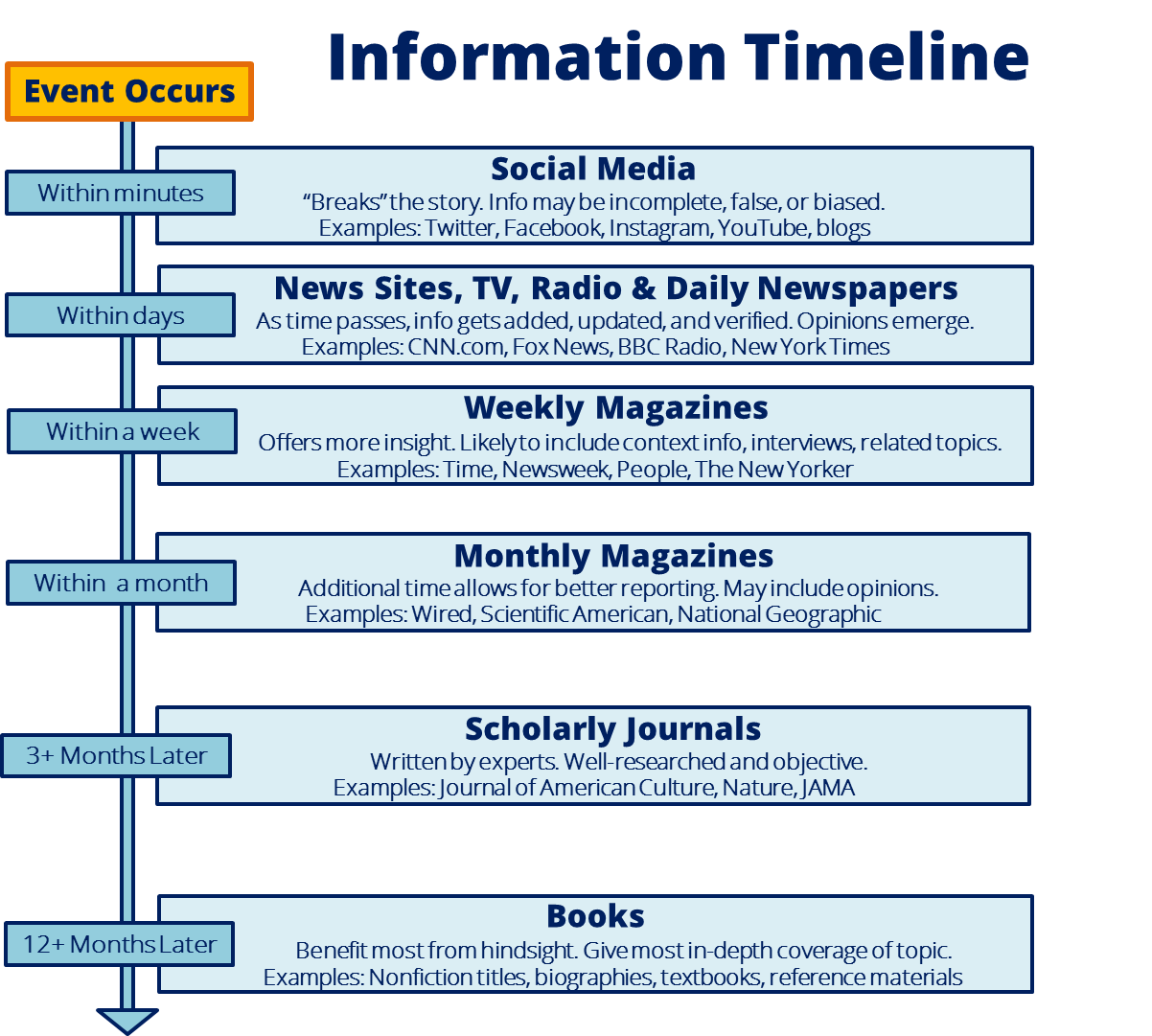
Information Timeline Graphic by adstarkel. Used under CC BY-NC-SA 2.0
What we'll go over:
- Understanding different types of sources
-
Finding secondary sources
- Getting books from the stacks
- Journals and databases
- Exploring historical newspapers
and other primary sources
Secondary Sources
Including chapters from edited collections, for example:
Engel, David. “Away from a Definition of Antisemitism: An Essay in the Semantics of Historical Description.” In Rethinking European Jewish History, edited by Jeremy Cohen and Moshe Rosman. Liverpool University Press, 2009.


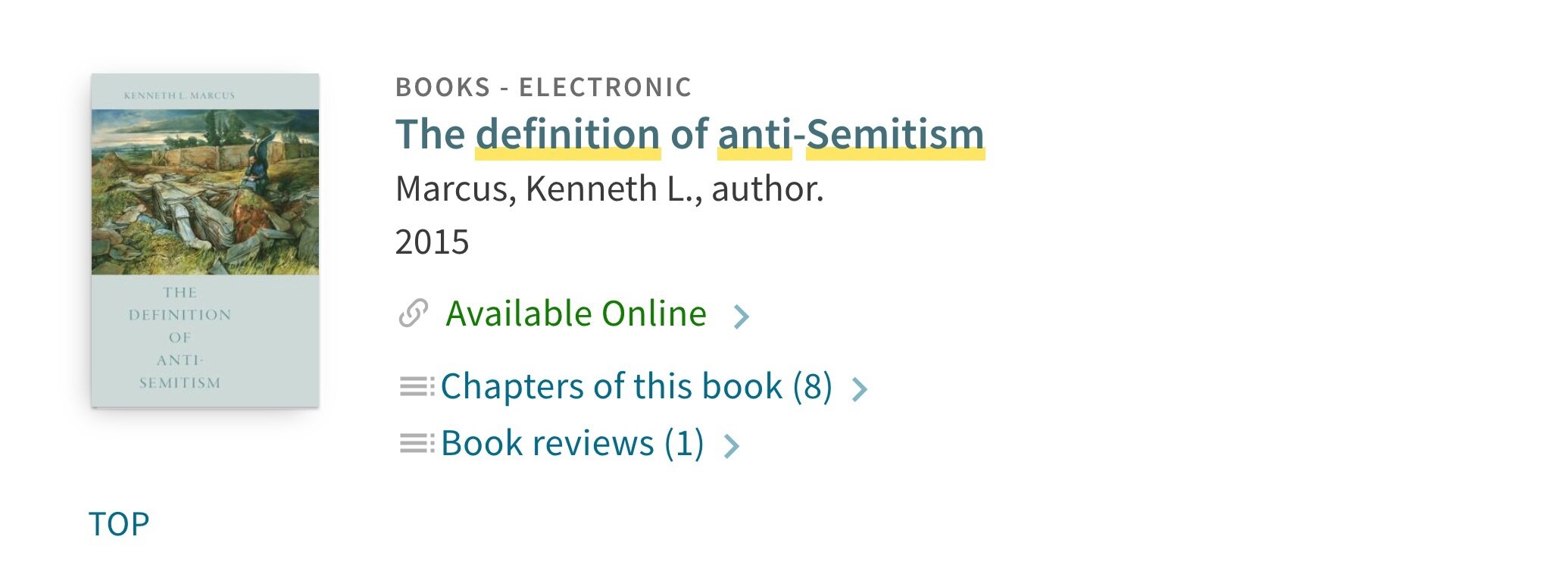
Books

source: McMaster University Library
Books at the Libraries
Example call number:
HQ1163 .H55 2022
H: Social Sciences
| Call number starts with | Floor in McCabe |
|---|---|
| A-E | Lower Floor |
| F-K | 2nd Floor |
| L-Z | 3rd Floor |
Tutorial: How to find a book in McCabe
Getting books from the library
- Pair up with a classmate
- Take the paper slip with your book title and call number
- Scan the QR code to open the tutorial on finding a book in McCabe
- Do two things:
• Use the call number to find your book on the shelf
• Find a second book nearby that looks interesting - Bring both of your books back here with you
To find the elevator, turn right when you leave LibLab.
| Call number starts with | Floor in McCabe |
|---|---|
| A-E | Lower Floor |
| F-K | 2nd Floor |
| L-Z | 3rd Floor |
Getting books from the library
When you return with your books, consider:
- Is your book an edited collection, with chapters contributed by different authors? Or is it a monograph?
- Look up at least one of the authors or editors. What can you tell about their academic background?
1. Go to Tripod: swarthmore.edu/libraries
2. Search for the book's title to find its record in Tripod.
- Choose the result for the book itself, not a book review
- Can't find it? Put the title in quotes, e.g. "Postcolonial Realms of Memory"
3. Find the subjects used to describe your book.
- Scroll down to Details section. Find the section labeled Subject.
- Click on a subject tag. What do you find? (e.g. Collective memory -- France)
Searching for books in Tripod
4. Explore Tripod using Subject, Region, and other filters
- These filters can help you find books on your topic
- Date refers to publication date (not the dates being discussed)
- Resource Type can pull up books (rather than videos)
Deciding which books to read:
useful questions
-
Who published it?
- University presses such as Oxford University Press, Cambridge, Harvard, Yale, Chicago, Stanford, Duke
- Non-university presses that often publish scholarly books include Routledge, Berghahn, Rowman and Littlefield, Springer/Palgrave
-
Who wrote it?
- Does the author have training in history?
- What kind of expertise do they have about the topic of the book?
-
Can you find any book reviews?
- You'll sometimes see book reviews linked in the Tripod record.
- To find book reviews, search Tripod for the book's title.

Pragmatic considerations:
Can you access it in time?
- How to access Swarthmore + TriCo books
- Borrowing beyond TriCo: EZBorrow, interlibrary loan, requesting article and chapter PDFs
How do you access a book from Tripod?

Follow links to read online
You can read books online and borrow physical copies from the TriCo libraries.
Login to Tripod to see the option to Request Physical Copy.
Requested books are held for you at the library front desk. Take 1-2 business days to arrive.
You can use the call number to get the book from the shelf.
Tripod
Login to Tripod to request delivery (arrives 1-2 days)
E-Z Borrow
Borrow books from academic libraries in PA, NJ (arrives in ~1 week)
Borrow books, journals, microfilm, DVDs, etc. from all over the world. (arrives in 1-3 weeks)
Penn Drexel Temple NYU Rutgers
Swat Haverford Bryn Mawr
Oxford Columbia University of Amsterdam
Harvard Stanford University of California Davis
How to get books from the TriCo + other libraries
You can request delivery of PDFs of articles & book chapters that aren't available in Tripod.
1. Go to Worldcat.org
2. Search in Worldcat using the same subjects you used
in Tripod, for example:
Worldcat is similar to Tripod, but it lets you search for books owned by libraries across the world.
What if you see a book you'd like to read?
First, check to make sure it's not in Tripod.
If it's not in Tripod, follow the link for Borrow Beyond TriCo.
The fastest way to request a book is through EZBorrow.
What we'll go over:
- Understanding different types of sources
- Finding secondary sources
- Getting books from the stacks
- Journals and databases
- Exploring historical newspapers
and other primary sources
✓
✓
Secondary Sources: Journal Articles
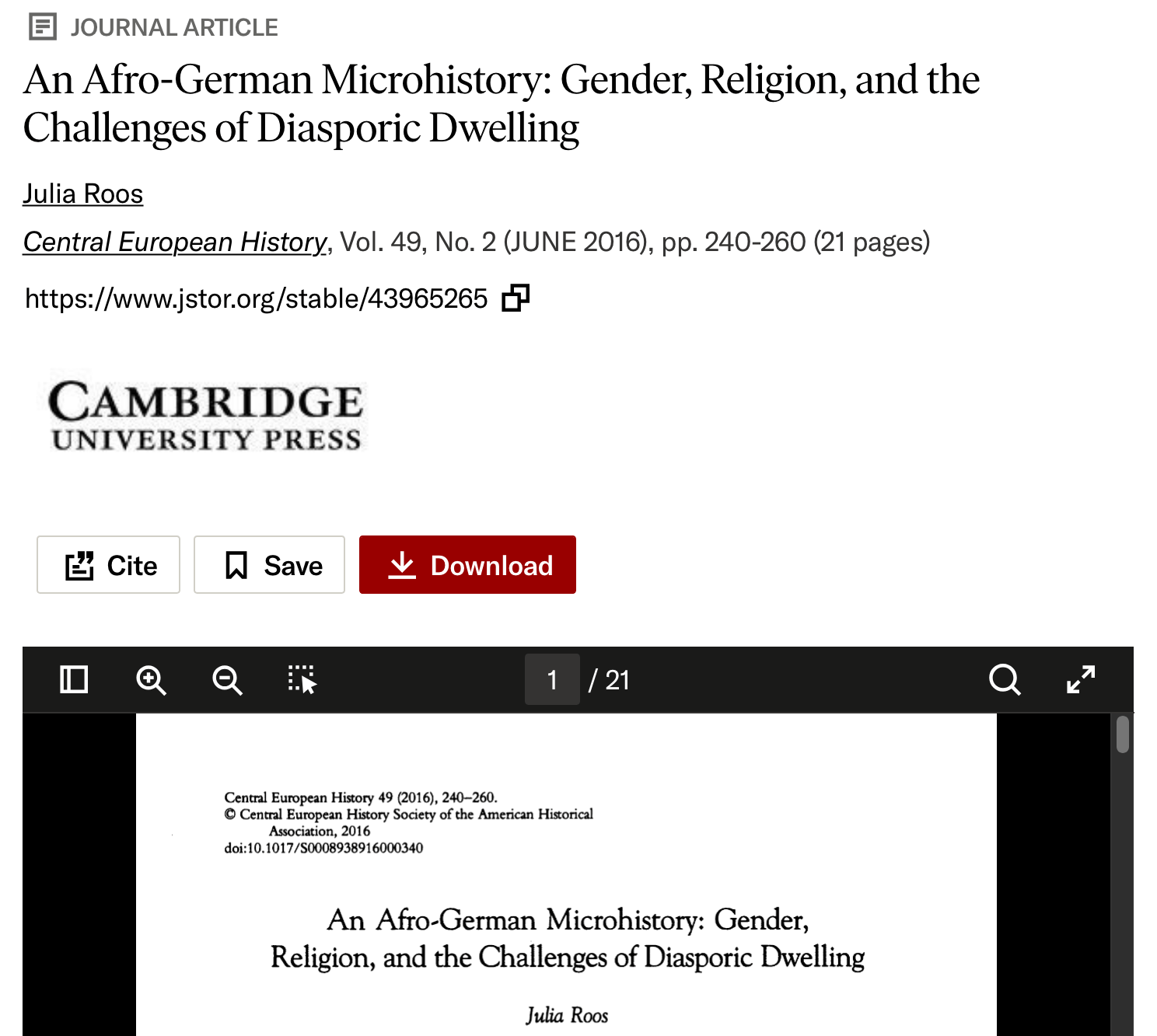
Example article:
Julia Roos, “An Afro-German Microhistory: Gender, Religion, and the Challenges of Diasporic Dwelling,” Central European History 49, 2 (2016): 240-260.
Secondary Sources: Journal Articles
Example reference for a journal article:
Julia Roos, “An Afro-German Microhistory: Gender, Religion, and the Challenges of Diasporic Dwelling,” Central European History 49, 2 (2016): 240-260.
How to read it:
Author, "Article Title," Title of Journal Volume #, Issue # (Year):Pages
Find your article and tell us the title:
- American Historical Review 110, 2 (2005): 409-434.
- American Historical Review 106, 3 (June 2001): 906-922
- German Studies Review 24, 2 (2001): 325-351
- History and Memory 5, 2 (Fall-Winter 1993): 7-31
Secondary Sources: Journal Articles
How to read a journal article reference:
Author, "Article Title," Title of Journal Volume #, Issue # (Year):Pages
American Historical Review 106, 3 (June 2001): 906-922
Hue-Tam Ho Tai, “Remembered Realms: Pierre Nora and French National Memory”
American Historical Review 110, 2 (2005): 409-434.
Gregory Mann, “Locating Colonial Histories: Between France and West Africa"
German Studies Review 24, 2 (2001): 325-351
Daniel Walther, “Creating Germans Abroad: White Education in German Southwest Africa, 1894-1914”
History and Memory 5, 2 (Fall-Winter 1993): 7-31
K.S. Inglis, “Entombing Unknown Soldiers: From London and Paris to Baghdad”
Journal of Contemporary History 29, 4 (1994): 711-734
Eric Jennings, “‘Reinventing Jeanne’: The Iconology of Joan of Arc in Vichy Schoolbooks, 1940-44”


History Databases
Finding journal articles and book reviews
Useful databases for finding history research
Finds articles based on the time period they discuss
Choosing your research tools
| Research Tool | Content Focus | Geographic Focus (of articles) | Matches your search term in... |
|---|---|---|---|
| Historical Abstracts | Articles from History journals | Outside of the US and Canada | Summary of each article |
| America, History & Life | Articles from History journals | US and Canada | Summary of each article |
| JSTOR | Articles from journals (all fields) | All | Every word in the article |
You can get links to databases and other resources for this class on the HIST 1U Research Guide.
Find a link to Research Guides in Tripod or the Libraries site.
In Research Guides, search for the class. (e.g. Defining an Us)
From the HIST 1U Research Guide,
go to the page Find Journal Articles.
Then from the Find Journal Articles page,
go to the database Historical Abstracts.
(click the yellow S)
Concept 1
Concept 2
Memorialization
OR
Memorials
Europe
OR
France
TOPIC
Collective Memory
Political Customs
Break down your topic idea into concepts
("memorials" OR "memorialization" OR "collective memory" OR "political customs")
AND (europe OR european OR france OR french)
OR
OR
French
OR
European
OR
What we'll go over:
- Understanding different types of sources
- Finding secondary sources
- Getting books from the stacks
- Journals and databases
-
Exploring historical newspapers
and other primary sources
✓
✓
✓
From the HIST 1U Research Guide,
go to the page Find Primary Sources: Historical News.
Then from the Find Primary Sources page,
go to The Guardian and Observer.
(click the yellow S)
Research Help & Advice
Reach out to talk about your ideas, projects, questions
Discussing your work and asking questions is a great way to build skills
Simon Elichko (social sciences librarian)
- Make an appointment: bit.ly/selichk1
-
Email selichk1@swarthmore.edu
Email librarian@swarthmore.edu
- You'll reach the subject librarian on-duty and they'll follow up with you (or have someone else do so)
Chat in Tripod
- Available M-F afternoons, staffed by librarians
HIST 001U - Defining an "Us" Nationalism, Culture, and Identity in Modern Europe
By Swarthmore Reference
HIST 001U - Defining an "Us" Nationalism, Culture, and Identity in Modern Europe
Slides for research workshop for History 001U