Vidhi Lalchand
Postdoctoral Fellow, Broad and MIT
Inverse Design for Portfolio Construction
From Text-to-(X)
We are witnessing a rapid generalization of “text-to-X” paradigms — where natural language becomes a universal programming interface.
Text → Text: question answering, summarization, dialogue — reasoning directly in language space.
Text → Image / Video / 3D: descriptive prompts converted into visual imagination.
Text → Code / Software: instructions turned into executable programs and data pipelines.
Text → Application: multi-step compositions of code, UI, and data logic forming deployable tools.
Text → Agent: autonomous systems that can plan, act, and interact with the world through APIs, sensors, and language.
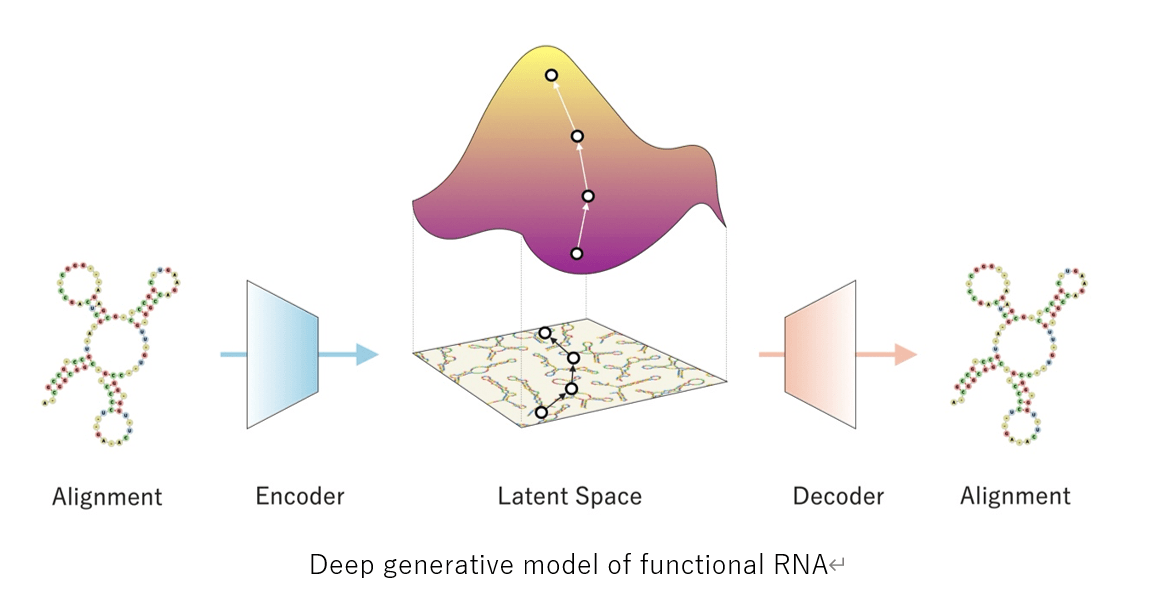
Inverse Design
LLM queries an internal generative model trained on millions of stock portfolios held for arbitrary durations and benchmarked historically.
From Text-to-(X)
LLM Reasoning
Engineering Wrapper
Function
Canonical architecture
Uncommon
LLM Reasoning
Mathematical Model
Function
From Text-to-(X)
I’ve just finished building my portfolio. I didn’t construct it to be market cap neutral — that’s not how I build — but I’m starting to worry I might be unintentionally long all mega-caps and short small-caps again.
With the Fed expected to hold rates steady next week and increasing chatter around a potential small-cap rally — especially after September’s CPI came in cooler than expected — I want to sanity-check my book.
I’m not looking for full factor neutrality. I just want to make sure I’m not making a silent size bet I didn’t mean to take.
Can you give me two optimized versions of my portfolio:
• One that reweights my existing names to reduce size bias
• And another that allows up to two adds/drops to do the same, if that gets me materially better alignment.
Real PM queries
From Text-to-(X)
Real PM queries
Fed likely done hiking; 1–2 cuts expected over next 12 months. Maintain modest duration tilt — add to quality growth, utilities, and infrastructure.
Increase exposure to gold and materials on sustained central-bank demand. Maintain overweight in nuclear, grid, and energy-transition engineering; selectively add onshoring industrials (ultra-pure chemicals, semicap inputs) with strong pricing power.
Keep sector deviations within ±5%, max name 8%, beta near 1.0, turnover <80%, and maintain liquidity discipline (ADV > $5M, DTL ≤ 3 days). Exclude coal and tobacco; portfolio carbon intensity ≤ benchmark.
Rebalance to reflect these views; reduce crowding and style bias.
Aveni — £11M Series A; FinLLM tools for advisers and compliance automation.
Fiscal AI — $10M+; conversational copilots for CFOs and finance teams.
Julius AI — $10M seed; AI “data analyst” for financial insights and modeling.
Samaya AI — $43M; generative agents for research, forecasting, automation.
Hebbi AI — $12M+; domain LLMs for reporting and risk management.
Stacks AI — $10M; automates financial close and real-time reconciliation.
Dual Entry — $90M; AI-native workflow engine replacing ERP/accounting.
Alaan — $48M Series A; spend-management and finance automation (MENA).
Casca — $29M Series A; AI-powered loan origination and underwriting.
Notable Startups in AI for Finance
By Vidhi Lalchand