Vidhi Lalchand
Postdoctoral Fellow, Broad and MIT
Vidhi Lalchand, Ph.D.
For IMU Biosciences
Data & Model
~300 samples, Ratios [On local parents]
    stratify_labels = clean_response["agvhd34"].values
    indices = np.arange(len(clean_tv_num))
    train_indices, val_indices = train_test_split(
        indices, train_size=250, stratify=stratify_labels, random_state=24
    )
    y = clean_response["agvhd34"].values
    N = len(y)

    X_raw = clean_tv_num.values.astype(float)  # raw ratios

    # 1) Log-transform counts (if they are non-negative)
    X_log = np.log1p(X_raw)    # log(1 + x), safe for x >= 0

    # 2) Standardize to improve kurtosis / skewness
    scaler = StandardScaler()
    X_scaled = scaler.fit_transform(X_log)
Model Framework: Logistic Classification with Elastic net regularisation
For total samples NNN, positives N1N_1N1, negatives N0N_0N0
Threshold \(p_{i}\) to classify, \( y_{i} \in (0,1)\)
Total objective Loss:
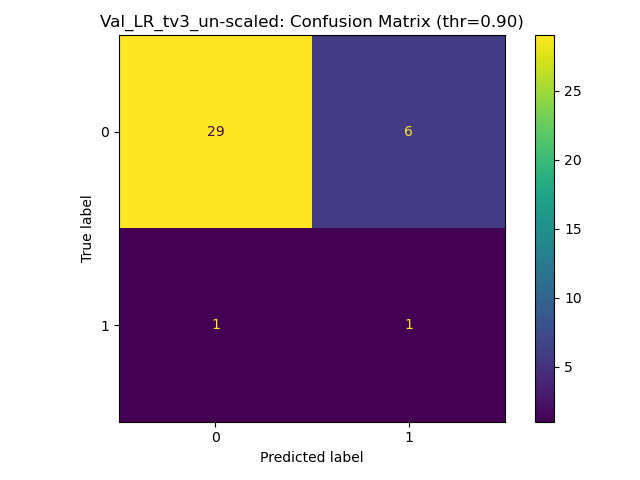
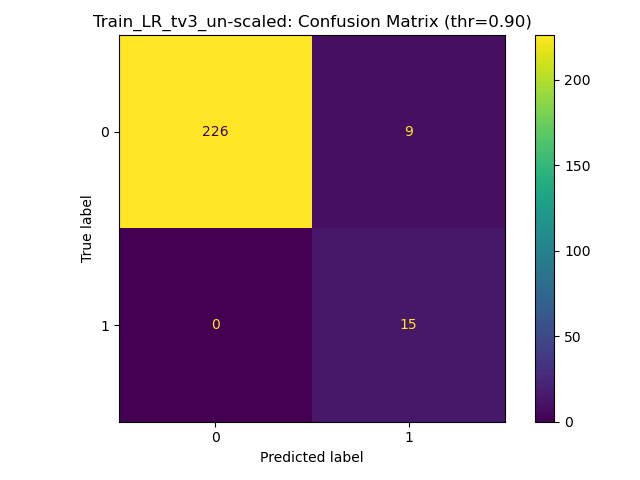
Results for Training on Raw - Ratios Tv5
Respectable but unreliable generalisation.
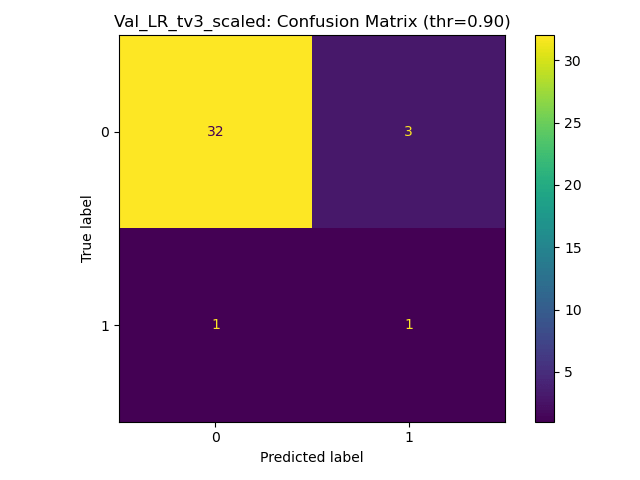
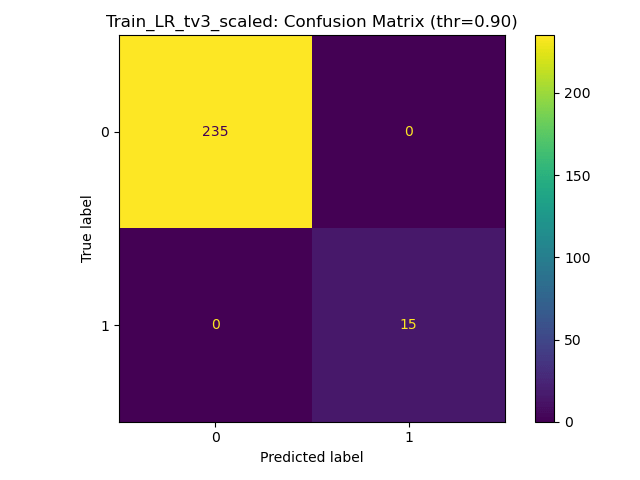
Results for Training on Scaled - Ratios Tv5
100% training acc, generalises with strong penalisation for false negatives, but can still produce FNs. Scaling the ratios is better for generalisation.
class TinyMLP(nn.Module):
    def __init__(self, d_in, d_hidden=24, p=0.4):
        super().__init__()
        self.net = nn.Sequential(
            nn.LayerNorm(d_in),
            nn.Linear(d_in, d_hidden), nn.ReLU(), nn.Dropout(p),
            nn.Linear(d_hidden, d_hidden//2), nn.ReLU(), nn.Dropout(p),
            nn.Linear(d_hidden//2, 1)
        )
    def forward(self, x): return self.net(x).squeeze(-1)
Alternative Framework: Small MLP w. dropout
Canonical MLP w. ReLU non-linearity and a dropout probability parameter of 0.4
Results for Training with Small MLP w. aggressive dropout
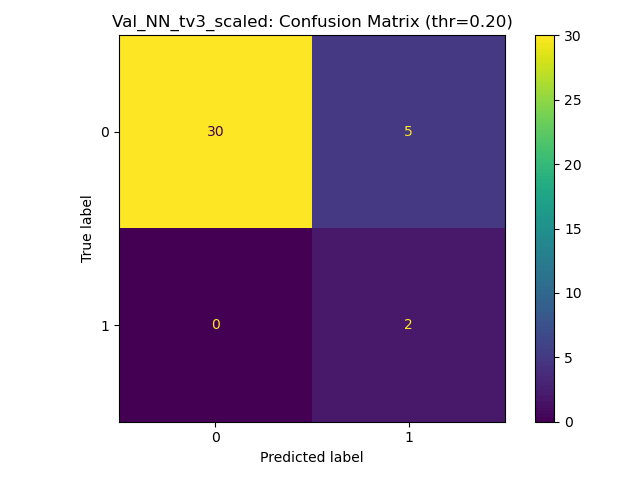
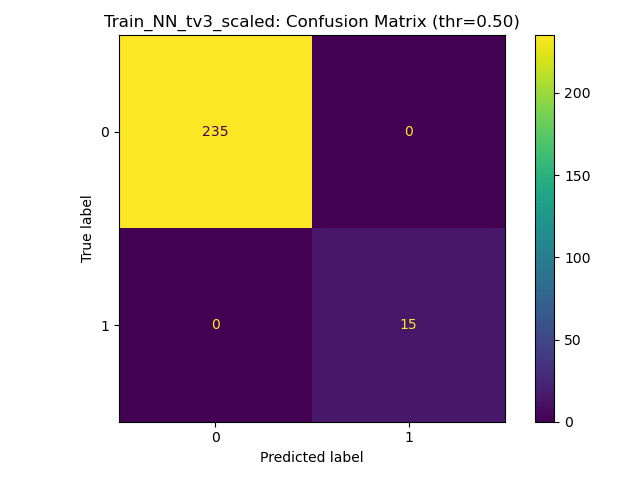
100% training acc, generalises with strong penalisation for false negatives, over cautious
By Vidhi Lalchand