Blockchain Technolgy & Decentralized Finance: PRIVACY
Instructors: Andreas Park & Zissis Poulos
Rotman – MBA


Concern: Privacy/Secrecy
- intrinsic feature of public blockchains is that information gets stored by public addresses.
- logic of smart contracts is visible to all
- => firms have need of secrecy, individuals have rights to privacy
Root problem
Solutions
- large numbers of wallets/addresses
- coinjoin
- ring signatures
- zero knowledge proofs
Zero Knowledge Proofs
Basic Idea
A mechanism that proves to one party (the VERIFIER) that another party (the PROVER) possesses some knowledge, without revealing the knowledge itself or any other information that can be used to re-construct it
Basic Premise
A mechanism that proves to one party (the VERIFIER) that another party (the PROVER) possesses some knowledge, without revealing the knowledge itself or any other information that can be used to re-construct it
This is a probabilistic statement not a math proof
WHY?

I was born between 1976 and 2000
Range Proofs

WHY?
I am an EU citizen
Set Membership
WHY?
We both have the same
access rights to this account

Comparison
WHY?
Computational
Integrity

I performed the computation
you asked me to
Toy Example


Verifier Victor
Prover Peggy
Types
ZKP
ZKP
SNARKS
STARKS
STIK
NIZKP
Bulletproof
Lattice
DVNIZKP
Graph iso
Pros/Cons
ZKP
ZKP
SNARKS
STARKS
STIK
NIZKP
Bulletproof
Lattice
DVNIZKP
Graph iso
- Improved privacy
- Better security
- Scalability solutions
- Expensive
- Trusted setup (for some types)
- Not always post-quantum secure
Pros/Cons
ZKP
ZKP
SNARKS
STARKS
STIK
NIZKP
Bulletproof
Lattice
DVNIZKP
Graph iso
- Improved privacy
- Better security
- Scalability solutions
- Expensive
- Trusted setup (for some types)
- Not always post-quantum secure
- Trusted setup

: multi-party computation ceremonies (2016-2017-2018)
Pros/Cons
ZKP
ZKP
SNARKS
STARKS
STIK
NIZKP
Bulletproof
Lattice
DVNIZKP
Graph iso
- Improved privacy
- Better security
- Scalability solutions
- Compute-heavy
- Trusted setup (for some types)
- Not always post-quantum secure
- Expensive
Vanilla Tx = 21,000 GAS
SNARK = 800,000 GAS
@ $15/Tx
$570 per SNARK proof
Scalability
ZKP
ZKP
SNARKS
STARKS
STIK
NIZKP
Bulletproof
Lattice
DVNIZKP
Graph iso
Two most popular
- Prove computation has been performed according to some rules
- Key Point: proofs much smaller than the data they represent!
- From many small payloads on-chain we move to much larger payloads off-chain
Scalability
ZKP
ZKP
SNARKS
STARKS
STIK
NIZKP
Bulletproof
Lattice
DVNIZKP
Graph iso
Two most popular
- Prove computation has been performed according to some rules
- Key Point: proofs much smaller than the data they represent!
- From many small payloads on-chain we move to much larger payloads off-chain



Rollups
Blockchains bundle three things together:
data availability
settlement
execution
Why rollups?
Monolithic Paradigm
Consensus
Data Availability
Data Availability
Execution
Settlement
- Limits the capacity
- Limits transaction throughput
- Hampers innovation
It's a problem
Why rollups?
Imagine instead of this
Application
Middleware/DB
Operating System
Hardware
We had this
Application
+
Middleware/DB
+
Operating System
+
Hardware
G
o
o
o
b
l
e
How rollups?
Consensus
Data Availability
Execution
Settlement
Merge


Multiple blockchains handle separately:
consensus
data availability
settlement
execution
Modular Design
How rollups?
Consensus
Data Availability
Execution
Settlement
- Process Tx outside Ethereum
- Bundle them + compute new state
- Publish new state on Ethereum
- Publish a validity proof (zk)
- Use Ethereum for settlement
ZK-rollups
Optimistic rollups
- Validators process Tx outside Eth
- They publish blocks
- Rotate based on PoS
- Honest reporting: bonding/slashing
- Other validators can challenge results!
- Implication: finality is not immediate (week?)
zk-rollups vs. optimistic rollups
Consensus
Data Availability
Execution
Settlement
- Generally more expensive
- Cryptographically secure
- Complex implementation
- Only support payments and transfers
ZK-rollups
Optimistic rollups
- Generally more efficient (>100Tx/sec)
- Cryptoeconomic security
- Compatible with Ethereum's VM
- Can run any type of contract
- Implication: more DeFi-ready
We need several rollups deployed to achieve scalability
Other scaling solutions
- Payment channels
- limited applications
- Sidechains
- usually sovereign -> have their own consensus
- Other Layer 1 chains that are EVM-compatible
- E.g., Avalanche, Cosmos etc.
MYTHS!
Myth 1: consensus is the bottleneck to scalability
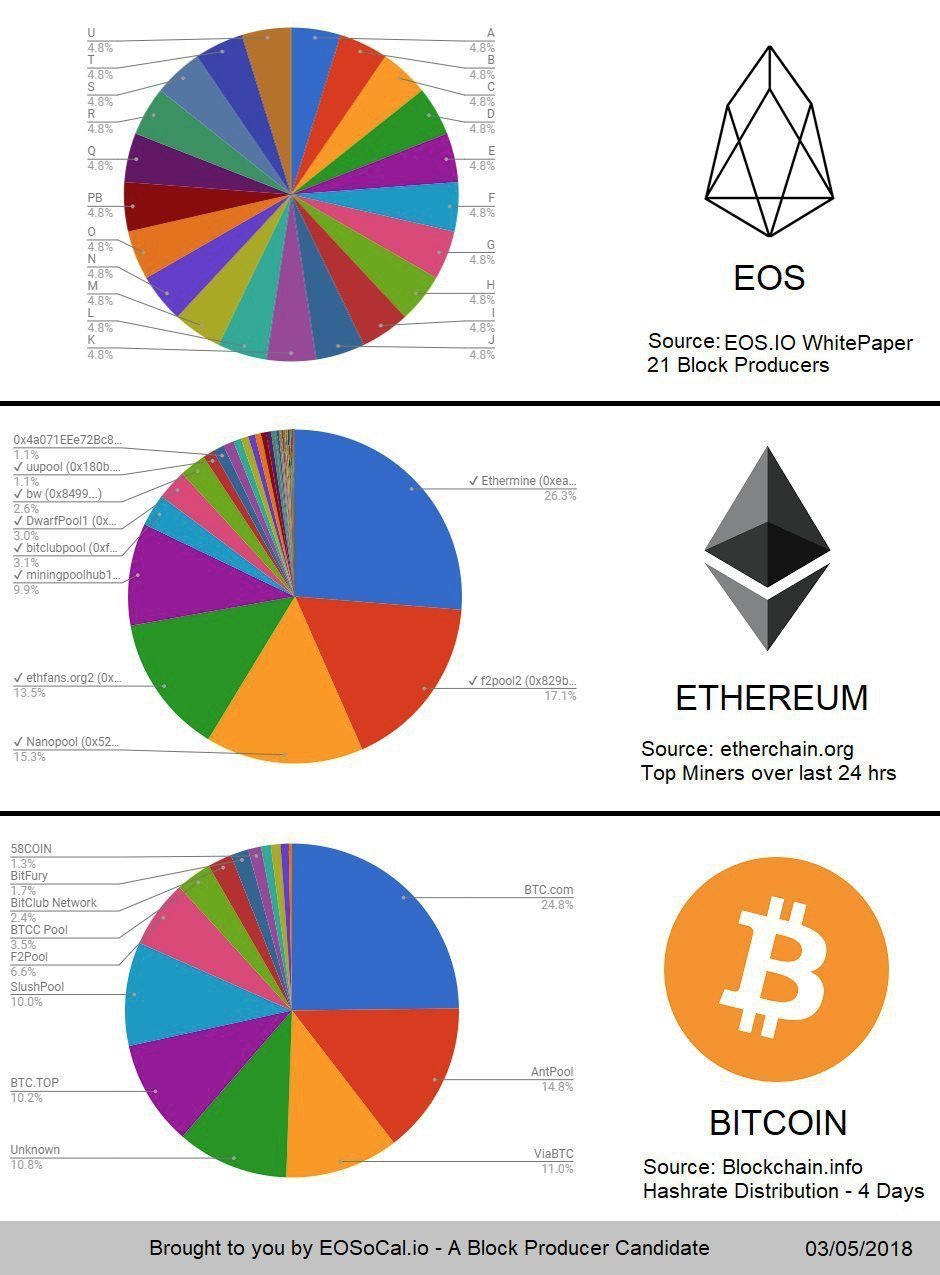
Myth 2: EVM rollups can increase scalability by default
Debunked: the cost of running a full node is the bottleneck
Debunked: the cost of running a full node is the bottleneck
Then how?
- Hetereogeneous sharding
- Parallel execution in every shard
- Every shard can have different implementations
- Innovation without hard forks
- Same hardware requirements but different execution models
- application-specific models
- models efficient for payments
- etc.
- Same hardware requirements but different execution models
Decentralized Finance: Privacy (MBA)
By zpoulos
Decentralized Finance: Privacy (MBA)
This is the slide deck that I use for a quick introduction to the Decentralized Finance class.