Blockchain Technolgy & Decentralized Finance Part 2
Instructors: Andreas Park & Zissis Poulos
Rotman – MBA


Challenges
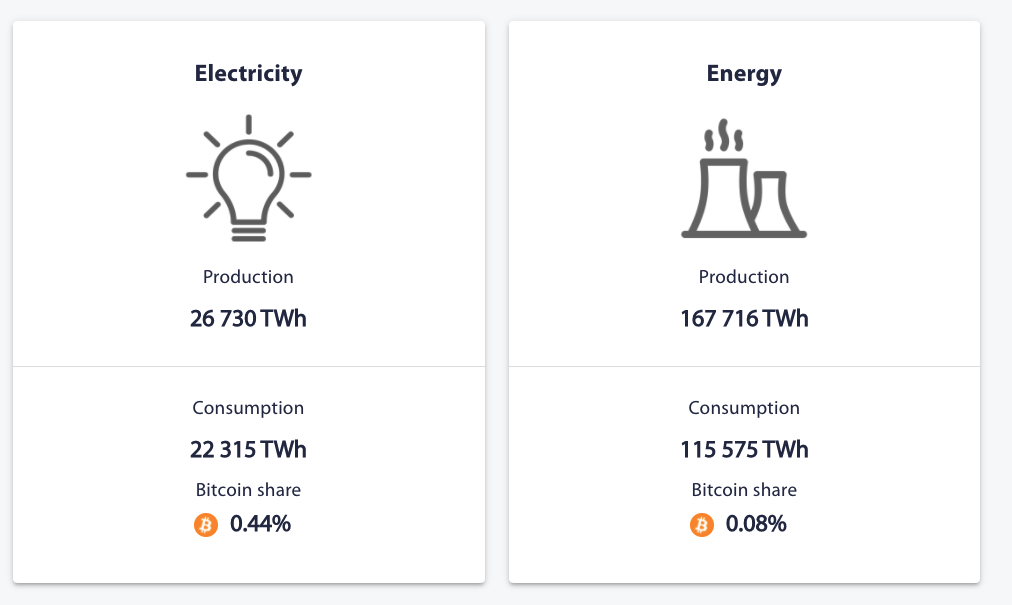
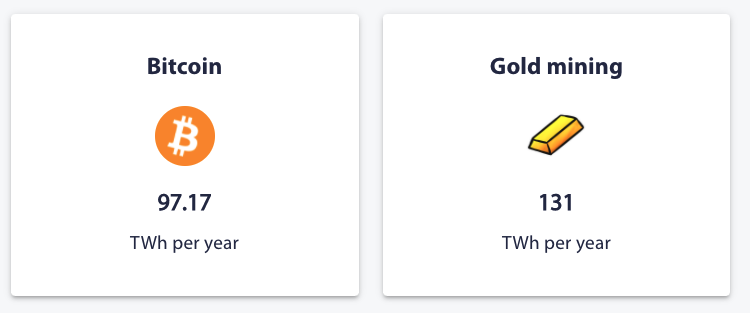
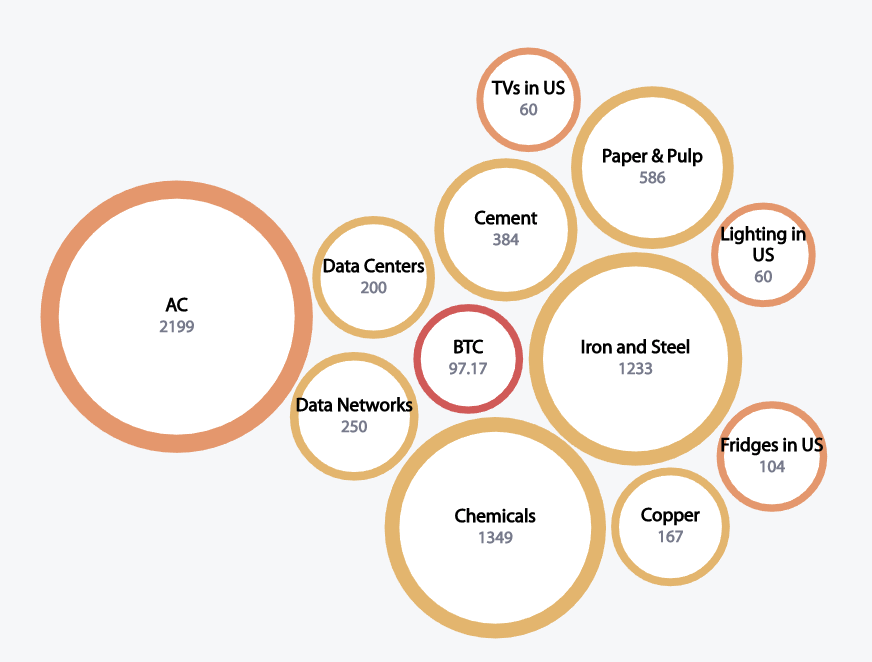
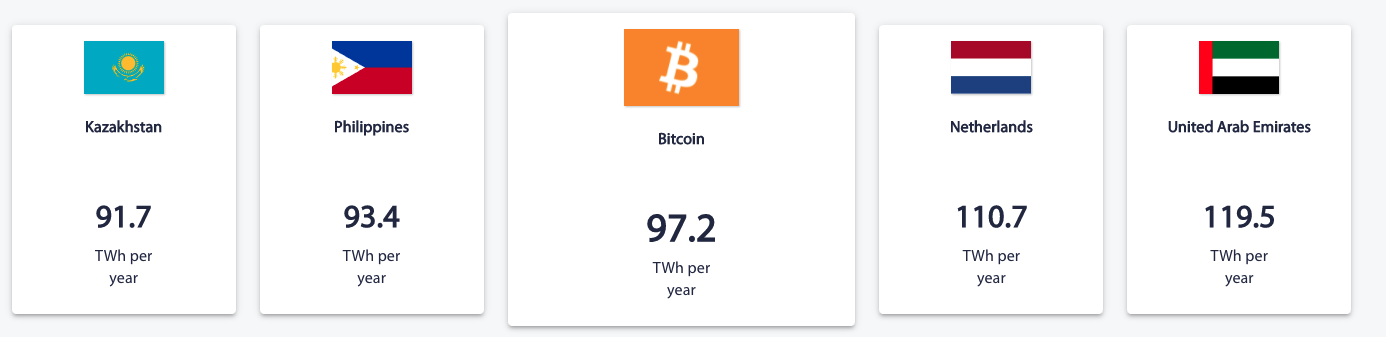
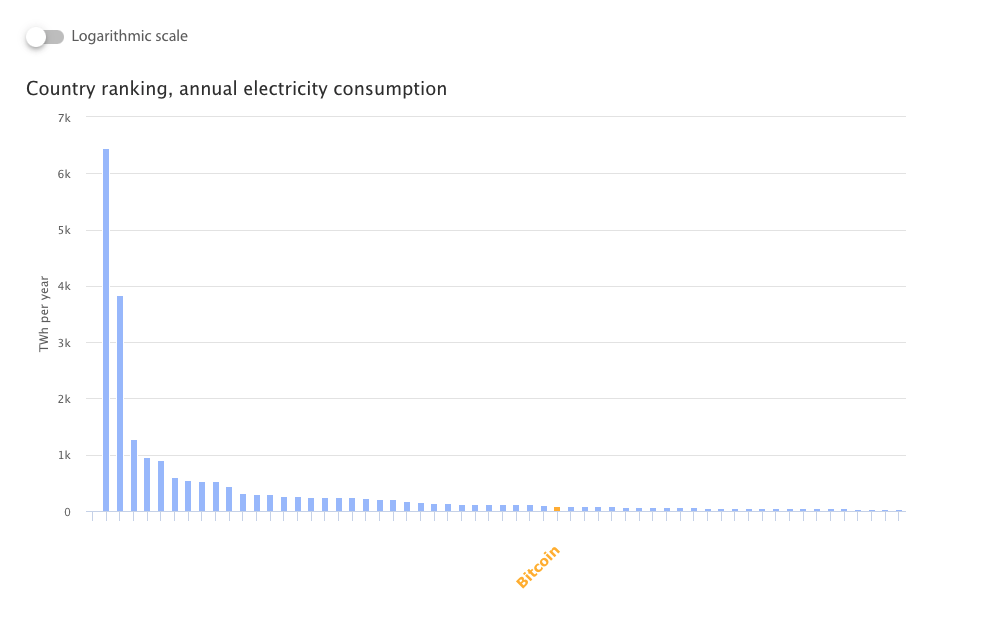
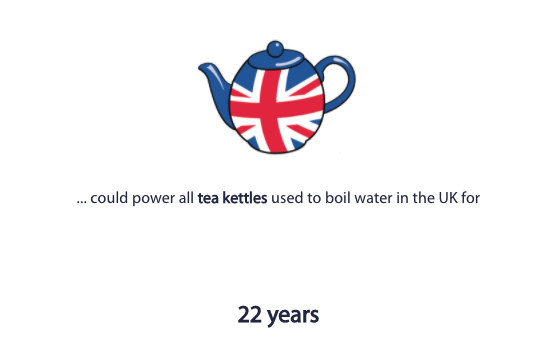
Proof of Work uses unsustainable amounts of energy
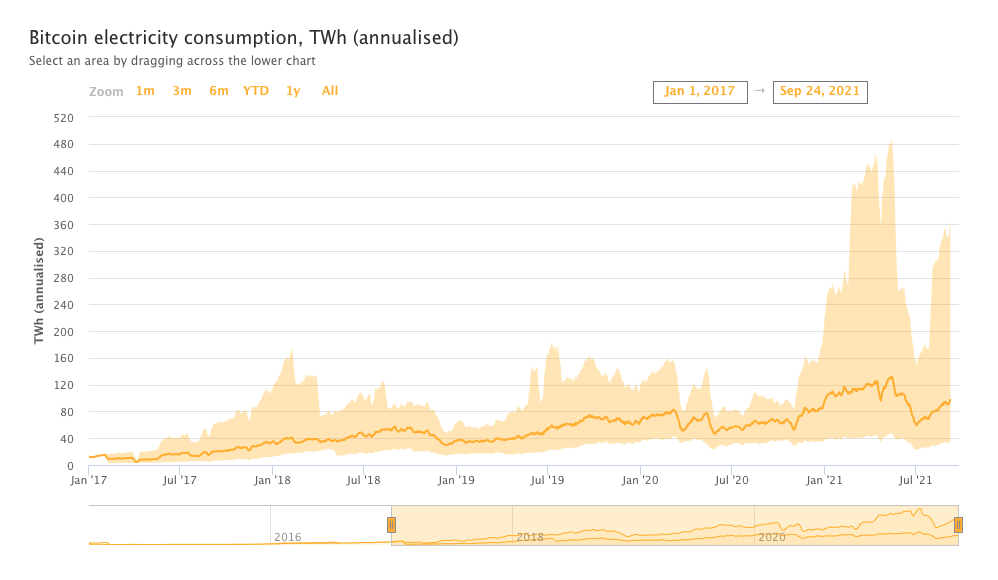
Source: Cambridge Bitcoin Energy Consumption Index https://cbeci.org/
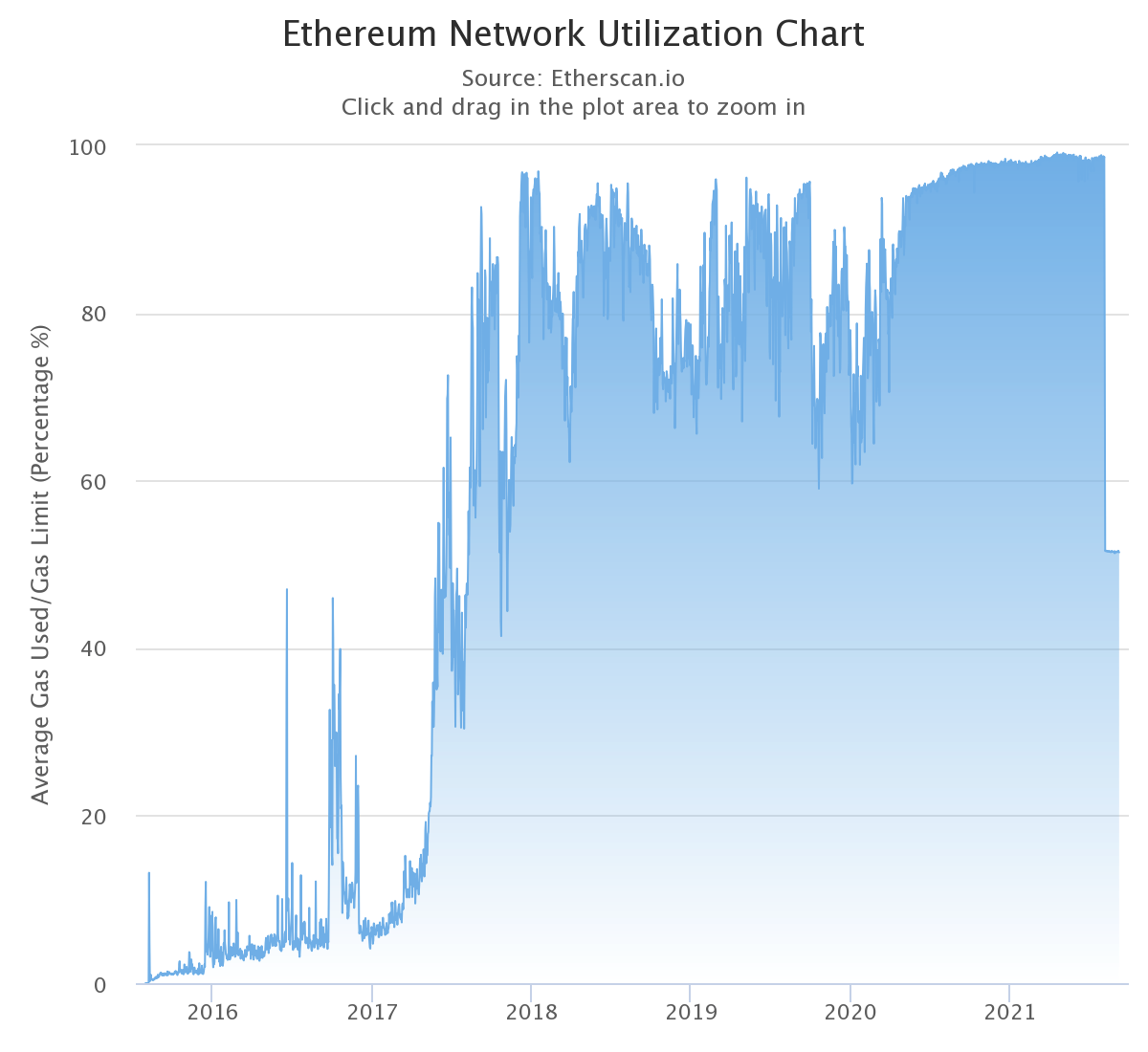
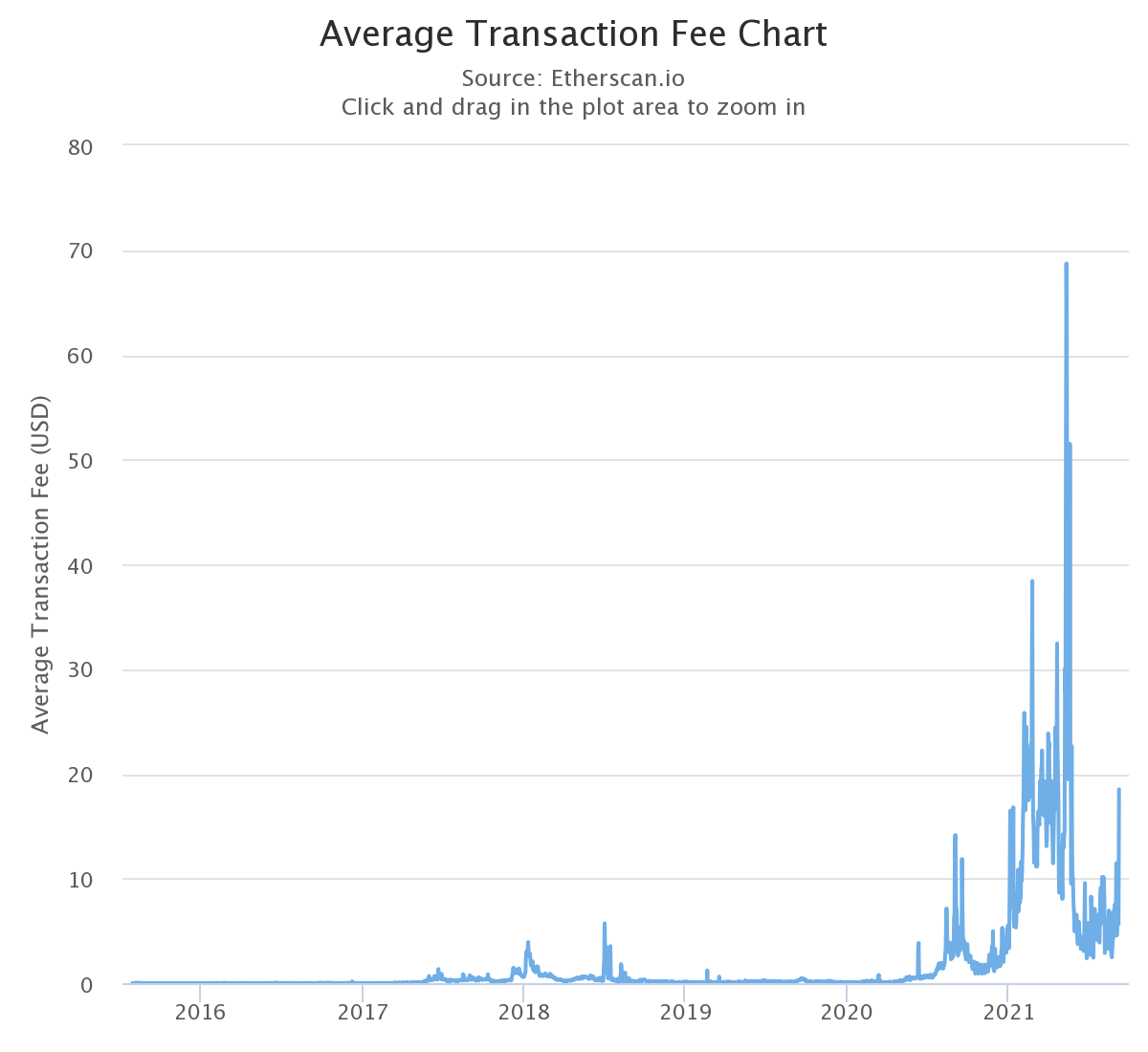
Ethereum is full and using it is expensive
Scalability projects for Ethereum
- Ethereum blocks have no size limit
- but: gas limit imposes computation limit and thus transaction limit
- note: in contrast to Bitcoin, Ethererum always announced that it would eliminate proof-of-work eventually
Root Problem
- Side Channels:
- Keep two-party interactions off the main chain and use chain only for terminal settlement
- Sharding
- instead of storing all info on all nodes, break up the blockchain into shards
- \(\to\) hard problem!
Solutions
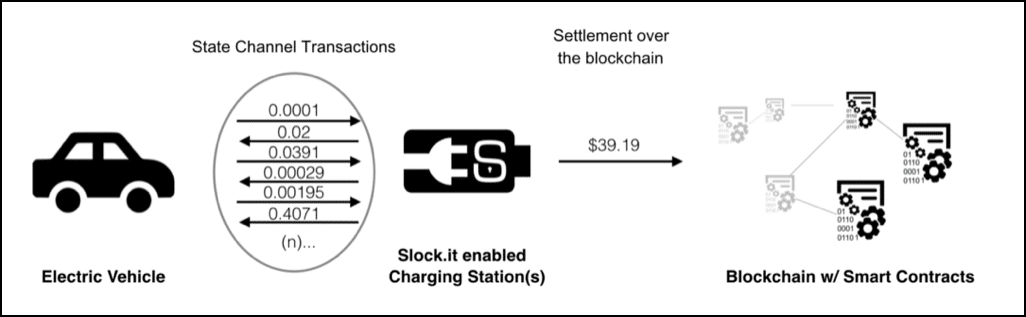
https://blog.stephantual.com/what-are-state-channels-32a81f7accab
a better blockchain: Conflux
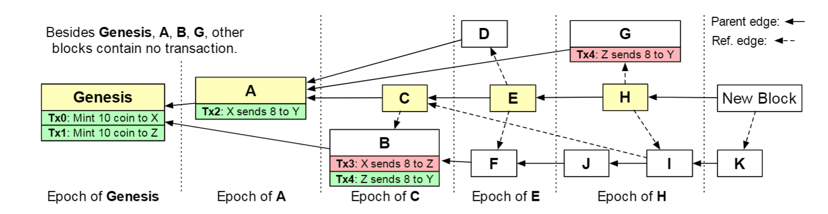
Greedy Heaviest Adaptive SubTree (GHAST) algorithm
- Blocks are assigned a weight according to the topologies
- Exists a deterministically heaviest chain called pivot chain
- An epoch contains one pivot chain block and its reachable blocks
Transaction Processing
- Blocks are processed sequentially ordered by epoch, topological order and id
- Only the first occurrence of the transaction is processed
- up to 4,000 tps for simple payment transactions
- Note: runs Solidity \(\to\) 100\% compatible with all Ethereum smart contracts
Disclaimer: token design strongly influenced by yours truly
going back to Budish (2018)
Selfish Mining Attack in CONFLUX
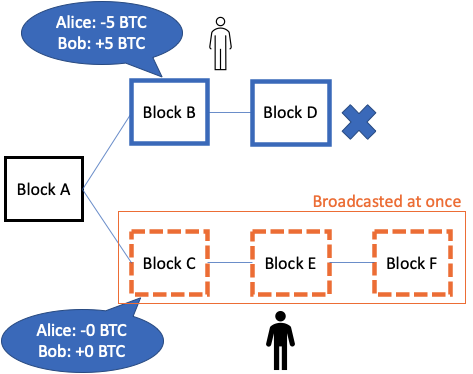
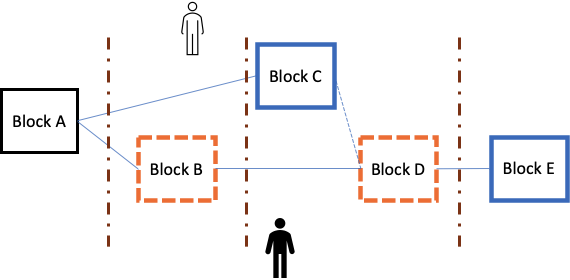
Serial Chain
Conflux Chain
In Conflux, withholding a block leads to greater anti-cone size
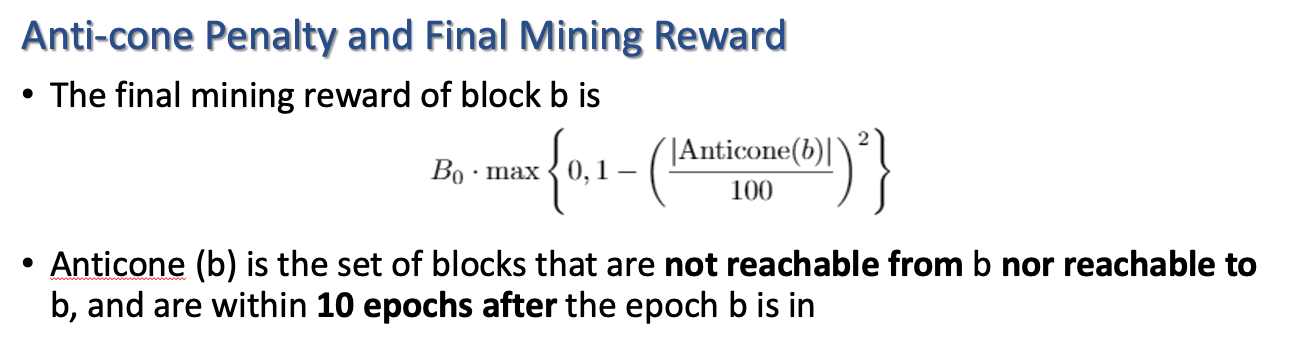
Intuition: Anticone = blocks created without properly referencing others blocks in its vicinity
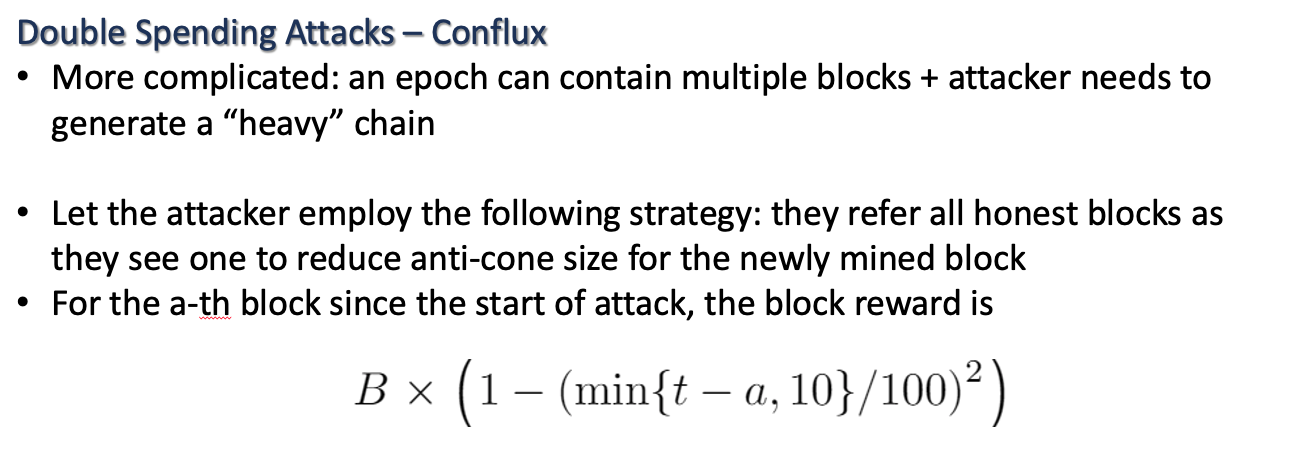
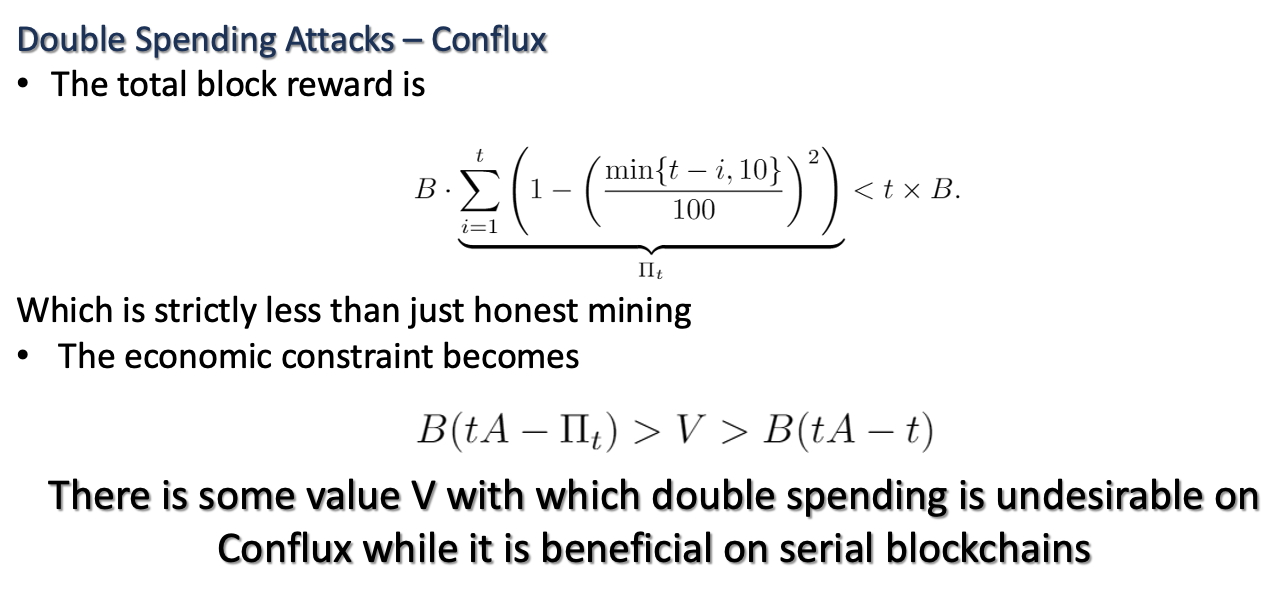
Selfish Mining/Double-Spent Attack in CONFLUX
Key problem of Proof-of-Stake:
How to incentivize support of longest chain?


B3
B1
B2
B4
B5
B6
Where to add a new block B7?
- PoW: only longest chain
- PoS: could add both at B3 and B6 (nothing-at-stake)
- solution: punish deviations!
My personal problem: I have not yet seen a convincing theoretical model of PoS
economic result: Fahad Saleh (2021) Review of Financial Studies, "Blockchain Without Waste: Proof-of-Stake" shows that PoS is an equilibrium
current state:
- promised since 2014
- secondary PoS chain in operation
- merger of chains expected in late 2021
Reality Check: Capacity
| transactions per second | T per 12 hours (business day) | |
|---|---|---|
| Bitcoin | 7 | 302,400 |
| Ethereum | 30 | 1,296,000 |
| Algorand | 2000 | 86,400,000 |
| Conflux | 4000 | 172,800,000 |
| Athereum | 5000 | 216,000,000 |
| Payments Canada ACSS | 648 | 28,000,000 |
| US retail | 7639 | 330,000,000 |
| Canada number of equity trades | 46 | 2,000,000 |
| Orders on Canadian equity markets | 3588 | 155,000,000 |
-
Tweaks: lighting network (BTC) or side chains, SegWit, blocksize possible, but there are limits
-
microtransactions, IoT, and other smart contract use cases place very high demands
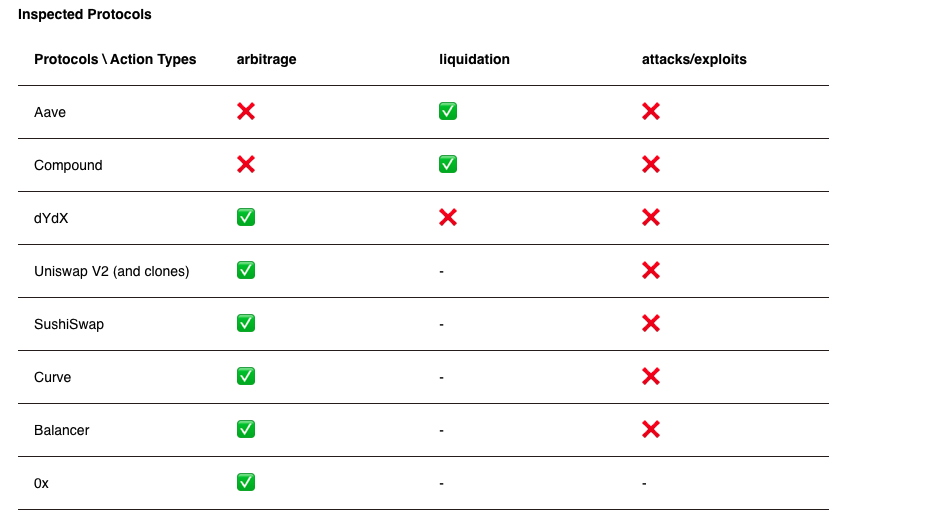
Miner extractable value and High Priority Gas Auctions
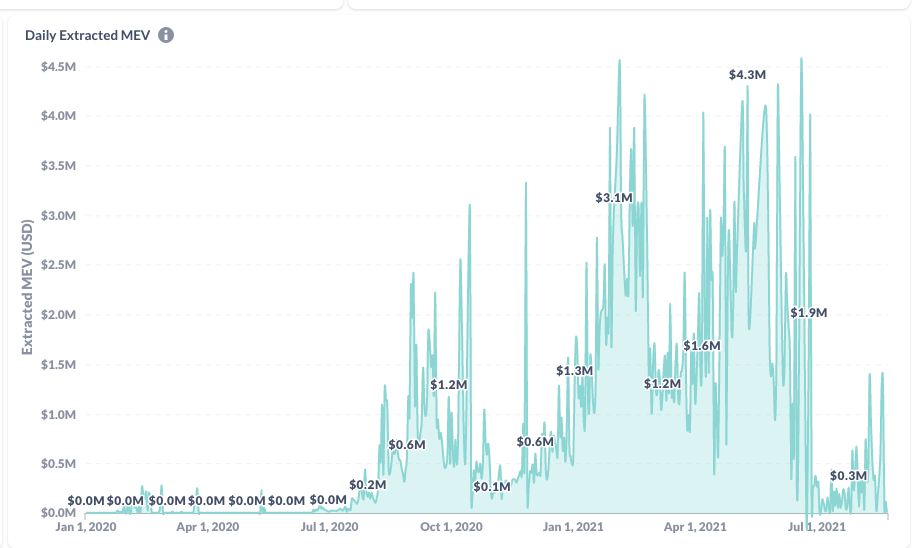
What can it for finance, what are problems and obstacles?



Obvious application: trading
Sue wants to sell ABX
Bob wants to buy ABX


sell order
buy order





Clearing House
Stock Exchange
Broker
Broker

3rd party tech

custodian
custodian

record beneficial ownership

central bank for payment
Evolution


With Blockchain: single ledger for money and securities





0xA69958C146C18C1A015FDFdC85DF20Ee1BB312Bc
0x91C44E74EbF75bAA81A45dC589443194d2EBa84B
0xA65D00Eda4eEB020754C18e021b1bF4E66C9Ed90
- blockchain 1.0
- first solution to double spending
- clunky, slow, expensive
- huge following and computing power
vs
- blockchain 2.0
- smart contract platform
- highly flexible
- foundation for many private initiatives
"Let me just say how impressed I am with Ethereum...If Bitcoin is email ––a one-trick pony, so to speak, but obviously revolutionary–– Ethereum goes far beyond that; it's more like the Internet...The whole idea of DeFi really is, number one, it’s obviously revolutionary, and I think at the end of the day could lead to a massive disintermediation of the financial system and the traditional players."
Heath P. Tarbert, CFTC Chairman, October 2020
Usage of blockchain in financial industry
Areas of applications
moving value (remittances)
digital money: real-time settlement, reduced reserves
tokenization of assets
automization of contract payments
securitization
systems and infrastructure reorganization
digital identity
new forms of financial contracts, assets, and forms of financing
What Changes in Business Models can Blockchain Technology bring?
What does blockchain do?
peer to peer value transfers
self-powered platforms
contract execution
disintermediation
Who do you dis-intermediate, and then who is your customer?
issuer
investor
broker-dealer
The Business challenge of dis-intermediation
investment advisor
Private Sector Solutions

Private vs. public
some key questions
Who gets to update?
Can a higher body prevent
transactions?
Can the past be altered?
consensus
immutability
censorship resistence
Public Blockchains provide
Main private blockchain systems




Features of Private vs. public blockchains
open to anyone
no one can be excluded
past cannot be changed
Public Blockchains



private Blockchains
high visibility of transactions
open-access eco-system
slow governance
privacy only at a cost
joint control and governance
straightforward KYC and AML
tech support
transaction secrecy simpler
rely on corporate development
compliance with law (reversion)
can keep competition out
Enter BigTech
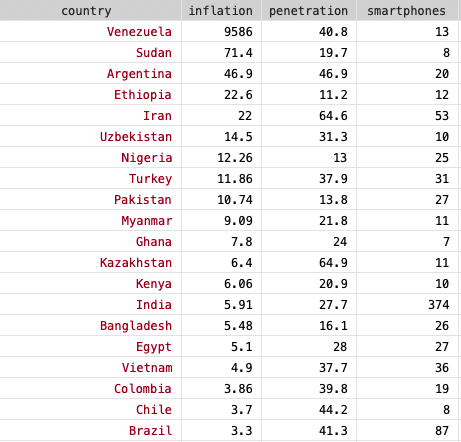
cellphone data from 2018 (NewZoo), inflation from 2020 (World Population Review)
Evolution

DIEM = "new financial infrastructure"
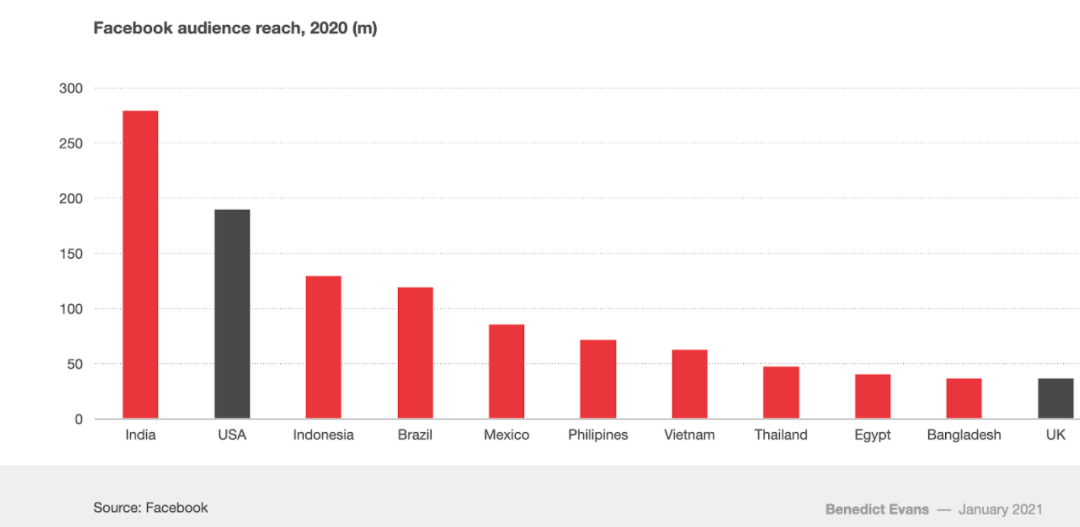
Why does BigTech enter the finance game?
They have ZERO interest in becoming a financial institution/bank
\(\rightarrow\) no expertise
\(\rightarrow\) competitive market
\(\rightarrow\) one of the most regulated business environments
My take


They are trying to deal with frictions that impede their business
They aim to collect data which will vastly improve their business
Lay the groundwork for the next step of the digital evolution: the "Metaverse"
5-minute version:
Finance, Metaverse, and Non-Fungible Tokens
metaverse =
marriage of the digital and physical world


sale price: $69,000,000
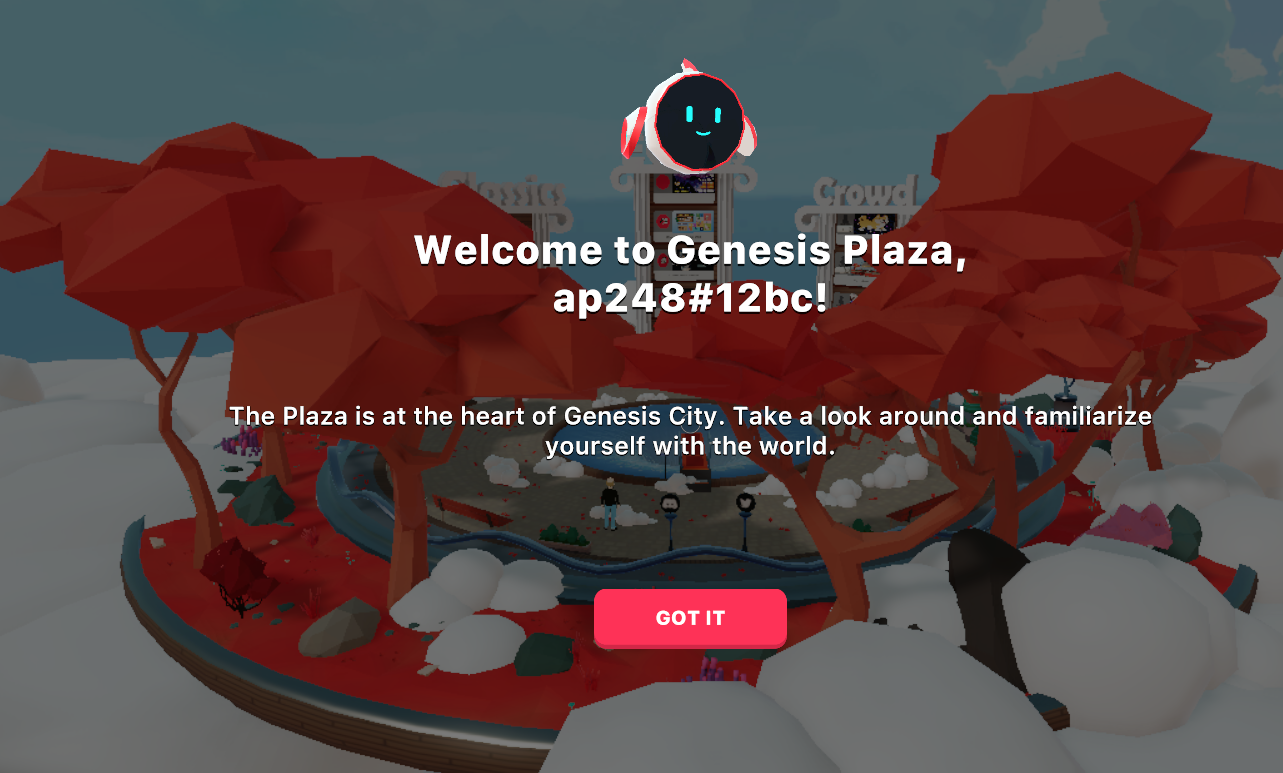
Decentraland: a digital world owned by its users
What is an NFT?
- "unique" token
- digital ownership certificate
- ERC-721 standard (also ERC-1155)
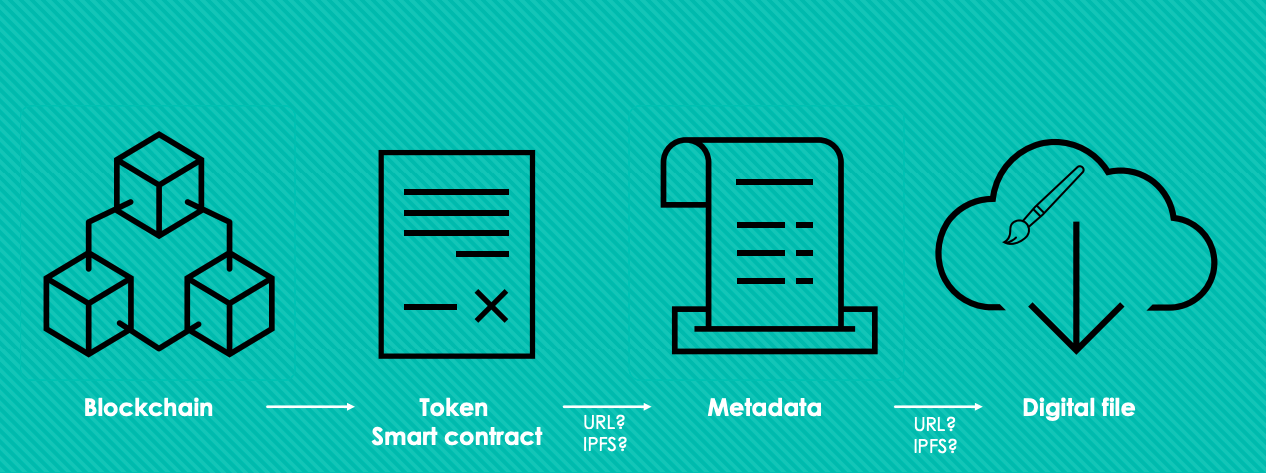
Why bother with an NFT?
- difficult legal question: what do you actually own?
- allows royalty payments
- could be used in other tools (e-book readers)
- NFTs can be tokenized (partial ownership)
- used as collateral in DeFi
Metaverse application
- ownership in the digital world
- payment for digital experiences
Related Development: Central Bank-Issued Digital Currencies
Evolution

CBDCs
Newest Developments: CBDC
CBDC = Central Bank issued Digital Currency
not a cryptocurrency \(\to\) just a "normal" liability on central banks balance sheets
-
BIS Jan 2019: "Proceed with caution"
-
BIS Jan 2020: "Impeding Arrival"
Is it coming?
players (inter alia)
-
China: in test mode; provinces prep own initiatives, coming next year
-
U.S.: has bigger problems and is always a last mover
-
UK: preparing
-
Canada: contingency planning (it'll happen within two years)
players (inter alia)
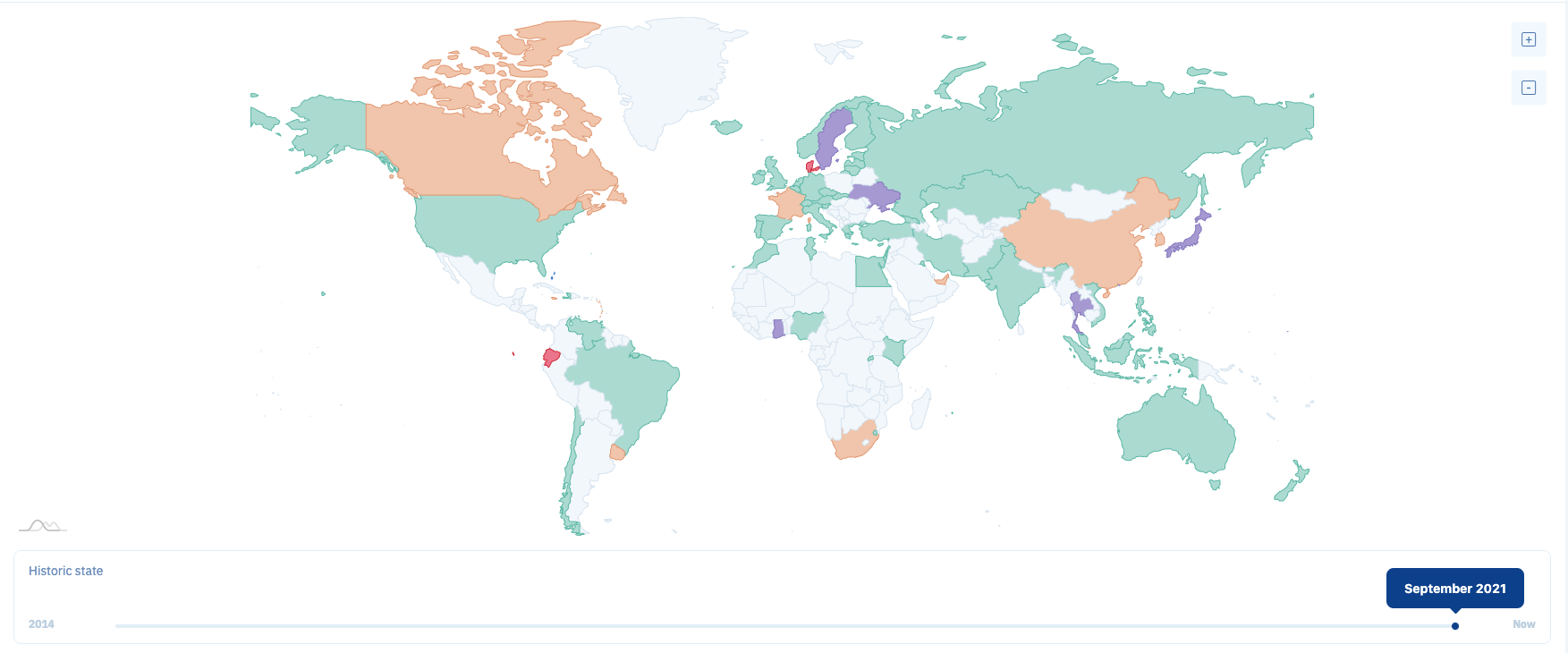
Source: CBDCTracker.org
Risks and open problems
- many apps are still experimental, many kinks need ironing, and tech progress is needed
- smart contract risk:
- detecting problems with code
- detecting problems with economic incentives
- foreseeing unforeseen contract contingencies
- contract contagion risks
- governance of decentralized organizations
- role of regulators
The Ugly Truth: token trading and token markets are different from securities trading and markets
Investor
Broker
Venue
Settlement
Exchange

Traditional
Wholeseller




Darkpool


Internalizer

Venue
Settlement
Investor
On chain
Crypto






Key Challenges for the blockchain Community for 2019
Technology
Legal/Regulation
Economic functions







What is the right governance structure for systems?
How should we design tokens as contracts?
How do platform payment means interact with outside world
How much do we have to pay operators to maintain the chain?
Key Economic Questions for Blockchain Design




Key Technology Questions for Blockchain Design
interoperability
cybersecurity and privacy
functionality
scalability
smart contract features and verification
space constraints






Solution projects to Key Technology Questions
interoperability
scalability
space constraints:





Does the law have to change to accommodate new tech? If so, how? What's dated, what's not?
Key Legal Questions for Blockchain Design
Legal setup of a platform: what rules can, should, and must a platform establish? What regulations are necessary?
How can token design and the law be married?
Questions for the future
What is the economic impact of "tokenizing everything"?
How will it affect investments and investment banking?
Which business opportunities will it enable?
What do tokens and "alternative money" mean for payments?
How does it all work and why?
How do we establish trust in commerce?
trustworthy People
long-term Relationships
reputation
contract law




institutions

What's needed for trust in anonymous deals?
Authority
Execution
Continuity
A deep dive into the "How?"









Cryptography: only Sue can spend her money
Authority




Execution
Problem: double-spending
How can we trust that
- sale happened and
- $$ only spent once?





Execution



Security
B3
B1
B2
B4
B5
Contains transaction from Sue to Bob
Question: Can Sue rewrite history?
immutability
No! Because: Economics!
Incentive to support longest Chain
B3
B1
B2
B4
B5
B6
Where to add a new block B7?
- Add to B3?
- => people after still more likely to add to B6
- lose "coinbase" reward
Altering the past?
B3
B1
B2
B4
B5
- needs to be faster than anyone after who adds to B5 and build a longer chain
- or needs to be able to mine repeatedly
B8
B7
B9
B10
B6
Contains transaction from Sue to Bob
Sue wants to undo the transaction by rewriting history with B6
Sue's objective
- Wants to undo this trade and cheat Bob by building alternative chain from B6
What does it take?
- needs to be predictably able to add several blocks to the chain without interference, or
- needs to be faster than anyone after who adds to B5 and build a longer chain, or
- needs to ability to reject new blocks that are added to B5 .
How does Proof of Work prevent this?
- mining success is random subject to resources spend:
- computers/GPUs
- electricity
- you need faster/more computers than 51% of the network
- current network power: 150million tera-hashes per second (blockchain.info)
Back of the envelope calculation
- hashrate: 150,000,000 TH/s
- best hardware (ASIC) has 110TH/s per unit
- => need 150,000,000 / 110 x 0.5 = 682,000 ASICs
- 1 ASIC costs around $10,000 (conservative)
- =>Cost = $6,820,000,000
- But it doesn't end here...Power consumption at 4.5GW
- => enough to power 1M homes in the US
Economic Analysis, Part II
Double spend attack prevention
- Validation rewards are taken as given, but they are crucial in
- determining incentives to participate,
- to support the chain, and
- to expense electricity and computing power
Basic idea of competitive equilibrium
aggregate mining cost = aggregate reward
Double spending attack
- expense resources but:
- win N block rewards until "confirmation" block
- ability to double-spend
condition that prevents it
(Chiu & Koeppl RFS 2018)
\text{mining reward} \times (N+1)N > \text{double spend amount}
How do you agree though that something happened, or, what is consensus?



How can we reach consensus? The Byzantine Generals' problem
How can we reach consensus? The Byzantine Generals' problem
Blockchain proof of work establishes consensus
Byzantine Generals' Problem

\(t\)
\(t\)
\(t\)
\(t\)
\(t\)
\(t\)
\(t\)
\(t\)
\(t\)

\(t\)
\(t\)
\(x\)
\(t\)
\(t\)
\(t\)
\(t\)
\(t\)
\(x\)
\(t,t,x\)
\(t,t,x\)
\(t,t,t\)
Byzantine Generals' Problem
\(x\)
\(y\)
\(z\)
\(y\)
\(x\)
\(z\)
\(y\)
\(x\)
\(z\)
\(x,y.z\)
\(x,y,z\)
\(x,y,z\)

Byzantine Generals' Problem
Equilibrium
- generals pick majority message
- successful consensus as long as no more than 1/3 cheats
Blockchain requirement
- reach Byzantine Fault Tolerant consensus
- trick: messages are hard to forge
Byzantine Generals' Problem
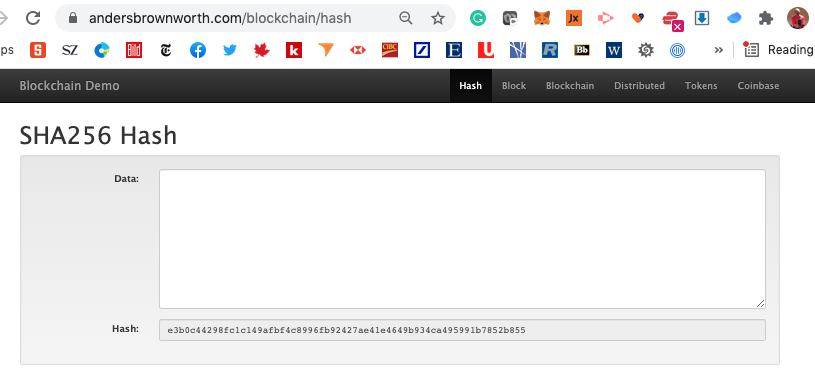
Time for a blockchain demo...
Proof of Work Protocol








A Byzantine Fault Tolerant Algorithm
This Hash starts with a pre-specified number of zeros!
Blockchain BFT
= 00000xd4we...

= 00000xd4we...
= 00000xd4we...
consensus is reached if hash starts with right number of leading zeros
PoW does two things
- selects a leader
- makes messages hard to forge
Blockchain BFT
Conclusion and final thoughts
blockchain is a transformative technology, but won't be used in practice overnight
many conceptual and technological challenges remain, but there are already various areas of application
legal, regulatory, and competitive changes are needed and then the opportunities are endless ...
it will open up the banking world further, foster international competition, and change how we pay and exchange value
My view: business development will happen in private/semi-public space; strong increase in recent activity; no more testing but re-engineering of processes.

@financeUTM

andreas.park@rotman.utoronto.ca

slides.com/ap248

sites.google.com/site/parkandreas/

youtube.com/user/andreaspark2812/
Copy of Topic 2: Execution, Immutability, and BFT
By zpoulos
Copy of Topic 2: Execution, Immutability, and BFT
This is the slide deck that I use for a quick introduction to the Decentralized Finance class.