Mere data ke darbar mein
Agriya Khetarpal
LucknowFOSS 2.0
04 April 2026
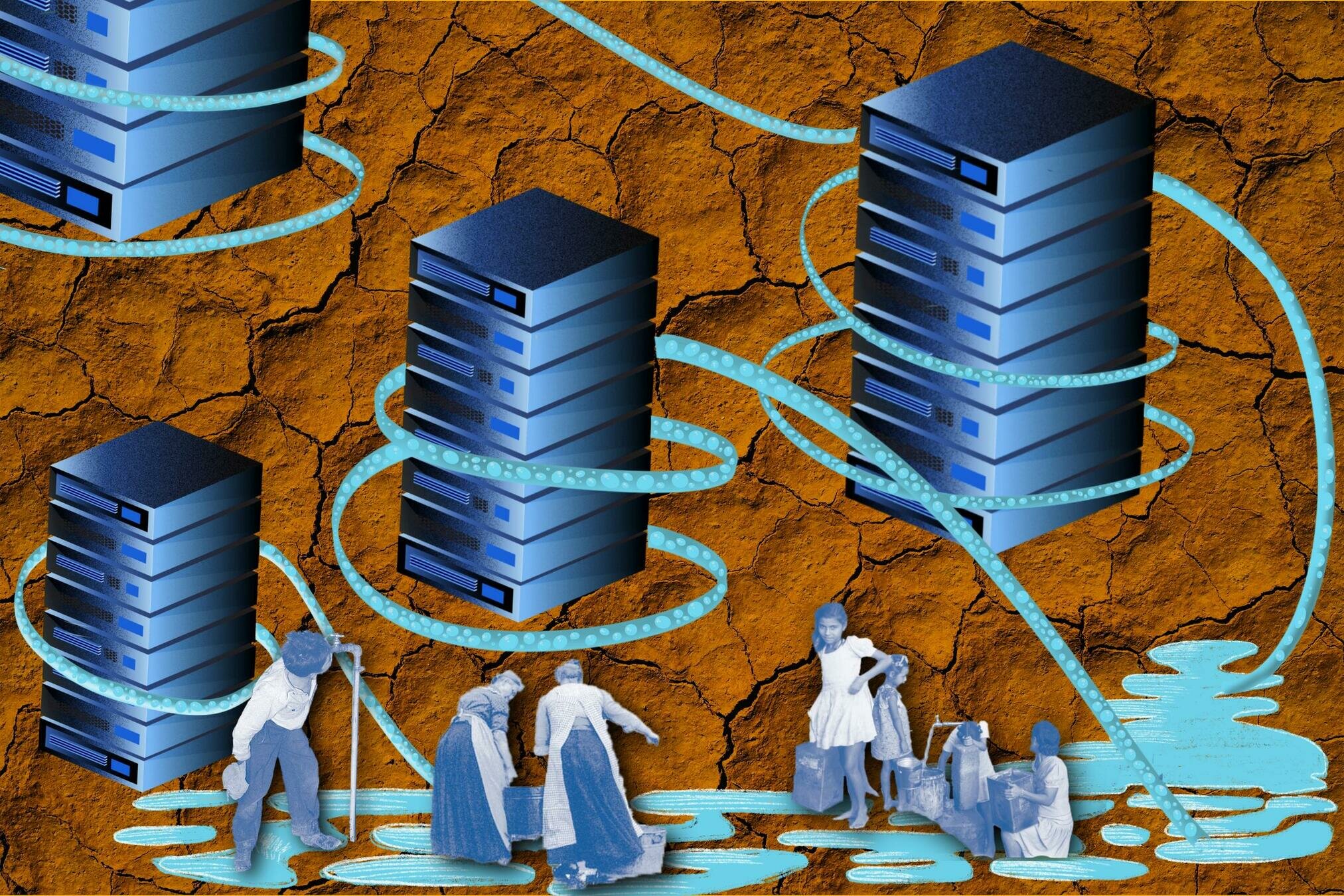
India's AI data centre rush, and the FOSS enthusiast's hidden stake
Follow along!

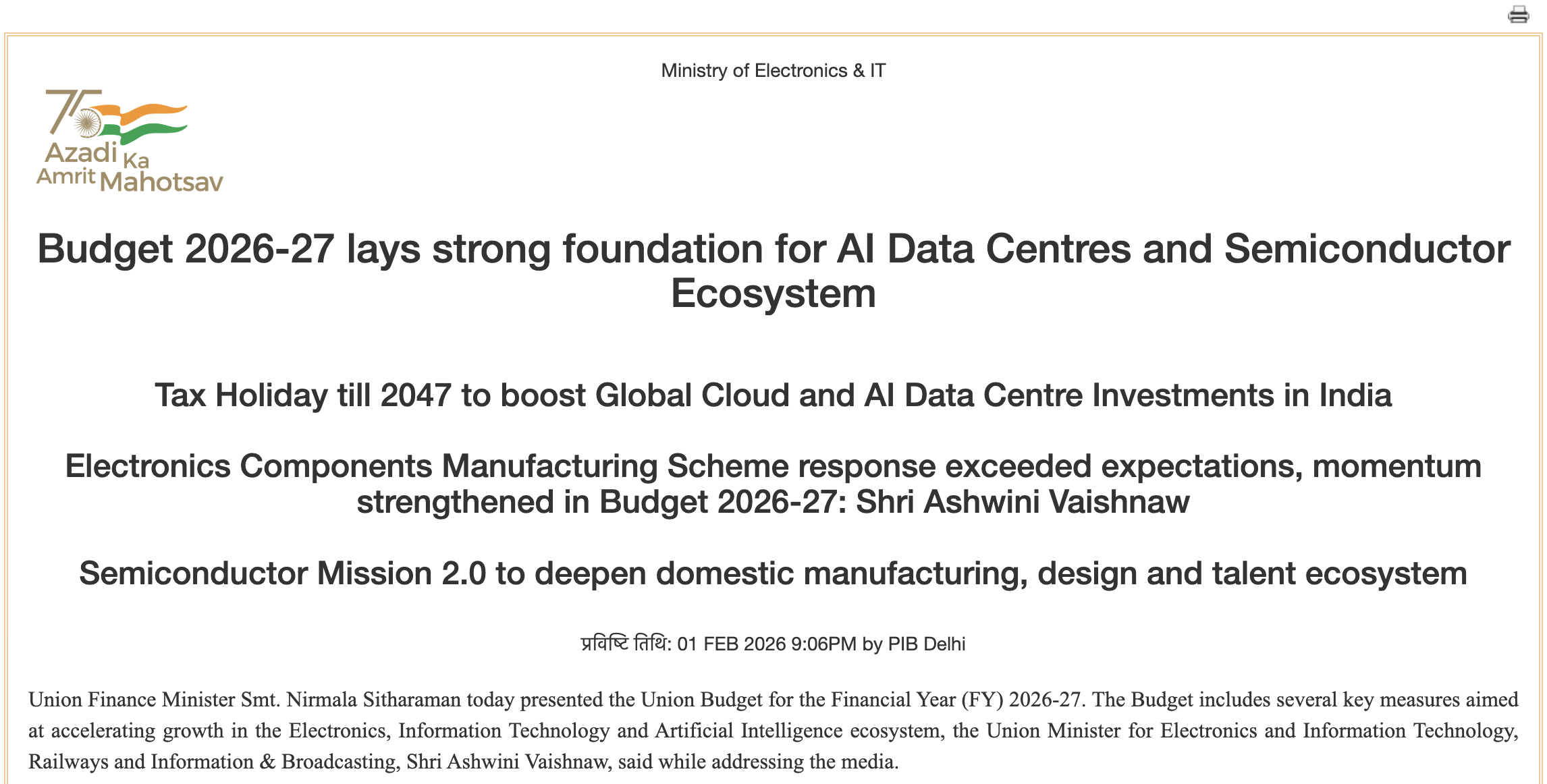
India's new FY 2026-27 announcements
- A dedicated, secure facility that houses computing systems, servers, storage, and networking equipment
- ERP and IT infrastructure, web hosting and Content Delivery Networks (CDNs), edge computing, data storage, disaster recovery, and more
- Early example: US military's Electrical Numerical Integrator and Computer (ENIAC)
A glossary of terms
Data centre
- A specialised data centre facility designed for computationally intensive, high-performance tasks of training and running inference for AI models.
- They are optimised for the parallel processing demands of AI workloads, typically utilising hardware such as AI accelerators (e.g., GPUs, TPUs) and high-speed interconnects.
A glossary of terms
AI data centre
- Massive cloud service providers – Amazon Web Services, Microsoft Azure, and Google Cloud Platform, and co.
- They offer highly scalable, on-demand computing, storage, and AI services. They operate colossal global data centres designed for high-performance data processing.
- Enable businesses to rent infrastructure and maintenance, and allow them to focus on efficiency and cost management.
A glossary of terms
Hyperscalers
Software that bridges IT and facility management, providing centralised, real-time monitoring and control of physical assets, power, cooling, and rack space.
A glossary of terms
DCIM (Data Centre Infrastructure Management)
The capacity of a state or an organisation to build, run, and govern AI systems in ways that align with its own set of rules, security needs, and virtues. It comprises several dimensions:
- a territorial aspect: where the stored data and hosted compute sit
- an operational dimension: who can operate and switch these systems on and off
- a technological and IP ownership dimension: who owns the data?
- a legal dimension: whose jurisdiction applies to the data?
A glossary of terms
Sovereign AI
- A sustainability metric used to determine the energy efficiency of a data centre
- It is expressed by dividing the total amount of power entering a data center by the power used to run the IT equipment within it, as a ratio, with the overall efficiency improving as the quotient tends towards 1.0.
A glossary of terms
Power Usage Effectiveness (PUE)
- A sustainability metric developed by The Green Grid to measure the efficiency of water usage in a data centre
- The ratio of annual water usage (litres) for cooling and humidification to the energy consumed by IT equipment (kWh)
- A lower WUE value indicates higher efficiency, supporting efforts to reduce environmental impact and improve water management
A glossary of terms
Water Usage Effectiveness (WUE)
Market-based instruments that represent the environmental, social, and non-power attributes of 1 MWh (megawatt-hour) of renewable electricity generated and added to the grid. They allow buyers to claim the use of renewable energy, separating green attributes from the physical electricity.
A glossary of terms
Renewable Energy Credits/Certificates (RECs)
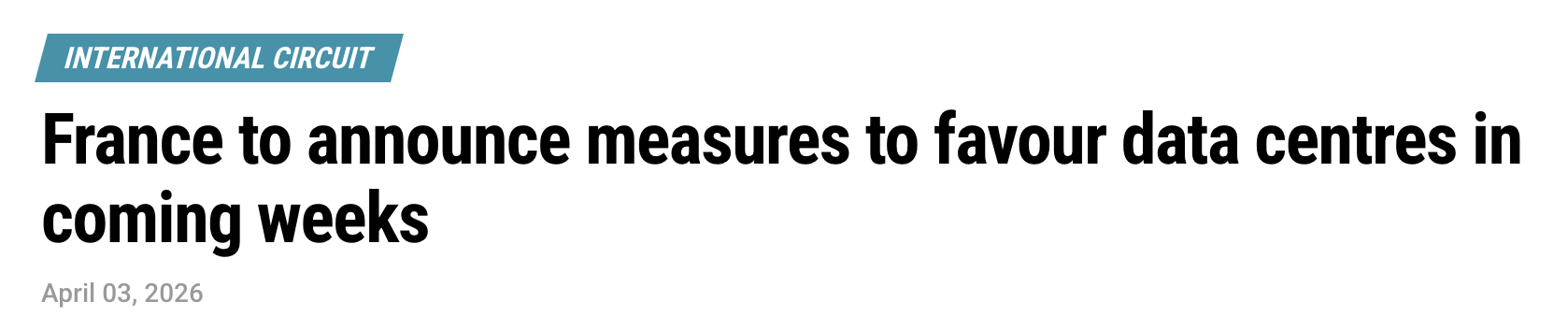
A headline every week



Data centres, vs. AI data centres
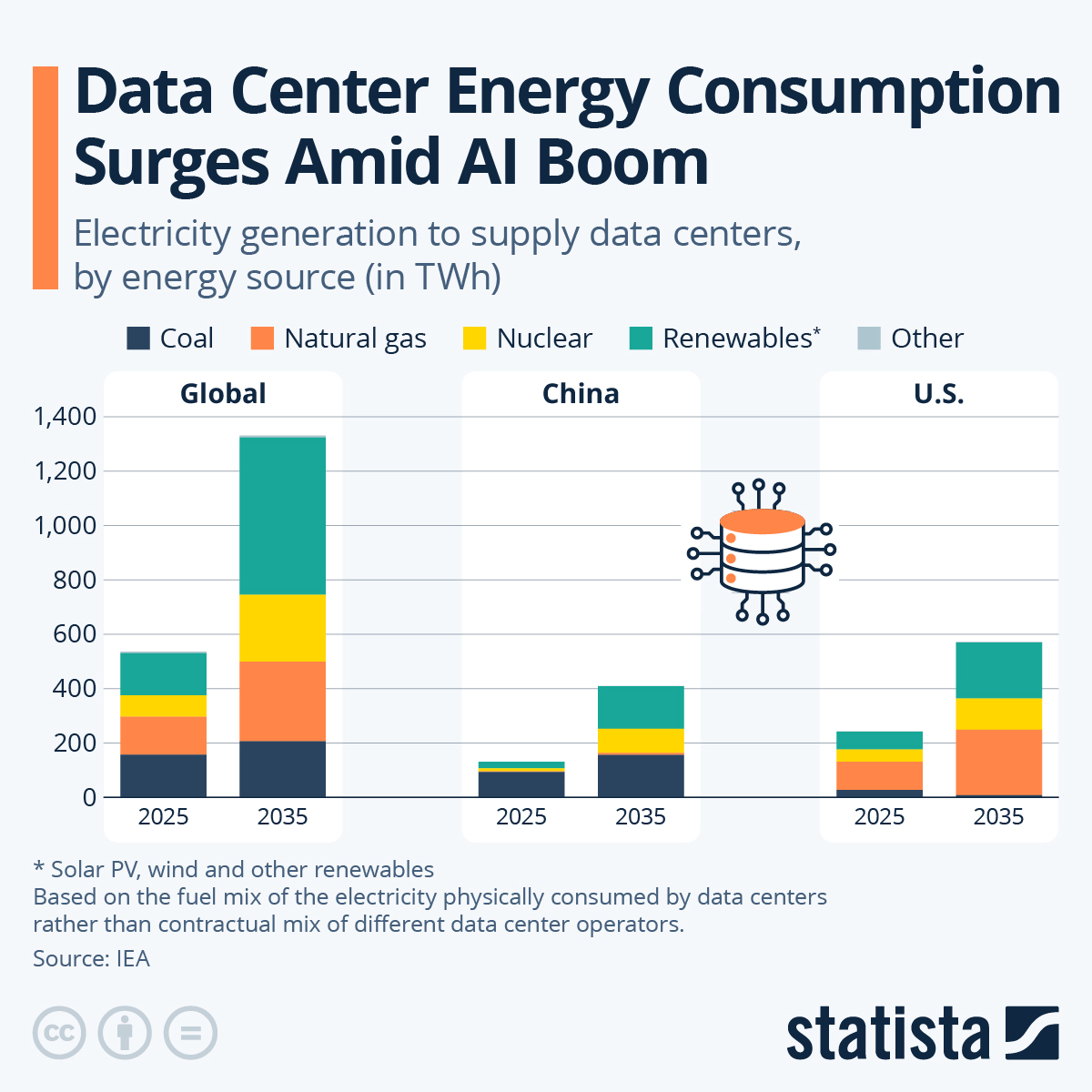
Significantly higher power requirements
Advanced cooling and heat exchange for GPU racks
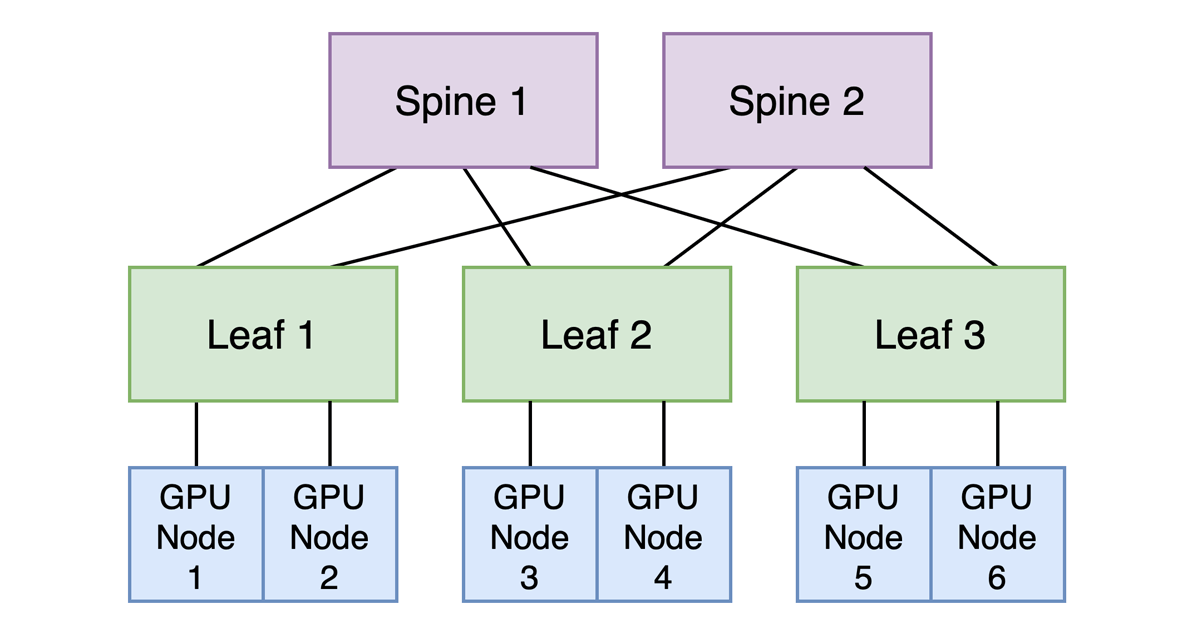
Architectural and networking differences to circumvent bottlenecks
Leaf-and-spine network designs
Policies of the nation vs. states
State-level data centre policies (curated)
| State | Policy | Notes and rubrics |
|---|---|---|
| Maharashtra | IT/ITES Policy 2023 | 100% electricity duty + 100% stamp duty exemption. |
| Uttar Pradesh | Data Centre Policy 2021 | 25–50% land subsidy; 100% power duty exemption for 10 years. |
| Karnataka | Data Centre Policy 2022–2027 | 10% land subsidy; 100% stamp duty exemption up to 10 acres. |
| Tamil Nadu | Data Centre Policy 2021 | 100% electricity tax waiver for 5 years; dual-grid support at 50 MW+. |
| Gujarat | IT/ITES Policy 2022–2027 | Up to 25% CAPEX support; ₹1/unit tariff subsidy for 5 years. |
| Haryana | State Data Centre Policy 2022 | 100% electricity duty exemption for 20 years. |
| Odisha | State Data Centre Policy 2022 | 20% capital subsidy; 30% power bill subsidy for 5 years. |
National-level data centre policies
| Policy | Notes and rubrics |
|---|---|
| Draft National Data Centre Policy (2020) | Pushes infra status, easier clearances, reliable power, and essential-service treatment. |
| Digital Personal Data Protection Act, 2023 | Can increase domestic data storage demand, but may raise compliance costs. |
| IT Act, 2000 + IT Rules, 2011 | Provides the baseline legal and cybersecurity framework for data handling. |
| CERT-In Directions | Creates uniform national rules for cyber incident reporting. |
| BEE energy efficiency standards | Sets national efficiency benchmarks, often layered with state green incentives. |
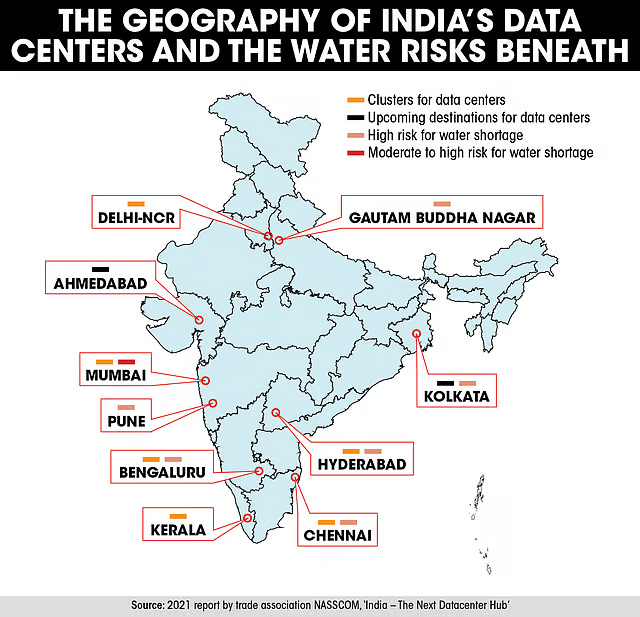
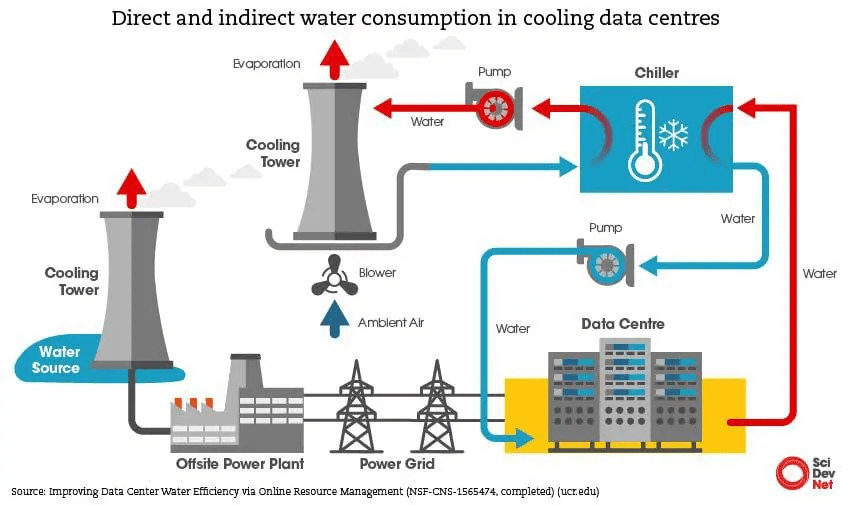
- 150 billion litres consumed in 2025 → 358 billion litres by 2030
- A 100 MW facility: up to 800,000 litres per day
- 60–80% of Indian data centres projected to face high water stress this decade
- It is commonly known that any cities are already water-scarce!
- Example: Bengaluru's Devanahalli hub has groundwater extraction at 169% of permissible limits
Water woes
- 13 TWh consumed today → 57 TWh projected by 2030 (fivefold increase)
- India's grid: ~70% coal-powered, still
- A single hyperscale facility consumes as much power as 50,000–100,000 homes, which is a small city!
- PUE and WUE disclosures are not mandatory for operators of data centres
Pangs of electricity
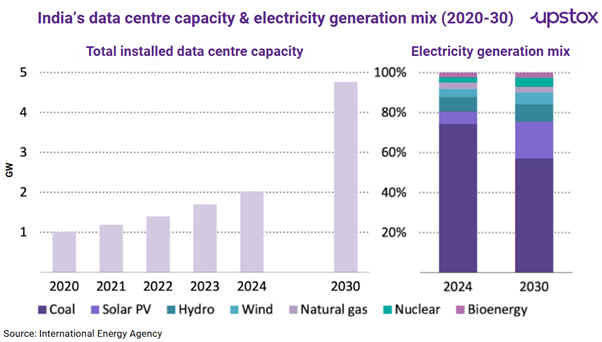
Data colonialism
- India generates 20% of global data, stores only 3% domestically
- This gap is framed as a post-colonial wound, in that Indian data enriching foreign platforms, foreign economies
- "Build data centres here, keep the data home"
- "Atmanirbhar Bharat", i.e., a self-reliant India gets applied to digital infrastructure
our data, on our soil
- The five largest data centre operators in India's pipeline are Microsoft, Google, Amazon, Reliance, Adani/AdaniConneX
- Three of these are US corporations operating under the US CLOUD (Clarifying Lawful Overseas Use of Data) Act
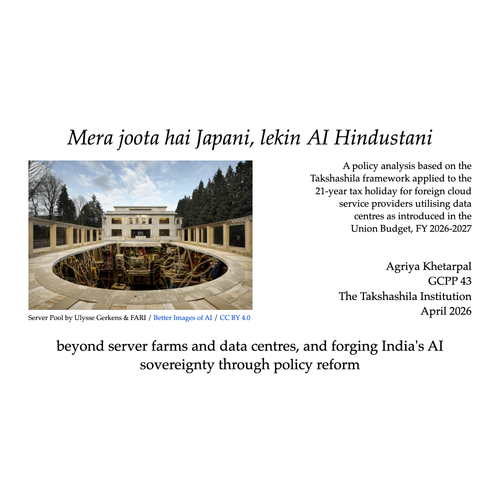
- A 21-year tax holiday that returns zero corporate tax to the Indian exchequer
- Example: "AWS Mumbai" is not the same as Indian-controlled infrastructure
But... who owns the infrastructure?
Data sovereignty is not achieved by the physical location of a server.
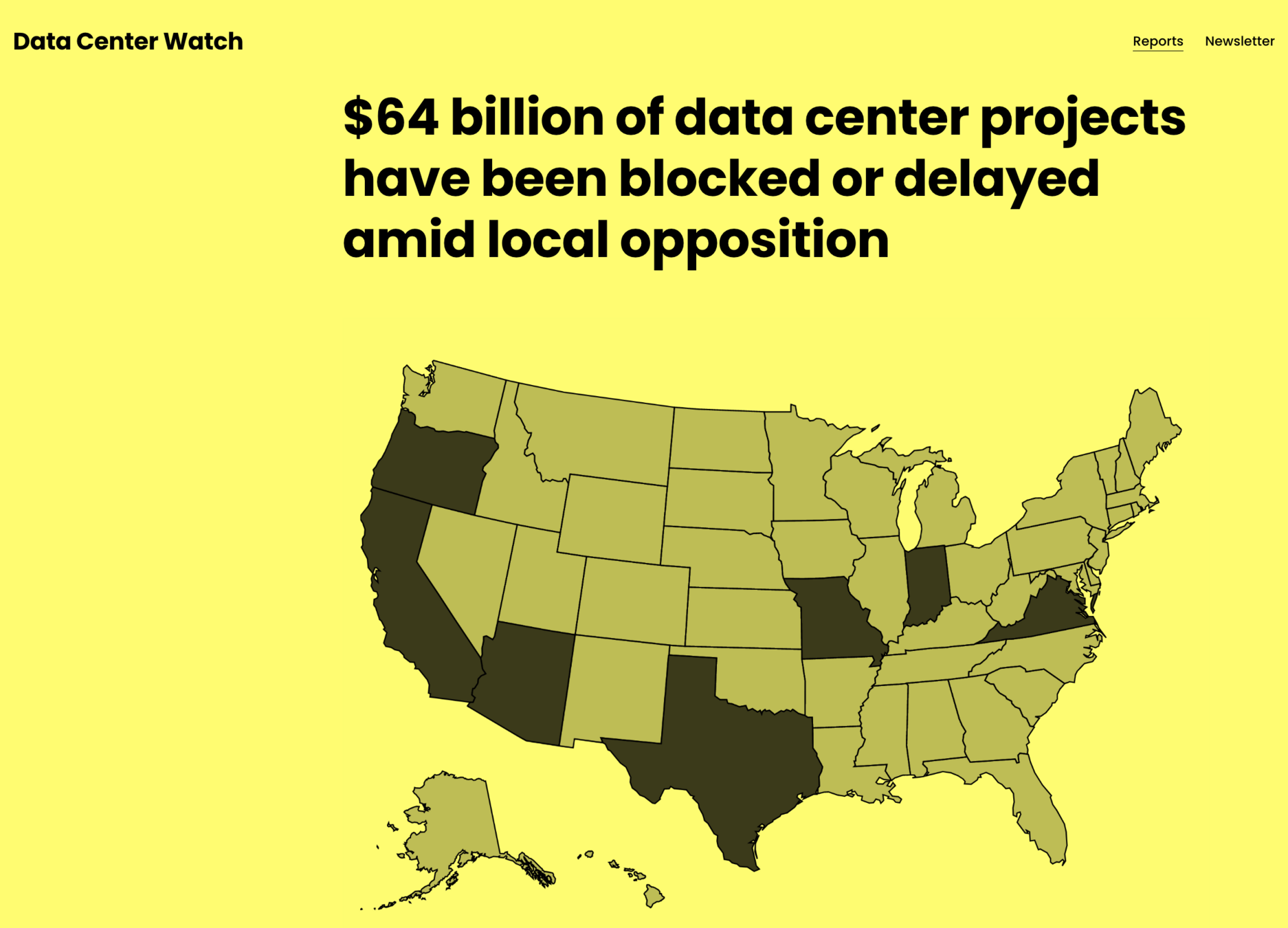
Contemporary cautionary tales: U.S.
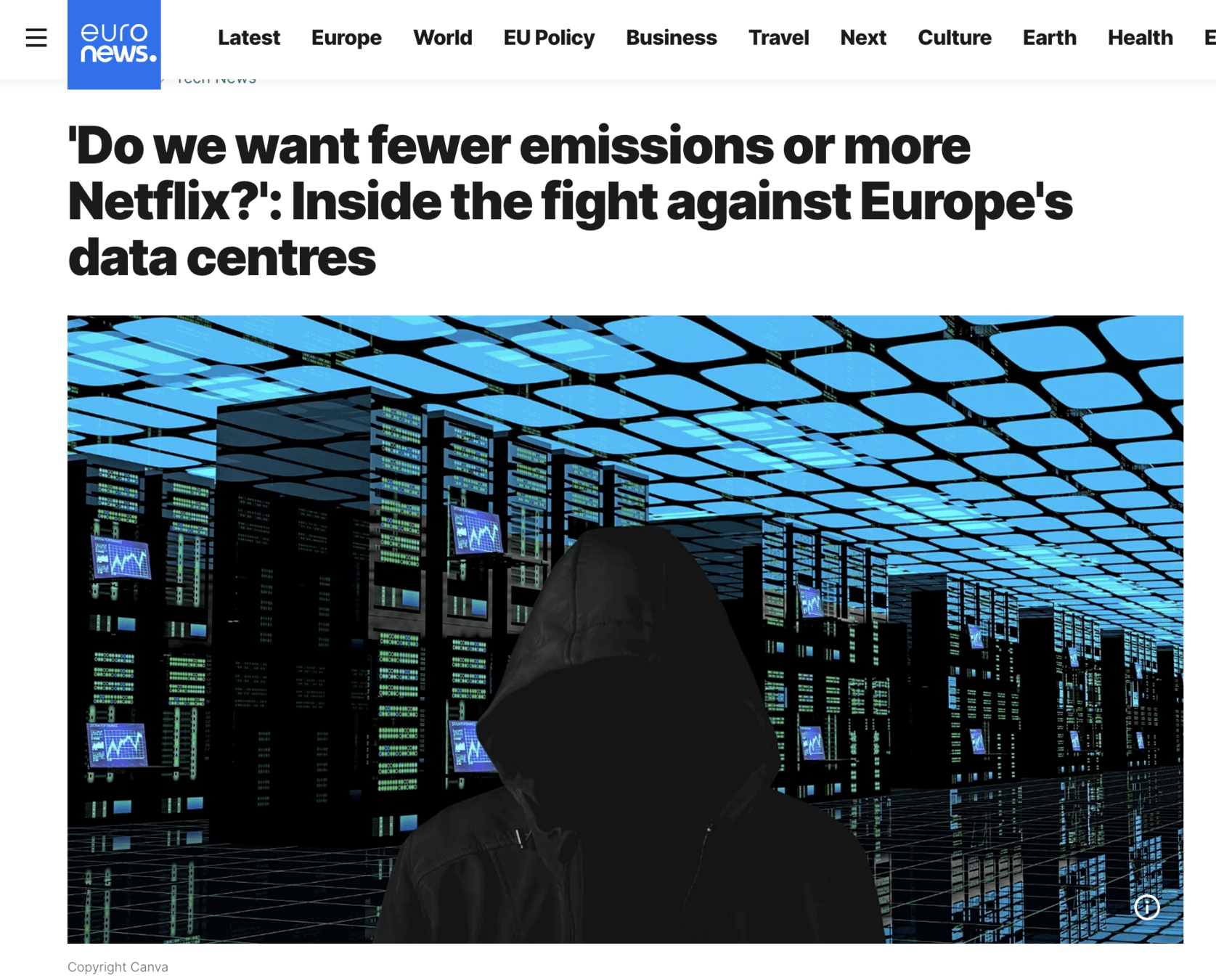
Contemporary cautionary tales: the EU
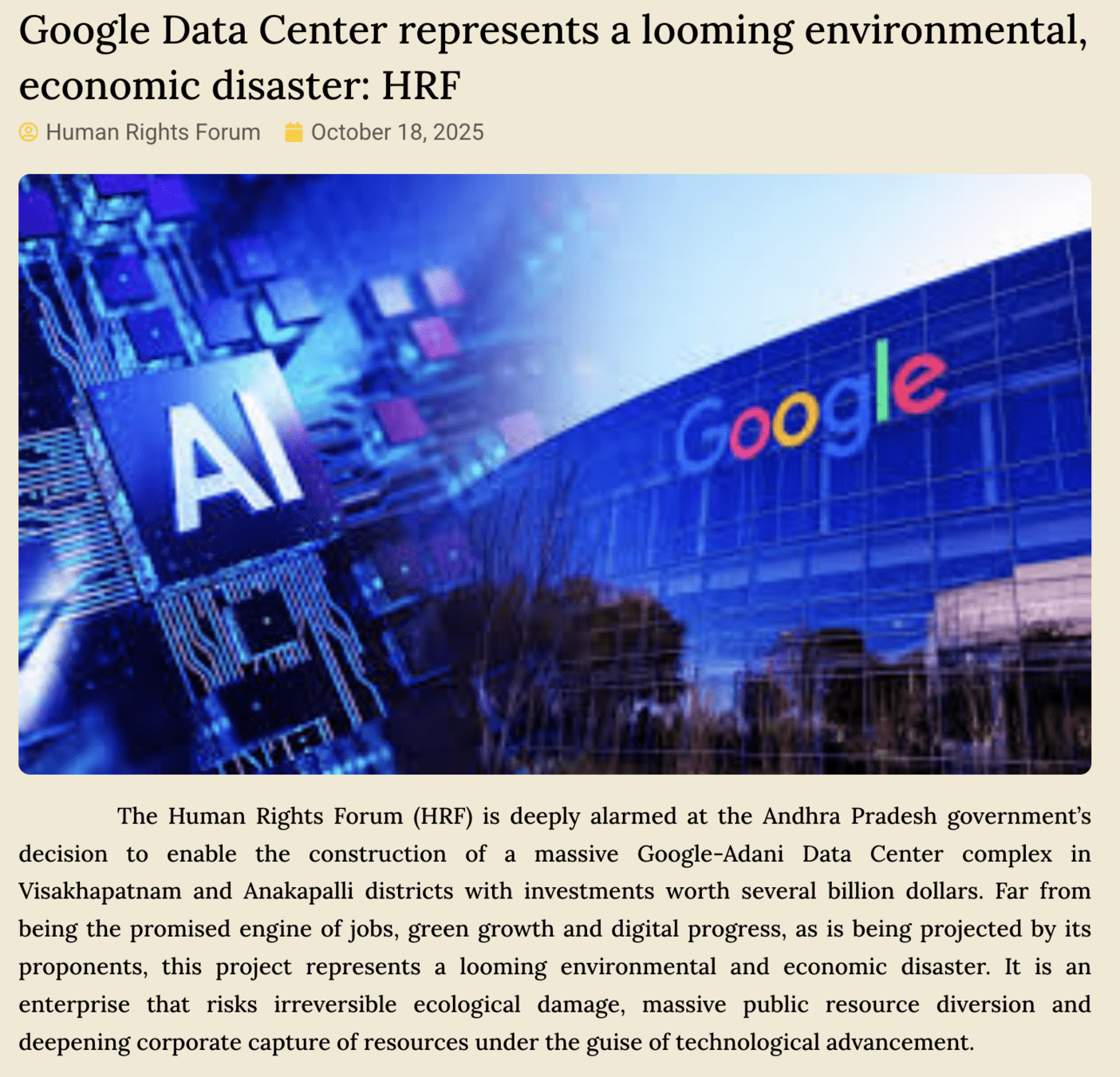
In India
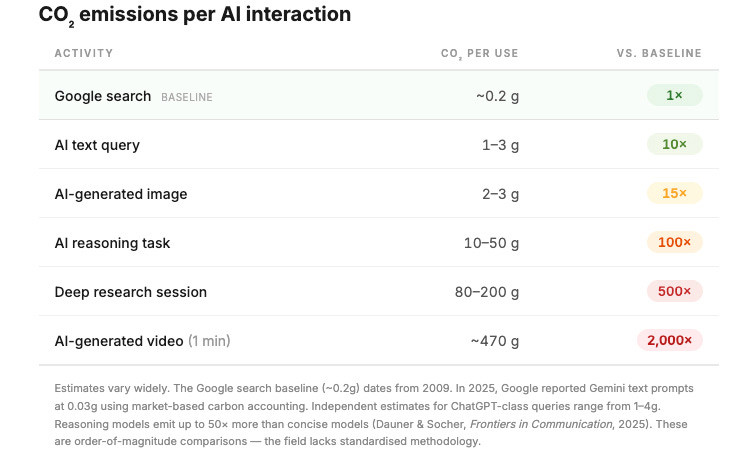
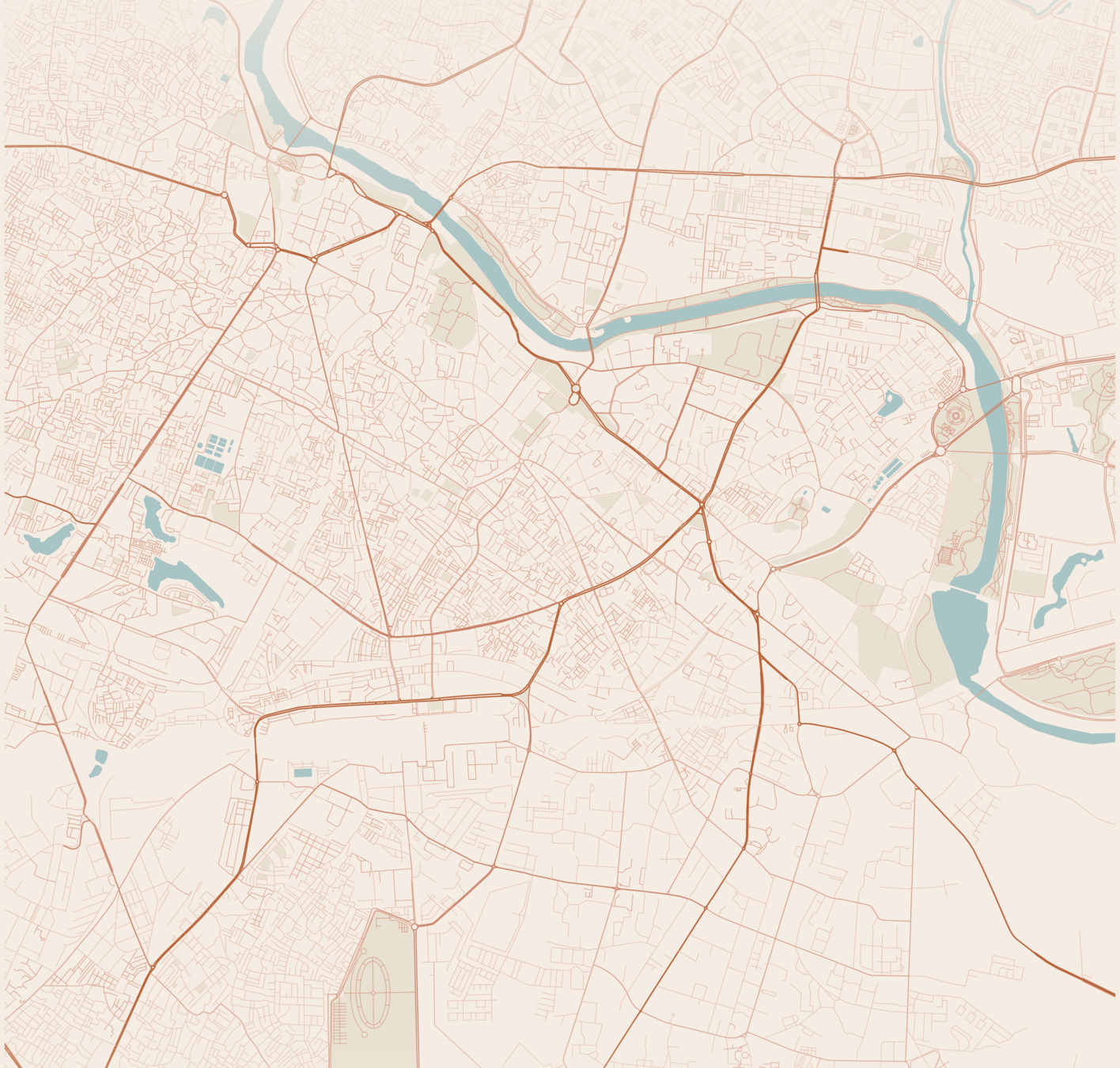
Dissecting the Lucknow AI City announcements
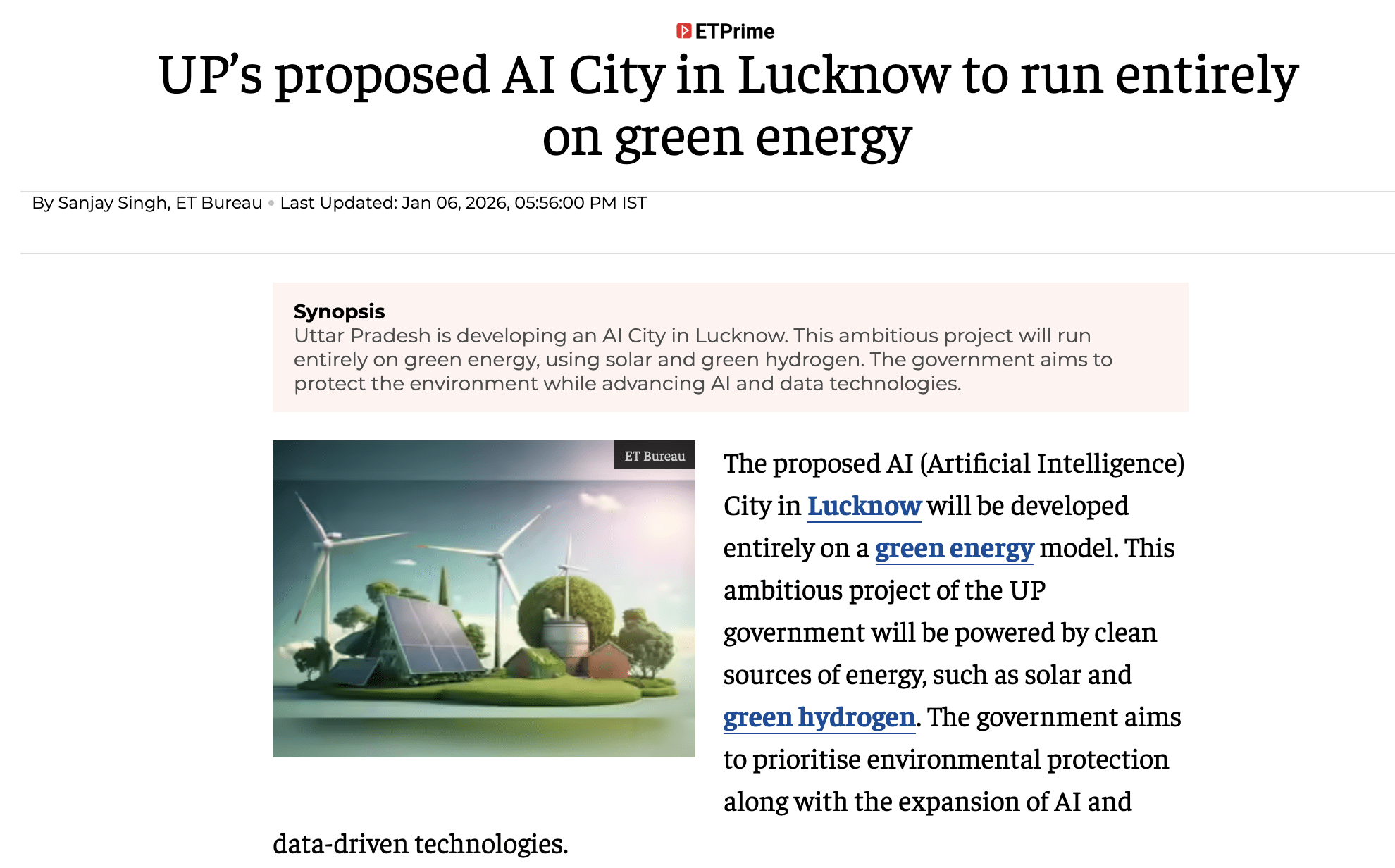
Extraordinary claims require extraordinary evidence
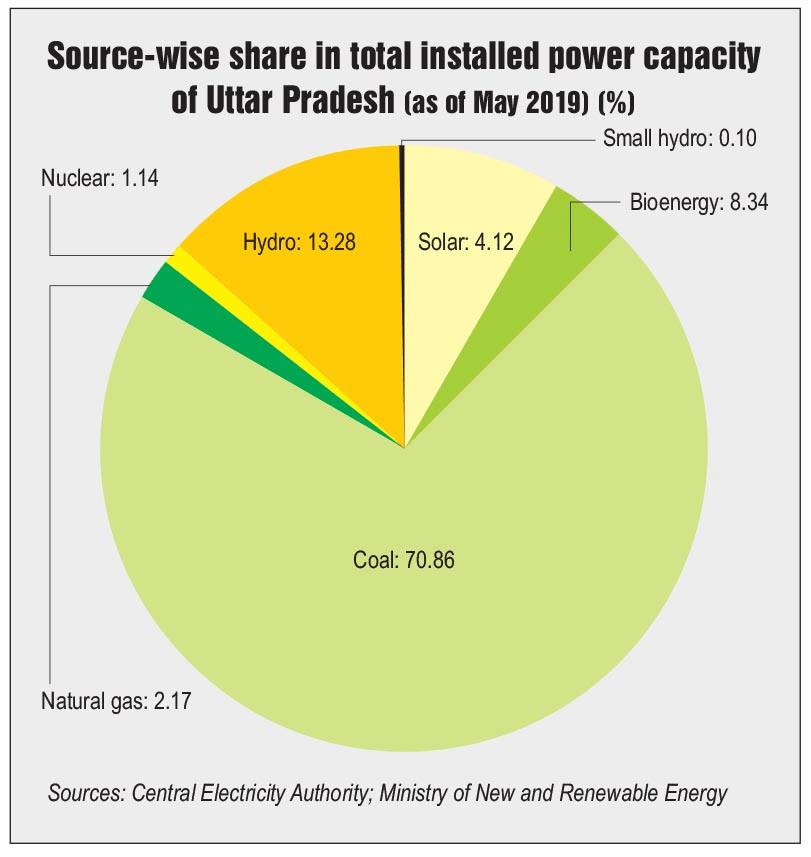
- No EIA has been filed on the Parivesh Portal yet. EIA Notification 2006 doesn't mention data centres.
- UP has 3,823 MW of installed solar capacity, against its 22,000 MW target for 2027. That's ~17% of the target!
- STT GDC (Singapore-majority owned, Tata minority), Sify Technologies at HCL IT City
- no published engineering plan, no PPA for solar, no MW figure for renewable capacity, no green hydrogen feasibility study
- WUE in hot climates runs 1.5–2.5 L/kWh, for a 100 MW facility in Lucknow's summers (regularly 45°C+), that is 2–6 million litres of water consumed per day. Microsoft's Asia-Pacific operations report 1.65 L/kWh, and Lucknow is hotter than most AP locations.
Some realities to care about
Why should you care, as someone
interested in FOSS?
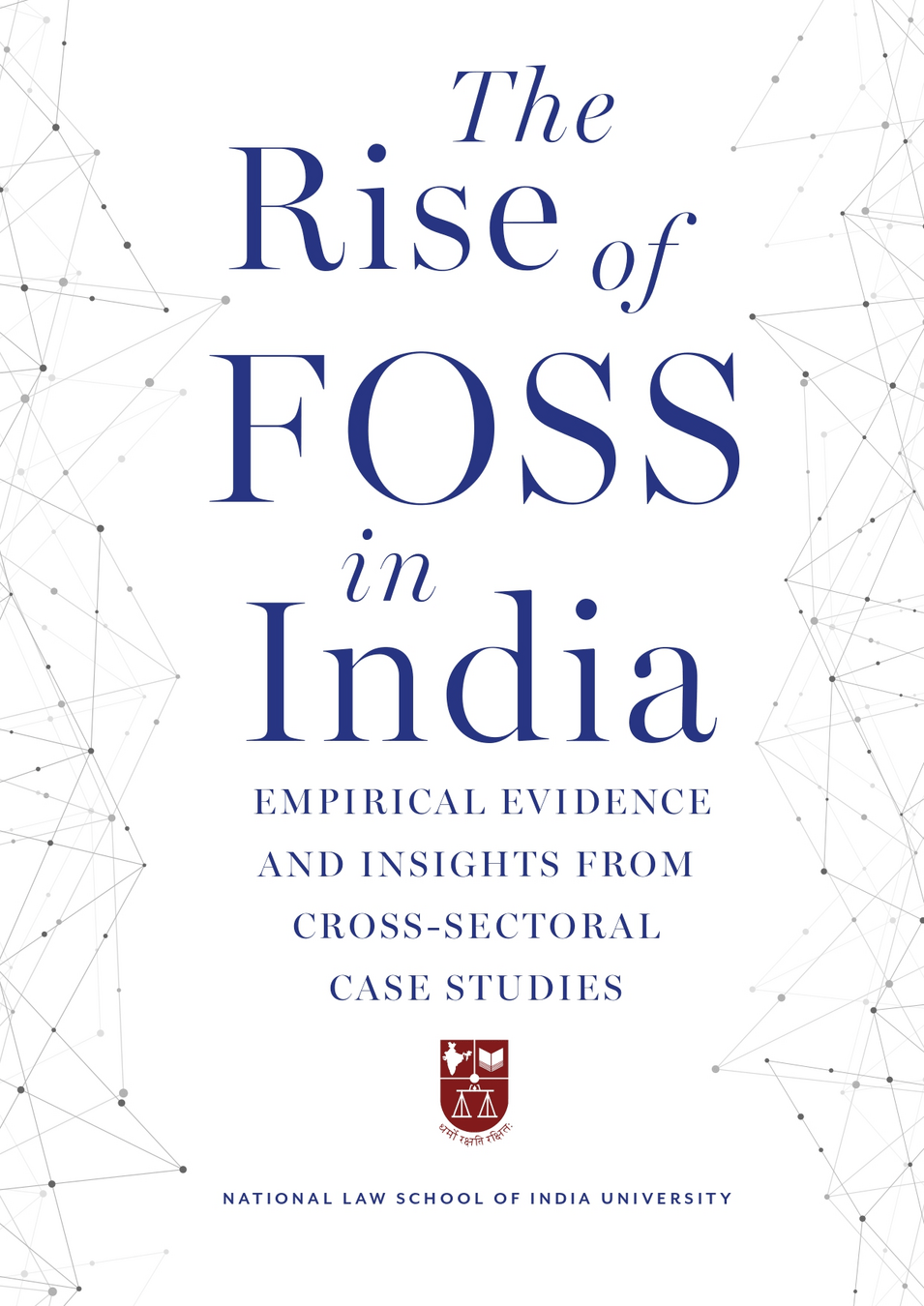
- NxtGen, a Bengaluru-based cloud provider serving clients like the Election Commission of India, built its enterprise cloud service SpeedCloud on OpenStack, an OSS infrastructure platform
- FOSS adoption enabled them to offer cloud services at prices ~80% lower than large proprietary competitors
- 1:50 Proprietary software to FOSS ratio
- Self-hosting Mattermost for internal communications — keeping company data off third-party SaaS platforms entirely
- "We would choose to use FOSS 10 out of 10 times"
On the "greenness" of software
CodeCarbon
Kubernetes-based Efficient Power Level Exporter

Cloud Carbon Footprint (by Thoughtworks)

Green Software Foundation's Carbon Aware SDK
Accountability as a FOSS value
- If the code is auditable, the infrastructure should be too
- Open data on energy and water is a FOSS value, and not just an environmental one
- Communities bearing the real costs deserve the same transparency we demand from software
- Mandatory EIAs for data centres above meaningful capacity thresholds
- Open, publicly accessible energy and water consumption data (PUEs and WUEs)
- A preference for FOSS infrastructure stacks in publicly subsidised facilities
Ending notes
Thank you!
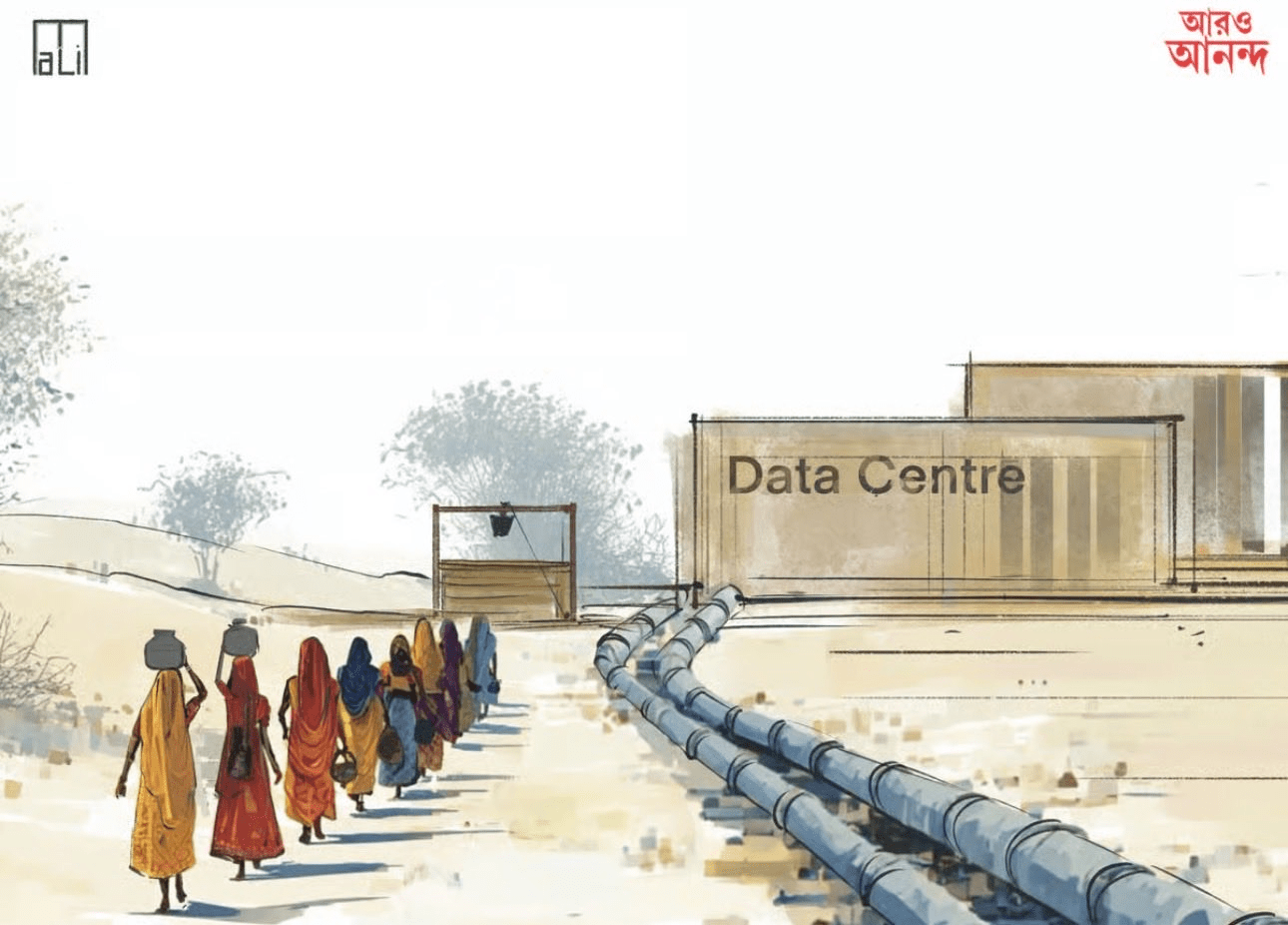
Mere data ke darbar mein: India's AI data centre rush, and the FOSS enthusiast's hidden stake
By Agriya Khetarpal
Mere data ke darbar mein: India's AI data centre rush, and the FOSS enthusiast's hidden stake
A presentation for software programmers and policy and FOSS enthusiasts that explores India's FY 2026-27 tax holiday on data centres and AI, what policy directions emerge, with a special impetus on Lucknow's AI City announcements. I end by describing the role of free and open source software (FOSS) in pragmatic discourse for data centres.