Mera joota hai Japani, lekin AI Hindustani
beyond server farms and data centres, and forging India's AI sovereignty through policy reform
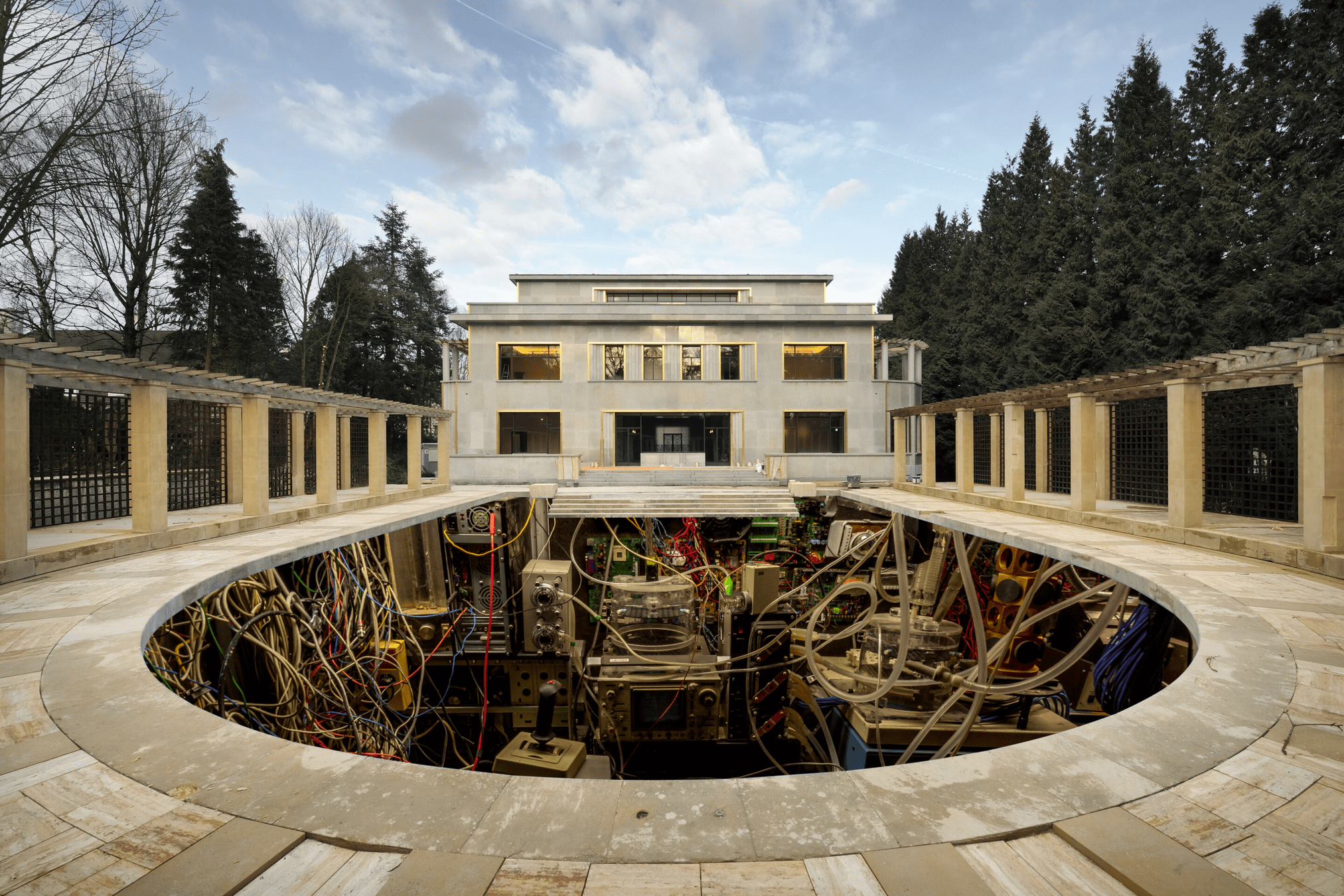
Server Pool by Ulysse Gerkens & FARI / Better Images of AI / CC BY 4.0
Agriya Khetarpal
GCPP 43
The Takshashila Institution
April 2026
A policy analysis based on the Takshashila framework applied to the 21-year tax holiday for foreign cloud service providers utilising data centres as introduced in the
Union Budget, FY 2026-2027
Policy recommendations
- Sovereignty metrics
- Contributions to open-weights models
- Funding for Indian FOSS AI communities
- Procurement of domestic open-architecture hardware (RISC-V)
- Local value additions
- A minimum % workforce from Indian institutions on DCIM-aligned projects
- Quotas for SMEs
- Published upskilling programmes
- Environmental key performance indicators (KPIs)
- PUE < 1.3
- >80% renewable energy sourcing by 2035
- Mandatory closed-loop cooling in water-stressed zones
Tiered tax system based on performance via a sovereignty and sustainability scorecard
Recommendation 1
Non-compliance: graduated tax clawbacks, but with a phase-in over 36 months with transparent reporting templates and industry consortia support
- Representatives from the central government, state governments, Ministry of Power, Ministry of Jal Shakti, environmental scientists, and representatives from affected marginalised communities
- Uniform national baseline for safety, security, and environmental impact
- Review state schemes for alignment with the national AI strategy, and hold a veto authority over sovereignty/ecology violations
- States that voluntarily align receive matching central grants
National Data Centre Council as a statutory body under MeitY
Recommendation 2
Karnataka's software ecosystem + Gujarat's renewable grid = a national compute corridor
Mandating open interoperability, local value addition, and environmental accountability that is not left to competitive state discretion
Goals
A co-investment fund for sovereign AI following on from Recommendation 1
Recommendation 2
Investment areas
- Domestic FOSS AI infrastructure, such as open-weights models, indic datasets, and AI governance frameworks by think tanks and research institutions
- RISC-V toolchain development aligned with advancing DIR-V programme and DHRUV64 chip design
- Cybersecurity auditing frameworks for ensuring data centre security standards are domestically controlled
- Regional AI innovation clusters to redistribute innovation dividends
15%
of foregone tax revenue
to be directed to such a fund
Managed by an independent board with transparent investment criteria: interoperability with global standards such as the EU AI Act, and Indian governance oversight
- Rapidly emerging destination with 25% CAPEX support and power subsidies actively attracting new investment
- New Renewable Energy Policy 2025 removes capacity caps and enables hybrid renewable + BESS that directly addresses data centre power demands
- Faces a groundwater crisis with 85% of districts affected, and thus a case study in policy blind spots
- Home to Bengaluru (one of) India's largest existing data centre clusters with high concentrations of hyperscaler presence
- A mature state-level framework: a dedicated Data Centre Policy 2022–27 with sustainability targets
- Also, the site of India's most visible water stress crisis, i.e., a live cautionary tale of demand outpacing enforcement
Why did I compare Karnataka and Gujarat?
Without these amendments, the tax holiday accelerates infrastructure build-out while leaving India structurally dependent on foreign-controlled AI platforms.
Mera data bhi Hindustani
This policy is designed in the public interest,
but fails to define what the public interest is.

Takshashila GCPP 43 final presentation
By Agriya Khetarpal