Mike Nason PRO
Open Scholarship and Publishing Librarian @ UNB Libraries // Metadata Nag and DOI Wrangler @ PKP // General Loudmouth and Malcontent
Mike Nason
Open Scholarship & Publishing Librarian | UNB Libraries
Open Scholarly Infrastructure Advisor | Public Knowledge Project
It's me, Mike! Hello! I hope you're well, despite [gestures broadly] the crippling geopolitical nightmare in which we find ourselves.
I'm your Open Scholarship & Publishing Librarian.
I work, primarily, in a field referred to as "Scholarly Communications".
My job is about helping researchers make the results of their work as accessible to the public (or, relevant research communities) as they need them to be, whether that's due to funding mandates, personal interest, or a sort of proactive capitulation.
I am here to help you. It's, like, specifically built into the CBA (16c.02).
It is what librarians are for.
research data management
tri-agency oa requirements
open access publishing
scholar profiles
repositories
digital publishing
open educational resources
open infrastructure
persistent identifiers
scholarly publishing
scholarly communications
academic integrity
bad-faith publishers
Lastly, we'll review some hot button topics. Because publishing is an industry with an enormous amount of money behind it, there's a lot of these!
Ideally, it will not be terribly overwhelming.
We'll take a look at how traditional publishing works and the place of academics in it. The basics.
We'll also discuss the lifecycle of publications and make an attempt to put this in context with the ways you work as students currently.
As students, much of the career-based double-lives lived by your professors is obscured to you. We'll talk a bit about what that means and why it's worth thinking about.
We'll also start to discuss your place in all this, and hopefully empower you to consider your own agency as burgeoning academics yourself.
An awful lot of things in academia will be presented to you as prescriptive, rigid, and/or immutable. This is especially true for topics related to publishing. But, the field has really changed a lot over the last two decades. You have supervisors or advisors for whom the landscape has shifted tremendously.
What I want you to understand more than anything is that very few things in academia are set in stone. Contrary to the specific, bad-faith mania drummed up by right wing pundits and ghouls, academia is generally a conservative place that is slow to change, but if you ask your instructors and/or advisors they will tell you that things are still pretty different than they were even a decade ago.
This isn't, like, bad. Not necessarily. But it does mean you're learning about publishing from one or two specific people who learned from a few specific people themselves and so on and so on.
This is a kind of folk wisdom.
It's also a little like how you inherit emotional baggage from your parents.
A mouthful of a phrase that essentially means “the process by which researchers share/publish the products of research”. You're the scholars! That's you!
Publishing and sharing research is a hugely important part of an academic career.
When you think about it, it's kind of wild that we don't spend more time talking about this stuff.
Publishing has changed quite a bit over the last couple of decades. That sounds like a long time, but when you consider whole generations of researchers and how long people spend in the profession, it's been pretty zippy. I'd like to empower you.
Some disciplines move through research and publish at a quick pace. It can take about a year between the time you submit your work to a journal and for it to be published. For some physicists, their work is already out of date by the time it's published.
We call this a short tail. Fast research where the window of relevance is more immediate and iterative within a field of study. But there's also long tails!
You're getting close to finishing a paper you're drafting. Either by yourself or with a few other authors. You need to start thinking about where you'll submit it.
You're going to want to look for the journal first because they're going to have things like word-count limits, formatting requirements, citation style requirements, and any other number of criteria.
You start this whole process before the paper is really "finished". Think of it like a very nice draft.
A bunch of stuff is going to happen to your paper while you wait to hear back about your submission.
Peer review is a longer version of the waiting game except, at the end, you either get rejected or a list of things that you'll need to fix.
Assuming your revisions are up to snuff, an editor will decide whether or not to formally accept the work. Then you'll either have your paper sent to copyediting and layout folks or you have to pass through a second round of peer review to affirm you (and the journal) have done their due diligence.
Once your paper is approved, you'll have to wait for it to move through the publication workflow. These vary by publisher. Copyediting and layout will happen and you'll be roped into the process as it moves along. Eventually, you'll be sent a proof for final approval.
This is what has happened to, more or less, every journal article you've read throughout your entire education.
You are absolutely not going to know all of these things.
But, someone has been in your shoes and will have relevant information for you.
You can also talk to:
librarians ( ͡◉ ͜ʖ ͡◉)
community of practice
your colleagues
Publications of repute will not come looking for you. (unless you are, like, a really big deal)
Keep your head on a swivel.
There is significant money to be made in exploiting folks who have more ambition than time/literacy.
university buys access to content
university pays researchers
researchers
research
peer review
write/submit
editorial
publishers
publishing workflow(s)
publish
copyediting
layout
There are many wonderful things about open access. It's a very idealistic movement based on the idea that increased access to information will, in turn, provide more equality and equity in scholarship worldwide.
People should engage with open access because it is a moral good! Information wants to be free!
It was spurred through what's known as the "serials crisis" where journal subscriptions rapidly increased to such an extent that institutions struggled to keep up and research became more and more restricted to folks with deep pockets.
The more people who can read your work, the larger an impact that work may have.
Access to knowledge is a public good.
Author Processing Charge
So then, some unscrupulous folks figured a few things out.
Though, I'd suggest, major publishers are just as predatory.
Though, I'd suggest, major publishers are just as predatory.
Author Processing Charge
press "down" for a little
oa policy diversion!
This policy exists to ensure that publicly funded research is available to that same public. It's an assertion that open access is a public good.
press "down"
again, please
If your article is the result of public funding, it needs to be available to the public within 12 months of its publication date.
If either the publisher's version of record or the accepted manuscript is available within 12 months, you're good.
just one
more slide
We have a policy now, too.
UNB Senates approved an official Open Access Policy in November 2023. It, similarly, encourages faculty to make the publisher's version of record or the accepted manuscript available, regardless of funding.
esc
psst! press "down"
here be data
By pressing down you can find information about the Tri-Agency Research Data Management (RDM) Policy and whatever potential impact it might have on your work!
press "down" for a little
rdm policy diversion!
more rdm stuff
this way!
The libraries are quite prepared to help you.
Whereas the goal of the OA Publishing Policy was to make content available to the public, the goal for the RDM policy is quite different.
"The objective of this policy is to support Canadian research excellence by promoting sound RDM and data stewardship practices. This policy is not an open data policy."
more rdm stuff
this way!
"All grant proposals submitted to the agencies should include methodologies that reflect best practices in RDM."
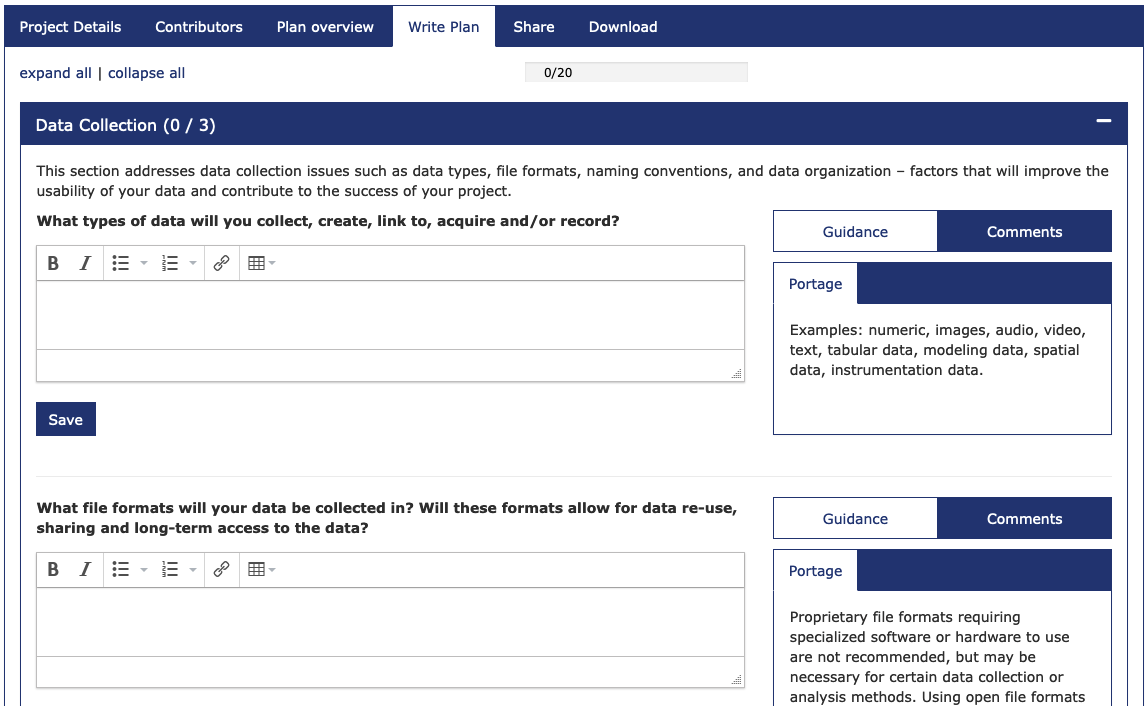
"For certain funding opportunities, the agencies will require data management plans (DMPs) to be submitted to the appropriate agency at the time of application, as outlined in the call for proposals."
more rdm stuff
this way!
more rdm stuff
this way!
more rdm stuff
this way!
more rdm stuff
this way!
more rdm stuff
this way!
more rdm stuff
this way!
more rdm stuff
this way!
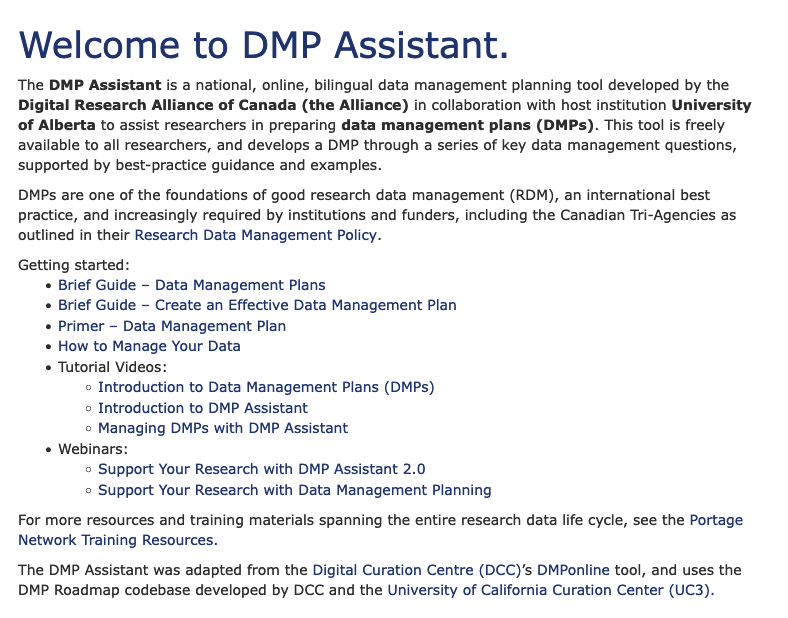
Provided by the Digital Research Alliance of Canada (formerly Portage)
link | https://assistant.portagenetwork.ca/
This is the place. This is the most important.
more rdm stuff
this way!
more rdm stuff
this way!
more rdm stuff
this way!
UNB Libraries RDM Services
lib.unb.ca/rdm
Data Management Planning
lib.unb.ca/rdm/data-management-planning
Contact
rdm.services@unb.ca
Tatiana Zaraiskaya - STEM Librarian
Siobhan Hanratty - Data/GIS Librarian
Alex Goudreau - Science/Health Sciences Librarian UNBSJ
James MacKenzie - Director, Scholarly Technologies
Mike Nason - Open Scholarship & Publishing Librarian
more rdm stuff
this way!
"Grant recipients are required to deposit into a digital repository all digital research data, metadata and code that directly support the research conclusions in journal publications and pre-prints that arise from agency-supported research.
Determining what counts as relevant research data, and which data should be preserved, is often highly contextual and should be guided by disciplinary norms."
more rdm stuff
this way!
Implementation
This won't be implemented until the Tri-Agencies have reviewed all submitted institutional strategies.
They will then "phase-in" deposit requirements. It will likely be a minute.
more rdm stuff
this way!
more rdm stuff
this way!
psst! press "down"
for a brief diversion!
keep
going...
These are, generally, referred to as "preprints".
These are all the versions after peer review.
almost
done...
esc
Is this a good journal? Is this a real journal? Does it have a good reputation in my field? Does it have retractions or other scandals? Does something about it seem predatory? What does "predatory" even really mean? What about the publisher? Does the journal look ok, but the publisher looks sketchy? Will my community of practice read it? Will it be well-cited? Am I in good company? Are APC fees normal or bad? Wait, why am I paying anything to publish in the first place? Doesn't this journal already make a ton of money? Do I want to support them with more money? Can the public read it? Does that matter to me? Is it as accessible to other researchers as I might assume it is? If I share a link, who will hit a paywall? What will it cost others to access it?
Is this journal open access? What does "hybrid OA" mean? Am I under some kind of mandate that requires me to share this work? Again, why am I paying for publishing? Do I need to? Does it matter to me which versions of the work are available? Does it matter to me where those versions are available? Why are you doing this to me? Do I have funding or support to open up an article via APC? What about my research data; where does that go? Does it all have to be open, or just some of it? Does it even have to be open? What am I allowed to share and where? What happens if I ignore the OA policy? Like, do I actually have to do this? Does any of this even actually matter?
How on top of all this do I need to be?
Even publishing your thesis comes with some of the decisions we talked about here.
Let's say you want to spin your thesis into a journal article. This is pretty common! In a lot of ways, unless you're super active on the conference circuit during your degree and presenting papers and posters, your thesis is kind of the closest thing to your first real publication as you can get.
psst! press "down"
for more information here!
Broadly speaking, you'll hear a handful of terms thrown around in this space. I'm going to focus on four of them, and then go into a little more detail.
They're listed from least problematic to most.
Doesn't Cost You Money to Publish
Does Cost You Money to Publish
Diamond Open Access is the platonic ideal of OA. A Diamond OA journal has no publishing fees and no subscription fees. Instead, they have found some alternative funding model to support their operational costs.
“Subscribe to Open” (S2O) is a pragmatic approach for converting subscription journals to open access—free and immediate online availability of research—without reliance on either article processing charges (APCs) or altruism.
S2O relies on existing library subscription procurement processes. The model provides a realistic and immediate route to opening a vast body of research output that would otherwise remain gated.
Green OA is more of a method for providing access to a version of a work that was not published in an OA venue. It is also often referred to as self-archiving.
A journal wouldn't identify as "green". Instead, you would meet a mandate requirement or facilitate open access by self-archiving a version of the work that is not the final, version of record.
If you post a preprint to a preprint server, that's green OA.
If you post an accepted manuscript (the version of a work after peer review and before copyediting/layout), that's green OA.
If you publish in any venue where your work is OA and you don't have to pay money for that to happen, that's green OA.
Green OA is a bit of a compromise.
I've used the phrase a lot in this presentation. Self-archiving is when you take a version of your work and make it available in a repository (institutional or disciplinary).
Usually, this isn't the final version of record. It's typically the "accepted manuscript", which is the version after peer review but before copy editing.
Self-archiving is usually cost free, but even paid journals allow for it. The idea is not just facilitating OA in one location, but multiple. This increases access.
If you give me an accepted manuscript to self-archive in our institutional repository, this will meet your Tri-Agency OA requirements. Assuming, of course, it's permissible by that journal.
Gold OA is when you have to pay an APC to publish your work in a journal.
Gold OA journals are always free for users to read, and most of their funding for operations come from author processing charges.
PLOS is a good example of a Gold OA publisher (PLOS is also a nonprofit).
Hybrid OA is increasingly common. These are journals that operate like traditional subscription journals that also offer the possibility paying an APC to facilitate immediate open access.
Hybrid OA is controversial, in particular, because these journals collect both subscription revenue and APC revenue. This is "double dipping".
Because OA has come down to money, it's useful to remember that types of open access are often tethered to the financial model of the publisher.
Not for Profit Publishing
For Profit Publishing
esc
If you're not under mandate, and you're confident that you don't need to worry about your audience affording access to your work, then probably not.
It would be cool if it was, but I get it.
However, you do still need to ask the following:
You can often choose a green route to open access, unless you're publishing with a "gold oa" journal.
This route often comes with a 12-month embargo. And, sometimes, you want your work to be released more quickly than that. In some cases, you might want to pay an APC just to get immediate open access.
And so:
SOMETIMES.
Because of UNB Libraries' membership in national, consortial bargaining efforts with major publishers, we are sometimes able to leverage APC agreements with publishers.
Even still, it's rarely as simple as just saying "this publisher yes, this publisher no". There's often caveats.
But! You can visit our APC Guide for a list of all eligible publishers we have agreements with.
It's worth noting that some of these agreements will fully waive APCs, but just as frequently they are merely discounts.
We are always happy to help you sort this out!
One of the ways you publish with intention is to think about the context of your research early in the process. We do this kind of work with stuff like ethics review and logistical stuff, but rarely as it relates to the production and publication of works.
As you get closer to the work being ready for submission, it's good to start looking for potential places to submit it. Remember things like style, copyediting, layout, and review will change the work. No one is expecting perfection on submission.
Remember, at this stage, you still own this work and what you do with it is your call.
You'll be surprised to learn, maybe, that this is when I usually start hearing from people thinking about open access. They want to know why something that was accepted is coming with a $3500 invoice. Or they're surprised to learn they're not legally allowed to distribute their work elsewhere.
By thinking about these issues earlier in your research, you'll be choosing publications based on your intentions for the work.
Selecting for Open Access
gold-oa journal
unb has apc waiver
free
$
unb has apc discount
no apc support
$$
hybrid journal
unb has apc waiver
free
$$
unb has apc discount
no self-archiving
free
allows self-archiving
$
no apc support
require immediate oa
Selecting for Open Access
diamond oa
subscribe to open
free
Here are some resources for looking things up and getting help if you find yourself in that situation and you don't want to ask me stuff!
Publishers don't love to be up front with their open access options. Sometimes you have to dig. Open Policy Finder is a tool that lets you search for publisher policies to learn what rights for a specific journal will be.
If you don't have time for this or maybe want to check a handful of publications, you can contact us with this handy publishing support form, and we'll get back to you after evaluating.
Open Policy Finder
A database of collected publisher policies, most easily searched by using a journal's ISSN.
Publishing Support Form
Tell us a little about your funding situation and the journals you're considering, and we can tell you if there's APC discounts available and/or what your options are for OA.
Again, I will happily refer to the CBA. I am contractually here to help you. It's, like, specifically built into the job (16c.02). It is what librarians are for.
research data management
tri-agency oa requirements
open access publishing
scholar profiles
repositories
digital publishing
open educational resources
open infrastructure
persistent identifiers
scholarly publishing
scholarly communications
toppling capitalism
dataverse
open journal systems
navigating apcs
orcid support
evaluating journals
publishing literacy
metadata literacy
data management plans
"predatory publishers"
student journals
open science/scholarship
taking back scholarship from publishers
UNB Libraries Supporting OA
Documentation and general support.
UNB Libraries APC Discounts
Guides to APC Discounts for UNB.
UNB Scholar Research Repository
Deposit your work! Self-archive!
UNB Scholar Deposit Form
Send us your publications.
UNB Libraries Publishing Support Form
We can help sort out policies/options.
Open Policy Finder
Check publisher policies.
Meeting Tri-Agency Requirements
My deck for ORS grant workshops.
Think, Check, Submit
A resource for evaluating publishers.
Publishing Support Folks
Mike Nason
Cat Gracey
Joanne Smyth
Julie Morris
James MacKenzie
https://lib.unb.ca/publishing
Contact Me Directly
mnason@unb.ca
UNB Scholar Inquiries
unb.scholar@unb.ca
RDM Support Folks
Tatiana Zaraiskaya
Siobhan Hanratty
James MacKenzie
Mike Nason
UNB Libraries RDM Services
Research Data Management help.
Data Management Planning
DMP support and documentation.
Contact Me Directly
mnason@unb.ca
RDM Services Contact
rdm.services@unb.ca
By Mike Nason
Issues in Scholarly Publishing for 2025. A presentation geared towards grad students and early career researchers at UNB. Covers: ORCID, Tri-Agency Mandates, RDM, APCs, Open Access