Let's talk about software quality
Does quality matter?
If you need to
go to the metro
Need a skate?
A car?
A truck?
A spaceship?
If your company needs to move very expensive goods?
The problem
The business is extremely frustrated with
engineering’s inability to deliver features rapidly and reliably.
Slow delivery
Buggy software releases
Poor scalability
Some organizations have difficulty eliminating technical debt because past attempts were too ambitious and didn’t provide much benefit.
As a result, the business becomes reluctant to invest in further clean up efforts.
The Law of Holes states that
"if you find yourself in a hole, stop digging"
"Any organization that designs a system (defined more broadly here than just information systems) will inevitably produce a design whose structure is a copy of the organization's communication structure."
CHANGE
states of change
The reliance on manual testing isn’t because of a lack of tooling and frameworks. For
example, JUnit, which is a popular Java testing framework, was first released in 1998.
The reason for lack of automated tests is mostly cultural: "testing is QA’s job", "it’s
not the best use of a developers’s time", etc. It also doesn’t help that developing a fast
running, yet effective, maintainable test suite is challenging. Also, a typical large
monolithic application is extremely difficult to test.
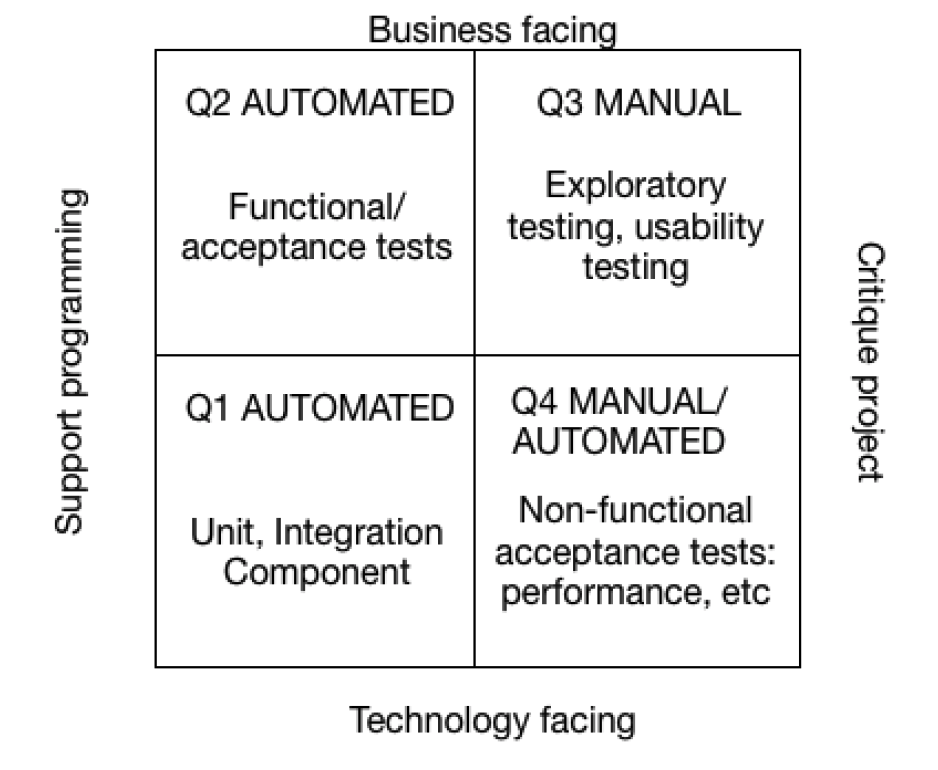
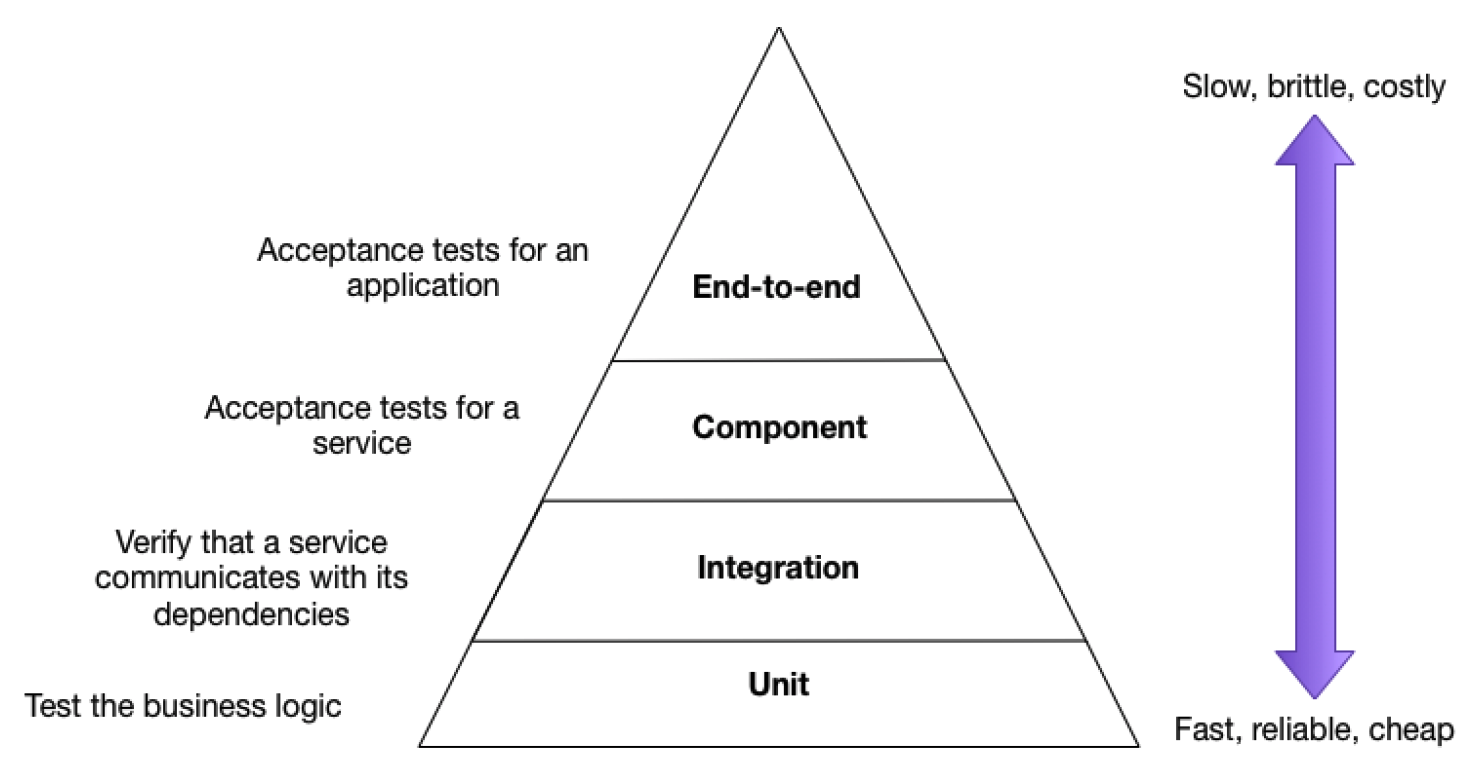
Since we don’t have unlimited budget for
development and testing, we want to focus on writing tests that have small scope
without compromising the effectiveness of the test suite.
Silos and pairing
Time to market
Profit
Why architecture matters?
You can deliver a lot of features
without software quality
You'll miss all the ilities
Scalability
Maintainability
Testability
Extensibility
Availability
https://en.wikipedia.org/wiki/List_of_system_quality_attributes
Understandability
Durability
Manageability
...
Sample

The importance of a well defined backlog
Will you build a factory, hire all the engineers and pieces without knowing what to build?
Tech debt
https://dzone.com/articles/measuring-technical-debt
Sample
Sample
Sample
System.out.println(1)
System.out.println(2)
System.out.println(FIZZ)
System.out.println(4)
System.out.println(BUZZ)
System.out.println(6)
Sample
System.out.println(1)
System.out.println(2)
System.out.println(FIZZ)
System.out.println(4)
System.out.println(BUZZ)
System.out.println(6)
Destructuring and spread
https://developer.mozilla.org/en-US/docs/Web/JavaScript/Reference/Operators/Destructuring_assignment
Spread & Destructuring
[a, b] = [10, 20];

console.log(a);
// expected output: 10

console.log(b);
// expected output: 20

[a, b, ...rest] = [10, 20, 30, 40, 50];

console.log(rest);
// expected output: [30,40,50]
var o = {p: 42, q: true};
var {p, q} = o;

console.log(p); // 42
console.log(q); // true
Spread
const person = { name: 'David Walsh', gender: 'Male' };
const tools = { computer: 'Mac', editor: 'Atom' };

const summary = {...person, ...tools};
/*
Object {
  "computer": "Mac",
  "editor": "Atom",
  "gender": "Male",
  "name": "David Walsh",
}
*/
Destructuring
function drawES6Chart({size = 'big', cords = {x: 0, y: 0}, radius = 25} = {}) {
  console.log(size, cords, radius);
  // do some chart drawing
}

drawES6Chart({
  cords: {x: 18, y: 30},
  radius: 30
});

drawES6Chart()
function drawES5Chart(options) {
options = options === undefined ? {} : options;
var size = options.size === undefined ? 'big' : options.size;
var cords = options.cords === undefined ? {x: 0, y: 0} : options.cords;
var radius = options.radius === undefined ? 25 : options.radius;
console.log(size, cords, radius);
}
drawES5Chart({
cords: {x: 18, y: 30},
radius: 30
});Destructuring
var metadata = {
    title: 'Scratchpad',
    translations: [
       {
        locale: 'de',
        localization_tags: [],
        last_edit: '2014-04-14T08:43:37',
        url: '/de/docs/Tools/Scratchpad',
        title: 'JavaScript-Umgebung'
       }
    ],
    url: '/en-US/docs/Tools/Scratchpad'
};

var {title: englishTitle, translations: [{title: localeTitle}]} = metadata;

console.log(englishTitle); // "Scratchpad"
console.log(localeTitle);  // "JavaScript-Umgebung"
Destructuring
var people = [
  {
    name: 'Mike Smith',
    family: {
      mother: 'Jane Smith',
      father: 'Harry Smith',
      sister: 'Samantha Smith'
    },
    age: 35
  },
  {
    name: 'Tom Jones',
    family: {
      mother: 'Norah Jones',
      father: 'Richard Jones',
      brother: 'Howard Jones'
    },
    age: 25
  }
];

for (var {name: n, family: {father: f}} of people) {
  console.log('Name: ' + n + ', Father: ' + f);
}
Iterators generators & iterables

https://developer.mozilla.org/en-US/docs/Web/JavaScript/Guide/Iterators_and_GeneratorsIterators
function makeIterator(array) {
    var nextIndex = 0;

    return {
       next: function() {
           return nextIndex < array.length ?
               {value: array[nextIndex++], done: false} :
               {done: true};
       }
    };
}
var it = makeIterator(['yo', 'ya']);
console.log(it.next().value); // 'yo'
console.log(it.next().value); // 'ya'
console.log(it.next().done); // trueGenerators *
function* idMaker() {
  var index = 0;
  while(true)
    yield index++;
}

var gen = idMaker();

console.log(gen.next().value); // 0
console.log(gen.next().value); // 1
console.log(gen.next().value); // 2
// ...
Iterables
var myIterable = {};
myIterable[Symbol.iterator] = function* () {
    yield 1;
    yield 2;
    yield 3;
};

for (let value of myIterable) {
    console.log(value);
}
Unit testing

mocha
npm install mocha --save-devvar assert = require('assert');
describe('Array', function() {
describe('#indexOf()', function() {
it('should return -1',() => {
assert.equal([1,2,3].indexOf(4), -1);
});
});
});test script
{
  "name": "myawesomeapp",
  "version": "1.0.0",
  "description": "my awesome app",
  "main": "index.js",
  "scripts": {
    "start": "node index.js",
    "test": "mocha test/* --recursive",
    "debug": "node --inspect-brk index.js"
  },
  "keywords": [
    "rest",
    "mongodb"
  ],
  "author": "alex",
  "license": "ISC",
  "dependencies": {
    "handlebars": "^4.0.11",
    "hapi": "^17.5.1",
    "mongodb": "^3.0.10",
    "vision": "^5.3.2"
  },
  "devDependencies": {
    "mocha": "^5.2.0"
  }
}
coverage
{
  "name": "myawesomeapp",
  "version": "1.0.0",
  "description": "my awesome app",
  "main": "index.js",
  "scripts": {
    "start": "node index.js",
    "test": "nyc mocha test/* --recursive",
    "debug": "node --inspect-brk index.js"
  },
  "keywords": [
    "rest",
    "mongodb"
  ],
  "author": "alex",
  "license": "ISC",
  "dependencies": {
    ...
  },
  "devDependencies": {
    "mocha": "^5.2.0",
    "nyc": "^12.0.2"
  }
}
npm install nyc --save-dev
Refactor! To MVC

Refactor! To MVC
server.route(PeopleController.getPeople)

server.route(PeopleController.getPerson)

server.route(PeopleController.renderPerson)
server.route({
method: 'GET',
path: '/people',
handler: (request) => {
return Db.getPeople()
}
})
server.route({
method: 'GET',
path: '/people/{name}',
handler: (request) => {
return Db.getPerson(request.params.name)
}
})
server.route({
method: 'GET',
path: '/render/people/{name}',
handler: async (request, h) => {
const person = await Db.getPerson(request.params.name)
return h.view('person', {
message: 'Hello Handlebars!',
person: person
});
}
})

Questions?

Homework
- Play around with this (promises and =>)
- Understand module.exports
- Allow insertion of people REST
- Form to perform insert with
body - Go to MDN and node website!

Lets talk about software quality
By Alejandro Vidal Rodriguez