








Anastasios Tzanidakis
Astronomy Ph.D Student at the University of Washington Time-domain Astrophysics, Astroinformatics, High-Dimensional Data Visualization, Statistical Modeling (he/him)
Anastasios (Andy) Tzanidakis
in Collaboration with LINCC Frameworks and UW DiRAC
atzanida@uw.edu // andytza.github.io // AndyTza
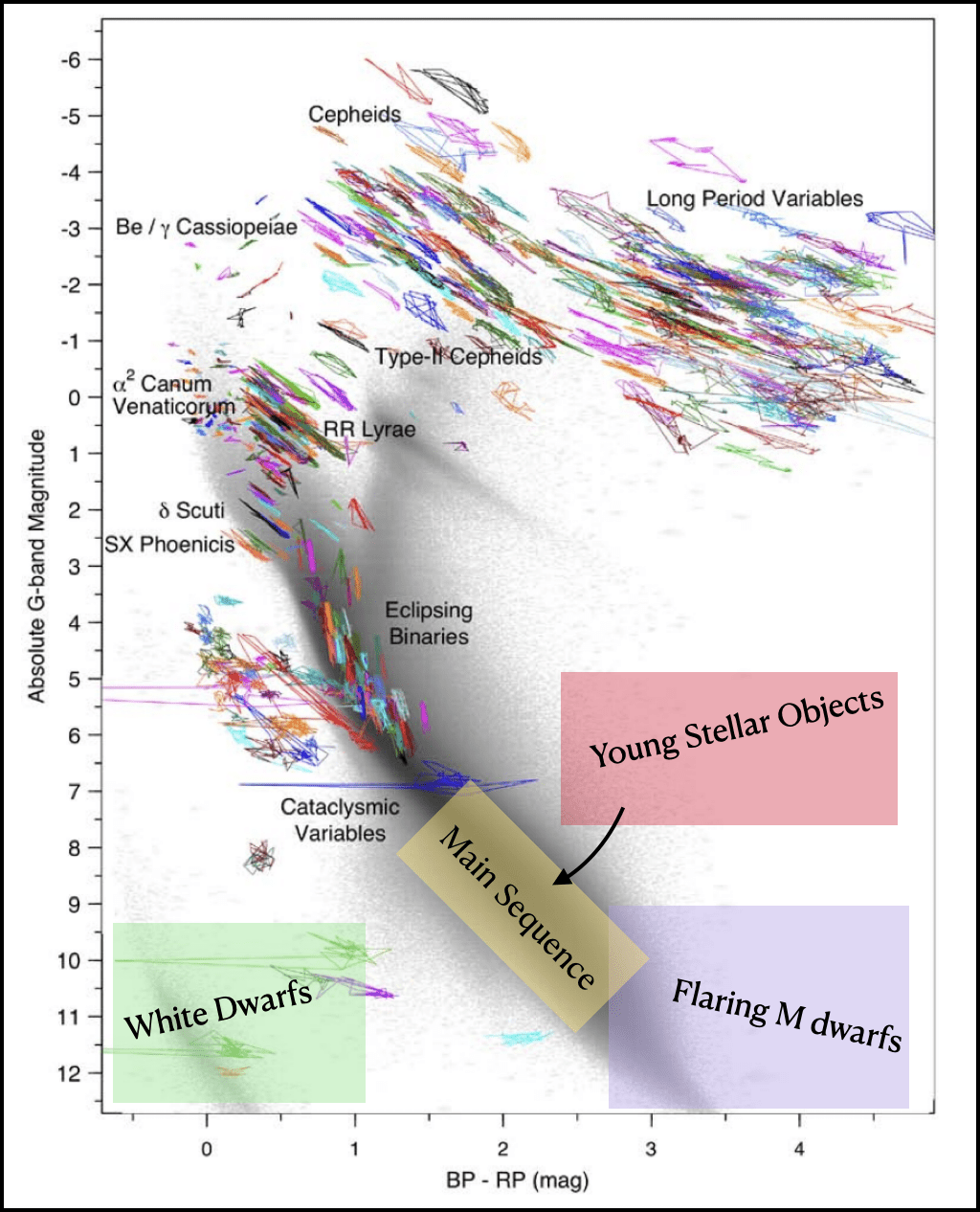
Characterizing Stellar Variability Across the HR Diagram
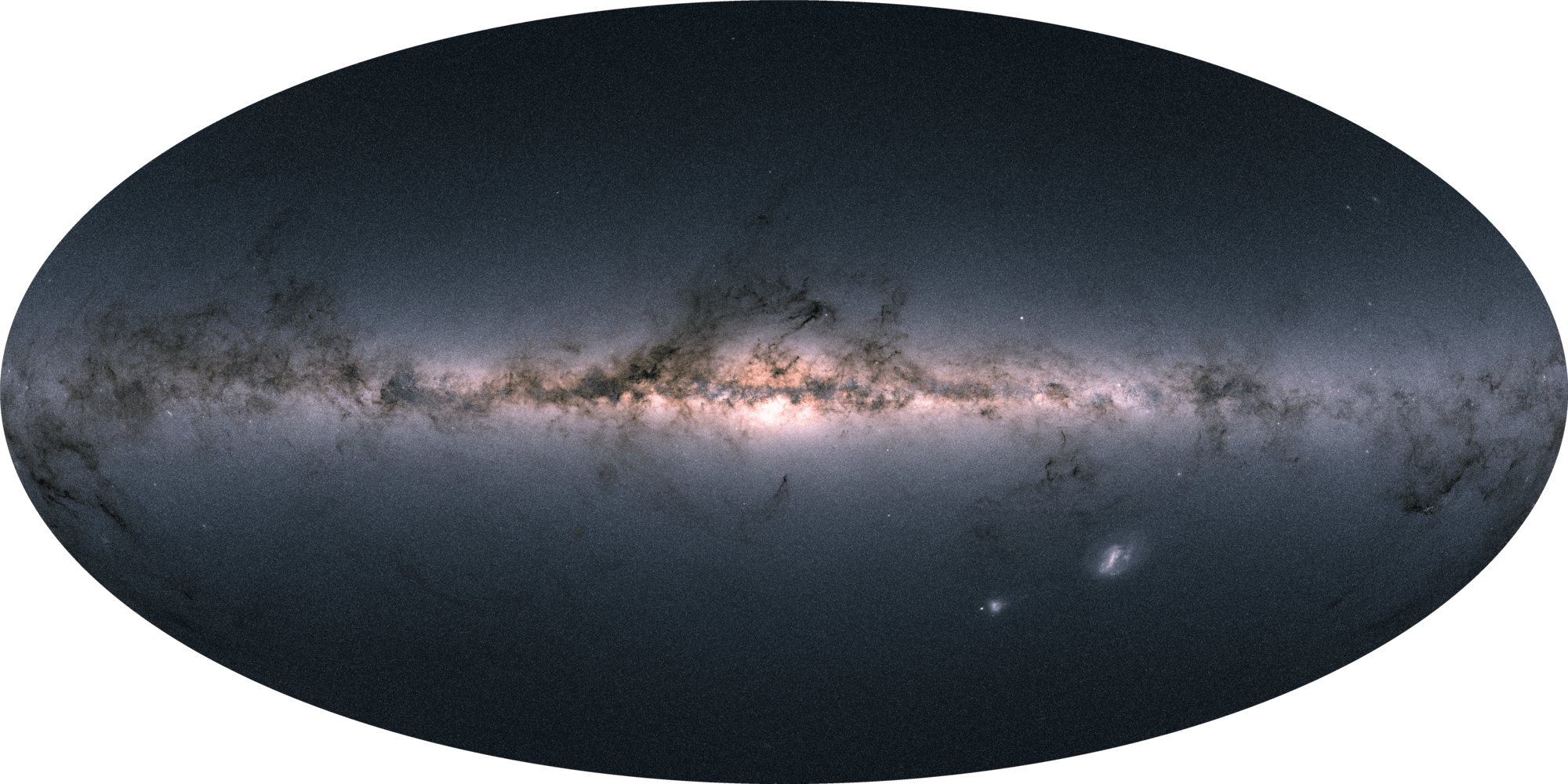
Image Credit: ESA
ESA / Gaia
Andy Tzanidakis / atzanida.github.io
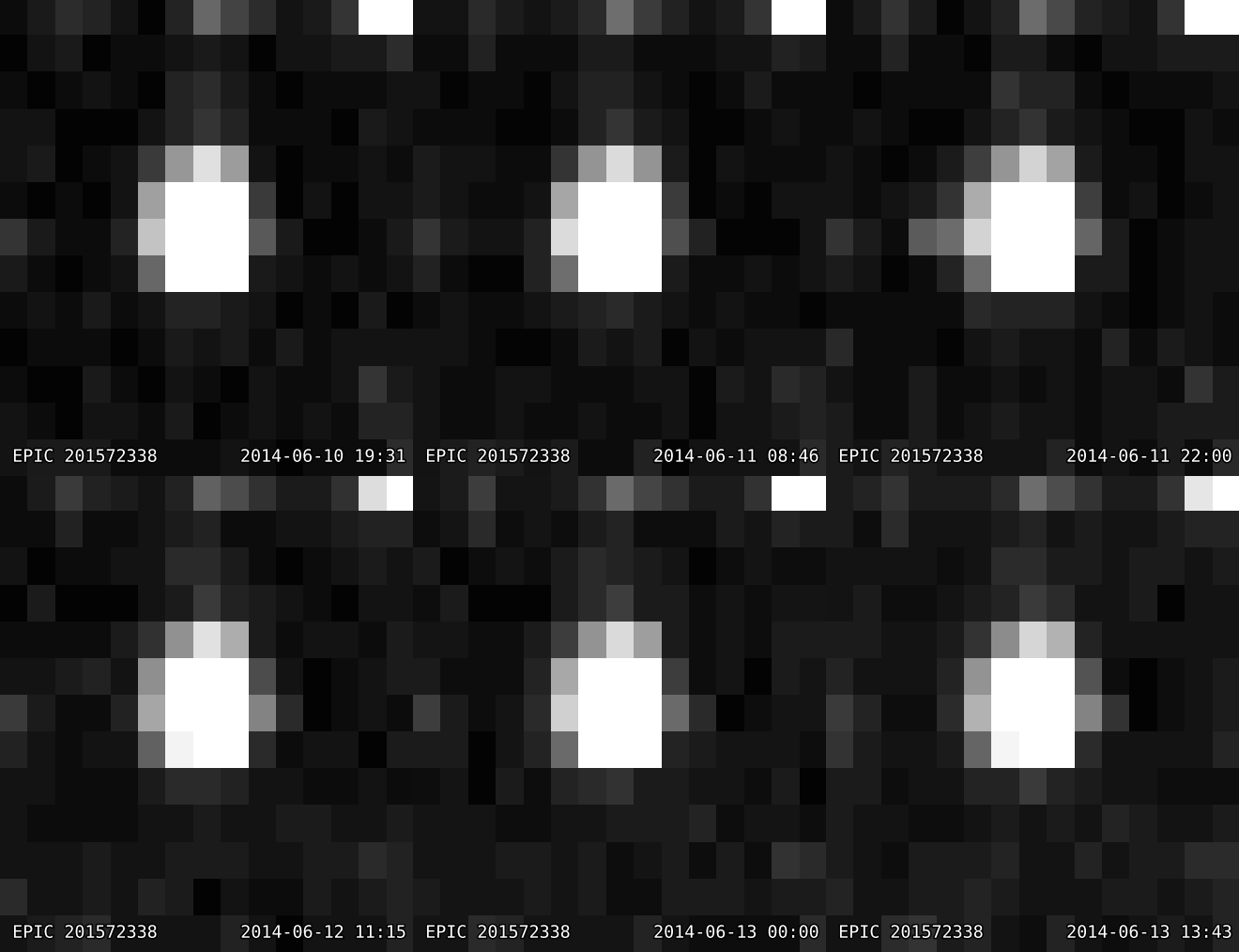
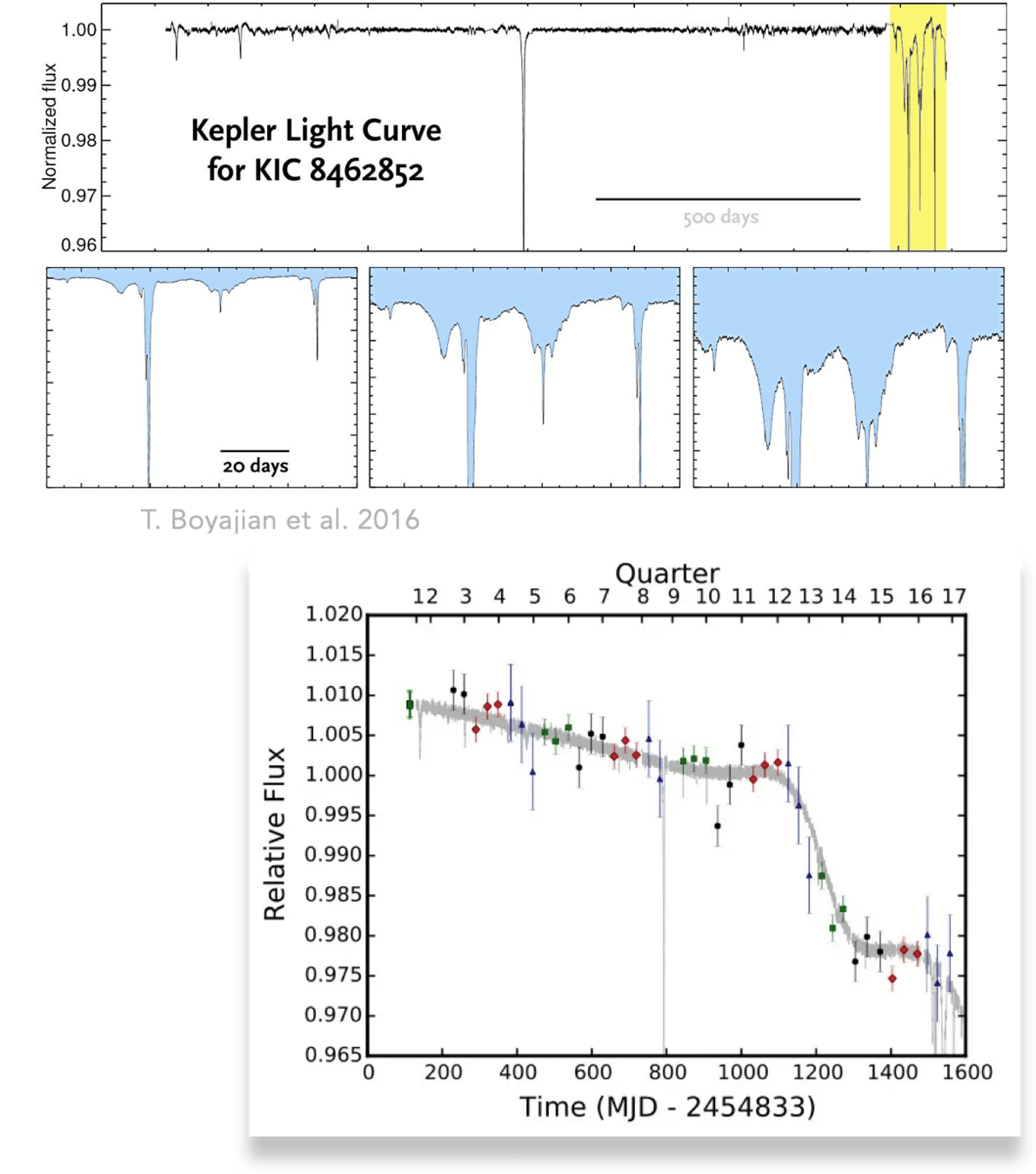
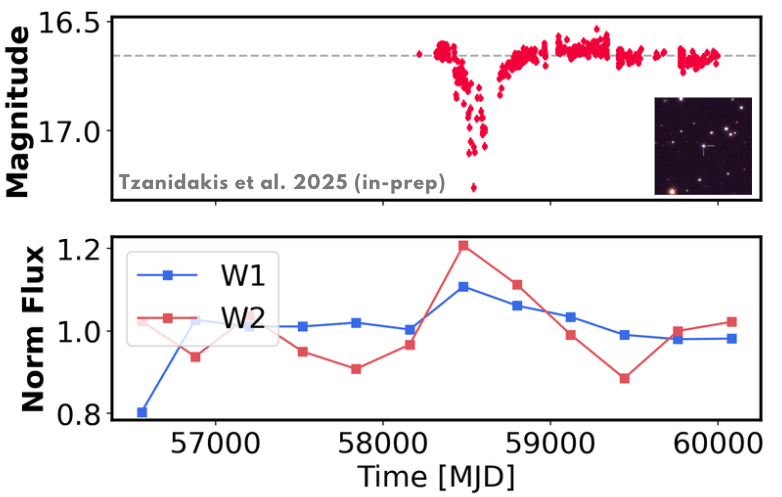
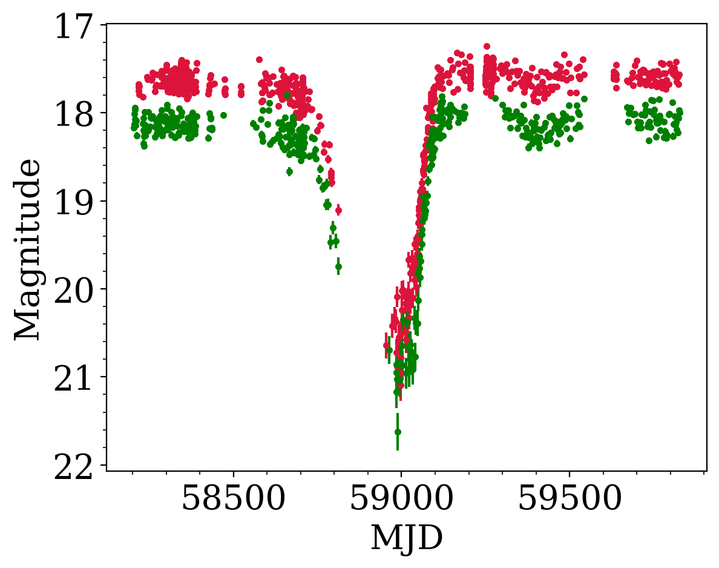
Boyajian Star
Andy Tzanidakis / atzanida.github.io
Boyajian Star
Andy Tzanidakis / atzanida.github.io
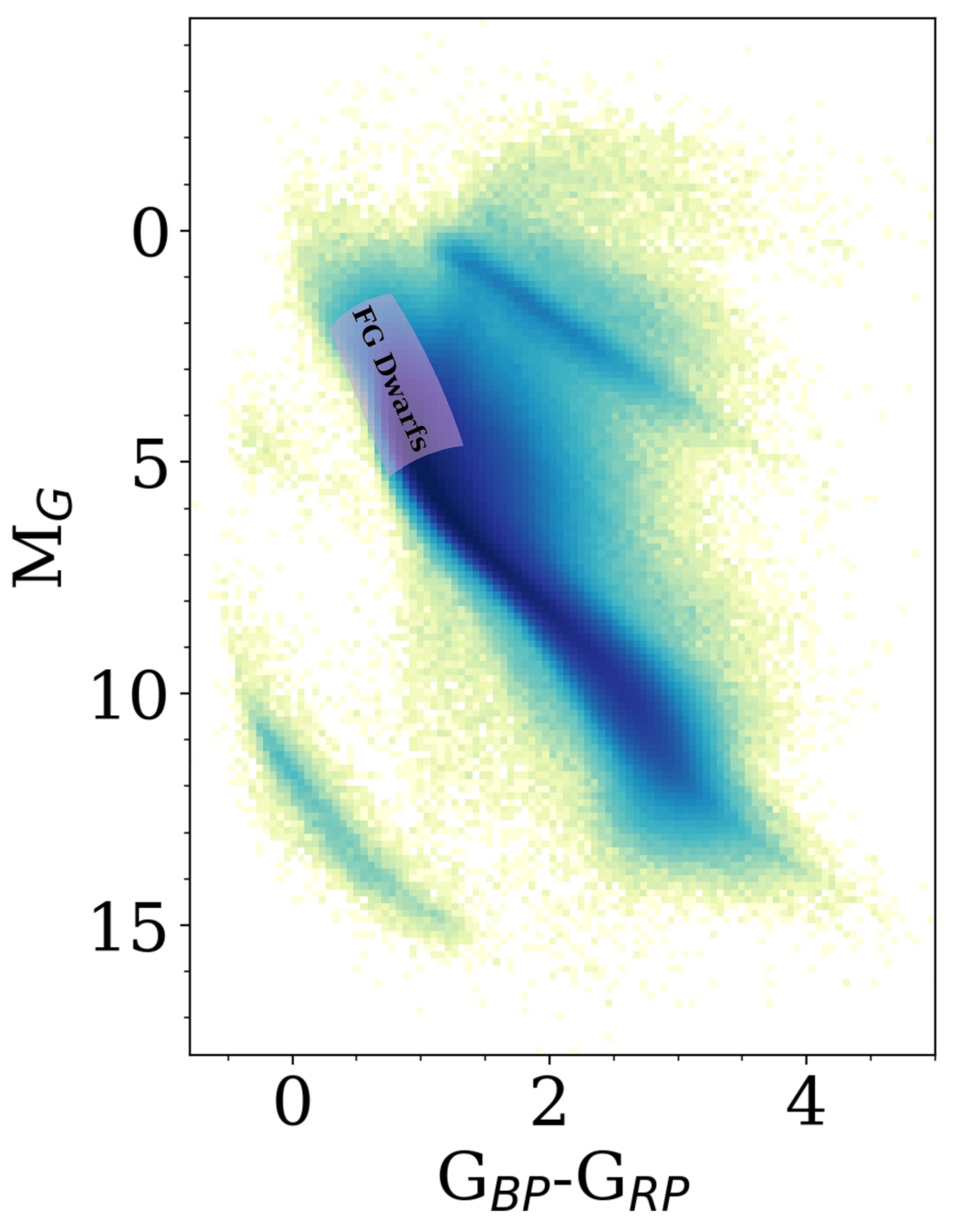
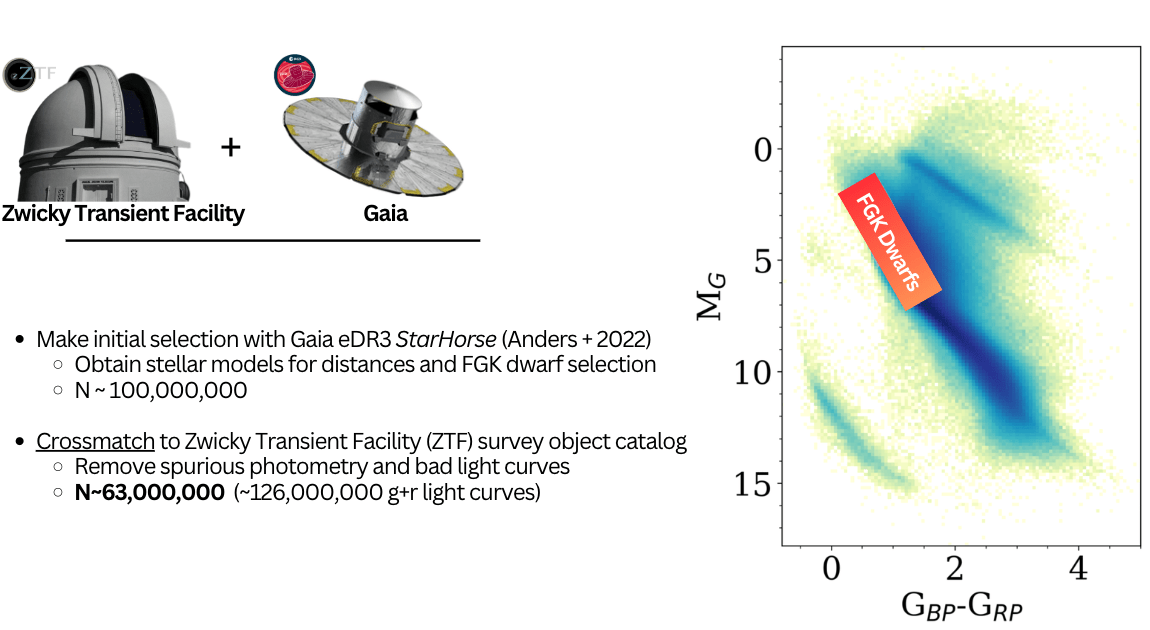
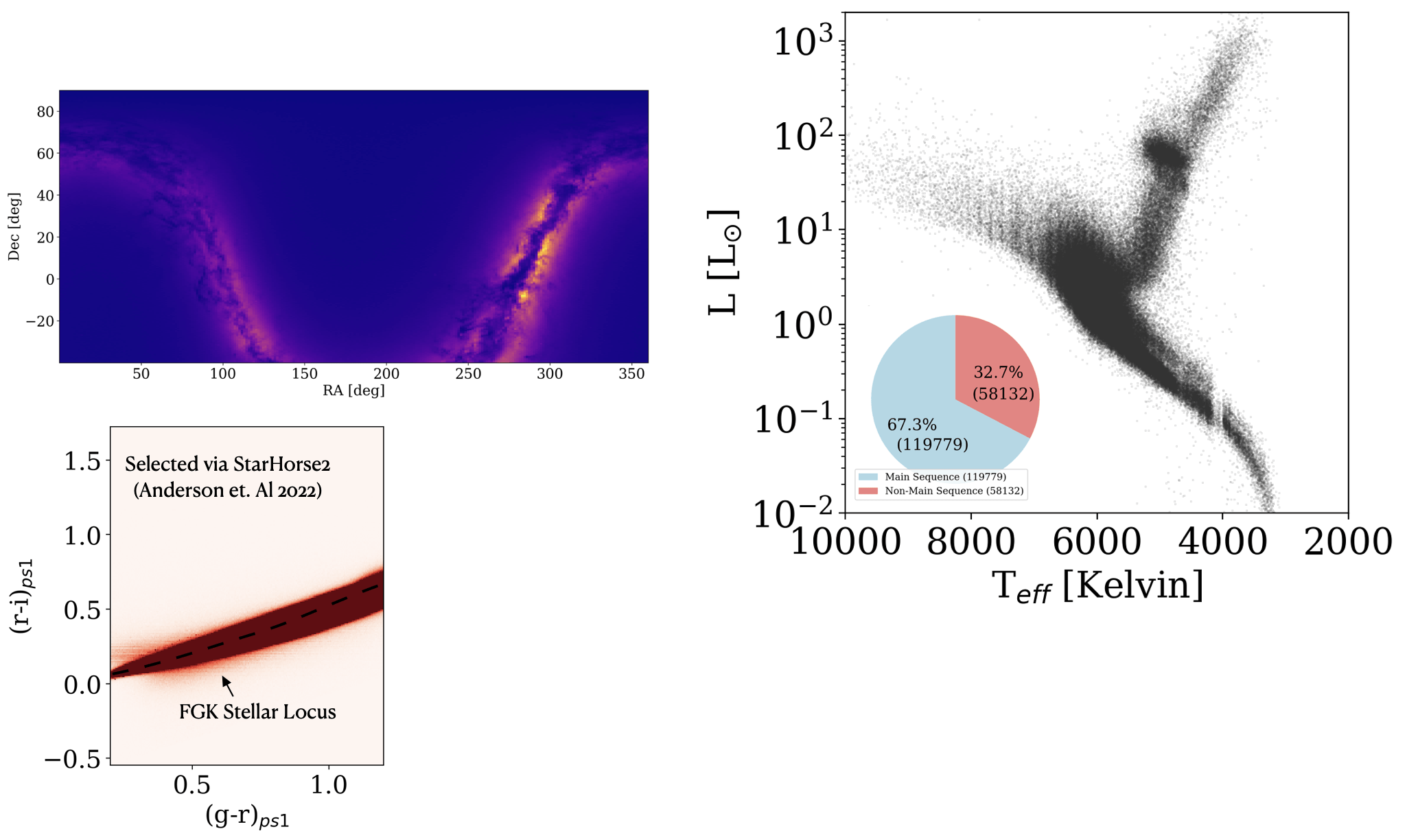
FGK Dwarfs
Next Generation Time Domain Tools
StarHorse 2.0
(Andersell et al.)
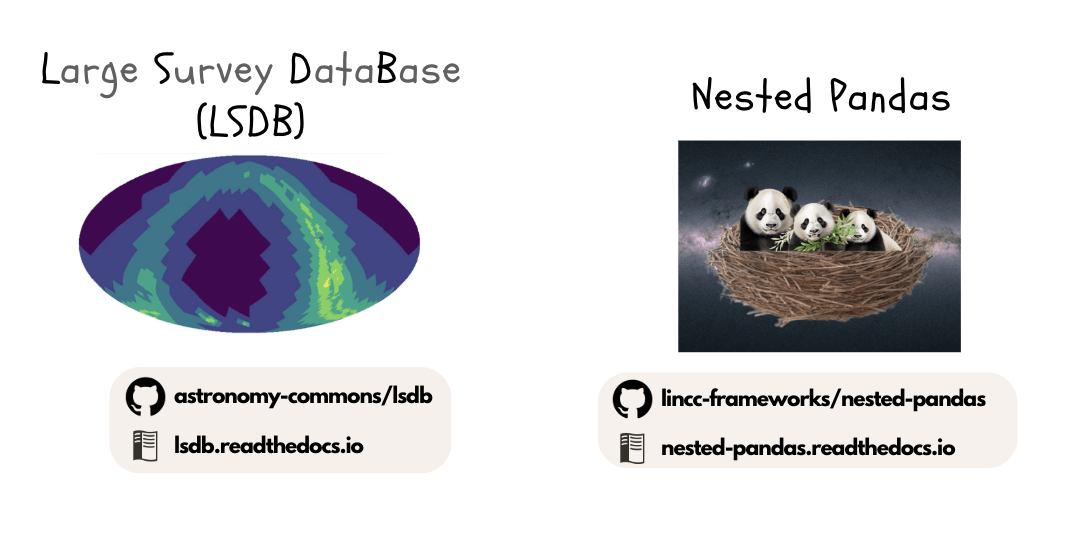
LSDB
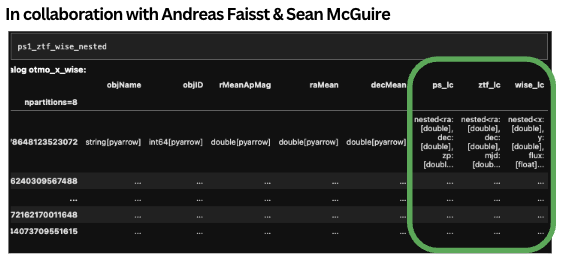
Nested Pandas
Object (1)
(catalogs)
ZTF
PS1
(object)
(object)
(object)
(object)
LSDB (crossmatching)
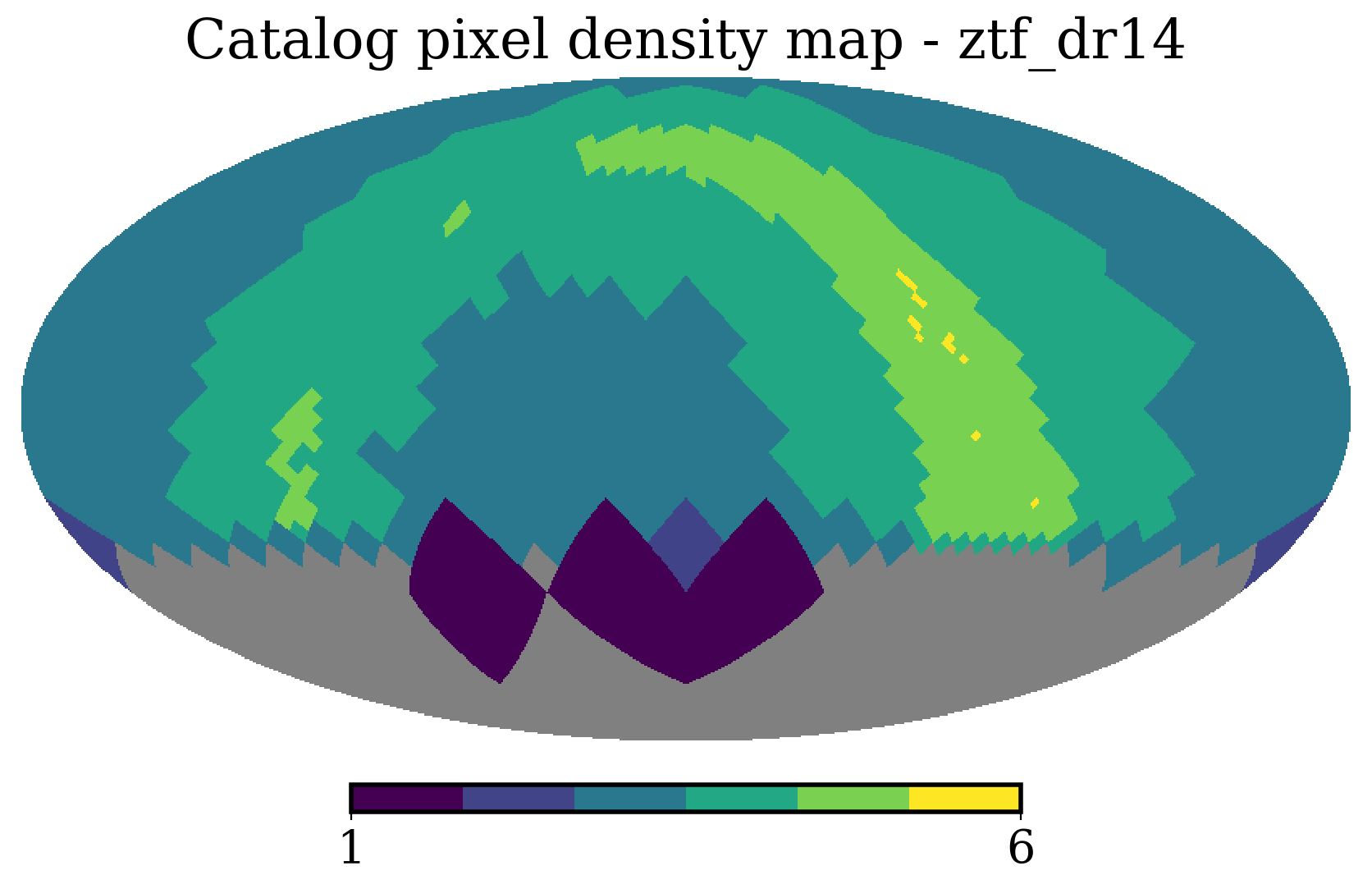
ZTF Zubercal DR14
(photometry)
Nested Pandas DataFrame
existing HATS obj
existing HATS obj
Data Pipeline
Master
+
Selections + Hierarchical Adaptive Tiling Scheme
Full ZTF DR14 Photometry
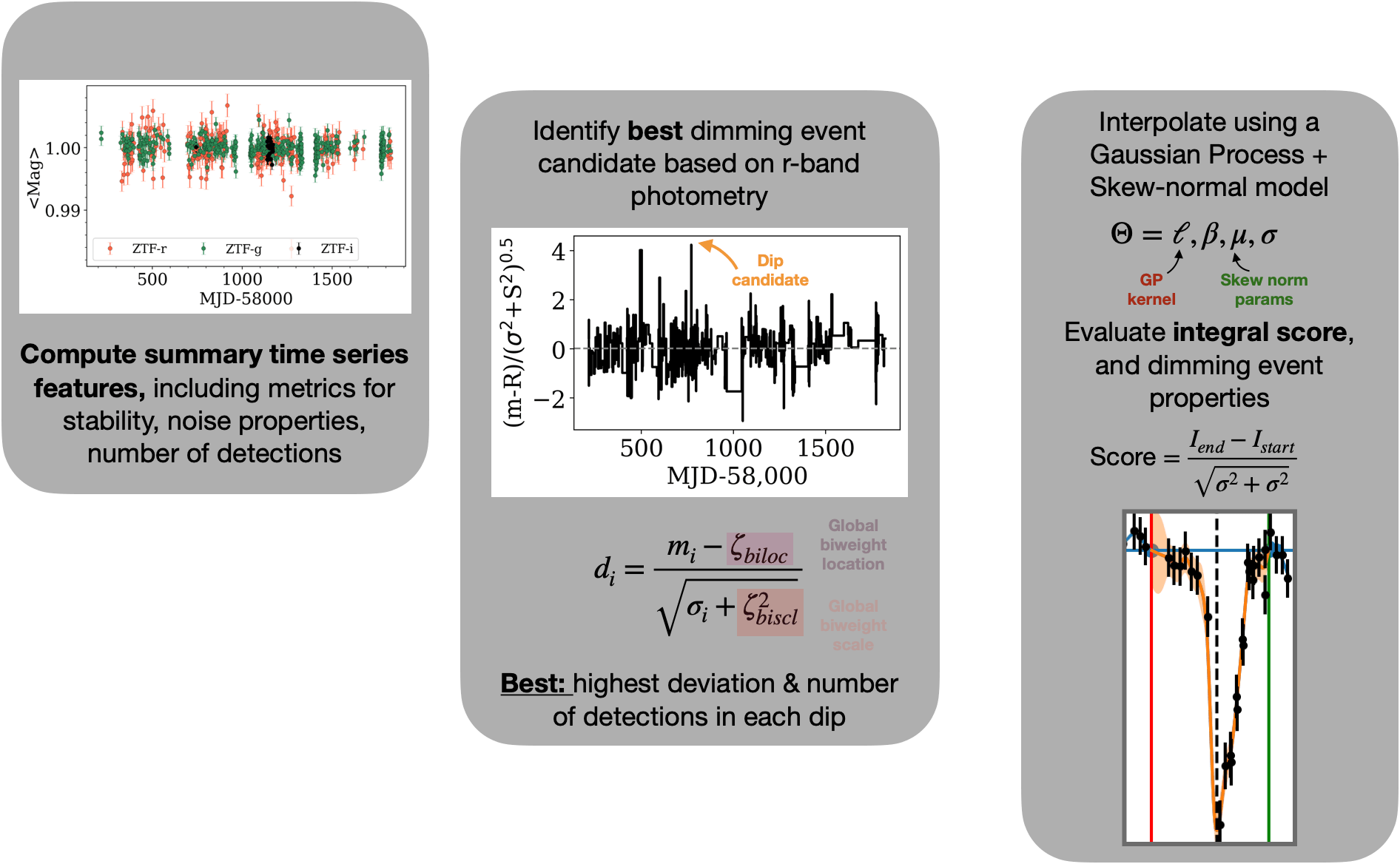
Identify Event
Scoring
Tzanidakis et al. (2025; in-prep)
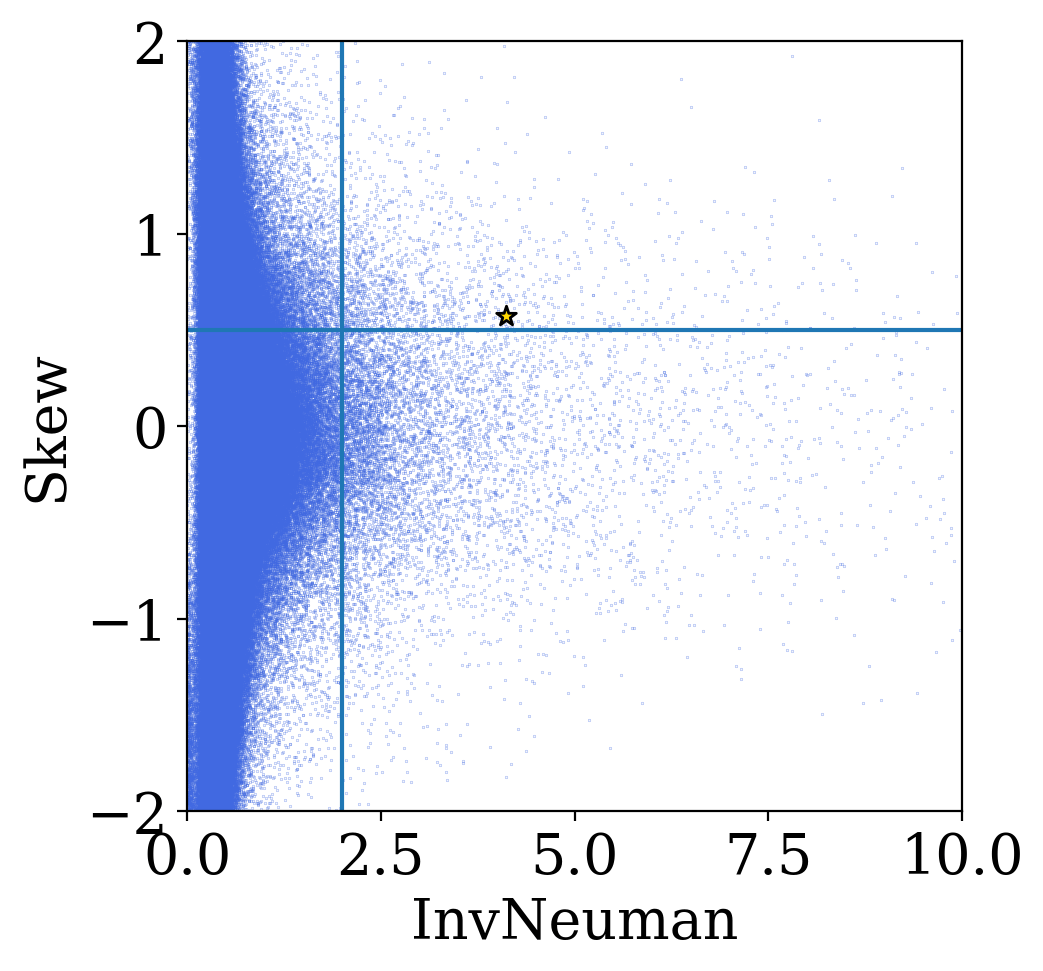
Evaluate score:
Compute features:
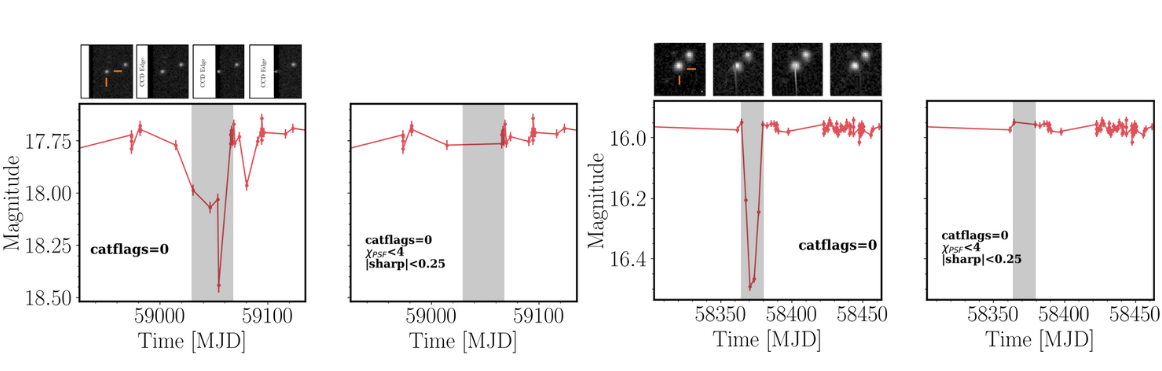
Filtering criteria:
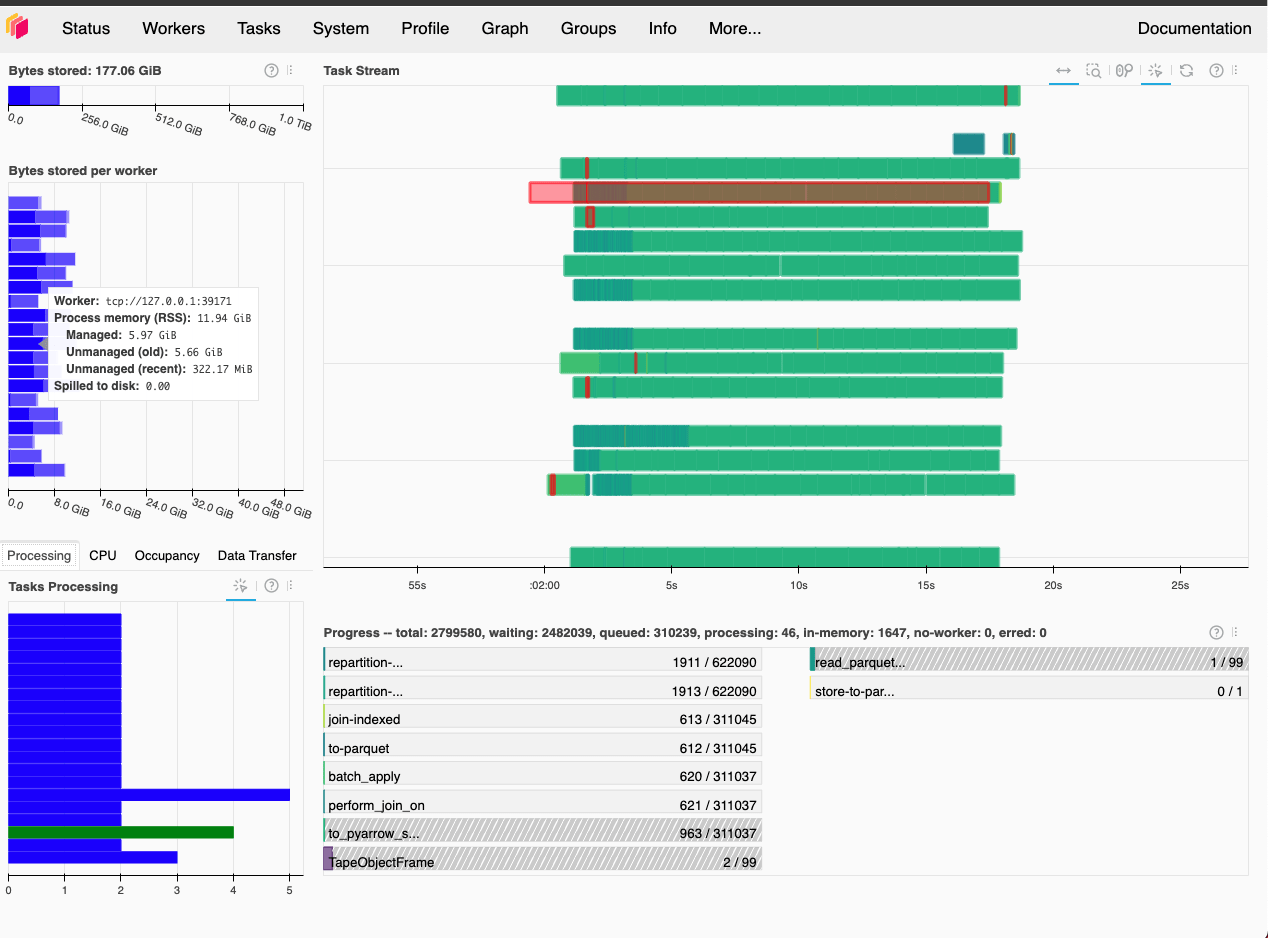
Performance
Time
LSDB crossmatching
and HATS partitioning
minutes
Full computation
120 million sources with over 25 columns...
~12-14 hrs
Scalability
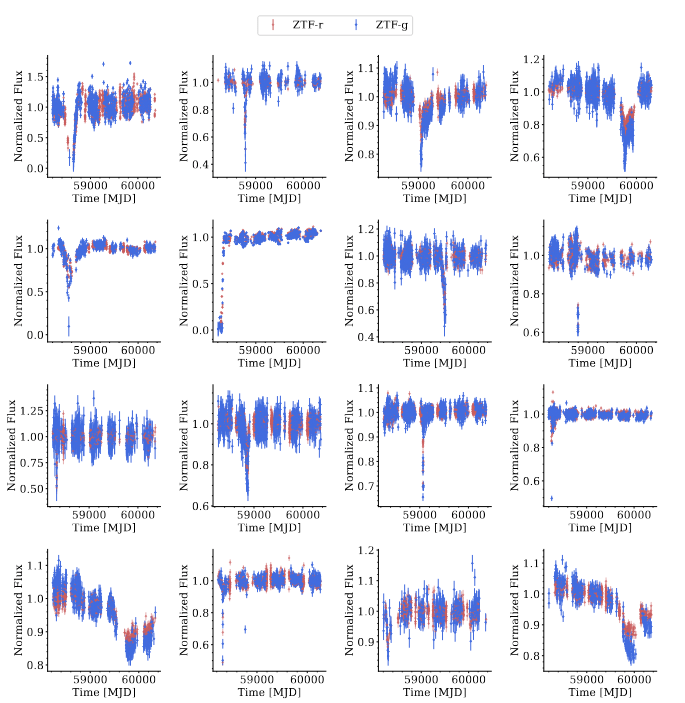
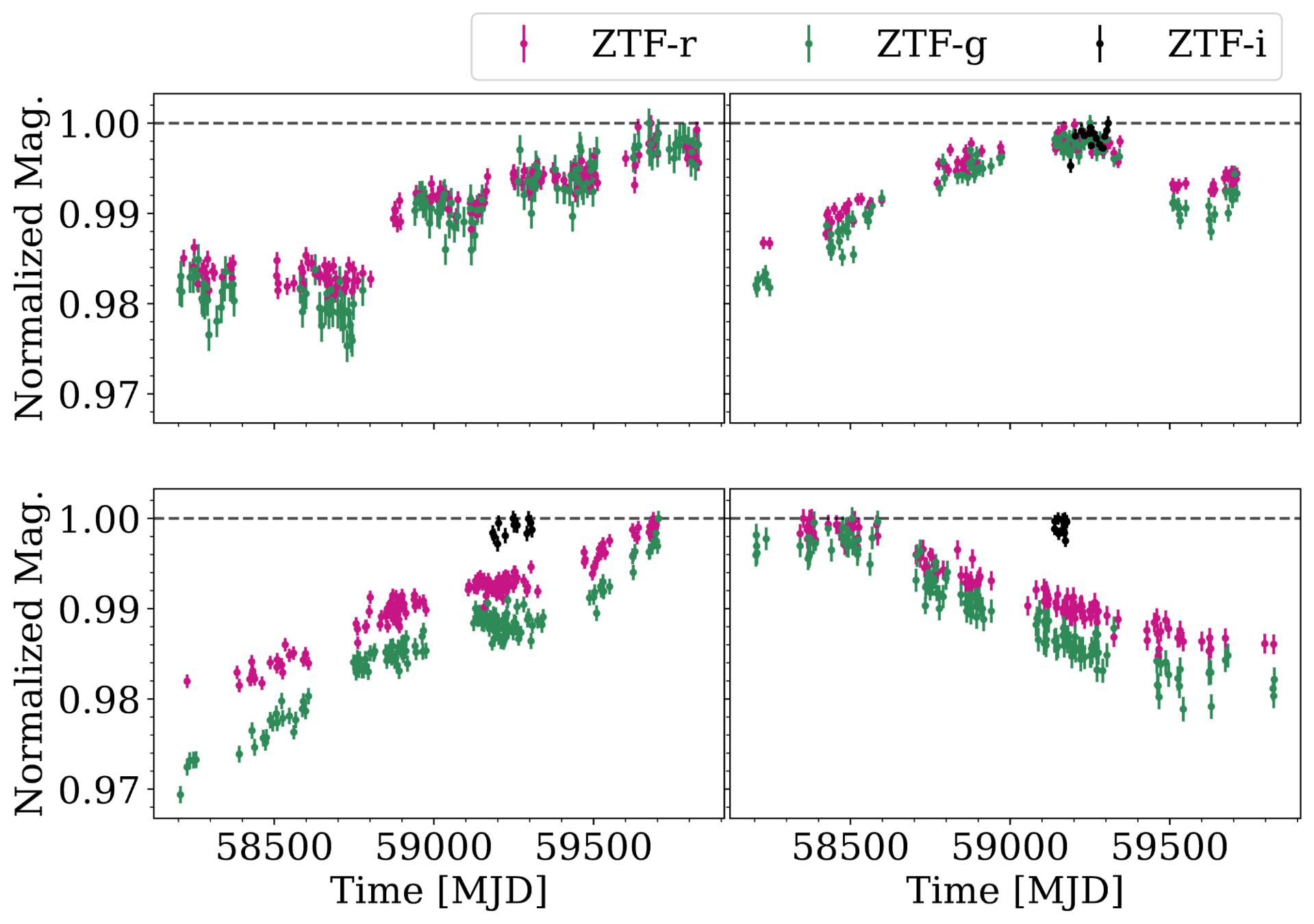
ZTF-g
ZTF-r
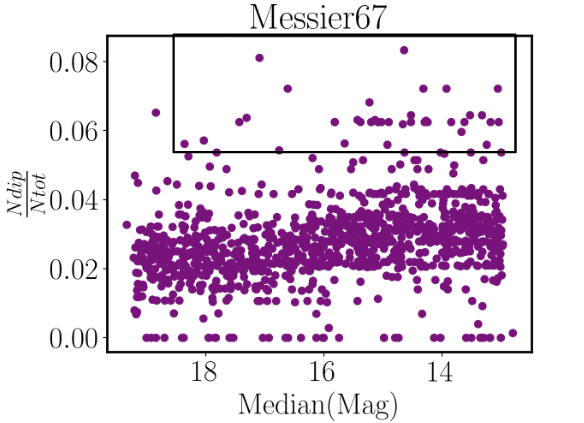
Discovery of ~80 New Rare MS Dippers
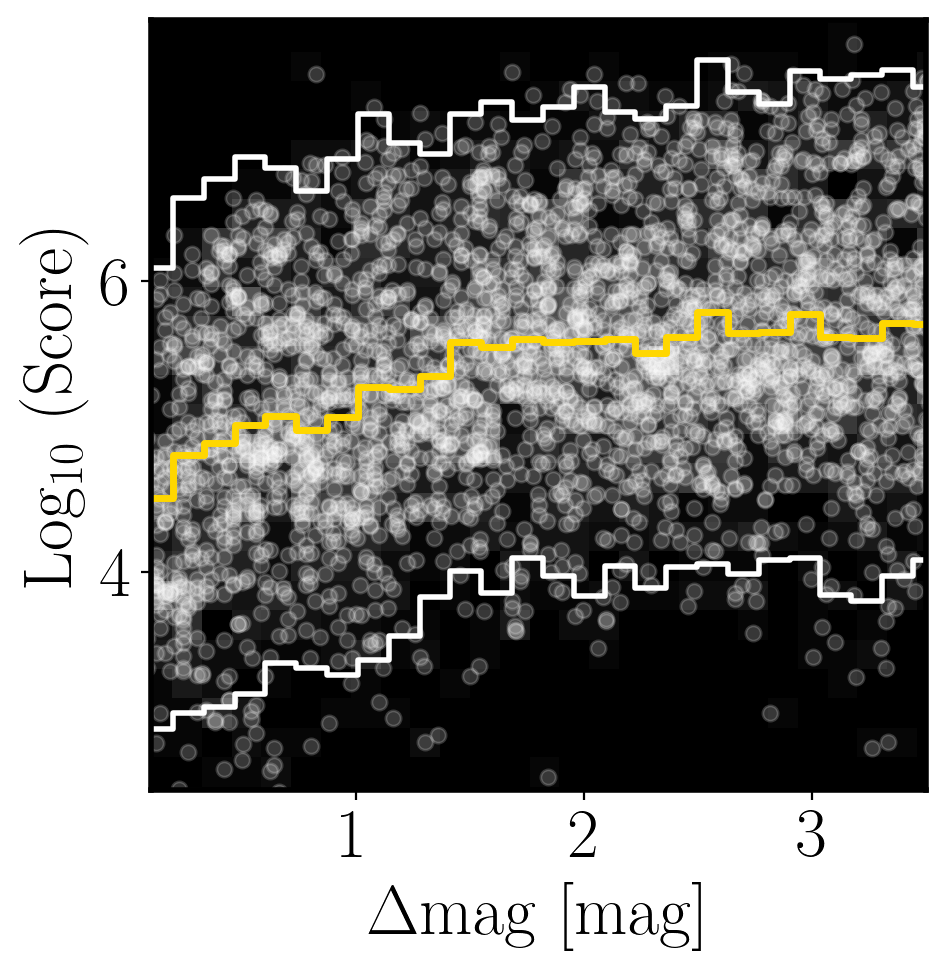
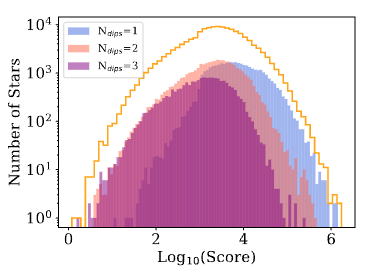
Using injection-recovery methods with LSDB & Nested, we're able to measure the score threshold of bonafide dippers
CMD Findings
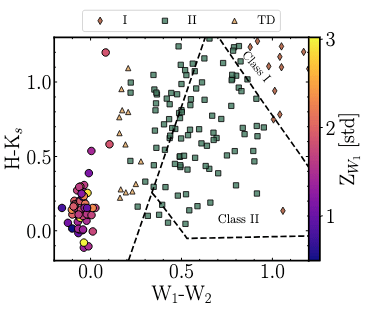
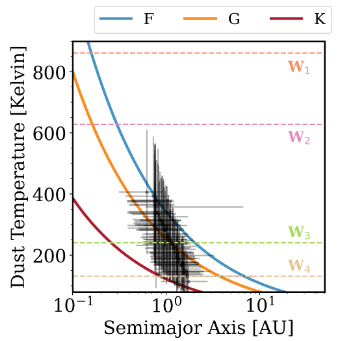
Absent IR Variability
2MASS/WISE photometry and CMD positions indicate that candidates are not consistent with Class I/II YSO's...
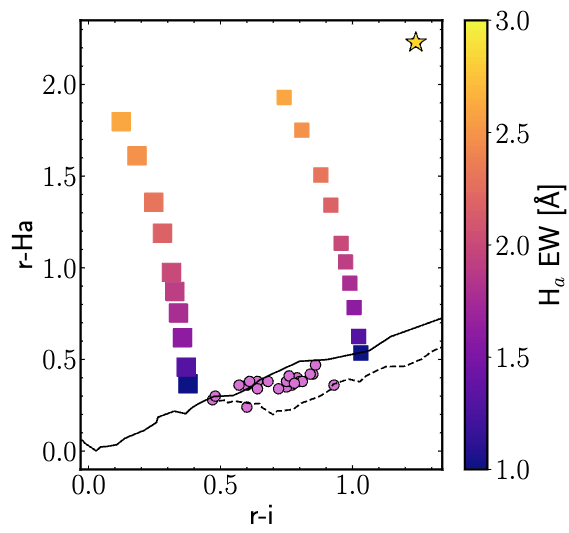
Absent Ha Variability
Photometry via IPHAS DR2 shows that at least ~40% of our sample has no significant H-alpha emission...
PS1 griz
PS1 griz
Tzanidakis et al. 2025 (in-prep)
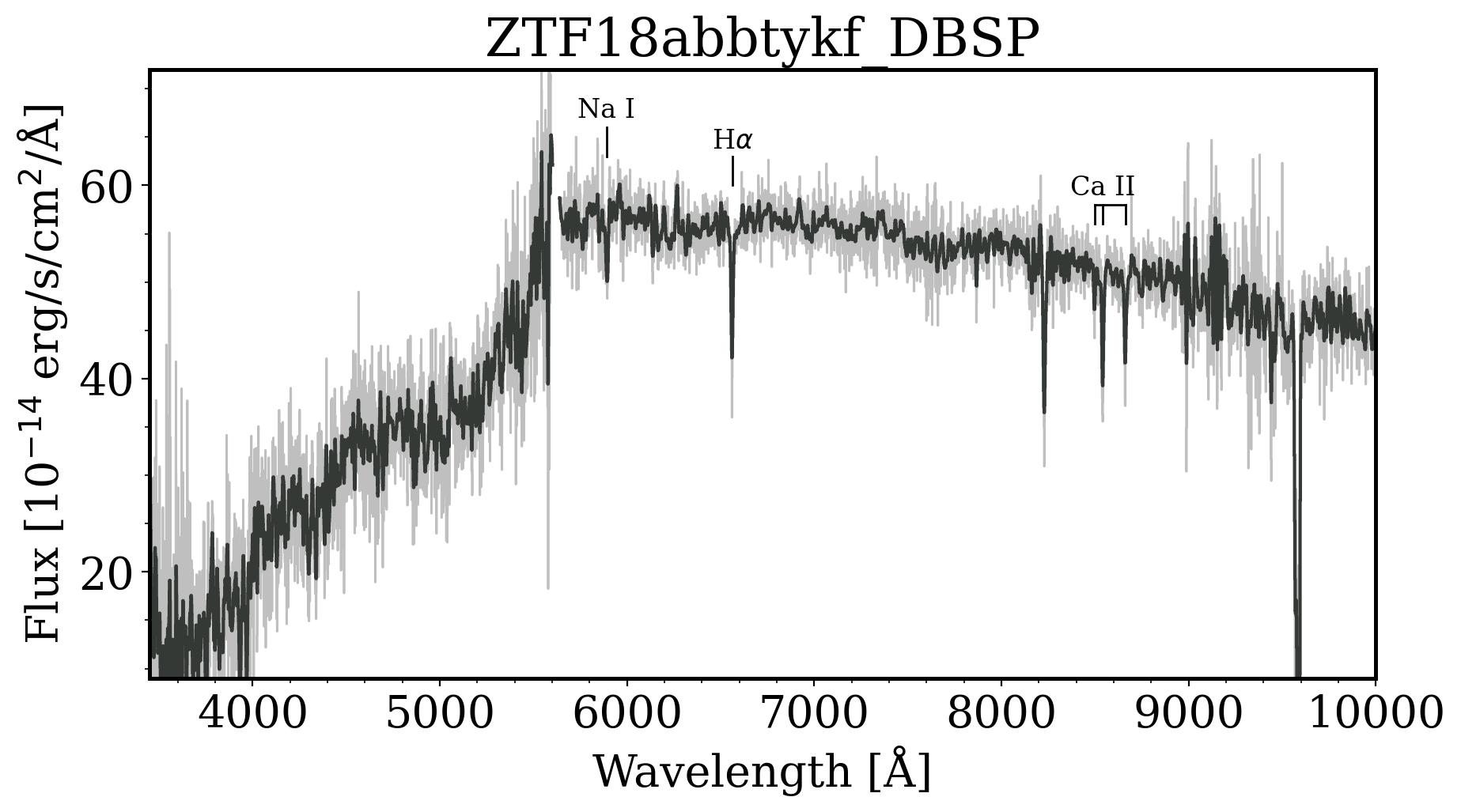
DBSP, P200"
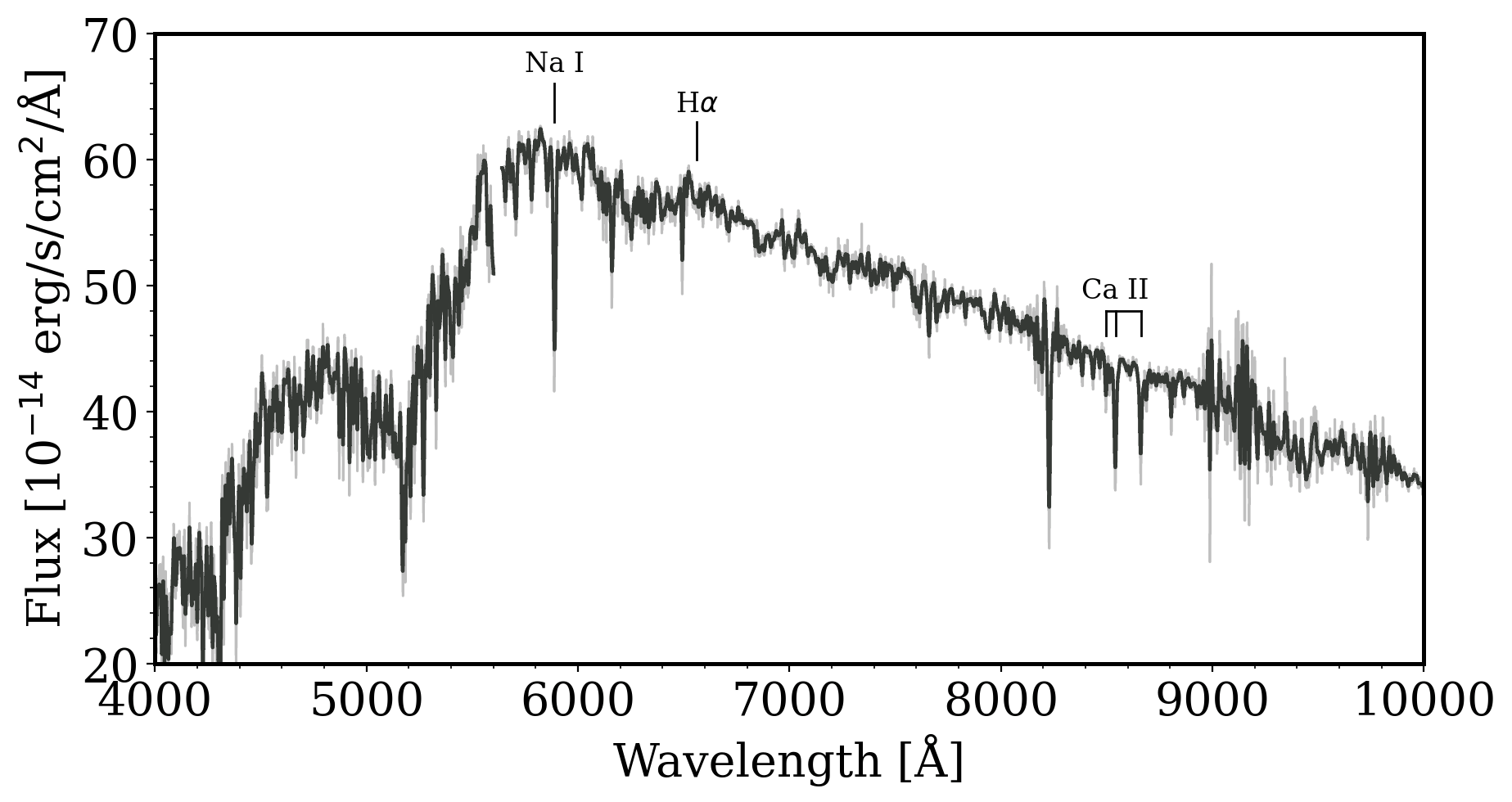
DBSP, P200"
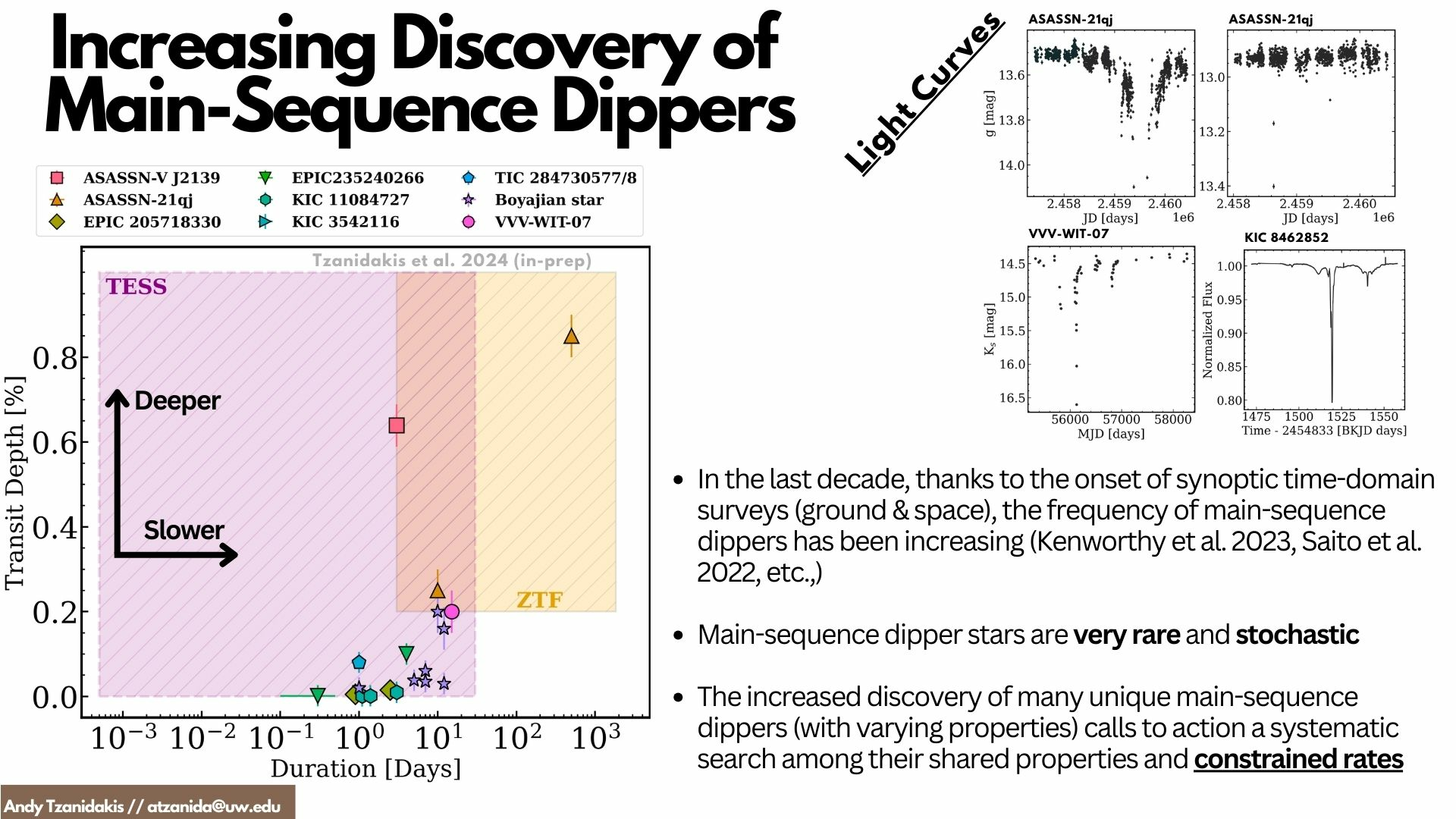
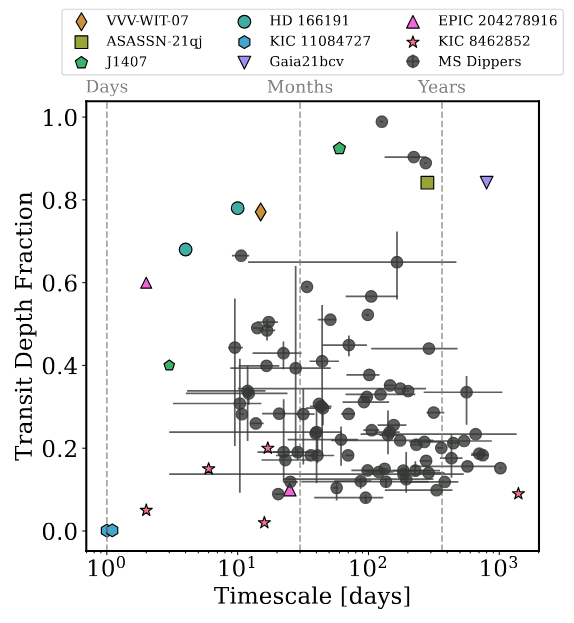
Our systematic search through >63 million FGK dwarfs has demonstrated that MS dippers are exceptionally rare objects ~1/M rate.
New Dipper Demographics
Easy Pandas API makes tools accessible to the user interacting with catalogs... Nested Pandas makes it very easy to apply Python time-series analysis...
The scalability of these tools has been my favorite part of this project. It has helped me expand my understanding of data pipelines. The barrier to access the bulk data doesn't feel difficult anymore
1.
2.
3.
I still want to better understand how Dask handles memory allocation, how to properly allocate CPU and memory clients...
Student collaboration: Tessa Ward, and Cassidy Johnson (University of Washington):
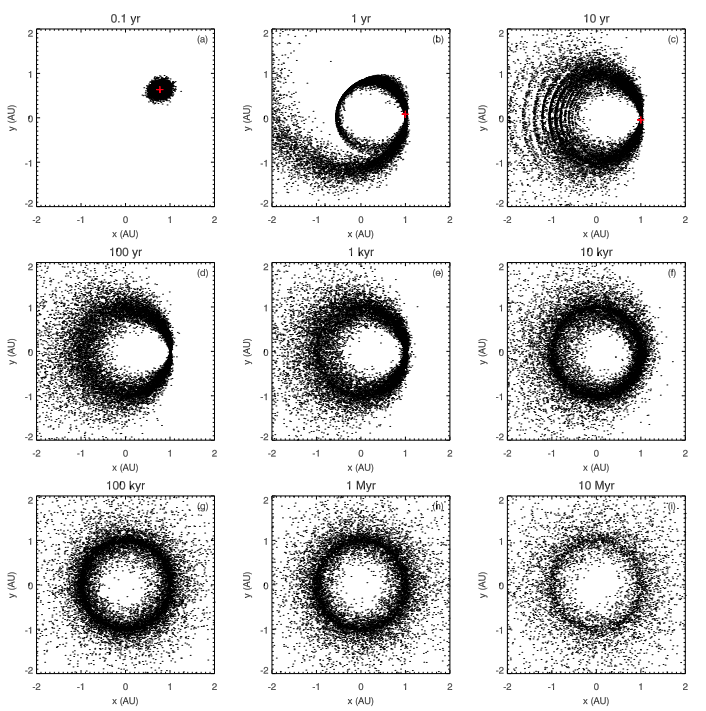
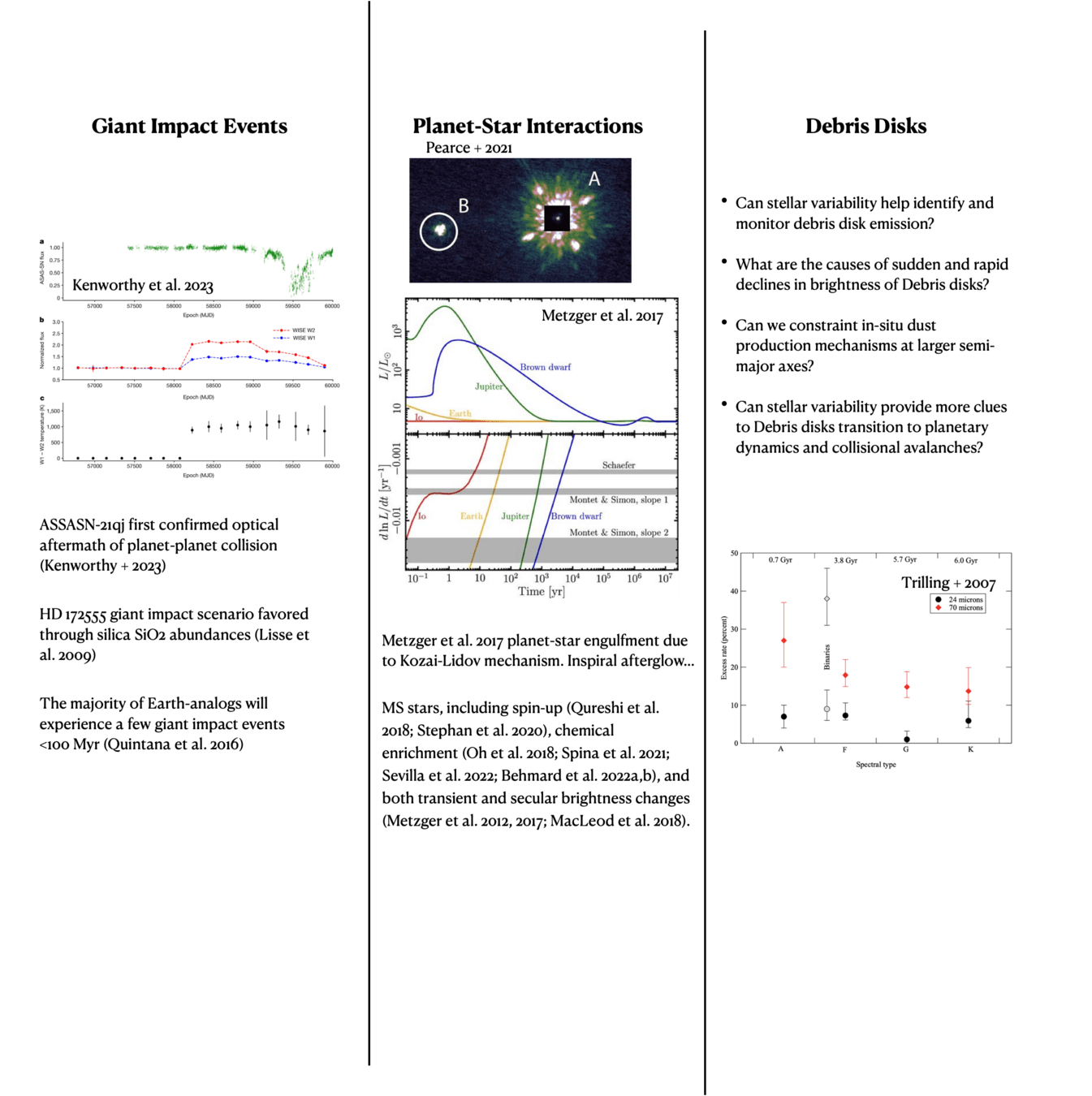
Optical + IR searches for Giant Impacts
The first volume-limited systematic search for signatures of Giant Impacts to probe terrestrial planet formation!
Special thanks to Neven Caplar, Doug Branton, Wilson Beebe, Andy Connolly, and the LINCC Frameworks team for making this project possible!
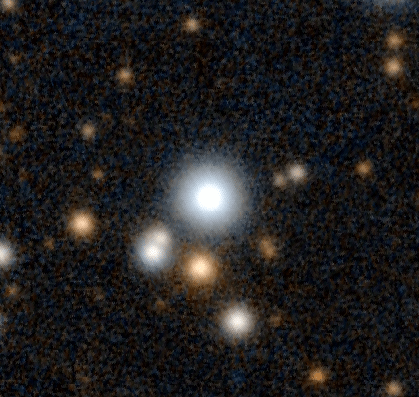
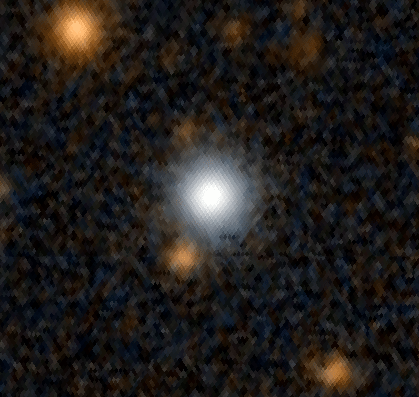
We are conducting the largest systematic search for main-sequence/Boyajian star analogs with ZTF and Gaia.
Both Large Survey DataBase (LSDB) and Nested Pandas, are pivotal tools for the success of this study - providing: data exploration, discovery, and rapid analysis
1.
2.
Project can be found on GitHub: github.com/dirac-institute/ZTF_FG_BoyajianSearch
Andy Tzanidakis// andytza.github.io // atzanida@uw.edu
3.
Our preliminary pipeline using LSDB + NP has already revealed over 80 new and exciting main-sequence dipper candidates!!
Crossmatch
Pipeline
Nested Table
Object
Data
Source
Data
Final data output & merge with Nested
Source
(photometry)
Object (1)
(catalogs)
Object (1)
(catalogs)
Object (1)
(catalogs)
Object (N)
(catalogs)
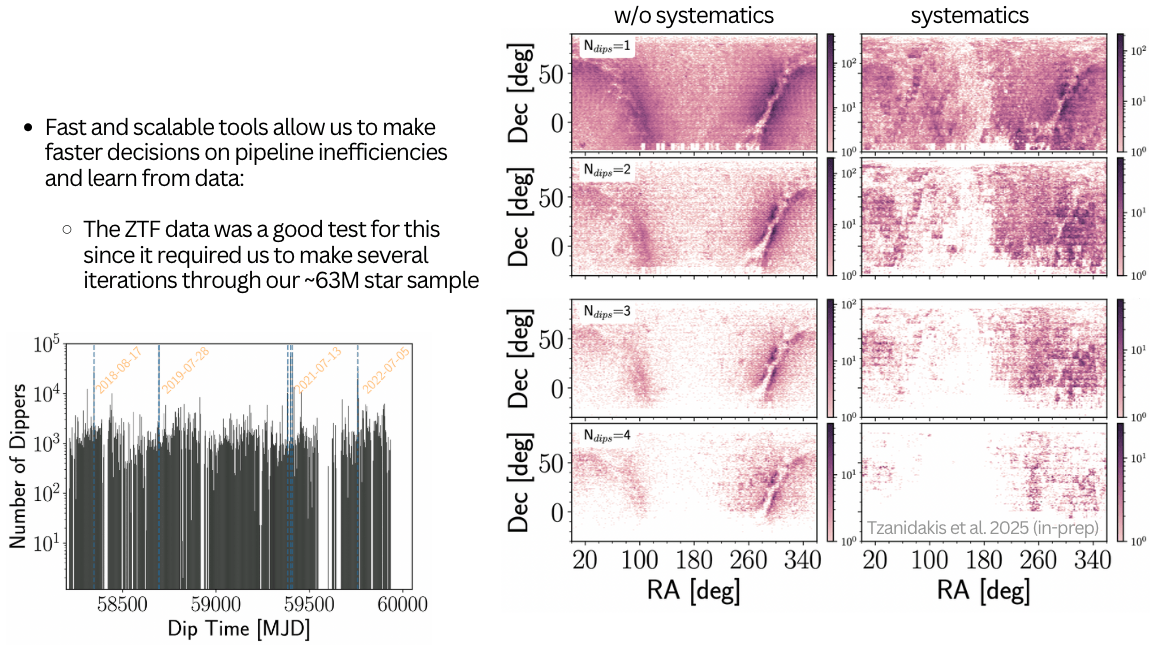
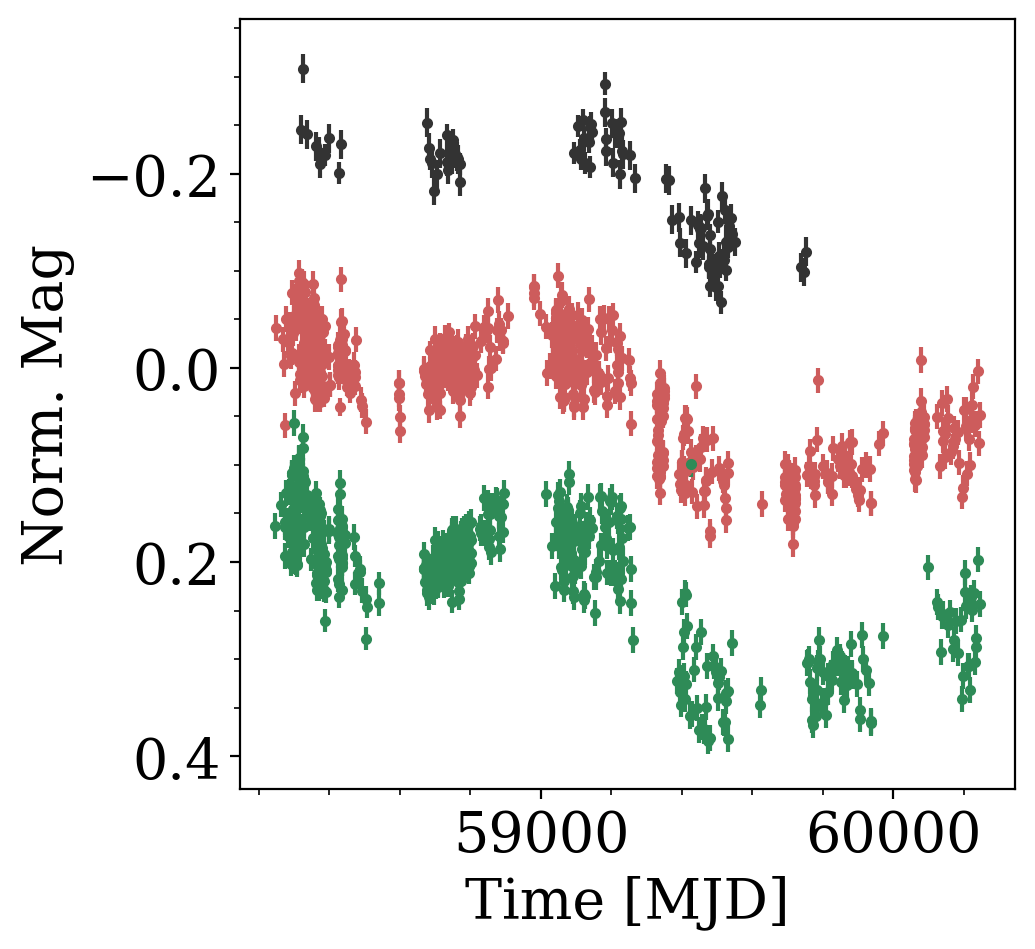
ZTF Systematics
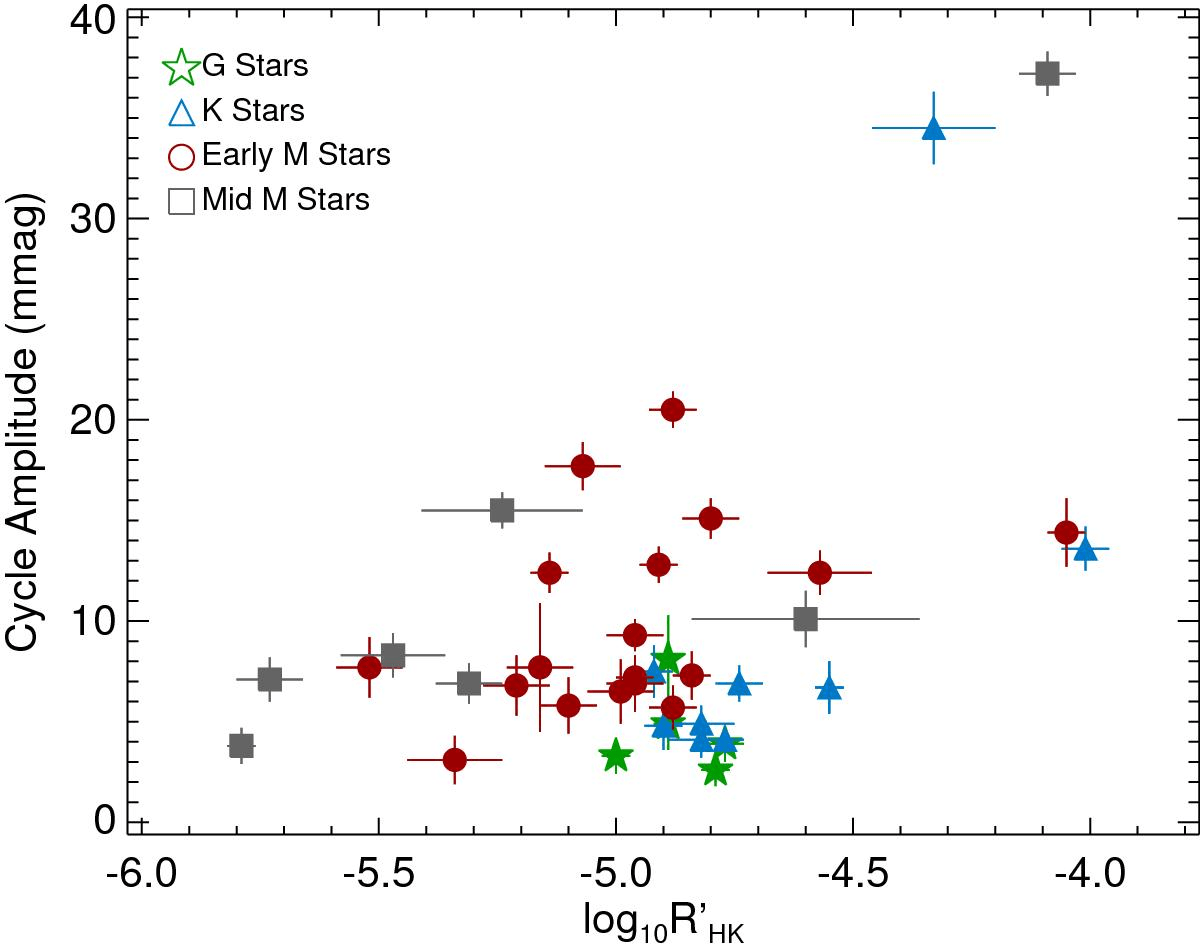
Kepler Statistics
Jackson & Wyatt (2012)
Giant Impact Debris
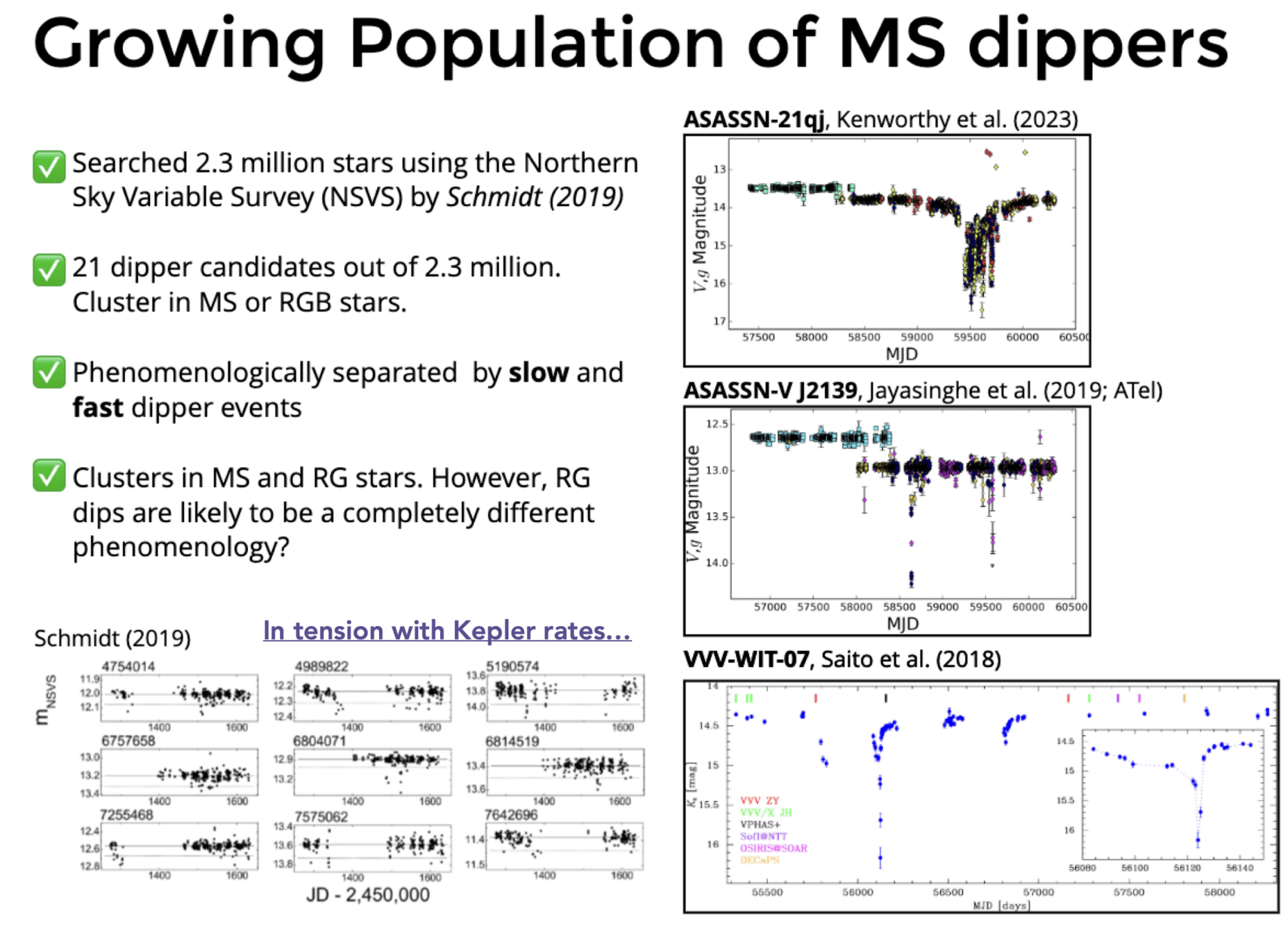
Slow Dippers
Slow and longterm secular trends can be found in simple light curve statistics
Typical activity cycles are in the 10-30 mmag
args = ImportArguments(
    ra_column="RA_ICRS",
    dec_column="DE_ICRS",
    lowest_healpix_order=2,
    highest_healpix_order=7,
    file_reader="parquet",
    input_file_list=["/nvme/users/atzanida/tmp/starhorse_query.parquet"],
    output_artifact_name="StarHorse_hats", # output file name
    output_path="/nvme/users/atzanida/tmp/",
    resume=False,
)

with Client(n_workers=4) as client:
    pipeline_with_client(args, client)
StarHorse 2.0
StarHorse 2.0
HATS
sample = ztf.crossmatch(starhorse_hips, radius_arcsec=1)
Code Pipeline
Andy Tzanidakis / atzanida.github.io
D/S Type
Symbiotic Binaries
Debris
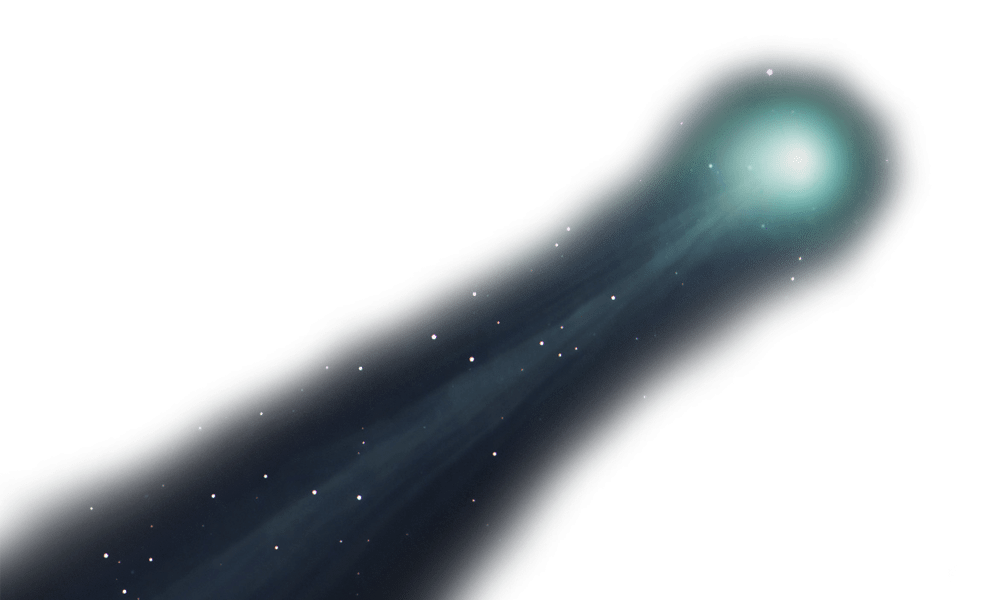
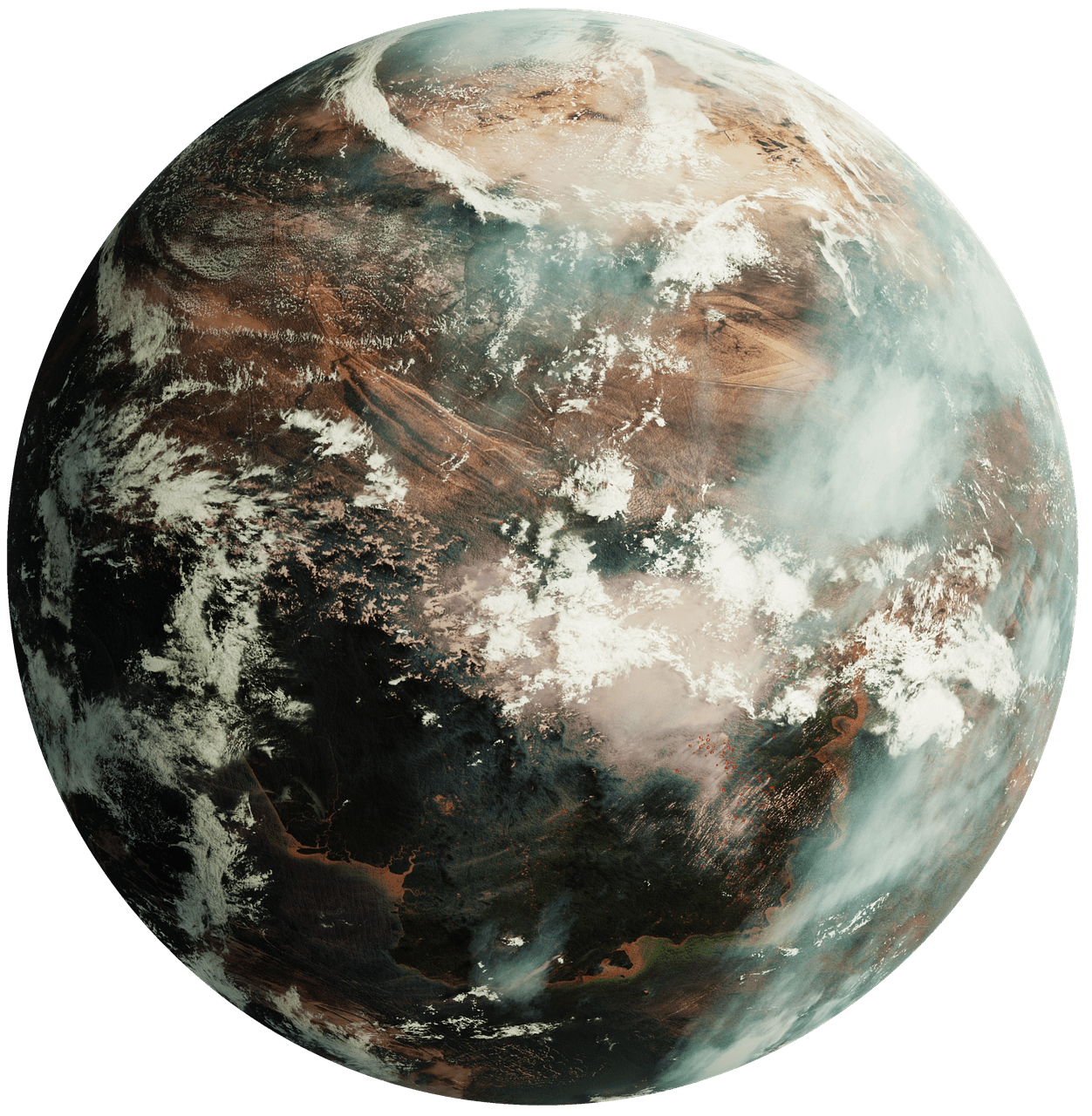
Planets, Comets, and Stars
Planet Englufment
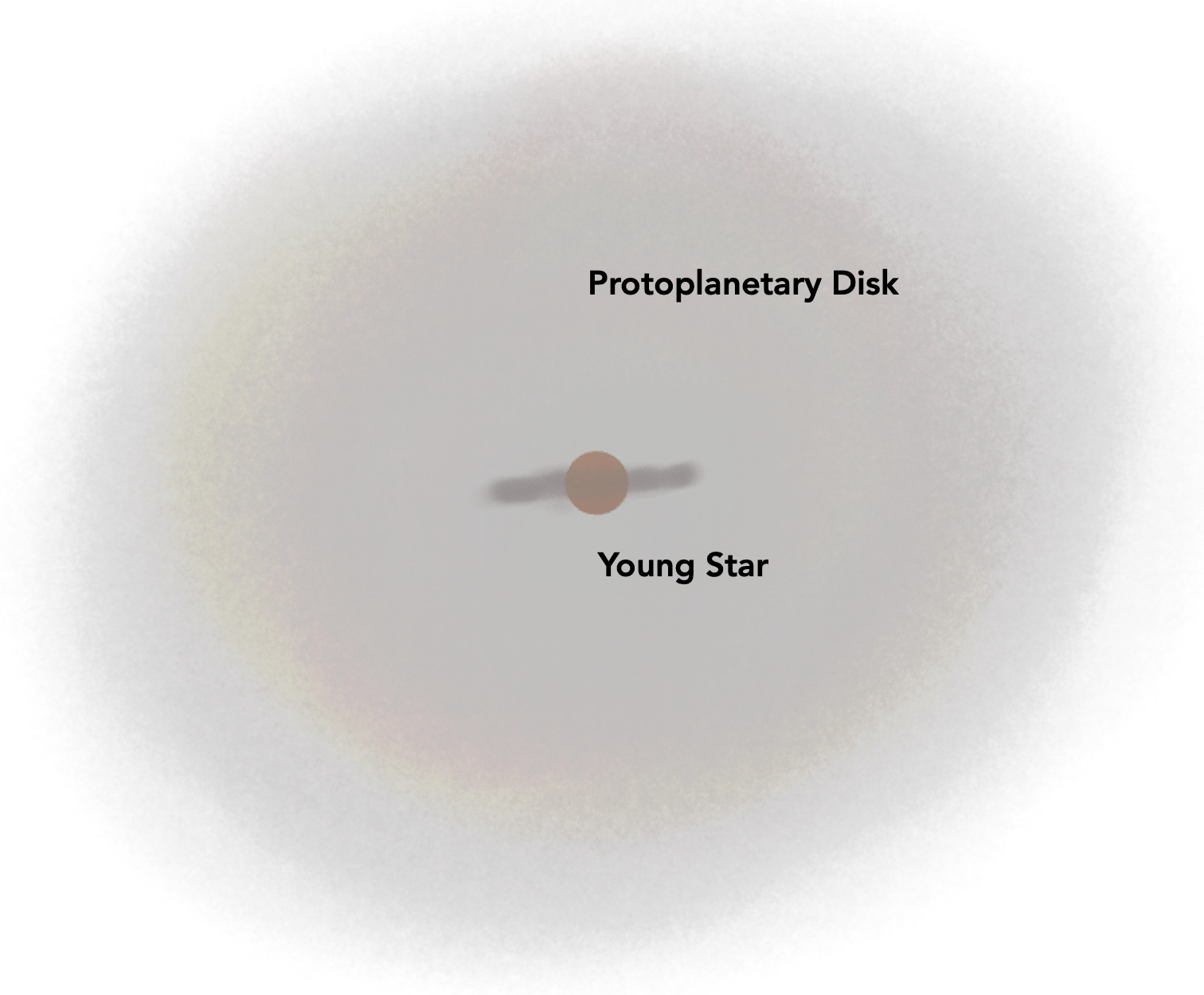
Young Stars
Old(er) Stars
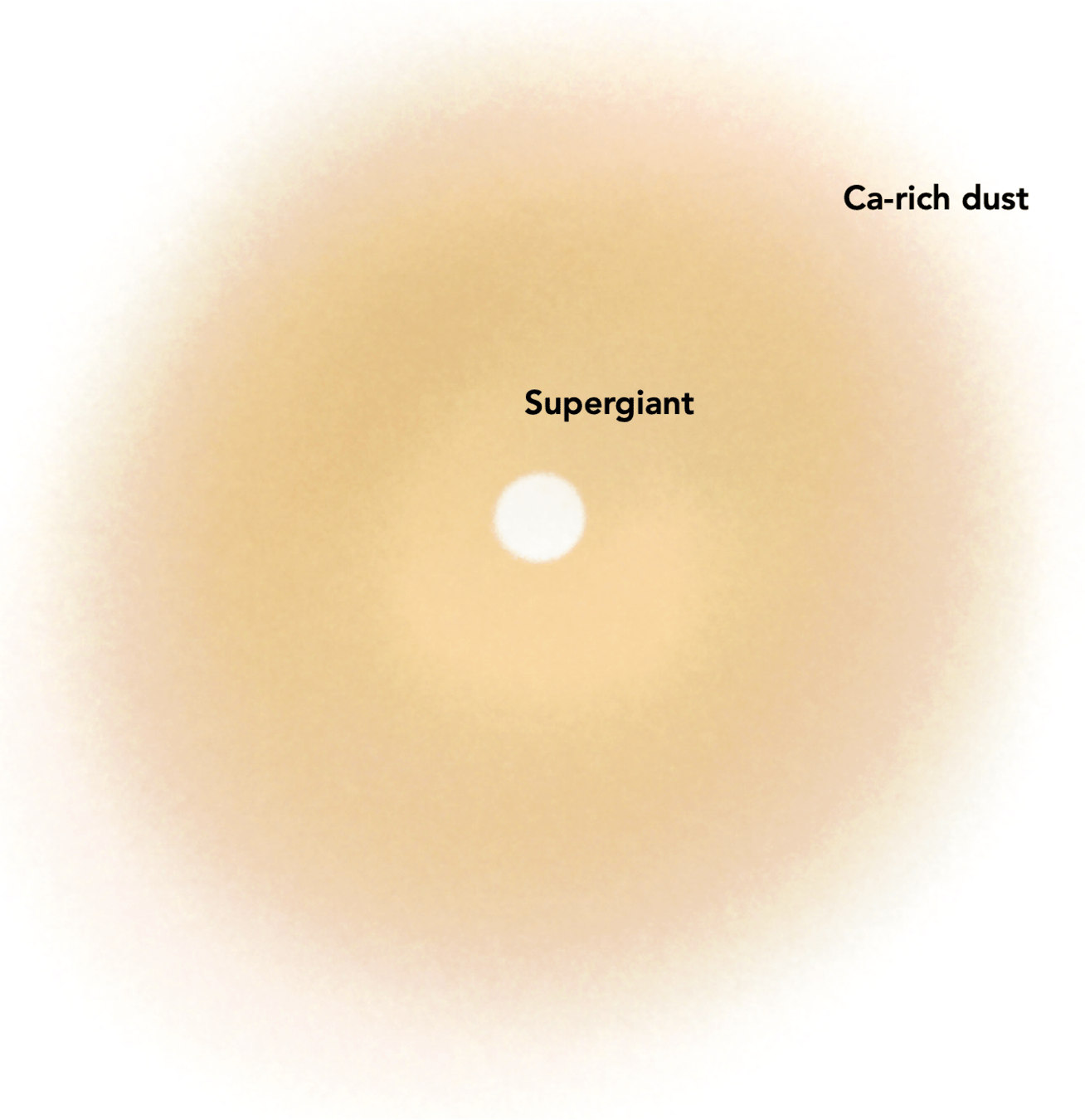
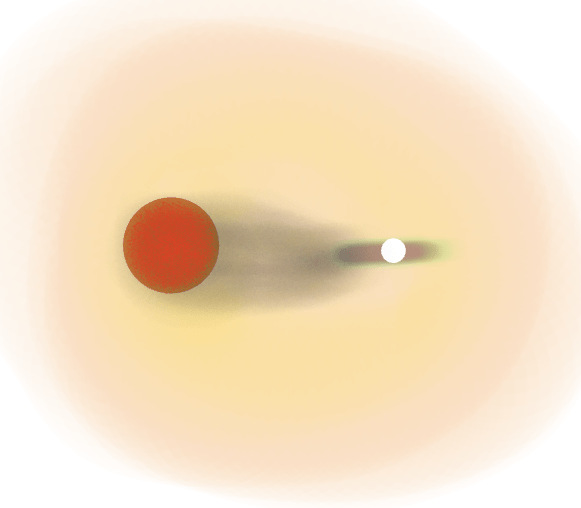
Interacting Stars
Characterizing Stellar Variability Across the HR Diagram
Gaia DR3
Customizable Python time-series evaluation routines (e.g. fitting, time-series features, ...)
ZTF (src) DR14
ZTF DR14
LSDB
Fast object catalog operations and querying
TAPE
Bridges object
and source catalogs
Large Survey DataBase
Timeseries Analysis & Processing Engine
By Anastasios Tzanidakis