Bridging Barriers
This slide deck has been co-created using generative AI for demonstrative and educational purposes.
Human-Machine Collaboration for
Better Access to Special Collections
by
Annika Rockenberger, PhD
University of Oslo Library
Digital Research Methods in the Humanities,
Social Sciences, Pedagogy, and Theology
Human-Machine Collaboration
Enhancing Access to Special Collections
The omnipresence of generative AI
Lorem ipsum dolor sit amet, consectetur adipiscing elit. Morbi nec metus justo. Aliquam erat volutpat.
Experiment Overview
- Original letters are digitised
- Metadata is added to the letters by a librarian together with a domain expert
- Letters are transcribed using high-performance HTR models in Transcribus (Swedish Lion, Text Titan I ter)
- Domain experts with paleographic and linguistic skills correct the machine transcription (1x correction) and tag names and places
- Corrected transcriptions are uploaded to NotebookLM
- Specific instructions (prompts) for creating the summaries are provided
- The output is evaluated for correctness by domain experts
- The summaries are supplied on the ALVIN platform
The Letters
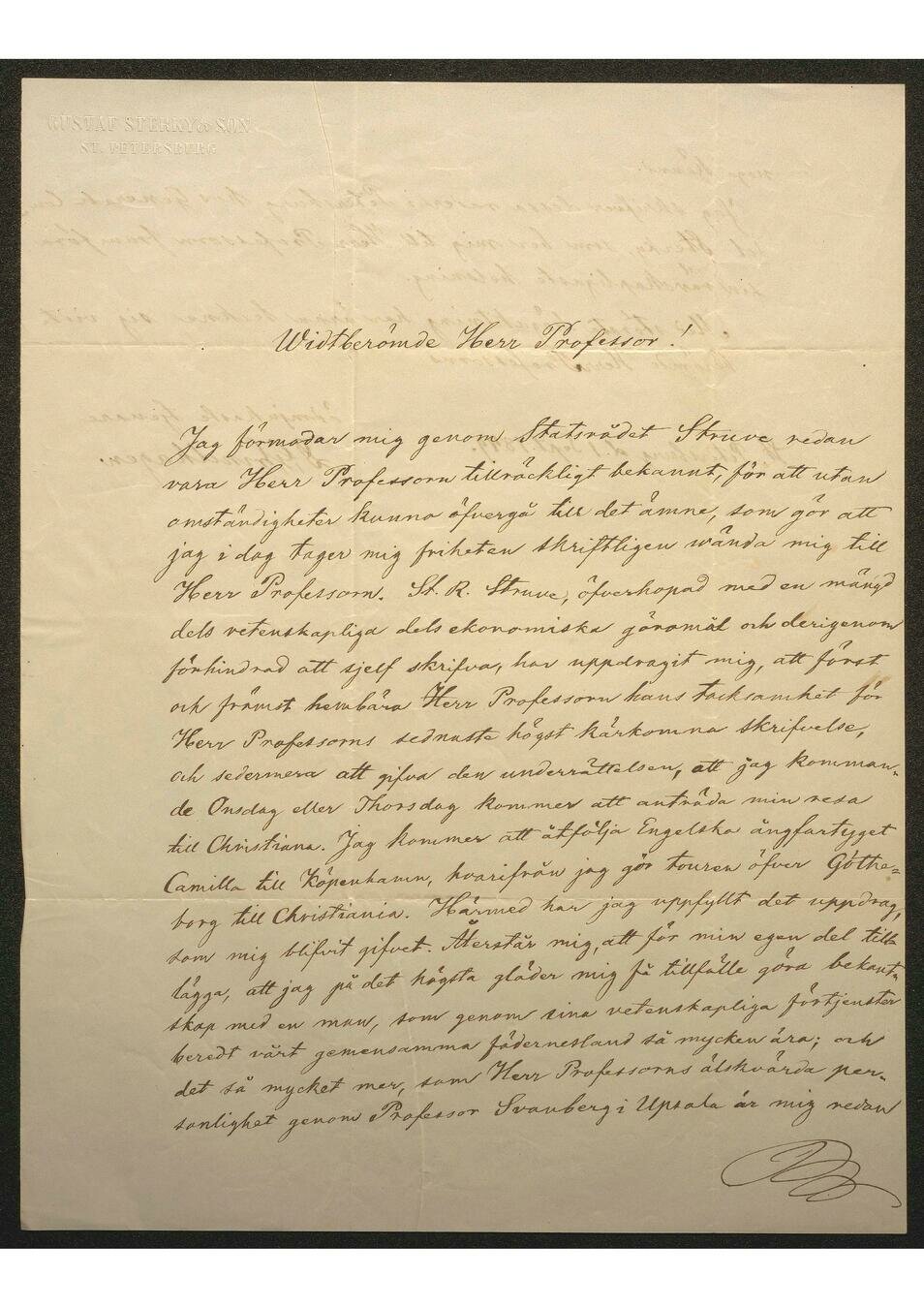
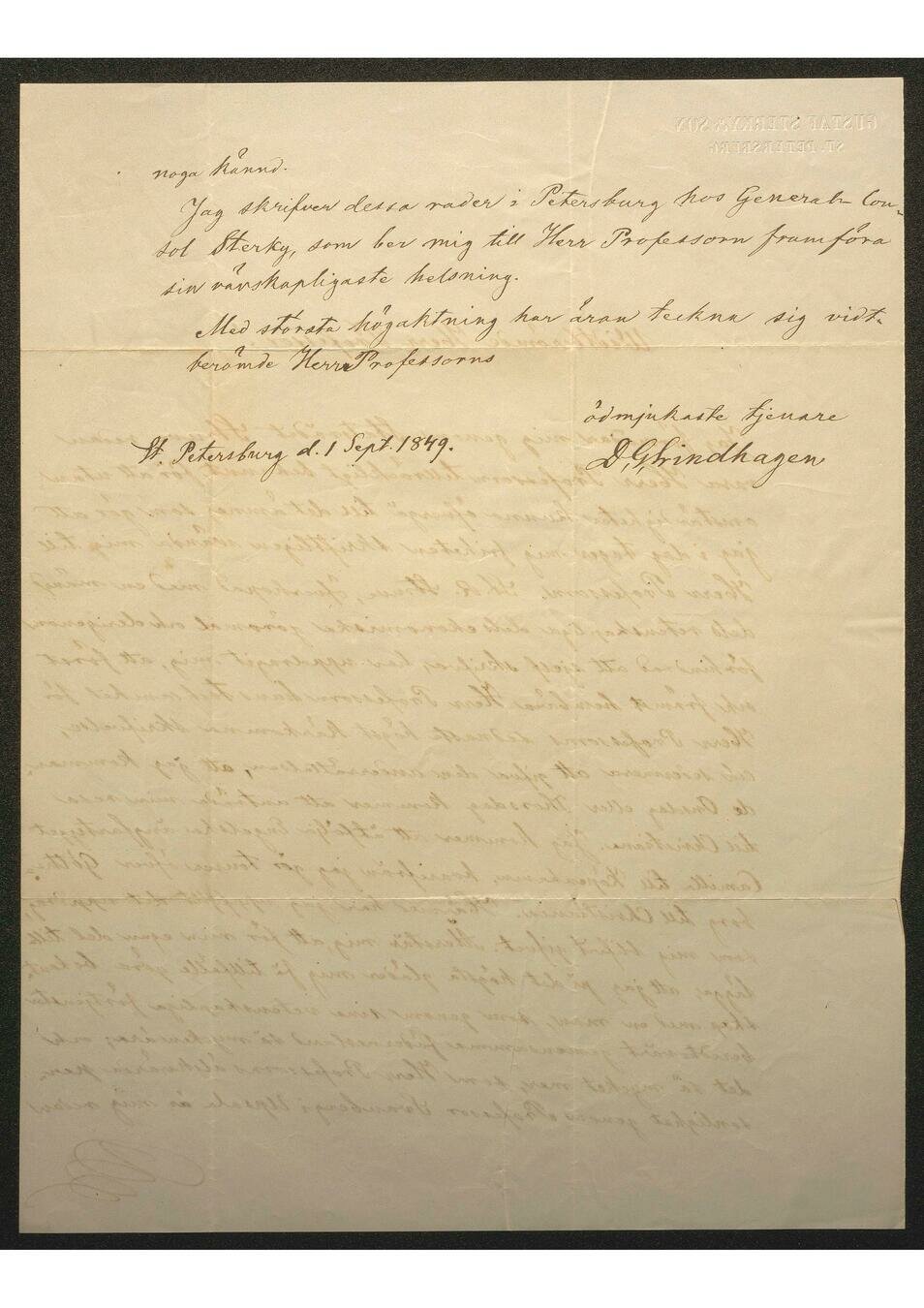
Daniel Georg Lindhagen to Christopher Hansteen. St. Petersburg, 1st September 1849
Digitised letter (left) – Record with metadata on Alvin platform, without images (right)
Experiment Overview
Our Challenge
The academic correspondence of the Norwegian Observatory:
Letters to Christopher Hansteen in the Collection of the Museum
of University History (MUV)
- Multilingual (German, French, Swedish, English, Russian)
- Several hands, few letters per hand
- Highly specific content (astronomical instruments, technical specifications, mathematical symbols and formulas)
- Early 19th-century handwriting
Experiment Overview
Manual Labor: Metadata
ALVIN platform and metadata, scanning and digitisation
Experiment Overview
Aim: Increase readability and searchability of individual letters
Situation: no time or money for expert manual transcription
Using machine learning to do text recognition, correct result by hand until publishable
Transcription Process
AI = Machine Learning
Handwritten Text Recognition (HTR)
Pattern recognition based on lines
Manual creation of Ground Truth (25+ pages)
Community project with materials from archives, libraries, museums, and research projects
Ground Truth: human-created, human-quality checked
AI = Large Language Model (LLM)
Language generation based on probability
trained on Ground Truth documents in the Transkribus collection
combined with HTR
Language/language group specific
Source bias (genre, medium, social group, type of document)
Training bias (good at recognising the known/most probable based on training set)
Swedish Letters
Machine Learning only HTR-model
trained on 15 million words / 3 million lines
running texts from 17th-19th century
Archival collections mainly
German Letters
LLM-enhanced HTR model
trained on 31 million words
multilingual, heterogeneous, balanced training set
historical and modern documents
???
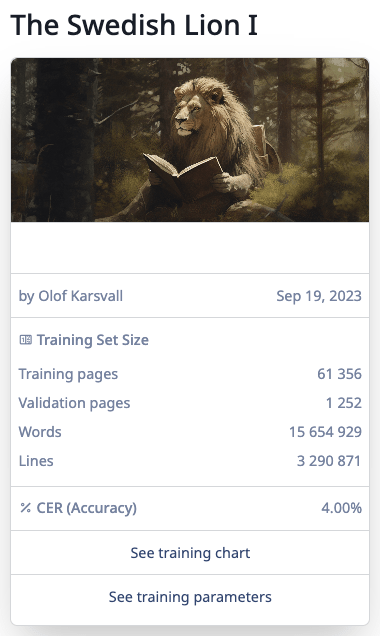
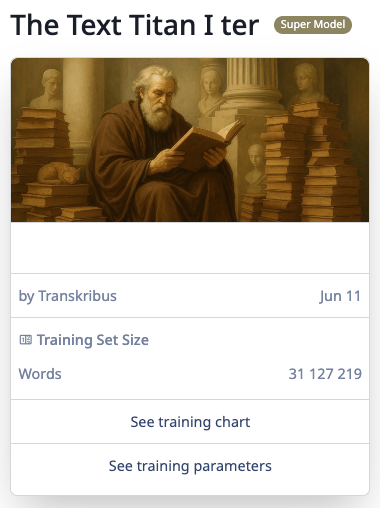
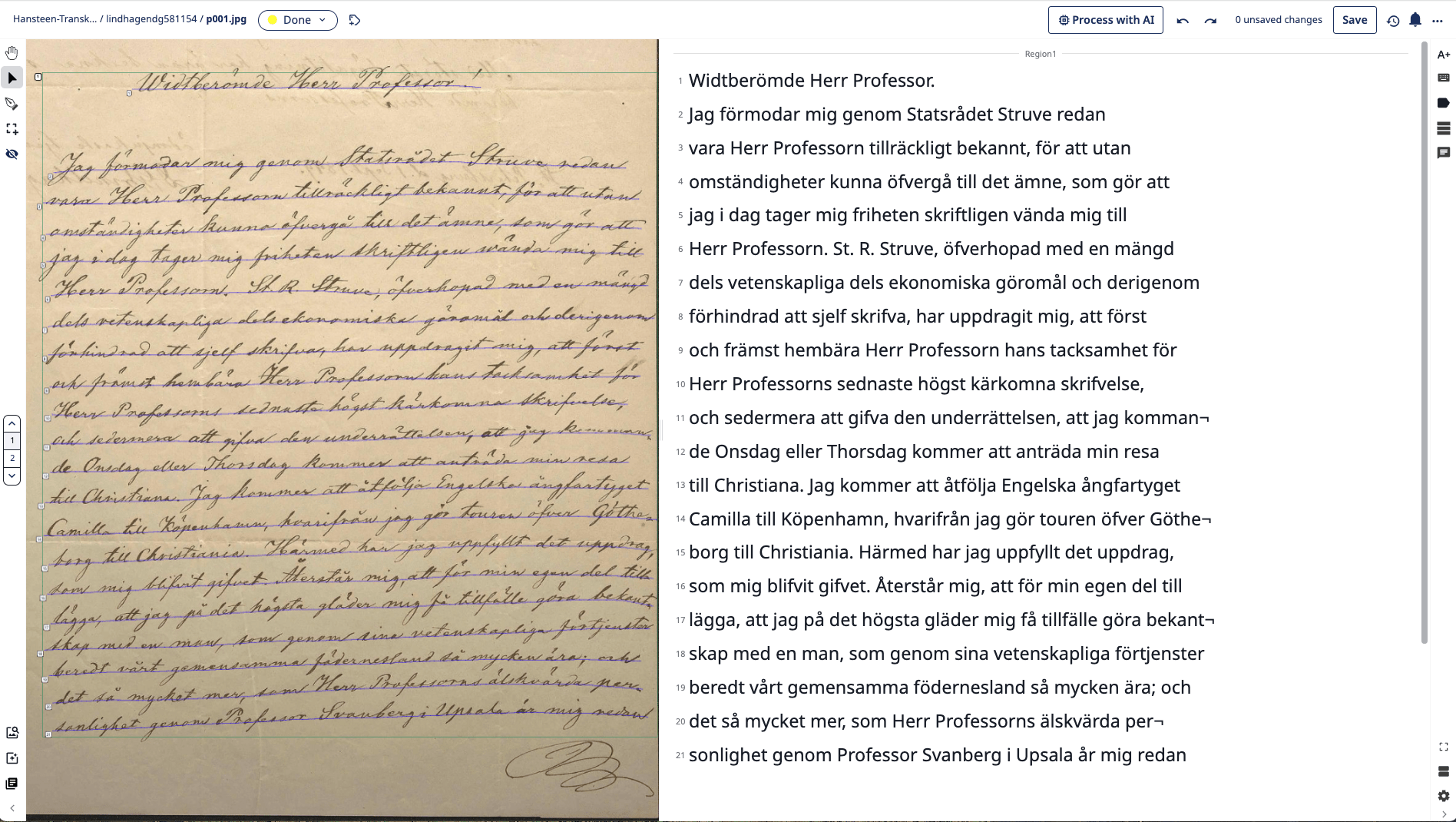
Swedish Letters: Plain HTR
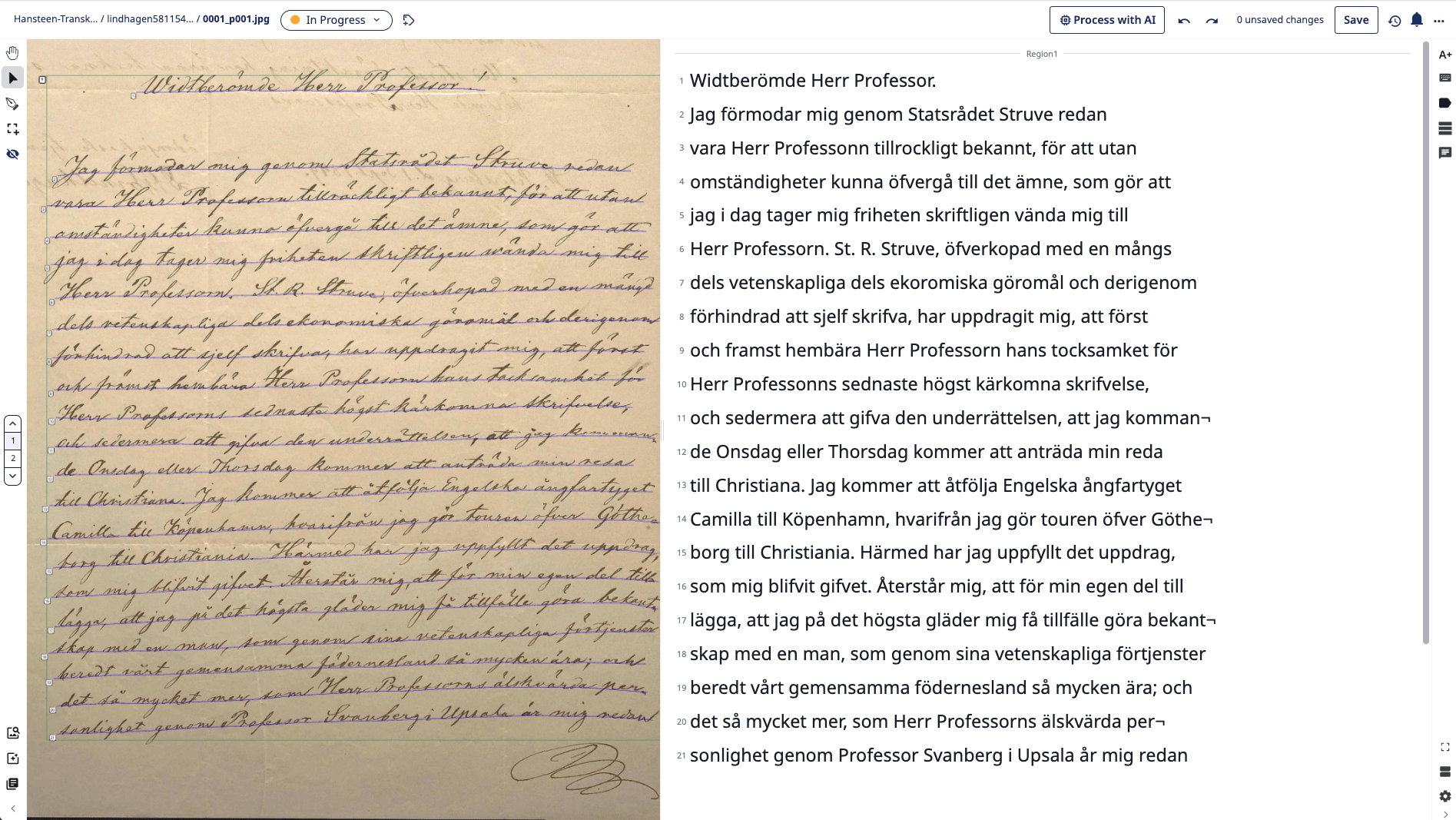
High-quality automatic transcription
Some characters are misread (r/n, a/o, k/h)
Swedish Letters – corrected
German Letters – LLM-enhanced HTR
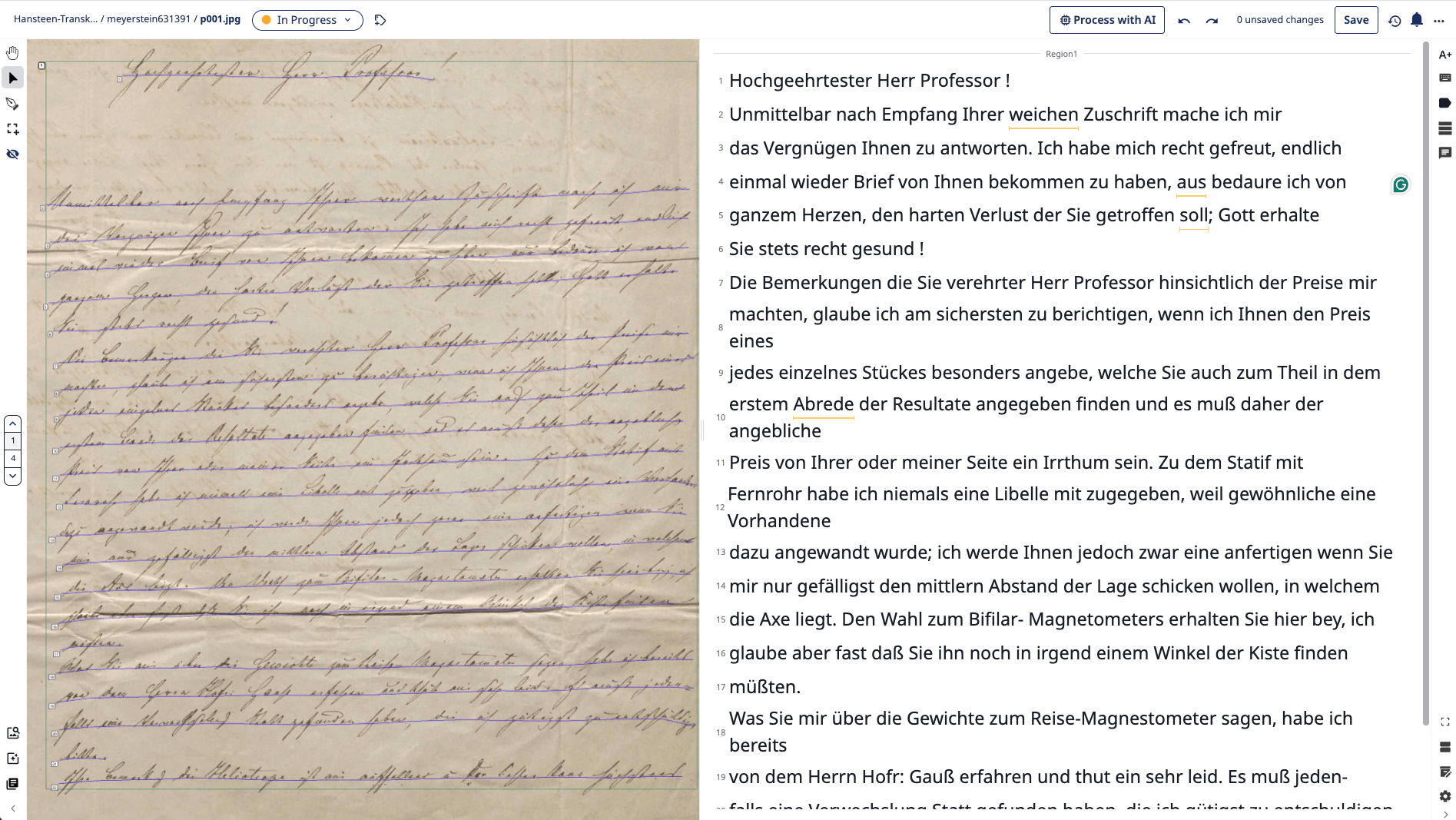
High-quality text recognition, but:
too eager to produce probable text!
-
Excitement
-
Attention
-
Irritation (Believable Bullshit)
-
Frustration
-
Disenchantment
The Five Stages of … Proofreading LLM-enhanced HTR
Utilizing Generative AI
Created concise "Regesta" to illuminate essential content of letters.
AI Hallucination
In the field of artificial intelligence, a hallucination, or artificial hallucination (also called bullshitting, confabulation, or delusion), is a response generated by an AI that presents false or misleading information as fact. (Wikipedia)
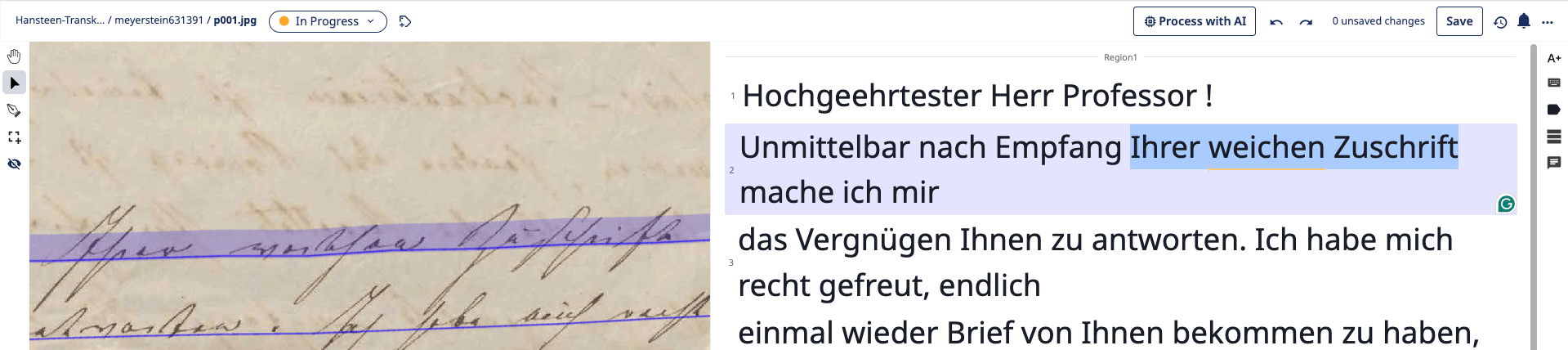
One example of many: HTR-model with LLMs built in tends to confabulate
Broader Access and Understanding
ALVIN platform enhances digital cultural heritage accessibility.
Bridging Barriers. Human-Machine Collaboration for Better Access to Special Collections. Talk at MF. Oslo. 2025-12-16
By Annika Rockenberger
Bridging Barriers. Human-Machine Collaboration for Better Access to Special Collections. Talk at MF. Oslo. 2025-12-16
Slides accompanying a talk at the seminar "Artificial Intelligence and the Humanities: New Opportunities and Challenges". MF - School of Theology, Religion and Society. Oslo, 16th Dec 2025. Talk by Annika Rockenberger