CMSC389L
Week 8
Load Balancers
March 16, 2018
Load Balancers

Why Load Balancers?
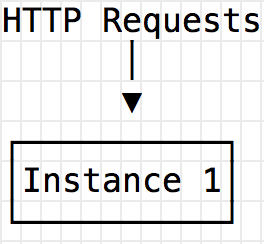
- Architectures seen so far: single server directly handling requests
- Guaranteed downtime (Single Point of Failure)
- Want to horizontally scale
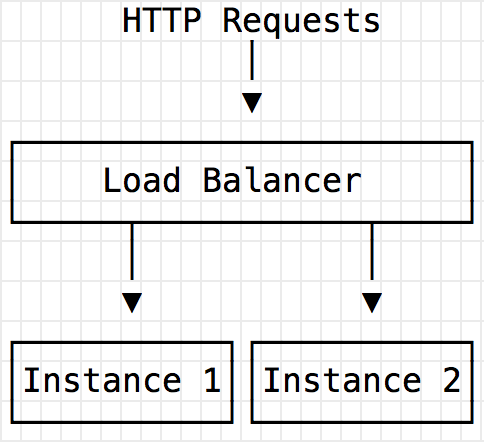
What is a Load Balancer?
- Given a set of targets (servers, sub-networks, etc.), a load balancer has to distribute traffic uniformly
- Goals:
- Ensure no single server is overworked
- Detect dead servers and redirect traffic
- Provide flexibility to dynamically add/remove servers
How to Balance Load?
- Multiple common load balancing algorithms:
- Simplest: Round-Robin
- Permute a list of targets, sending one request at a time
- Assumes all requests have similar load characteristics
- Most optimal: Metric-based
- Least likely to overwork any single server
- Other:
- Hash-based (for example: hash(IP) % # targets)
- Random
- Simplest: Round-Robin
What about changes in load?
- Load is rarely uniform -- oftentimes it is cyclical (seasonal, nightly, etc.) or spiky
- Perfectly distributed load could still lead to failures if there is not enough capacity
- Thus: load balancers need to be able to launch new capacity as demand changes
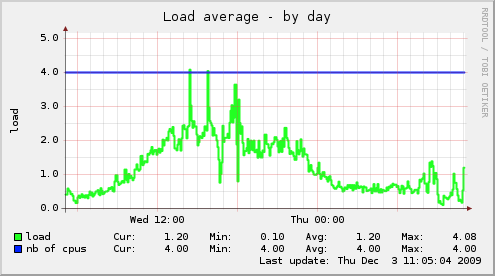
- AWS makes available Auto-Scaling for this purpose
Back to AWS: Why use AWS?
- A load balancer is oftentimes a key user-facing component of your architecture
- It has to:
- Be available forever
- Serve a hostname that never changes
- Accept any amount of incoming requests
- Distribute requests evenly across backends
- Have perfect knowledge of failed instances to route traffic away from or new instances to start routing traffic to
AWS Load Balancers (ELB)
- CLBs: Classic Load Balancers
- ALBs: Application Load Balancers
- NLBs: Network Load Balancers
- Brand New!
AWS Load Balancers: Concepts
- Listeners
- Targets
- Target Groups
- Health Checks
- Content-Based Routing
ALB Pricing
- Continuous Per-Hour
-
2.25¢ / hour
- $16.20 / month for a 30-day month
-
2.25¢ / hour
- LCU-hours ("Load balancer Capacity Unit")
- 0.8¢ / LCU / hour
- Goal: measure your actual usage and bill you for that
- Netflix should pay more than you for an ALB
- 1 LCU is measured on the largest dimension. Either:
- New Connections (25 / second)
- Active Connections (3k / minute)
- Bandwidth (1GB / hour)
- Rule Evaluations (1k / second)
ALB Demo
ALB Worksheet
Complete the worksheet section on ALB.
Week 8 Feedback
ter.ps/week8
Closing Notes
Semester Projects!!!!!
Turn in today's worksheet when we get back from spring break.
CMSC389L Week 8 (Lecture 8)
By arasevic