
WINDSHEAR EFFECTS ON AIRPLANES AND SYSTEM
CHAPTER 03
WINDSHEAR EFFECTS ON AIRPLANES
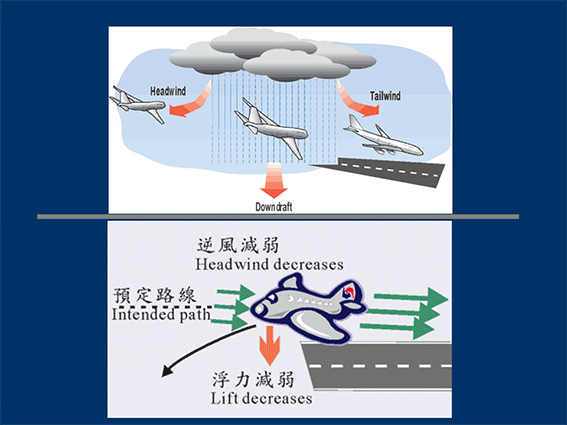
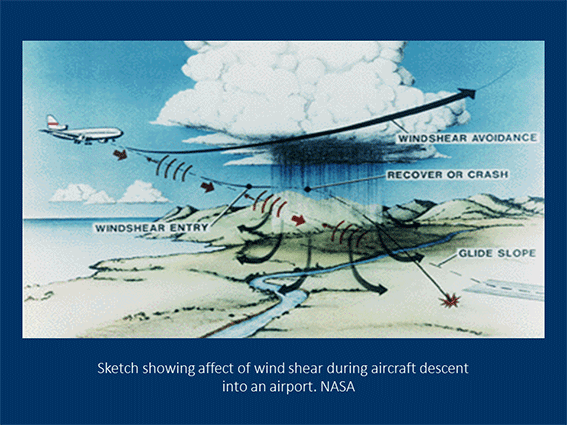
- Headwind/Tailwind Shear Response, increasing headwind (or decreasing tailwind) shear increases indicated airspeed and thus increase performance. The large airspeed increase may be reason for discontinuing the approach
- Vertical windshear response, Vertical winds exist in every microburst and increase in intensity with altitude. Such winds usually reach peak intensity at heights greater than 500 ft above the ground. Downdrafts with speeds greater than 3,000 ft per minute can exist in the centre of a strong microburst
WINDSHEAR EFFECTS ON AIRPLANES
Vertical winds exist in every microburst and increase in intensity with altitude. Such winds usually reach peak intensity at heights greater than 500 feet above the ground. Downdrafts with speeds greater than 3,000 feet per minute can exist in the center of a strong microburst.
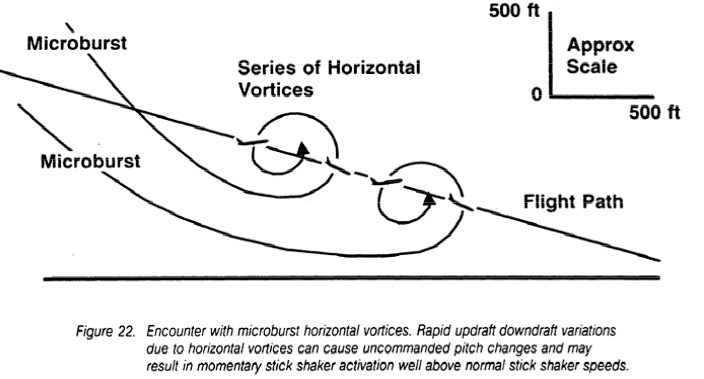
more critical than sustained downdrafts, short duration reversals in vertical winds can exist due to the horizontal vortices associated with microbursts. This is shown in Figure 22.
• Crosswind Shear Response. A crosswind shear tend to cause the
airplane to roll and/or yaw.
• Turbulence Effects.
- Effects of turbulence can mask changing airspeed trends and delay recognition of severe windshear.
- Trend to use available airplane pitch attitude during a recovery by causing random stick shaker.
- Increasing pilot workload and distraction
• Rain Effects. Accident investigations and the study of
windshear are accompanied by high rates of rainfall.
WINDSHEAR EFFECTS ON AIRPLANES
Several Important Clues of Windshear
•Low Level Warning Alert System (LLWAS)
•Weather Reports
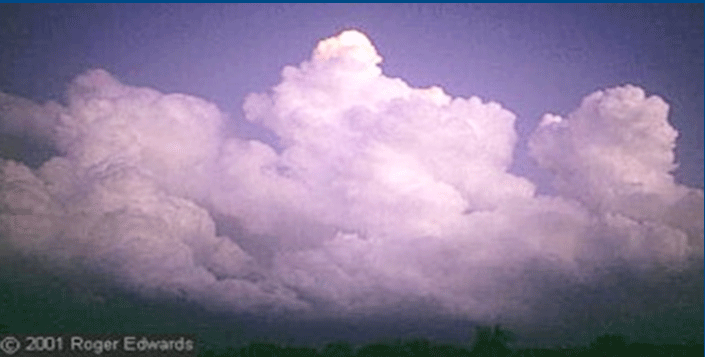
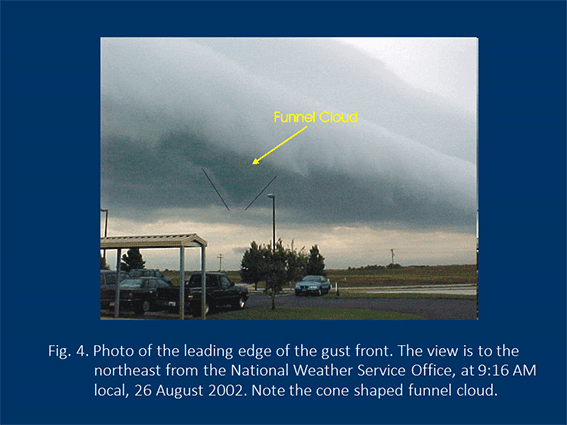
•Visual Clues such as: Cumulonimbus clouds
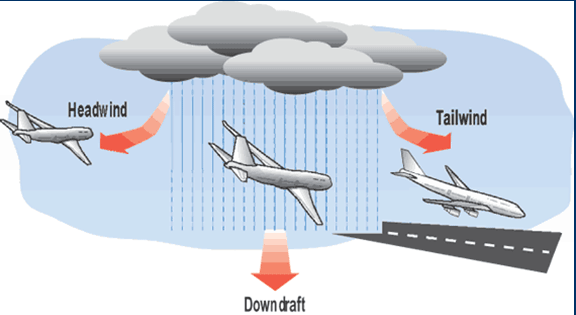
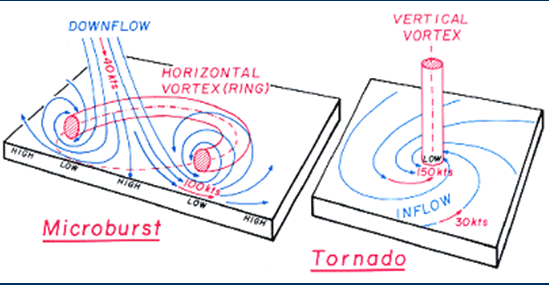
- A downburst that results in strong downdrafts (reaching 40 knots vertical velocity)
- An outburst that results in strong horizontal wind shear and wind-component reversal (with horizontal wind reaching 100 knots)
Microburst present two distinct threats to aviation safety:
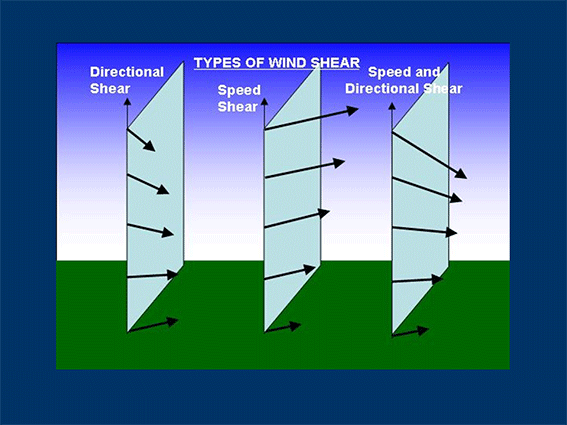
A rapid change in wind direction or velocity causing airspeed changes greater than 15 knots or vertical speed changes greater than 500 feet per minute.
Severe Windshear
How do downbursts happen?
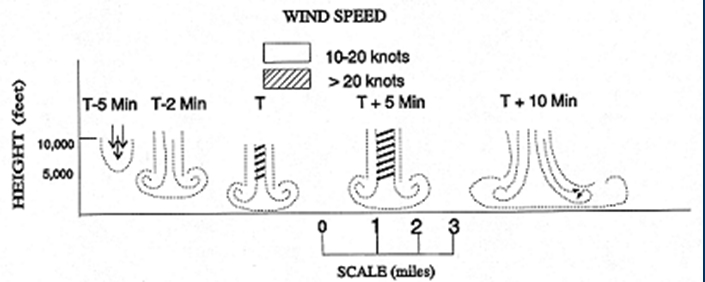
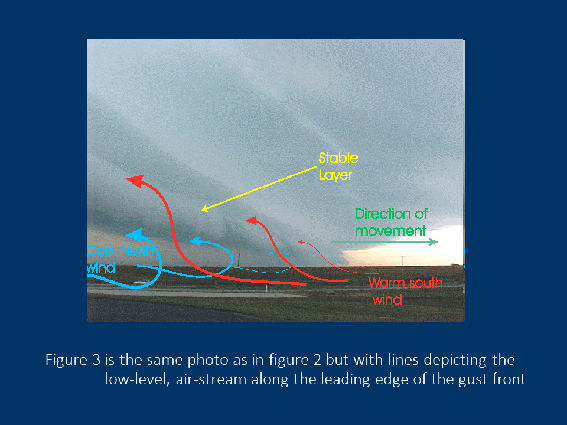
Cold air begins to descend from the middle and upper levels of a thunderstorm (falling at speeds of less than 20 miles an hour)
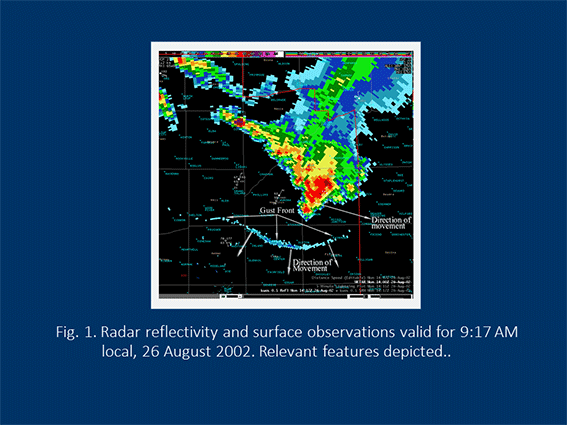
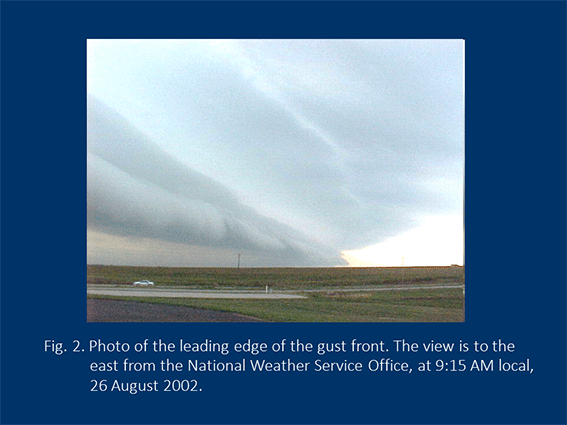
As the colder air strikes the Earth's surface, it begins to "roll" - much like water as a boat moves through it.
As the colder air "rolls" out, it is compressed causing winds to increase dramatically - at times even stronger than tornado winds!
The key difference is in two words - IN and OUT!
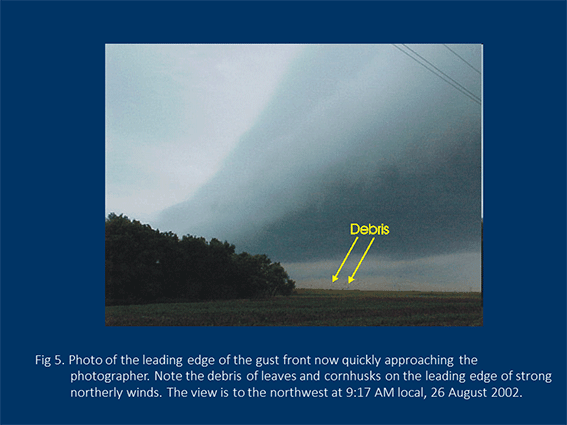
IN - all wind flows INTO a tornado. Debris is often laying at angles due to the curving of the inflow wind.
OUT - all wind flows OUT from a downburst. Debris is often laying in straight lines (hence the term "straight line winds") parallel to the outward wind flow
How are downbursts different from tornadoes?
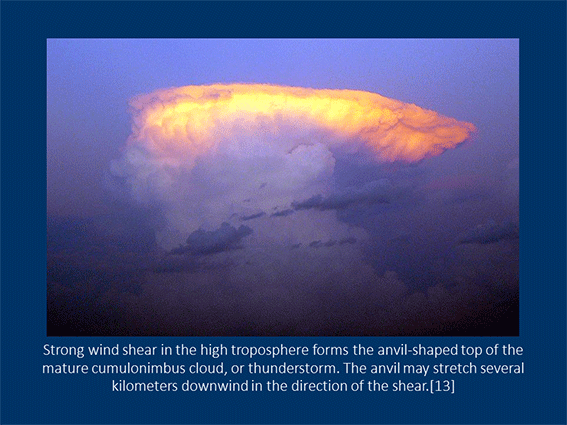
Severe thunderstorms, which can spawn tornadoes and hailstorms, require wind shear to organize the storm in such a way as to maintain the thunderstorm for a longer period of time. This occurs as the storm's inflow becomes separated from its rain-cooled outflow. An increasing nocturnal, or overnight, low level jet can increase the severe weather potential by increasing the vertical wind shear through the troposphere. Thunderstorms in an atmosphere with virtually no vertical wind shear weaken as soon as they send out an outflow boundary in all directions, which then quickly cuts off its inflow of relatively warm, moist air and kills the thunderstorm.[14]
Severe thunderstorm
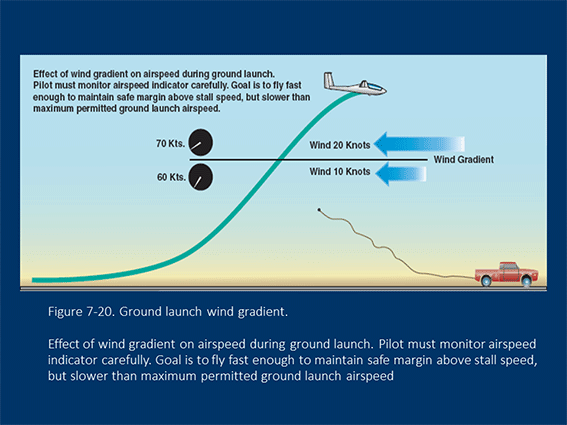
Glider ground launch due to wind shear.
In gliding, wind gradients just above the surface affect the takeoff and landing phases of flight of a glider. Wind gradient can have a noticeable effect on ground launches, also known as winch launches or wire launches. If the wind gradient is significant or sudden, or both, and the pilot maintains the same pitch attitude, the indicated airspeed will increase, possibly exceeding the maximum ground launch tow speed. The pilot must adjust the airspeed to deal with the effect of the gradient.[16]
When landing, wind shear is also a hazard, particularly when the winds are strong. As the glider descends through the wind gradient on final approach to landing, airspeed decreases while sink rate increases, and there is insufficient time to accelerate prior to ground contact. The pilot must anticipate the wind gradient and use a higher approach speed to compensate for it.[17]
Wind shear is also a hazard for aircraft making steep turns near the ground. It is a particular problem for gliders which have a relatively long wingspan, which exposes them to a greater wind speed difference for a given bank angle. The different airspeed experienced by each wing tip can result in an aerodynamic stall on one wing, causing a loss of control accident
END OF CHAPTER 03
Effect (Chapter 03)-TRAVIRA
By arifmarzuki