



Adam Wyett PRO
I am an ESL teacher based in Saint Etienne, France. I use Slides to share and present my presentations live while teaching group-classes in lo-tech environments.
[ refactor · scalable system · MVP · vibe coding · bug bounty · incident ]
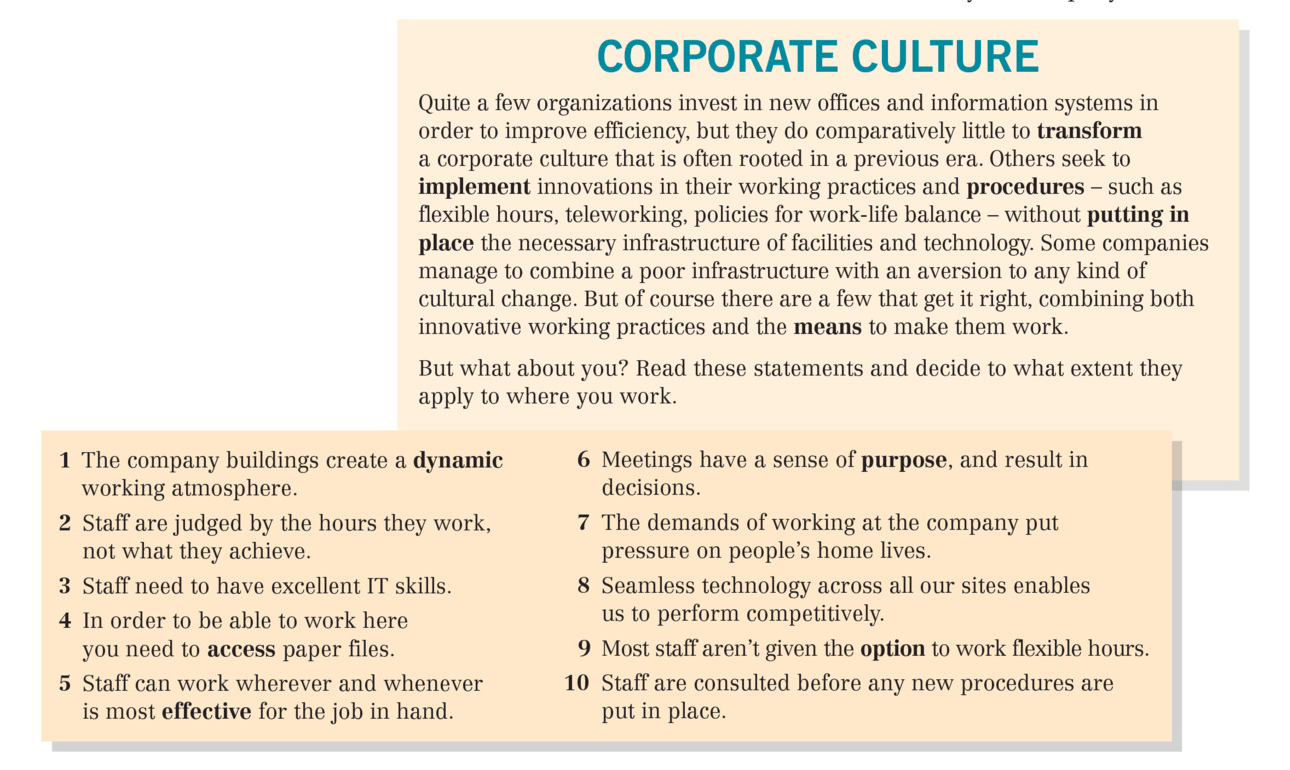
True or False?
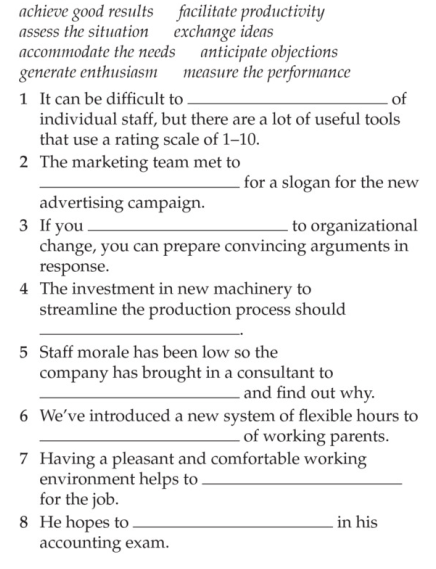
accommodate achieve anticipate facilitate generate
exchange assess measure
a _______ targets / objectives
b _______ needs / special requirements / requests
c _______ enthusiasm / ideas / interest
d _______ information / knowledge / points of view
e _______ success / progress / productivity
f _______ change / development / growth
g _______ performance / a situation
h _______ problems / potential difficulties / objections
accommodate achieve anticipate facilitate generate
exchange assess measure
a achieve targets / objectives
b accommodate needs / special requirements / requests
c generate enthusiasm / ideas / interest
d exchange information / knowledge / points of view
e measure success / progress / productivity
f facilitate change / development / growth
g assess performance / a situation
h anticipate problems / potential difficulties / objections
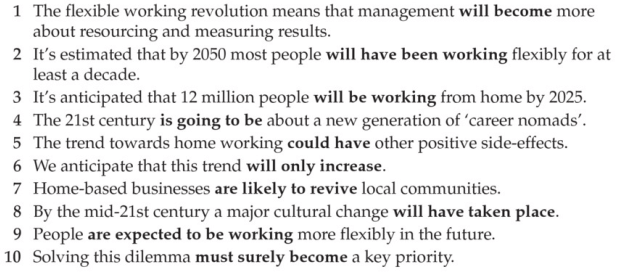
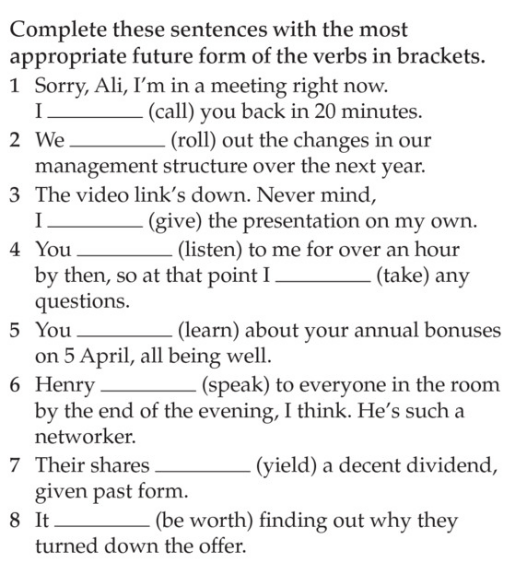
What are the tenses?
How certain is the speaker?
Will
Going to
Predictions based on experience or "feeling"
We've increased the salary, so I think more people will apply
Predictions based on evidence or ACTUAL feelings
I'm going to get angry in a minute.
Spontaneous plans
You're late? Ok, I'll start without you.
Plans / decisions actually previously made
Sue is attending the conference in May.
Promises / requests / threats
Will you help me?
I promise I'll help you.
Questions about future obligations
When will we need to be ready?
Will tenses for actions in progress, completed or elapsed in Future
We will be working to resolve this issue for the next 2 months.
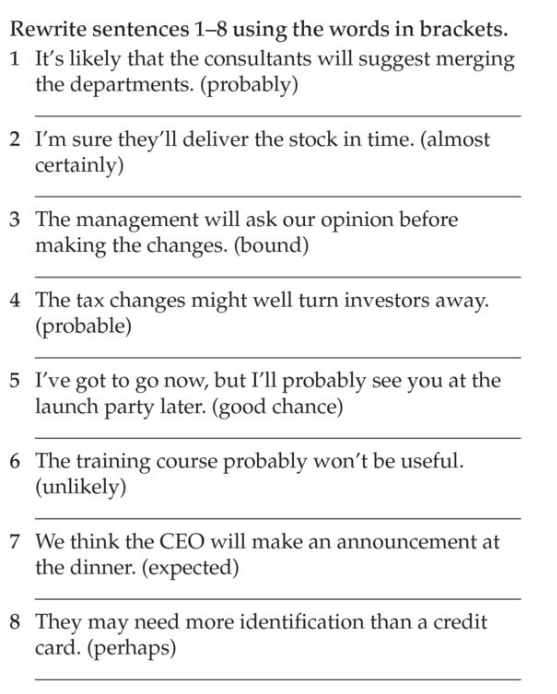
Modals with varying levels of certainty
Will + adverbial
Adjectives with "be ... to" / "it's ... that ... will ..."
Use adverbs for emphasis / distinction
What are your predictions for possible changes in your company or department? Consider:
(Use the target language)
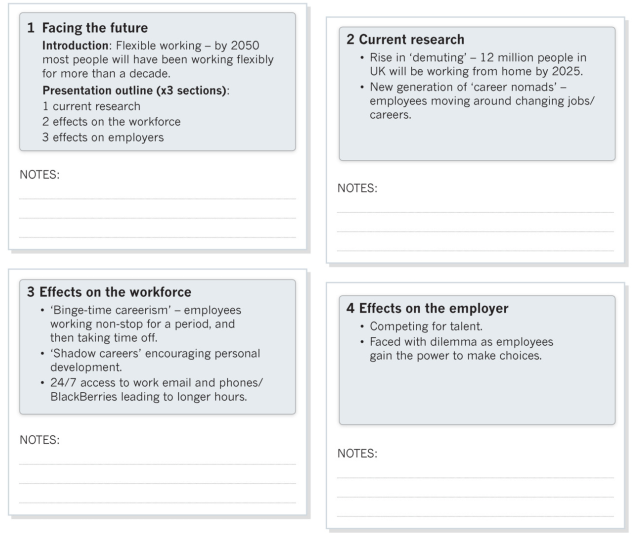
A large insurance company is creating a strategy for facing the future and one of its managers has been asked to attend a seminar on the future of working practices.
A large insurance company is creating a strategy for facing the future and one of its managers has been asked to attend a seminar on the future of working practices.
A large insurance company is creating a strategy for facing the future and one of its managers has been asked to attend a seminar on the future of working practices.
A large insurance company is creating a strategy for facing the future and one of its managers has been asked to attend a seminar on the future of working practices.
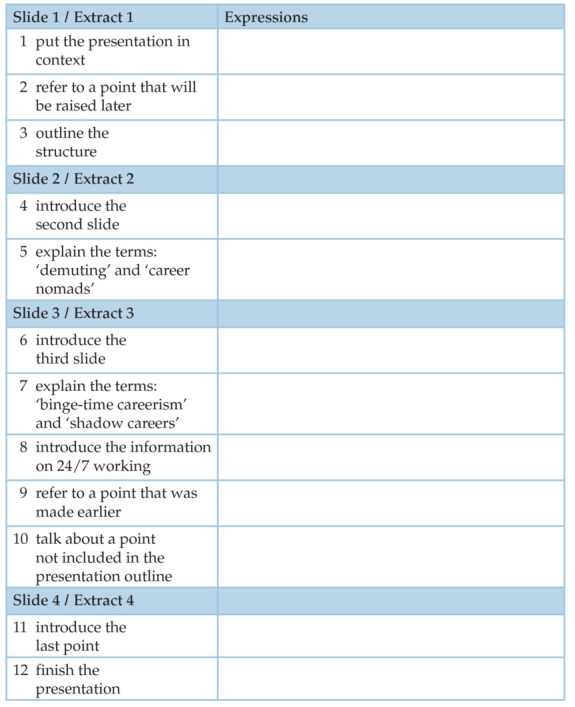
Outlining a structure
I've divided my talk up into …
First of all, I’ll … After that, I’ll …
I’ll conclude with …
Beginning the presentation
I’d like to start by saying …
Referring forwards / backwards / sideways
I’ll return to … later.
As I said earlier, …
I’ll say more about … in a moment.
Just to digress for a second, …
Signalling the next section
OK, moving on …
Turning to …
This brings me to …
Ensuring understanding of a specialist subject
Just to fill you in on some of the background, …
By … I mean …
Now I don’t know if you are familiar with …?
Well, … refers to …
This is where …
And perhaps here I should explain what I mean by …
That’s when …
So, for example, …
Ending the presentation
And this is my key point.
To sum up, …
I’ll be happy to take any questions now.
Prepare a quick presentation for changes you expect to see / would like to see in your company.
Sketch out the structure. Include:
By Adam Wyett