GLOBAL CONSTITUTIONALISM:
A SOCIO-LEGAL APPROACH
AYDIN ATILGAN
SETTING THE SCENE: KEYWORDS
-
CONSTITUTION: “An ordering of a city in respect of its offices and particularly of the sovereign one.” (Aristoteles)
- INTERNATIONAL LAW: "is what international lawyers make of it" (Koskenniemmi)
- GLOBAL LAW: "law has also, and in line with the logic of functional differentiation, established itself globally as a unitary social system" (Teubner&Fischer-Lescano)
- GLOBAL CONSTITUTIONALISM: "An emerging interdisciplinary field" (Wiener)
- GLOBAL CONSTITUTIONALIZATION: "continuing, but not linear, process of the gradual emergence and deliberate creation of constitutionalist elements in the international legal order by political and judicial actors bolstered by an academic discourse in which these elements are identified and further developed" (Peters)
- SOCIOLOGY OF LAW: "a transdisciplinary enterprise and aspiration to broaden understanding of law as a social phenomenon" (Cotterrell)
WHAT IS GLOBAL CONSTITUTIONALISM?
“Global constitutionalism is an academic and political agenda that identifies and advocates for the application of constitutionalist principles in the international legal sphere in order to improve the effectiveness and the fairness of the international legal order. "
(Anne Peters, 2009)
KEY THEMES OF GLOBAL CONSTITUTIONALIST DISCOURSE
- The institutionalization of power,
- The limitation of power
- Social idealism,
- The standard setting capacity of constitutions in the sense of a systematization of law
- The recognition of individual rights
(Schwöbel, 2011)
MAPPING GLOBAL CONSTITUTIONALIST THEORIES
GC THEORIES RELYING ON AN ASSUMPTION/POSSIBILITY OF A CONSTITUTIONALIZATION PROCESSGC THEORIES AS NOETIC STUDIES
GLOBAL CONSTITUTIONALIST THEORIES RELYING ON AN ASSUMPTION OF A CONSTITUTIONALIZATION PROCESS
(Schwöbel, 2011)
SOCIAL (SOCIETAL) CONSTITUTIONALISM INSTITUTIONAL CONSTITUTONALISM NORMATIVE CONSTITUTONALISM ANALOGICAL CONSTITUTONALISMSOCIAL (SOCIETAL) CONSTITUTIONALISM
A. Fischer-Lescano, G. Teubner, P. Allot, C. Tomuschat, J. Delbrück
“constitutional problems arising outside the borders of the nation state in transnational political processes, and at the same time outside the institutionalized political sector, in the ‘private’ sectors of global society.”
(Gunther Teubner, 2013)
INSTITUTIONAL CONSTITUTIONALISM
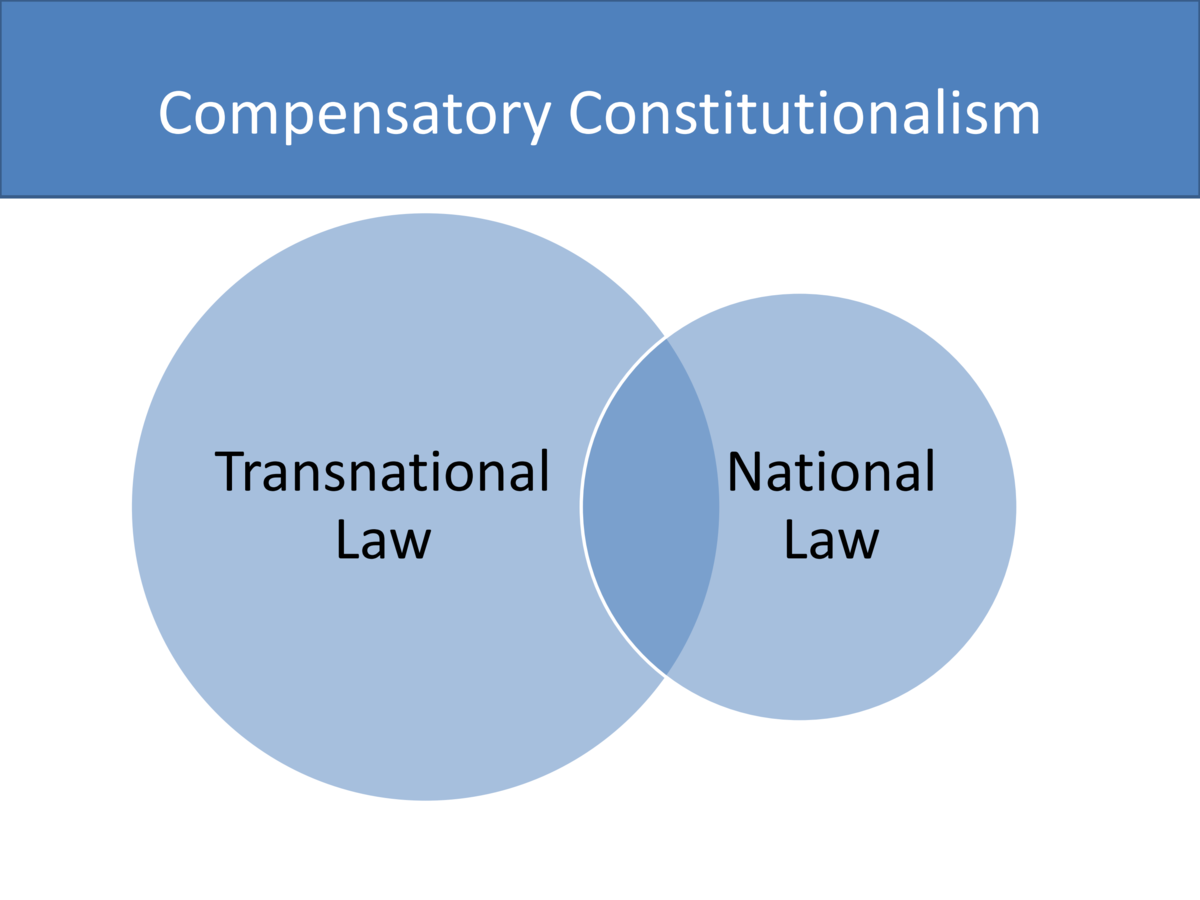
A. Peters, AM Slaughter, M. Maduro, J. Habermas
NORMATIVE CONSTITUTIONALISM
(B. Fassbender, J. Delbrück, E. de Wet, M. Byers)
“(…) the Charter shows a number of strong constitutional features; in particular, it includes rules about how the basic functions of governance are performed in the international community, that is to say, how and by whom the law is made and applied, and how and by whom legal claims are adjudicated. The Charter also establishes a hierarchy of norms in international law (Article 103).”
( (Fassbender, 2009)
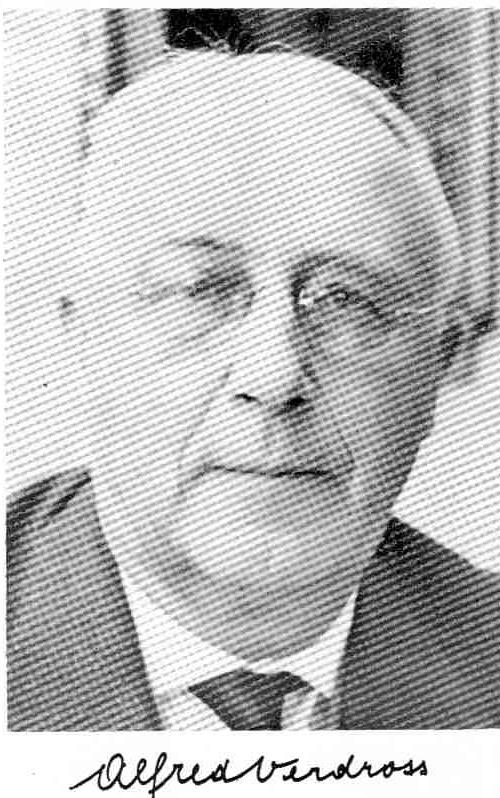
ANALOGICAL CONSTITUTIONALISM
Alfred Verdross,
The Constitution of
the International
Legal Community, 1926
GLOBAL CONSTITUTIONALISM
AS A NOETIC STUDY
GLOBAL CONSTITUTIONALISM AS A MINDSET
ORGANIC GLOBAL CONSTITUTIONALISM
GLOBAL CONSTITUTIONALISM AS A MINDSET
(…) constitutionalism is not necessarily tied to any definite institutional project, European or otherwise. Irrespective of the functional needs or interests that laws may seek to advance, a Kantian view would focus on the practice of professional judgment in applying them. Less than an architectural project, constitutionalism would then be a programme of moral and political regeneration. This is what I mean by the description of constitutionalism as a "mindset.”
(Martti Koskenniemi, 2007)
ORGANIC GLOBAL CONSTITUTIONALISM
“ a living structure and a forum which functions for debates on fragmentation, legitimacy and the role of law in the society.
(Christine Schwöbel, 2011)
GLOBAL CONSTITUTIONALISM
BETWEEN TWO ENDS
→←
CONSTITUTIONALISATION THROUGH FRAGMENTED BODIES
WORLD STATE or UNION OF INTERNATIONAL LEGAL ORDER
GLOBAL CONSTITUTIONALISM: overall
- No written constitution: an academic artefact
- Focus on interplay of institutional and organizational dynamics (Wiener, 2011)
- An umbrella term for increasing cooperation and interdependence in global domain
- A modern or post modern discourse, involving actual problems and questions of international and global law
WHAT IS GLOBAL CONSTITUTIONALISM LACKING?
-
Reliable normative and institutional sources
- A common "demos"
-
A justice oriented approach
-
Consensus on a social contract
- Sources of legitimacy
- Knowledge (and consent) of non-western world law
- Broader view of constitutionalism (nomos)
- A dynamic sociological approach which can respond rapid transformations of the global society.
INCAPACITY OF MODERN CONSTITUTIONALISM: inefficient response to global constitutionalism
- Failure to grapple with cultural and social diversities (Tully, 2007; Krisch 2011)
- Unity and hierarchy in domestic systems; diversity, fragmentation and heterarchy in global.
- Mismatching of foundational constitutions of nations states. Global constitutionalism rather relies on societal and discursive processes. (Krisch, 2011)
- Fragmentation and polycentricity: Medieval constitutions? (Thornhill, 2013)
ANY ROOM FOR CONTRIBUTIONS TO THE GLOBAL CONSTITUTIONALIST DISCOURSE?
- A sociological view of international and global law (sociology of law).
- Examination of foundational basis for a so-called constitutionalization process in terms of transformation of international law and state, by sociological views.
- Better fitting constitutionalist views to the imperfection of global order.
- Cutting off analogical attempts to search constitutionalization within the scope of municipal constitutionalisms: A new and distinctive language for global studies and constitutionalism (Kymlicka, 2001; Krisch 2011).
- Any case, a constructivist approach.
WHY A SOCIOLOGICAL VIEW? TRANSFORMATION OF STATE AND INTERNATIONAL LAW
According to Anne-Marie Slaughter, three basic shifts in international legal order at globalization age:
- From national to global
- From government to governance
- From unitary state to disaggregated state
WHAT IS DISAGGREGATION OF STATE?
"It is simply the rising need for and capacity of different domestic government institutions to engage in activities beyond their borders, often with their foreign counterparts. It is regulators pursuing subjects of their regulations accross borders; judges negotiating minitreaties with their foreign brethren to resolve complex transnational cases; and legislators consulting on the best ways to frame and pass legislation affecting human rights or the environment."
(Slaughter, 2005)
TRANSGOVERNMENTAL NETWORKS
"sets of direct interactions among sub-units of different governments that are not controlled or closely guided by the policies of the cabinets or chief executives of those governments"
(Keohane&Nye, 1974)
what do they do?
- to exchange information
- to take roles in enforcement of regulations
- to harmonise different laws of nations
(Slaughter, 2005)
NETWORKS OF CIVIL SOCIETY
Networks on environment, public health, business and networks of judges or diaspora communities
OR even illegal networks, such as Al Qaeda like other global networks of human trafficking, drugs, money laundering etc.
(Slaughter, 2005)
WHY DID THEY rise?
"The networking of political institutions is the de facto response to the management crisis suffered by nation states in a supranational world. The call for global governance has been answered to some extent in the practice of governments and social actors. Not under the utopian form of a world government led by retired statesmen and noble intellectuals, but in the daily practice of joint decision-making in a network state made of nation-states, supranational associations, international institutions, local and regional government, and quasi-public non-governmental organizations."(Castells, 2009)
network society as a consequence of developments of modern society
→ → →
(Ladeur, 1994)
SOCIETY OF NETWORKS
SOCIETY OF ORGANIZATIONS
SOCIETY OF INDIVIDUALS
NETWORKS OF NETWORKS:
NETWORK SOCIETY AS INTERCONNECTED NODES
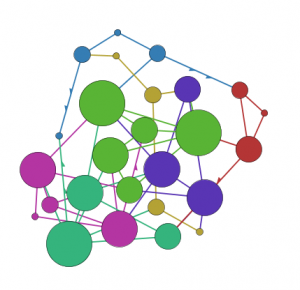
"Networks are flexible, adaptive structures that powered by information technology, can perform any task that has been programmed in the network. They can expand indefinitely, incorporating any new node by simply reconfiguring themselves, on the condition that these new nodes do not represent an obstacle to fulfilling key instructions in their program."

(Castells, 2009)
NETWORKS AS POWER HOLDERS
OF society
"Power does not reside in institutions, not even the state or large corporations. It is located in the networks that structure society."(Castells, 2009)
SOCIOLOGY OF NETWORKS: NEW HORIZONS ON COMMUNITY ISSUE
"Social network analysis has freed the community question from its traditional preoccupation with solidarity and neighborhood. It provides a new way to study community that is based on the community relationships that people actually have rather than on the places where they live or the solidary sentiments they have."
(Wellman, 2009)
can a socio-legal theory function to examine global constitutionalization through global networks?
"I argue that the idea of `a community' as a distinct social phenomenon should be abandoned. Instead the focus should be on social relations of community of various contrasting types"(Cotterrell, 2013)
GEORGES GURVITCH: A DIALECTIC SOCIOLOGY AND A DYNAMIC SOCIOLOGY OF LAW
"the law created and embodied in collectivities of all types. (...) The law of the state itself rests on social law"
(Gurvitch, 1947)
"SOCIAL LAW" OF GURVITCH
“Social law is for us the autonomous law of communion by which each active, concrete, and real totality is integrated in an objective fashion. This social law incarnates a positive value. It is a law of integration. It is distinguished from the law of coordination (the order of individual law) and the law of subordination. These latter two are solely recognized by the systems of juridical individualism and unilateral universalism.”
(Gurvitch, 1947)
SOCIAL LAW: TRANSPERSONAL RELATIONS IN THE SOCIETY
"I-Other": INDIVIDUAL LAW → SEPARATION
"WE": SOCIAL LAW → INTEGRATION
NORMATIVE FACTS: REAL POWER OF
LAW-MAKING
"every form of active sociality which realizes a positive value is a producer of law(...) The force of obligation flows from the normative fact."
(Gurvitch, 1947)
IN CONCLUSION:
CAN NEW NORMATIVE FACTS OF THE GLOBAL SOCIETY BE A FOUNDATIONAL BASIS FOR A CONSTITUTIONALIZATION?
Hypotheses upon,
- Demos
- Pouvoir constituant
- Legitimacy
- Justice
- Rule of law
GLOBAL CONSTITUTIONALISM: A SOCIO-LEGAL APPROACH
By Aydın Atılgan