Veto Power, Delegation and Mechanism Design
Brandon Williams
Alistair Wilson
Richard Van Weelden
Caltech Behavioral/Experimental Workshop
June 20, 2025
Motivation
- Many "bargaining" contexts exist in which a less-informed party must decide what to offer to a more-informed party, who hold veto power
Motivation
- Many "bargaining" contexts exist in which a less-informed party must decide what to offer to a more-informed party, who hold veto power




Motivation
- Many "bargaining" contexts exist in which a less-informed party must decide what to offer to a more-informed party, who hold veto power
- The proposers might have a choice:
- Try to coordinate to gain information from the other party
- Offer a range of options that concedes some agenda-setting power, but internalizes conflict in the mechanism
Literature
Models of similar bargaining forms have been proposed in theory...
- Under complete information - Romer and Rosenthal (1978)
- Under cheap talk negotiation - Matthews (1989)
- With valuable expertise involved - Holmström (1977)
- More recently: Kartik, Kleiner, Van Weelden (2021)
And used in experiments...
- Early bargaining - e.g. Roth and Murnighan (1980, 1982)
- Vetoes within committees - Kagel, Sung, and Winter (2010)
- Multiple rounds of bargaining - Nunnari (2021)
More recently: Kartik, Kleiner, Van Weelden (2021)
Theory
More recently: Kartik, Kleiner, Van Weelden (2021)
Theory
Theory
0
1
Theory

Proposer
0
1
Theory

v
Vetoer
0
1
Theory
v
???
0
1
Theory
v
???
0
1
Theory
v
Status quo
Theory
v
Status quo
Theory
v
Status quo
Theory
Status quo
Full Delegation
v
Theory
Status quo
No Compromise
v
Theory
Status quo
Interval Delegation
v
Theory
Status quo
Interval Delegation
v
Theory
Status quo
Interval Delegation
v
Theory
The vetoer differs in ex ante alignment, which changes bargaining power
Theory
The vetoer differs in ex ante alignment, which changes bargaining power
Theory
The vetoer differs in ex ante alignment, which changes bargaining power
Theory
Status quo
v
Theory
Status quo
v
Theory
Status quo
v
Full Delegation
Optimal if:
- Sufficiently risk-averse
- Lower bargaining power
Theory
Status quo
v
No Compromise
Optimal if:
- Higher bargaining power
Theory
Status quo
v
Interval Delegation
Optimal if:
- Bargaining power lies in between
Theory
Status quo
v
Interval Delegation
Comparative statics
c*
Theory
Status quo
v
Interval Delegation
Comparative statics
- Discretion ↑ in risk aversion
c*
Theory
Status quo
v
Interval Delegation
Comparative statics
- Delegation ↑ in risk aversion
- Delegation ↓ in bargaining power
c*
Theory
Status quo
v
Interval Delegation
c*
Theory
Status quo
v
Take-it-or-leave-it
c*
Theory
Status quo
v
Take-it-or-leave-it
c*
Strictly worse off
Theory
Status quo
v
Take-it-or-leave-it
c*
Strictly worse off
May be worse off
Theory
Status quo
v
Take-it-or-leave-it
c*
Strictly worse off
May be worse off
or better off
Theory
Status quo
v
Interval Delegation
c*
Theory
Status quo
v
Interval Delegation
c*
Acquiesce
Veto Threat
Theory
Status quo
v
Interval Delegation
c*
Acquiesce
Veto Threat
a_I^*
Theory
Status quo
v
Interval Delegation
c*
Acquiesce
Veto Threat
a_I^*
Optimal delegation allows for fewer veto results for the proposer than under cheap talk
Theory
Status quo
v
c*
Acquiesce
Veto Threat
a_I^*
Take-it-or-leave-it
Theory
Status quo
v
c*
Acquiesce
Veto Threat
a_I^*
Take-it-or-leave-it
Under take-it-or-leave-it, efficiency gains with cheap talk
Theory
- Full delegation optimal if proposer is sufficiently risk-averse and/or distribution of vetoer is decreasing on the interval
Theory
- Full delegation optimal if proposer is sufficiently risk-averse and/or distribution of vetoer is decreasing on the interval
- No delegation optimal if distribution of vetoer is increasing on the interval
Theory
- Full delegation optimal if proposer is sufficiently risk-averse and/or distribution of vetoer is decreasing on the interval
- No delegation optimal if distribution of vetoer is increasing on the interval
- The optimal interval is increasing in risk aversion and decreasing in higher ex-ante alignment
Theory
- Full delegation optimal if proposer is sufficiently risk-averse and/or distribution of vetoer is decreasing on the interval
- No delegation optimal if distribution of vetoer is increasing on the interval
- The optimal interval is increasing in risk aversion and decreasing in higher ex-ante alignment
- Take-it-or-leave-it is strictly worse for proposer and often worse for both
Theory
- Full delegation optimal if proposer is sufficiently risk-averse and/or distribution of vetoer is decreasing on the interval
-
No delegation optimal if distribution of vetoer is increasing on the interval
- The optimal interval is increasing in risk aversion and decreasing in higher ex-ante alignment
- Take-it-or-leave-it is strictly worse for proposer and often worse for both
- Cheap talk does little for interval delegation but generates efficiency gains for take-it-or-leave-it
Experimental Design
- Constructed environment that models the veto bargaining framework
- One challenge: how to bring this abstract environment to a participants in a way that is easier to understand?
Experimental Design
- Constructed environment that models the veto bargaining framework
- One challenge: how to bring this abstract environment to a participants in a way that is easier to understand?
Experimental Design
- Constructed environment that models the veto bargaining framework
- One challenge: how to bring this abstract environment to a participants in a way that is easier to understand?
Experimental Design
- Constructed environment that models the veto bargaining framework
- One challenge: how to bring this abstract environment to a participants in a way that is easier to understand?
-
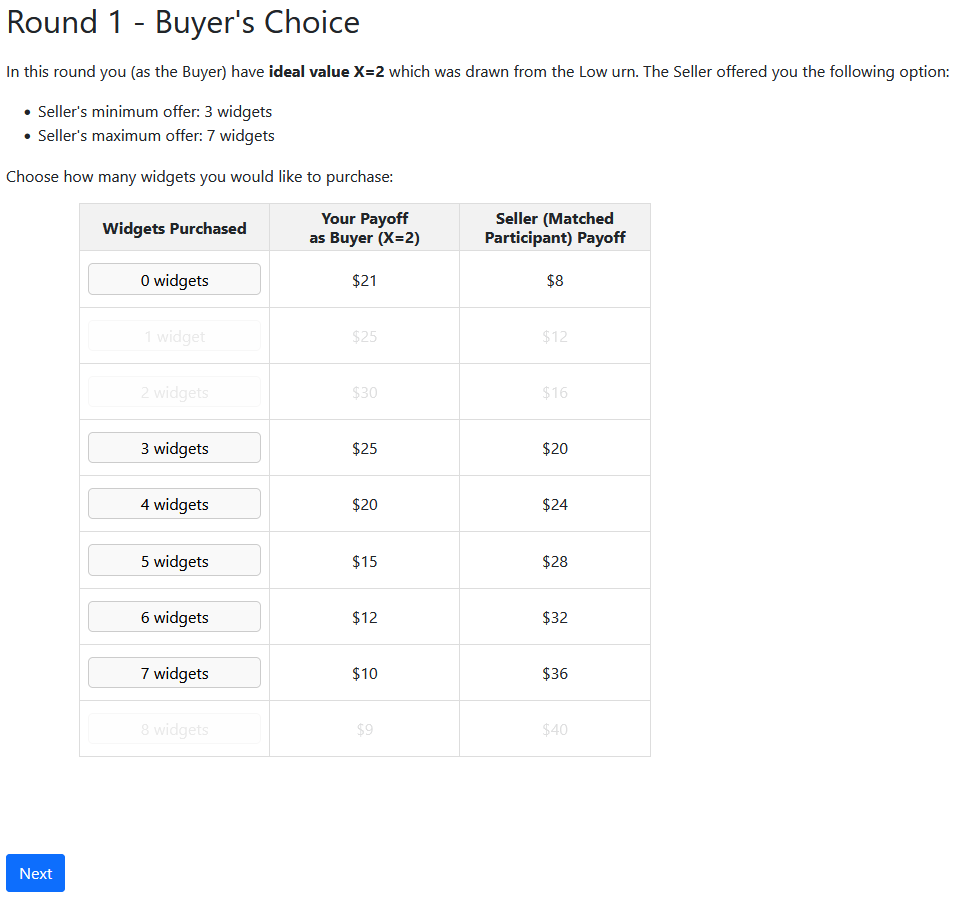
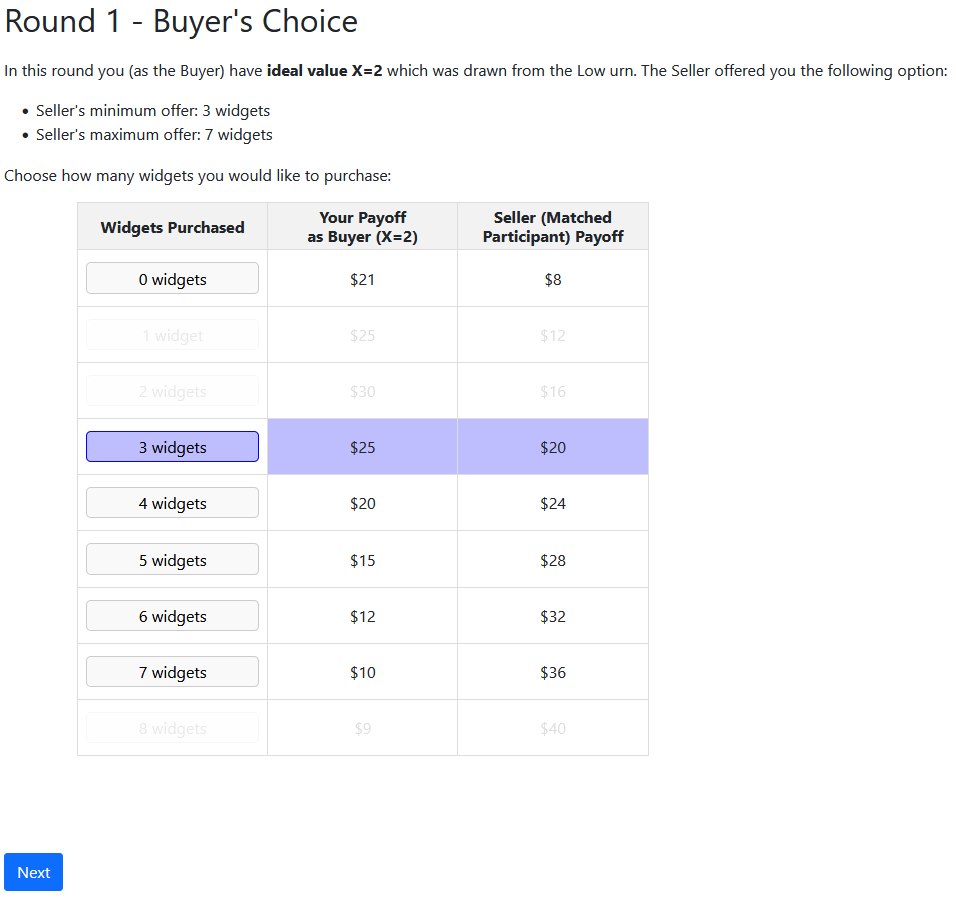
Buyers and Sellers framework bargaining over widgets to purchase:
- Sellers (our proposers) want to sell as many widgets as possible
- Buyers (our responders/vetoers) have an optimal number of widgets
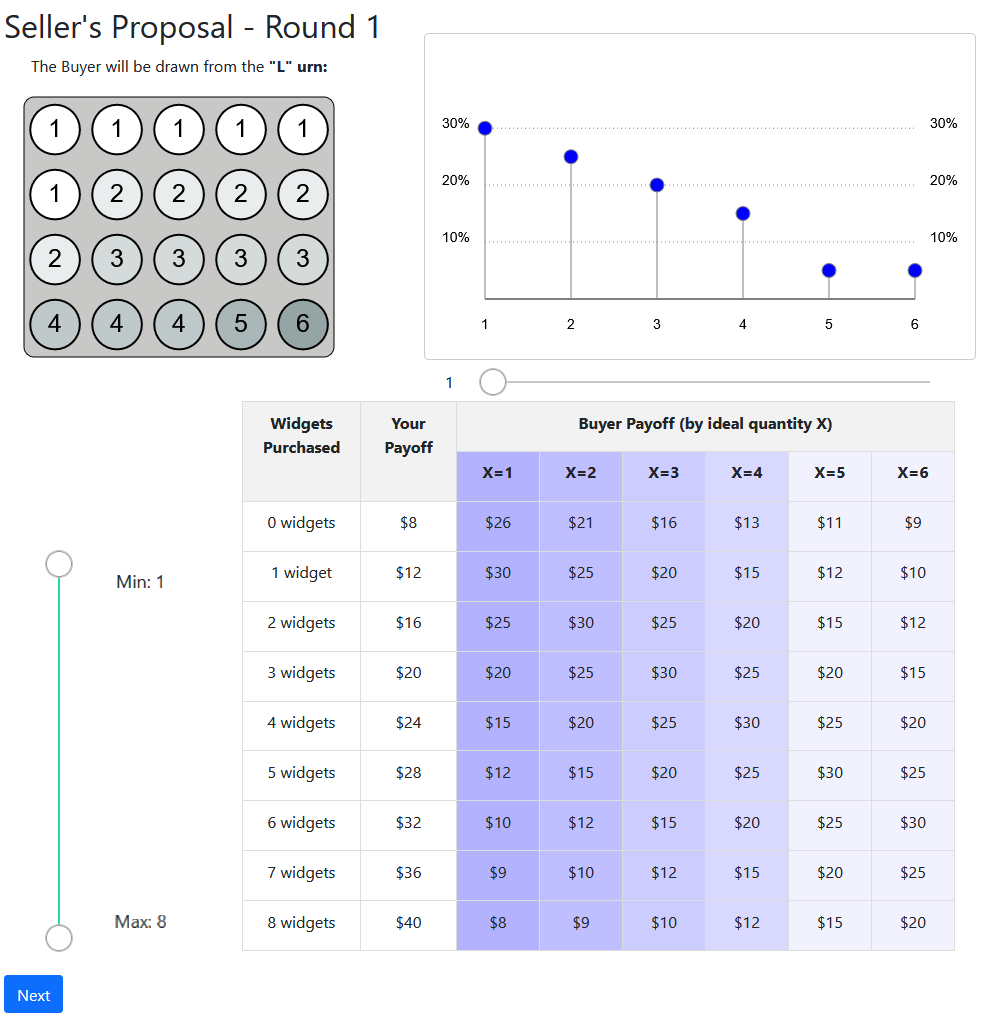
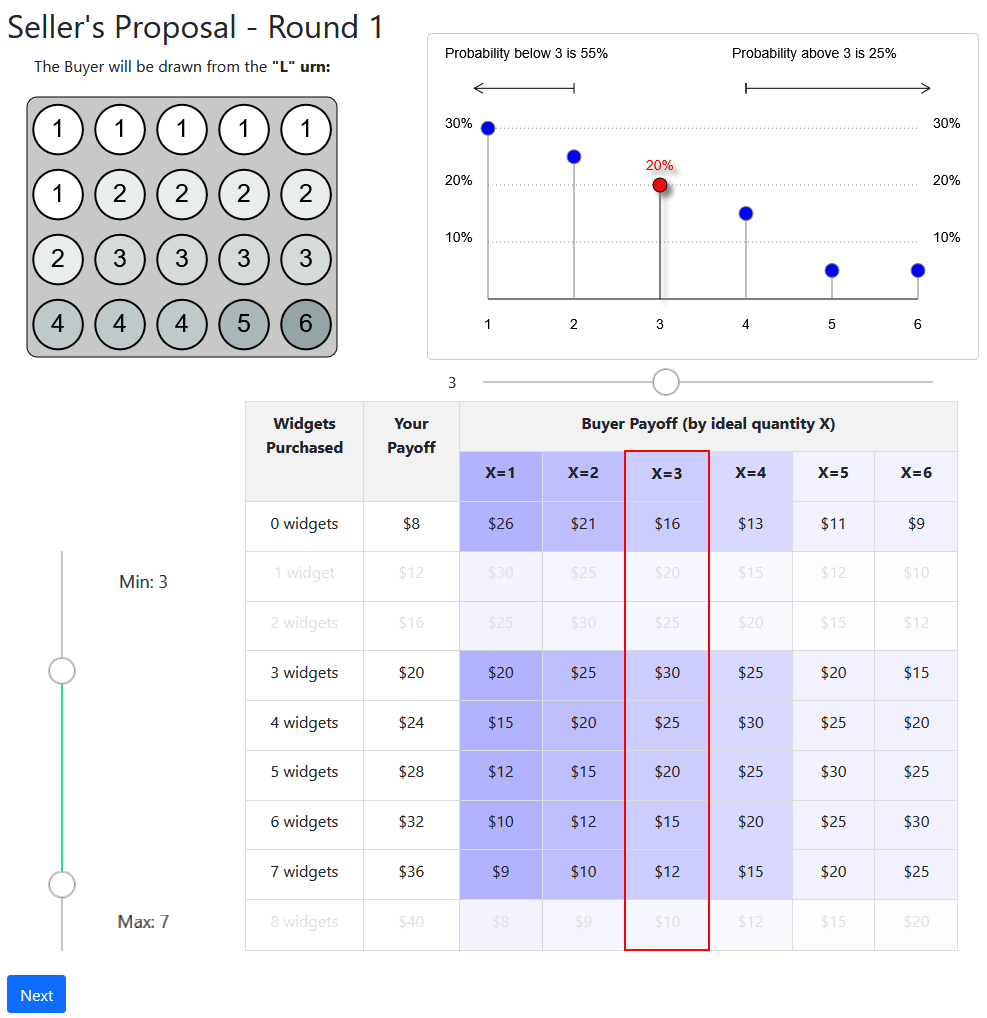
Delegation treatment:
offer a range
Take it or leave it:
single offer
Experimental Design
- Within-subject variation:
- Varying distributions (high, middle, low) for the Buyer
- Changing roles: 5 rounds in one role, 5 rounds in the other, and back to first role for 5 more rounds
- Between subject 2x2
- 12 sessions at the Pittsburgh Experimental Economics Laboratory
| No Chat | Chat | |
| Take-it-or-leave-it | N=66 | N=60 |
| Delegation | N=64 | N=66 |
Experimental Design
- Within-subject variation:
- Varying distributions (high, middle, low) for the Buyer
- Changing roles: 5 rounds in one role, 5 rounds in the other, and back to first role for 5 more rounds
- Between subject 2x2
- 12 sessions at the Pittsburgh Experimental Economics Laboratory
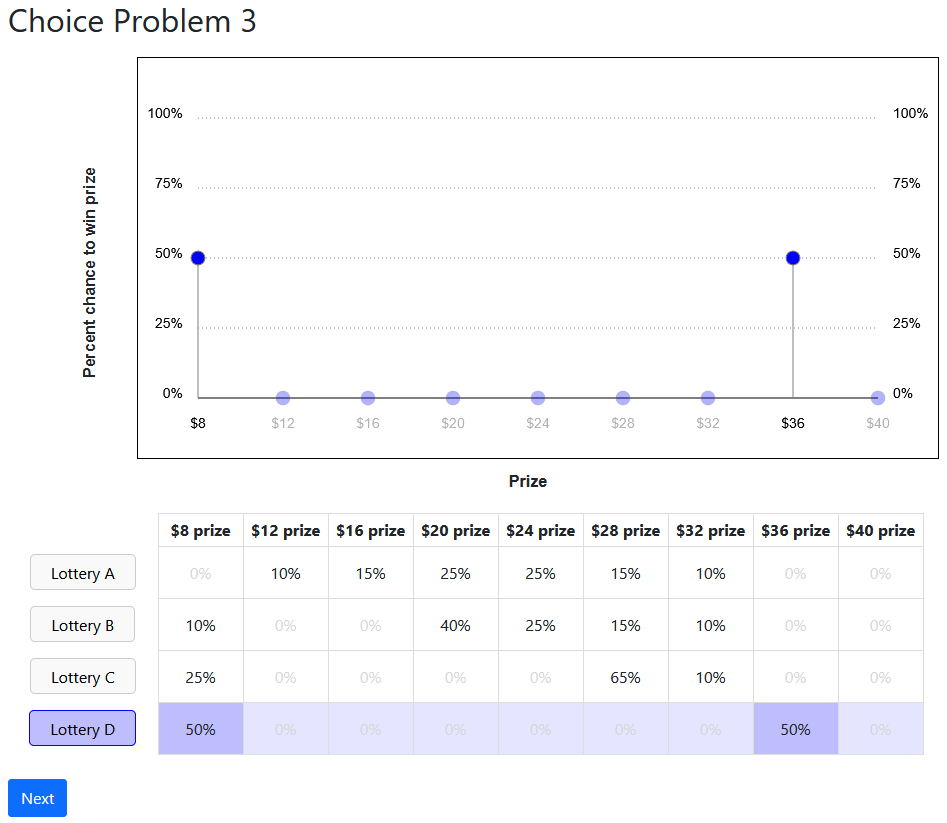
- Collect other behavioral variables:
- Optimizing ability while playing against a robot Buyer
- Risk-aversion over the same domain
- Other-regardingness also over the same domain
Results
- Recall our theoretical predictions:
- Sellers should adjust their offer according to the Buyer's distribution
- We should expect efficiency gains from the delegation mechanism
- Chat should generate more efficient outcomes for take-it-or-leave-it but not for delegation
- Sellers (and potentially Buyers) worse off under take-it-or-leave it
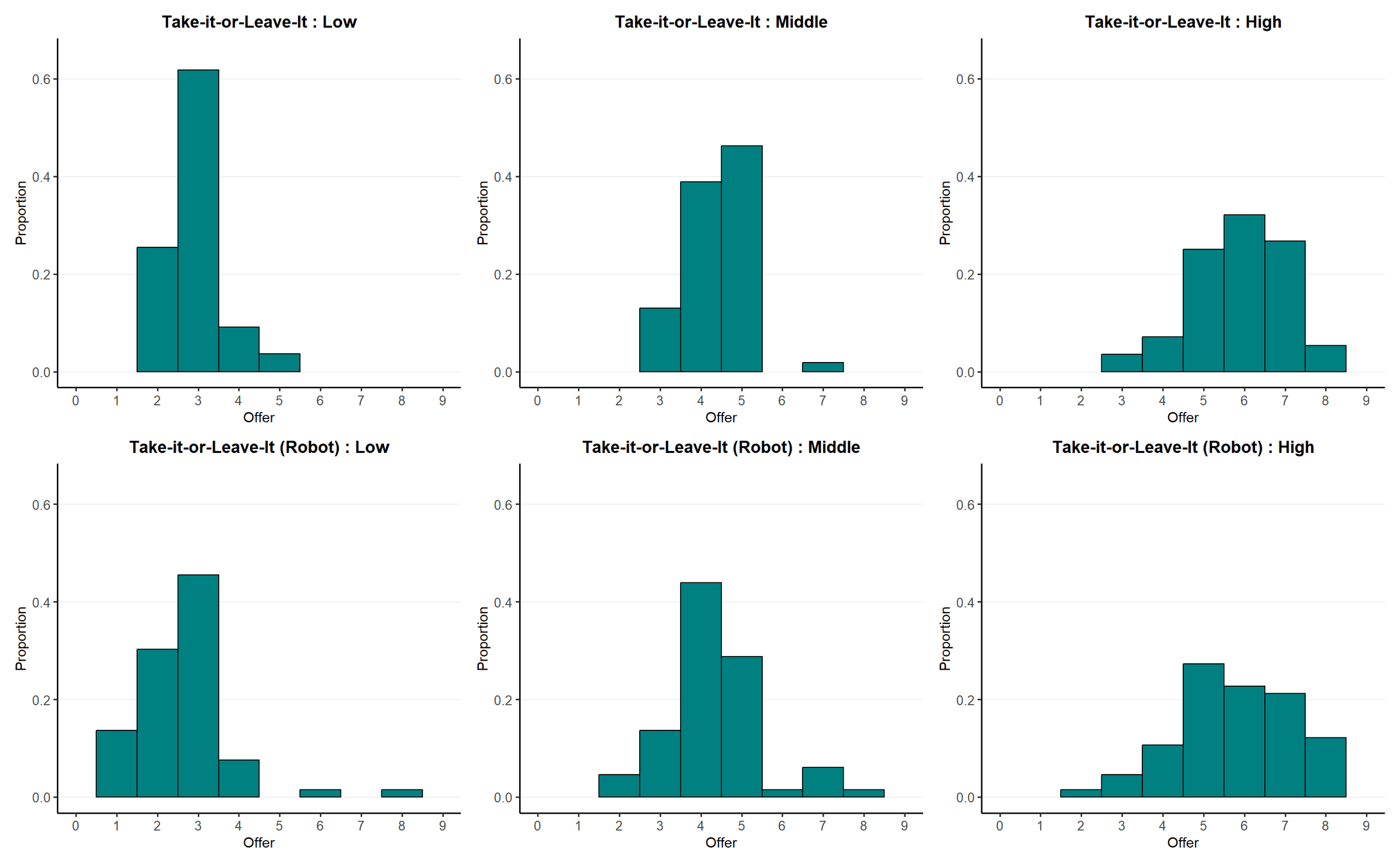
Results
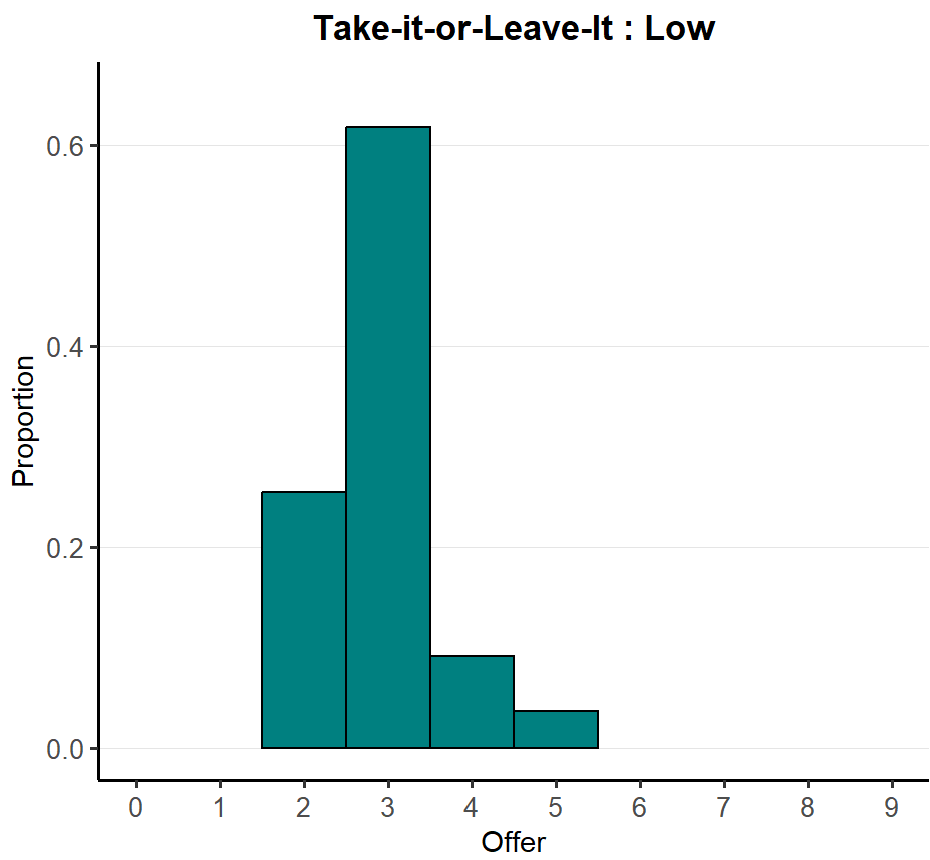
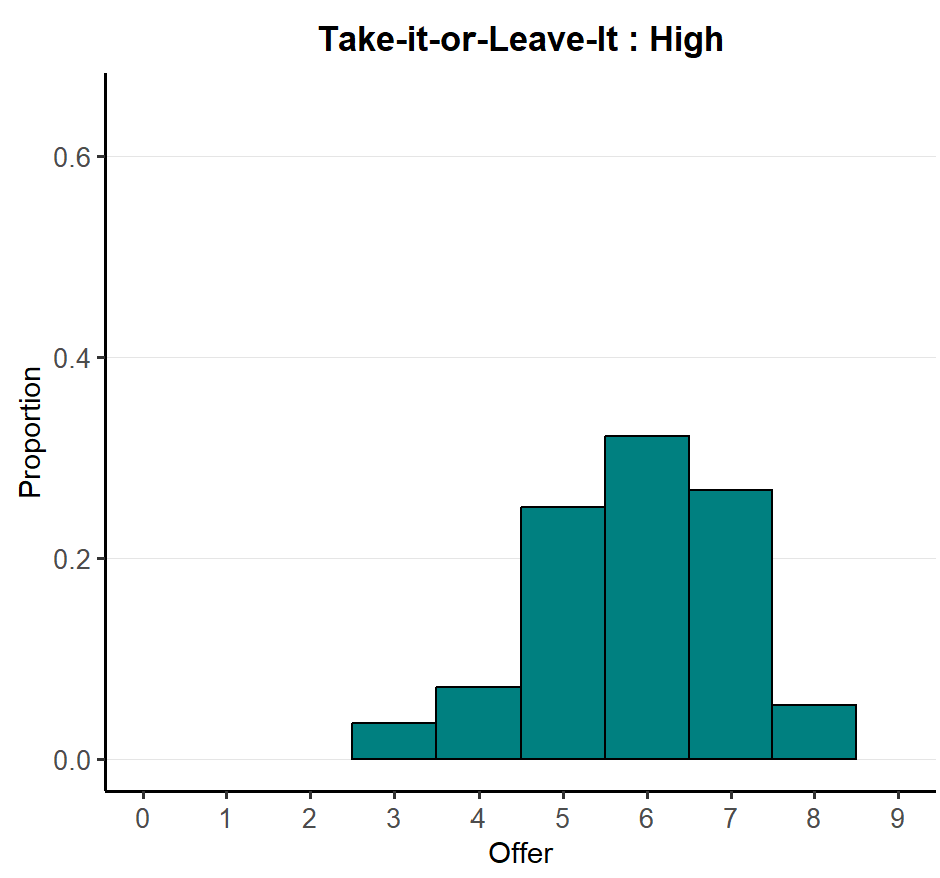
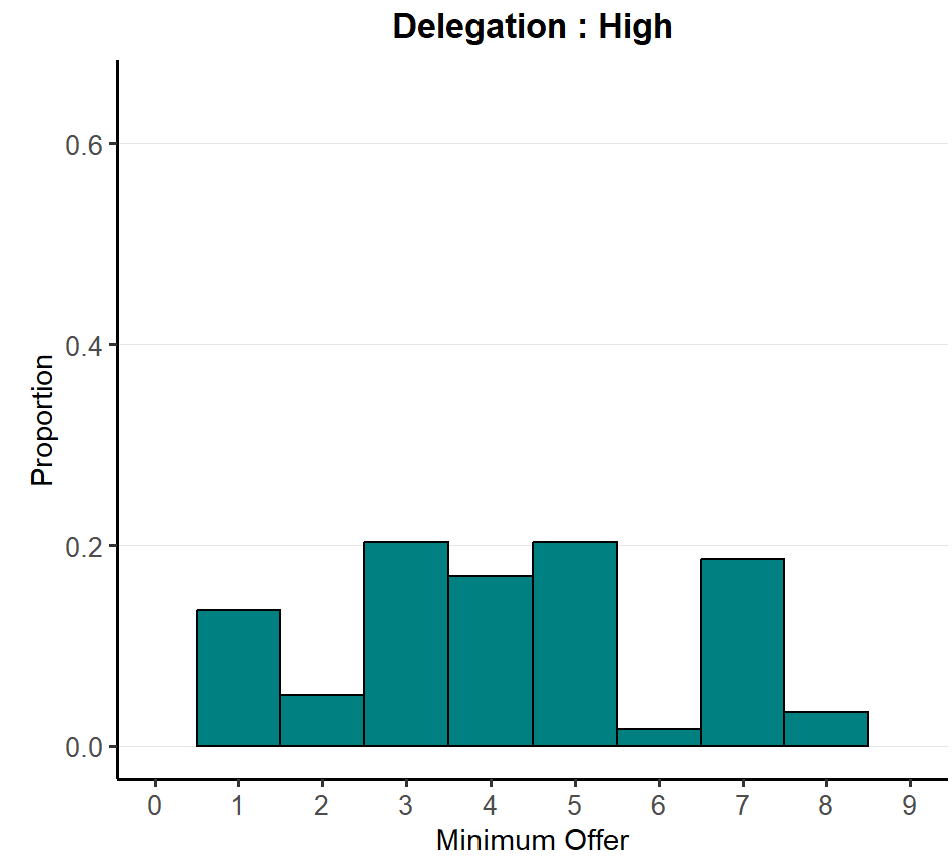
- Sellers should adjust their offer according to the Buyer's distribution
- No Chat condition:
Results
- Sellers should adjust their offer according to the Buyer's distribution
- No Chat condition:
Results
- Sellers should adjust their offer according to the Buyer's distribution
- No Chat condition:
Results
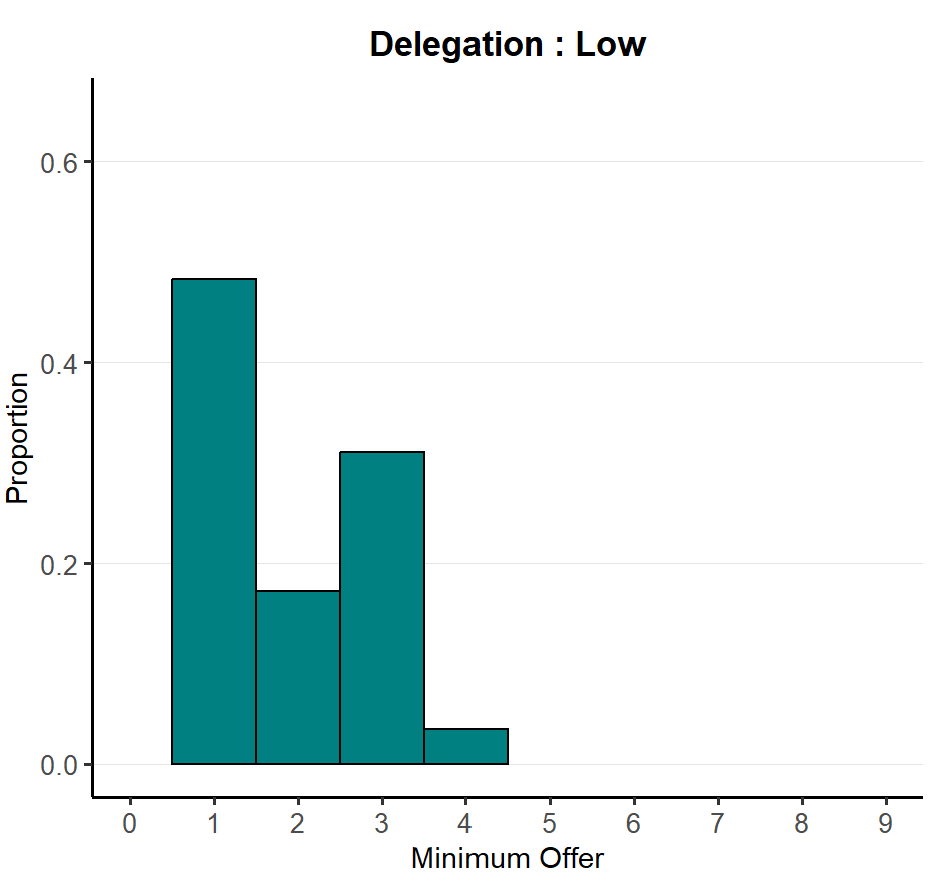
- Sellers should adjust their offer according to the Buyer's distribution
- No Chat condition:
Results
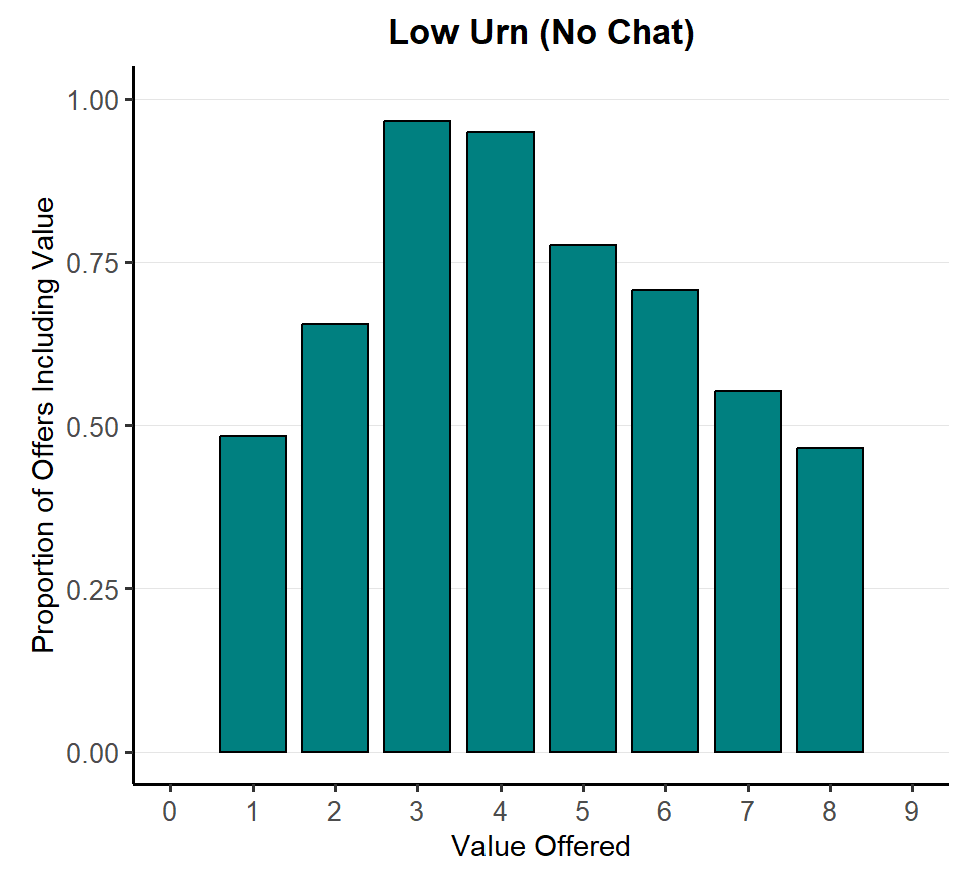
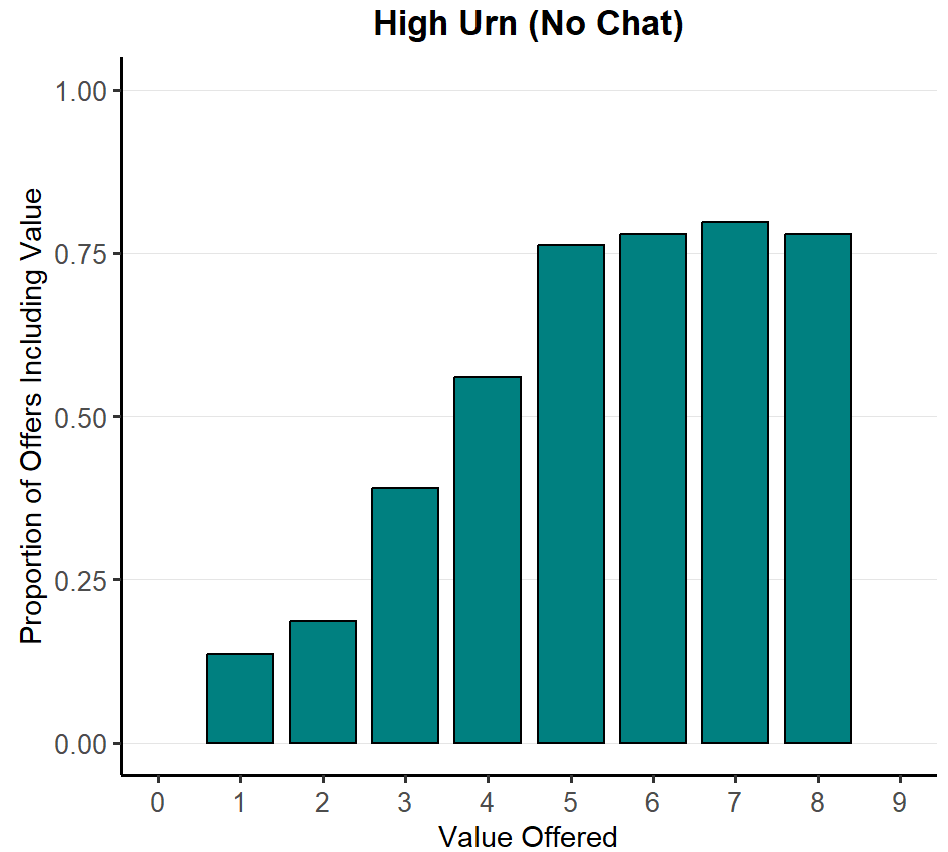
- Sellers should adjust their offer according to the Buyer's distribution
- No Chat condition:
Results
- Sellers should adjust their offer according to the Buyer's distribution
- No Chat condition:
Results
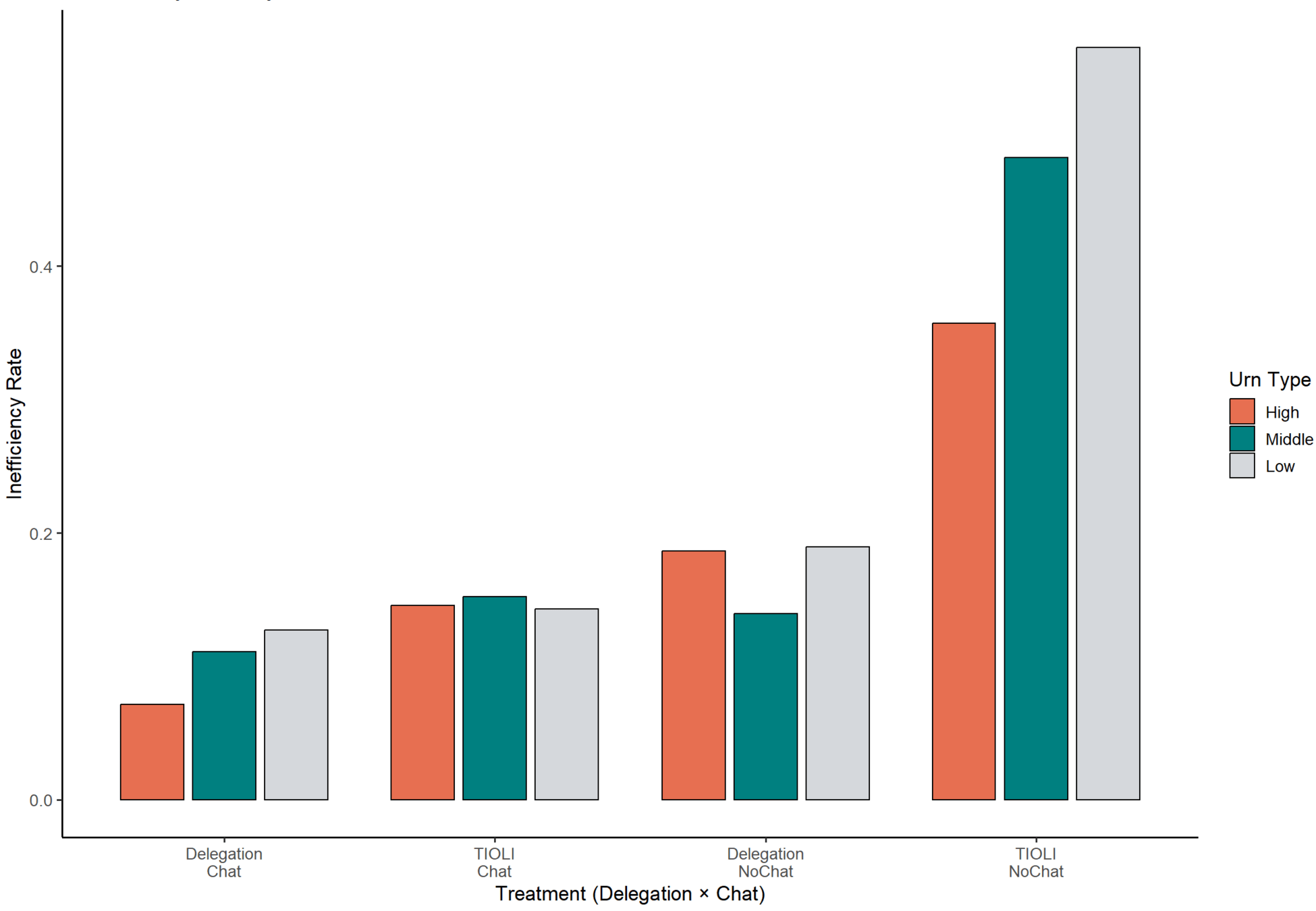
- We should expect efficiency gains from the delegation mechanism
- Chat should generate more efficient outcomes for take-it-or-leave-it but not for delegation
- Define efficiency in a Pareto sense:
- Inefficient: widgets purchased ≥ optimal Buyer amount
- A breakdown (veto) is inefficient
- A purchase less than the optimal quantity, which could have been increased and made both better off, is inefficient
Results
- We should expect efficiency gains from the delegation mechanism
- Chat should generate more efficient outcomes for take-it-or-leave-it but not for delegation
Results
- We should expect efficiency gains from the delegation mechanism
- Chat should generate more efficient outcomes for take-it-or-leave-it but not for delegation
Results
- We should expect efficiency gains from the delegation mechanism
- Chat should generate more efficient outcomes for take-it-or-leave-it but not for delegation
Results
- We should expect efficiency gains from the delegation mechanism
- Chat should generate more efficient outcomes for take-it-or-leave-it but not for delegation
Meaningful efficiency
gains through delegation
Results
- We should expect efficiency gains from the delegation mechanism
- Chat should generate more efficient outcomes for take-it-or-leave-it but not for delegation
Meaningful efficiency
gains through delegation
Meaningful efficiency
gains through chat
Results
- We should expect efficiency gains from the delegation mechanism
- Chat should generate more efficient outcomes for take-it-or-leave-it but not for delegation
Meaningful efficiency
gains through delegation
Meaningful efficiency
gains through chat
Limited efficiency
gains through chat
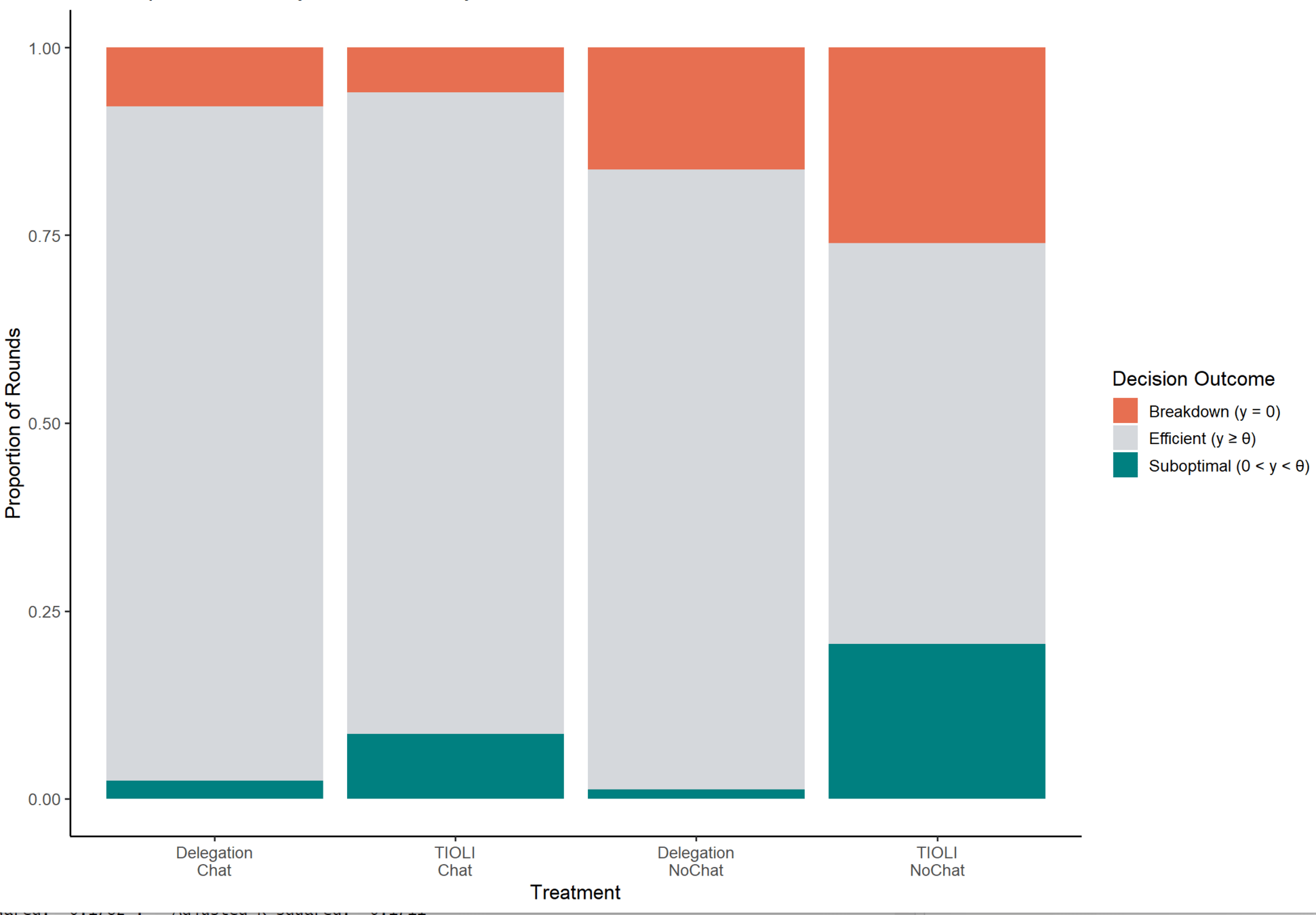
Delegation reduces
inefficient accepted offers
What types of inefficiency occur?
Delegation reduces
inefficient accepted offers
Delegation reduces
inefficient accepted offers
Results
- Sellers (and potentially Buyers) worse off under take-it-or-leave it
- Alternatively, who does better by treatment?
- Who does better by bargaining power?
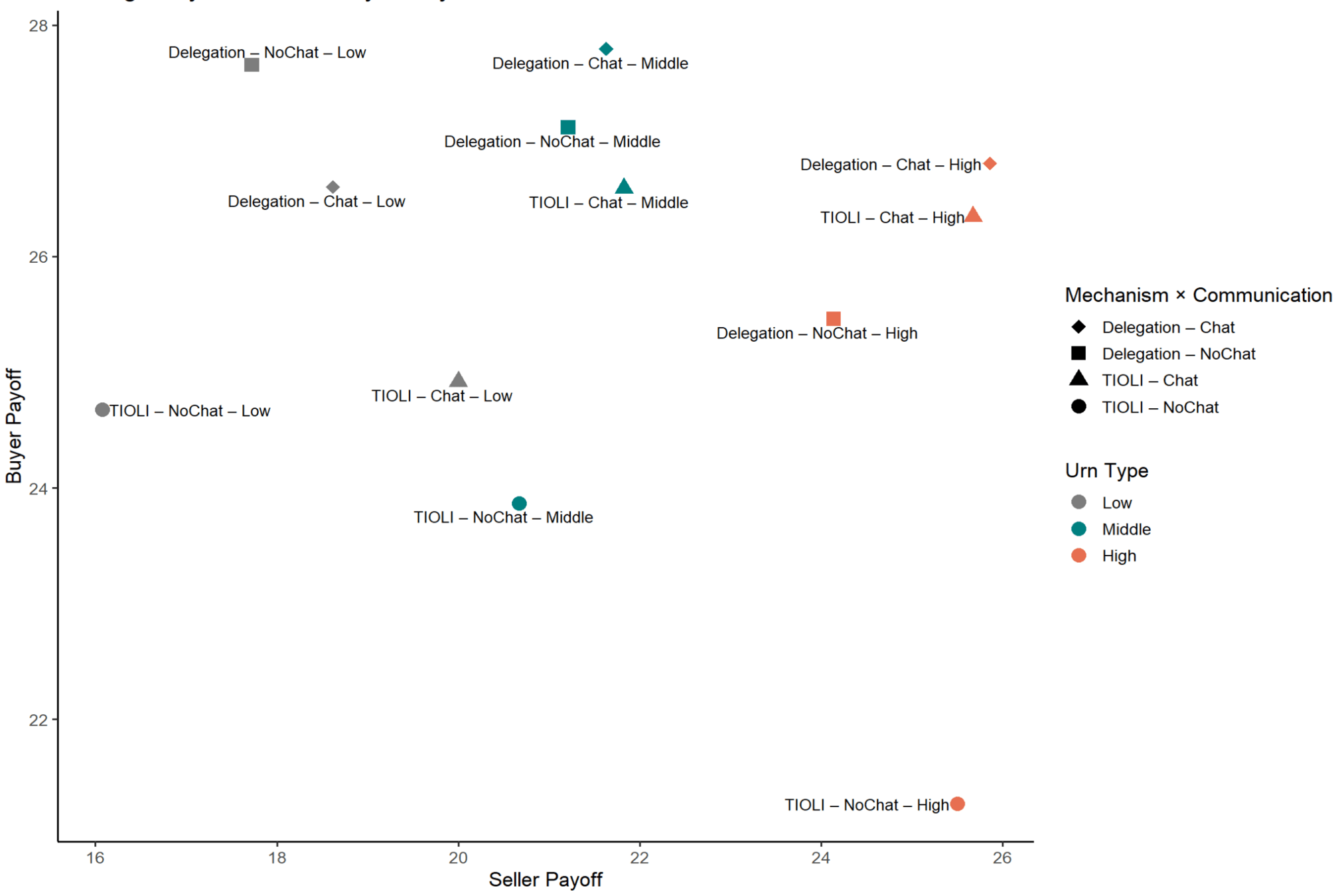
Seller extracting more
Buyer extracting more
Conclusion
- Modeled delegation bargaining with veto power in a lab setting using a Buyer-Seller framework
- Sellers responded to the possible Buyer types, but left money on the table for both parties
- Efficiency gains from the delegation mechanism were nearly as good as allowing open communication
- Much still to do:
- Identify those who optimize against robot Buyer but deviate behaviorally when interacting with participants
- Analyze chat messages
- Integrate measure risk-aversion and altruism
Thank you!
Questions or Comments?
Experimental Design
Results
- How often do trades breakdown?
- No Chat condition:
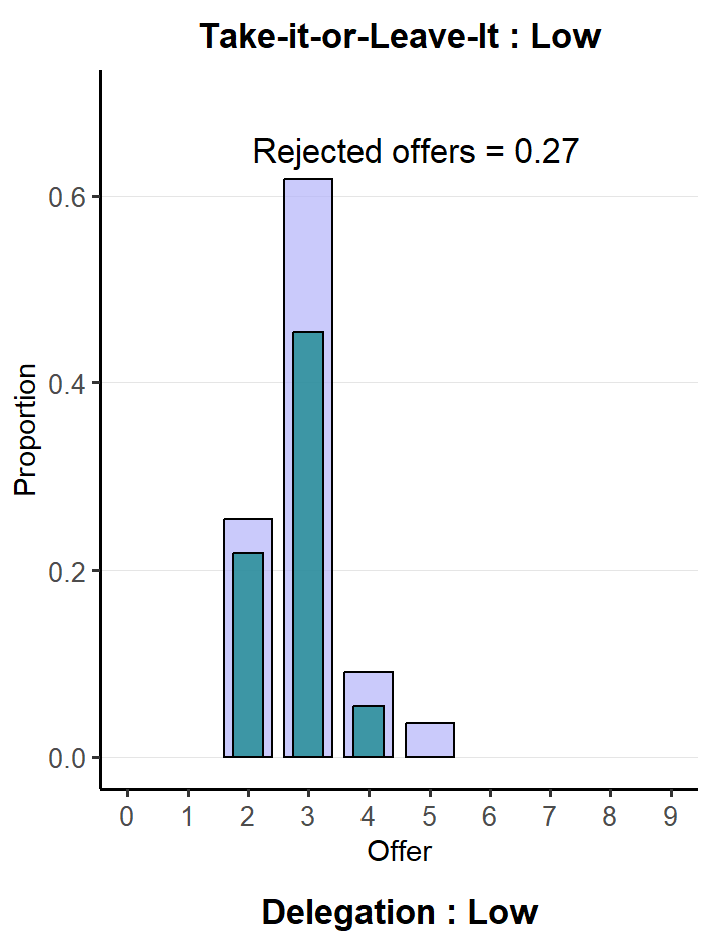
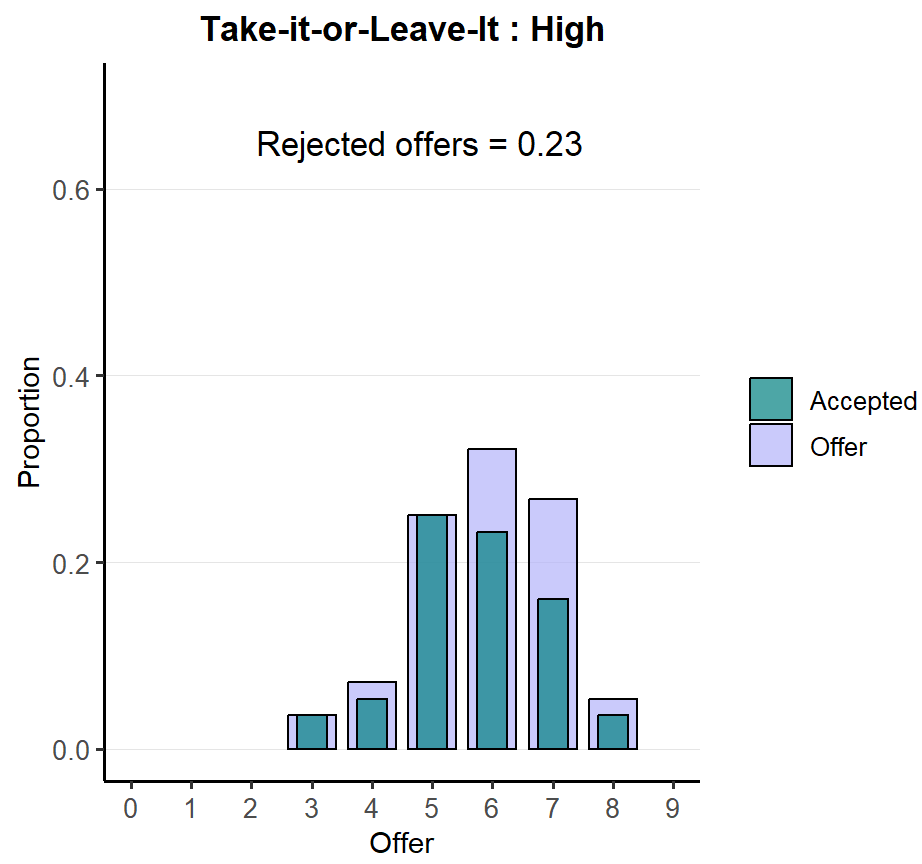
27% failure
23% failure
Results
- How often do trades breakdown?
- No Chat condition:
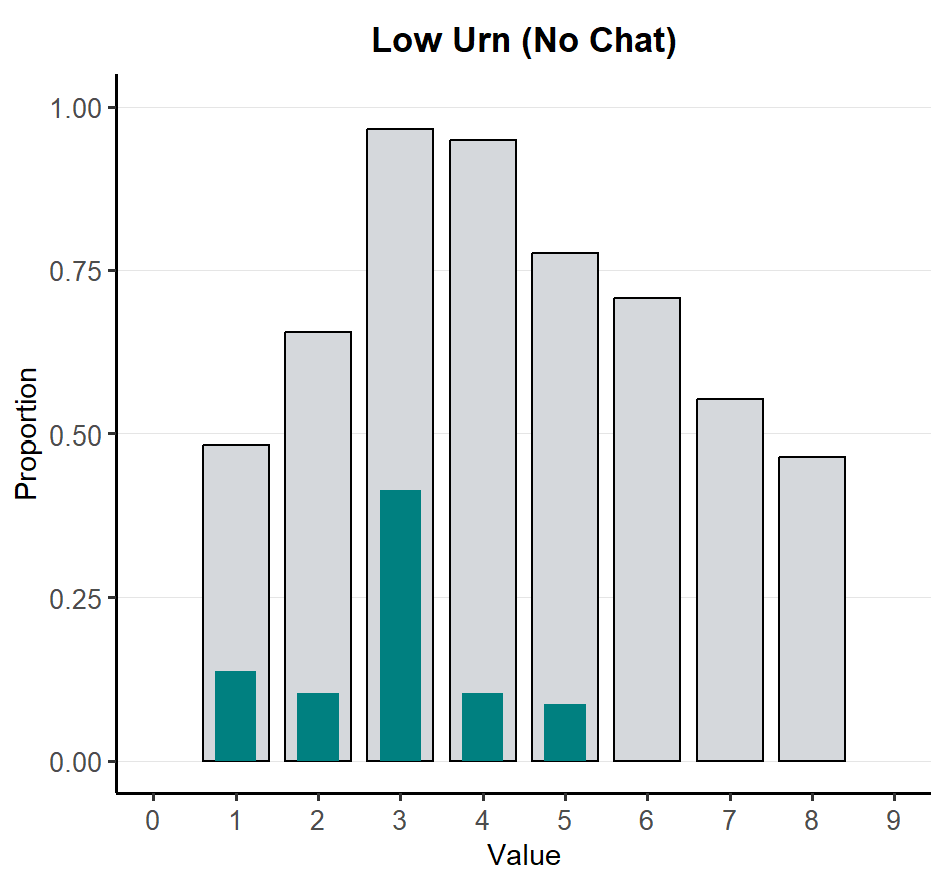
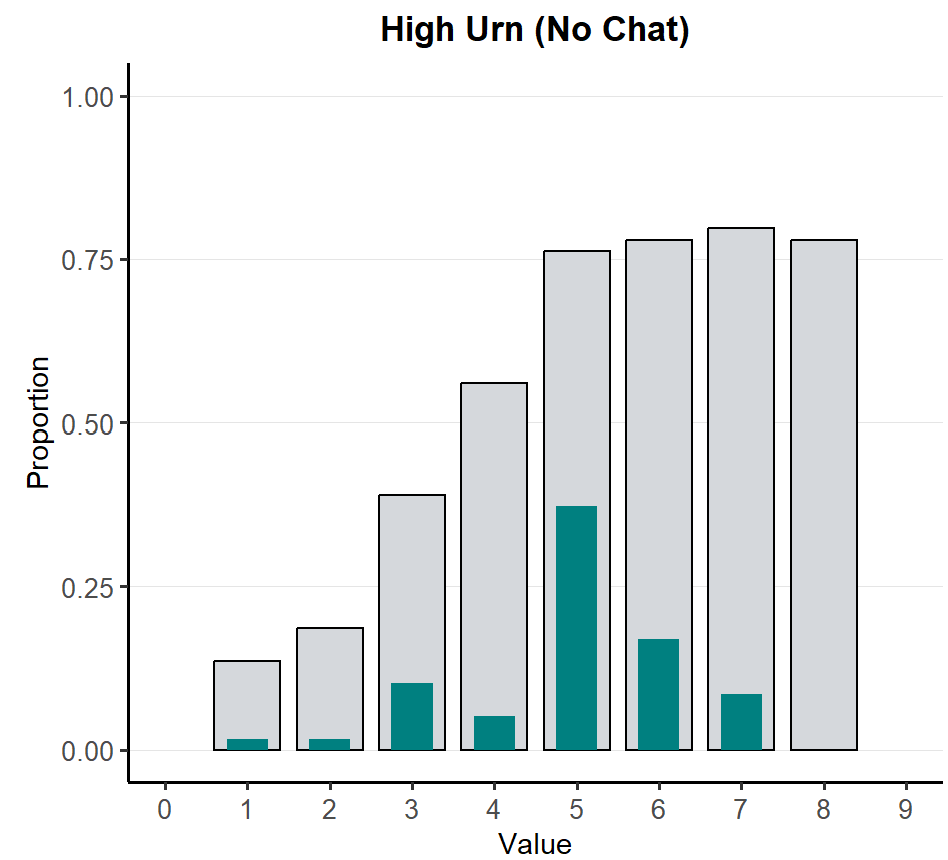
16% failure
19% failure
Results
- How often do trades breakdown?
- No Chat condition:
Evidence of
self-limiting
caltech delegation
By bjw95