Technology and Low-Income States
Brandon Williams
Development Economics
September 24, 2024
Technology and Low-Income States
Development Economics
September 24, 2024
Building State Capacity: Biometric Smartcards (2016)
- Many developing money invest in poverty-reducing measures, but the money is lost to inefficiencies and corruption along the way (leakage)
- Biometric payment schemes (theoretically) give an effective way to authenticate and transfer payments in environments with limited literacy
- Issues:
- It's hard to implement
- Rent-seekers may limit effectiveness
- Technical problems
- Displaced corruption to other places
- Rolled out smartcard in 157 subdistricts with 19 million rural population (an intervention at scale)
Technology and Low-Income States
Development Economics
September 24, 2024
Building State Capacity: Biometric Smartcards (2016)
- Faster collection of payments
- 20 percent less time collecting and up to 10 days sooner
- Fewer delays
- Reduced leakage
- 24 percent increase in household earnings
- 41 percent reduction in work-fare program leakage
- 47 percent reduction in social security pension leakage
- No loss on the extensive margin: 7.1 percentage points increase in households participating
- No evidence of vulnerable populations made worse off
- "Ghost" workers as one mechanism
Technology and Low-Income States
Development Economics
September 24, 2024
E-governance (2020)
- If a program is funded nationally but implemented locally, how do we transfer the funds?
- Notoriously "leaky" to send funds in advance
- "Just-in-time" funding emerging as an alternative
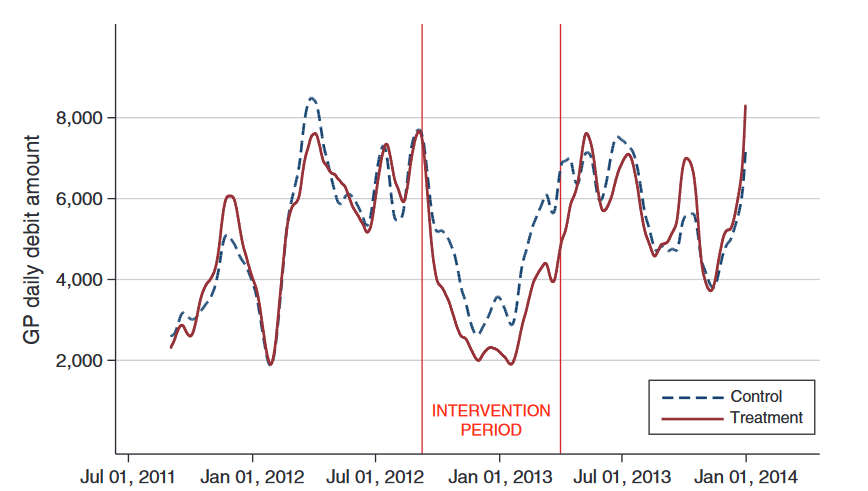
- Admin data shows local expenditures (the GP) reduced by 24%
- Some delays in funding
Technology and Low-Income States
Development Economics
September 24, 2024
E-governance (2020)
Technology and Low-Income States
Development Economics
September 24, 2024
E-governance (2020)
- If a program is funded nationally but implemented locally, how do we transfer the funds?
- Notoriously "leaky" to send funds in advance
- "Just-in-time" funding emerging as an alternative
- Admin data shows local expenditures (the GP) reduced by 24%
- Some delays in funding
- Some delays in funding
- GP officials successfully lobbied to end the program but program was eventually rolled out nationally after full results
- Full results:
- Funds distributed to beneficiaries unchanged
- Some improvement at the extensive margin
- 5% reduction in the number of households unmatched (potential ghosts)
- Funds distributed to beneficiaries unchanged
Technology and Low-Income States
Development Economics
September 24, 2024
Band-aid on a Corpse (2008)
- Multi-tiered, local public health system in India should be ideal way to deliver in a developing context, but falls short. Why?
- One reason might be high absenteeism of nurse providers
- Health centers closed 56% of the time
- 43% absenteeism for nurses
- Experimentally implement incentives (fines and punishments) for nurses that are extremely effective after 6 months
Technology and Low-Income States
Development Economics
September 24, 2024
Band-aid on a Corpse (2008)
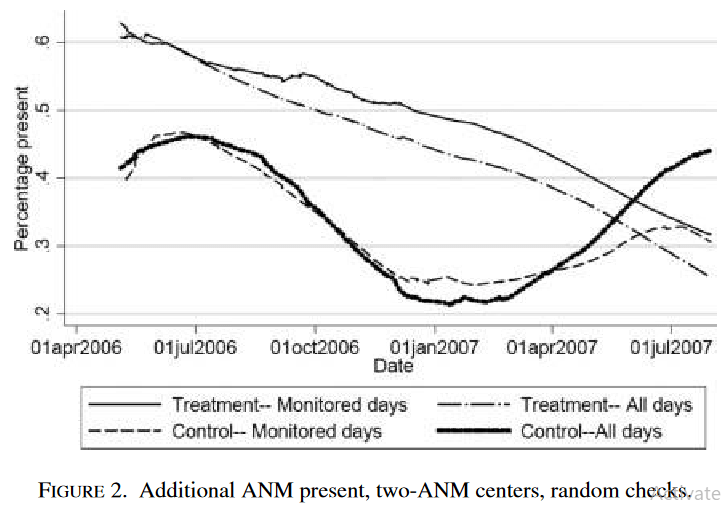
Why does the intervention fall over time?
Technology and Low-Income States
Development Economics
September 24, 2024
Band-aid on a Corpse (2008)
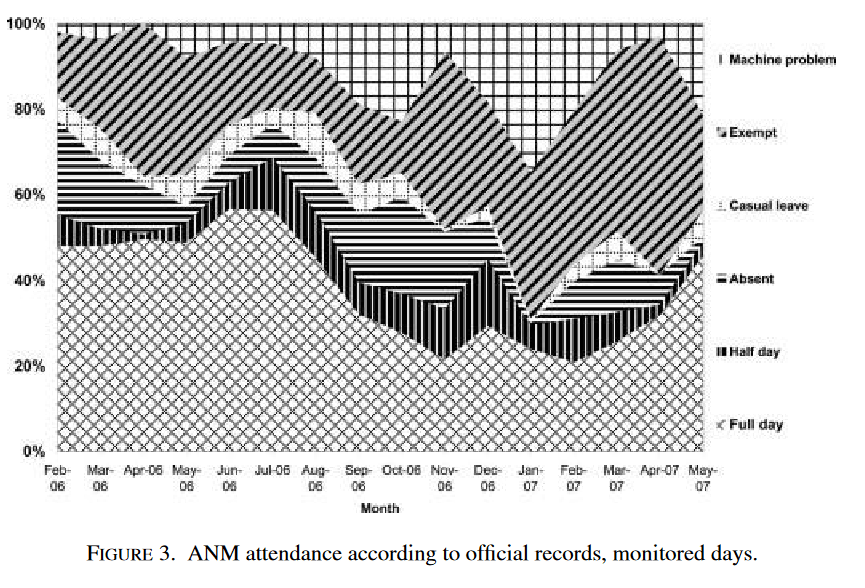
Poorly aligned system incentives:
- Machine breaks => no need to check in => don't show up to prevent machine repair => continue to be absent
- Officials allowing more exemptions
Technology and Low-Income States
Development Economics
September 24, 2024
Political Economy of Absence (2023)
- Why is it so hard to fix absenteeism?
- Four part analysis
- Survey evidence that politicians are protecting doctors from accountability. Can we test it?
- Geographic RD shows that comfortable politicians and more connected to doctors have more doctor absenteeism. Can we improve it?
- Smartphone monitoring of inspectors increased inspection rates but not doctor attendance (except maybe those in politically competitive districts). What if we show these results to the doctors?
- Flagging a facility with low attendance reduces future absenteeism by 27 percentage points.
Technology and Low-Income States
Development Economics
September 24, 2024
No Bulls (2023)
- What does fixing information asymmetry do to service provision?
- Looks at AI (not that kind of AI) in rural Pakistan
- Farmers cannot usually directly observe quality of vet care (and results signal is noisy
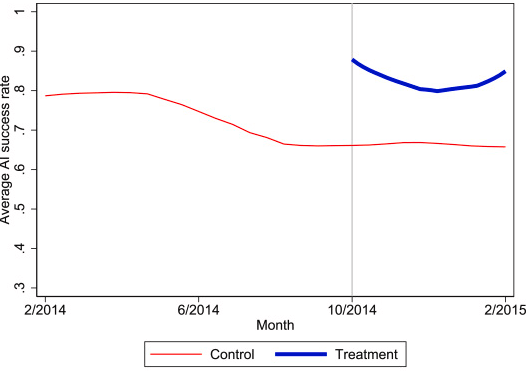
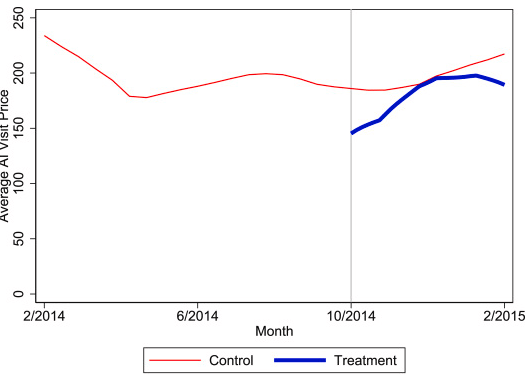
- If we provide this information directly (via a Yelp-like service), find that farmers get 25% higher AI rates, but pay no higher prices
- Does not involve switching vets
- Instead, driven by vets exerting more effort
Technology and Low-Income States
Development Economics
September 24, 2024
No Bulls (2023)
Technology and Low-Income States
Development Economics
September 24, 2024
No Bulls (2023)
Dev.Slides.9.24
By bjw95