Taxes and State Capacity
Brandon Williams
Development Economics
October 31, 2024
Taxes and State Capacity
Development Economics
October 31, 2024
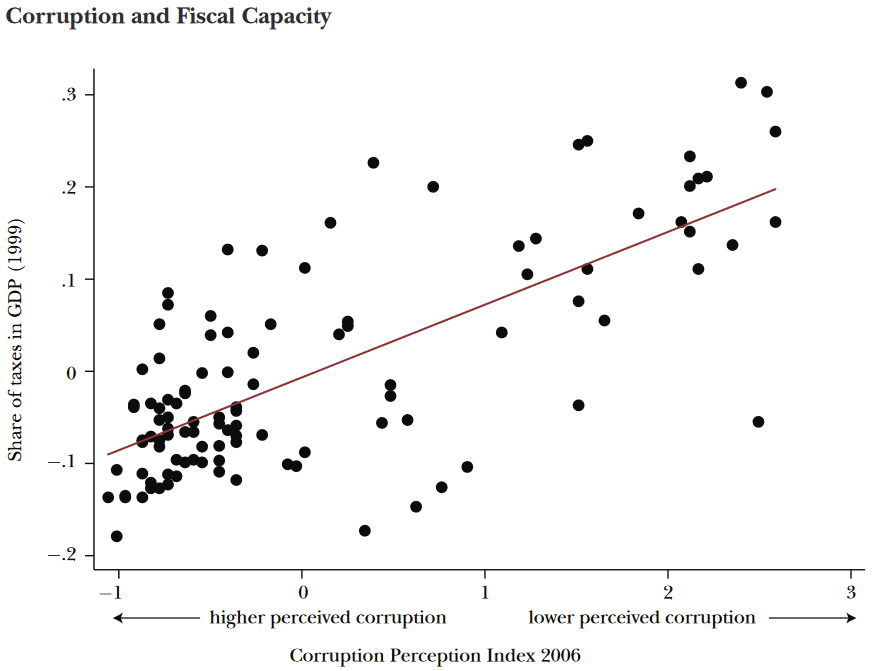
Why Do Developing Countries Tax So Little?
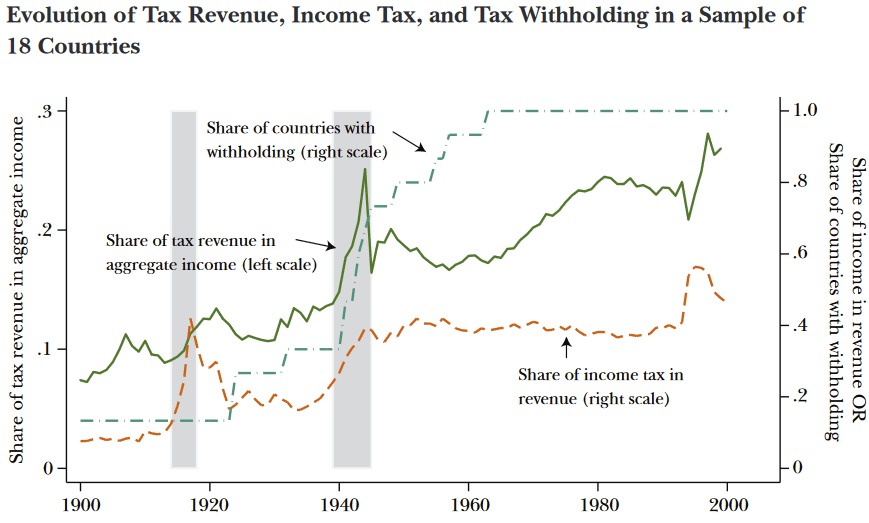
The twentieth century has arguably witnessed the biggest increase in state power in history, at least in terms of the ability to raise tax revenues."
Taxes and State Capacity
Development Economics
October 31, 2024
Why Do Developing Countries Tax So Little?
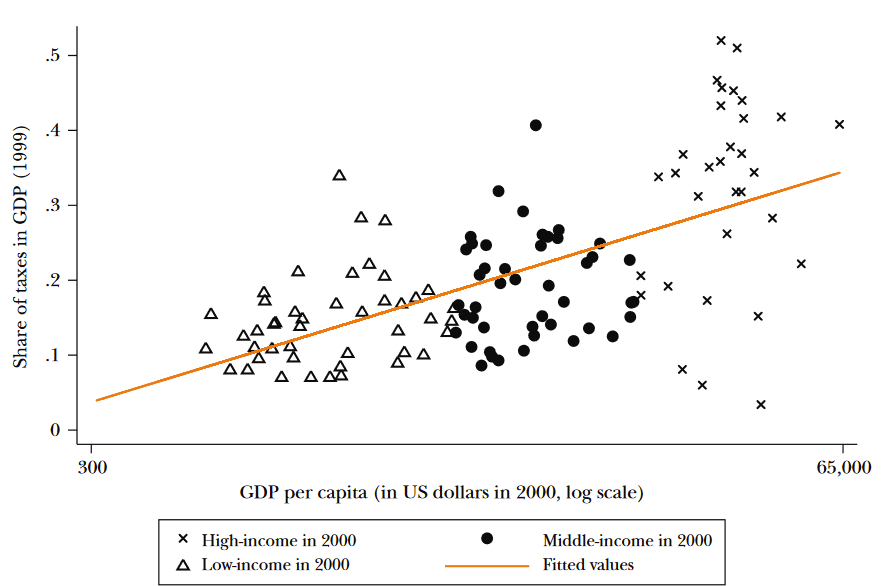
...tax shares are positively correlated with income."
Taxes and State Capacity
Development Economics
October 31, 2024
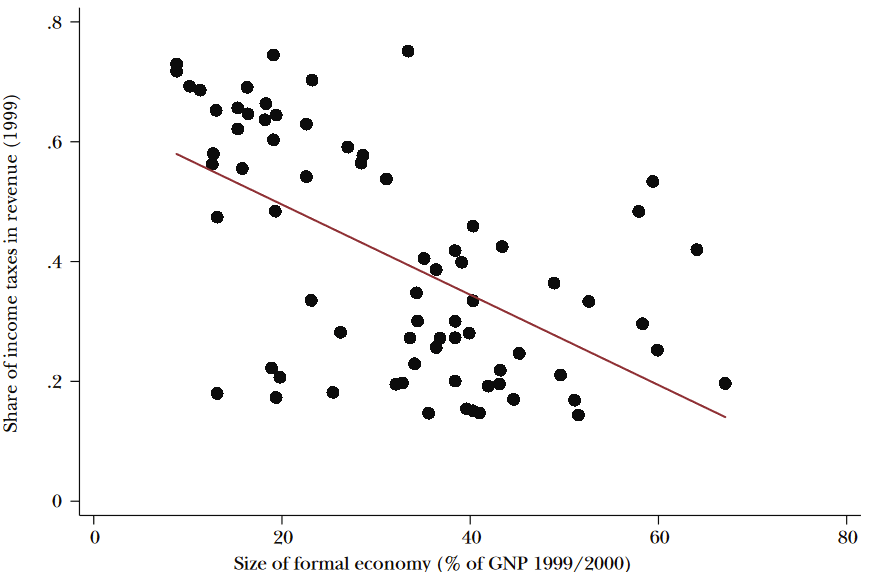
Why Do Developing Countries Tax So Little?
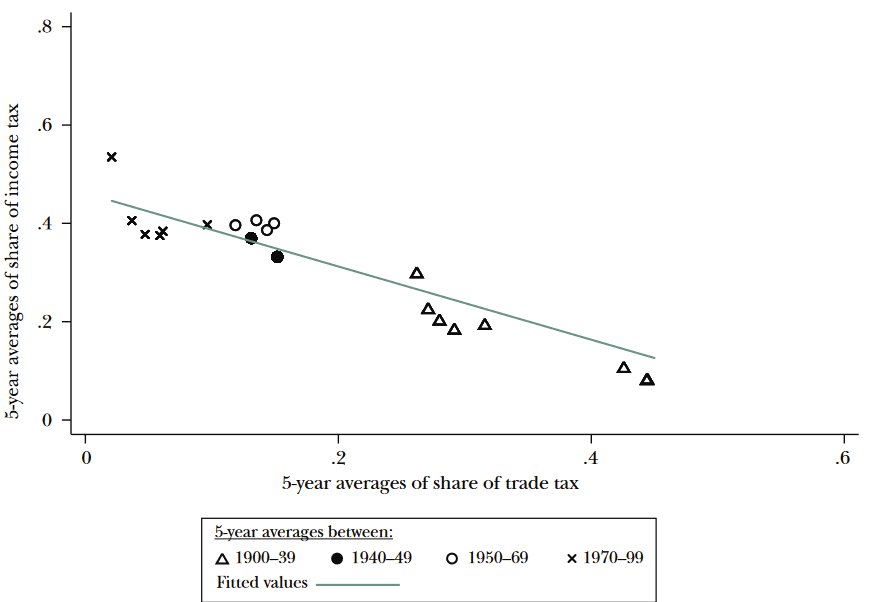
...the move from trade taxes to income taxes is a clear feature of the historical development of taxation."
Taxes and State Capacity
Development Economics
October 31, 2024
Why Do Developing Countries Tax So Little?
- Existing models of taxation may be quite bad when it comes to developing countries. Why?
- Might not reflect the median voter, and might not reflect voters at all
- Taxation as redistribution may mean redistributing to key political groups rather than low income groups
Taxes and State Capacity
Development Economics
October 31, 2024
Why Do Developing Countries Tax So Little?
Taxes and State Capacity
Development Economics
October 31, 2024
Why Do Developing Countries Tax So Little?
- Existing models of taxation may be quite bad when it comes to developing countries. Why?
- Might not reflect the median voter, and might not reflect voters at all
- Taxation as redistribution may mean redistributing to key political groups rather than low income groups
- Taxation as redistribution ignores spending on infrastructure, education, health care, etc.
- Income tax base is not so important (or large) for developing countries, who get more tax revenue from trade
- Tax evasion and avoidance are key factors in developing countries
Taxes and State Capacity
Development Economics
October 31, 2024
Why Do Developing Countries Tax So Little?
Taxes and State Capacity
Development Economics
October 31, 2024
Why Do Developing Countries Tax So Little?
Ultimately the most striking observation is the basic fact, stressed at the beginning of this paper, that developing countries today are not so different—in terms of the tax share in GDP, and the structure of taxation—from modern high-income countries at a similar stage of development... From this perspective, the most important challenge is taking steps that encourage development, rather than special measures focused exclusively on improving the tax system.
Taxes and State Capacity
Development Economics
October 31, 2024
State Capacity Ceiling on Tax Rates (2024)
- If developing countries are taxing so low, can they simply raise tax rates?
- Enforcement is not perfect, and raised rates may simply push people into delinquency (or dilute labor supply)
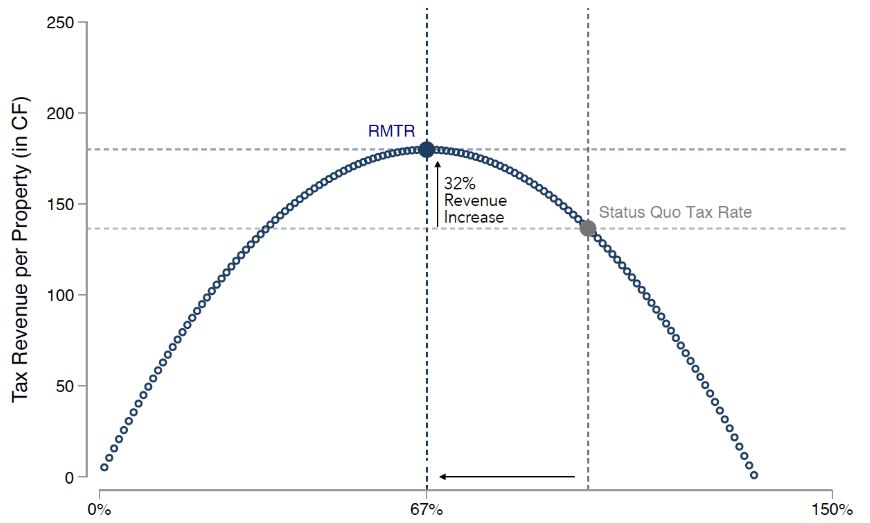
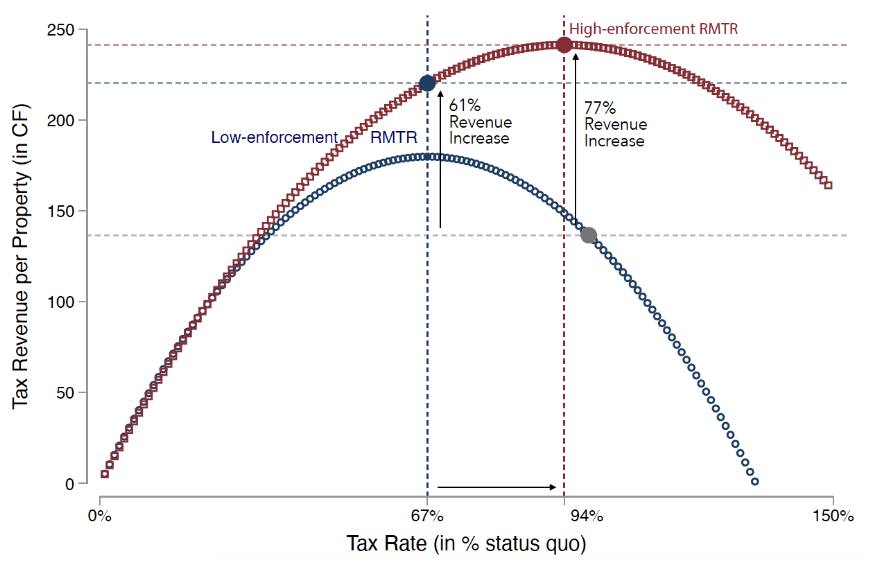
- Given these behavioral responses, what is the Revenue-Maximizing Tax Rate (RMTR) in a weak state?
- This paper exploits two complementary levers:
- Random variation in tax rates
- Randomization of enforcement (notices and collectors)
Taxes and State Capacity
Development Economics
October 31, 2024
State Capacity Ceiling on Tax Rates (2024)
- If developing countries are taxing so low, can they simply raise tax rates?
- This paper exploits two complementary levers:
- Random variation in tax rates
- Status quo (control) or reduction of 17%, 33% or 50%
- Not informed of the reduction but rather the rate
- Only 5.6% of control paid their property tax, but rates increase to 6.7%, 10%, and 13% respectively
- Elasticity: A 1% increase in tax reduces revenue by 0.243%
- The RMTR is 66% of the status quo rate
- Randomization of enforcement (notices and collectors)
- Random variation in tax rates
Taxes and State Capacity
Development Economics
October 31, 2024
State Capacity Ceiling on Tax Rates (2024)
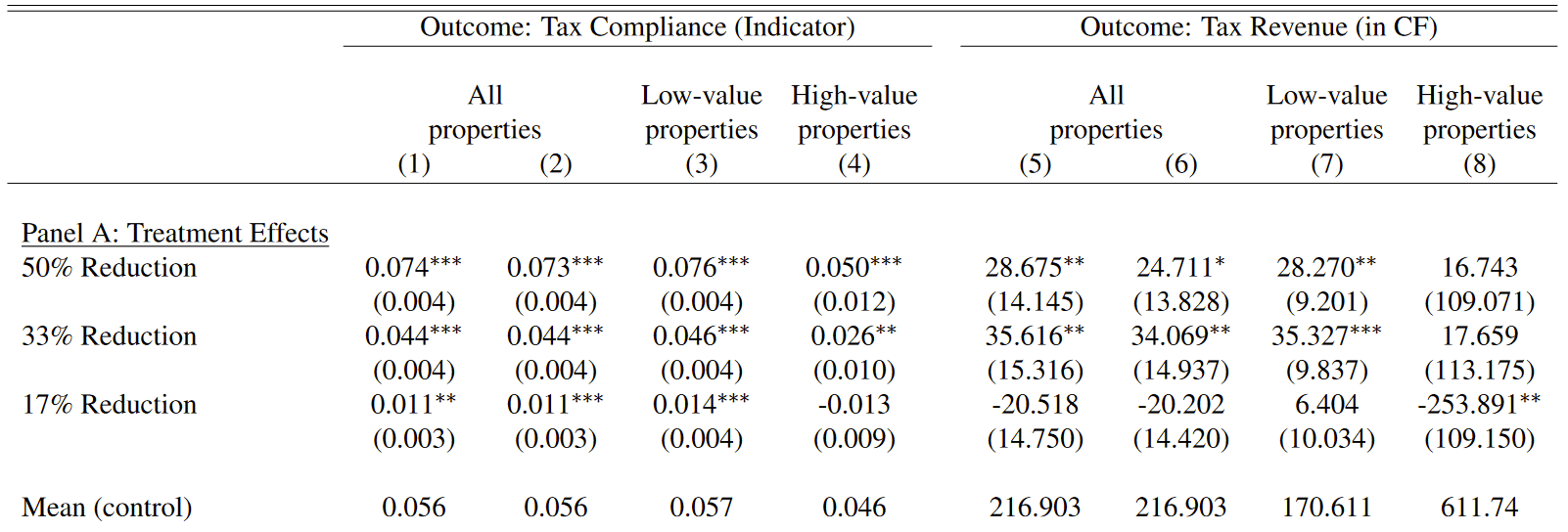
Tax compliance is very low
Taxes and State Capacity
Development Economics
October 31, 2024
State Capacity Ceiling on Tax Rates (2024)
Tax compliance is very low
Lowering rates raises compliance significantly
Taxes and State Capacity
Development Economics
October 31, 2024
State Capacity Ceiling on Tax Rates (2024)
Tax compliance is very low
Lowering rates raises compliance significantly
Importantly, it raises revenue
Taxes and State Capacity
Development Economics
October 31, 2024
State Capacity Ceiling on Tax Rates (2024)
Tax compliance is very low
Lowering rates raises compliance significantly
Importantly, it raises revenue
Taxes and State Capacity
Development Economics
October 31, 2024
State Capacity Ceiling on Tax Rates (2024)
- If developing countries are taxing so low, can they simply raise tax rates?
- This paper exploits two complementary levers:
- Random variation in tax rates
- Randomization of enforcement (notices and collectors)
- The RMTR could be increased by more enforcement
- It is 41% higher when given an enforcement measure
- Replacing low-enforcement collectors with average ones raises the RMTR by 42%
- Jointly optimizing tax rates and enforcement raises 26% more revenue than (naively) optimizing them separately
Taxes and State Capacity
Development Economics
October 31, 2024
State Capacity Ceiling on Tax Rates (2024)
Taxes and State Capacity
Development Economics
October 31, 2024
State Capacity Ceiling on Tax Rates (2024)
Dev.Slides.10.31
By bjw95