Religion and Society
Brandon Williams
Development Economics
August 29, 2024
Overview
- Religion as a Social Influencer: All three papers emphasize the profound impact of religion on social behavior and attitudes, whether through participation in religious gatherings like the Hajj, the influence of religious practices on economic decisions, or through targeted religious interventions.
- Tolerance and Unity: The Hajj study and the randomized religion study both highlight how religious experiences can foster tolerance and unity, either through direct interaction with a diverse religious community or through structured religious interventions.
- Economic Implications of Religion: Both "Religion and Economy" and "Randomizing Religion" explore how religious beliefs and practices can shape economic behaviors, from trust and cooperation to economic growth and potential inefficiencies.
- Complexity and Context Dependency: All three papers highlight the context-dependent nature of religion's impact, showing that while religion can promote positive social and economic outcomes, it can also entrench certain norms and behaviors that may have mixed or negative effects on broader societal goals.
Overview - AI, Do Not Trust!
- Religion as a Social Influencer: All three papers emphasize the profound impact of religion on social behavior and attitudes, whether through participation in religious gatherings like the Hajj, the influence of religious practices on economic decisions, or through targeted religious interventions.
- Tolerance and Unity: The Hajj study and the randomized religion study both highlight how religious experiences can foster tolerance and unity, either through direct interaction with a diverse religious community or through structured religious interventions.
- Economic Implications of Religion: Both "Religion and Economy" and "Randomizing Religion" explore how religious beliefs and practices can shape economic behaviors, from trust and cooperation to economic growth and potential inefficiencies.
- Complexity and Context Dependency: All three papers highlight the context-dependent nature of religion's impact, showing that while religion can promote positive social and economic outcomes, it can also entrench certain norms and behaviors that may have mixed or negative effects on broader societal goals.
Religion and Economy (2006)
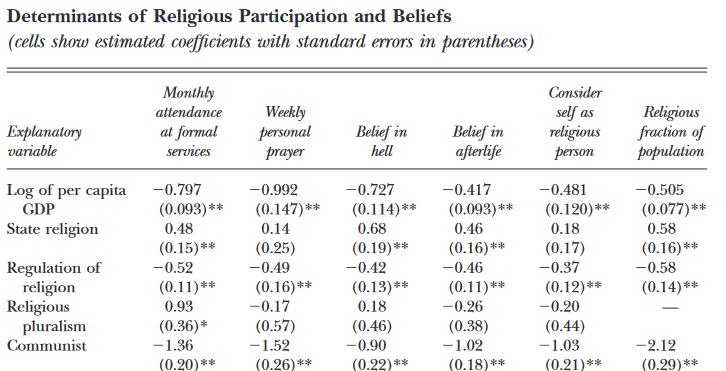
- Religion and political economy form a two-way street
- Dependent Variable:
- Supply side (e.g. gov't impose restrictions)
- Demand side (e.g. Marx and the secularists)
- Independent variable
- Religious beliefs lead to different outcomes (e.g. Weberian model of Protestant work ethic)
- Social capital framework and networking
Religion and Economy
- Religion and political economy form a two-way street
- Dependent Variable:
- Supply side (e.g. gov't impose restrictions)
- Demand side (e.g. Marx and the secularists)
Religion and Economy
- Independent variable
- Religious beliefs lead to different outcomes (e.g. Weberian model of Protestant work ethic)
- Social capital framework and networking
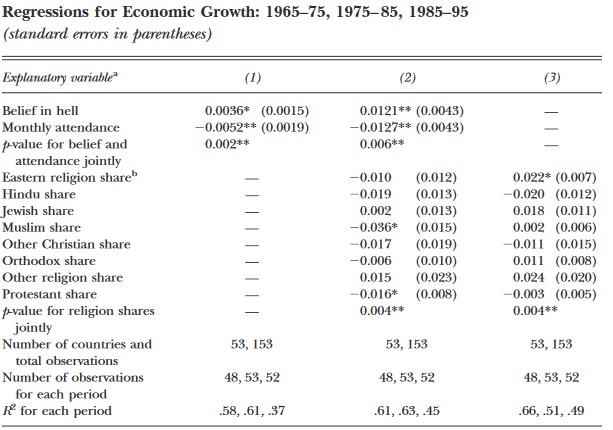
The results accord with Weber’s emphasis on religion as an influence on beliefs and, thereby, on individual traits and values. In particular, religion does not seem to operate as a social organization that enhances productive social capital and networking. In that scenario, we would anticipate a positive relation between growth and participation in formal services, rather than the negative relation found in the data. Thus, the special aspect of religion is belief formation.
Religion and Economy
The results accord with Weber’s emphasis on religion as an influence on beliefs and, thereby, on individual traits and values. In particular, religion does not seem to operate as a social organization that enhances productive social capital and networking. In that scenario, we would anticipate a positive relation between growth and participation in formal services, rather than the negative relation found in the data. Thus, the special aspect of religion is belief formation.
Impact of the Hajj (2009)
- Using a lottery system for Hajj visas, investigates the impact of performing the pilgrimage to Mecca
- Results:
- Increases the observance of orthodox Islamic practices
- Increases desire for peace and tolerance for others
- Hajjis are 22% more likely to declare that people of different religions are equal and 11% more likely to state that adherents of different religions can live in harmony.
- Hajjis are less likely to believe that the state should enforce religious injunctions and
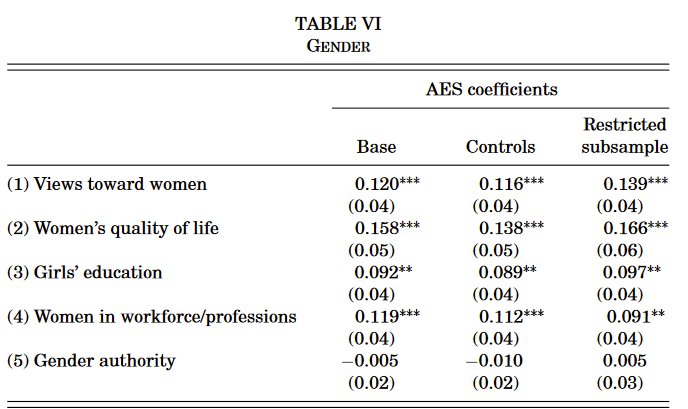
- Changes in gender:
Impact of the Hajj (2009)
- Using a lottery system for Hajj visas, investigates the impact of performing the pilgrimage to Mecca
- Results:
- Changes in gender:
Randomizing Religion (2021)
Randomizing Religion (2021)
Wait, you can do that?
Randomizing Religion (2021)
Wait, you can do that?
nothing short of a (probably unattainable) ‘genuine experiment’ will suffice to demonstrate religion’s causal impact.
Iannaccone (1998, 1475)
Randomizing Religion (2021)
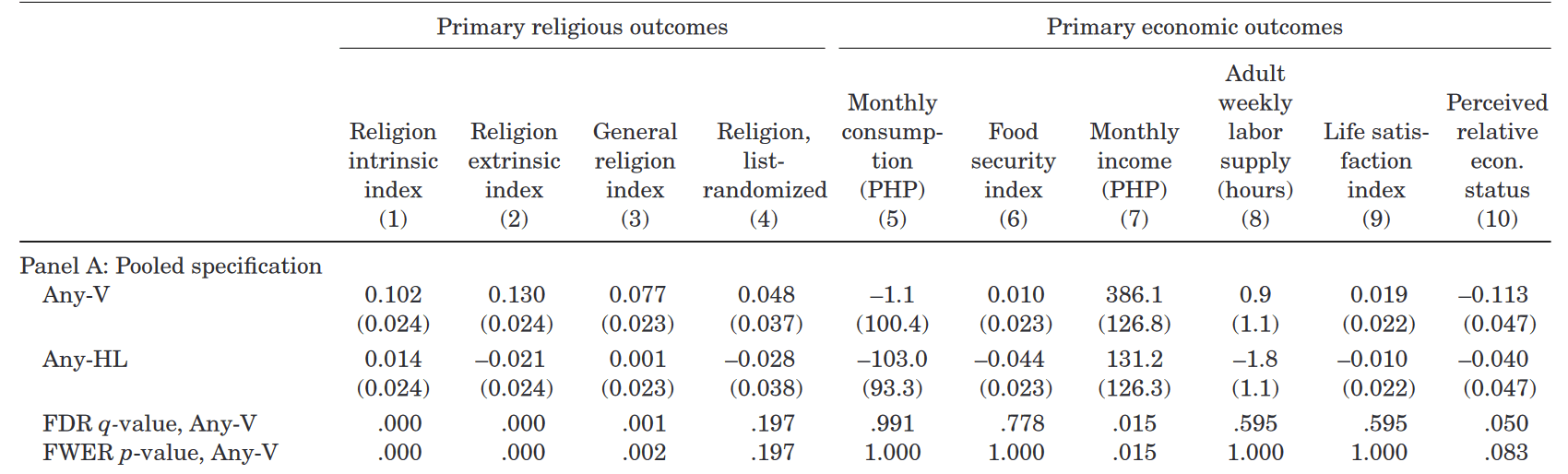
- Randomly assign 8k households to receive various versions of religious instruction (e.g. health and livelihood, Christian values) in the Philippines
- At six months:
- Higher religiosity and increased income
- No change in labor supply, consumption, food security, life satisfaction
Randomizing Religion (2021)
- At six months:
- Higher religiosity and increased income
- No change in labor supply, consumption, food security, life satisfaction
Randomizing Religion (2021)
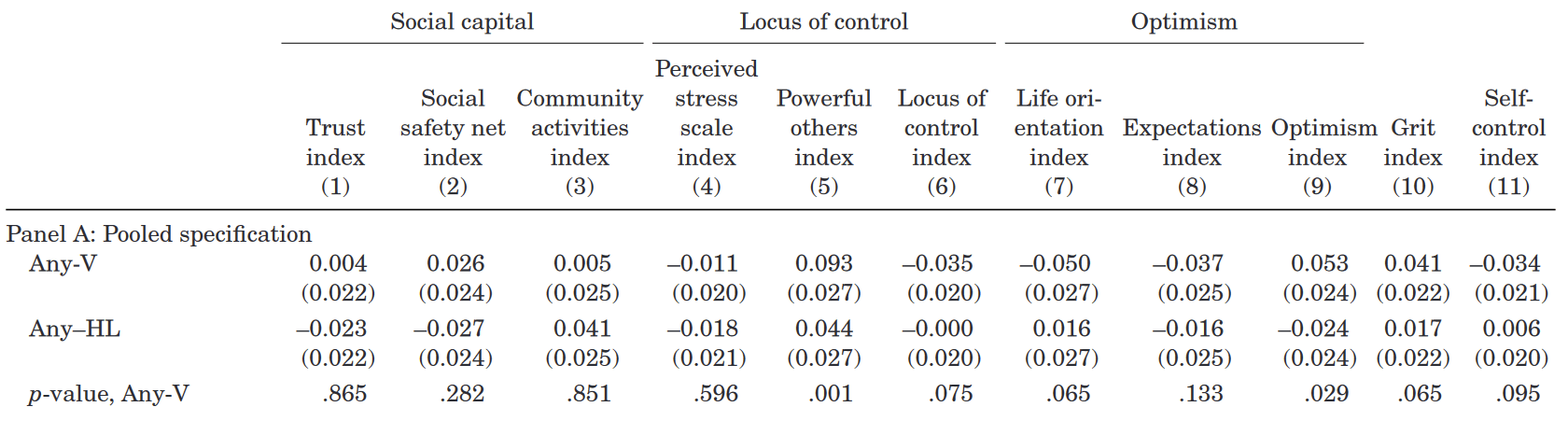
- What's the mechanism?
- Operates through "grit"
- "I am a very hard worker"
- "I finish whatever I begin"
- Operates through "grit"
- No movement in social capital, locus of control, optimism, etc.
Randomizing Religion (2021)
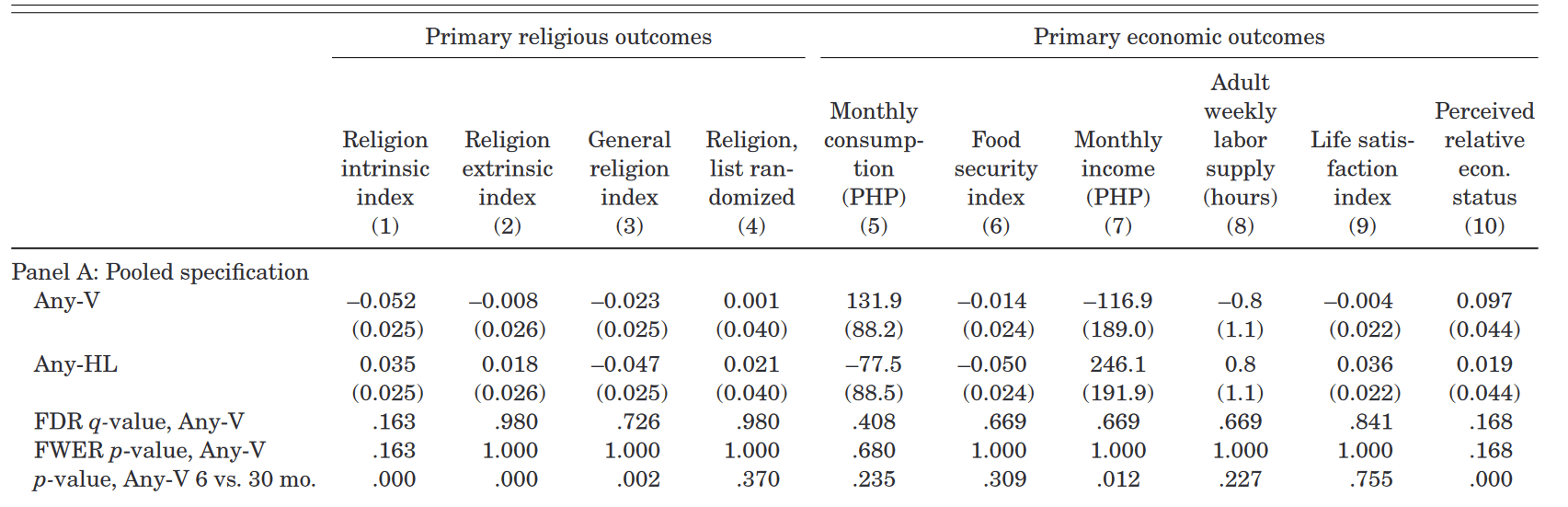
- At 30 months:
- More mixed results, income result no longer present
- Slightly higher perceived economic status
- No more increase in religiosity, though more likely to identify as Protestant
Randomizing Religion (2021)
- Limitations:
- Works at the boundaries: these are already religious individuals
- Targets the ultrapoor and personally identified
- Did this really "randomize religion"? Would these values produce the same results independent of a religious framework?
Dev.Slides.8.29
By bjw95