Costly belief Elicitation
Brandon Williams
Alistair Wilson
University of Pittsburgh
ESA Columbus, October 2024
- Experimental economists often give incentives to eliciting beliefs. Why?
- We hope providing incentives leads to collecting better, more accurate beliefs:
- Understanding what is asked requires effort
- Overcome personal motives to distort
- Doing burdensome calculations
- Therefore, if belief elicitation is an effortful exercise, how do we best increase the precision of the expressed belief?
Motivation
- We want to understand what incentives produce honest, deliberative beliefs
Motivation
0
100
20
80
- We want to understand what incentives produce honest, deliberative beliefs
Motivation
0
100
20
80
- We want to understand what incentives produce honest, deliberative beliefs
- We need to understand the psychological costs within a testing environment
- The scale and structure of the marginal costs becomes important
- Drawing a distinction between revealing a true belief and the effort required to generate a deliberative belief
Motivation
- Create a task that mirrors forming a probabilistic belief that requires effort
- Use experiments on Prolific to understand the relationship between cost, effort, and precision
- Vary the cost for precision and calibrate on how long it takes to complete and willingness to accept
- Understand how hard this task is to guess
- Vary the reward structure
- To do: Measure the psychological costs for actual elicitations
- Objective Bayesian Posteriors
- Subjective Beliefs
Roadmap
-
Some examples of recent papers in belief elicitation:
-
Testing incentive compatibility:
- Danz, Vesterlund, and Wilson, 2022
- Healy and Kagel, 2023
-
"Close enough" payments:
- Enke, Graeber, Oprea, and Young, 2024
- Ba, Bohren, and Imas, 2024
- Settele, 2022
-
QSR or BSR:
- Hoffman and Burks, 2020
- Radzevick and Moore, 2010
- Harrison et al., 2022
-
Others (exact or quartile):
- Huffman, Raymond, and Shvets, 2022
- Bullock, Gerber, Hill, and Huber, 2015
- Prior, Sood, and Khanna, 2015
- Peterson and Iyengar, 2020
-
Testing incentive compatibility:
Literature
- Create a task that mirrors forming a probabilistic belief that requires effort
Task
- Create a task that mirrors forming a probabilistic belief that requires effort
Task
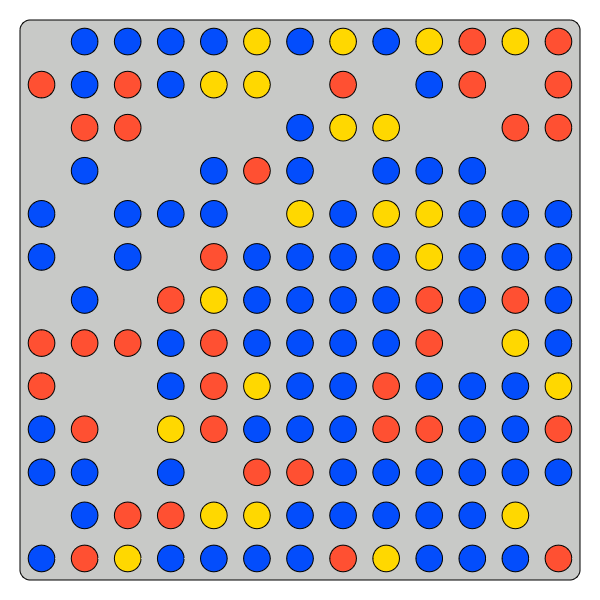
What is the proportion of blue tokens to total tokens in this urn?
81 blue
63 non-blue
56.25% true amount
=
- Create a task that mirrors forming a probabilistic belief that requires effort
- Use experiments on Prolific to understand the relationship between cost, effort, and precision
- Vary the cost for precision and calibrate on how long it takes to complete and willingness to accept
- Understand how hard this problem is to guess
- Vary the reward structure
Calibration: Exact
- Create a task that mirrors forming a probabilistic belief that requires effort
- Use experiments on Prolific to understand the relationship between cost, effort, and precision
- Vary the cost for precision and calibrate on how long it takes to complete and willingness to accept (calibration treatment)
- Understand how hard this problem is to guess
- Vary the reward structure
Calibration: Exact
- Create a task that mirrors forming a probabilistic belief that requires effort
- Use experiments on Prolific to understand the relationship between cost, effort, and precision
- Vary the cost for precision and calibrate on how long it takes to complete and willingness to accept (calibration treatment)
- Understand how hard this problem is to guess (initial guess treatment)
- Vary the reward structure
Calibration: Exact
- Create a task that mirrors forming a probabilistic belief that requires effort
- Use experiments on Prolific to understand the relationship between cost, effort, and precision
- Vary the cost for precision and calibrate on how long it takes to complete and willingness to accept (calibration treatment)
- Understand how hard this problem is to guess (initial guess treatment)
- Vary the reward structure (incentives treatment)
- BSR with only qualitative information
- BSR with quantitative information
- A "close enough" incentive
Calibration: Exact
-
- Vary the cost for precision and calibrate on how long it takes to complete and willingness to accept (calibration treatment)
Calibration: Exact
-
- Vary the cost for precision and calibrate on how long it takes to complete and willingness to accept
Calibration: Exact
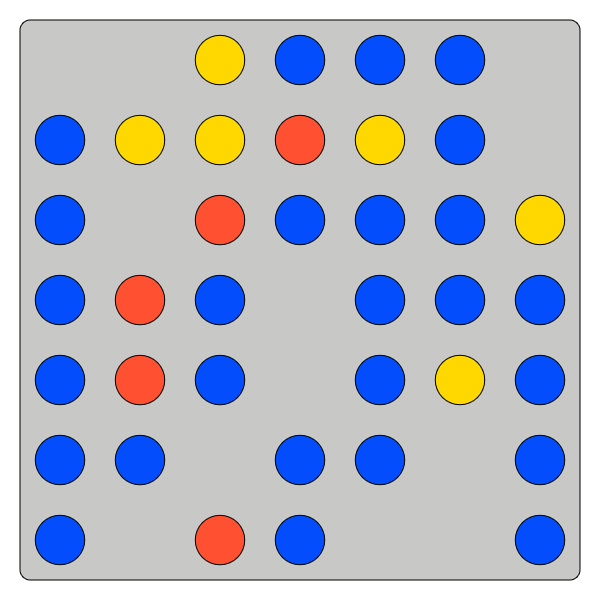
How to get you to exert effort when formulating your belief?
We start by paying $0.50 if you exactly count:
- Number of blue tokens
- Number of total tokens
Measure accuracy and time taken as a proxy for effort
Vary the difficulty over 5 tasks
-
- Vary the cost for precision and calibrate on how long it takes to complete and willingness to accept
Calibration: Exact
Vary the difficulty over 5 tasks
Small with gaps
-
- Vary the cost for precision and calibrate on how long it takes to complete and willingness to accept
Calibration: Exact
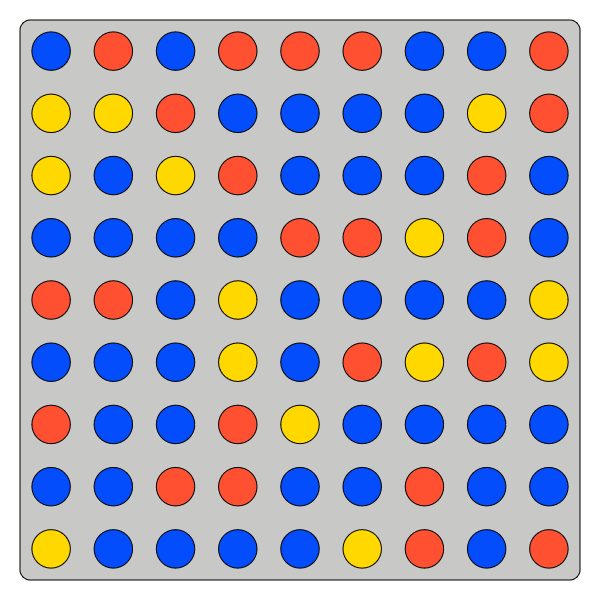
Vary the difficulty over 5 tasks
Larger with no gaps
-
- Vary the cost for precision and calibrate on how long it takes to complete and willingness to accept
Calibration: Exact
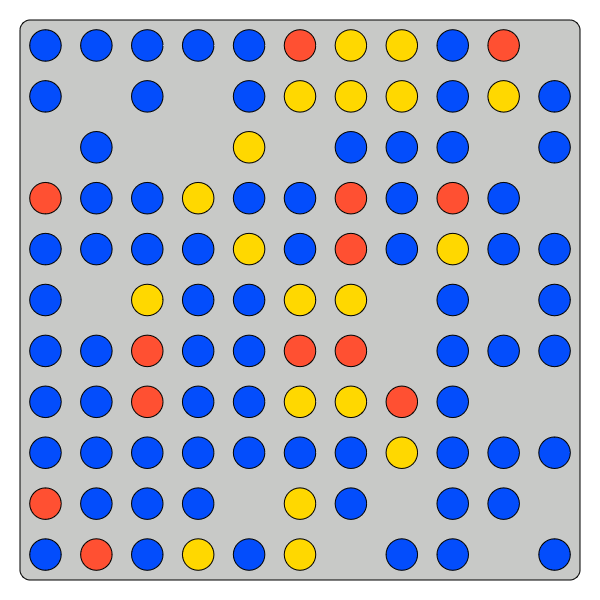
Vary the difficulty over 5 tasks
Larger with gaps
-
- Vary the cost for precision and calibrate on how long it takes to complete and willingness to accept
Calibration: Exact
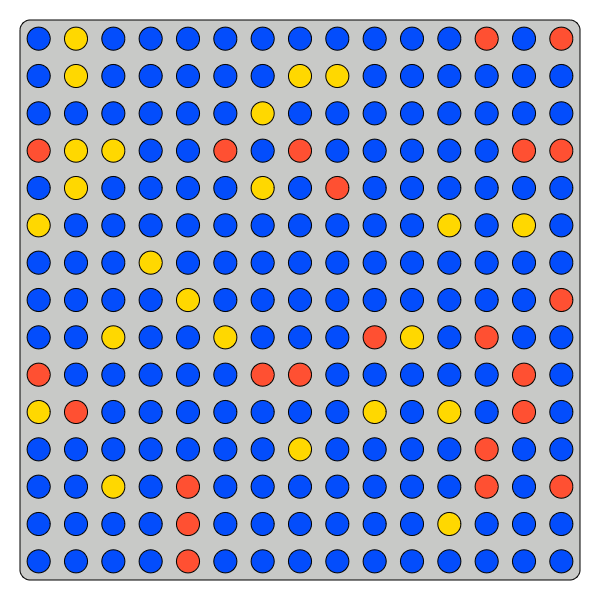
Vary the difficulty over 5 tasks
Largest with no gaps
-
- Ten rounds with an easy task or the hard task base pay plus $X (Oprea, 2020)
Calibration: WTP
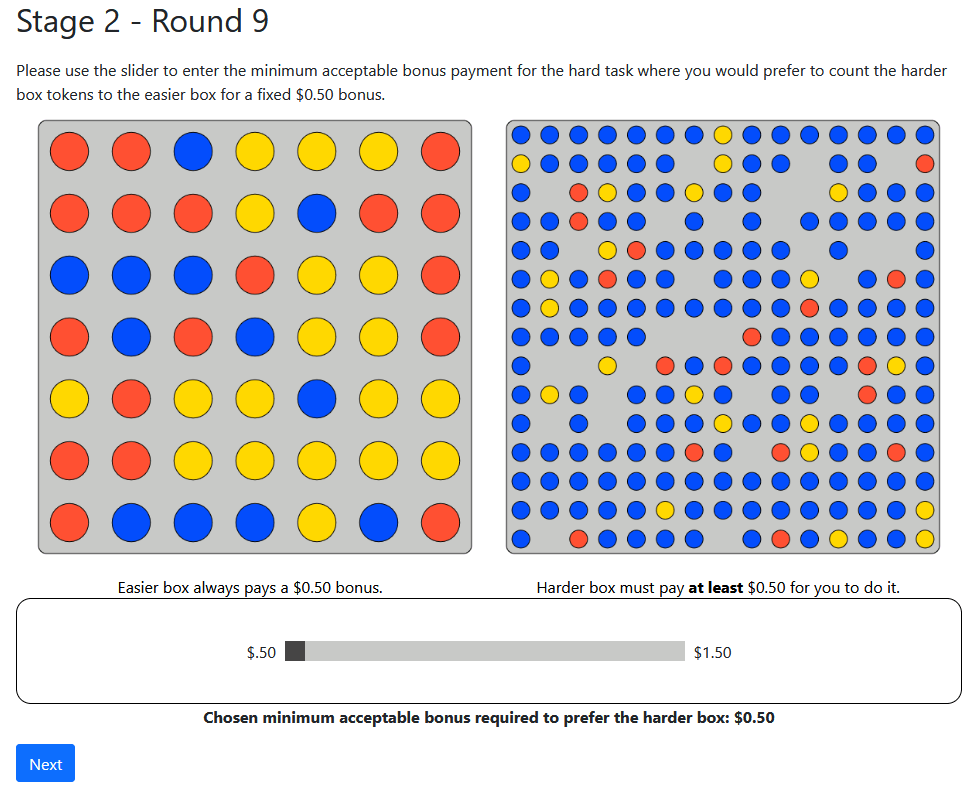
LHS:
Constant
Difficulty
RHS:
Varying
Difficulty
Always
Pays $.50
If Correct
$X
If Correct
Choose
$X
Calibration: Results (n=250)
Model Fitted Values
Calibration: Results (n=250)
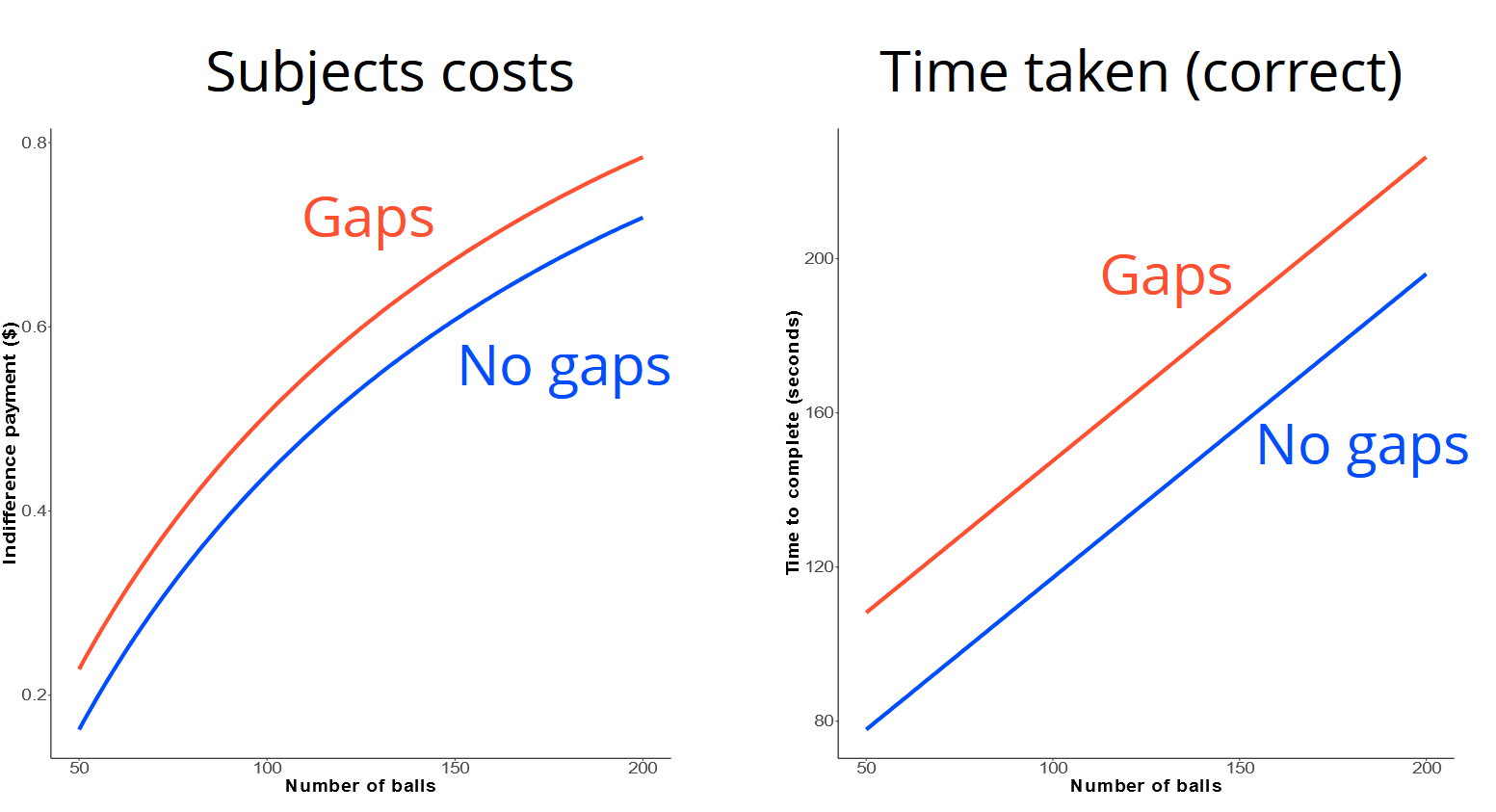
Number of Tokens
Indifference Payment
Model Fitted Values
Calibration: Results (n=250)
Number of Tokens
Indifference Payment
Number of Tokens
Time in Seconds
Model Fitted Values
Initial Guesses
- Create a task that mirrors forming a probabilistic belief that requires effort
- Use experiments on Prolific to understand the relationship between cost, effort, and precision
- Vary the cost for precision and calibrate on how long it takes to complete and willingness to accept (calibration treatment)
- Understand how hard this problem is to guess (initial guess treatment)
- Vary the reward structure (incentives treatment)
- BSR with only qualitative information
- BSR with quantitative information
- A "close enough" incentive
Initial Guesses
-
- Understand how hard this problem is to guess (initial guess treatment)
Initial Guesses
-
- Understand how hard this problem is to guess (initial guess treatment)
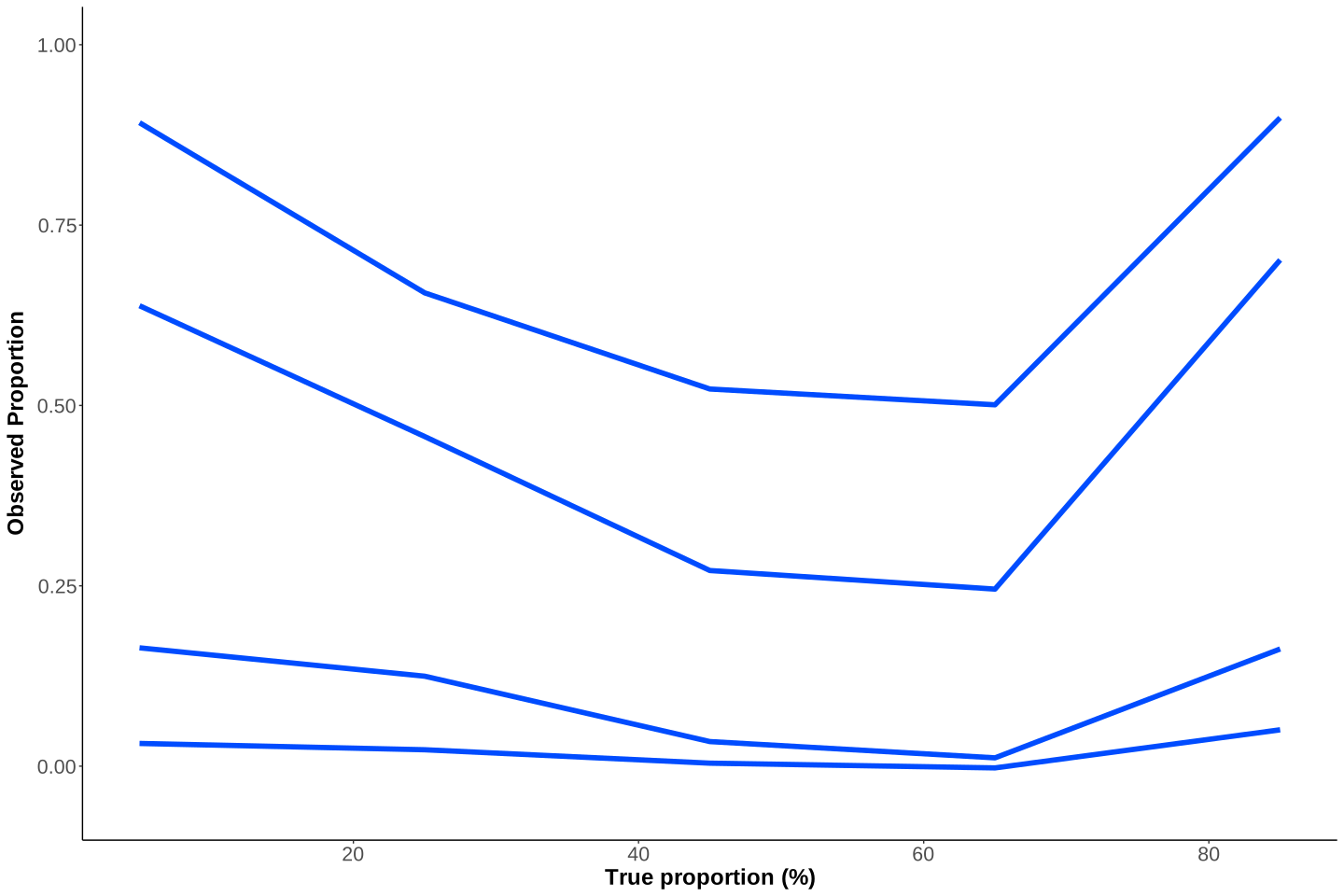
- Participants have 15 or 45 seconds to form and enter a guess on the proportion
- High powered rewards:
- $2.50 if within 1%
- $1.00 if within 5%
- $0.50 if within 10%
- 10 rounds with varying proportions (pay three decisions)
Initial Guesses: Results (N=200)
Initial Guesses: Results (N=200)
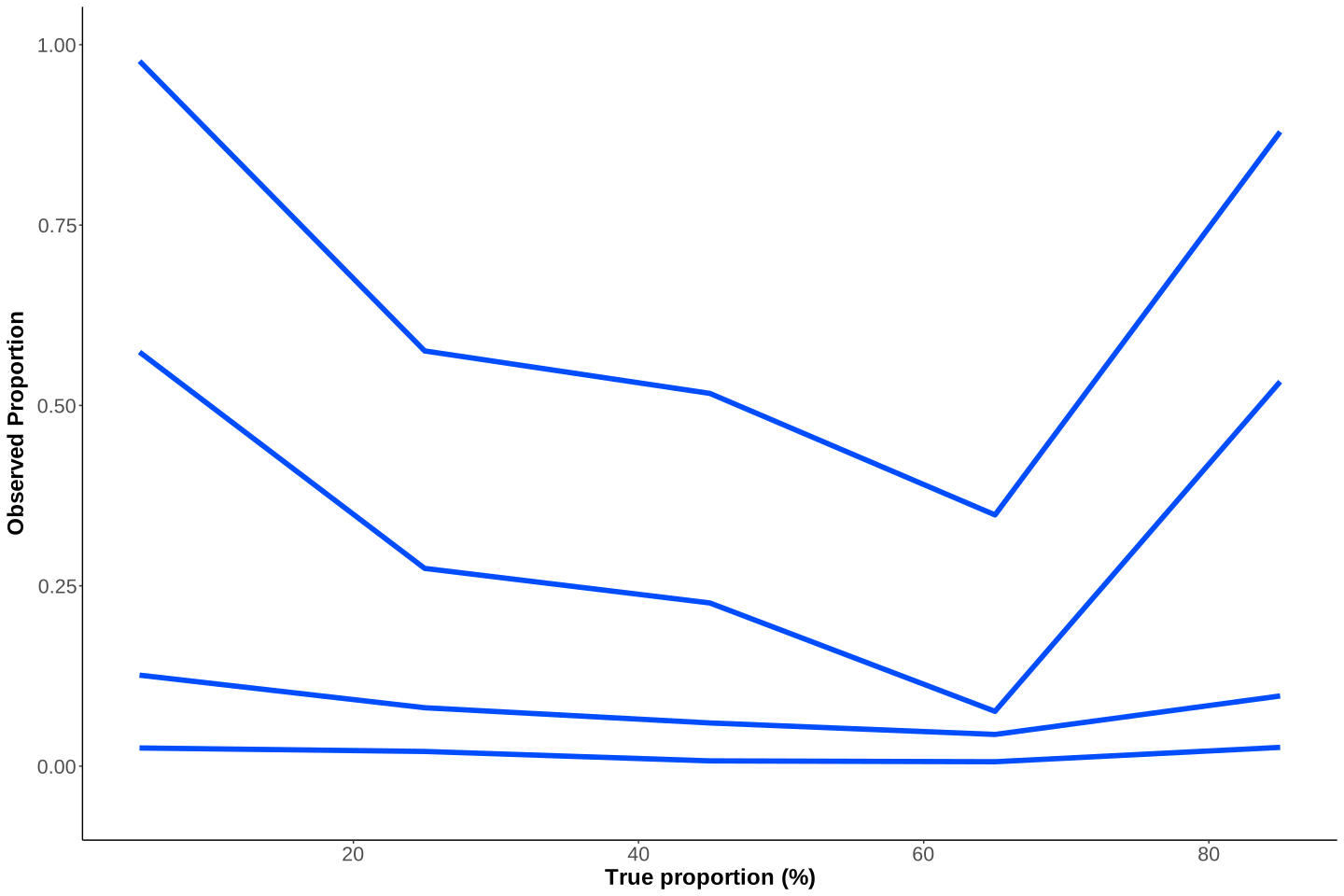
Within 10%
Within 5%
Within 1%
Exact
15 Seconds
Initial Guesses: Results (N=200)
Within 10%
Within 5%
Within 1%
Exact
15 Seconds
Initial Guesses: Results (N=200)
Within 10%
Within 5%
Within 1%
Exact
15 Seconds
Initial Guesses: Results (N=200)
Within 10%
Within 5%
Within 1%
Exact
15 Seconds
Initial Guesses: Results (N=200)
Within 10%
Within 5%
Within 1%
Exact
15 Seconds
Initial Guesses: Results (N=200)
Within 10%
Within 5%
Within 1%
Exact
15 Seconds
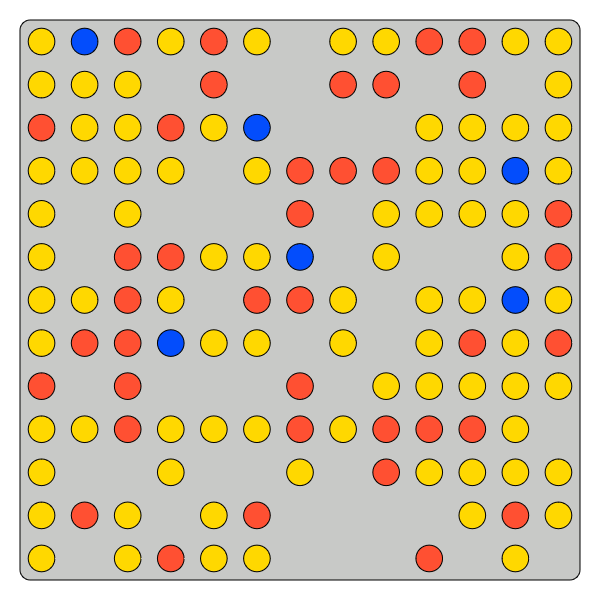
4.8%
Initial Guesses: Results (N=200)
Within 10%
Within 5%
Within 1%
Exact
15 Seconds
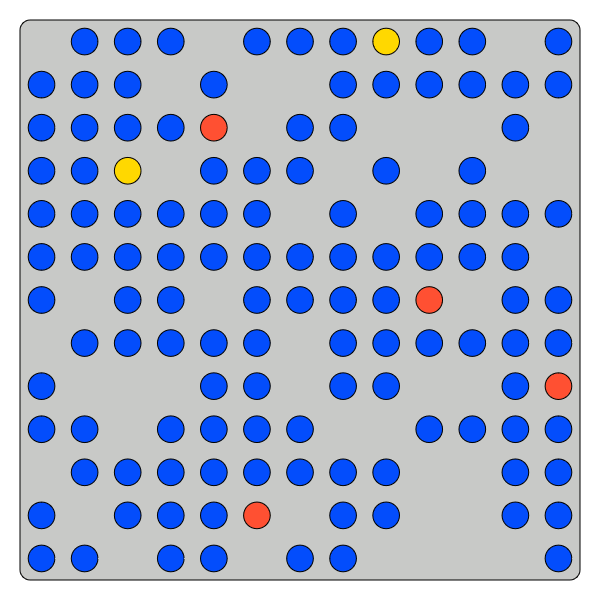
95.1%
Initial Guesses: Results (N=200)
Within 10%
Within 5%
Within 1%
Exact
15 Seconds
Initial Guesses: Results (N=200)
Within 10%
Within 5%
Within 1%
Exact
45 Seconds
Incentives
- Create a task that mirrors forming a probabilistic belief that requires effort
- Use experiments on Prolific to understand the relationship between cost, effort, and precision
- Vary the cost for precision and calibrate on how long it takes to complete and willingness to accept (calibration treatment)
- Understand how hard this problem is to guess (initial guess treatment)
- Vary the reward structure (incentives treatment)
- BSR with only qualitative information
- BSR with quantitative information
- A "close enough" incentive
Incentives
-
- Vary the reward structure
- BSR with only qualitative information
- BSR with quantitative information
- A "close enough" incentive
- Vary the reward structure
Incentives
-
- Vary the reward structure
- BSR with only qualitative information
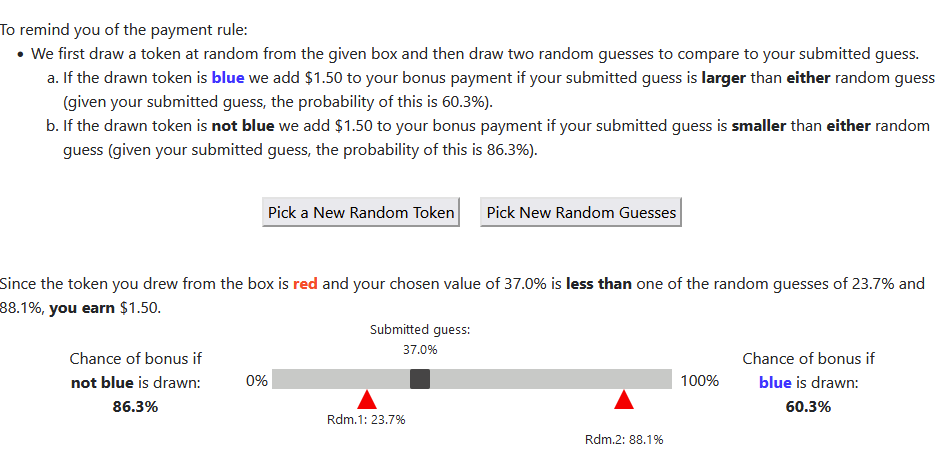
- Text description of payoff structure (Vespa & Wilson, 2018)
- BSR with quantitative information
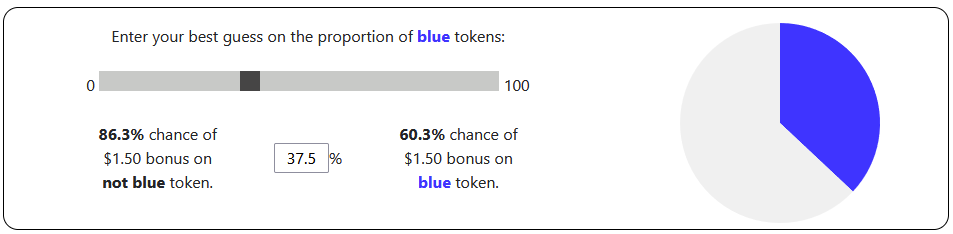
- Full information on the quantitative incentives (Danz et al., 2022)
- A "close enough" incentive
- $1.50 if within 1%; $0.50 if within 5%
- Current use in several papers (e.g. Ba et al., 2024)
- BSR with only qualitative information
- Vary the reward structure
Incentives
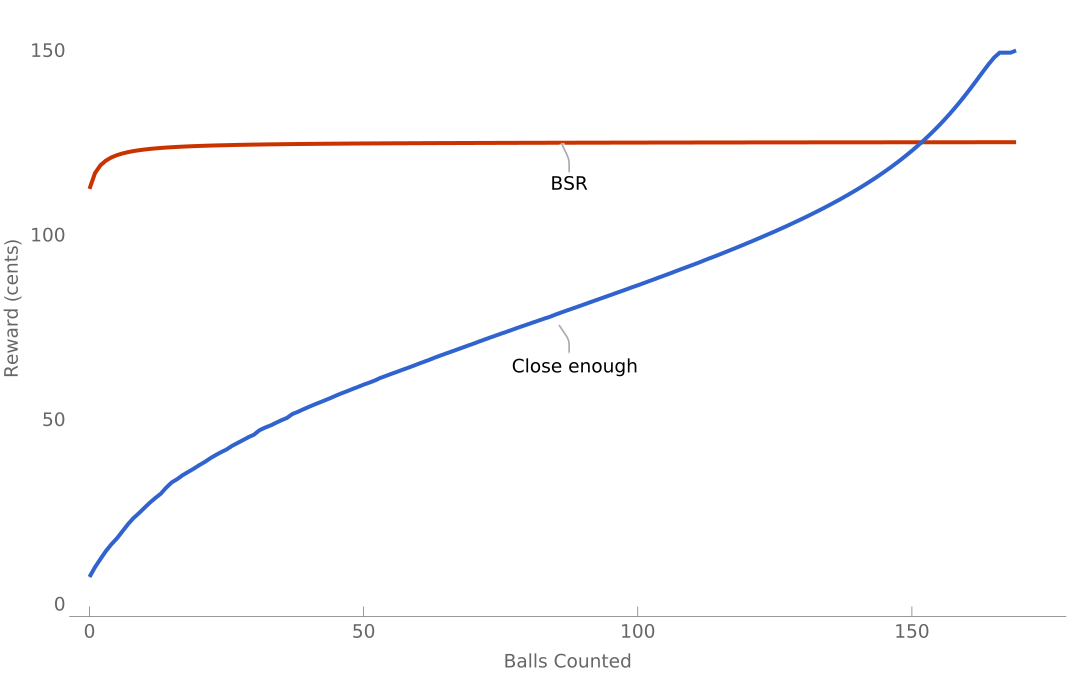
How does the expected reward vary by incentive?
Incentives
Incentives
Incentives
-
- Vary the reward structure
- BSR with only qualitative information
- BSR with quantitative information
- A "close enough" incentive
- 10 rounds, pay 3
- No time limits
- N=100 in each incentive treatment
- Vary the reward structure
Results
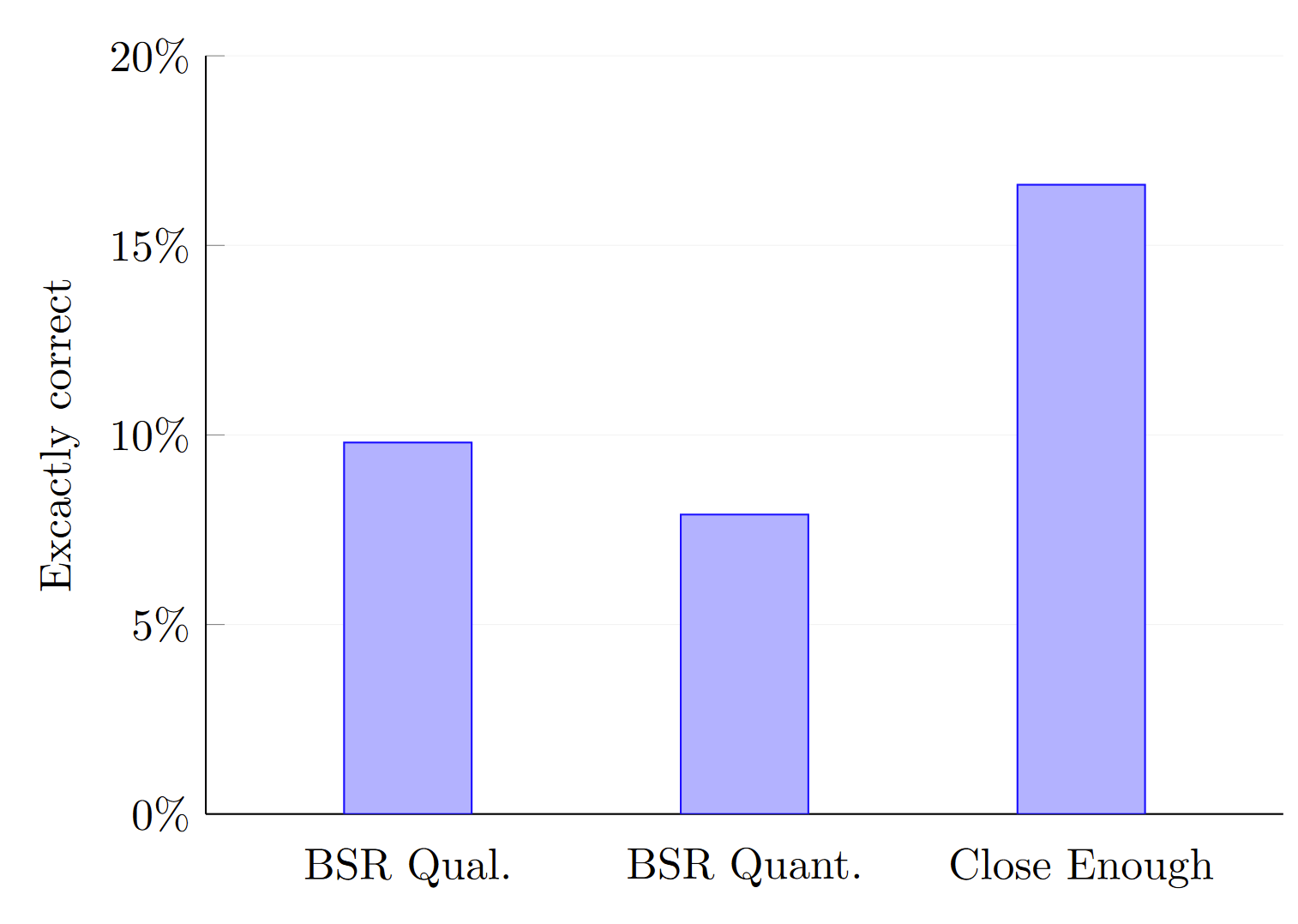
Incentives: Exactly correct
★ ★ ★
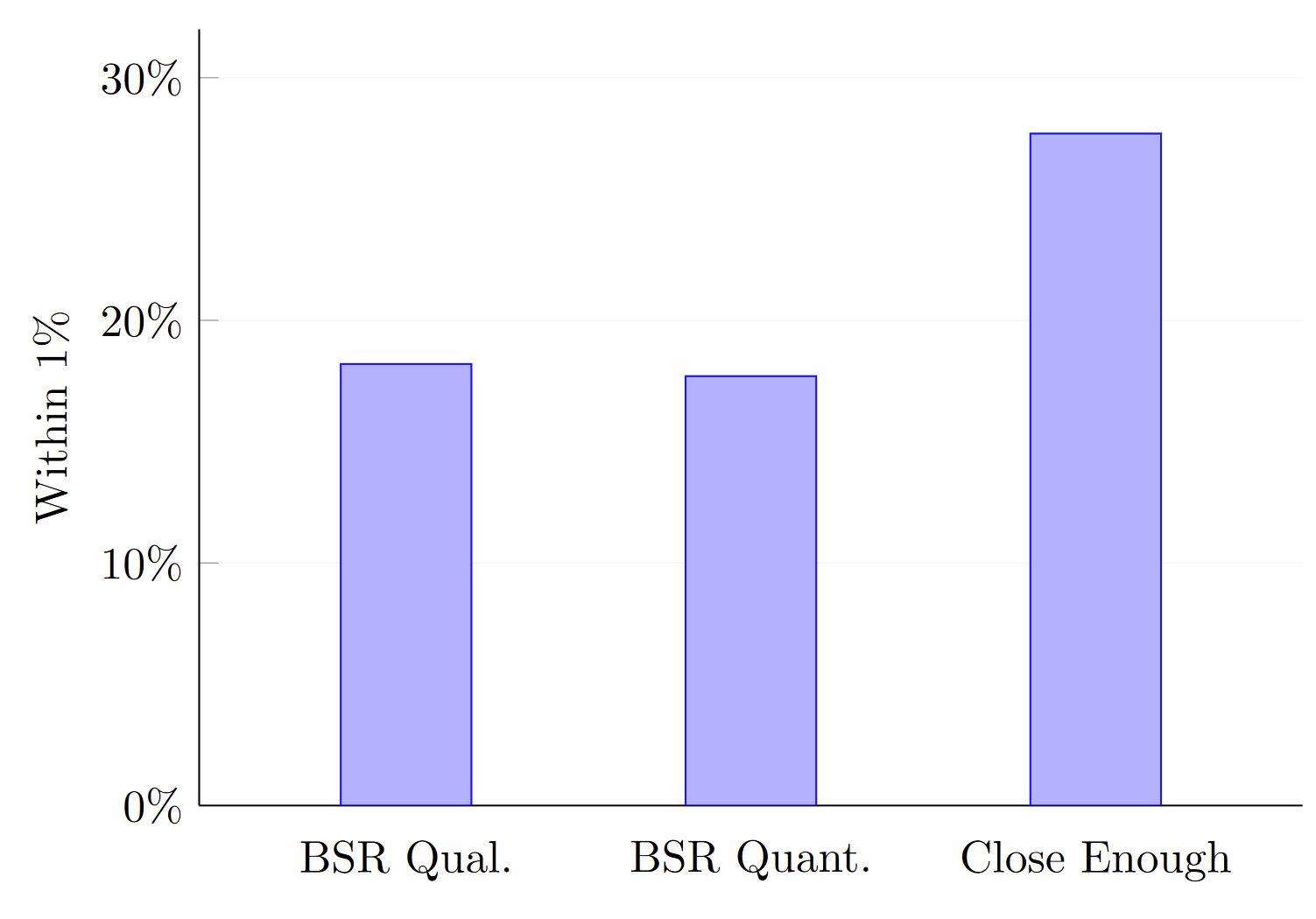
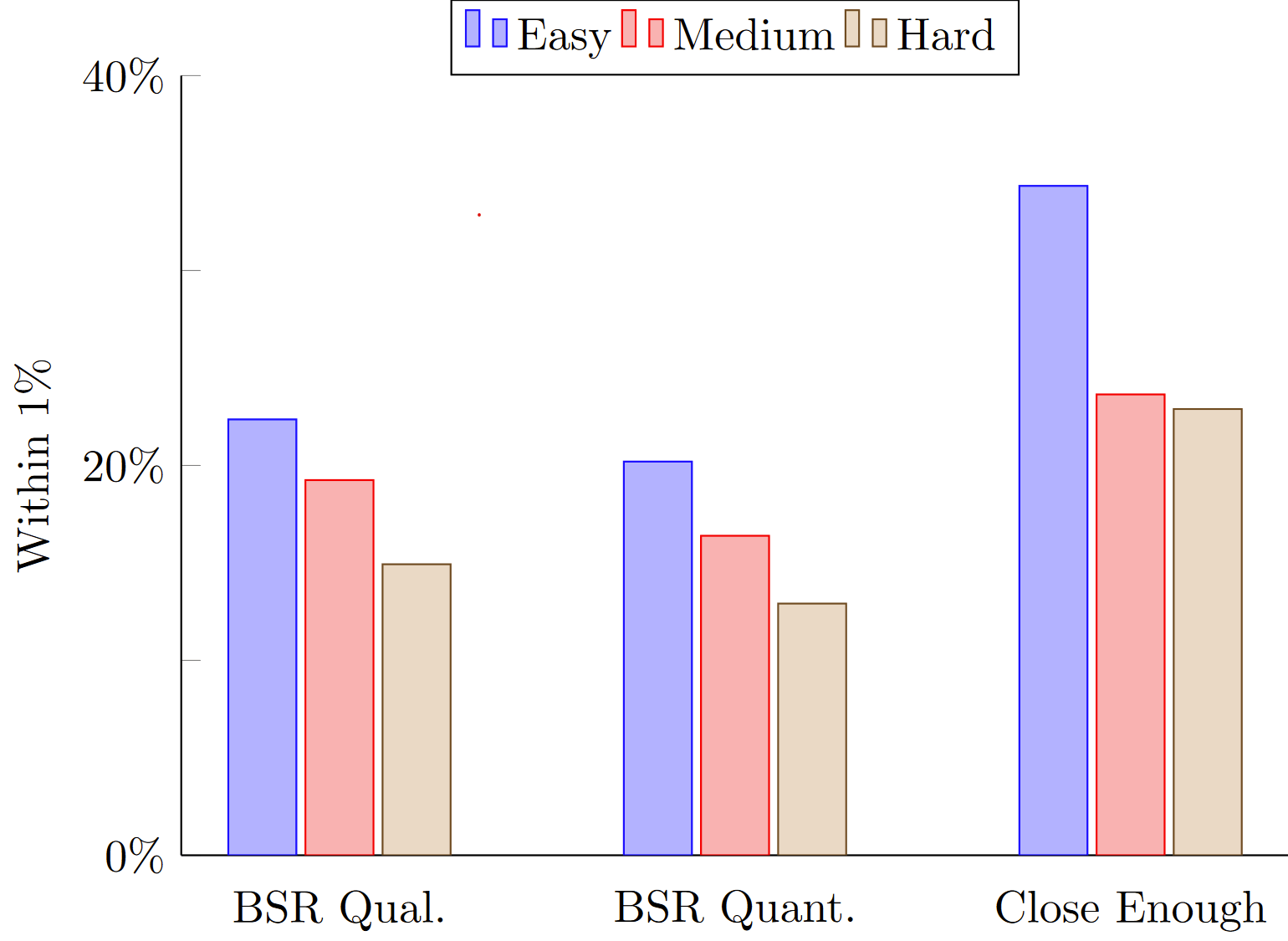
Incentives: Within 1%
★ ★ ★
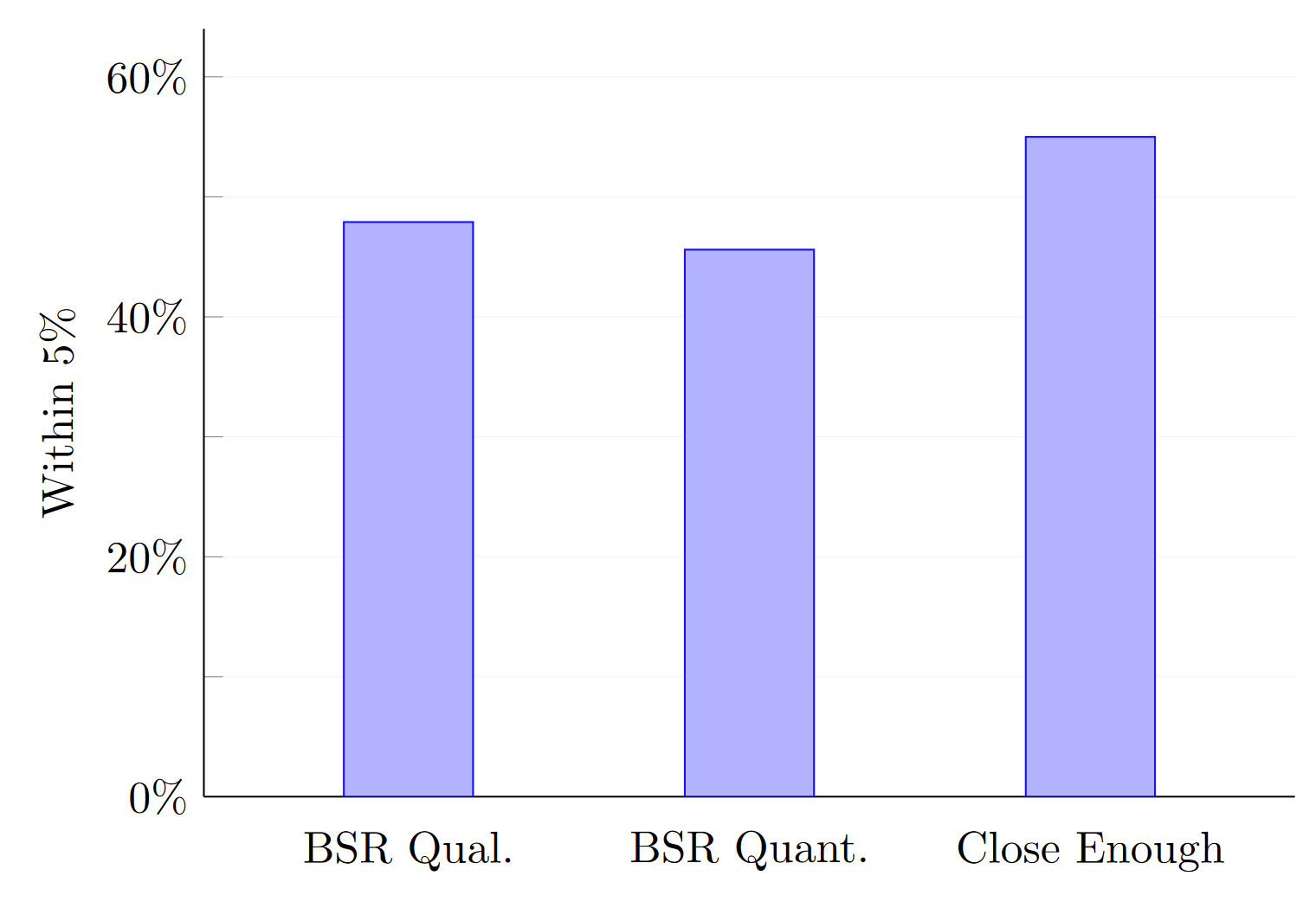
Incentives: Within 5%
★ ★ ★
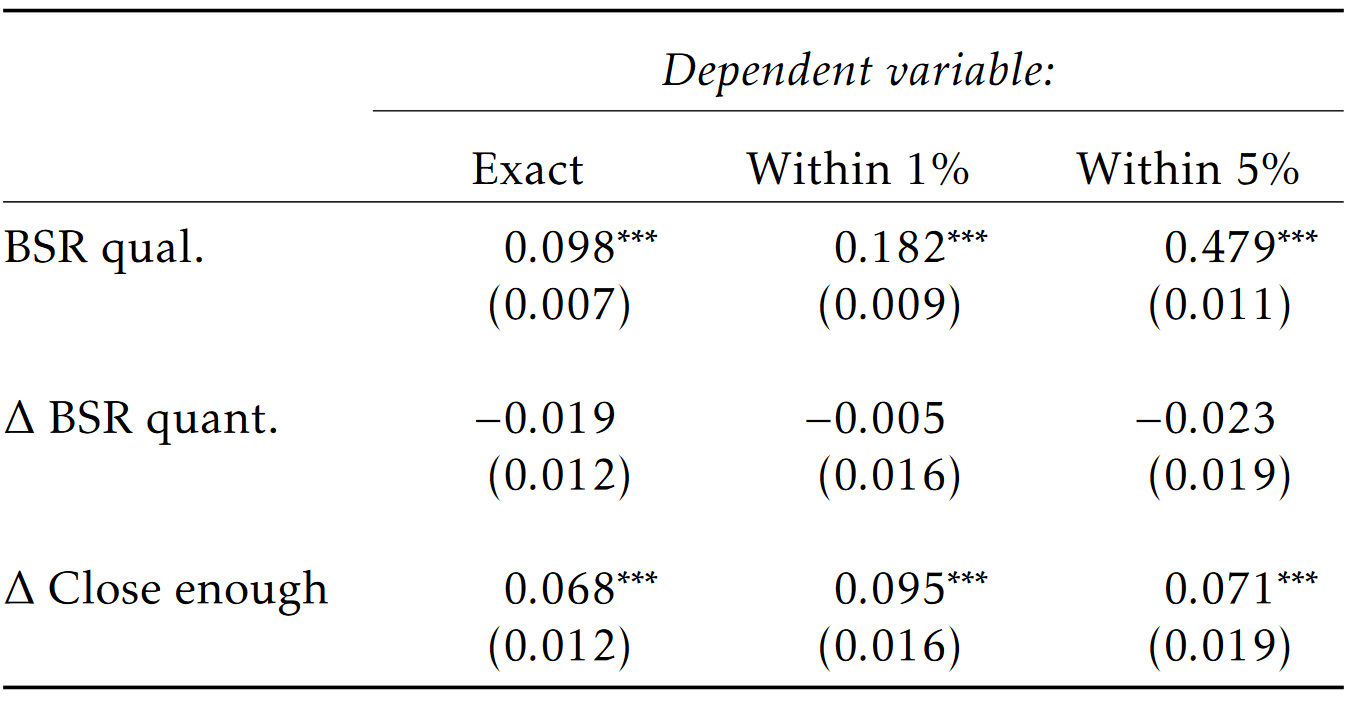
Incentives: accuracy
Incentives: accuracy
Incentives: accuracy
Incentives: accuracy
Incentives: time taken (effort)
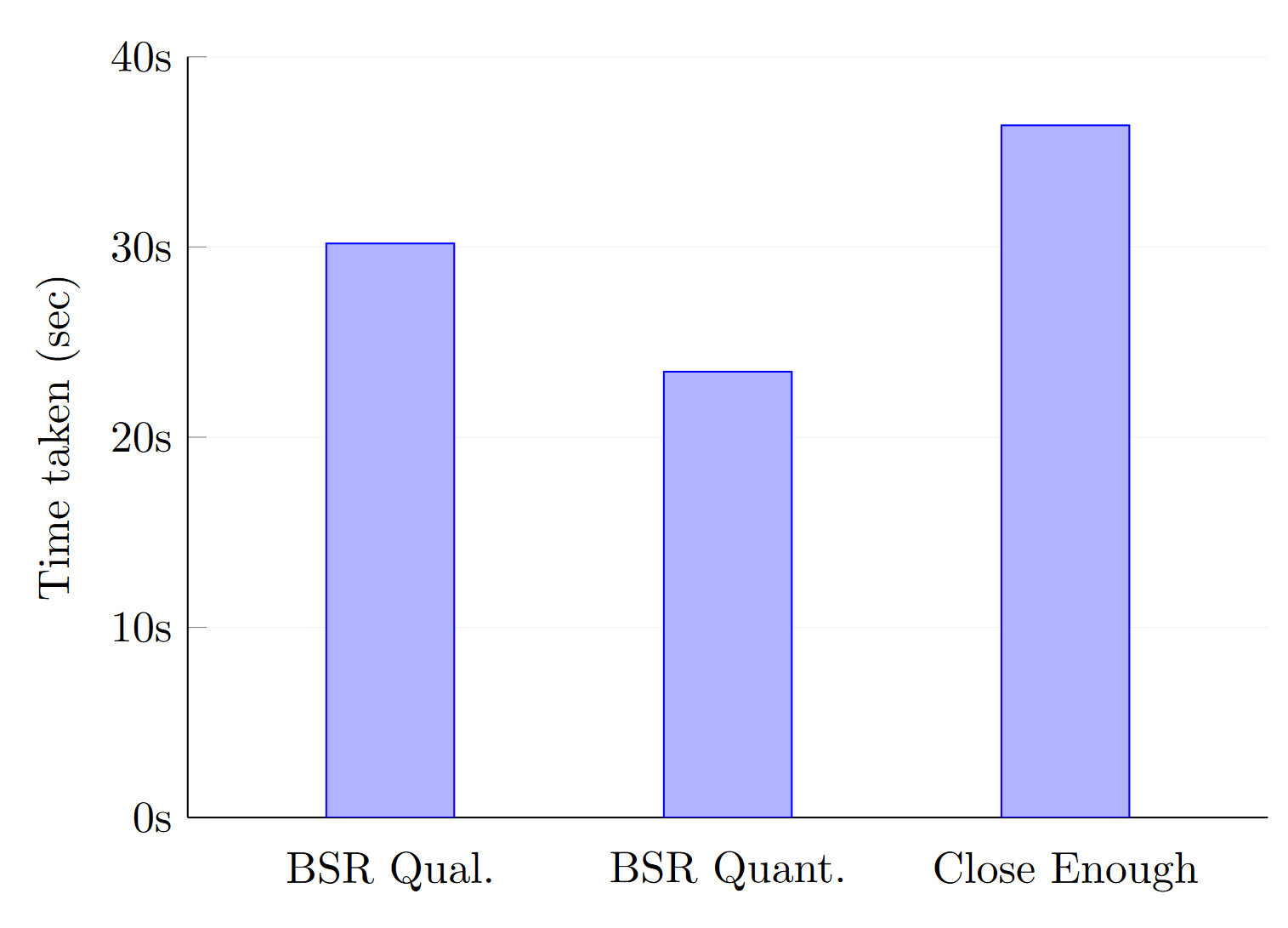
Incentives: time taken (effort)
★ ★ ★
-22%
Incentives: time taken (effort)
★ ★ ★
-22%
★ ★ ★
+21%
Incentives: Research costs
- "Close enough" outperformed BSR on both accuracy and time spent
- Also cheaper in payments to participants (~50%)
- With a fixed budget, how much more effort could be induced?
Conclusions and future work
- Have an effortful task that responds to incentives
- Works well on Prolific
- Induces objective simple priors
- Effort decreases variance of the belief
- Exact incentive works best for inducing effort (and cheaper)
- Followed by BSR qualitative
- And BSR quantitative, though output similar to qual.
- To Do:
- Examine and measure the effective costs for common elicitations in experiments
- Examine effects of uncertainty on incentives
Thank you!
Alistair Wilson
Brandon Williams
alistair@pitt.edu
brandon.williams@pitt.edu
Incentives
-
- Vary the reward structure
- BSR with only qualitative information
- Vary the reward structure
Incentives
-
- Vary the reward structure
- BSR with quantitative information
- Vary the reward structure
Incentives
-
- Vary the reward structure
- BSR with only qualitative information
- Vary the reward structure
Incentives
-
- Vary the reward structure
- BSR with quantitative information
- Vary the reward structure
Incentives: accuracy
ESA October: Costly Beliefs
By bjw95