Prosocial Behavior Under Cognitive Task Switching
Brandon Williams
University of Pittsburgh
Second Year Paper Proposal
Motivation


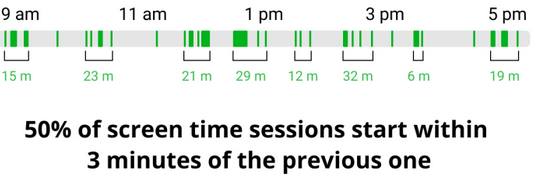
"In a typical day, we found that people spend an average of three minutes working on any single event before switching to another event." (Gonzalez & Mark, 2004)
"[IT] developers’ work is highly fragmented, as developers are spending only very short amounts of time (0.3 to 2 minutes) in one activity before switching to another one." (Meyer, et al. 2017)
Question
Are individuals subjected to rapid and cognitively burdensome task switching more or less prosocial?
Question
Are individuals subjected to rapid and cognitively burdensome task switching more or less prosocial?
Question
Are individuals subjected to rapid and cognitively burdensome task switching more or less prosocial?
Question
Are individuals subjected to rapid and cognitively burdensome task switching more or less prosocial?
Question
Are individuals subjected to rapid and cognitively burdensome task switching more or less prosocial?
Contribution
Are individuals subjected to rapid and cognitively burdensome task switching more or less prosocial?
- Performance worse under task switching than repetition (Koch et al., 2018) or sequential (Buser & Peter, 2012)
- High "switching costs" associated with mixed-task blocks (Kiesel et al., 2010)
- Strategic adoption of multitasking leads to less productivity (Coviello et al., 2015)
- Multitasking might explain the gender wage gap online (Adams-Prassl et al., 2023)
- More screen switches in a day, the less productive a person feels (Mark et al., 2015)
- Are prosocial behaviors intuitive or deliberative? Evidence mixed (Bear & Rand, 2016, Achziger et al., 2015, Kvarven, 2020)
Contribution:
- Is there an impact of the fragmented nature of our work on our generosity, trust, and cooperation?
- Evidence for these as intuitive (positive) or deliberative (negative) phenomena?
- Who is affected by this (e.g. heterogeneity analysis)?
Methods
Are individuals subjected to rapid and cognitively burdensome task switching more or less prosocial?
Laboratory:
- Manipulate cognitive load through sequence of non-trivial and stimuli-diverse tasks
- Versus control group, which does non-trivial task repeatedly
- Outcomes are the results of cooperation (public good), generosity (dictator), and trust (investment) games
Field:
-
Manipulate cognitive load through the type of day in two different professions:
- Coders on "sprint" days (task consistent)
- Consultants on "go live" days (task switching)
Analysis:
- Does one group exhibit wider variance (i.e. comparison of distributions)?
- Are there characteristics that make one robust to cognitive depletion?
Thank you!
Questions or Comments?
2nd Year Paper Proposal: Cooperation under Cognitive Burden
By bjw95