BUILDING COMMUNITY-LED YOUTH PATHWAYS FOR COASTAL RESILIENCE
A Replicable Discover–Connect–Protect Framework Delivered Through Community Training Centres
ConnectOcean has developed a replicable community-based framework that addresses a critical but often overlooked challenge in coastal communities:
Young people live next to the ocean, but many cannot safely access it, do not feel connected to it, and are therefore excluded from both opportunity and stewardship.
This disconnect has real and compounding consequences.
It contributes to:
- high rates of drowning and water-related risk
- limited pathways into skills, employment, and leadership
- and a lack of local ownership in conservation efforts
At the same time, conservation efforts often struggle to succeed because the people living closest to these ecosystems are not actively involved in understanding or protecting them.
ConnectOcean addresses both challenges through a single, structured model built on a clear premise:
If young people cannot safely enter the environment they depend on, they cannot connect to it.
If they do not connect to it, they will not take responsibility for protecting it.
THE FRAMEWORK:
DISCOVER - CONNECT - PROTECT
This premise is applied through a simple but deliberate progression:
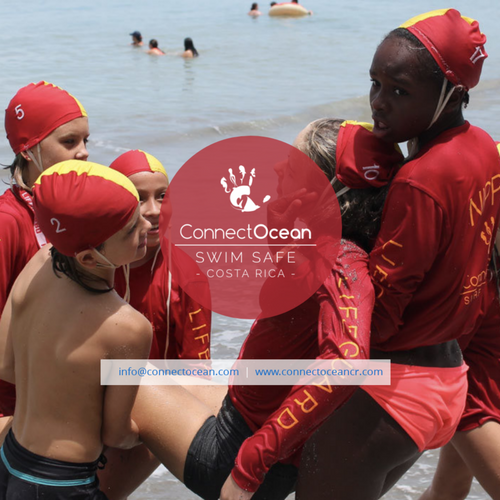
- Discover – Young people learn how to safely enter the water and are introduced to the environment through guided, hands-on experiences
- Connect – They return through structured programs where they build skills, form relationships, and begin to understand how their environment works
- Protect – They take on responsibility, contributing as mentors, assistants, and active participants in their communities
This is how connection is built over time—not through one experience, but through repeated participation, increasing responsibility, and a growing sense of belonging.
THE PATHWAY:
FROM ACCESS TO LEADERSHIP
The framework is delivered through a clear, progressive pathway:
Water Safety → Lifesaving → STEM & Conservation → Leadership
Each stage addresses a specific barrier and unlocks the next level of development:
- Water Safety removes fear and risk, giving young people the ability to safely enter the ocean
- Lifesaving provides structure through sport, building discipline, teamwork, and a strong sense of belonging
- STEM & Conservation Programs develop understanding, exposing participants to how ecosystems function and how to contribute to real-world efforts
- Leadership Pathways create progression, where experienced participants support others, take on defined roles, and become part of the system itself
Over time, young people move from:
first exposure → active participation → responsibility → leadership
THE SCALABLE UNIT:
COMMUNITY TRAINING CENTRES
This pathway is delivered through Community Training Centres, which anchor the model within each community.
These centres provide:
- consistent, ongoing program delivery
- a structured environment for mentorship and progression
- a place where participants return, develop, and take on increasing responsibility
They are not temporary program sites.
They are local platforms that develop people over time.
As participants progress, they remain within the system—first as students, then as team members, and eventually as mentors and leaders. This creates a self-reinforcing structure, where each cohort helps support the next.
WHAT CHANGES OVER TIME
When this system is in place, the change is visible:
- Young people who once avoided the ocean become confident and capable in it
- Participants return year after year, rather than engaging once and leaving
- Skills develop into certifications and real opportunities
- Older participants begin to teach, mentor, and lead within their own communities
At the community level, the shift is equally clear:
- Programs are no longer dependent on external delivery alone
- Local capacity grows as trained youth take on active roles
- Communities become participants in stewardship, not just recipients of programs
PROOF OF CONCEPT
ConnectOcean has already demonstrated this model through grassroots implementation, funding the majority of its community work through its own social enterprise.
This has shown:
- consistent demand from coastal communities
- strong retention and progression of participants
- and clear movement of youth into mentorship and leadership roles
The model works.
The limitation is not effectiveness — it is the ability to scale it.
THE OPPORTUNITY
The next phase is to expand this model through a network of Community Training Centres and strengthen the systems that support it.
- participant tracking and impact measurement
- standardized training pathways
- instructor and leadership development pipelines
- partnerships with training institutions and community stakeholders
This is not funding for isolated programs.
It is growth capital to expand a working system into a scalable model with long-term impact.
We are seeking a multi-year strategic partner to enable this transition.
This investment will focus on three areas:
- Stabilize: Ensure consistent delivery by reducing reliance on fluctuating operational revenue
- Scale: Establish additional Community Training Centres and expand access to more communities
- Systematize: Build the infrastructure required for replication, including:
CLOSING
In coastal communities, the starting point is often simple:
The ability to safely enter the water.
For many young people, that moment is a turning point.
It is where fear is replaced with confidence,
where exclusion becomes participation,
and where a pathway begins.
From there, this model provides a clear and structured progression that develops skills, creates opportunity, and builds leadership.
Through this pathway, young people gain:
- practical competencies in water safety and lifesaving
- structured training and recognized certifications
- access to mentorship and long-term development
- and a clear route into leadership within their communities
Over time, this produces a measurable shift:
Participants do not simply complete programs—they return, progress, and take on responsibility.
They become mentors, instructors, and role models for the next generation.
ConnectOcean has built and tested this model.
The next step is to scale it.
With the right multi-year support, this framework can be expanded into a network of Community Training Centres—creating sustained pathways for youth development, leadership, and long-term community impact.
"Through each other, for each other."
OUR MISSION:
CONTACT US
Building Community-Led Youth Pathways for Coastal Resilience
By ConnectOcean
Building Community-Led Youth Pathways for Coastal Resilience
Un Proyecto de ConnectOcean Conservation and Outreach. Una División de ConnectOcean Group. Las Catalinas, Playa Danta. Guanacaste, Costa Rica.