




Content ITV PRO
This is Itvedant Content department
Learning Outcome
4
Evaluate a prompt's quality using established design principles.
3
Identify common prompt design mistakes and how to avoid them.
2
Apply clarity, specificity, and structure when writing prompts.
1
Understand the core principles that make a prompt effective.
Before we go further — let's recall
What we've already built.
Prompt Engineering
the skill of writing clear, structured instructions for AI.
Role of Prompts
prompts control the AI's task, context, tone, and output.
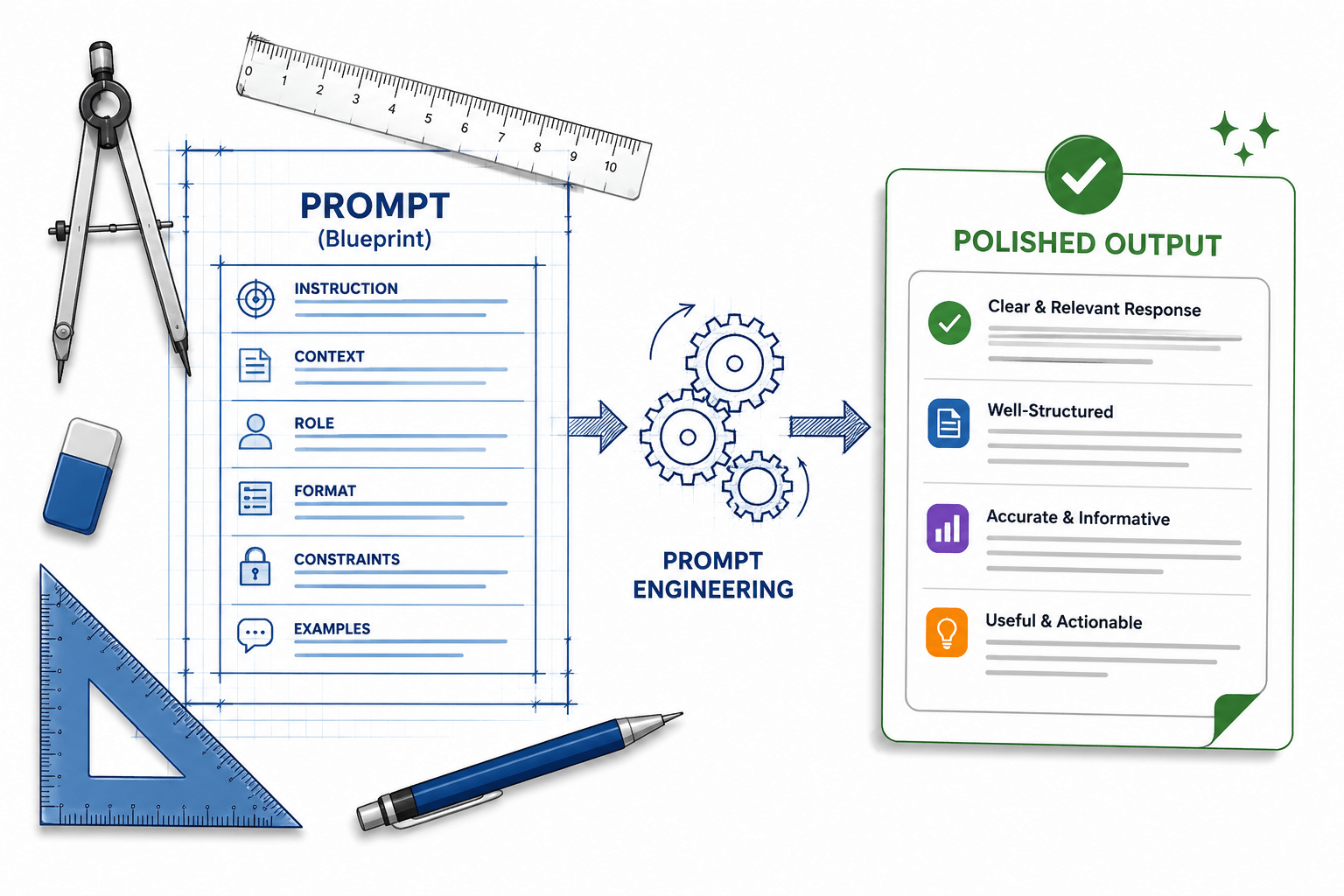
Prompt Components
Instruction, Context, Role, Format, Constraints, and Examples make up a prompt.
We know what goes into a prompt. But just having all the components isn't enough — how you write and organize them matters just as much.
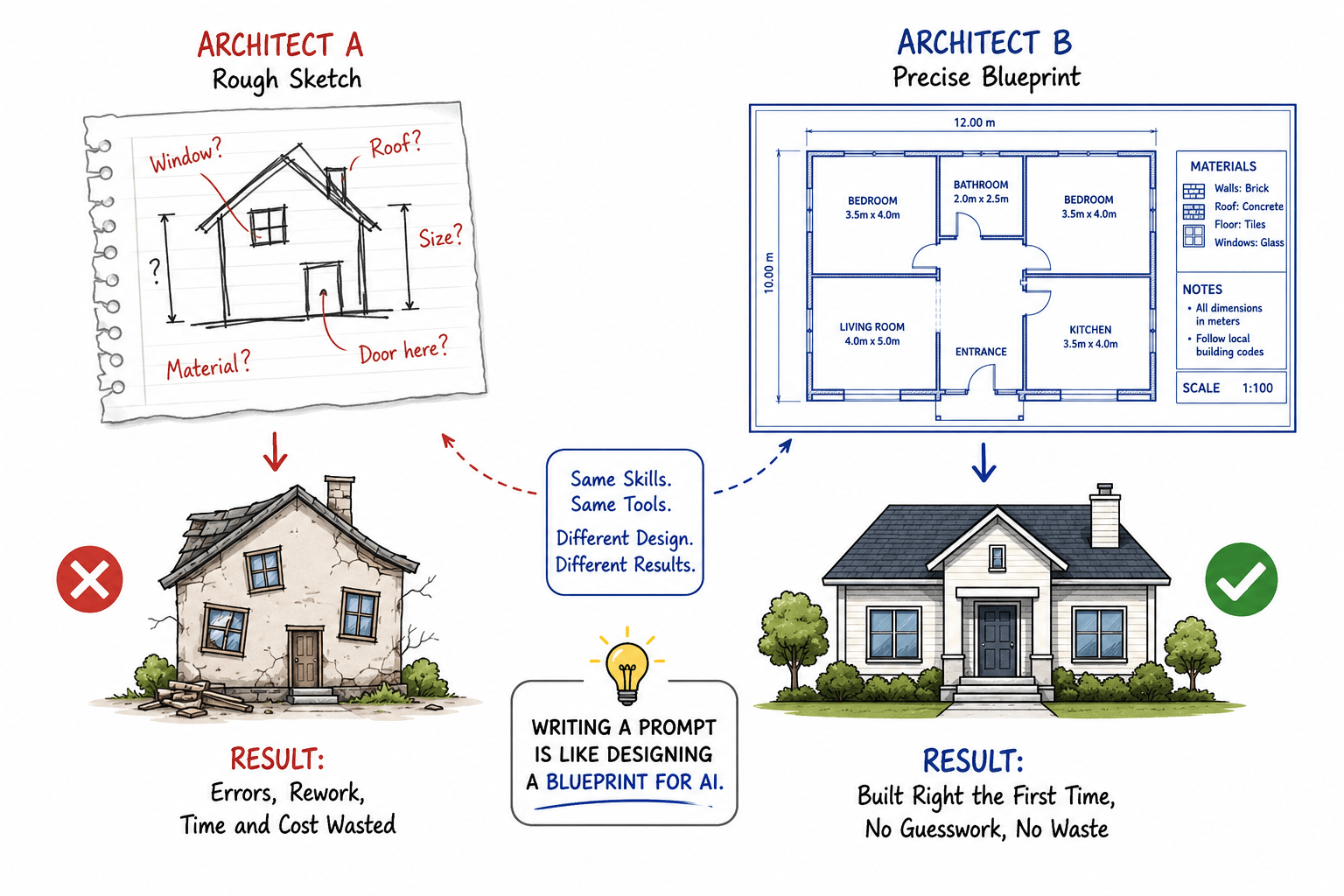
Architect's Blueprint Analogy
Imagine two architects are asked to design the same house.
Architect A creates a rough sketch with no measurements or labels, forcing the builder to guess.
Architect B creates a detailed blueprint, allowing the builder to build the house correctly the first time.
Think About It
Previously, we imagined two architects — one with a rough sketch, one with a precise blueprint. Same skills, same tools, but very different results based purely on design quality.
Can simply having the right prompt components — without organizing or refining them — guarantee a great AI output?
A small thought before we go technical
Expected Answer
NO
Just like a blueprint, a well-designed prompt needs clarity, structure, and precision.
Now, let's explore the key principles of effective prompt design.
What Are Prompt Design Principles?
Definition
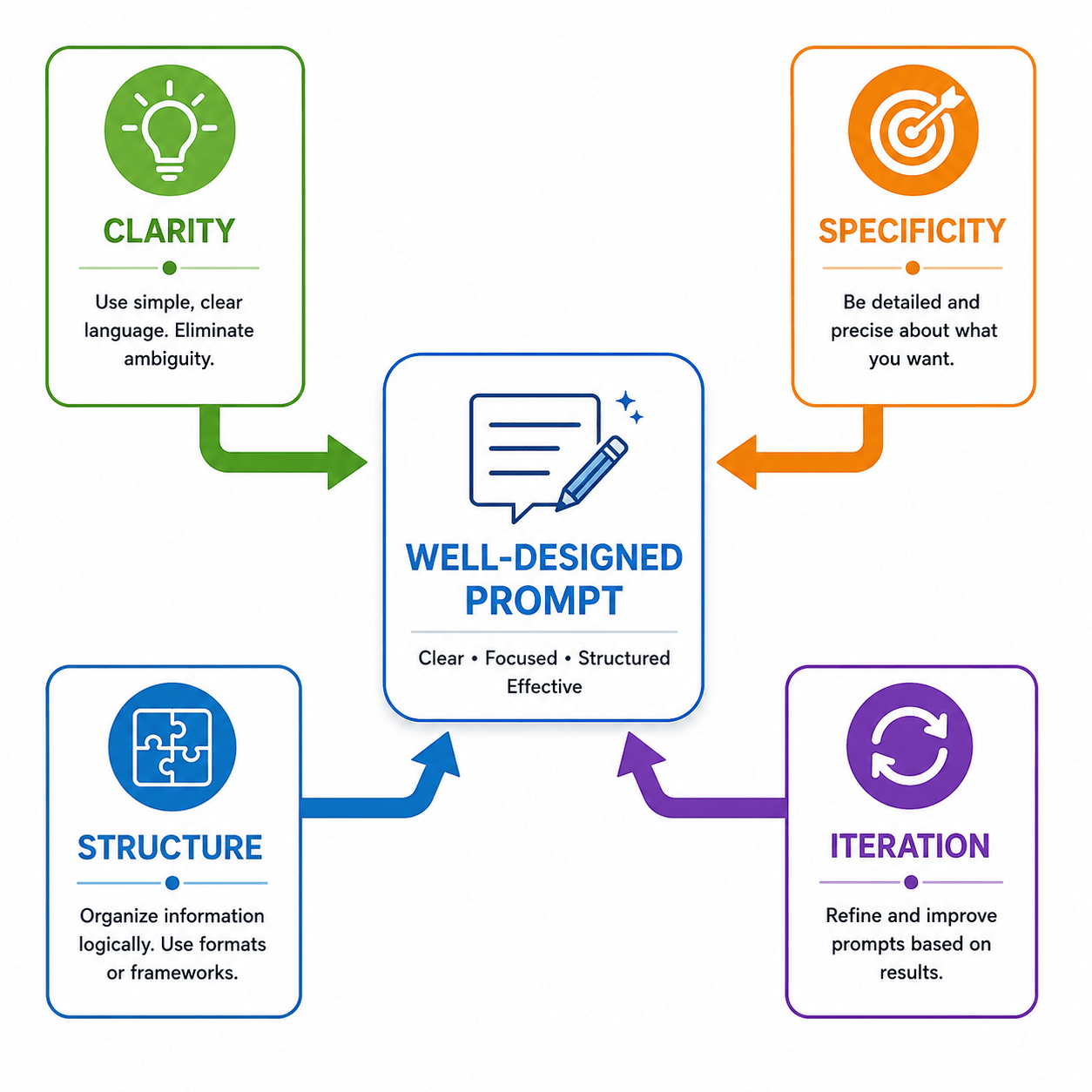
Prompt Design Principles are the guiding rules that help you write prompts that are clear, precise, and structured — maximizing the chance of getting accurate, high-quality AI output on the first attempt.
While Prompt Components tell you what to include, Design Principles tell you how to write and arrange it effectively.
Why it matters:
01 — Efficiency
Well-designed prompts reduce back-and-forth corrections and save time.
02 — Reproducibility
They make prompt writing a repeatable, teachable skill — not trial-and-error.
03 — Troubleshooting
When output is wrong, principles reveal which design rule was broken.
Real-Life Examples :
Business Analyst
Restructures a messy prompt into numbered steps → gets a precise report on the first try.
Designer
Rewrites an ambiguous prompt with specific adjectives → gets an image matching their exact vision.
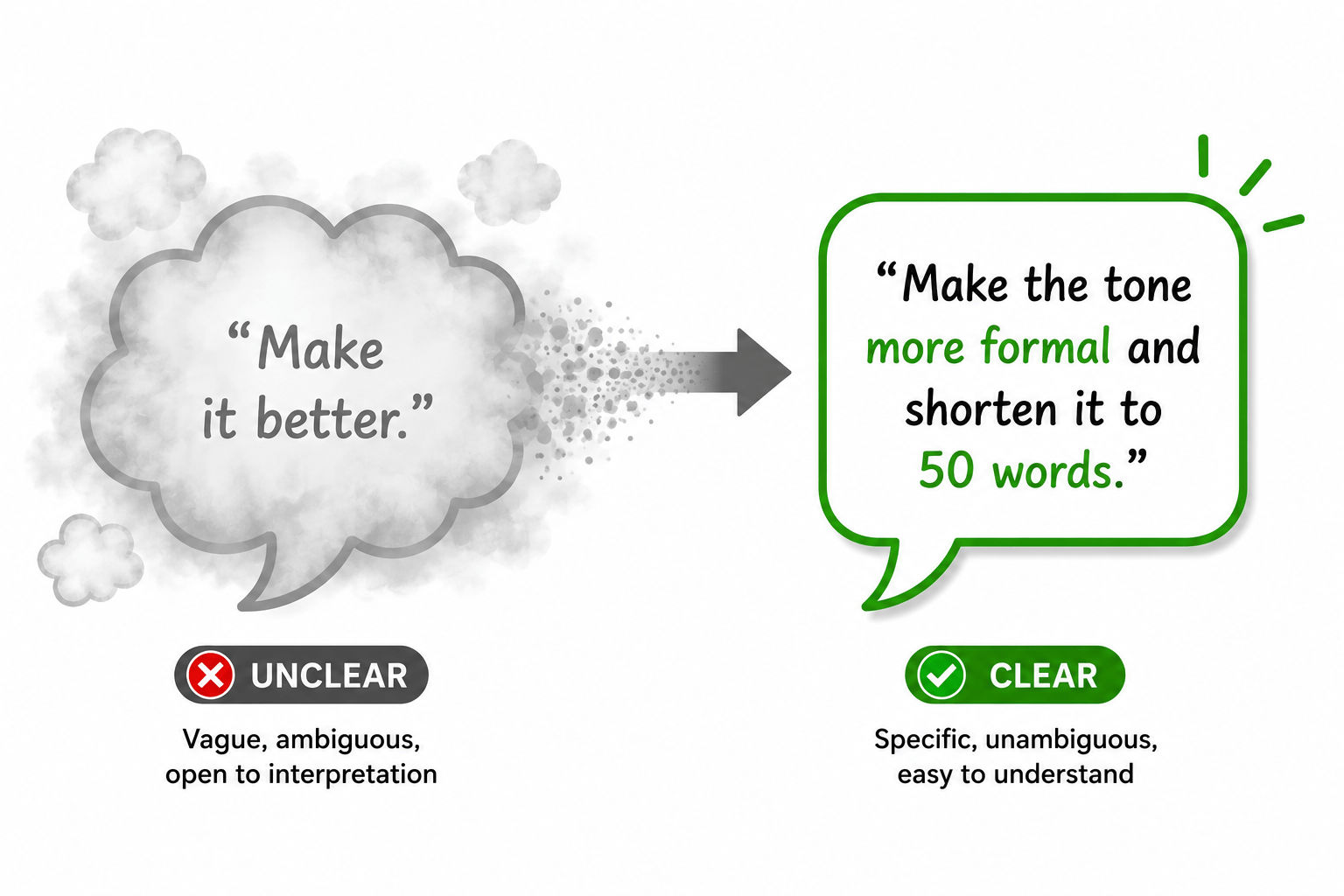
Principle 1: Clarity
Example:
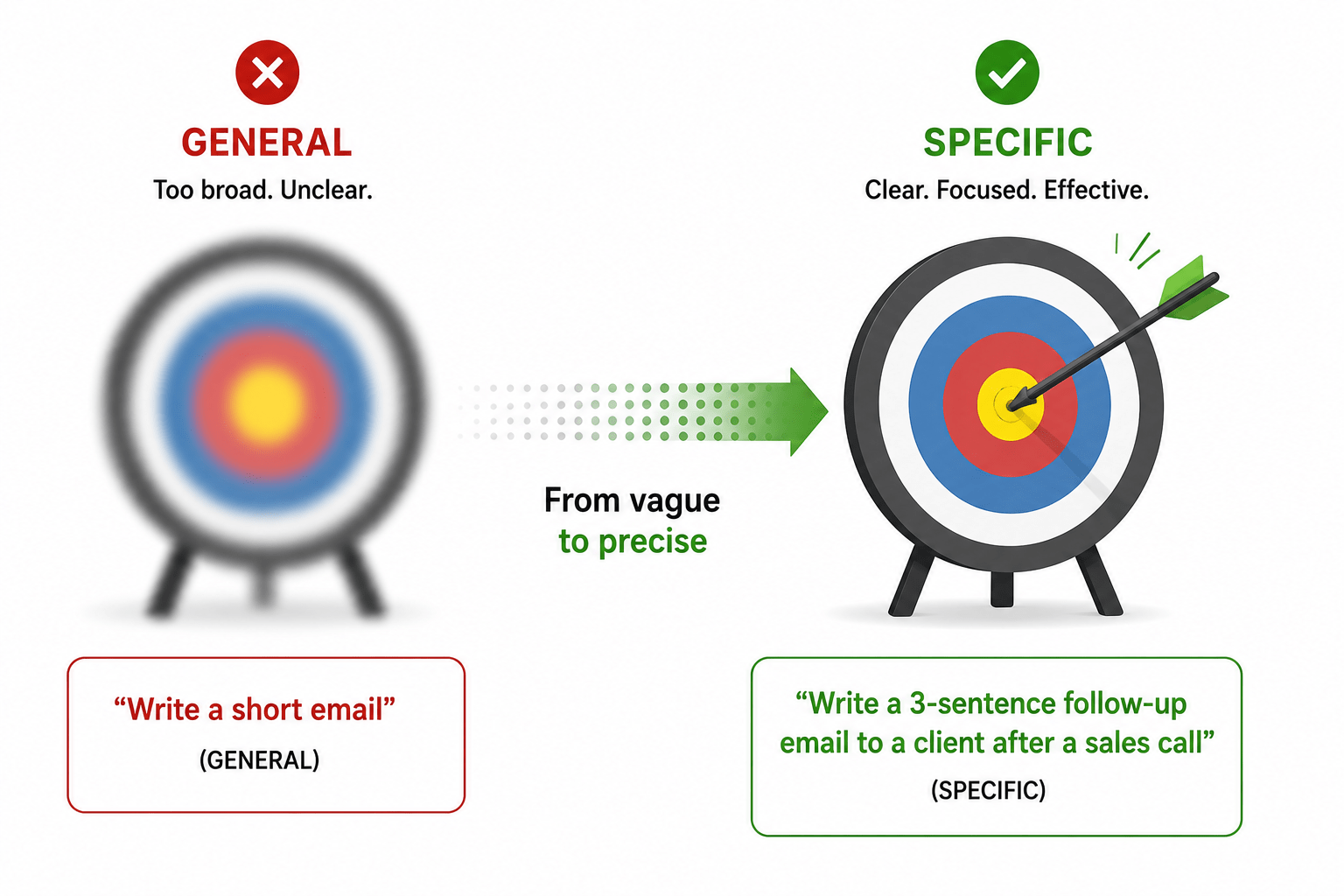
Principle 2: Specificity
Example:
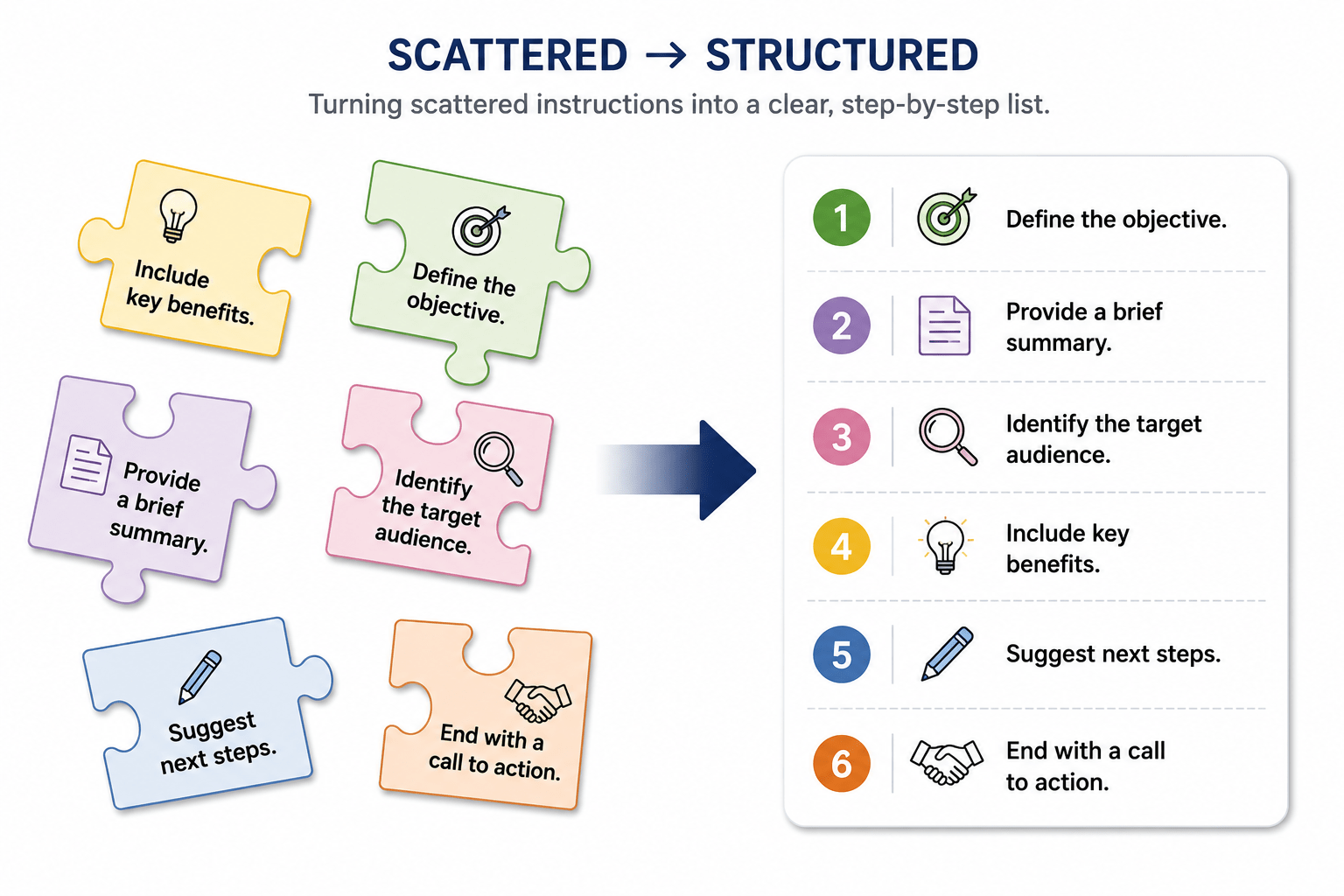
Principle 3: Structure & Order
Example:
Numbered instructions or step-by-step phrasing for multi-part tasks.
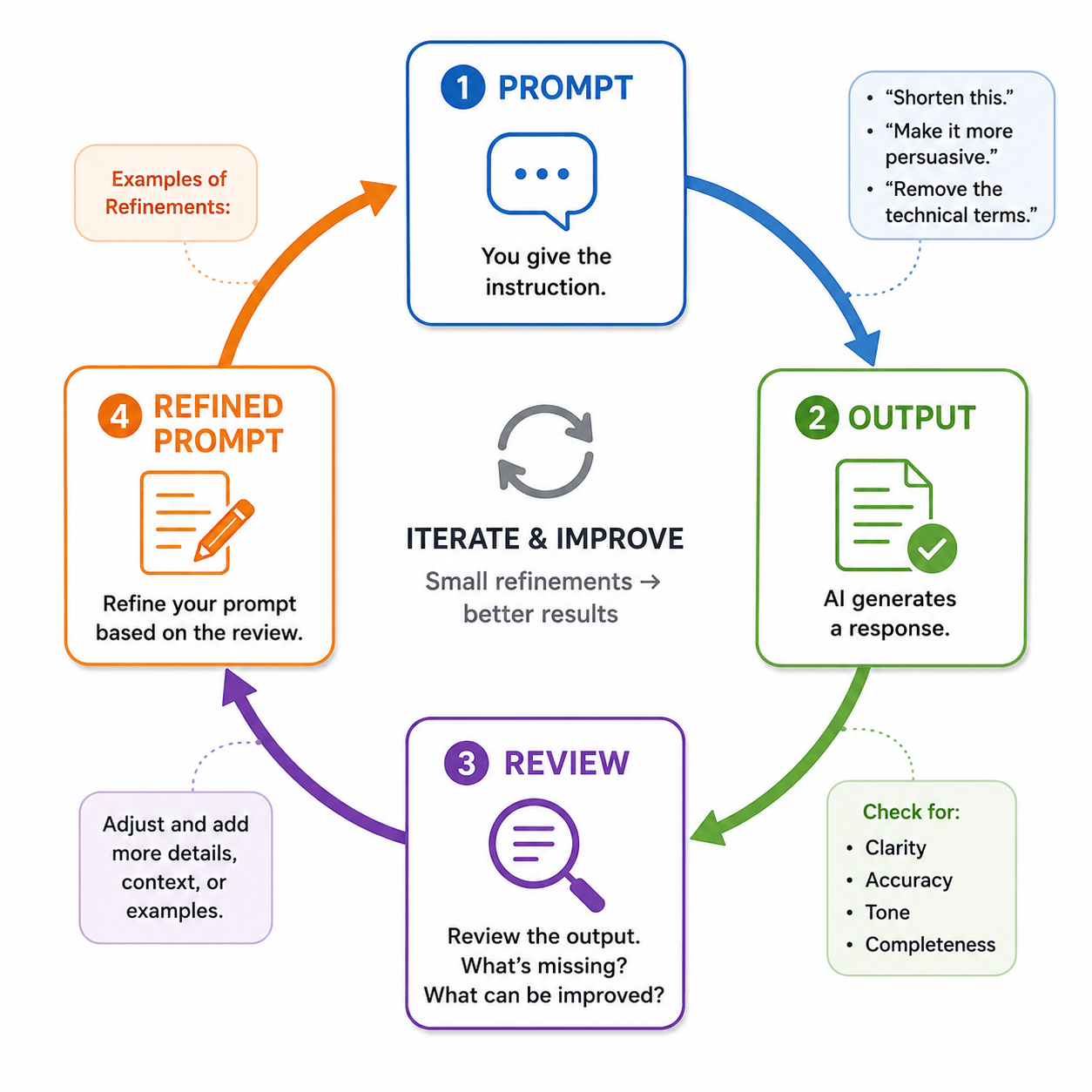
Principle 4: Iteration & Refinement
Example:
Prompting is a conversation, not a one-shot command.
"Shorten this," "Make it more persuasive," "Remove the technical terms" — each a refinement step.
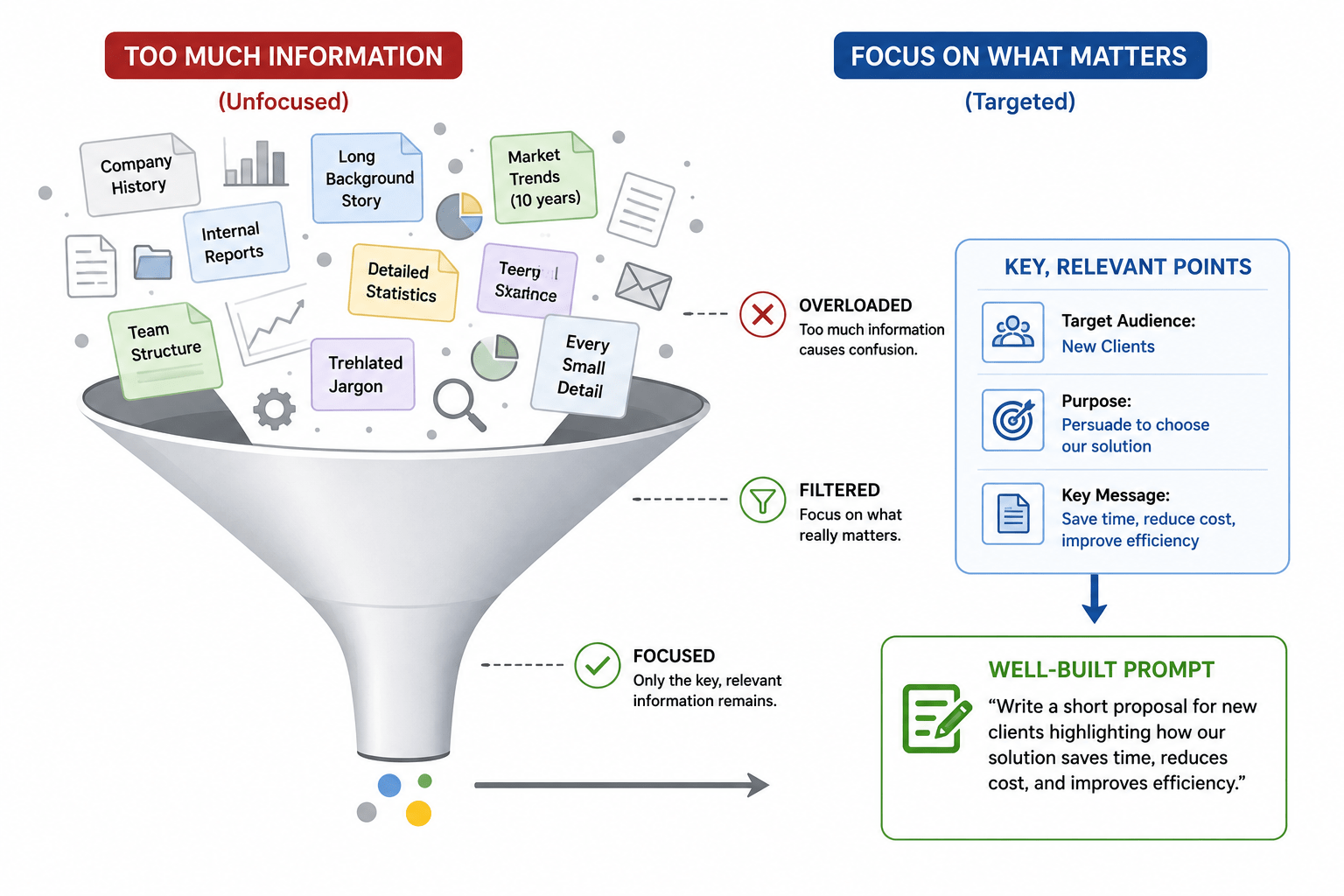
Principle 5: Providing Sufficient Context
Include only the relevant background information the AI needs — not too little (causing guesswork), not too much (causing confusion).
Share the target audience and purpose of a document, without pasting unrelated background details.
Example:
Sharing the target audience and purpose of a document, without pasting unrelated background details.
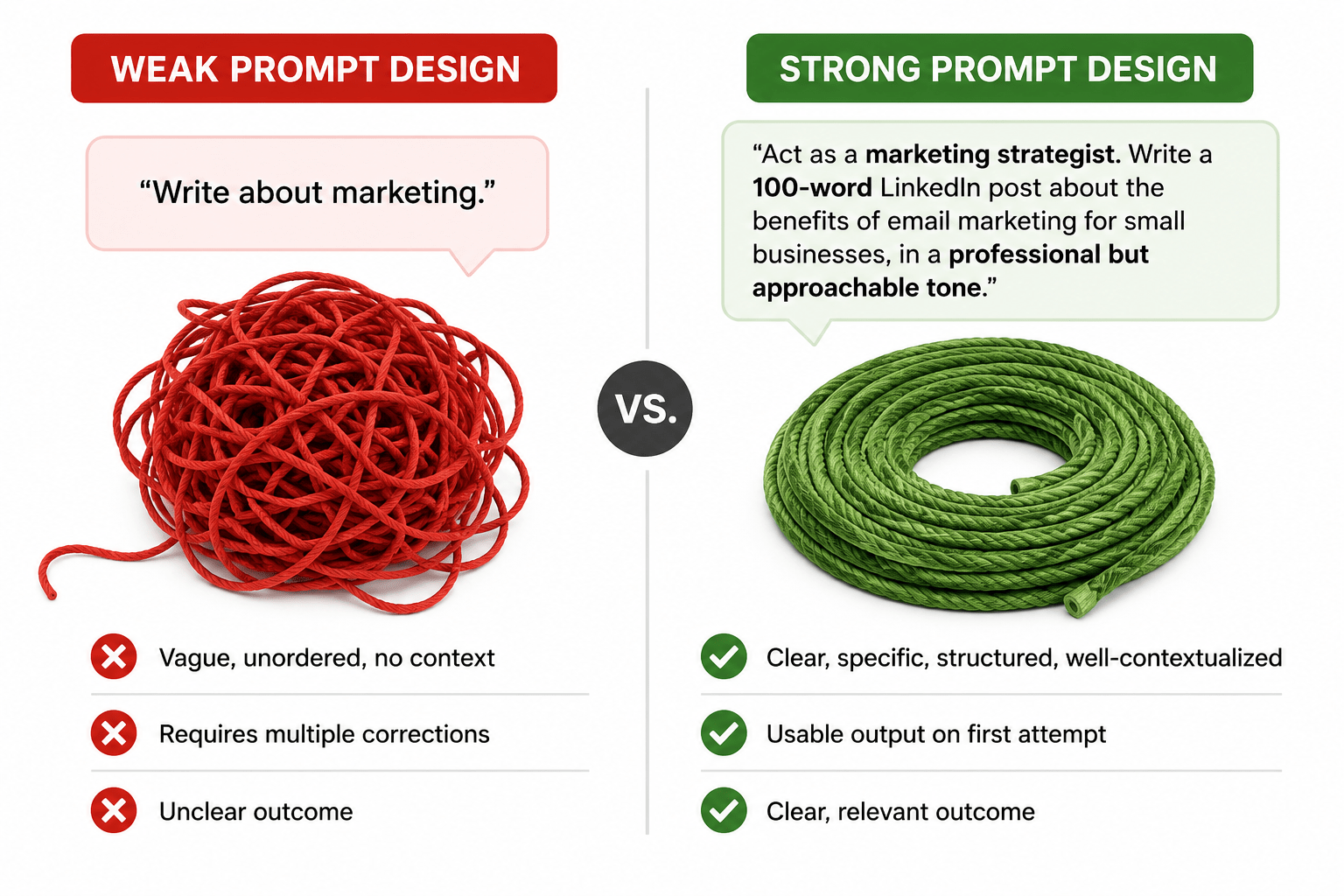
Weak Design vs. Strong Design (Comparison)
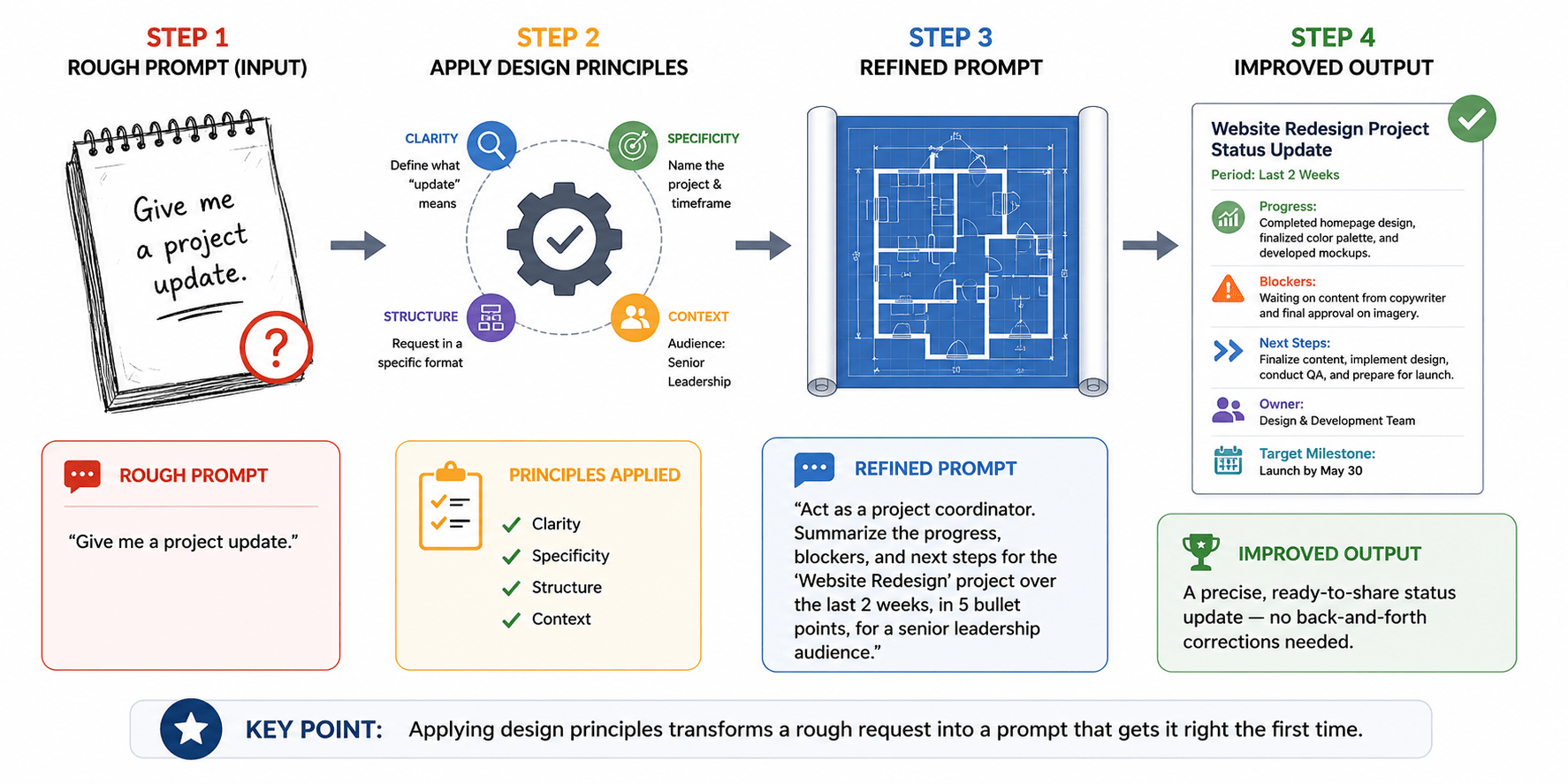
How Design Principles Improve Output (Core Mechanism)
Scenario: A project manager wants a status update summary from AI.
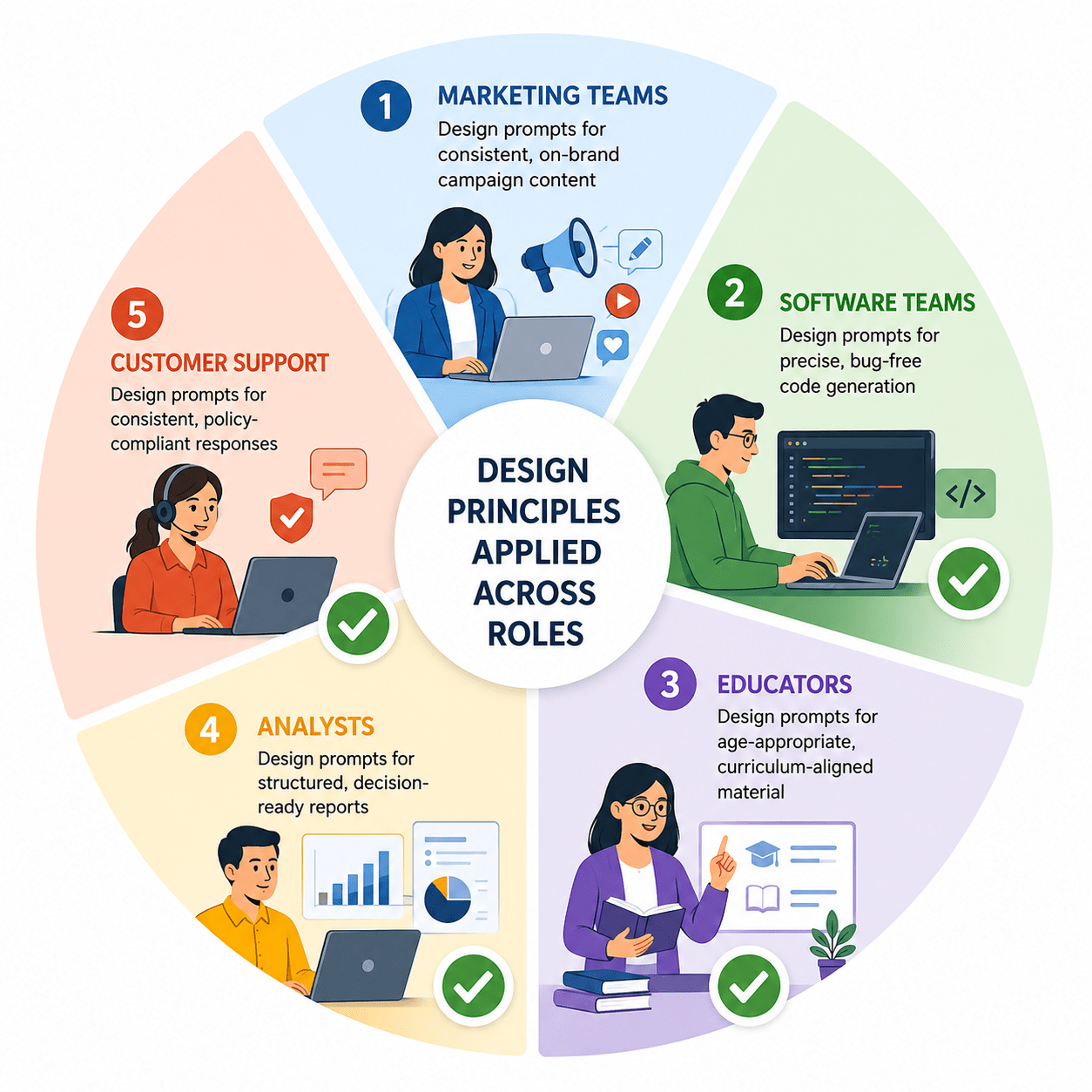
Applications of Prompt Design Principles
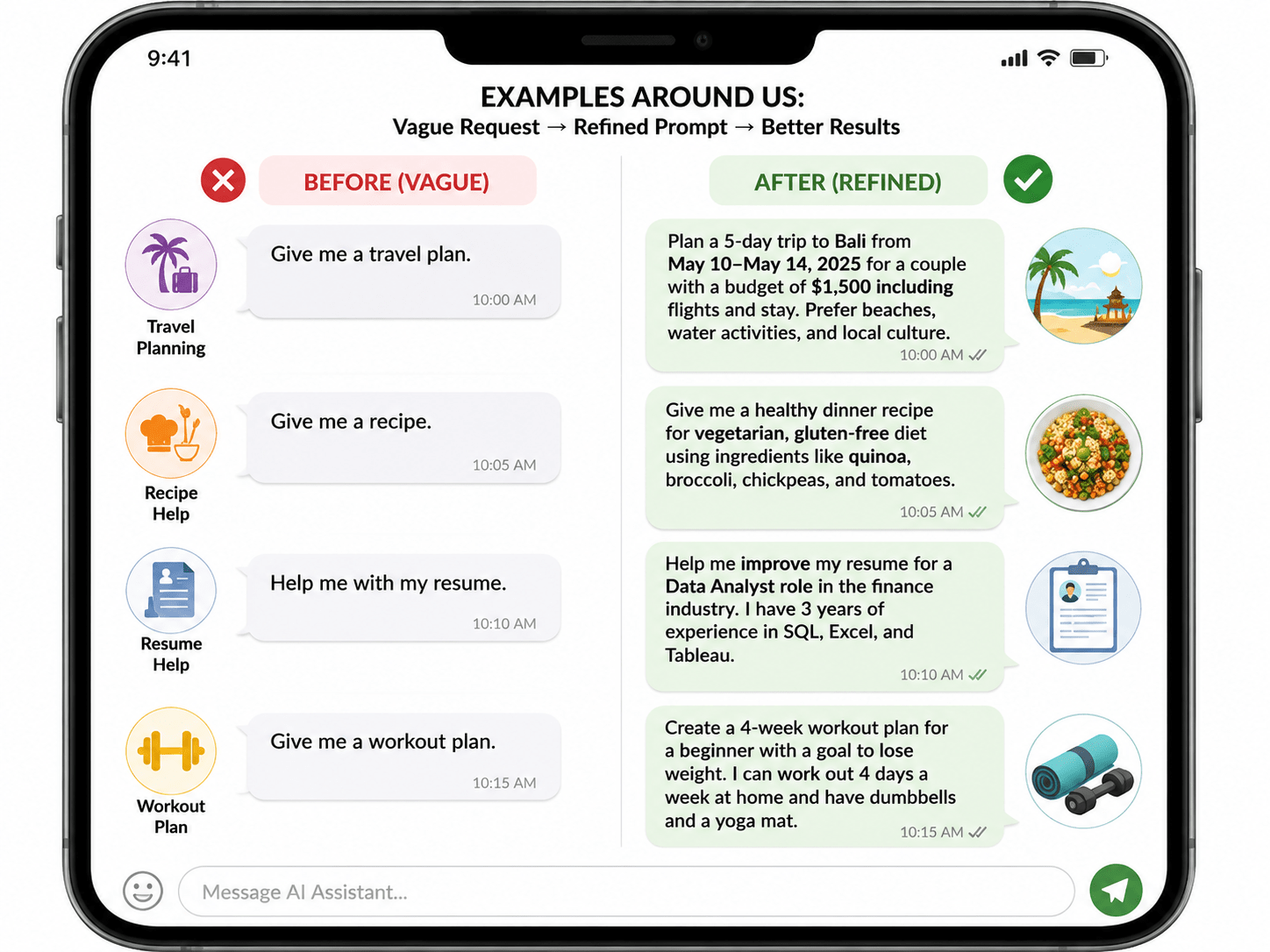
Daily Life Applications
Summary
4
Refining prompts is part of the process.
3
Well-designed prompts produce better results.
2
The five principles are Clarity, Specificity, Structure, Iteration, and Context.
1
Prompt design focuses on clarity, structure, and organization.
Quiz
Which prompt design principle involves treating the first prompt as a draft and improving it based on the AI's output?
A. Specificity
B. Structure & Order
C. Iteration & Refinement
D. Clarity
Quiz-Answer
Which prompt design principle involves treating the first prompt as a draft and improving it based on the AI's output?
A. Specificity
B. Structure & Order
C. Iteration & Refinement
D. Clarity
By Content ITV