


Content ITV PRO
This is Itvedant Content department
Rapid Application Development
The RAD model was formally introduced in the early 1990s by James Martin
He explained it in his book:
📘 Rapid Application Development (1991)
RAD became popular when businesses needed software
quickly due to fast market changes.
Traditional models like the Waterfall model were:
❌ Time-consuming
❌ Difficult to change
❌ Slow to deliver
❌ Documentation-heavy
Companies wanted:
✅ Faster delivery
✅ Early working prototypes
✅ Flexible requirement changes
✅ Active user involvement
So RAD was introduced to speed up development.
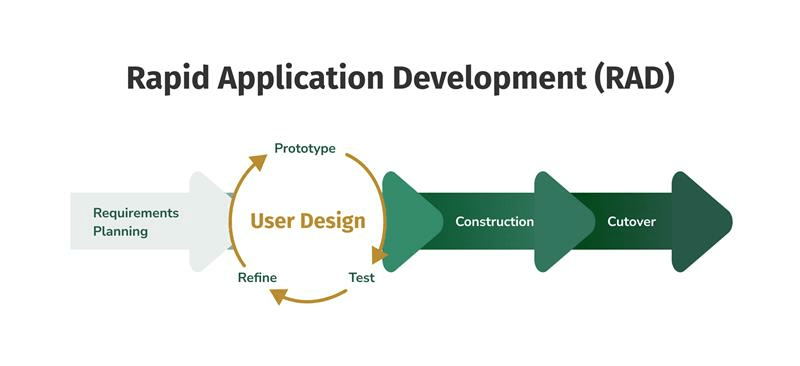
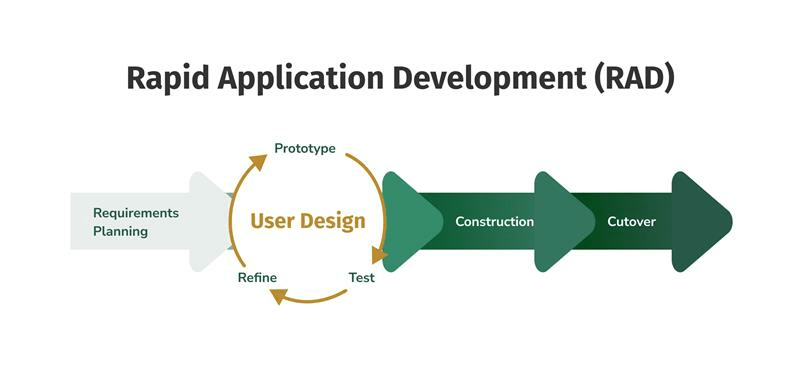
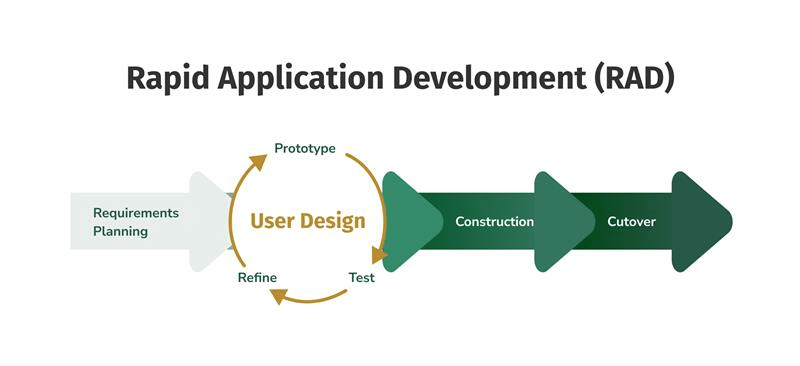
RAD has 4 main phases:
Discuss project goals
Identify requirements quickly
High-level planning
Create prototypes
Get user feedback
Modify design based on feedback
Rapid coding
Component reuse
Parallel development
Testing
Deployment
User training
The main purpose is:
The main purpose is:
To deliver software quickly
To reduce development time
To involve users heavily
To adapt quickly to changes
It is ideal when:
Requirements are moderately clear
Project timeline is short
Skilled developers are available
Imagine developing a College Management System:
🔹 Week 1 → Prototype of login & dashboard
🔹 Week 2 → Student module
🔹 Week 3 → Attendance system
🔹 Week 4 → Reports & final deployment
Users continuously check and give feedback.
✅ Fast development
✅ Continuous user involvement
✅ Early working system
✅ Flexible to change
❌ Not suitable for large complex systems
❌ Requires skilled team
❌ Heavy user involvement needed
❌ Not ideal for high-risk projects
By Content ITV