





Content ITV PRO
This is Itvedant Content department
Learning Outcome
5
Differentiate between Traditional and Agile testing
4
Understand the Agile testing lifecycle
3
Identify the role of a tester in Agile projects
2
Explain how testing works within a Sprint
1
Understand the concept of Agile methodology
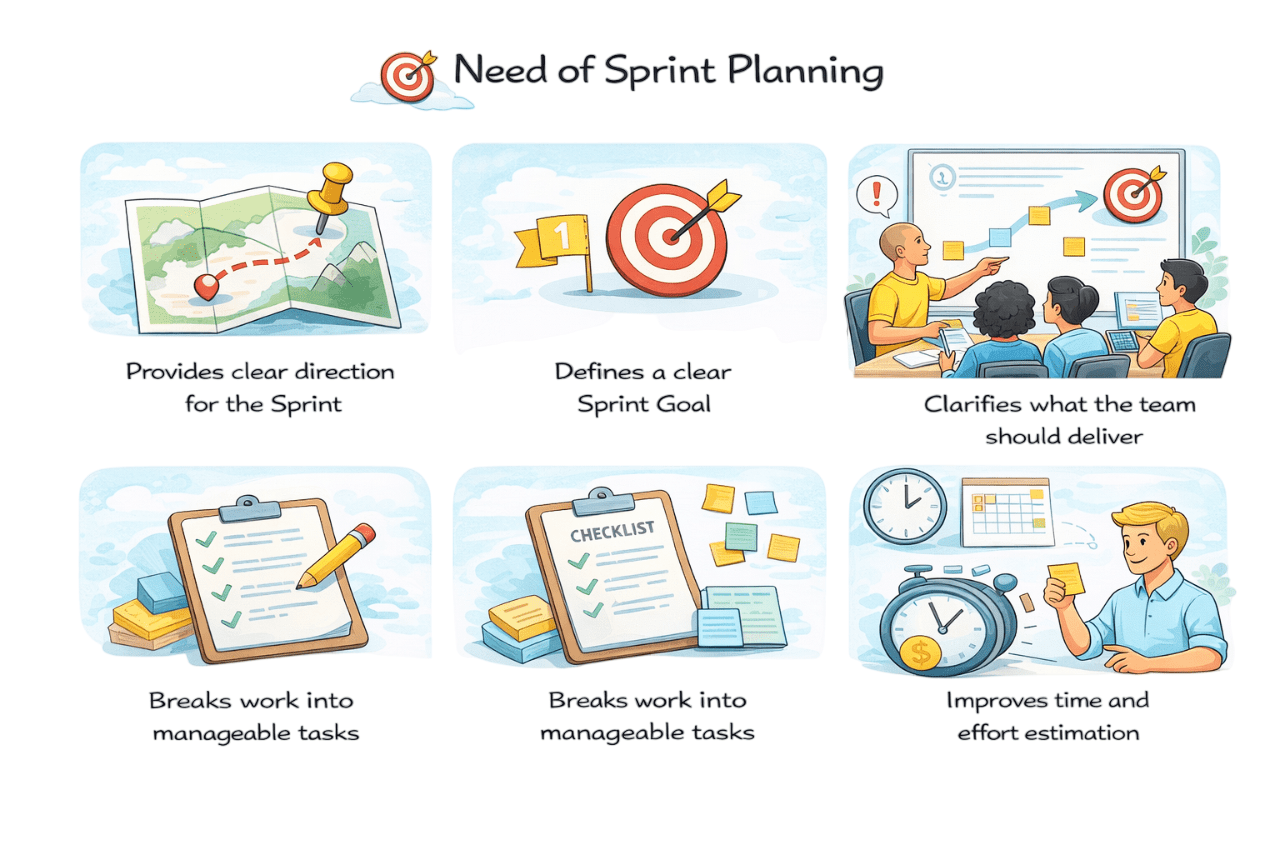
Need of Sprint Planning
Gives clear sprint direction
Defines a clear sprint Goal
Clarifies what the team should deliver
Breaks work into manageable tasks
Improve time & effort estimation
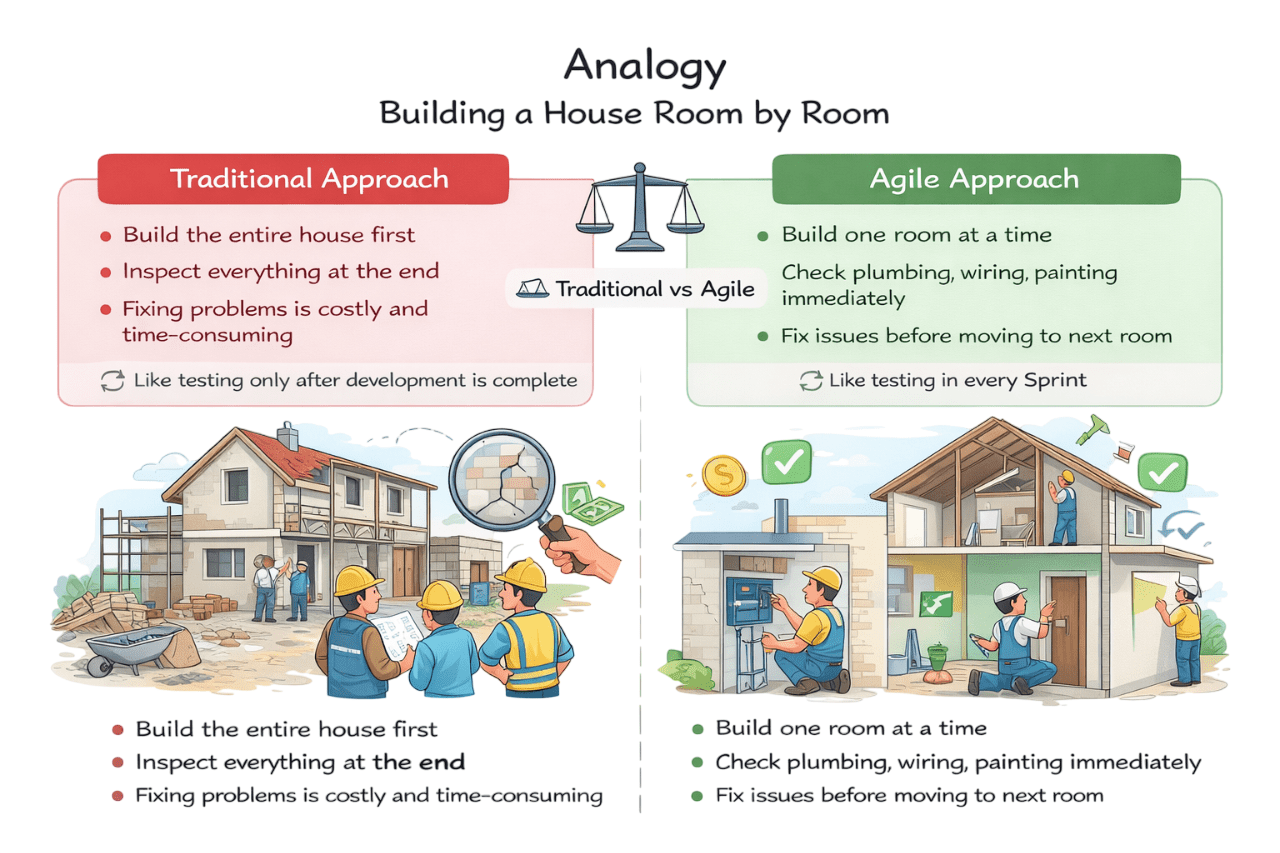
Building House Room by Room
Build the entire house first
Like Testing only after development is complete
Inspect everything at the end
Fixing problems is costly & time-consuming
Traditional Approach
Build one room at a time
Check plumbing,wiring,painting immediately
Fix issues before moving to next room
Agile Approach
Like Testing in every sprint
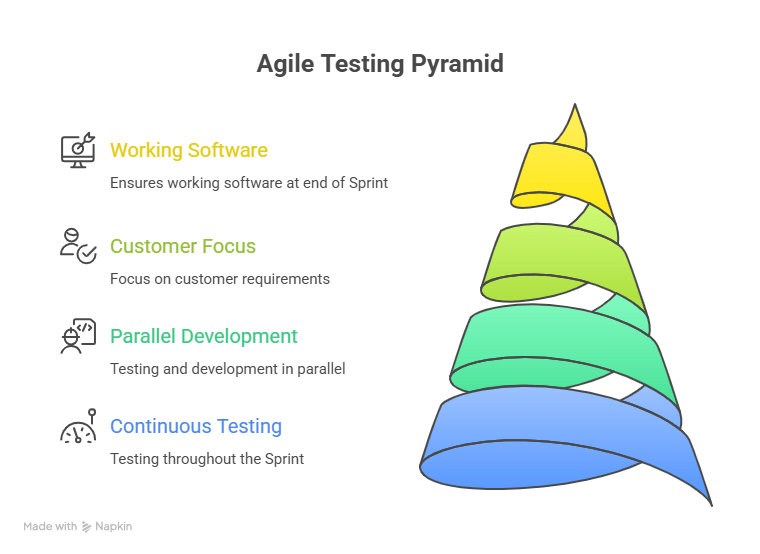
What is Agile Testing?
Parallel Development
Testing and development in parallel
Continuous Testing
Testing throughout the sprint
Working Software
Ensures working software at end of sprint
Customer Focus
Focus on customer requirement
Agile Testing is the practice of testing software continuously during development in an Agile environment.
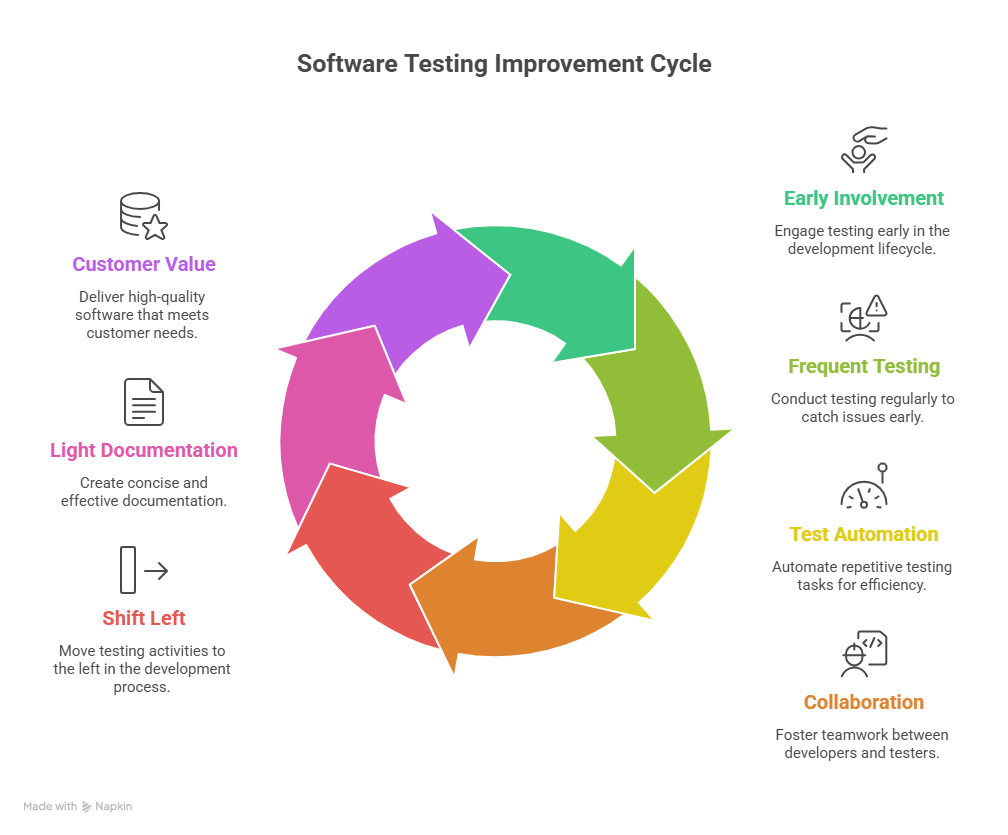
Key Characteristics of Agile Testing
Collaboration
Foster teamwork between developers and testers
Customer Values
Delivers high quality software that meets customer needs
Light Documentation
Create concise and effective documentation
Shift left
Move testing activities to the left in the Development process
Early Involvement
Start testing early in development
Early Involvement
Conduct testing regularly to catch issues early
Test Automation
Automate repetitive testing tasks for efficiency
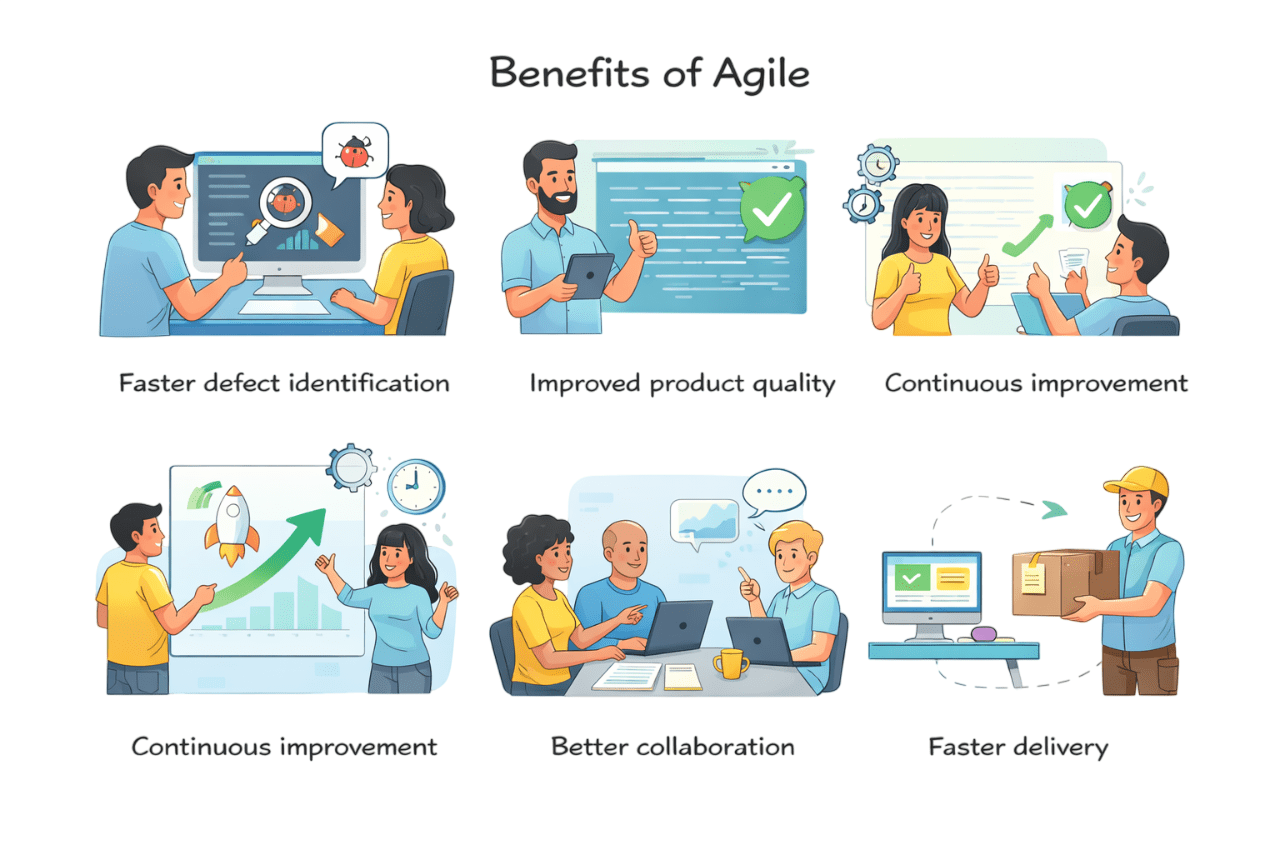
Benefits of Agile
Faster Defect Identification
Improved Product Quality
Continuous Improvement
Better Collaboration
Faster Delivery
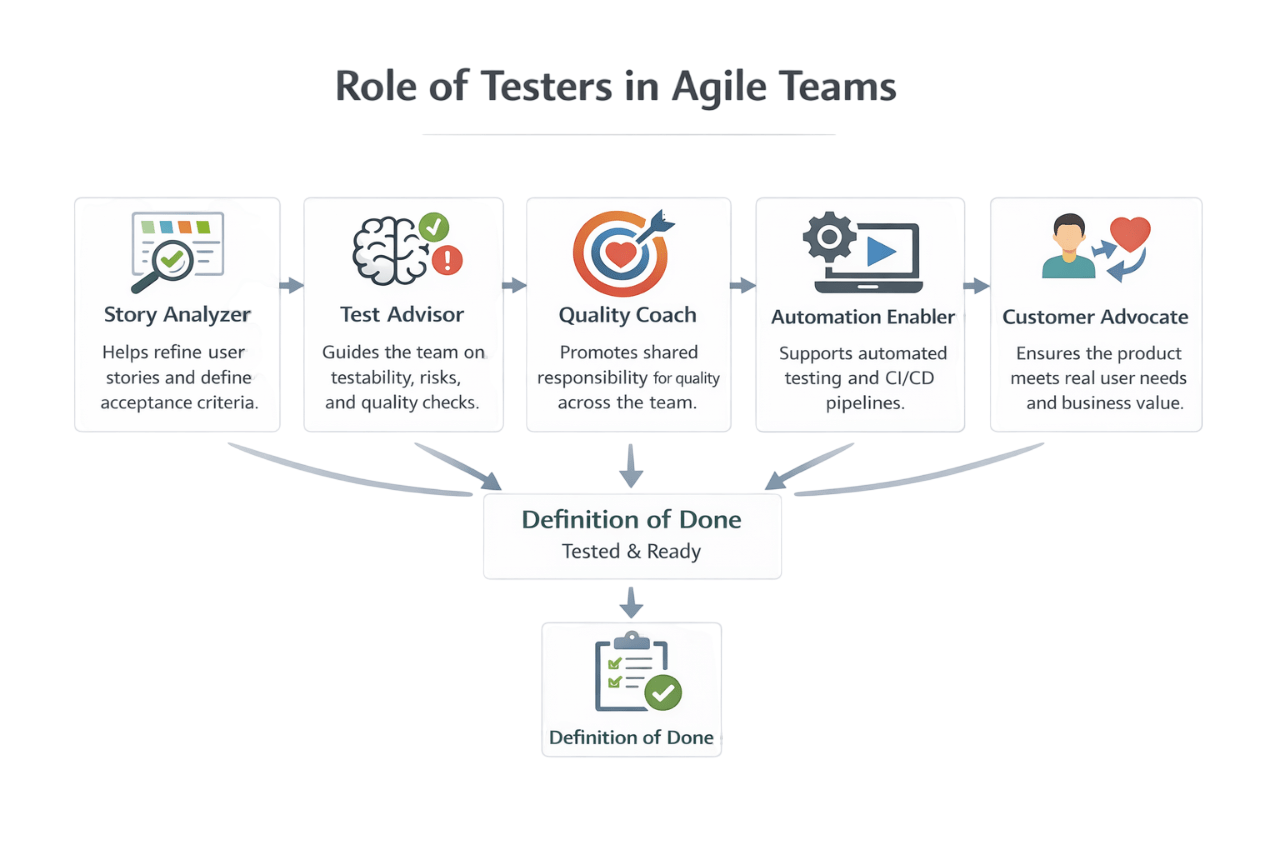
Roles of Tester in Agile Teams
Story Analyzer
Test Advisor
Quality Coach
Automation Enabler
Customer Advocate
Helps refine user stories & define acceptance citeria
Guides the team on testability,risks & quality checks
Promotes shared responsibility for quality across the team
Supports automated testing and CI/CD pipelines
Ensure the product meets real user needs & business value
Quality Coach
Quality Coach
Definition of Done
Tested & Ready
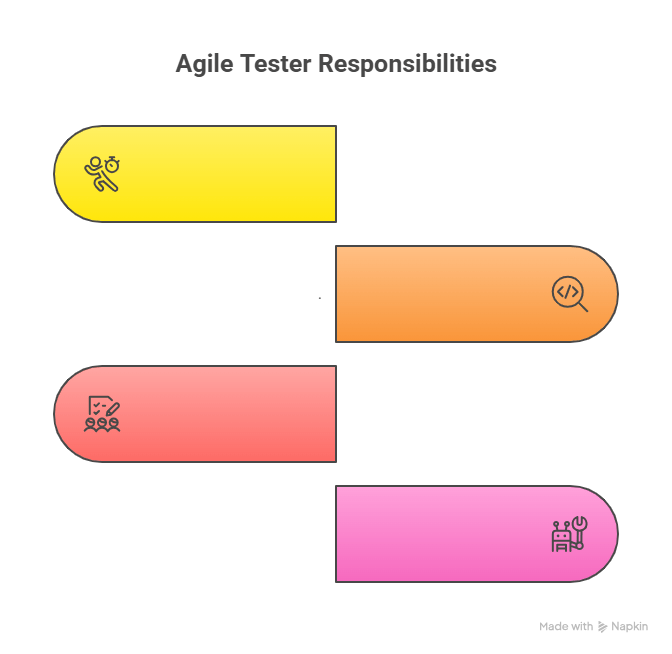
How Testers Contributes in Agile
Plan tests for upcoming features
Ensure features work as expected
Share updates and resolve blockers
Automate tests for faster quality checks
Sprint Planning
Functional Testing
Daily Scrum
Automation
Support
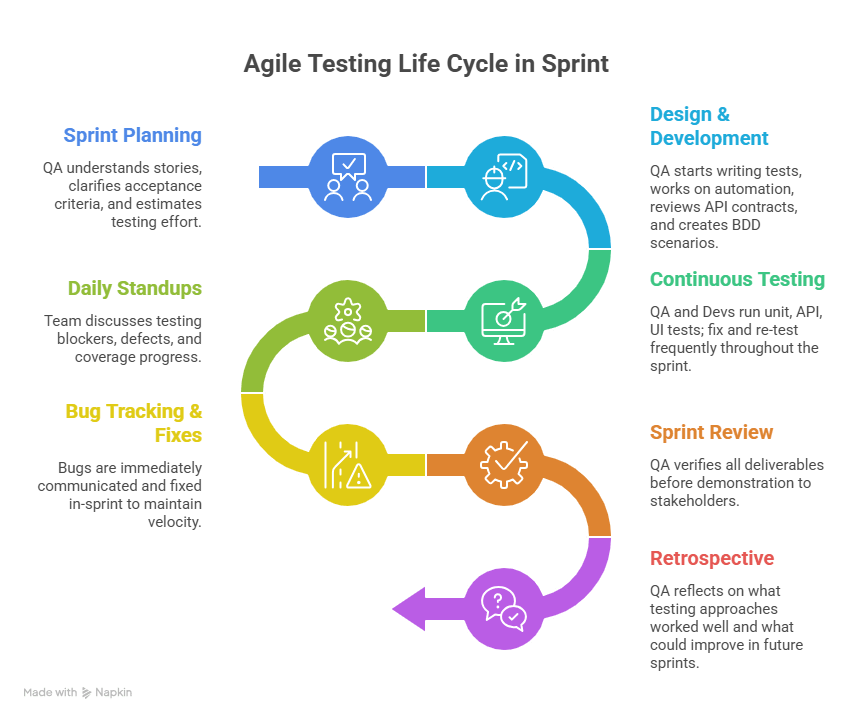
Agile testing life cycle
Sprint Planning
Design & Development
Continuous testing
Sprint Review
Retrospective
Daily Standups
Bug Tracking & Fixes
Understand user stories and acceptance criteria
Discuss progress, defects, and blockers
Report, fix, and retest bugs quickly
Prepare test cases and automation scripts
Run unit, API, and UI tests continuously
Verify features before stakeholder demo
Discuss improvements for next sprint
Sprint Planning Vs Sprint Retrospective
| Sprint Planning | Sprint Retrospective |
|---|---|
| Focuses on upcoming work | Focuses on the completed Sprint |
| Sets Sprint goals | Improves team process |
| Decides what to build | Discusses what went well / didn’t |
| Happens at the beginning | Happens at the end |
| Plans the work | Improves the way of working |
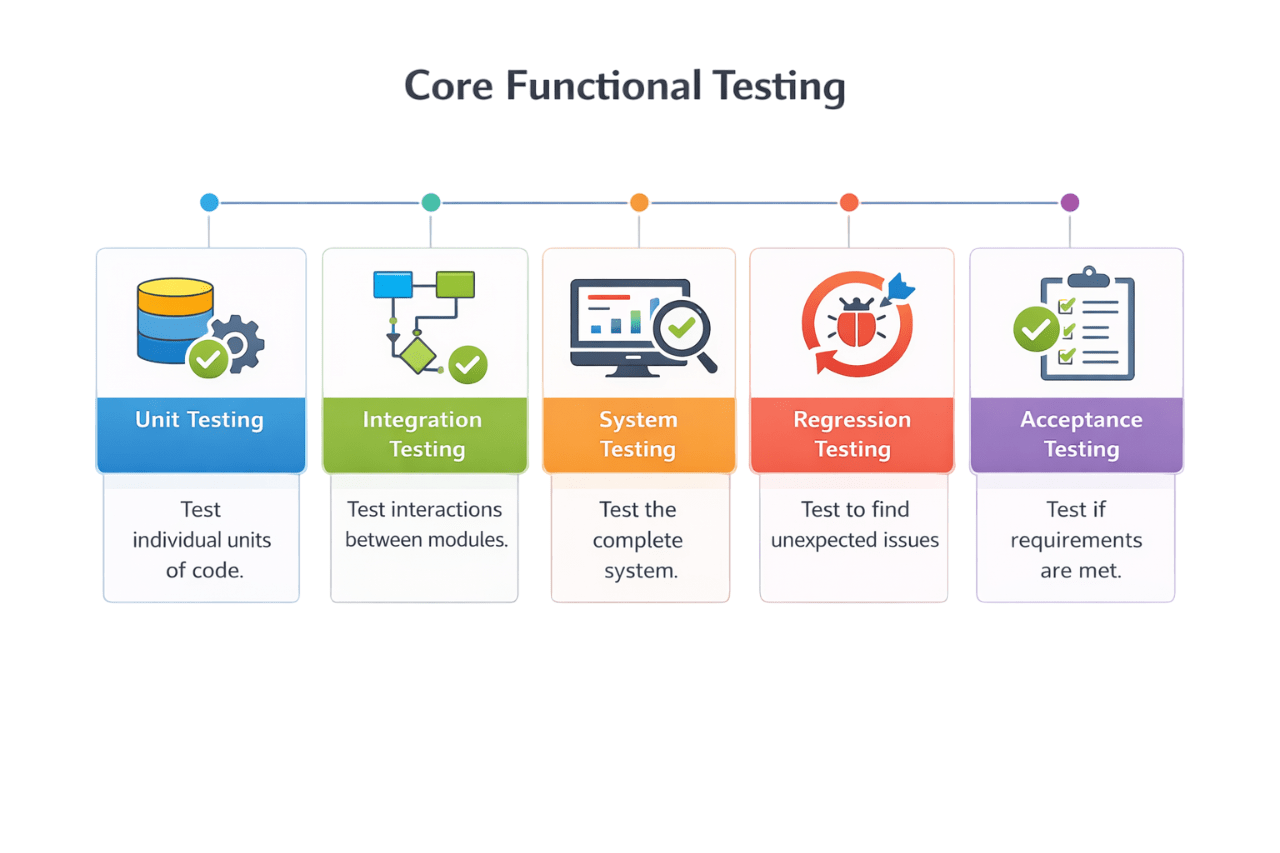
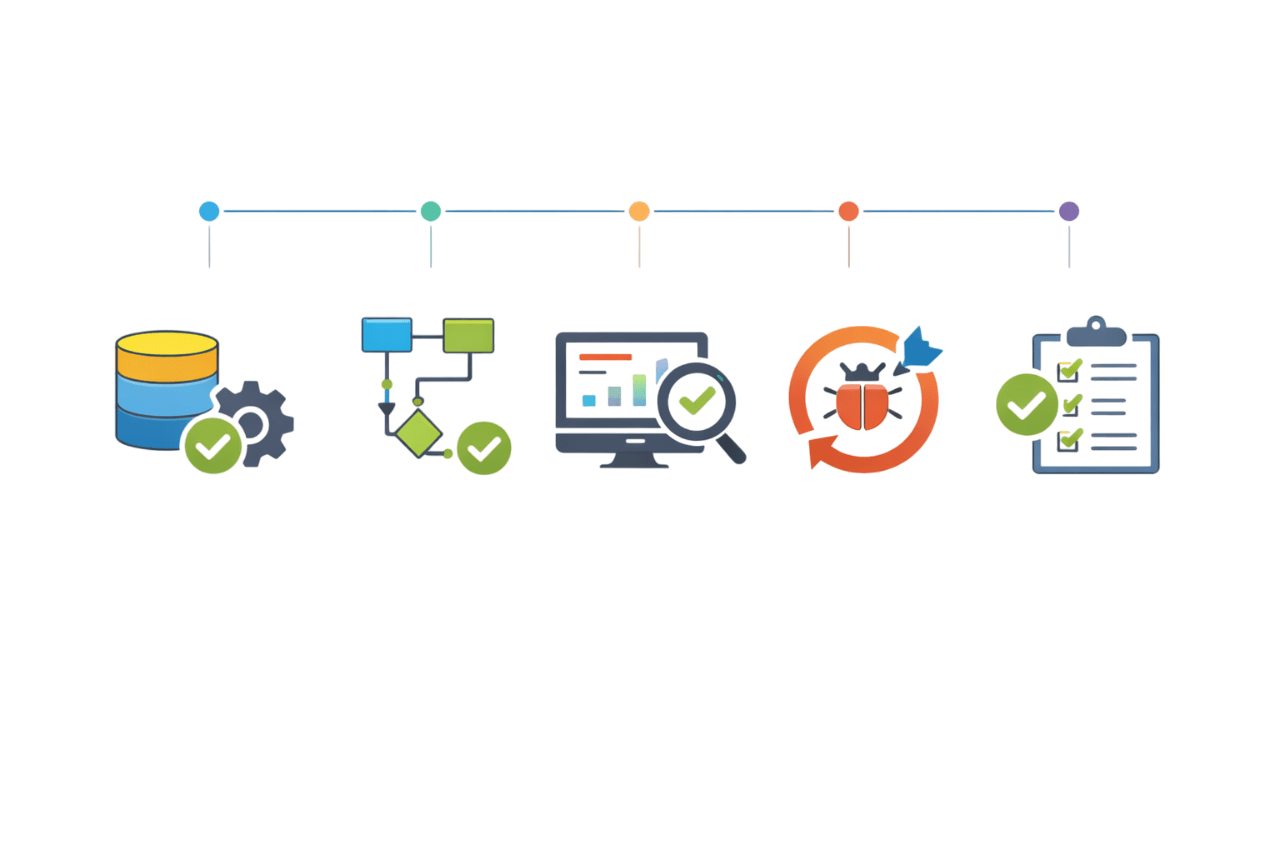
Functional Testing
Unit Testing
Integration Testing
System Testing
Regression Testing
Acceptance Testing
Test individuals units of code
Test Interactions between modules
Test the Complete system
Test to find unexpected issues
Test if requirements are met
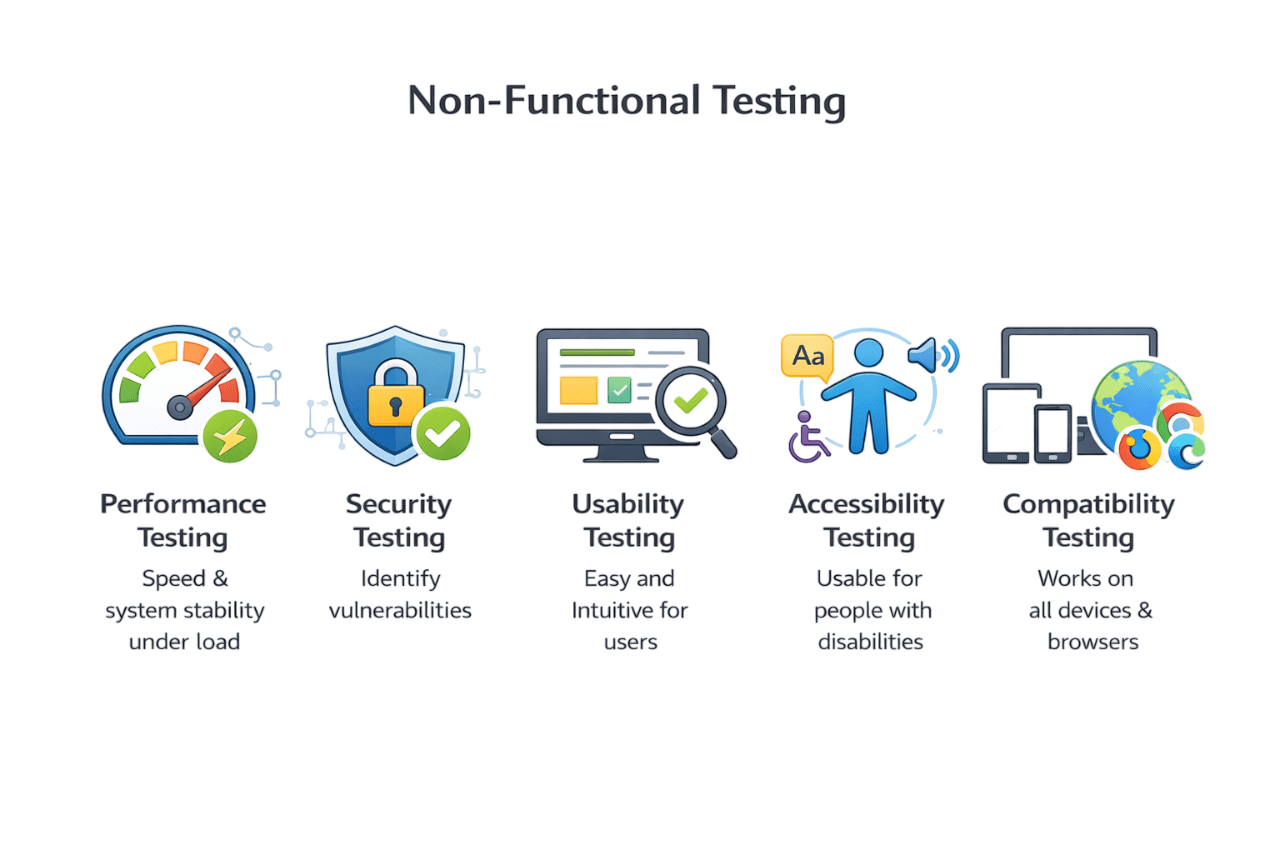
Non Functional Testing
Performance Testing
Speed & system stability under load
Security Testing
Identify vulnerabilities
Usuability
Testing
Easy and intuitive for users
Accessibilty
Testing
Usable for people with disabilities
Compatibility
Testing
Works on all devices & browsers
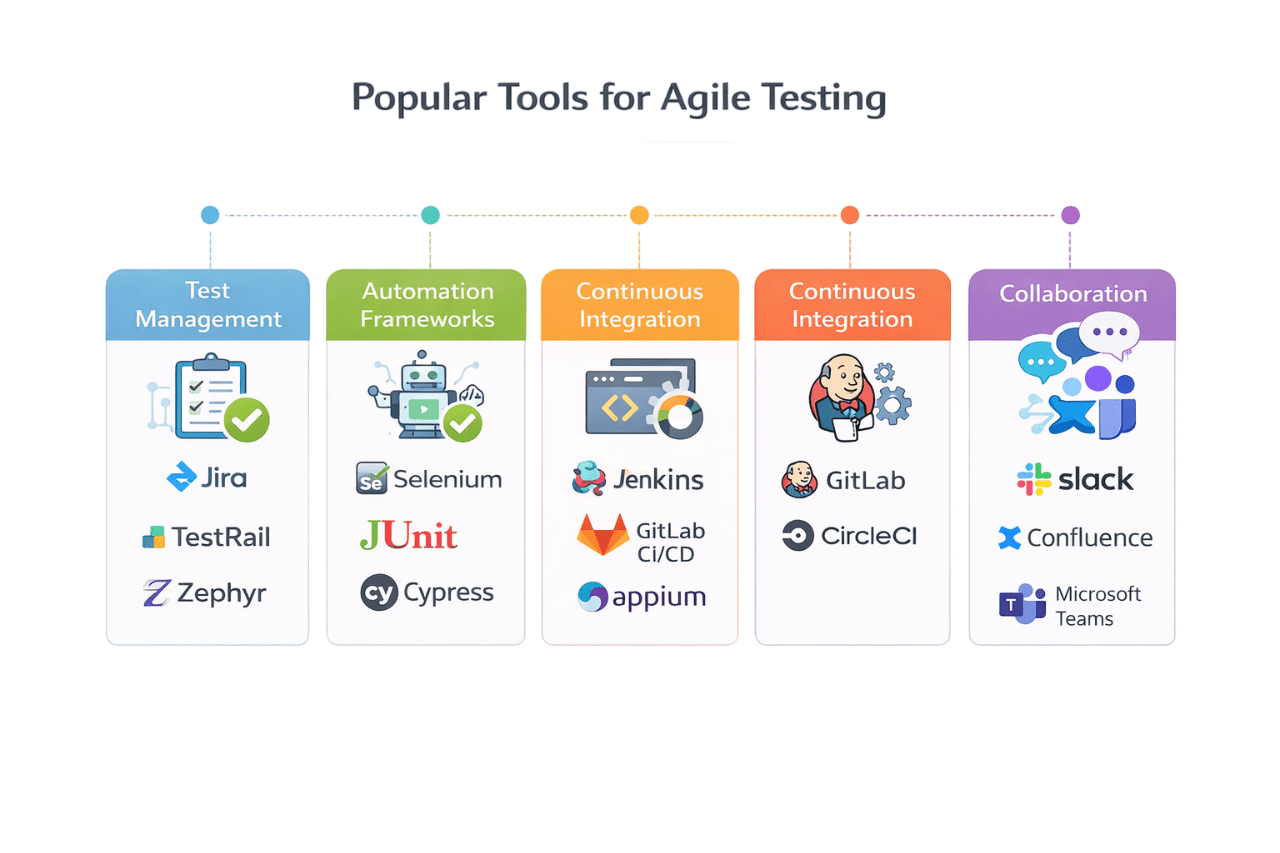
Popular Tools for Agile Testing
Test Management
Automation Framework
Continous Integration
Collaboration
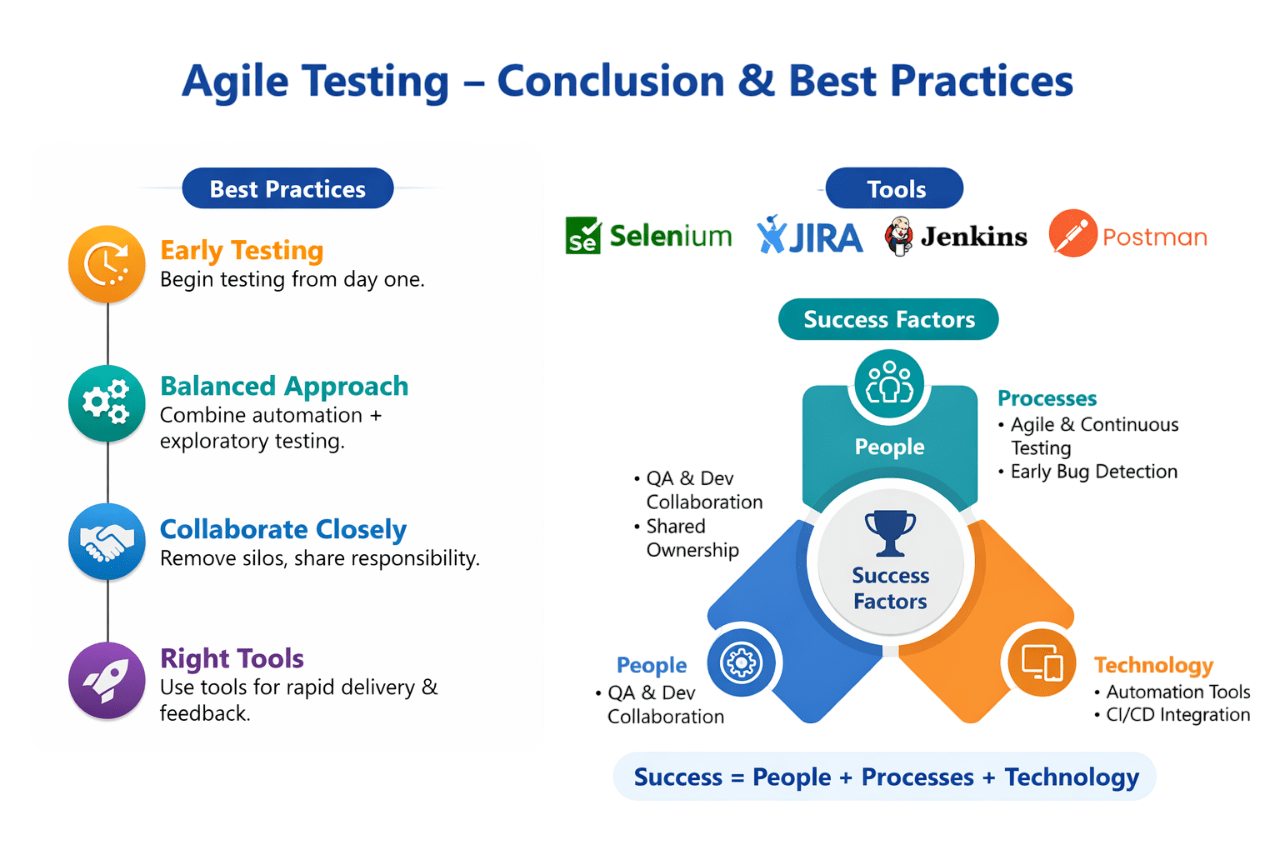
Agile Testing - Conclusion and Best Practices
Best Practices
Early Testing
Balanced Approach
Collaborate Closely
Right Tools
Begin testing from day one
Combine automation+ exploratory testing
Remove silos,share responsibility
Use tools for rapid delivery & feedback
Success depends on the right mix of people, processes, and technology
Summary
5
Each Sprint delivers working software
4
Early bug detection reduces rework
3
Testers are involved in all Scrum activities
2
Development and testing run together
1
Testing happens continuously in every Sprint
Quiz
The main benefit of Agile testing is:
A. Heavy documentation
B. Late defect detection
C. Early defect detection
D. No customer involvement
Quiz-Answer
A. Heavy documentation
B. Late defect detection
C. Early defect detection
D. No customer involvement
The main benefit of Agile testing is:
By Content ITV