


Content ITV PRO
This is Itvedant Content department
Learning Outcome
4
Understand the impact of feature scaling on algorithm convergence & distance-based models
3
Identify which scaling technique to use based on the data distribution.
2
Differentiate between Min-Max Scaling (Normalization) & Standardization (Z-score Scaling).
1
Define Data Scaling and explain why different units
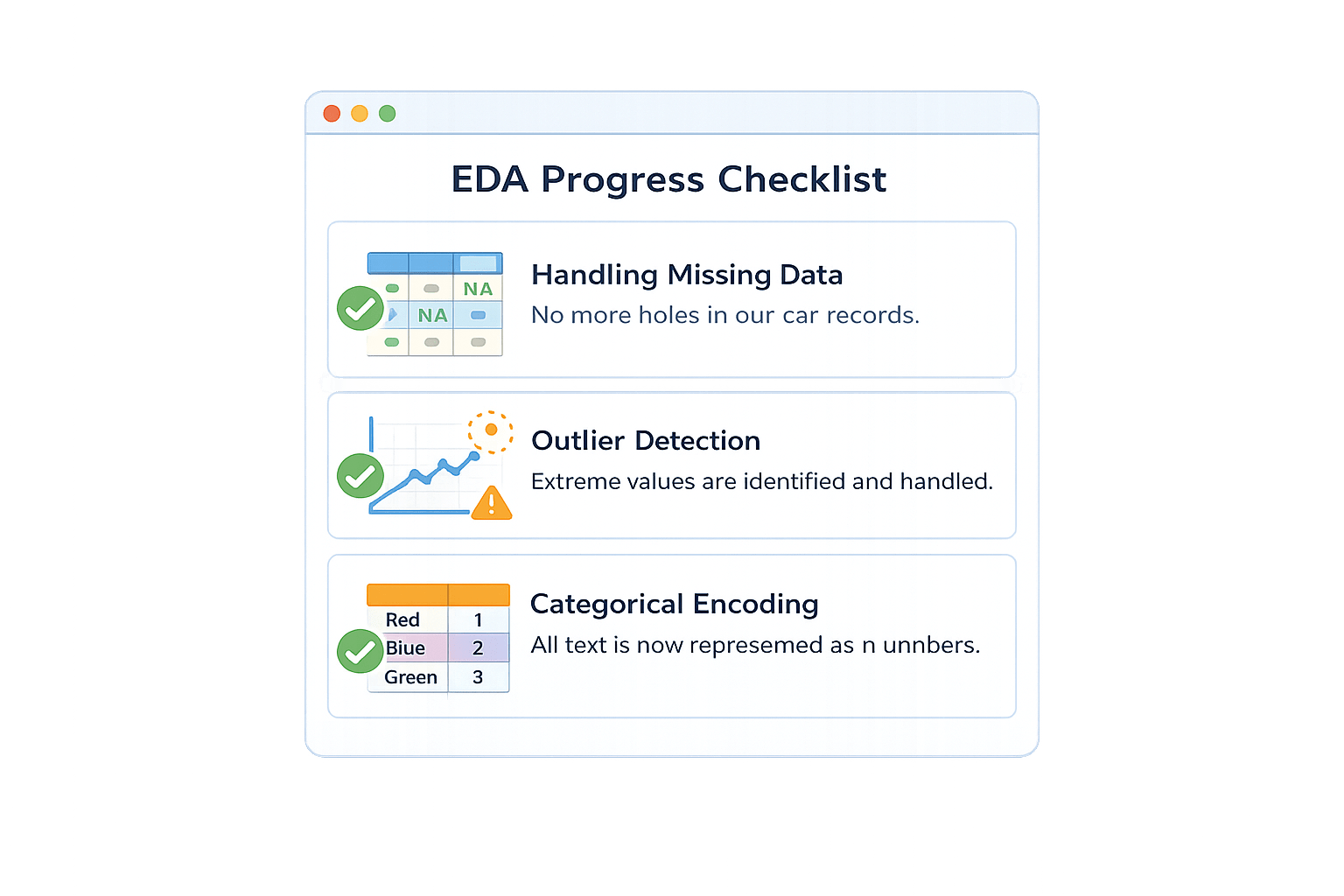
All text is now represented as numbers.
Extreme values are identified and handled.
No more holes in our car records.
5
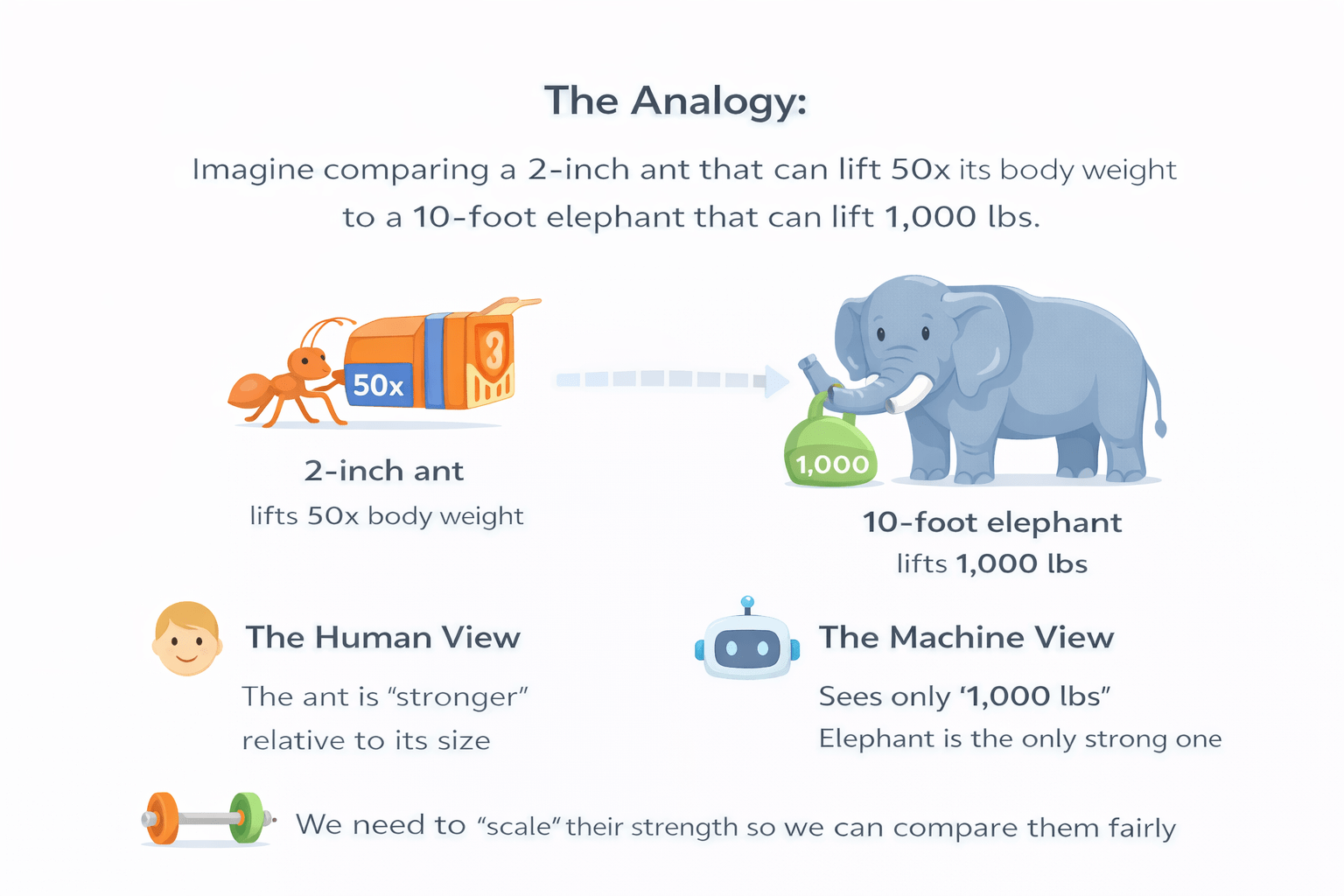
Imagine comparing a 2-inch ant that can lift 50x its body weight to a 10-foot elephant that can lift 1,000 lbs
We need to "scale" their strength so we can compare them fairly.
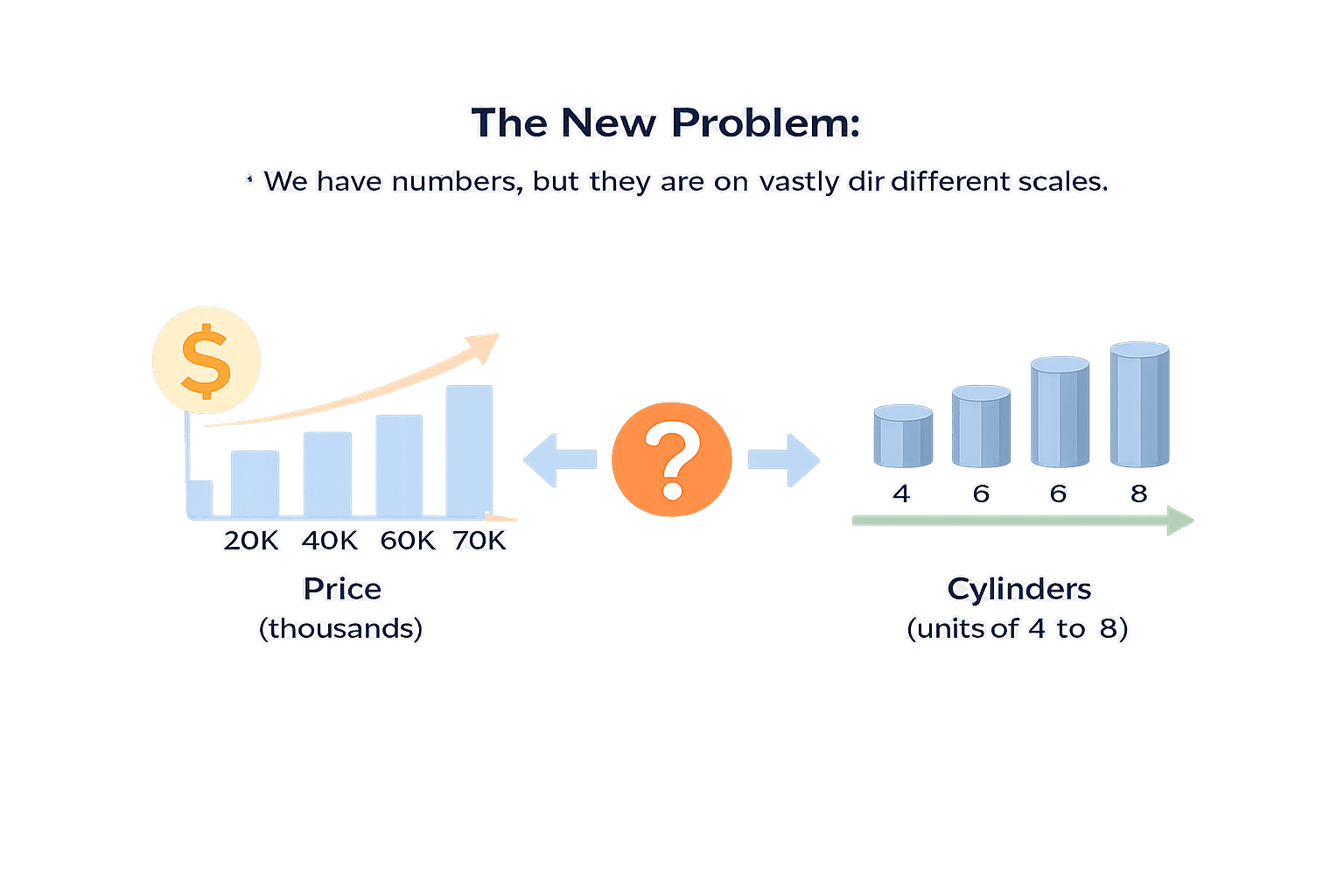
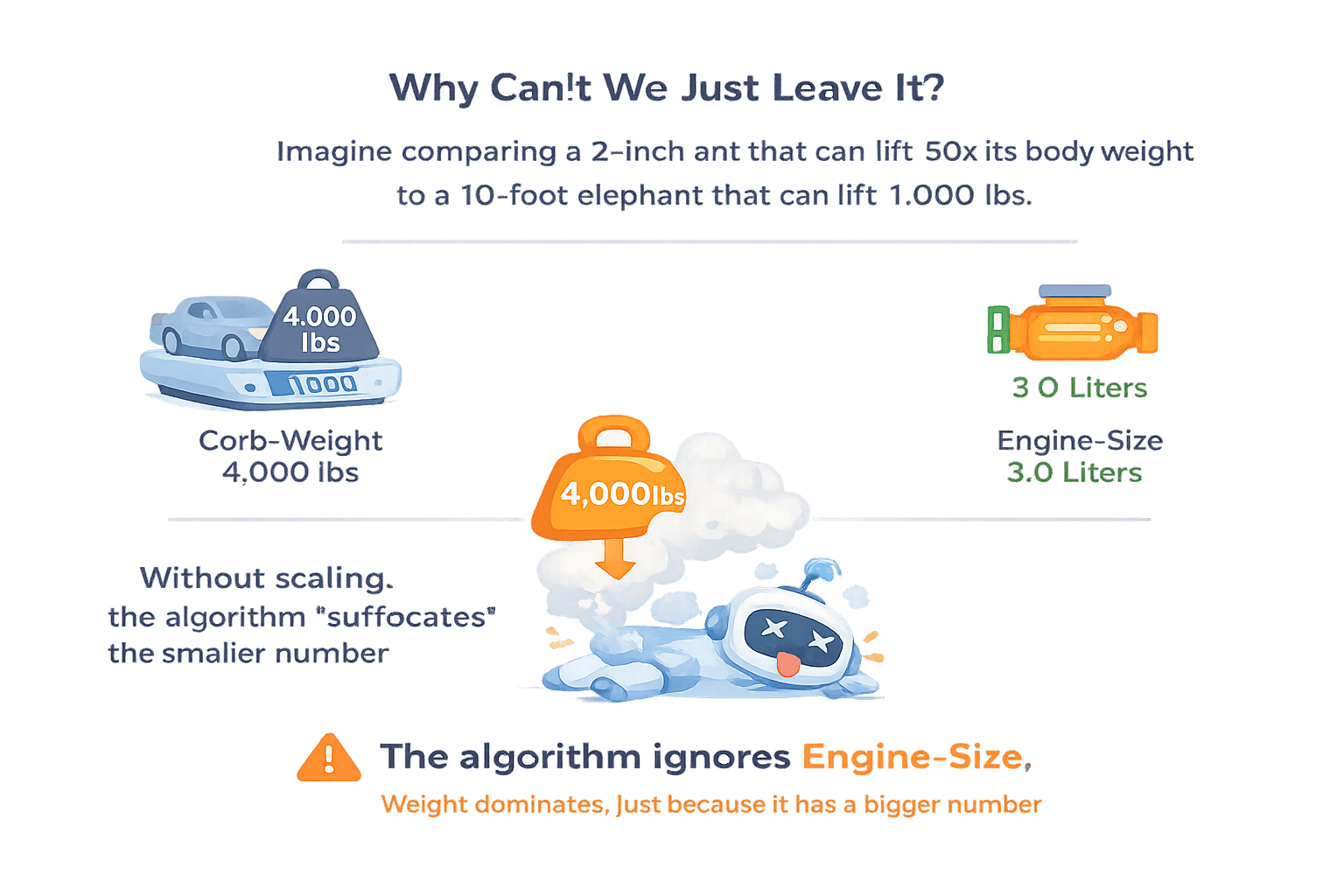
In Automobile data, Curb-Weight might be 4,000 lbs, while Engine-Size is only 3.0 Liters.
Without scaling, the algorithm "suffocates" the smaller number.
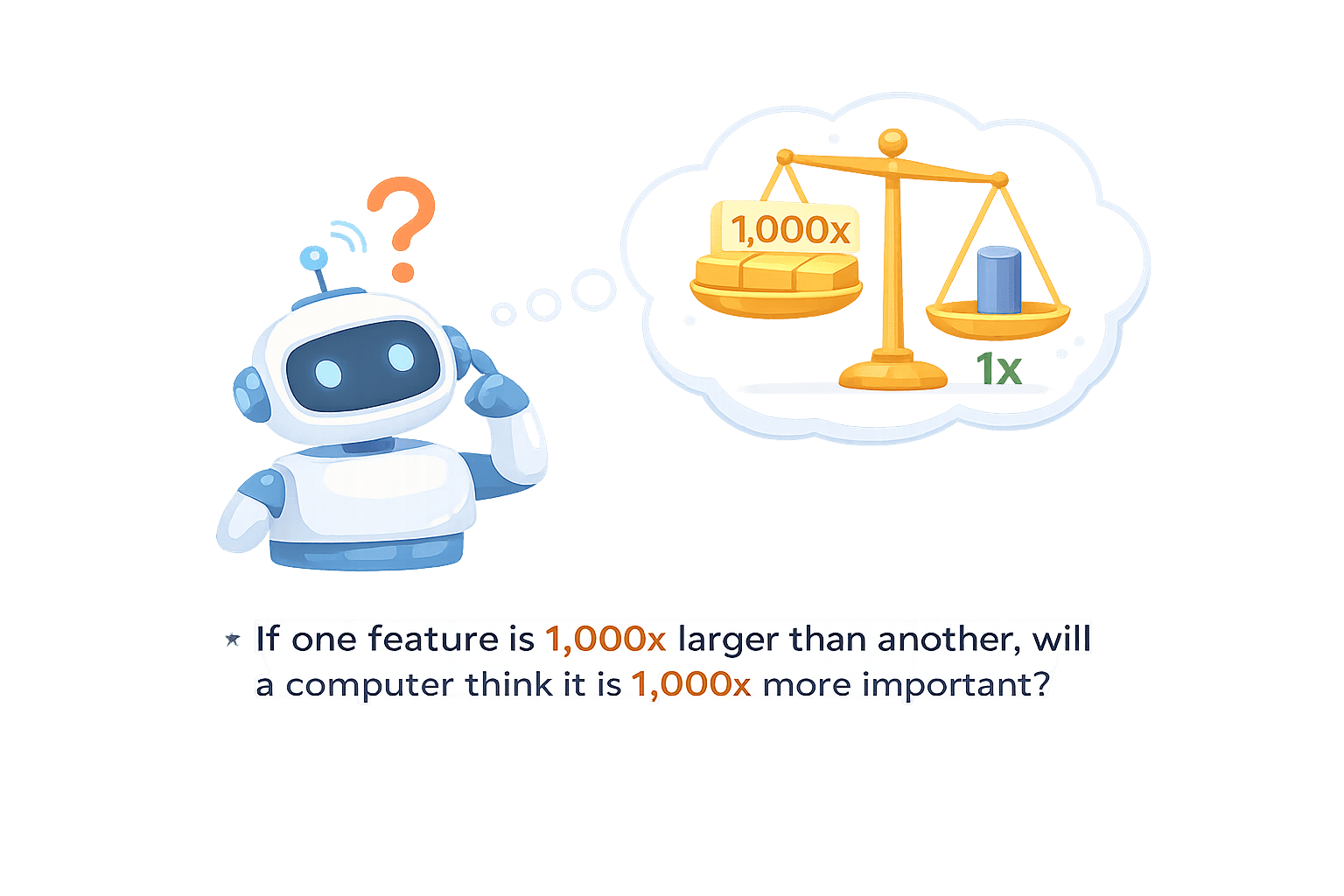
Why can't we just leave it !
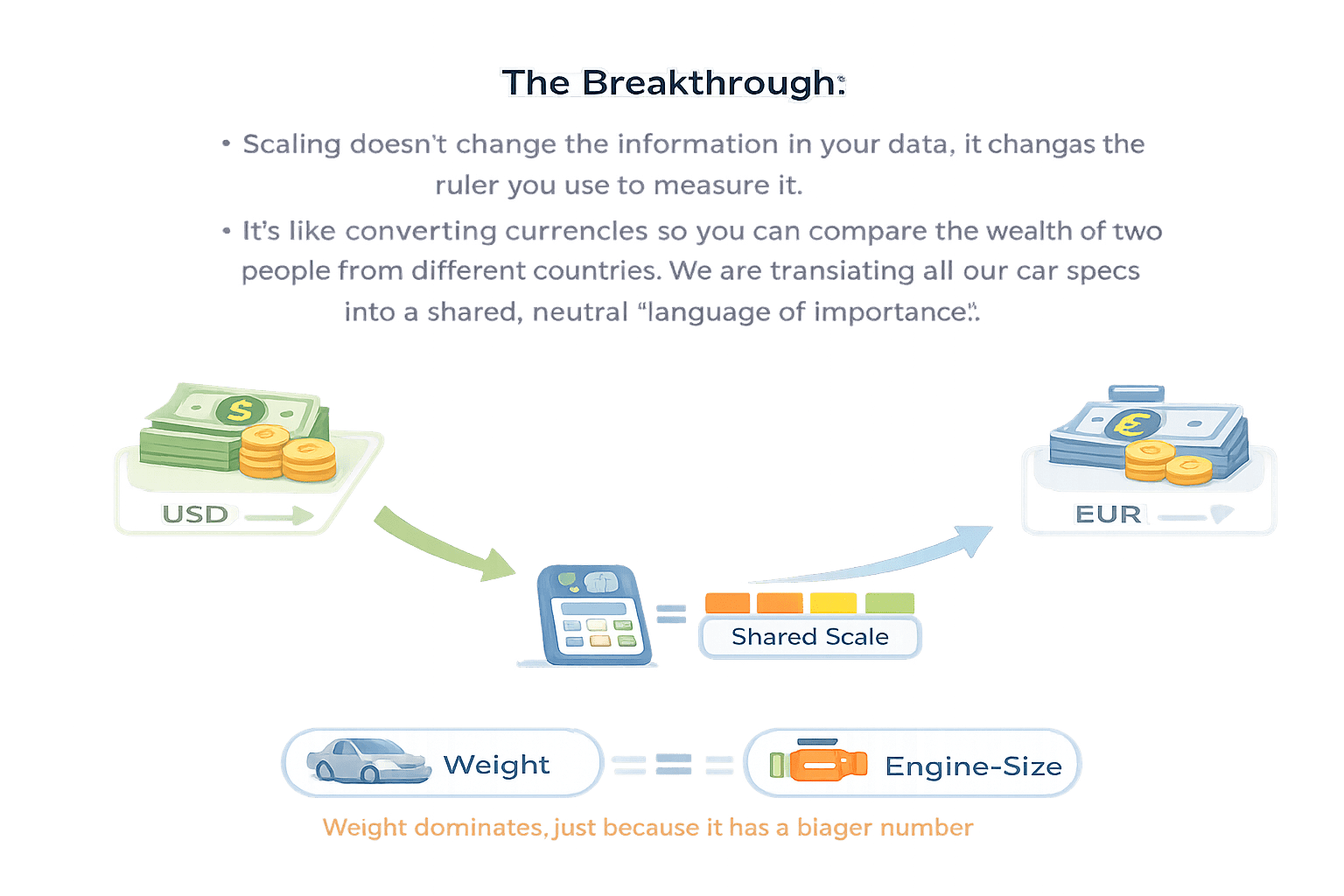
Scaling doesn't change the information in your data; it changes the ruler you use to measure it.
It’s like converting currencies so you can compare the wealth of two people from different countries
We are translating all our car specs into a shared, neutral "language of importance
Data Scaling is the process of transforming the range of independent variables or features of data.
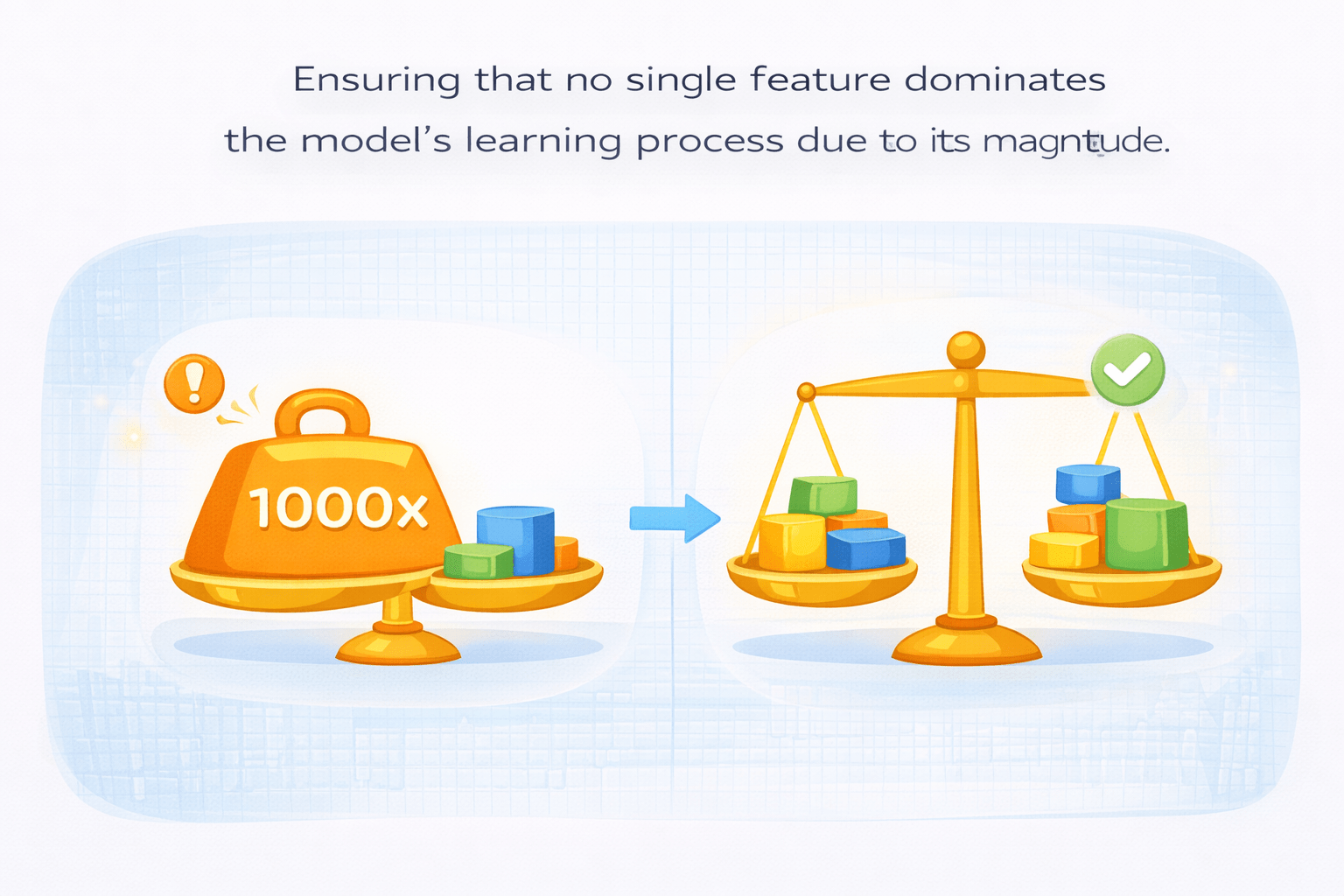
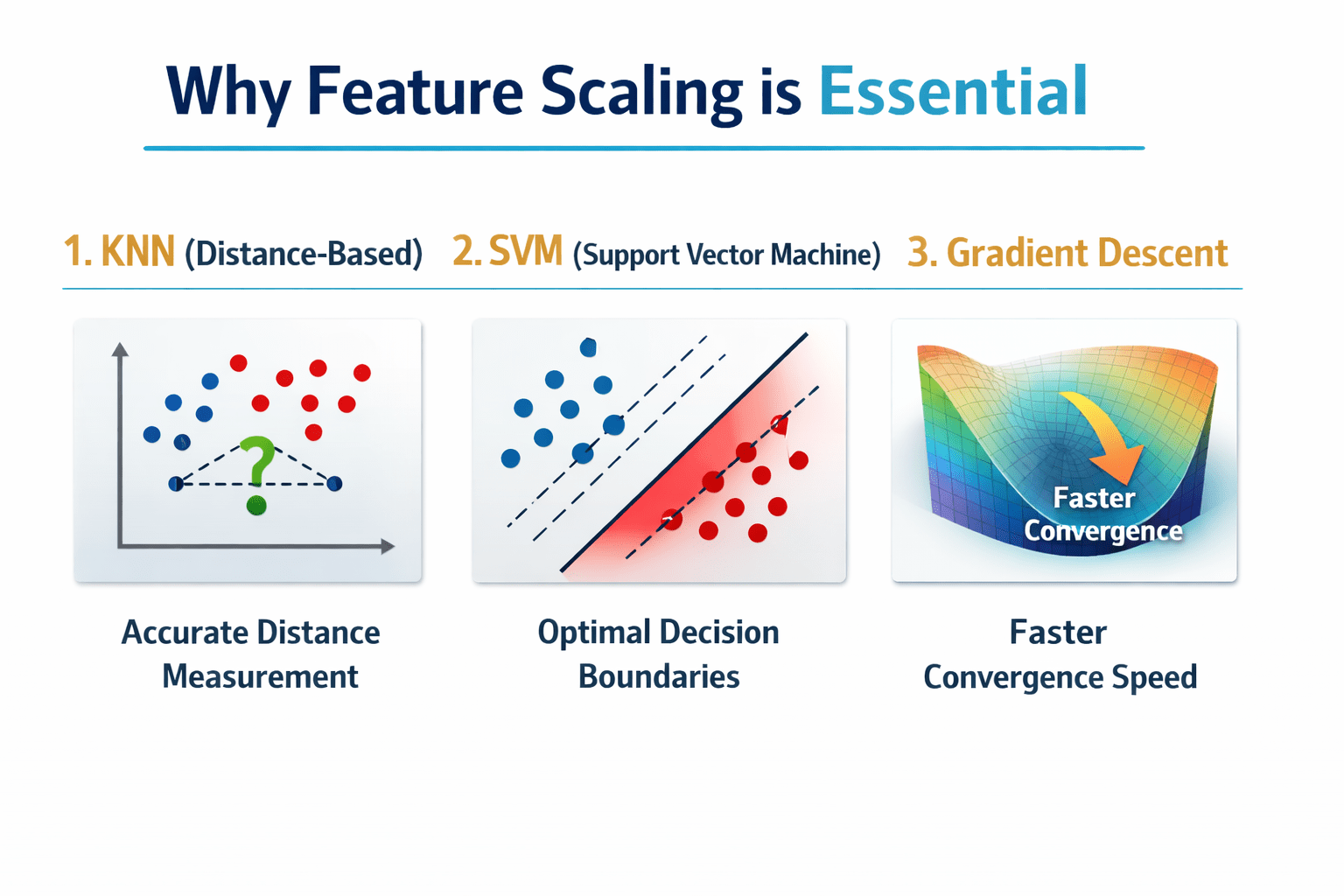
Ensuring that no single feature dominates the model’s learning process due to its magnitude.
Essential for:
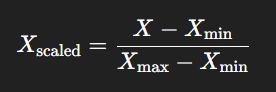
Where:
XXX = original value
XminX_{\min}Xmin = minimum value of the feature
XmaxX_{\max}Xmax = maximum value of the feature
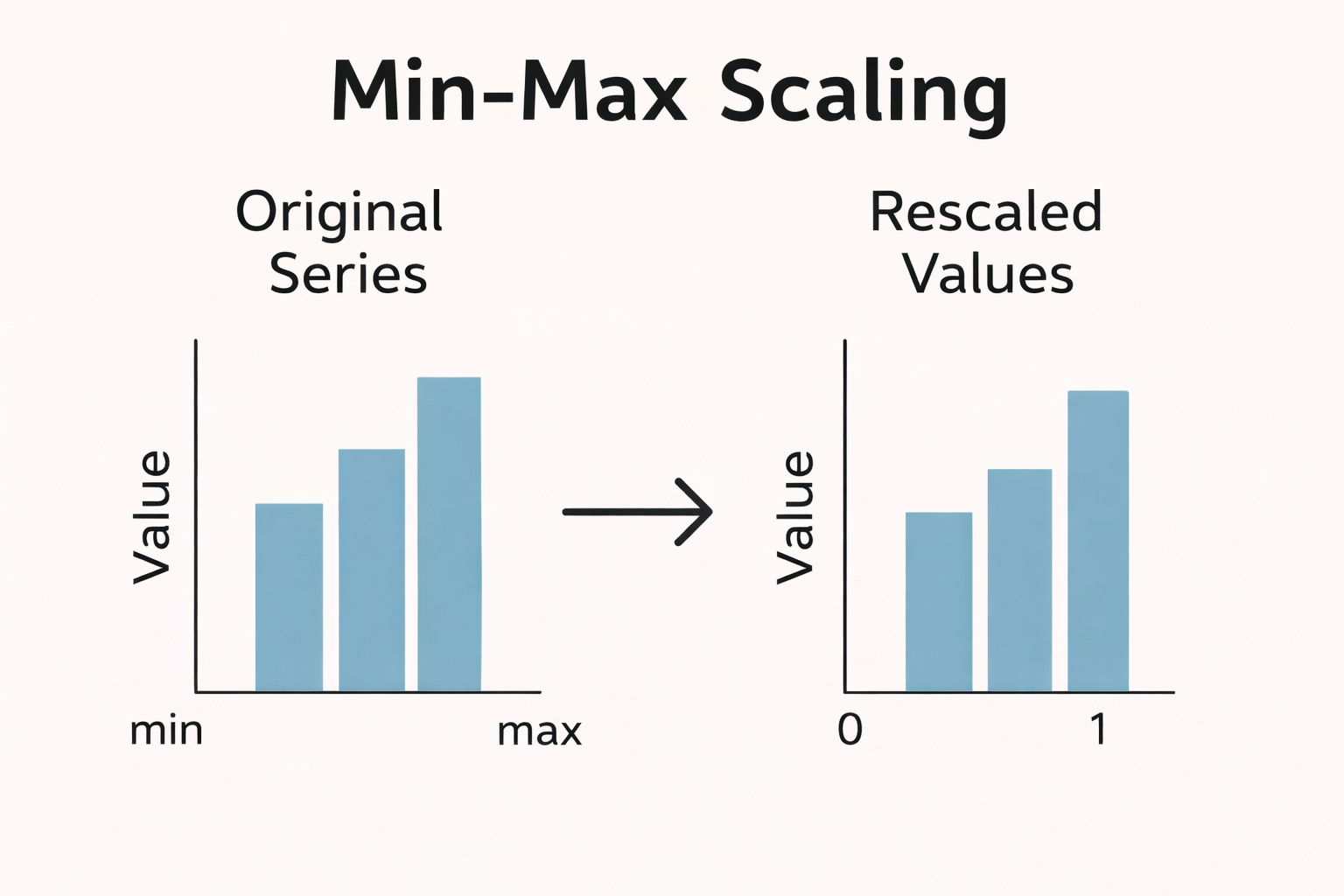
Mechanism
Rescales numerical data to a fixed range, most commonly 0 to 1, while preserving the relative relationships between values.
Formula :
Best Used For
Data with known and fixed bounds
(e.g., Fuel Efficiency in MPG, percentages, ratings).
Algorithms that do not assume a normal distribution
(e.g., KNN, Neural Networks).
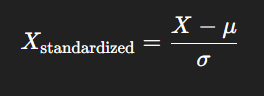
Where:
XXX = original value
μ\muμ = mean of the feature
σ\sigmaσ = standard deviation of the feature
Standardization (Z-Score Scaling)
Mechanism
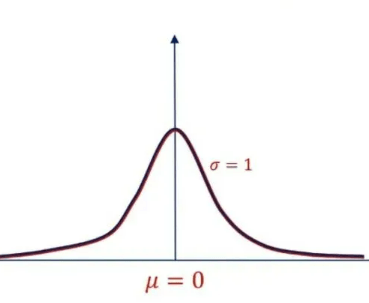
Centers numerical data around a mean of 0 and rescales it to have a standard deviation of 1, without bounding the values to a fixed range.
Formula :
Best Used For
Data that approximately follows a Gaussian (Normal) distribution
Algorithms such as Linear Regression, Logistic Regression, SVM, PCA
Normalization vs. Standardization
| Feature | Min-Max Scaling | Standardization |
|---|---|---|
| Output Range | Strictly 0 to 1 | No fixed range centered at 0) |
| Outlier Sensitivity | Very Sensitive | Less Sensitive |
| Distribution Shape | Compressed into a box | Maintains the shape of distribution |
| Automobile Use Case | Safety Rating (0-5 stars) |
Engine Horsepower or Price |
Summary
4
Always Scale AFTER Splitting: Don't let your test data "leak" into your training scale
3
Standardization is the "Go-to" for most machine learning algorithms
2
Normalization (Min-Max) is great for specific ranges
1
Scaling is about fairness: It ensures features with small numbers have an equal voice.
Quiz
Which scaling technique is most affected by a single extreme outlier in the Car Price column?
A. Standardization
B. Min-Max Scaling (Normalization)
C. Categorical Encoding
D. Log Transformation
Which scaling technique is most affected by a single extreme outlier in the Car Price column?
A. Standardization
B. Min-Max Scaling (Normalization)
C. Categorical Encoding
D. Log Transformation
Quiz-Answer
By Content ITV