














Content ITV PRO
This is Itvedant Content department
Learning Outcome
4
Explain the concepts of memory acquisition and memory dumps.
3
2
Describe SOC functions: monitoring, detection, investigation, and response.
1
Explain the purpose and importance of a SOC.
A student solves a math problem on a whiteboard. The board contains all the calculations needed to solve the problem.
Whiteboard = RAM;
Calculations = Temporary Data
While working, the student keeps notes about the current problem. Similarly, RAM stores running programs, open applications, active websites, logged-in users, and network connections.
RAM stores volatile data currently being used by the system.
The student erases the whiteboard, and the calculations disappear. In the same way, RAM data is generally lost when the computer is powered off.
RAM = Volatile Memory
Before erasing the board, someone takes a photo of it to preserve the calculations. Similarly, investigators capture a memory dump before important RAM data is lost.
Collecting and analyzing RAM data = Memory Forensics
Memory Architecture Basics
Memory architecture describes how computer memory stores and organizes data while the system is running. RAM stores the operating system, applications, and active user data. It is fast but temporary, so its contents are usually lost when the computer is turned off.
Memory analysis can reveal running processes, network connections, encryption keys, and malware.
Volatile Data Concepts
Volatile data is information stored in memory that is lost when a system is powered off or restarted.
Volatile data may provide evidence that cannot be recovered from the disk.
Active network connections
Running processes
Logged-in users
Clipboard contents
Temporary passwords
Encryption keys
Examples include:
Live System Acquisition
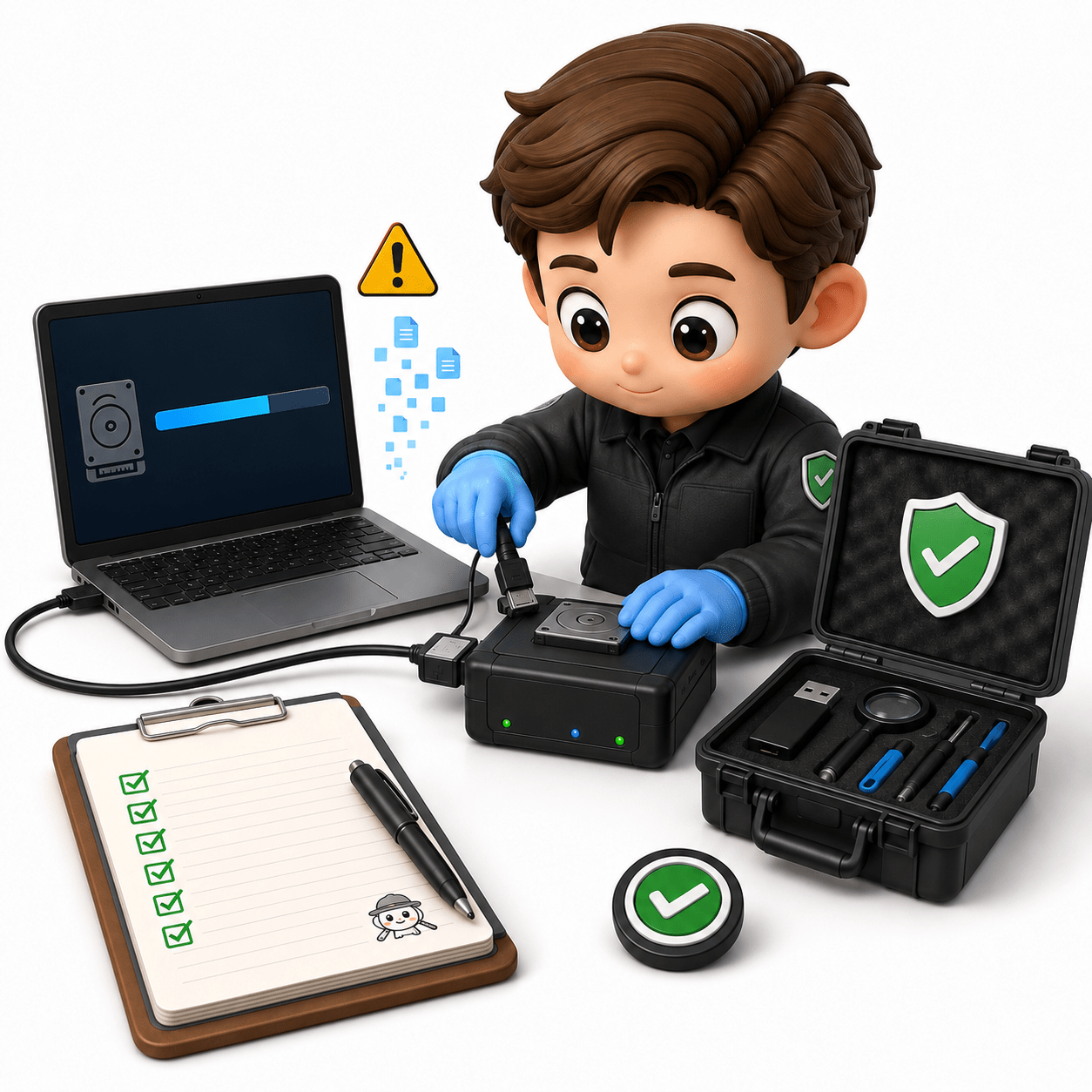
Live system acquisition collects digital evidence while a computer is still running. It allows investigators to capture volatile data such as RAM, running applications, active users, and network sessions.
Because live acquisition can alter some data, investigators should use trusted tools and document all actions.
Memory Capture Techniques
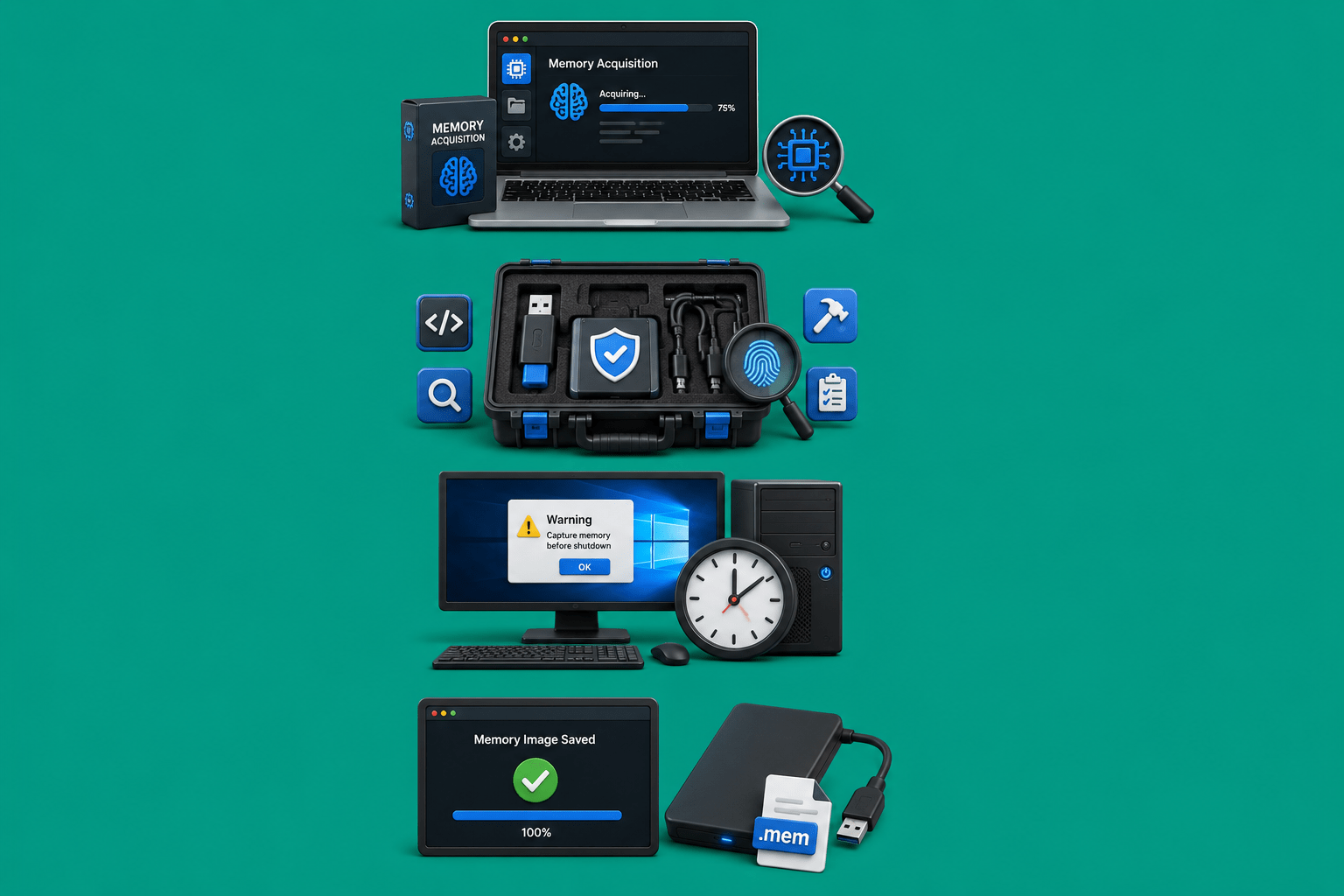
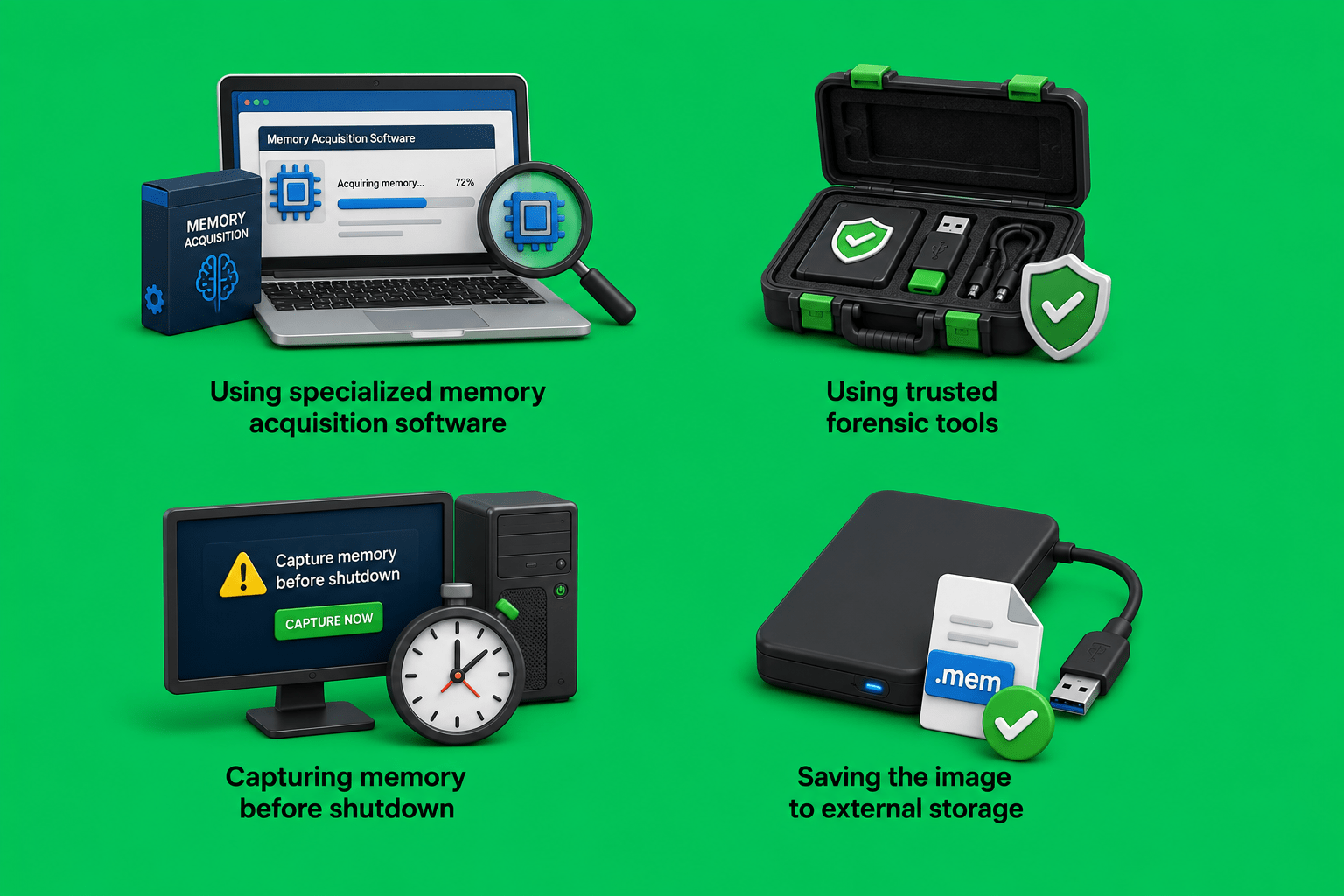
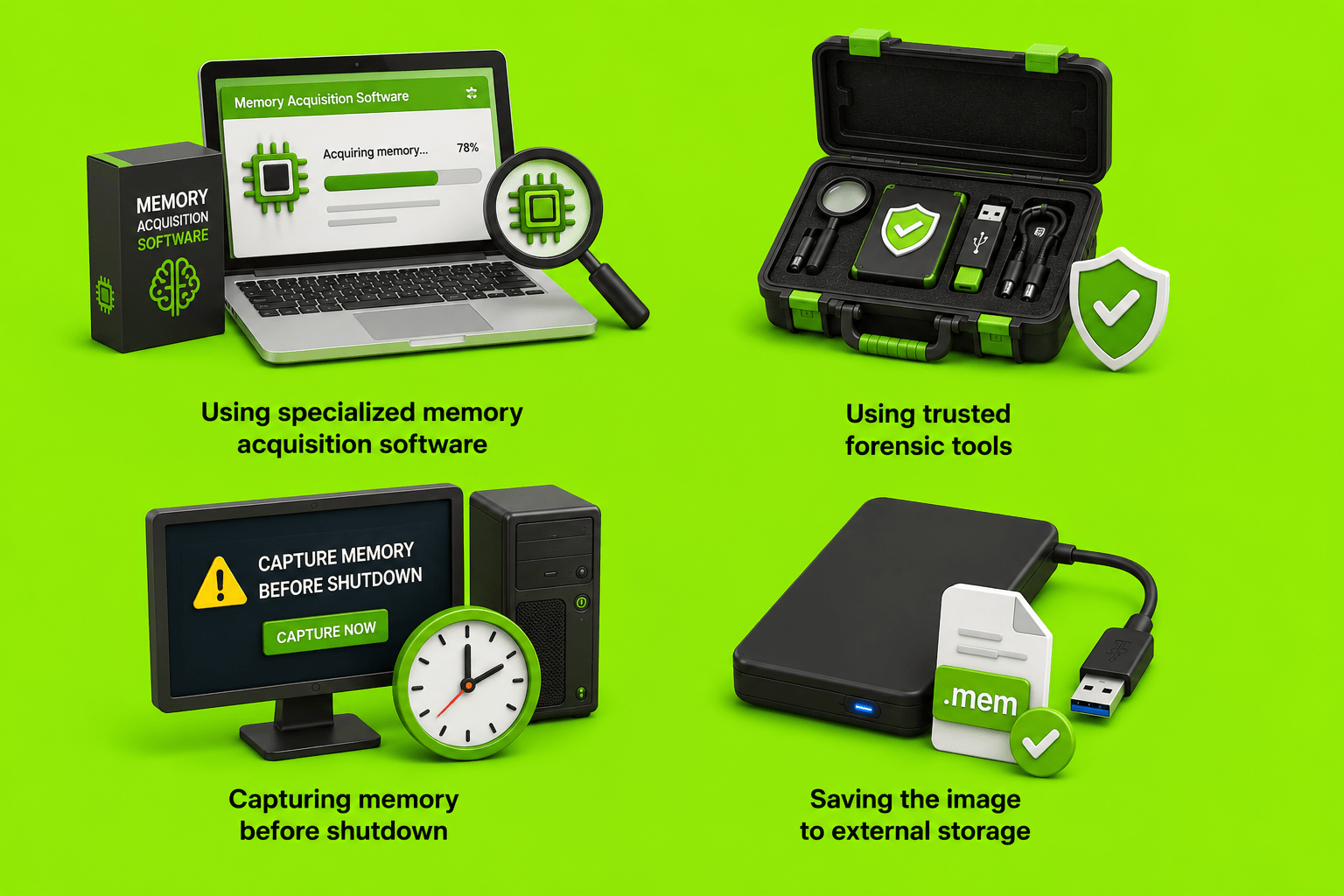
Memory capture creates a copy of RAM, usually saved as a memory dump.
Proper capture preserves evidence that would otherwise be lost.
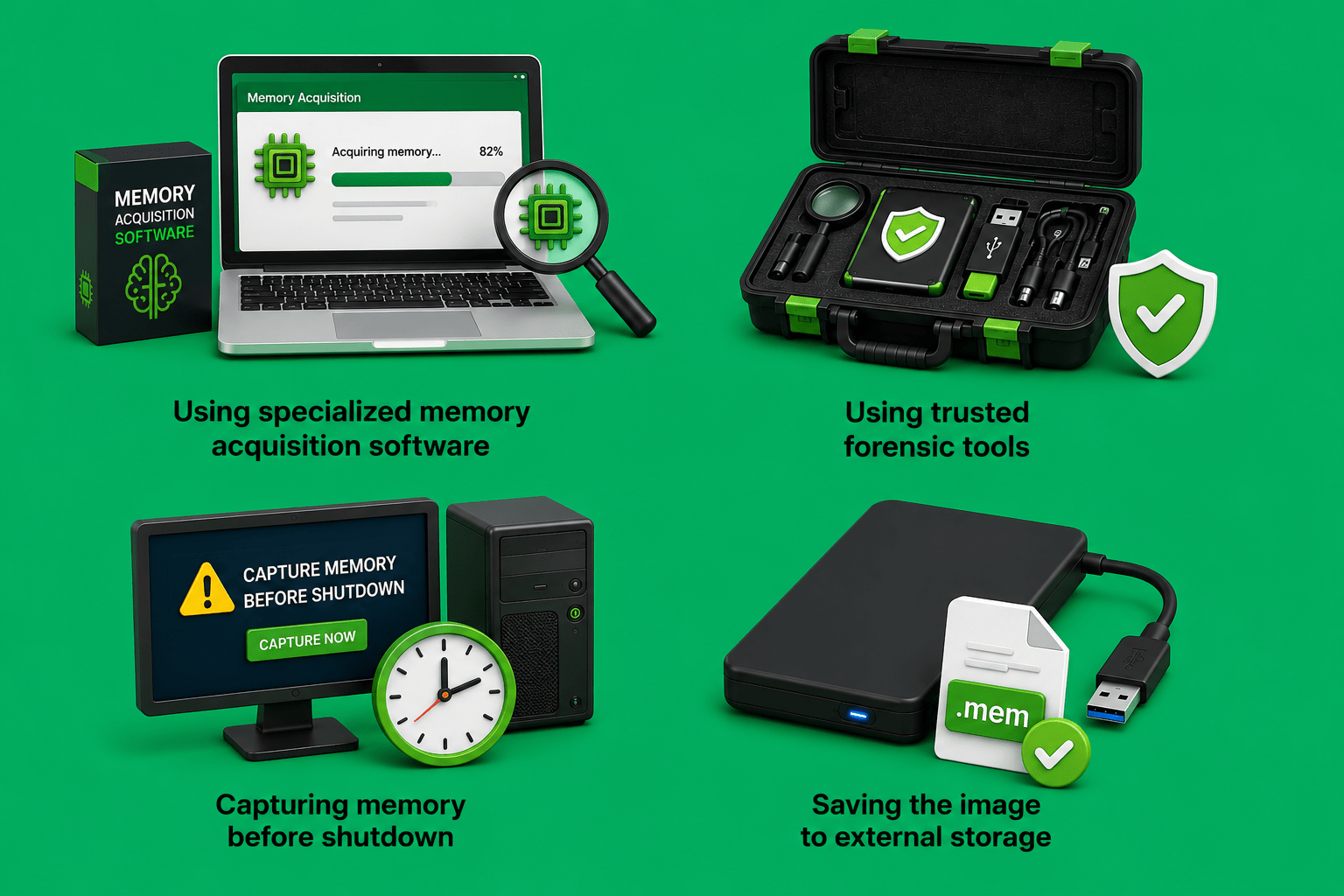
Using specialized memory acquisition software
Capturing memory before shutdown
Using trusted forensic tools
Saving the image to external storage
Common techniques include:
Memory Dump Formats
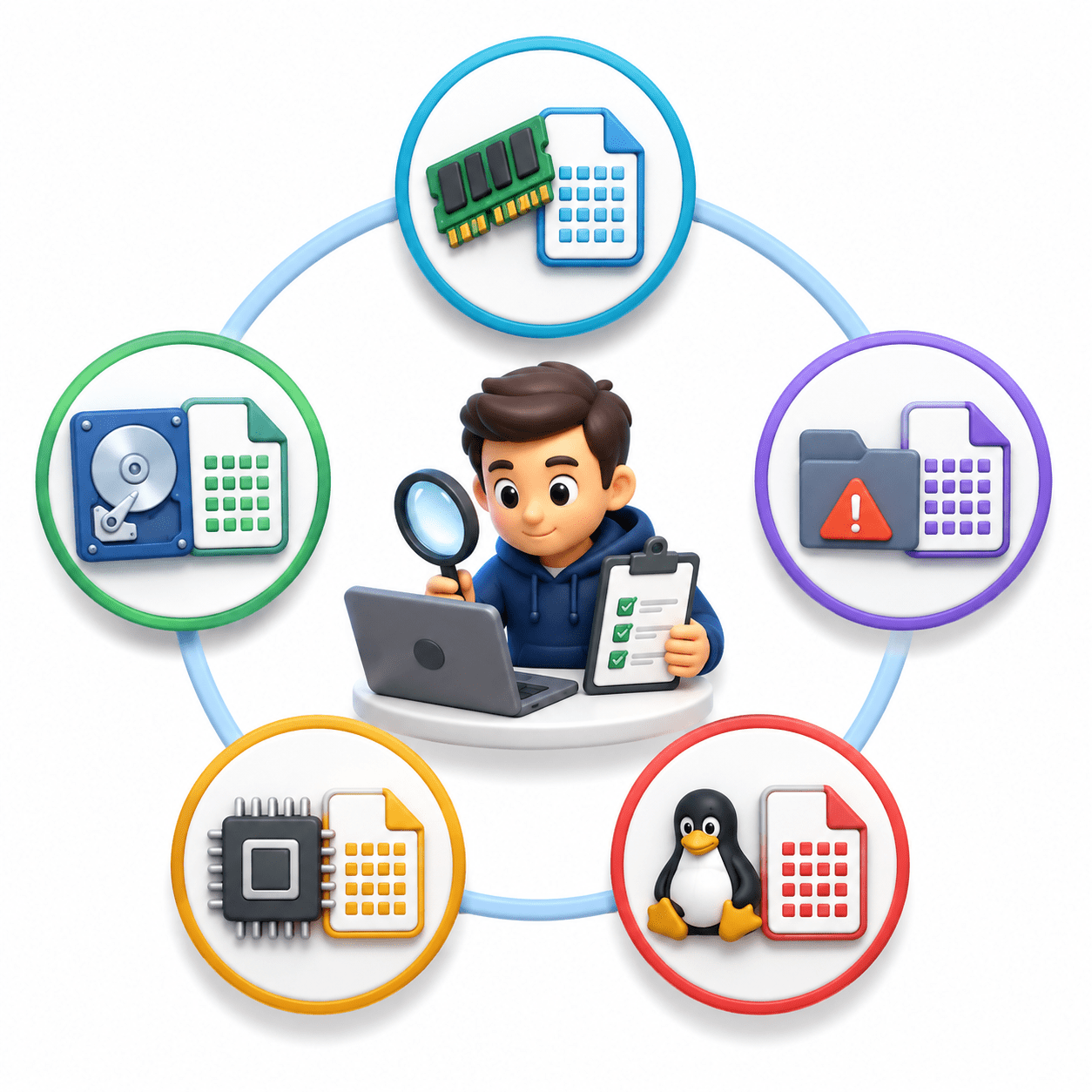
A memory dump is a file containing RAM contents at a specific time.
ELF Memory Format
Kernel Memory Dump
RAW Memory Dump
Complete Memory Dump
Crash Dump
These files are analyzed using forensic software.
Common formats include:
Process Enumeration
Process names
Process IDs (PID)
Parent-child relationships
Process start times
Resource usage
Process enumeration identifies active processes stored in memory.
Investigators examine:
This helps identify suspicious or unauthorized programs.
Service and Application Analysis
Running applications
Background services
Startup programs
Suspicious software
Unauthorized applications
Investigators examine running services and applications to identify normal and suspicious activity.
Analysis may include:
This can reveal malicious or unauthorized programs active during an incident.
Active Network Session Analysis
Open Handles and Objects
Memory analysis can reveal active network connections while a computer is running.
Investigators may identify:
Connected IP addresses
Open ports
TCP/UDP connections
Remote servers
This helps determine whether the system communicated with suspicious devices.
This helps understand application activity.
An open handle is a reference used by a program to access system resources. Investigators examine handles to determine which resources were being accessed.
Examples include:
Open files
Registry keys
Running processes
Network sockets
Registry Data in Memory
Parts of the Windows Registry are loaded into memory while the system is running.
Investigators can analyze this data to identify:
User accounts
Recently opened files
Installed software
System configuration
Startup programs
Registry data helps reconstruct user activity and system settings.
User Activity Reconstruction
User activity reconstruction rebuilds user actions by analyzing memory data.
This helps determine what the user was doing when memory was captured.
Investigators may identify:
Logged-in users
Recently opened applications
Open documents
Browsing activity
Chat sessions
Clipboard contents
Malware Artifact Discovery
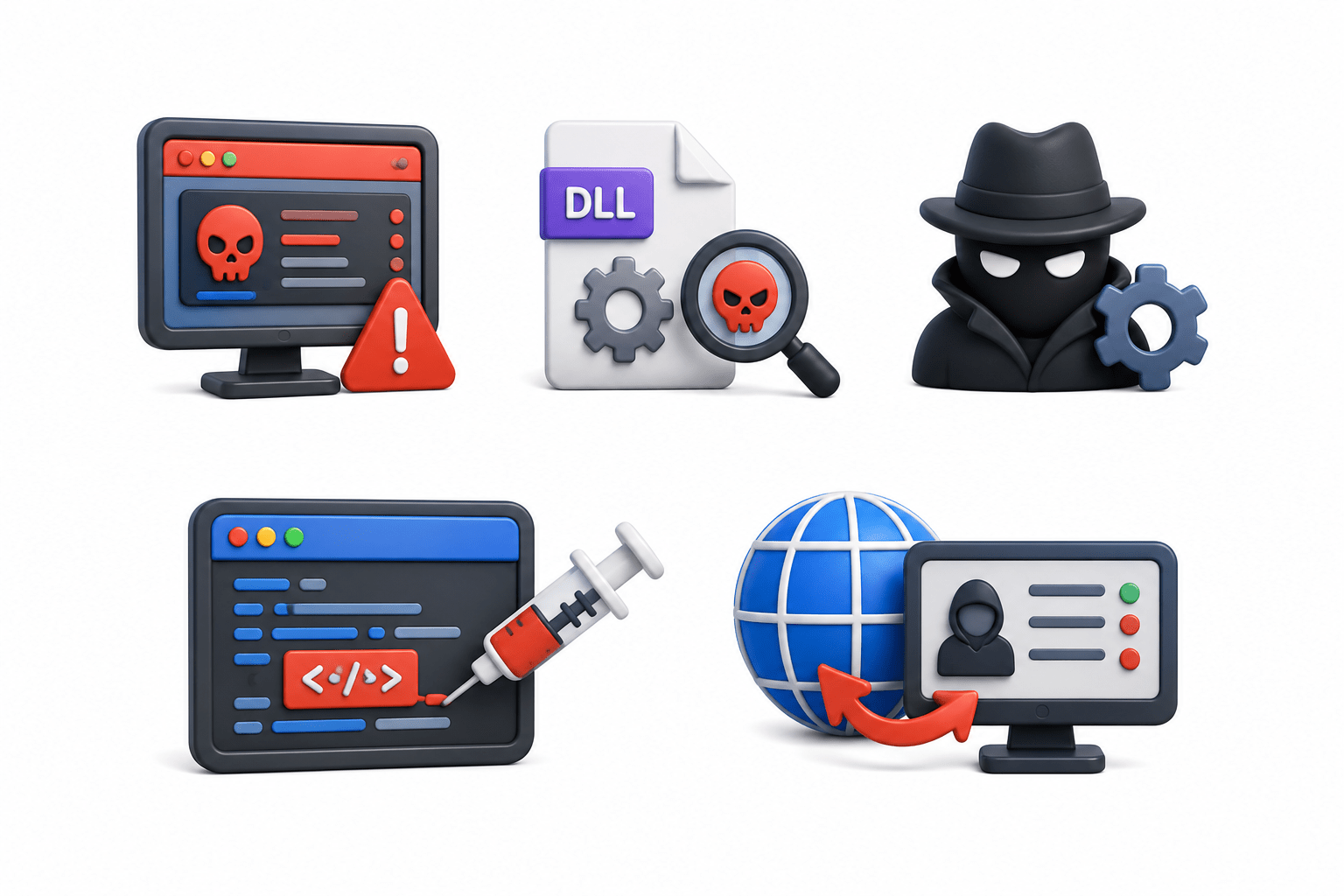
Memory analysis can reveal malware that operates in memory to avoid detection.
This helps determine what the user was doing when memory was captured.
Common artifacts include:
Malicious processes
Injected code
Suspicious DLLs
Unauthorized network connections
Hidden services
Code Injection Detection
Code injection occurs when malicious code is inserted into a legitimate process. Investigators examine processes for unusual memory regions, injected code, or modified behavior.
Detecting code injection helps identify sophisticated attacks.
This helps identify rootkit activity.
Hidden processes
Concealed drivers
Unauthorized system modifications
Rootkit Identification
A rootkit is malware designed to hide itself or other malicious software.
Memory analysis can reveal:
Credential Artifact Analysis
Credential artifacts are traces of authentication information stored in memory.
These artifacts help determine who accessed the system and how authentication occurred.
Examples include:
Usernames
Password hashes
Login sessions
Security credentials
Authentication tokens
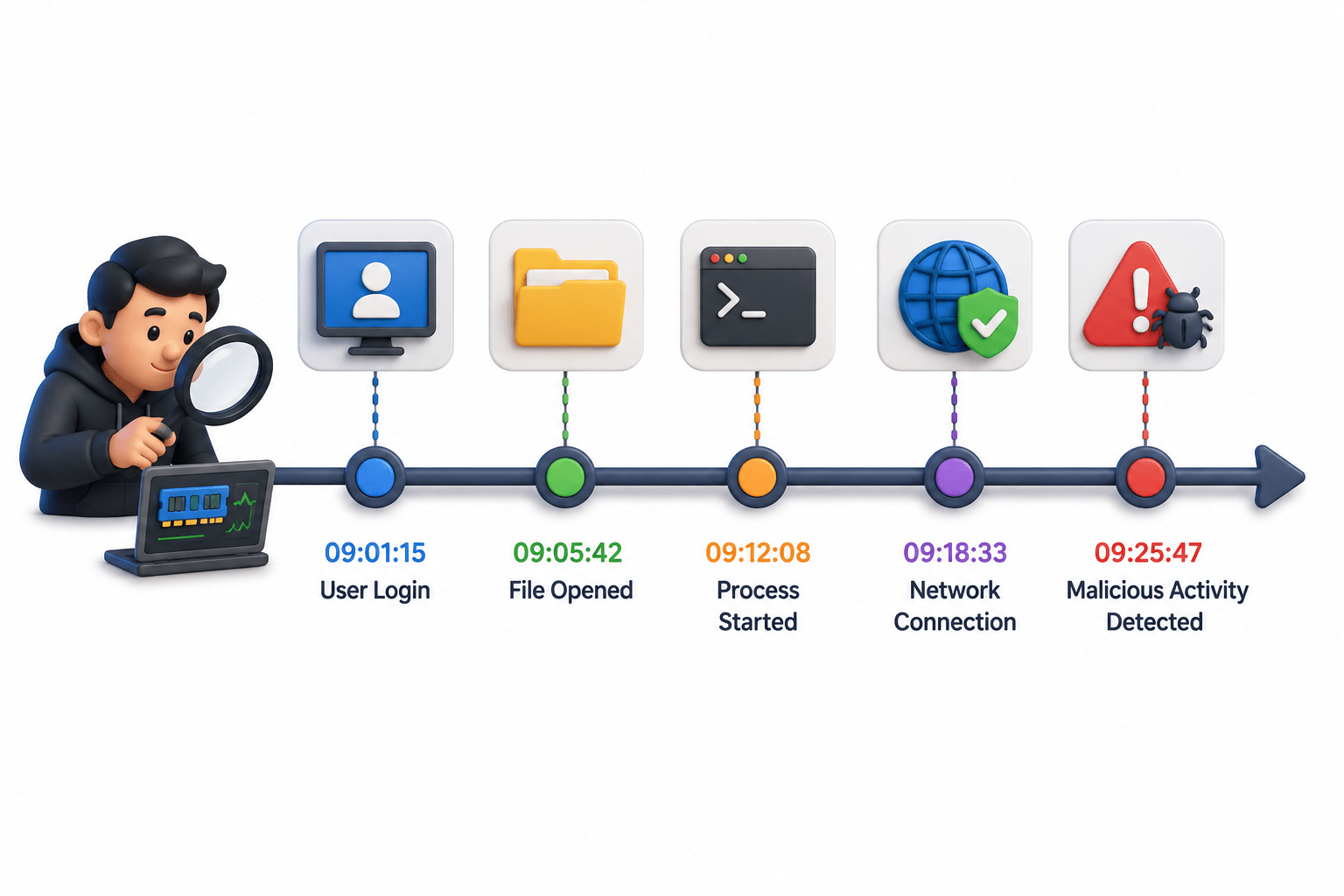
Memory timeline analysis arranges memory-related events chronologically to reconstruct system activity.
Memory Timeline Analysis
A timeline may include:
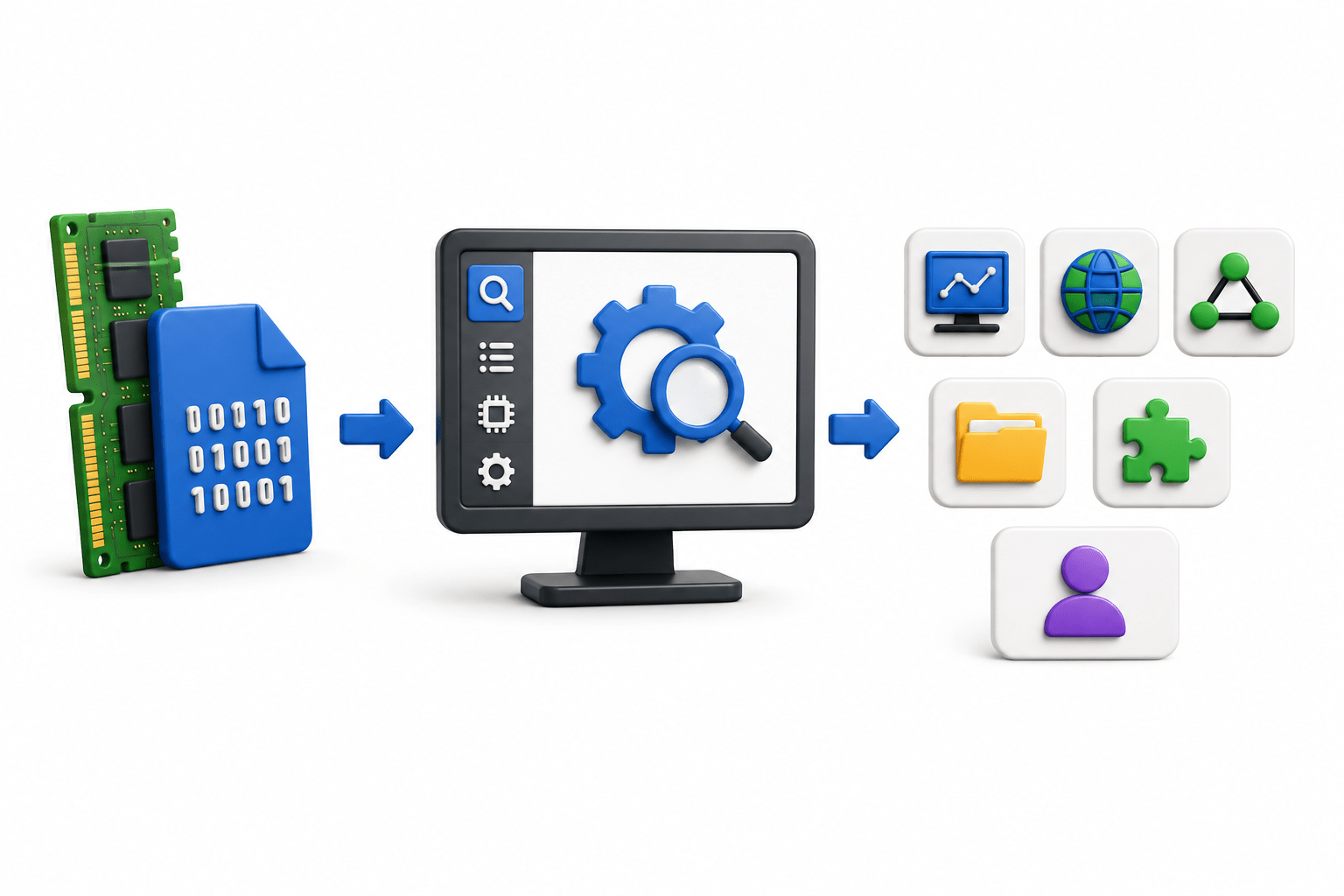
Memory parsing extracts useful information from memory dumps using forensic tools.
Memory Parsing Techniques
Investigators parse memory to identify:
Threat Hunting in Memory
Memory threat hunting proactively searches RAM for malicious activity that traditional security tools may miss.
It helps detect advanced and fileless attacks.
Investigators look for:
Unknown processes
Suspicious DLLs
Hidden malware
Unauthorized network connections
Code injection
Rootkits
Memory Analysis Frameworks
Memory threat hunting proactively searches RAM for malicious activity that traditional security tools may miss.
They simplify investigations and improve analysis accuracy.
Key features include:
Process analysis
Network analysis
Registry analysis
Malware detection
Timeline generation
Memory Investigation Tools
Common memory forensic tools include:
Analyzes memory dumps for processes, malware, network connections, and registry data.
Analyzes memory images and detects malicious activity.
Captures memory from live systems and creates forensic images.
Captures RAM from running Windows systems.
Acquires RAM from live computers for forensic analysis.
Volatility Framework
Rekall
FTK Imager
Magnet RAM Capture
Belkasoft RAM Capturer
Summary
5
RAM contains valuable evidence.
4
Tools include Volatility, FTK Imager, and Magnet RAM Capture.
3
Memory acquisition creates a copy of RAM for analysis.
2
RAM is volatile and loses data when powered off.
1
Memory forensics analyzes data in RAM.
Quiz
Which type of memory loses its contents when the computer is turned off?
B. Hard Disk Drive
C. RAM
D. USB Flash Drive
A. SSD
Quiz-Answer
C. RAM
Which type of memory loses its contents when the computer is turned off?
A. SSD
B. Hard Disk Drive
D. USB Flash Drive
By Content ITV