







Content ITV PRO
This is Itvedant Content department
Learning Outcome
5
Evaluate IPO risks and rewards.
4
Learn the IPO process and key participants.
3
Compare different funding sources.
2
Identify why companies raise funds.
1
Understand IPOs and their purpose.
Analogy: A Wedding Ceremony
1.Before the IPO, the company is in a private relationship with a small circle of investors (founders, venture capitalists, private equity)
2.The IPO is the wedding day = A big public event where the company formally announces its commitment to the wider public
3.The stock exchange = Venue where the ceremony is held
4.Investment bankers = The wedding planners, arranging everything from pricing to marketing
5.The public investors = The guests, who now get a chance to “join the family” by buying shares
6.After the IPO, the company is in a marriage with the public market, accountable to shareholders and regulators
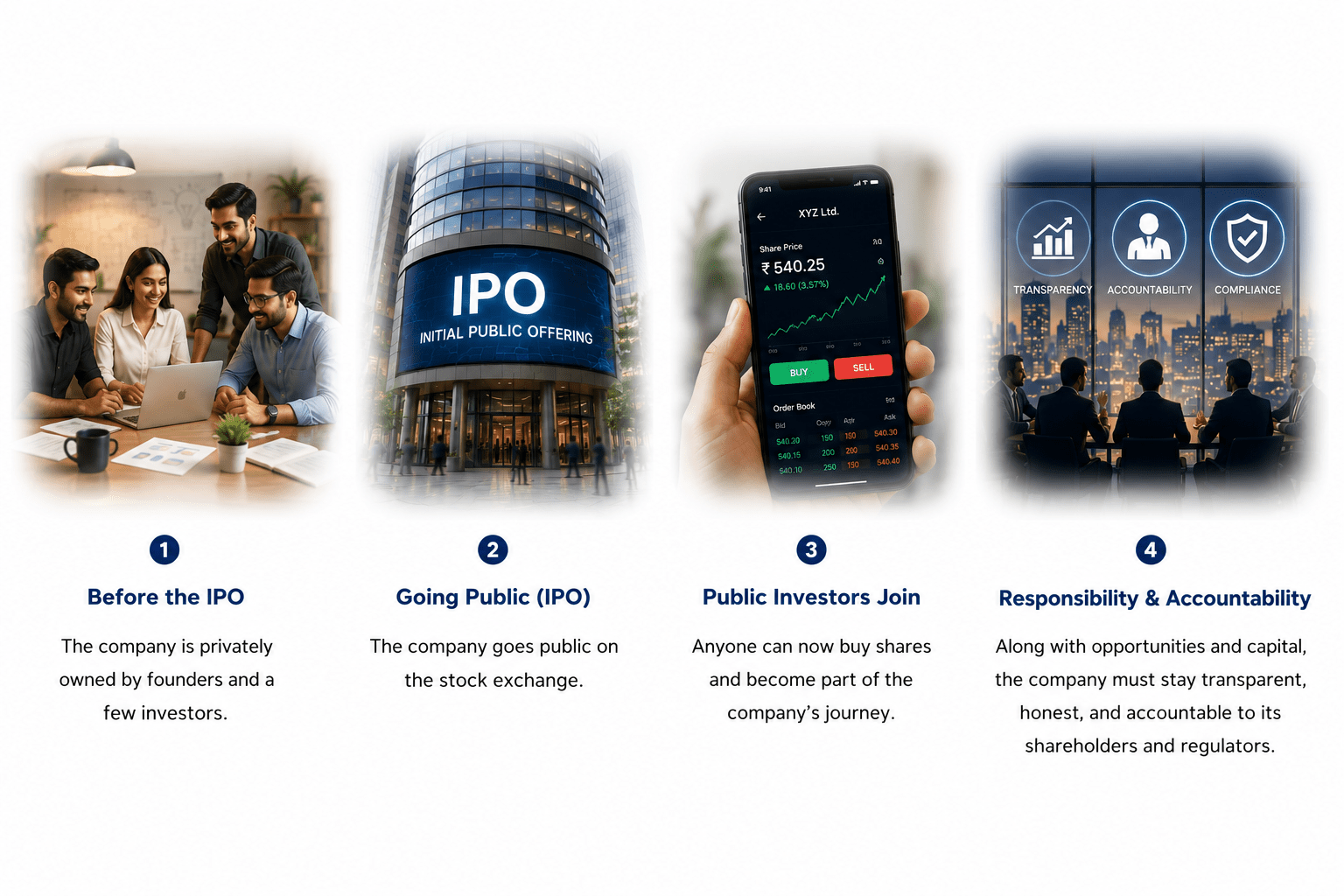
the company is privately owned by founders and a few investors
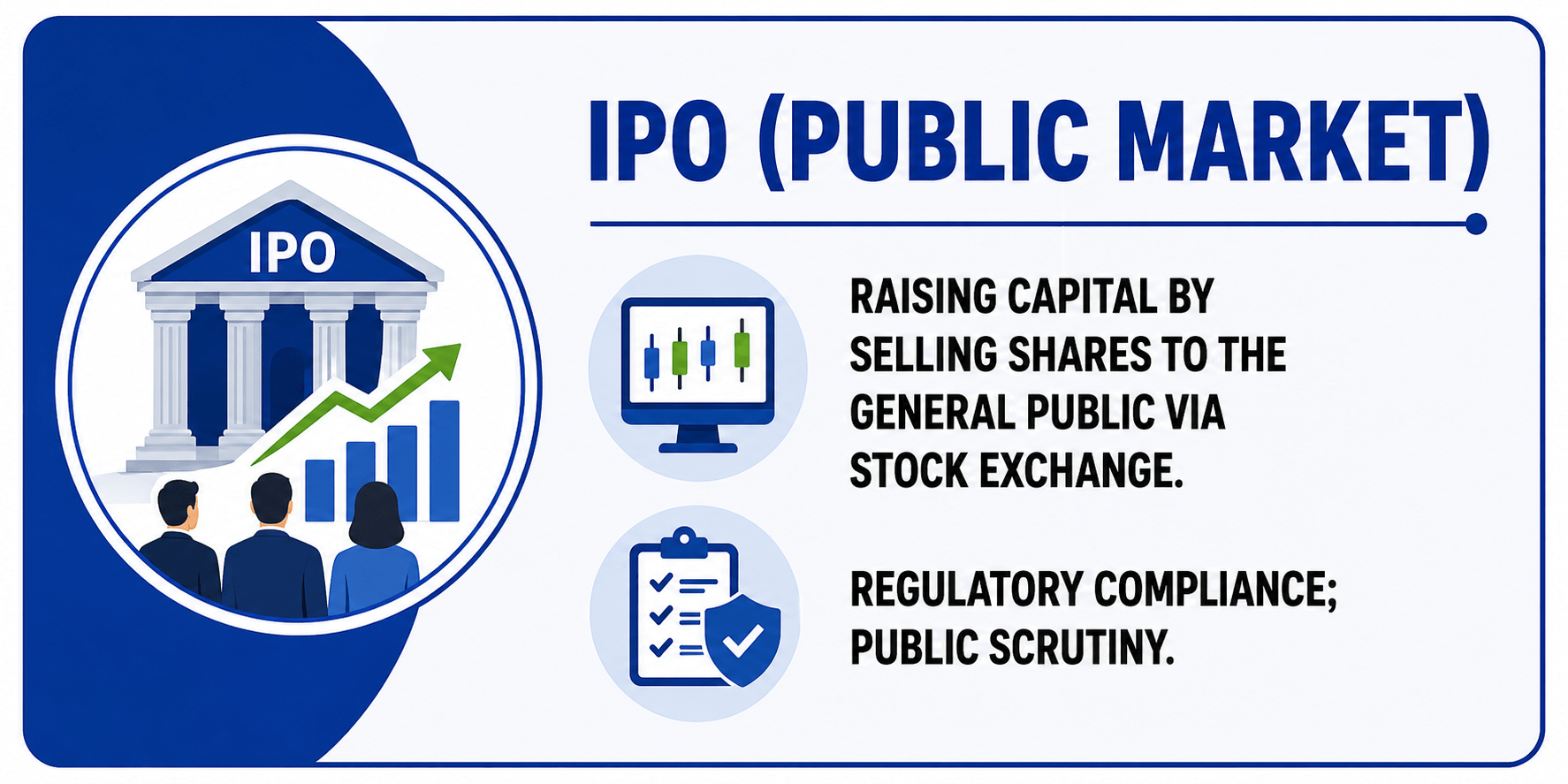
the company goes public on the stock exchange
Anyone can now buy shares and become part of this journey
Along with new opportunities and capital, the company also takes on responsibility to remain transparent and accountable to shareholders.
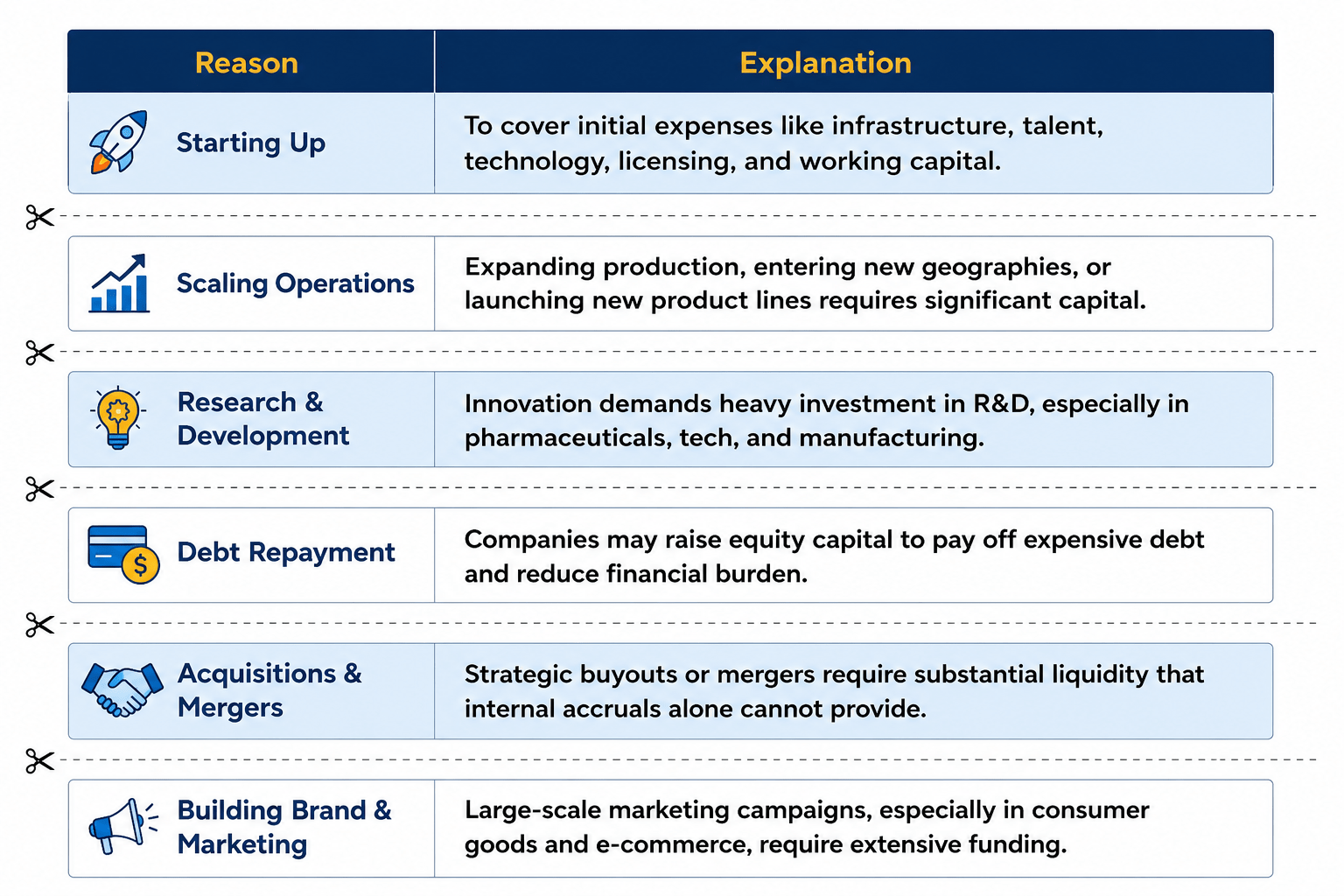
Why does a company need funding?
Every business, regardless of its size or industry, requires capital at various stages of its lifecycle. The need for funding arises primarily due to the following reasons:
What Are the Ways of Funding?
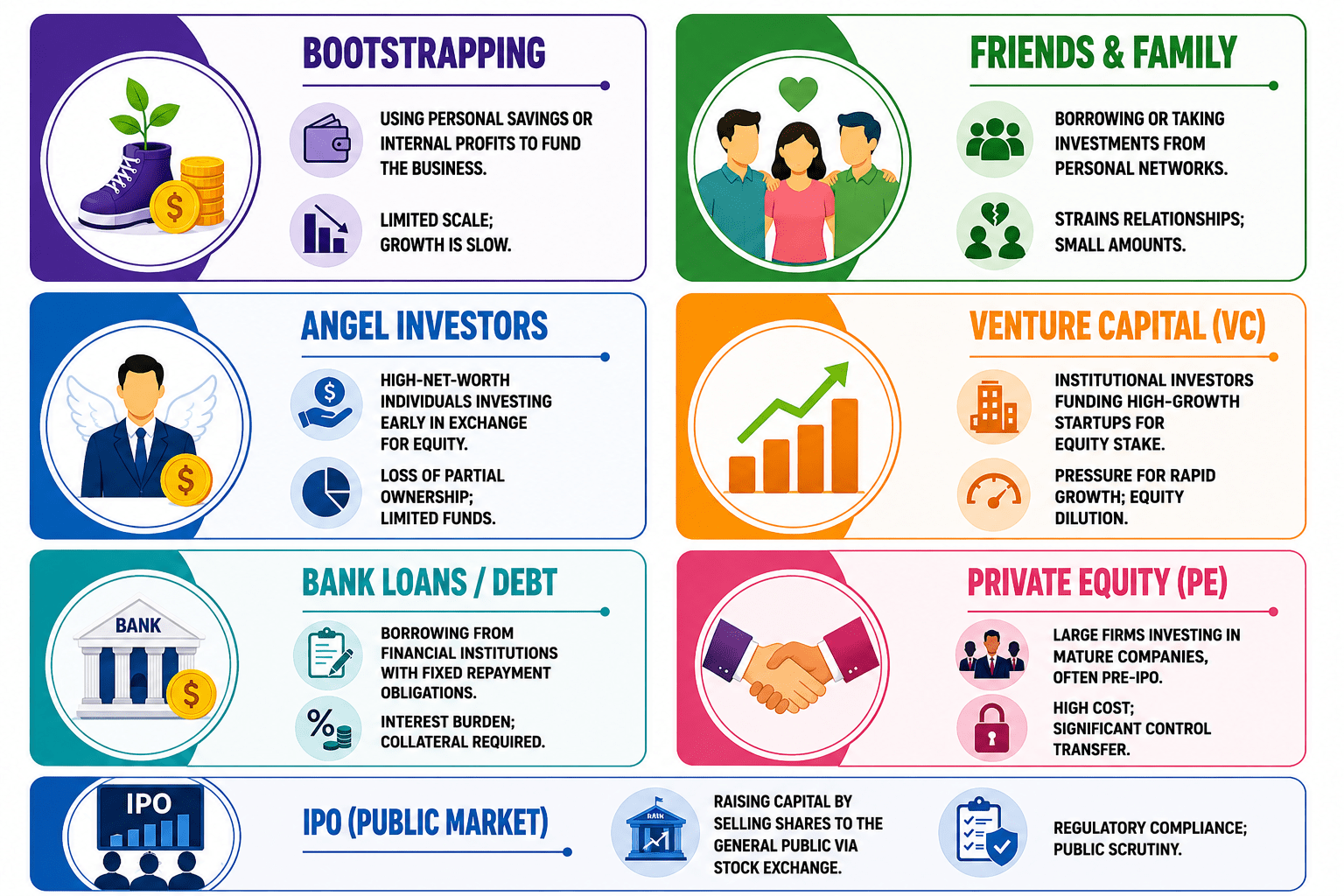
Companies can raise capital through various channels, broadly classified into internal and external sources:
Which Is the Best Way of Funding?
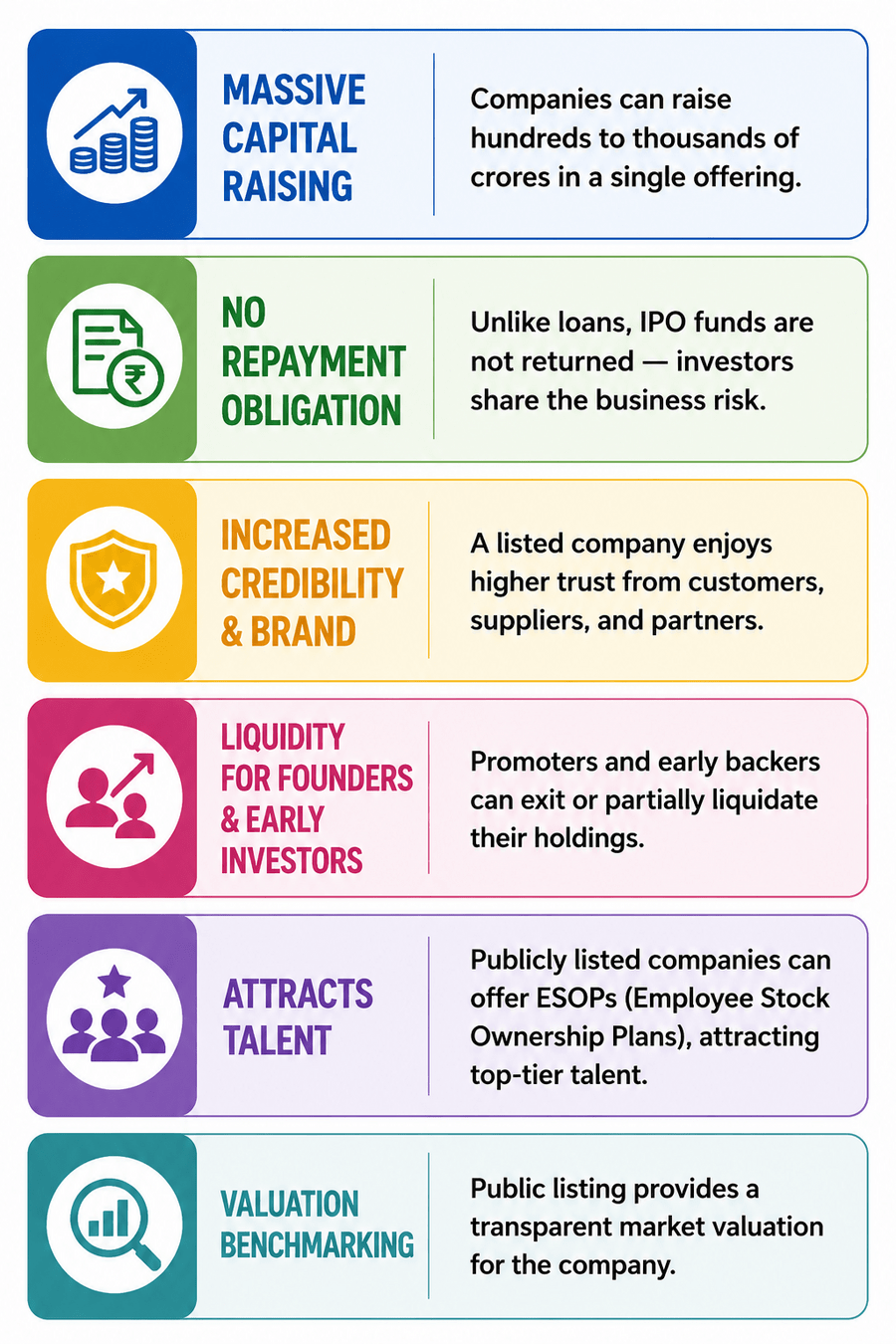
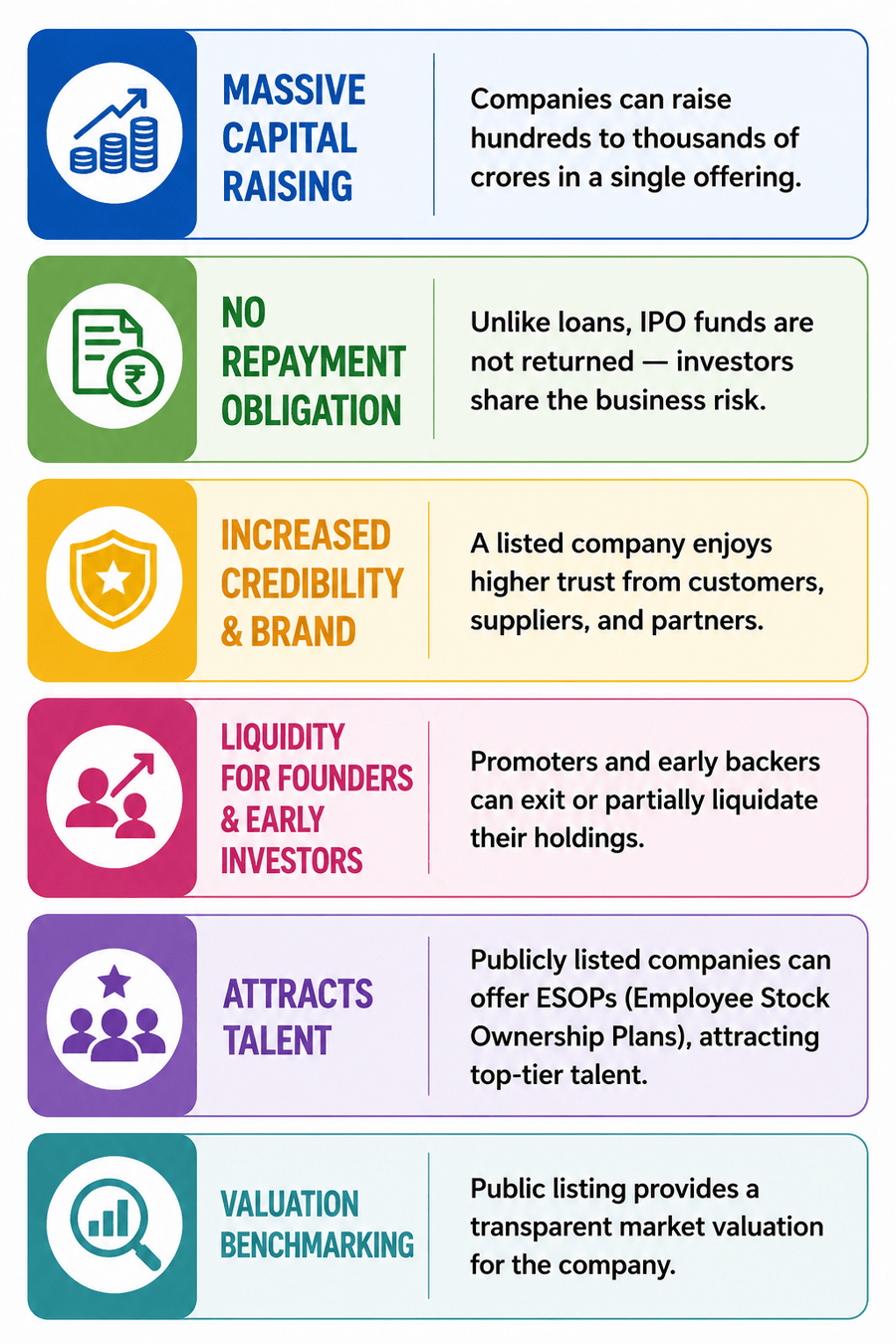
There is no single 'best' method — the right choice depends on the company's stage, size, risk appetite, and long-term vision. However, an IPO is widely regarded as the most powerful and scalable form of funding for mature companies with proven business models. Here is why:
Which Is the Best Way of Funding?
However, an IPO is NOT ideal for early-stage companies. The regulatory compliance (SEBI in India, SEC in the US), disclosure requirements, and investor scrutiny make it suitable only for companies with a track record, stable revenues, and a compelling growth story.
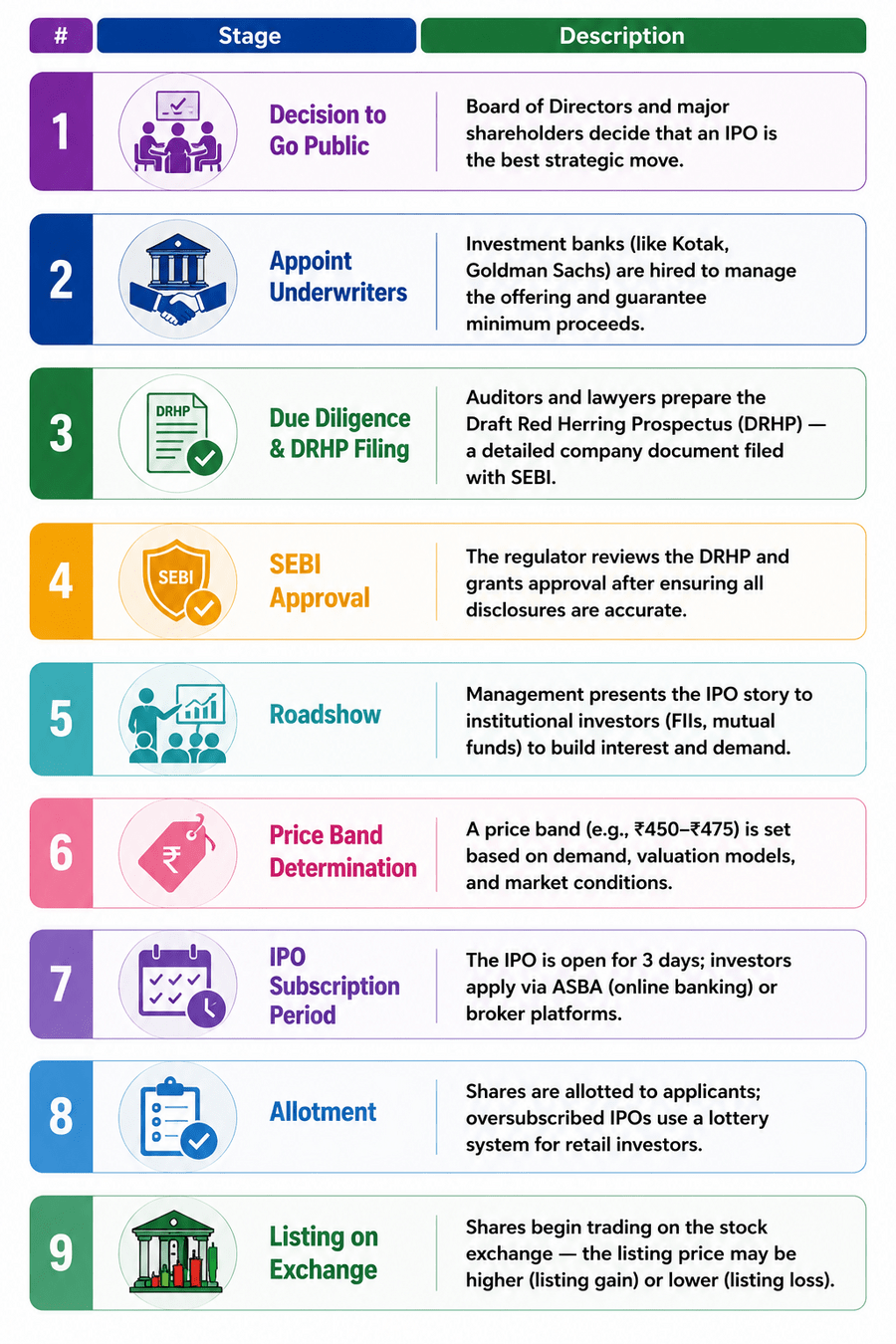
The IPO Process — Step by Step
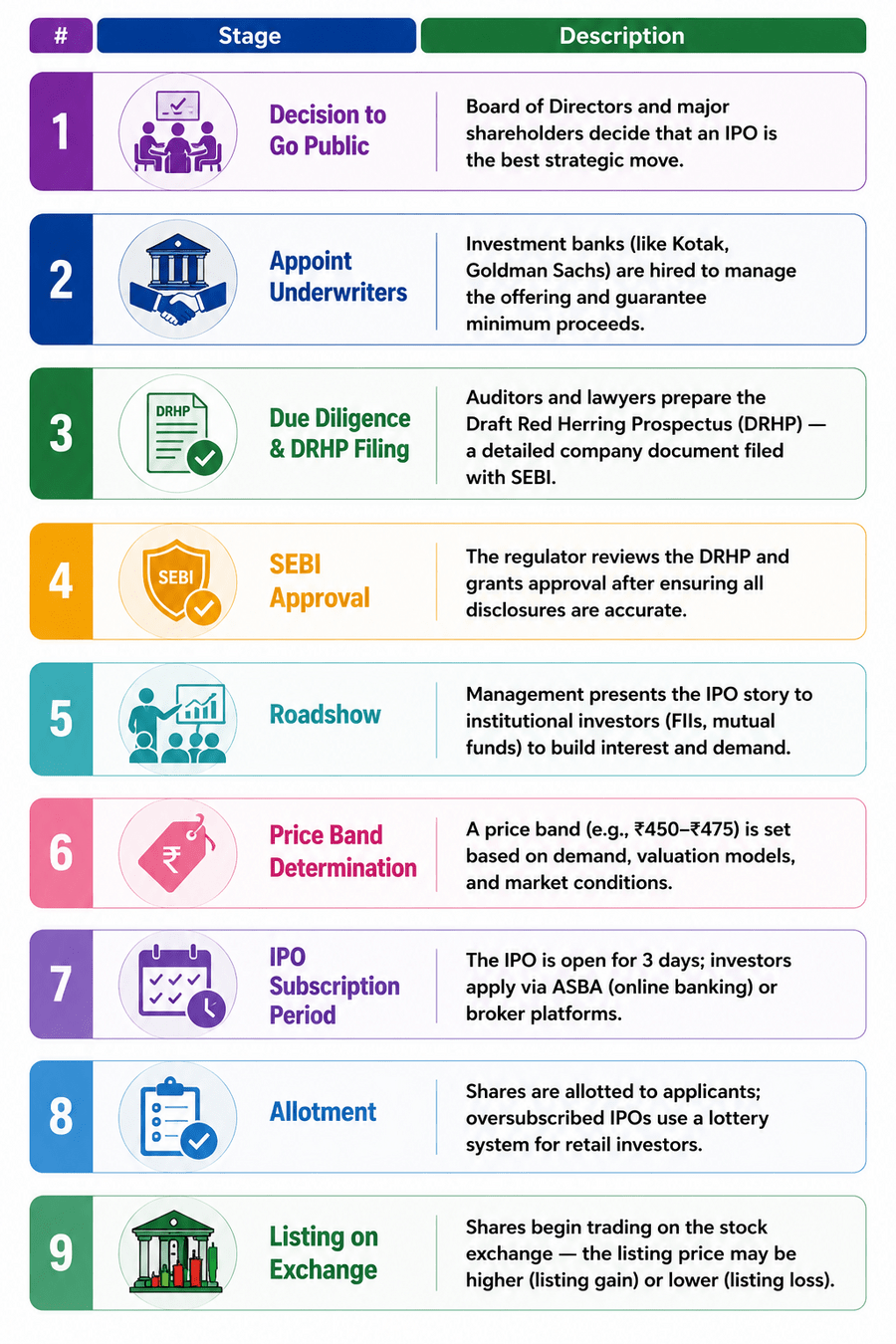
The IPO Process — Step by Step
Summary
5
Commodity market trades raw materials.
4
Derivatives market trades asset-based contracts.
3
Forex market exchanges currencies.
2
Money market is short-term; capital market is long-term.
1
Primary market issues shares; secondary market trades shares.
Quiz
Which of the following is NOT a function of financial markets?
A. Liquidity provision
B. Price discovery
C. Resource allocation
D. Tax collection
Quiz-Answer
Which of the following is NOT a function of financial markets?
A. Liquidity provision
B. Price discovery
C. Resource allocation
D. Tax collection
By Content ITV