

























Content ITV PRO
This is Itvedant Content department
Learning Outcome
5
Learn how risk transfer operates
4
Understand the importance of liquidity and price discovery
3
Identify how capital allocation works
2
Recognize how markets support economic growth
1
Understand the core functions of financial markets
Why Financial Markets Exist
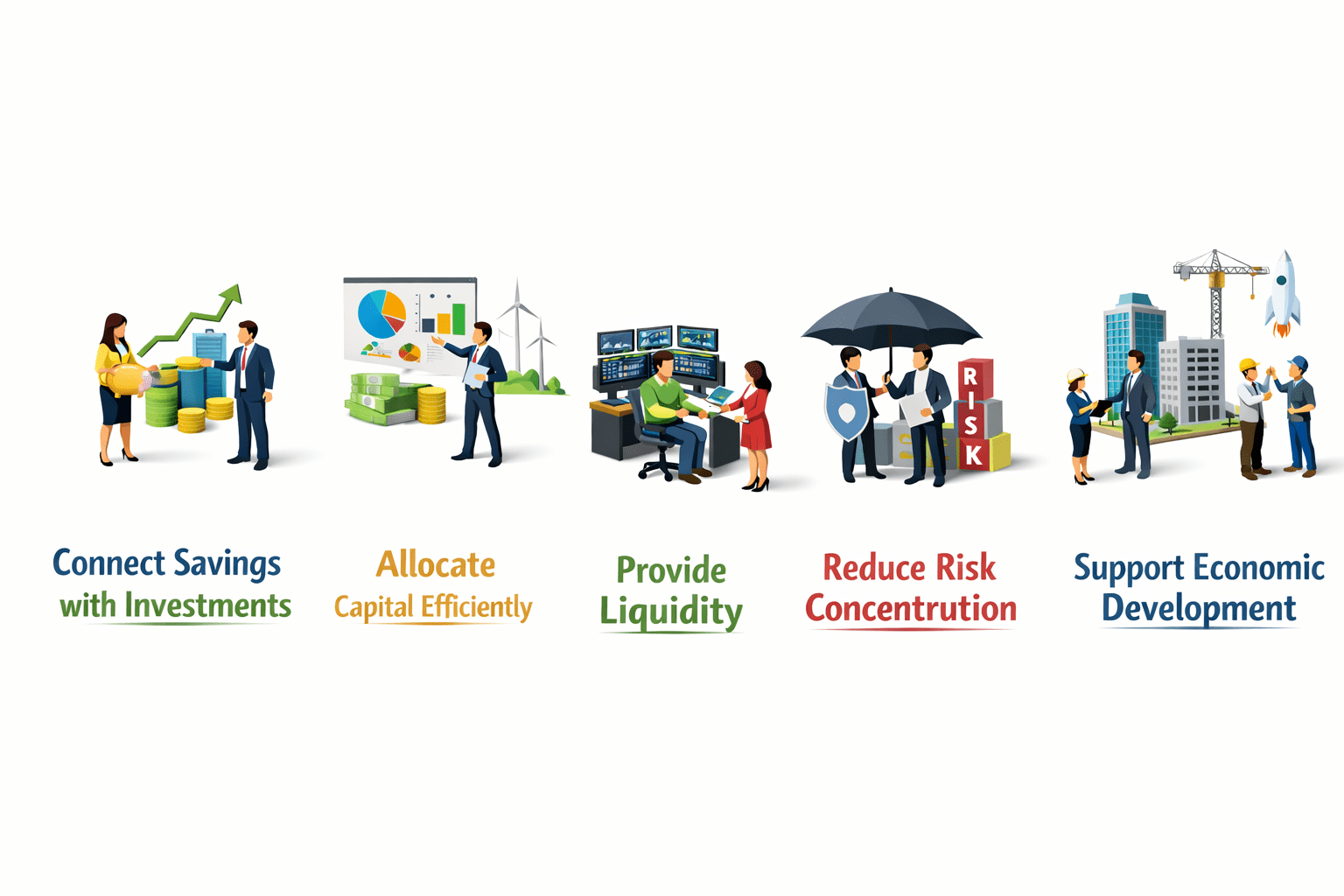
Financial markets are not just trading platforms.
They exist to:
Connect savings with investments
Allocate capital efficiently
Provide liquidity
Reduce risk concentration
Support economic development
Core idea:Financial markets act as the circulatory system of the economy.
Function 1:- Capital Formation
What is Capital Formation?
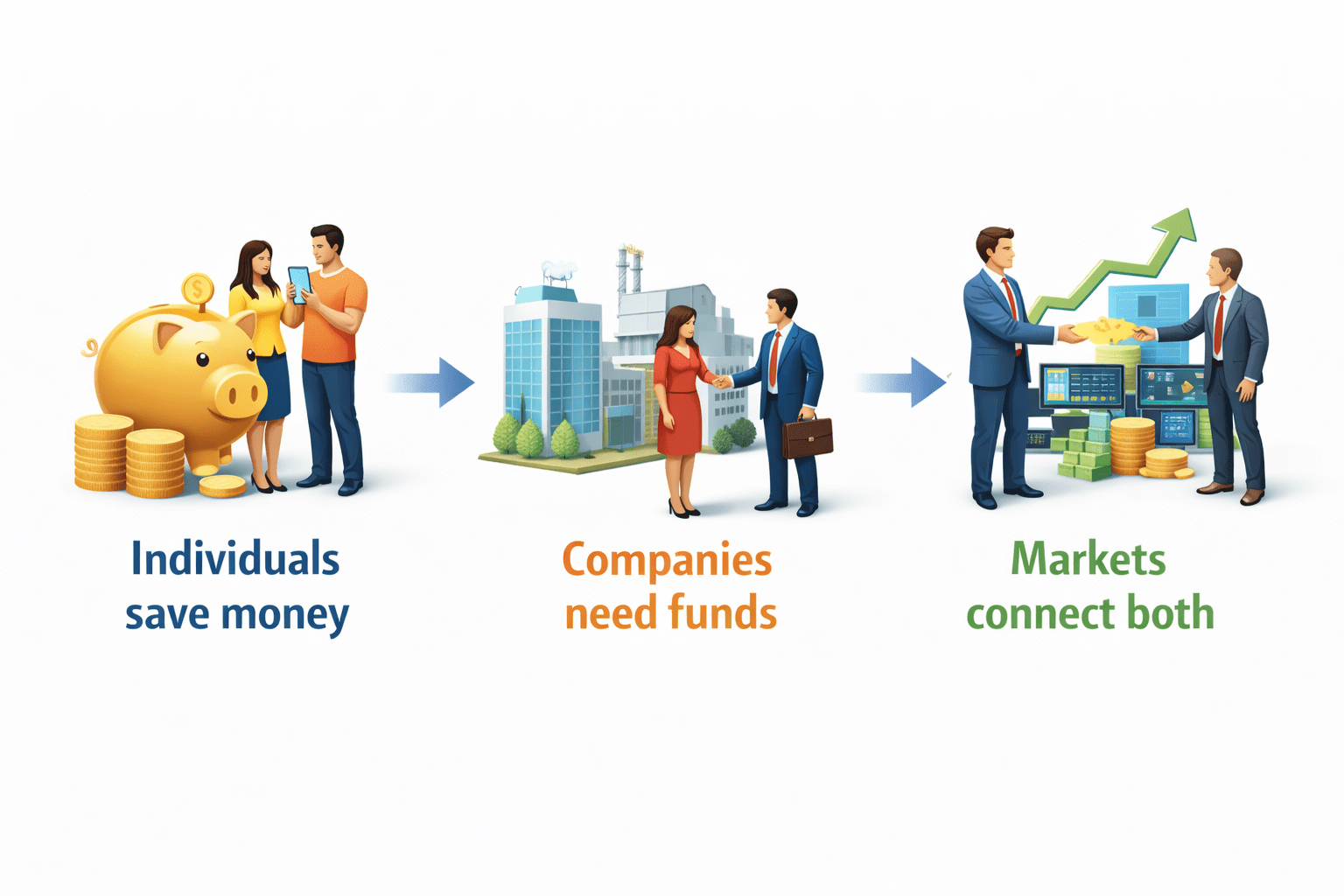
Financial markets help convert savings into productive investments.
How it works:
Individuals save money
Companies need funds
Markets connect both
Function 1:- Capital Formation
Why it matters:Capital formation drives economic growth and development.
Investors buy shares
Company receives funds
Expands business
Creates jobs
Example:-
Function 2:- Mobilization of Savings
Savings from households are often idle.
Channel savings into investment opportunities
Financial markets:
Offer various financial instruments
Encourage disciplined investing
Without markets: Savings remain unproductive.
Core idea:Markets transform savings into economic activity.
Function 3:- Liquidity Provision
What is Liquidity?
Liquidity means how easily assets can be bought or sold without major price impact.
Financial markets provide:
Continuous trading platforms
Active buyers and sellers
Quick conversion of securities into cash
Benefit:Investors are more willing to invest when exit options are available.
Function 4:- Price Discovery
Price discovery is the process of determining the fair value of securities.
Prices are influenced by:
Demand and supply
Company performance
Economic conditions
Market expectations
Function 4:- Price Discovery
Efficient price discovery ensures:
Fair valuation
Informed decision-making
Transparent markets
Core idea:Markets reflect real-time information through prices.
Function 5:- Risk Transfer & Risk Management
Financial markets allow risk to be distributed among participants.
Mechanisms include:
Diversification
Derivatives (futures, options, swaps)
Insurance products
Example:An investor hedges against price fluctuations using derivatives.
Benefit:Risk is shared instead of concentrated.
Function 6:- Facilitating Economic Growth
Financial markets:
Support entrepreneurship
Fund infrastructure projects
Encourage innovation
Text
Improve capital allocation
Function 6:- Facilitating Economic Growth
Strong financial markets lead to:
Higher investment
Increased productivity
Sustainable economic growth
Integrated View
Financial markets perform multiple interconnected functions:
Mobilize savings
Form capital
Provide liquidity
Discover prices
Transfer risk
Promote economic development
Insight:Each function strengthens the overall financial system.
Summary
5
Risk transfer enhances stability
4
Price discovery promotes transparency
3
Liquidity builds investor confidence
2
They ensure efficient capital allocation
1
Financial markets connect savers and investors
Economic growth depends on strong markets
6
Quiz
Financial markets help in converting savings into:
A. Taxes
B. Investments
C. Loans only
D. Consumption
Quiz-Answer
Financial markets help in converting savings into:
A. Taxes
B. Investments
C. Loans only
D. Consumption
By Content ITV