




Content ITV PRO
This is Itvedant Content department
Learning Outcome
5
Understand the role of encryption and decryption in securing data
4
Learn the end-to-end flow of data across a network
3
Understand how de-encapsulation retrieves original data at the destination
2
Learn how encapsulation prepares data for transmission
1
Understand what a protocol is and why rules are required for communication
Let's Recall
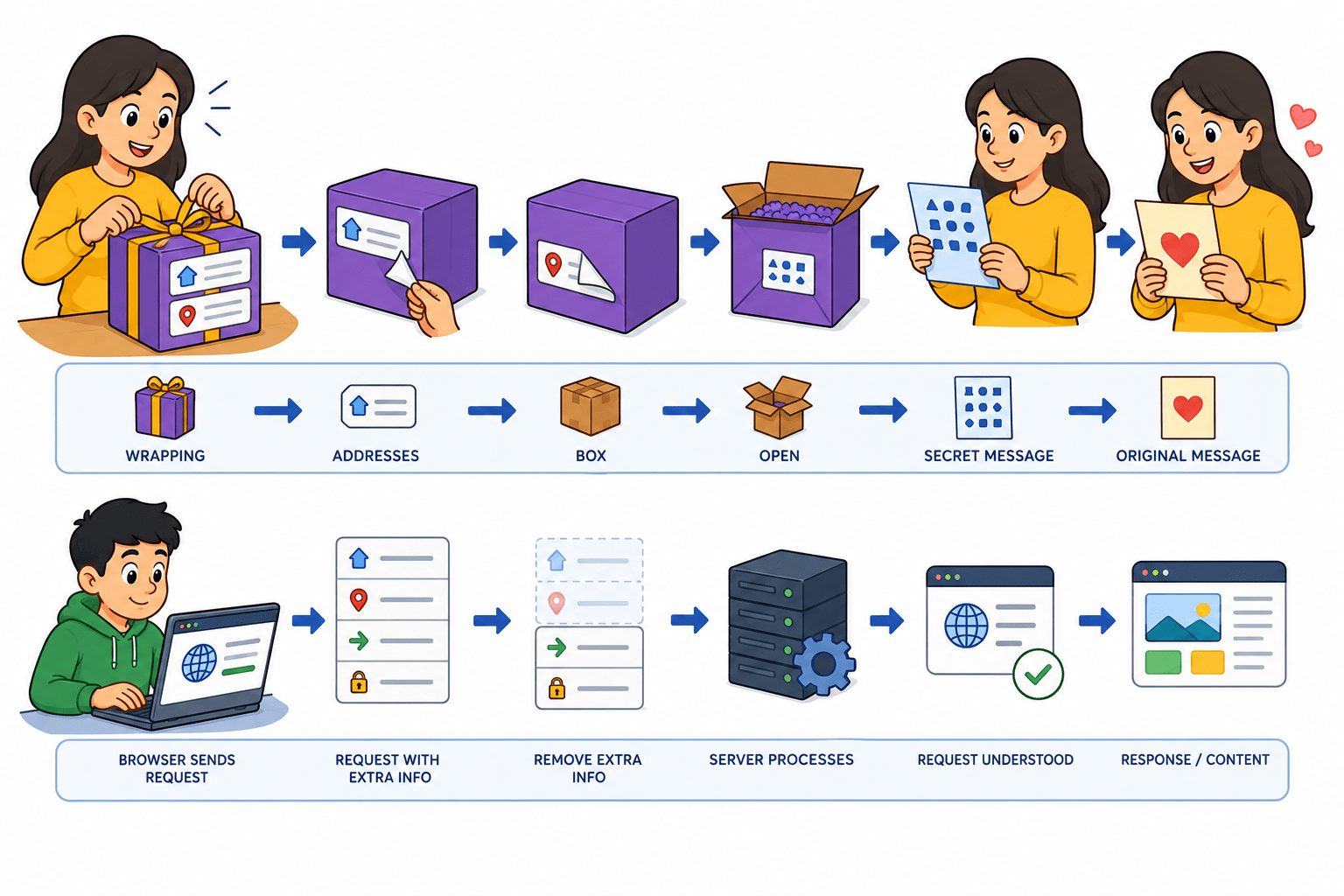
Imagine you want to send a secret gift to your friend.
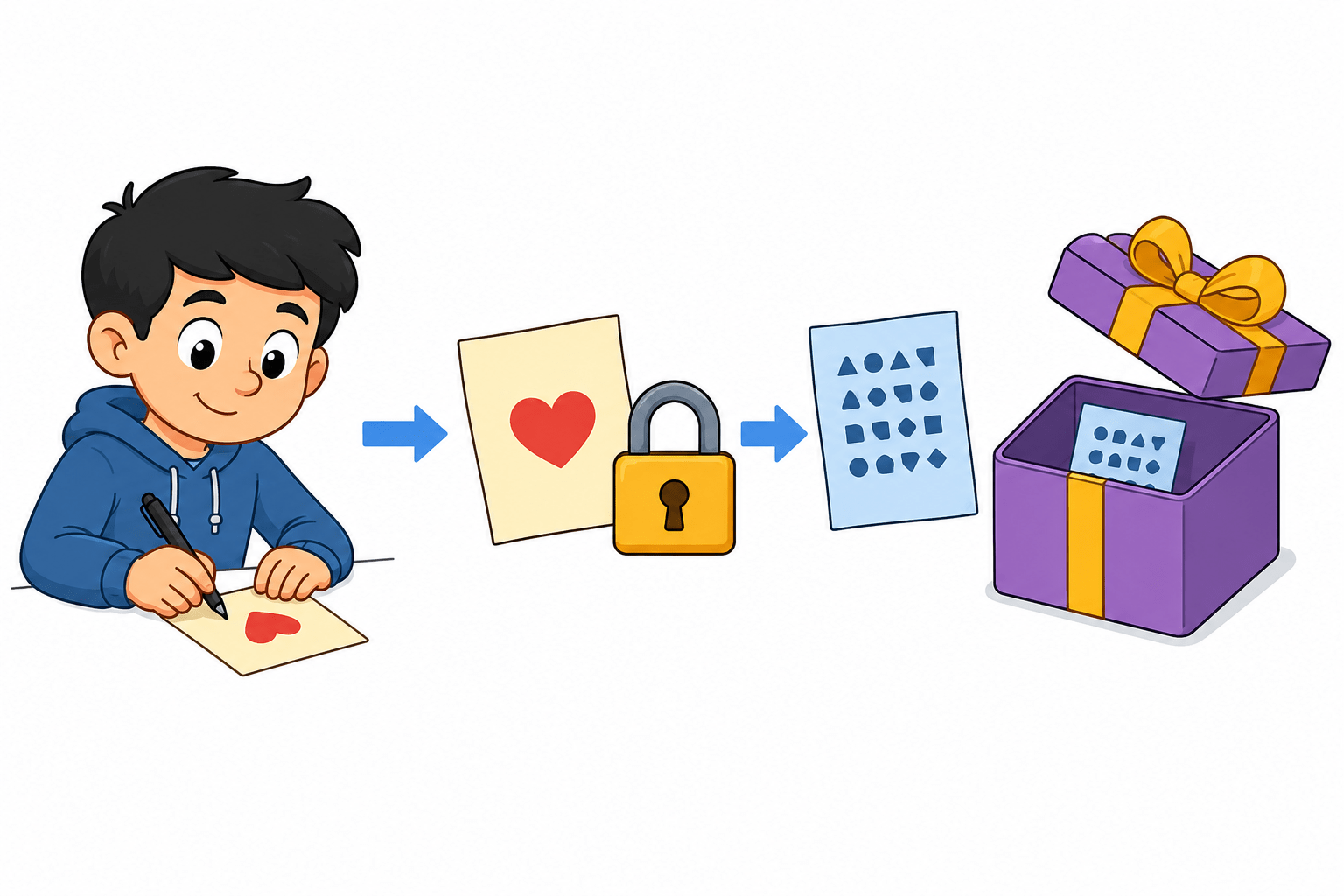
First, you write a small message to place inside the gift box.
Since you don't want anyone else to read it, you convert the message into a secret form that only your friend can understand.
This is similar to encryption, where data is protected before being sent across a network.
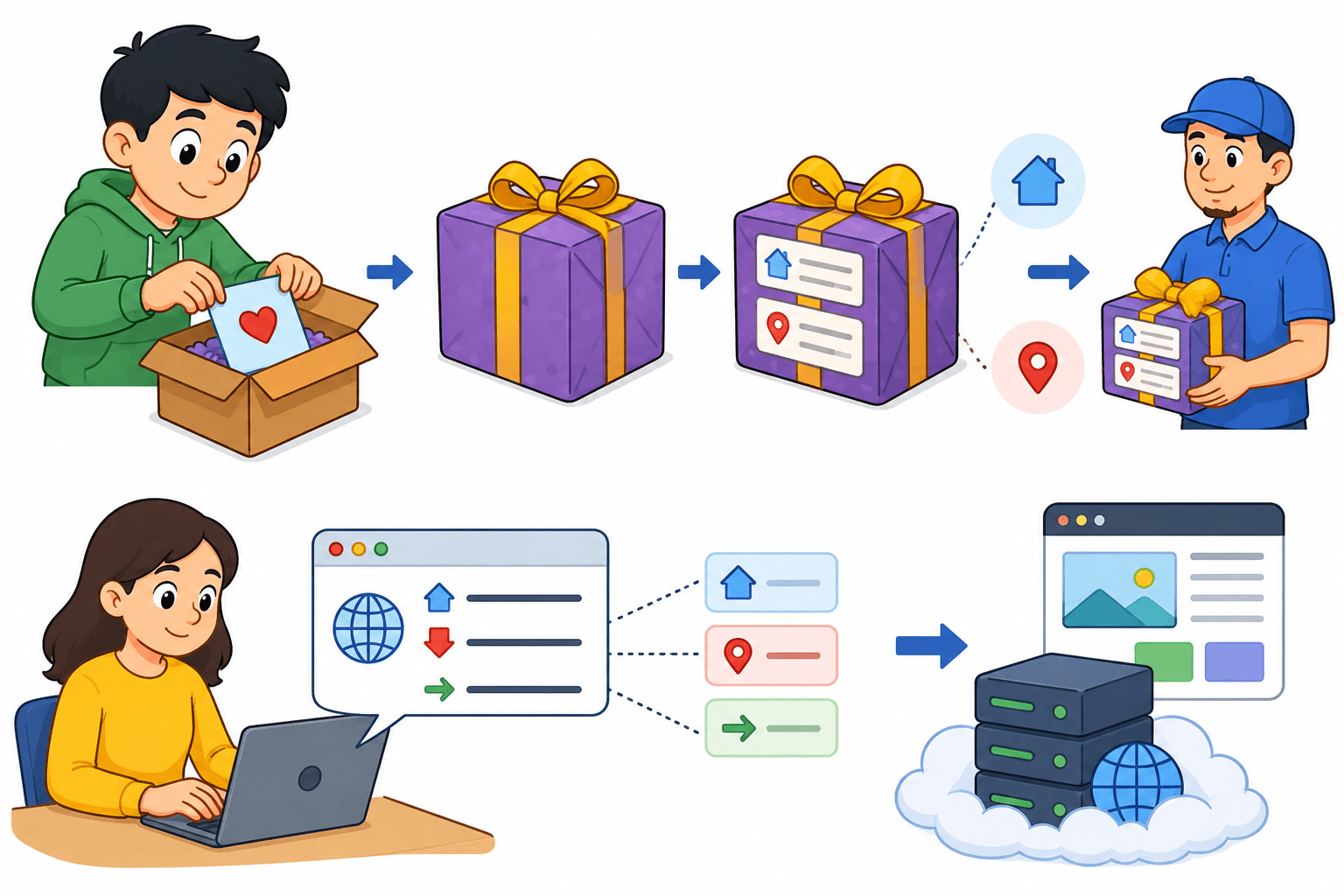
Next, you place the message inside a box and wrap it carefully.
You also add your friend's address and your own return address so the delivery service knows where the package should go and where it came from.
In the same way, when you open a website, your browser creates a request and adds extra information such as source and destination addresses to ensure the message reaches the correct server.
You then hand the package to a delivery service.
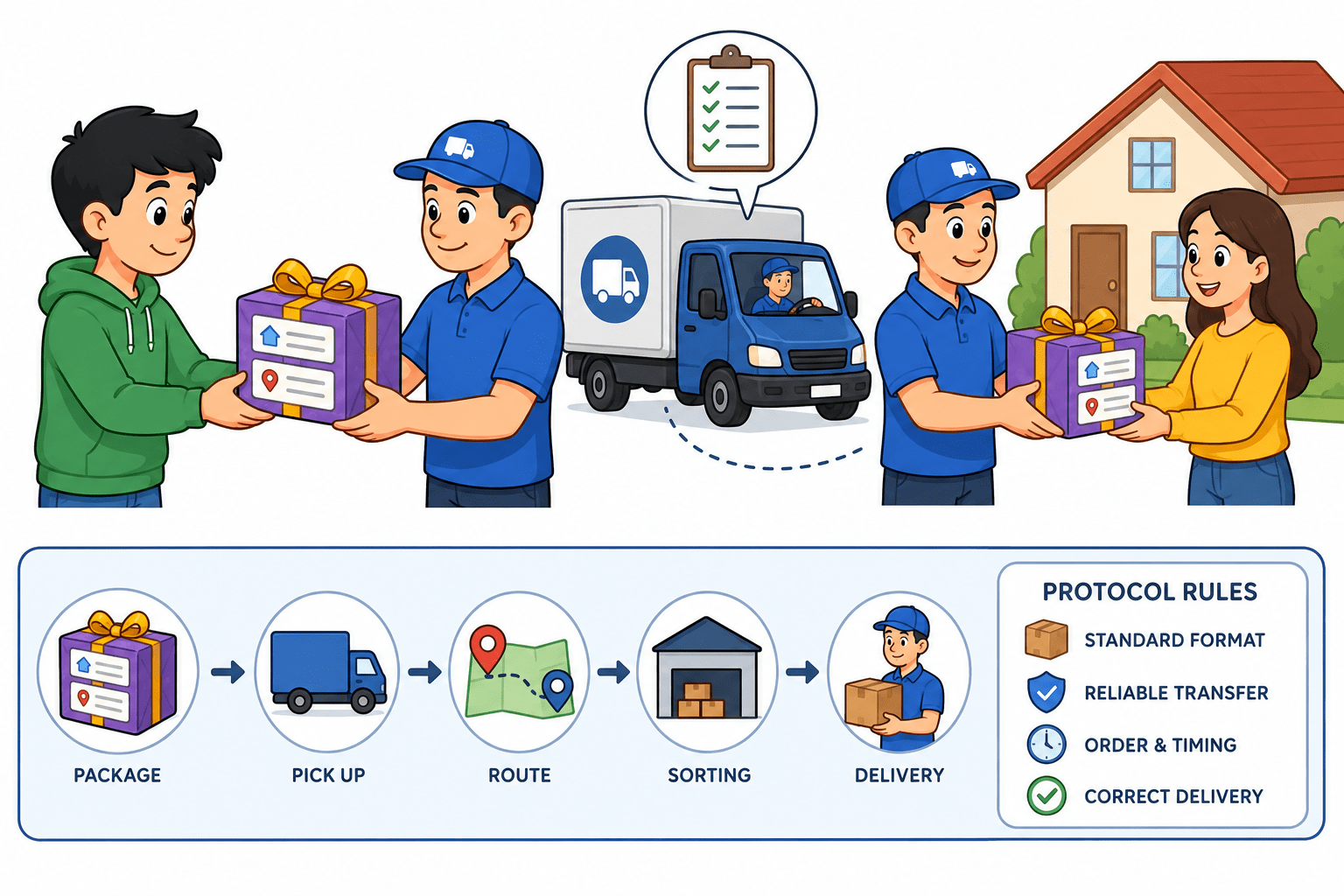
The courier follows a set of rules to handle every package in a standard way and deliver it correctly.
Similarly, network protocols define rules for how data is packaged, transmitted, and received on the internet
The package travels through roads, warehouses, and delivery centers before reaching your friend.
Likewise, data travels through multiple routers, switches, and network paths across the internet until it reaches the destination website.
When your friend receives the package, they remove the wrapping layer by layer, open the box, and retrieve the secret message.
They then convert it back to its original form so they can read it.
In the same way, the website receives the request, removes the extra networking information, processes the data, and understands what was requested.
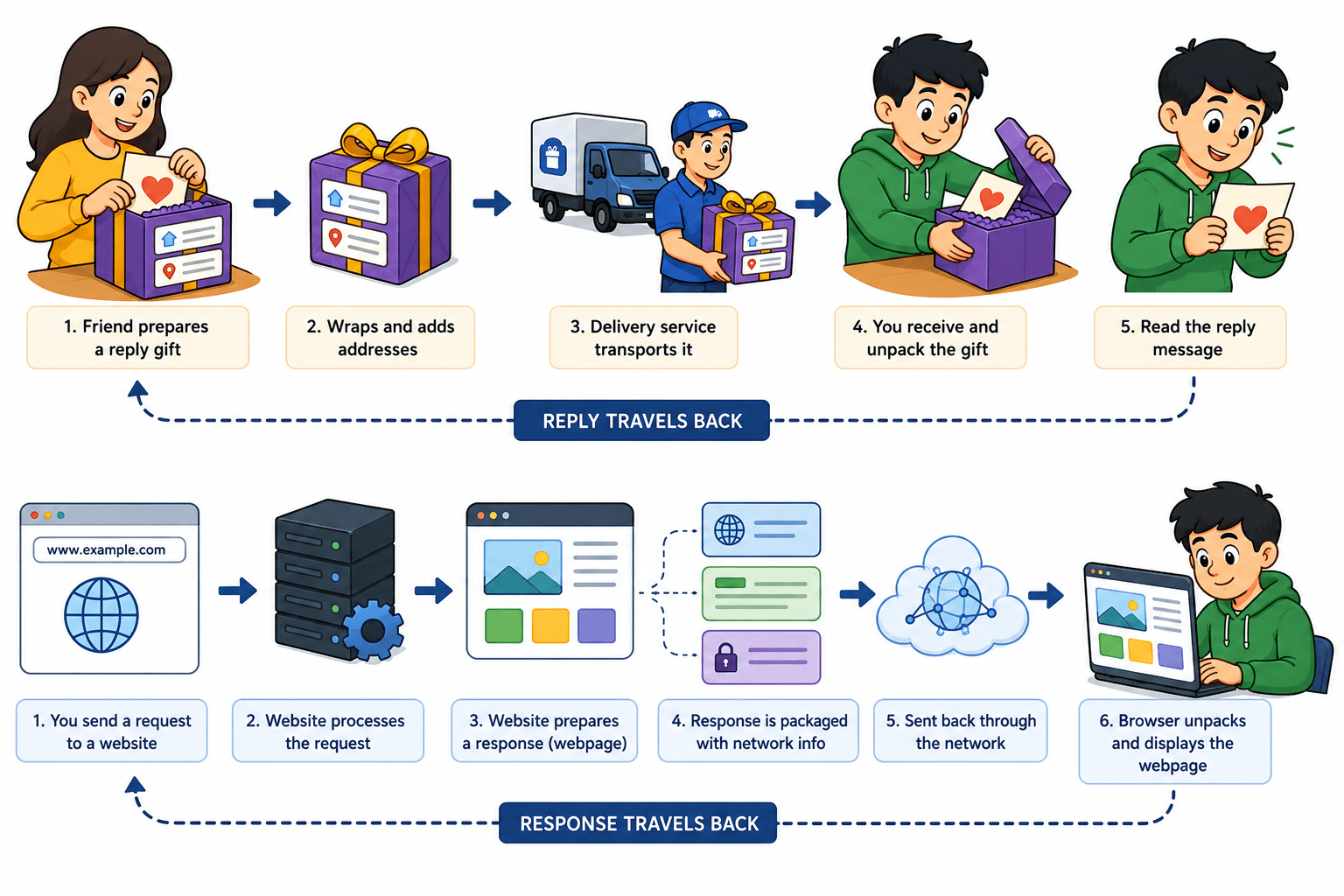
Finally, the website prepares a response, such as a webpage, and sends it back through the network using the same process.
Just as your friend could send a reply gift back to you, the website returns the requested information to your browser, where it is unpacked and displayed for you to see.
What is a Protocol?
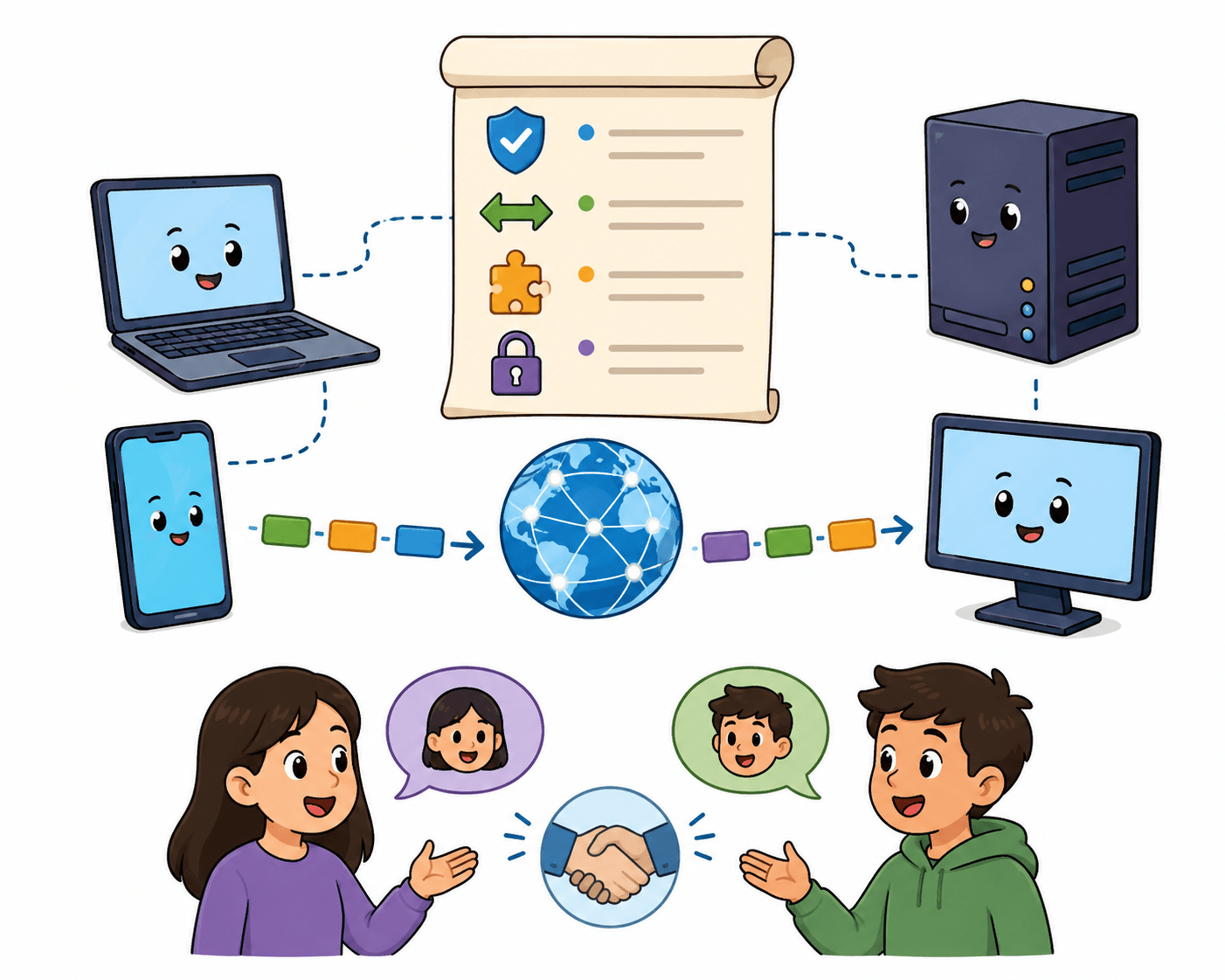
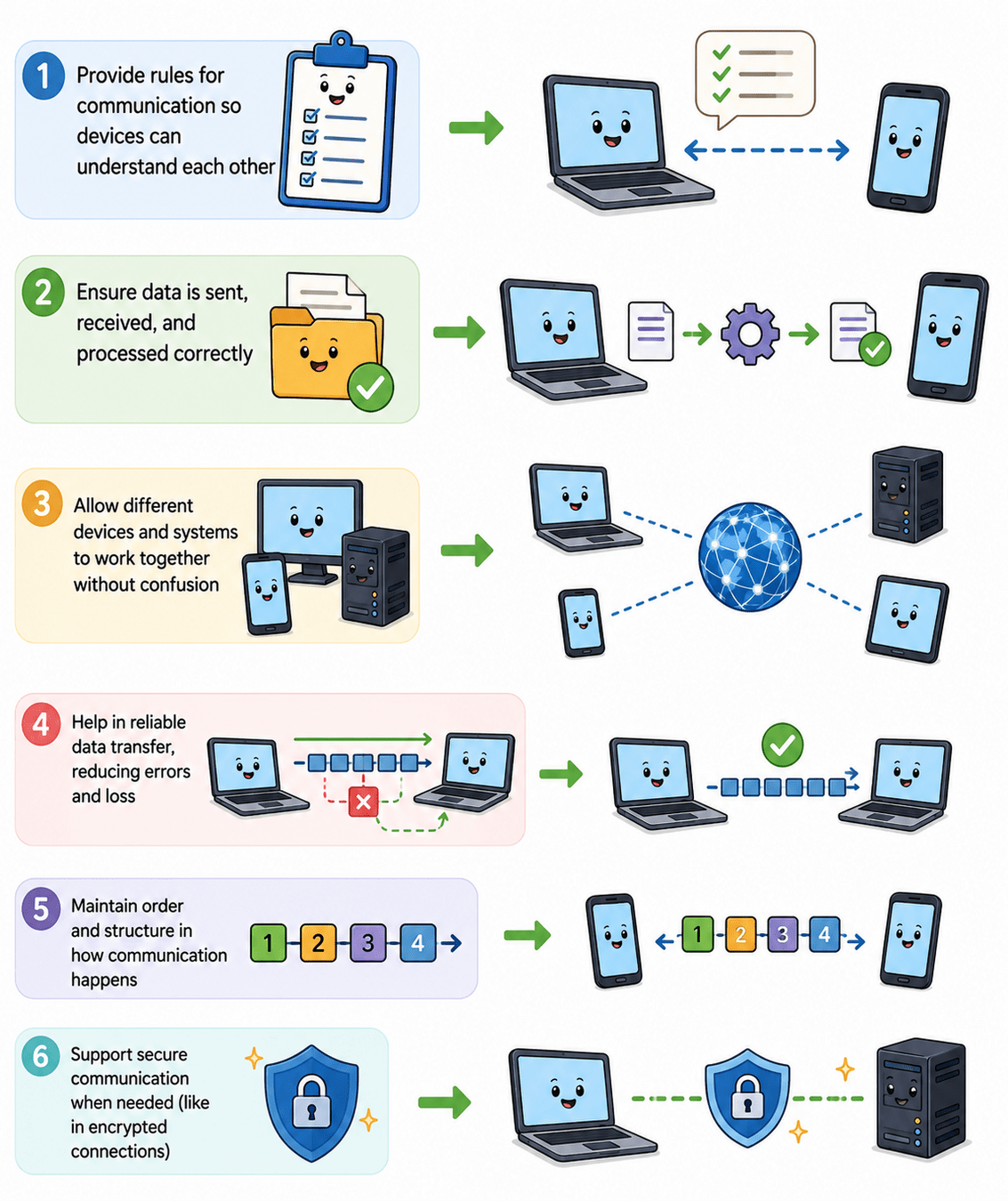
A protocol is a set of rules that define how devices communicate over a network. It decides how data is sent, received, and understood between devices. Just like people need a common language to talk, computers need protocols (like HTTP, TCP, IP) to exchange information correctly.
Use of Protocols
How It Works
Encapsulation & De-encapsulation Process
Encapsulation:
Encapsulation is the process of adding extra information (headers) to data as it moves
down the layers of a network model. Each layer adds its own details (like address, error checking, etc.) before sending the data.
De-encapsulation:
De-encapsulation is the reverse process. When data reaches the destination, each layer removes its added information step by step to get the original data.
Simple idea:
Sender = wraps data layer by layer (like packing a parcel)
Receiver = unwraps data layer by layer
Data Flow in Network
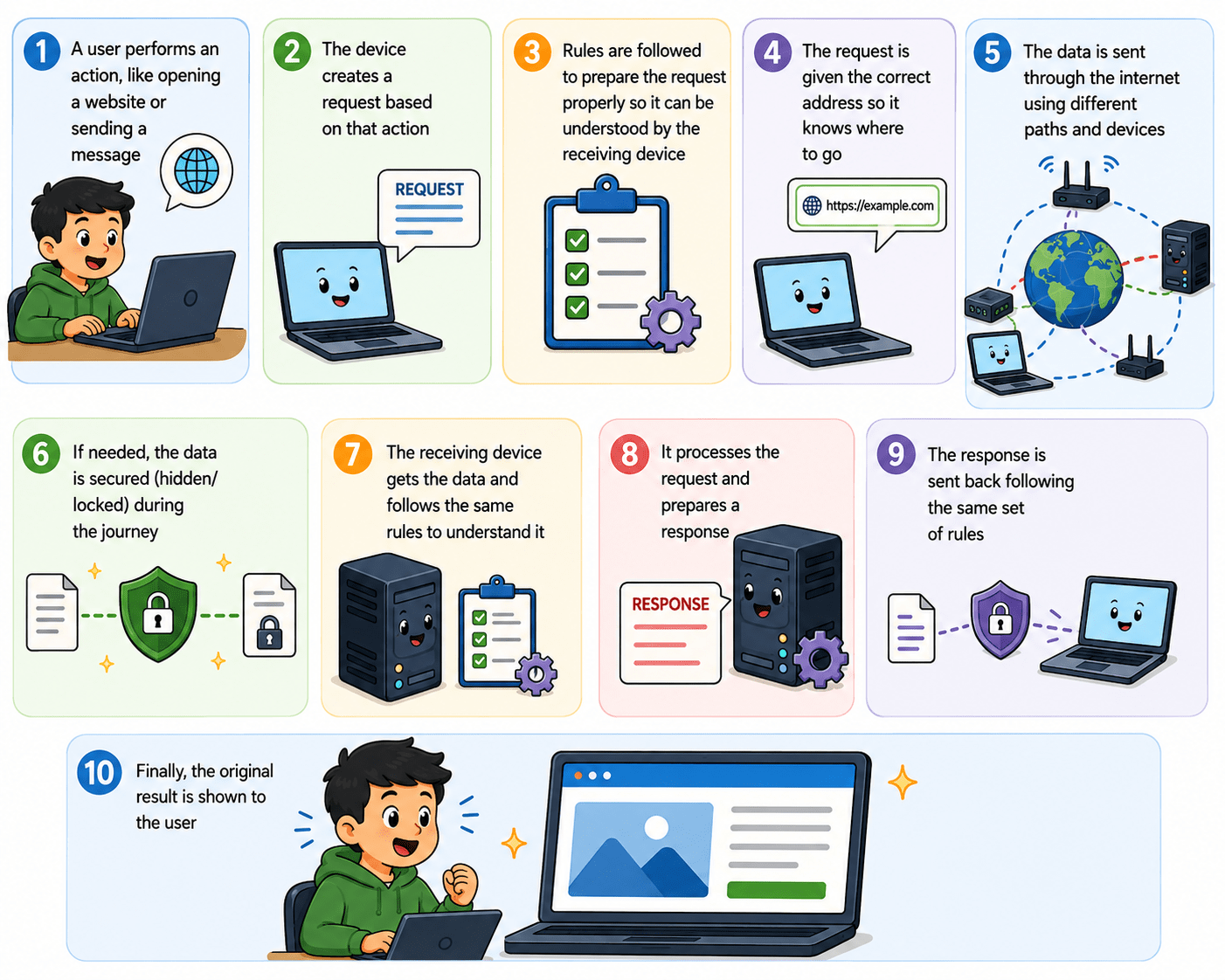
When data is sent from one device to another, it follows a step-by-step process:
The sender creates data (like a message or request).
Data passes through different layers where it is encapsulated.
It travels across the network using routers and cables/wireless.
The receiver gets the data.
Data is de-encapsulated layer by layer.
The original message is delivered to the application.
Simple example:
Sending a message is like sending a courier:
You write the message (data)
Pack it with address details (encapsulation)
It travels through roads (network)
Receiver opens the package (de-encapsulation)
Reads the message
What is Encryption and Decryption
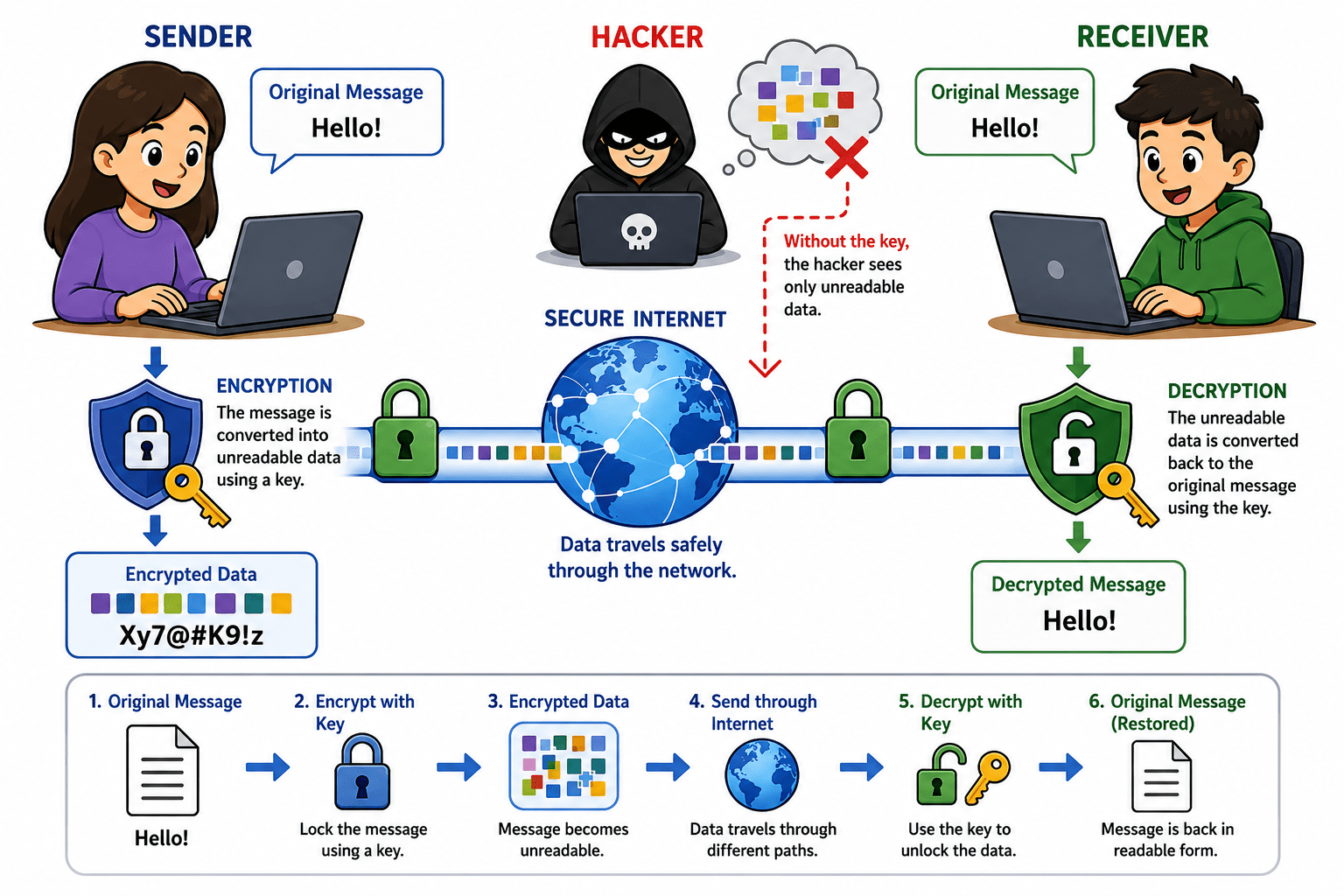
Encryption is the process of converting readable data (plain text) into an unreadable form (cipher text) to protect it from unauthorized access.
“Hi” → “Xy7@#” (scrambled data)
Encryption:-
Decryption:-
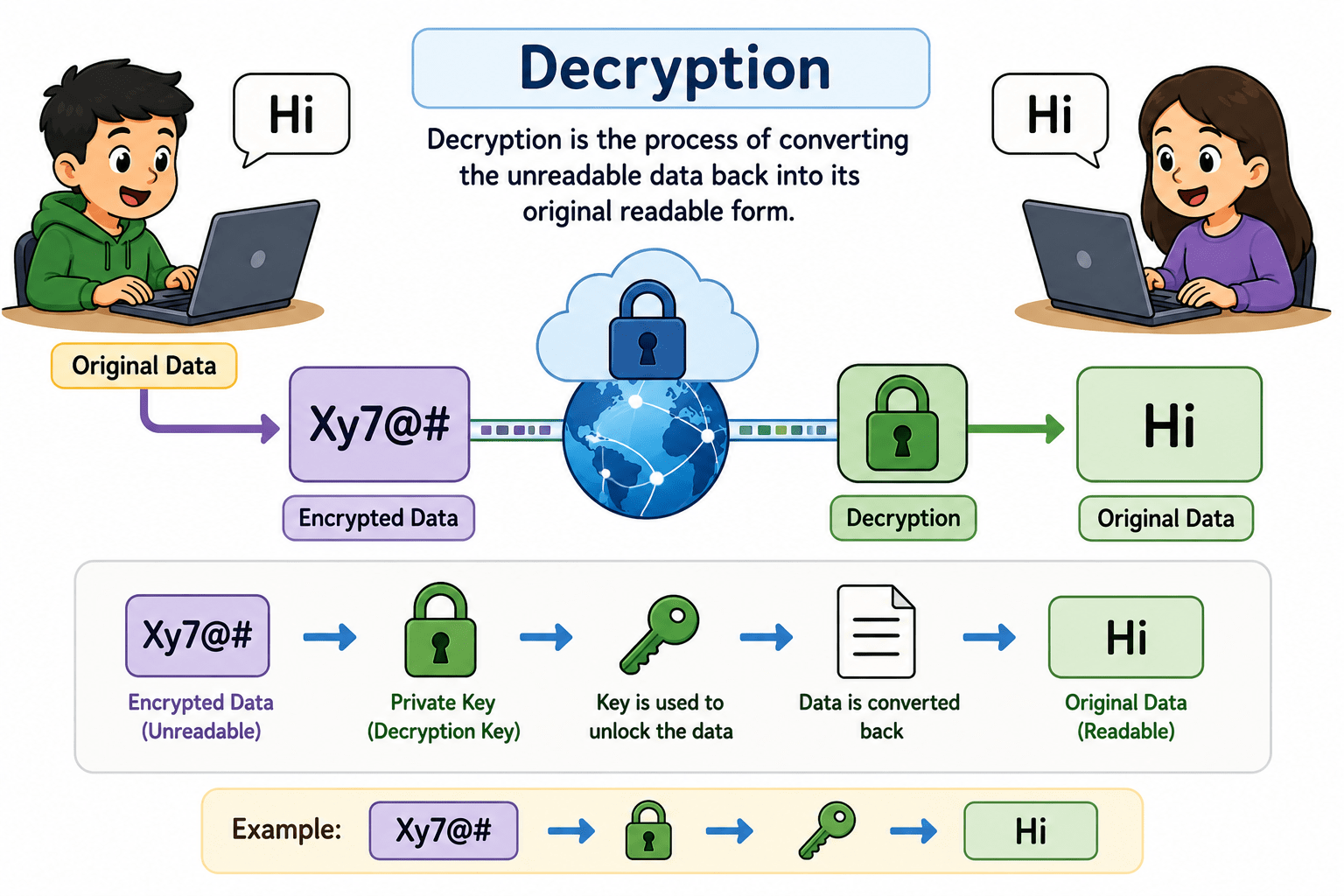
Decryption is the process of converting the unreadable data back into its original readable form.
“Xy7@#” → “Hi”
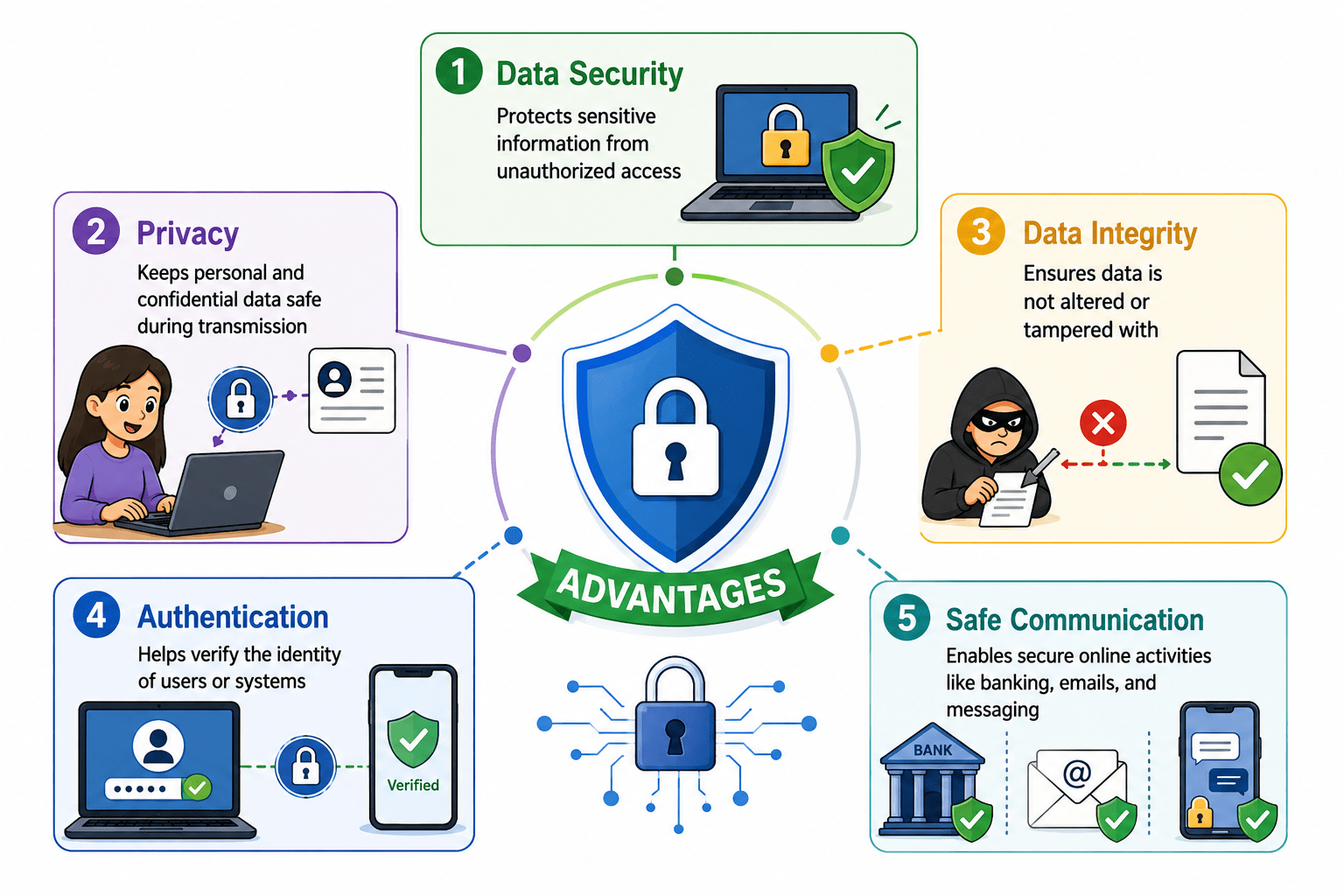
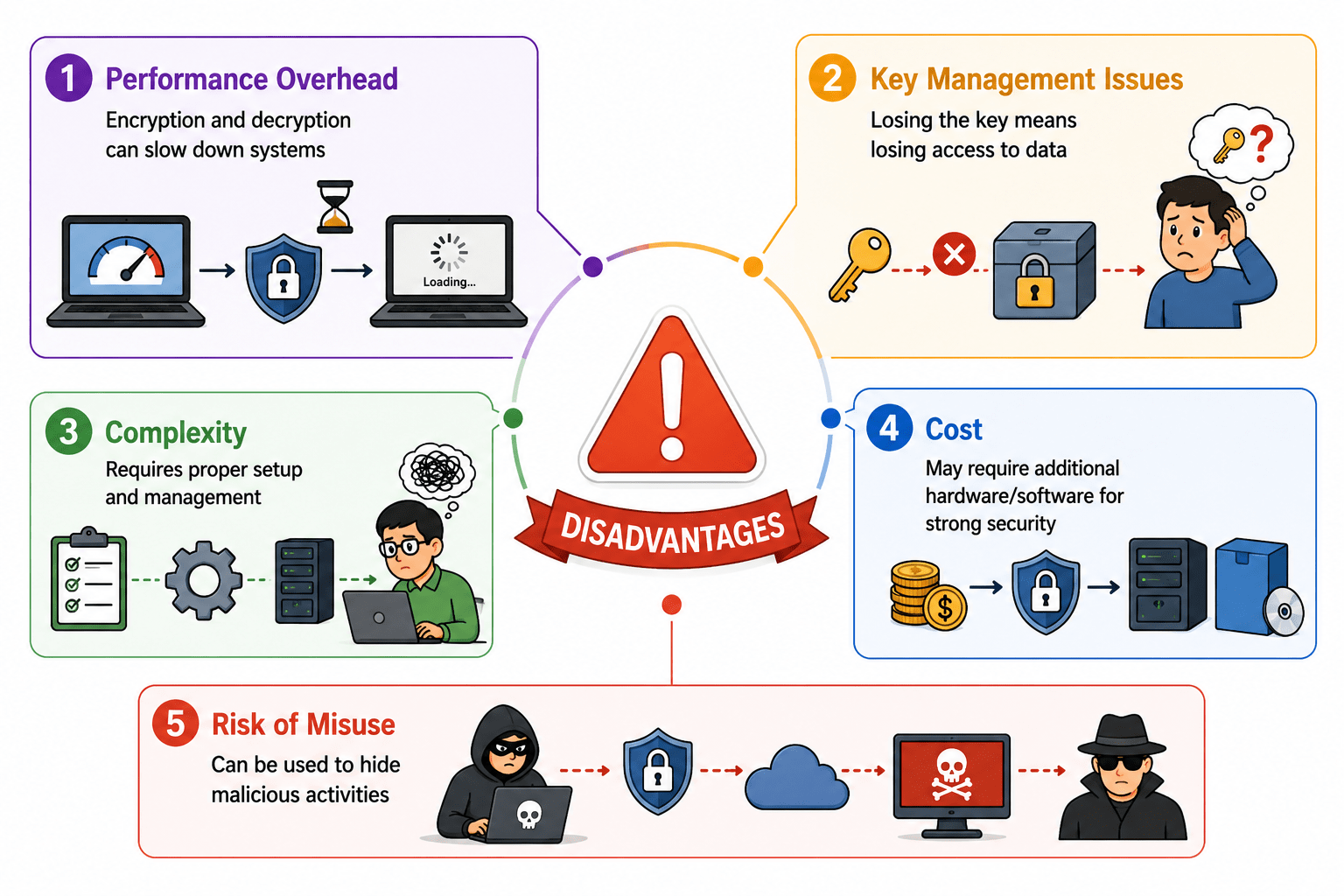
Advantages & Disadvantages of Encryption and Decryption
Summary
4
Encryption improves security but increases complexity and processing time.
3
Decryption converts encrypted data back into readable form.
2
Encryption converts data into a secure unreadable form.
1
A protocol is a set of rules that enables devices to communicate over a network.
Quiz
What is de-encapsulation?
A. Sending data
B. Adding headers
C. Removing headers
D. Routing data
Quiz-Answer
What is de-encapsulation?
C. Removing headers
A. Sending data
B. Adding headers
D. Routing data
By Content ITV