








Content ITV PRO
This is Itvedant Content department
Learning Outcome
5
Compare FX Forwards and NDFs in global markets
4
Explain how offshore NDF markets operate
3
Identify which currencies are used in each instrument
2
Understand FX Forwards and NDFs for currency risk
1
Understand FX Forwards and NDFs for currency risk
What Is an FX Forward?
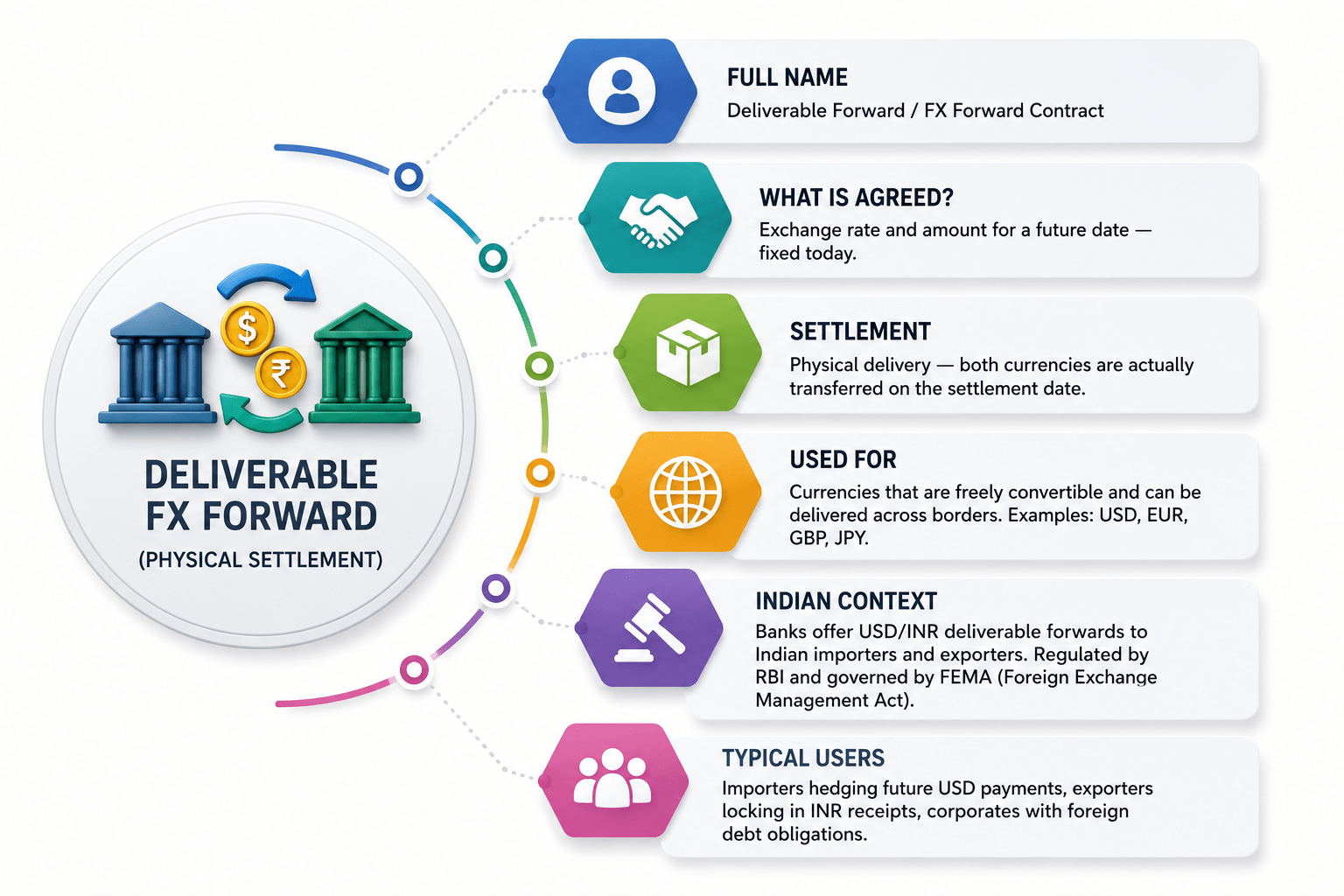
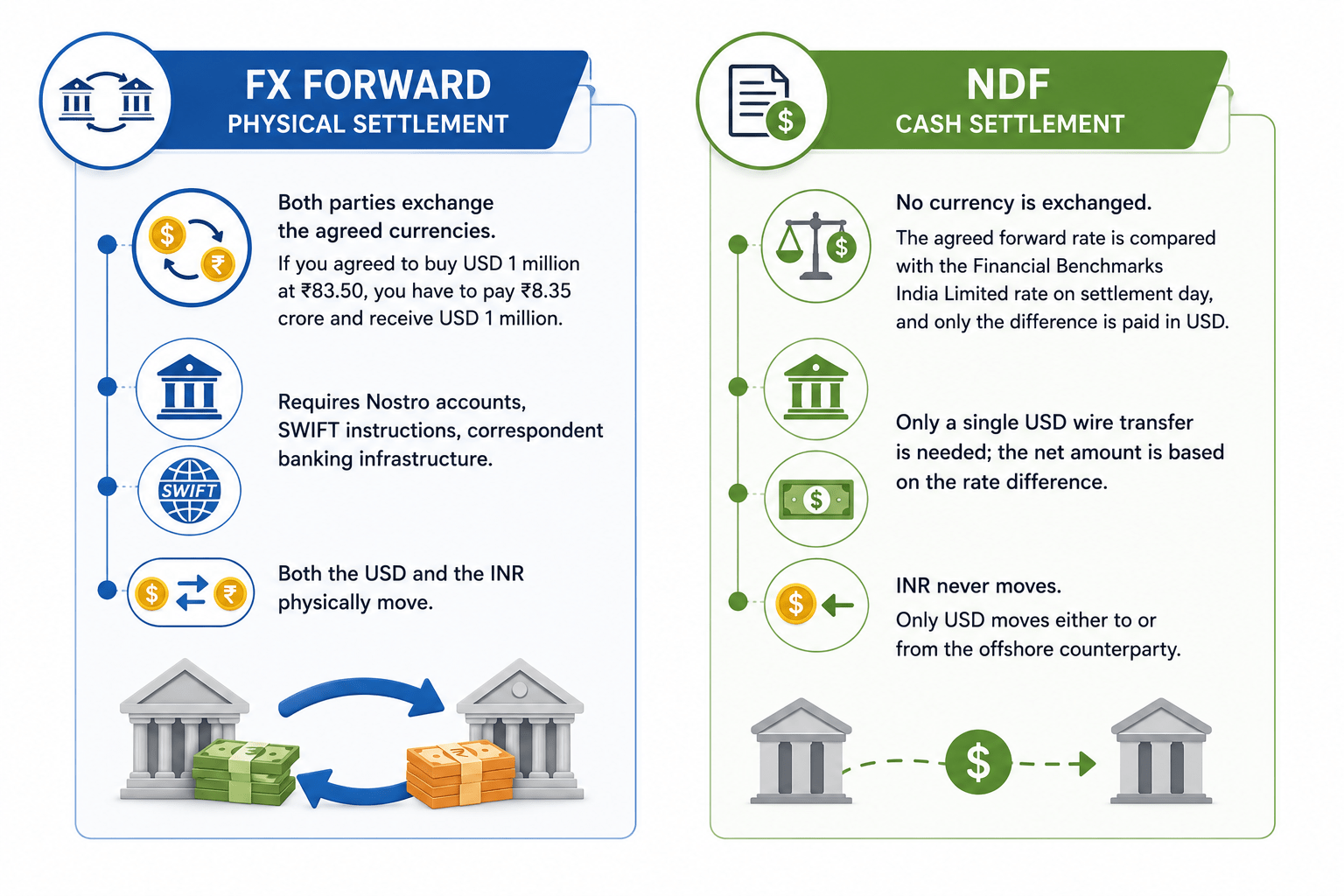
An FX Forward is a contract between two parties — usually a bank and a corporate — to buy or sell a specific amount of one currency against another at a pre-agreed rate, on a specific future date.
The rate agreed today is called the Forward Rate. On the settlement date, both parties physically exchange the agreed currencies. This is called Deliverable Forward or Physical Settlement
What Is a Non-Deliverable Forward (NDF)?
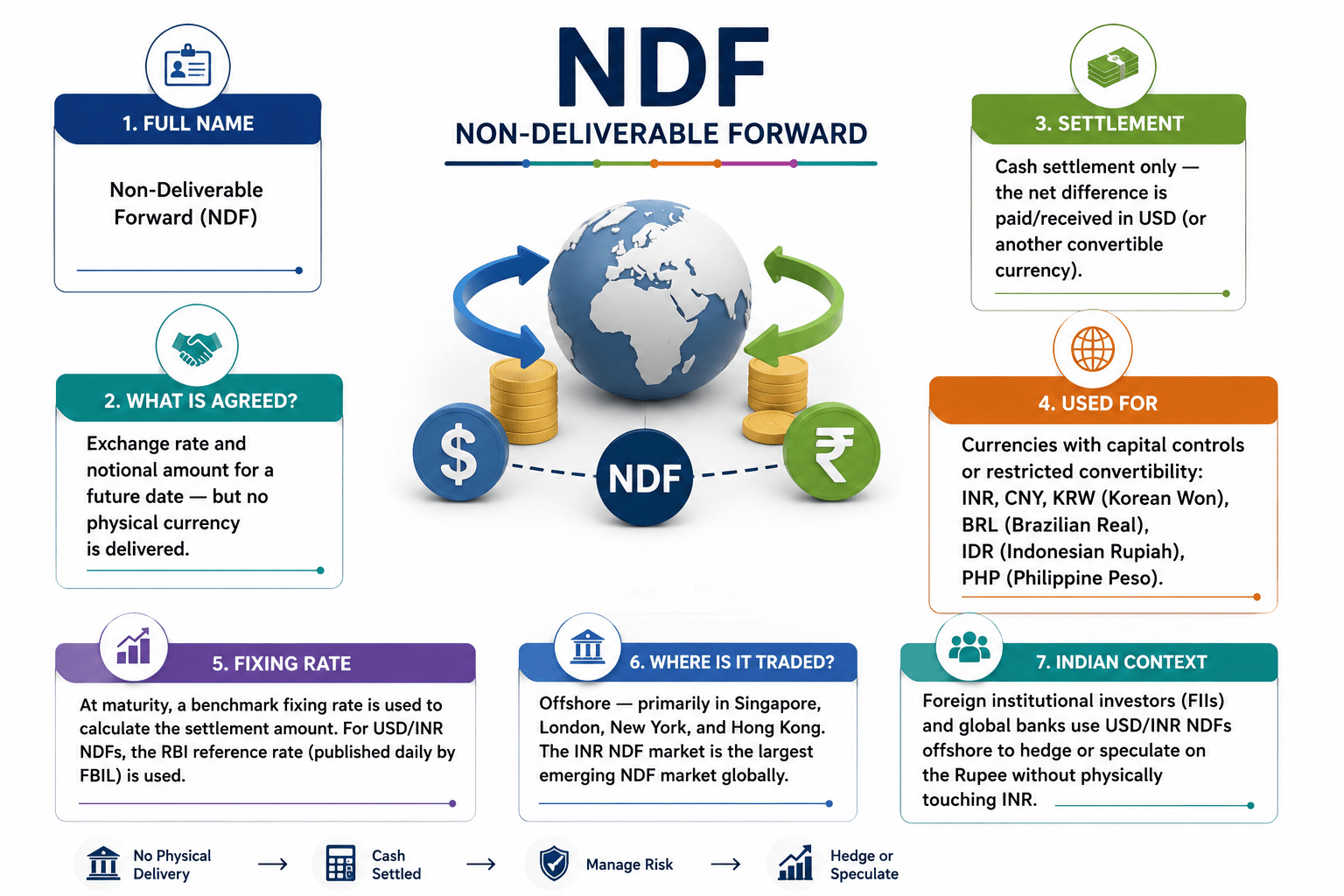
A Non-Deliverable Forward (NDF) is a forward contract used for currencies that cannot be freely delivered outside their home country. Instead of exchanging both currencies on the settlement date, only the profit or loss (the difference between the agreed forward rate and the actual market rate on that date) is settled — in a freely convertible currency, usually USD.
Because only a net cash amount moves (not the restricted currency itself), NDFs are traded offshore meaning outside the jurisdiction of the restricted country's central bank.
FX Forward vs NDF
Settlement Difference — The Key Distinction
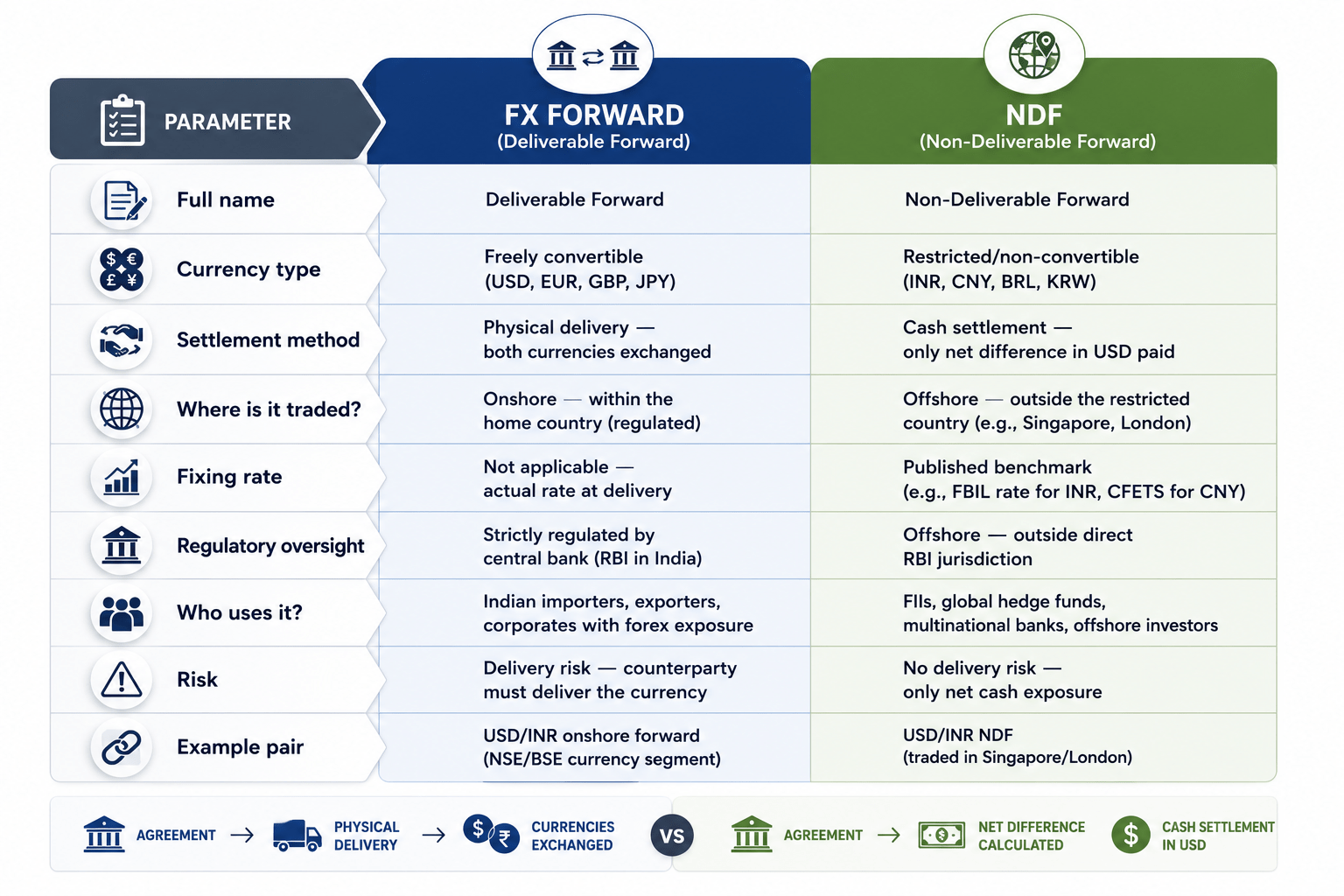
The most important difference between an FX Forward and an NDF is how they settle on the maturity date.
Worked Examples
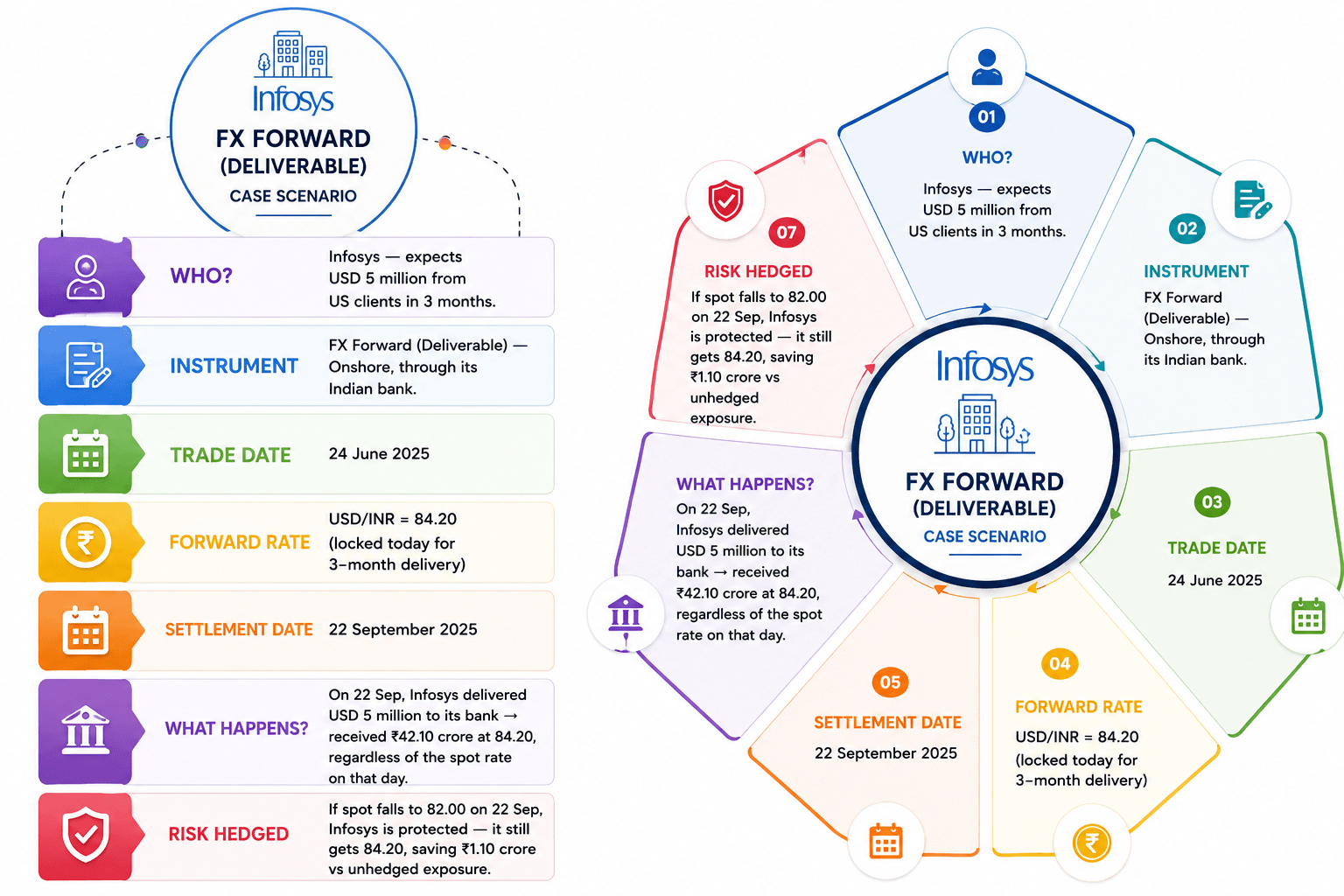
Example 1 — Indian Exporter Using an FX Forward (Onshore)
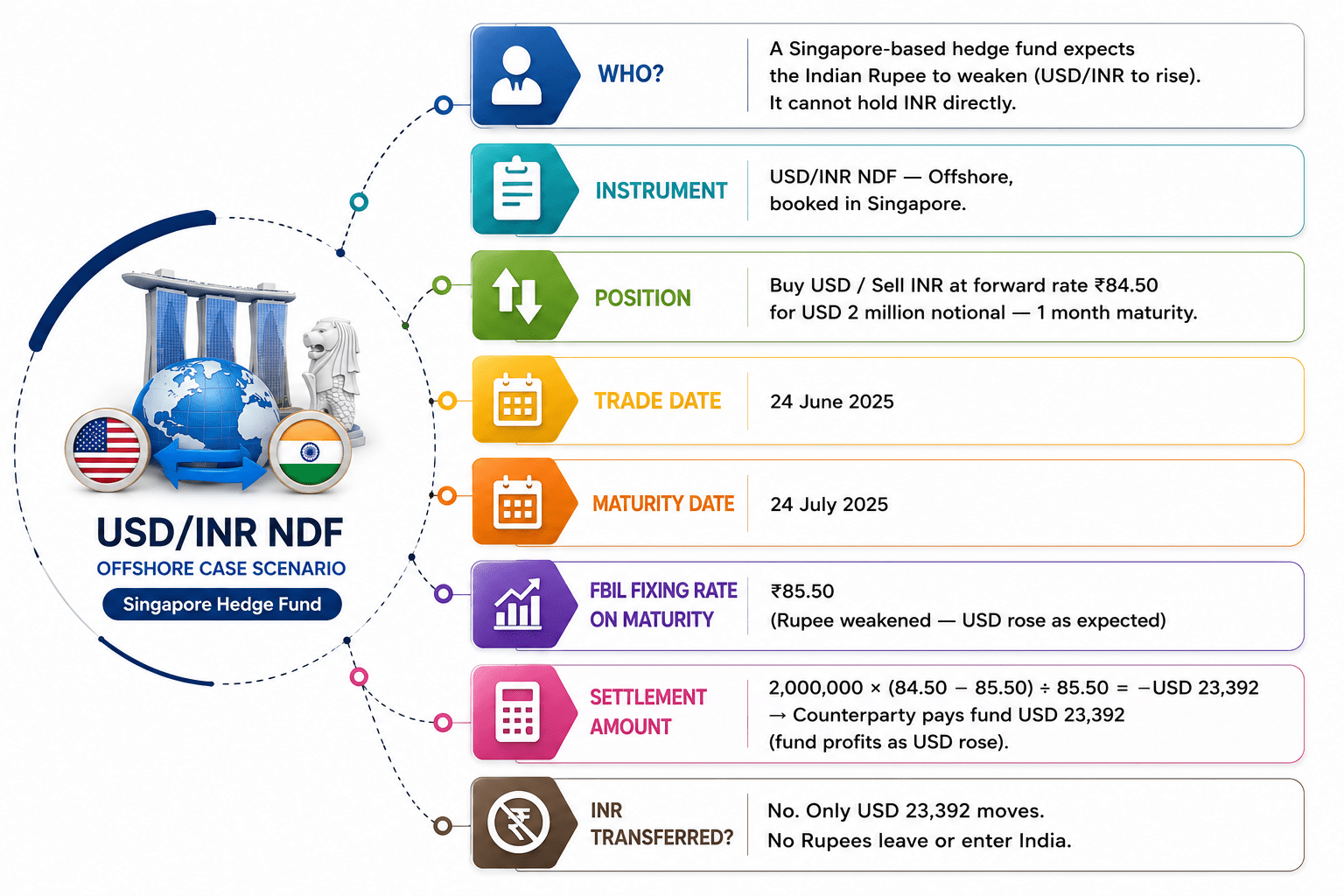
Example 2 — Foreign Fund Using an NDF (Offshore)
Practical Applications
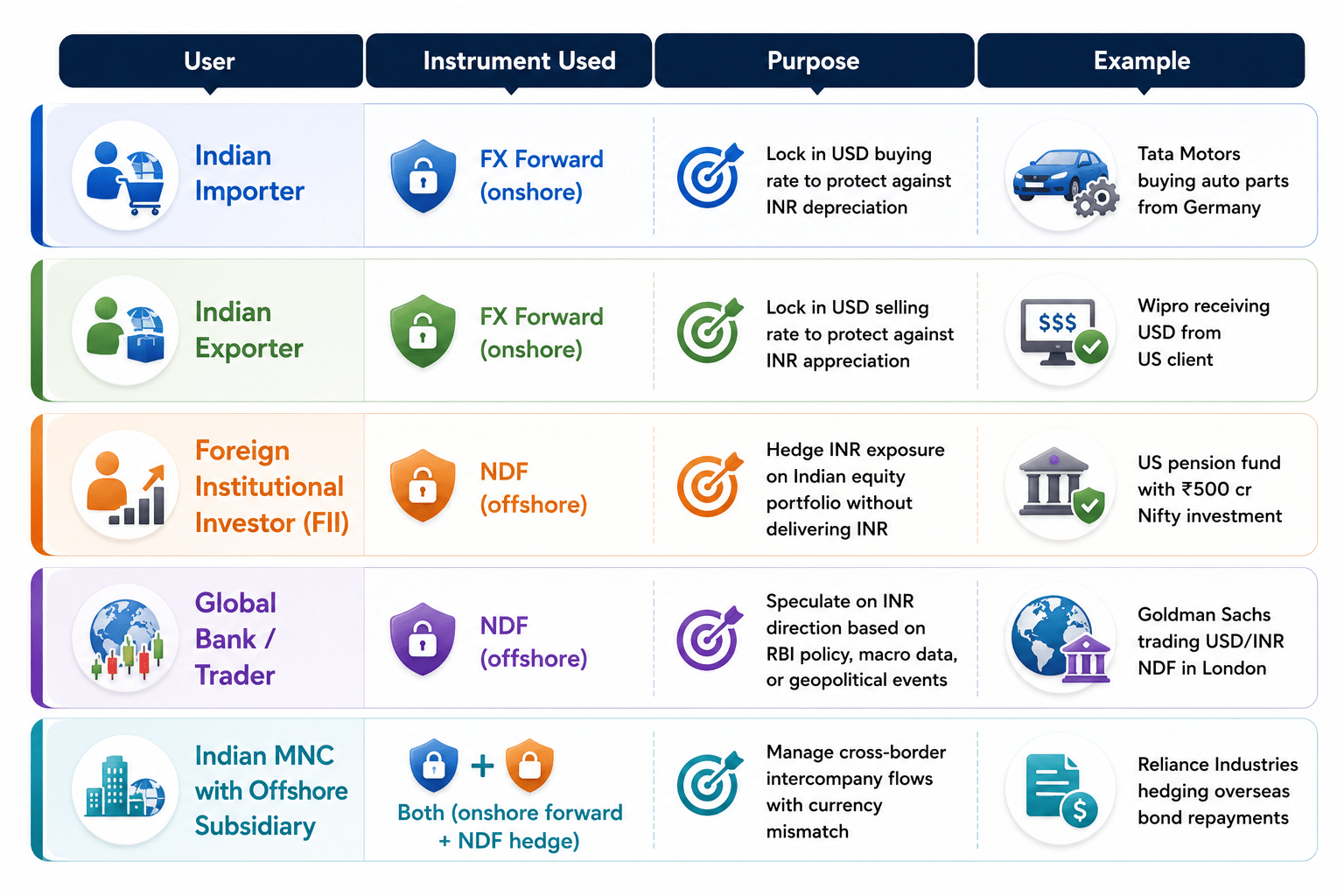
Both instruments serve different participants with different needs. The table below summarises who uses what and why
Summary
5
Key Difference: Settlement Method
4
FX Forwards: Convertible currencies | NDFs: Restricted currencies.
3
NDFs settle through cash payment based on rate difference.
2
FX Forwards settle through physical exchange of currencies
1
FX Forwards and NDFs help manage future currency exchange risk
Quiz
Which regulator controls Indian stock market activities?
A. MAS
B. FCA
C. SEBI
D. CFTC
Quiz-Answer
Which regulator controls Indian stock market activities?
A. MAS
B. FCA
C. SEBI
D. CFTC
By Content ITV