Requirements Modeling
Class Diagrams
What are Class Diagrams?
Pressman, R., Maxim, B. Software Engineering: A Practitioners Approach
- Built from requirements elicited from the customer.
- A representation understood by both stakeholders and software engineers.
- Represents the objects that the system will manipulate.
- Specifies the operations that will be applied to the objects
- Specifies relationships between objects/classes
Why?
Pressman, R., Maxim, B. Software Engineering: A Practitioners Approach
- Depicts a view of the system that the customer can understand.
- Typically results in useful feedback at the earliest possible time.
- With further refinements, becomes the basis for software design.
How do I build them?
Pressman, R., Maxim, B. Software Engineering: A Practitioners Approach
- Identify Classes/Objects
- Specify attributes
- Define operations
- Specify associations and dependencies
Identifying Classes
Pressman, R., Maxim, B. Software Engineering: A Practitioners Approach
- Underline each noun or noun phrase and record them somewhere.
- Pay attention to synonyms
- Classes are typically:
- external entites (e.g. people, other systems)
- things (e.g. reports, displays)
- roles (e.g. manager, engineer)
- any other entity that is important to the problem or solution space
- Generally, classes should never have "procedural names" e.g. DeleteUser
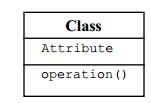
Identifying Classes: Selection
Pressman, R., Maxim, B. Software Engineering: A Practitioners Approach
- Review and select from your list of classes (nouns and phrases) as follows:
- Information about the class must be remembered so that the system can function.
- Has a set of identifiable operations that can change attributes of the class.
- Multiple attributes: sometimes a class with a single attribute is better represented as an attribute of another class.
- Has attributes that apply to all instances of the class.
- Has operations that apply to all instances of the class.
- External entities that produce or consume information.
Attributes and Operations
http://www.tutorialspoint.com/uml/uml_class_diagram.htm
- Attributes describe a class.
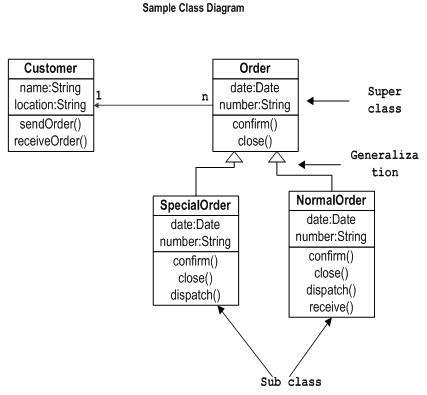
- Operations define the behavior of an object.
Relationships: Composition
Pressman, R., Maxim, B. Software Engineering: A Practitioners Approach
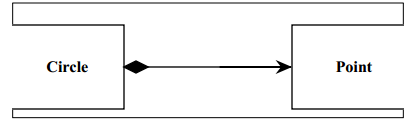
- One class is composed of another.
- The black diamond represents composition
- Arrowhead denotes the relationship is navigable in only one direction.
Relationships: Inheritance
http://www.objectmentor.com/resources/articles/umlClassDiagrams.pdf
- Depicted by triangular arrowhead that looks like a slice of pizza.
- "is-a" relationship
Relationships: Aggregation
Pressman, R., Maxim, B. Software Engineering: A Practitioners Approach
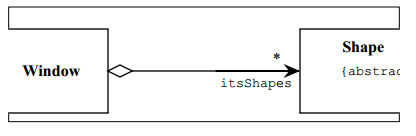
- "whole/part" relationships.
- Represented by an open diamond.
- Example: A window may contain many shape instances
- Notice that the role has been named. This is the name that Window knows its Shape instance by.
- "*" represents many.
Now, go forth into the world and build those class diagrams!
Class Diagrams
By David Adamo Jr.