Taste-based Discrimination in Diverse Settings

Dawid Walentek, Natalia Letki & Ulf Liebe

Separating taste-based and statistical discrimination

  • Observational data: conflating characteristics
  • Experimental: external validity

Identifying the mechanisms of discrimination

  • In-group favouritism
  • Out-group bias

Research Design

  • Pre-registered experiment
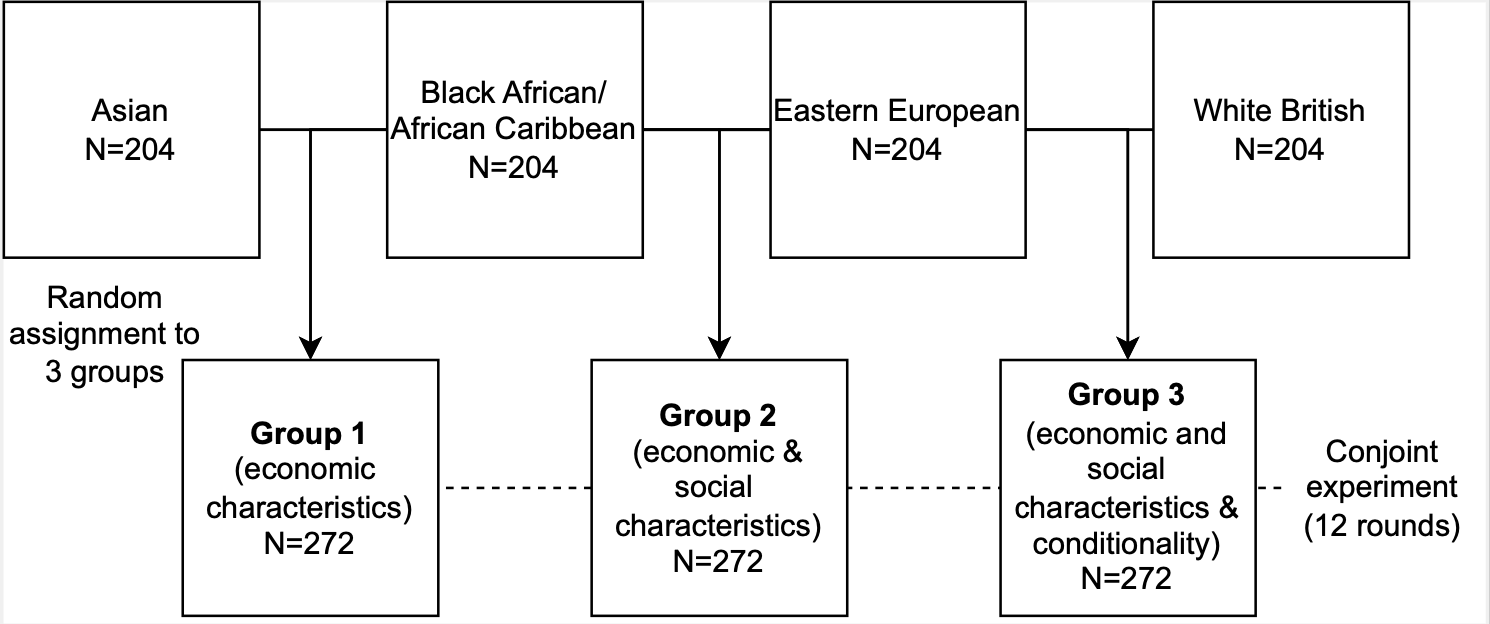
  • 816 respondents in the UK
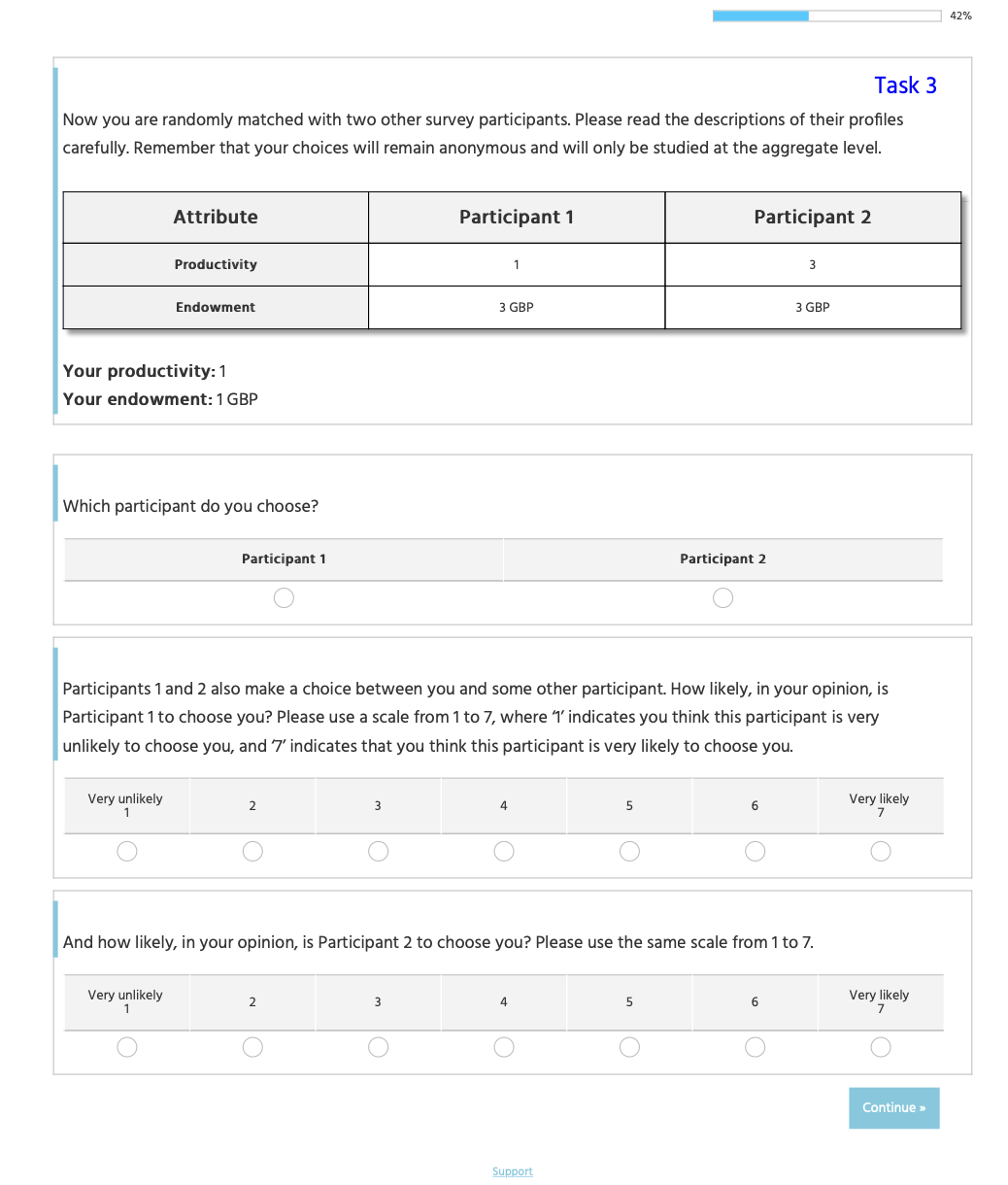
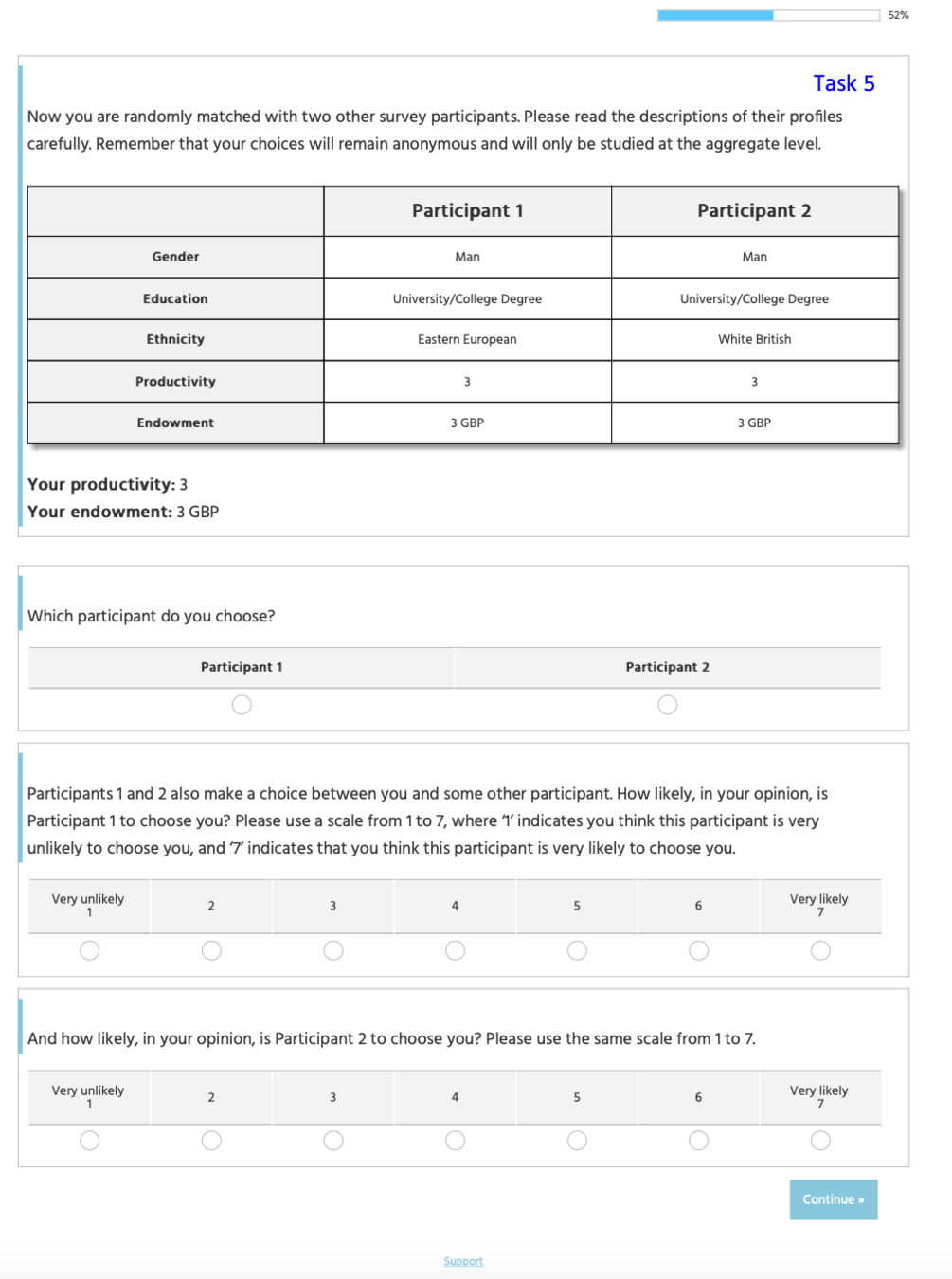
  • 12 incentivised choices over pairs of participants
  • Payout determined by joint economic characteristics
    • one round paid out
  • profiles generated with a conjoint algorithm
    • orthogonality
    • matching

Research Design

Research Design

Group 1

Group 2&3

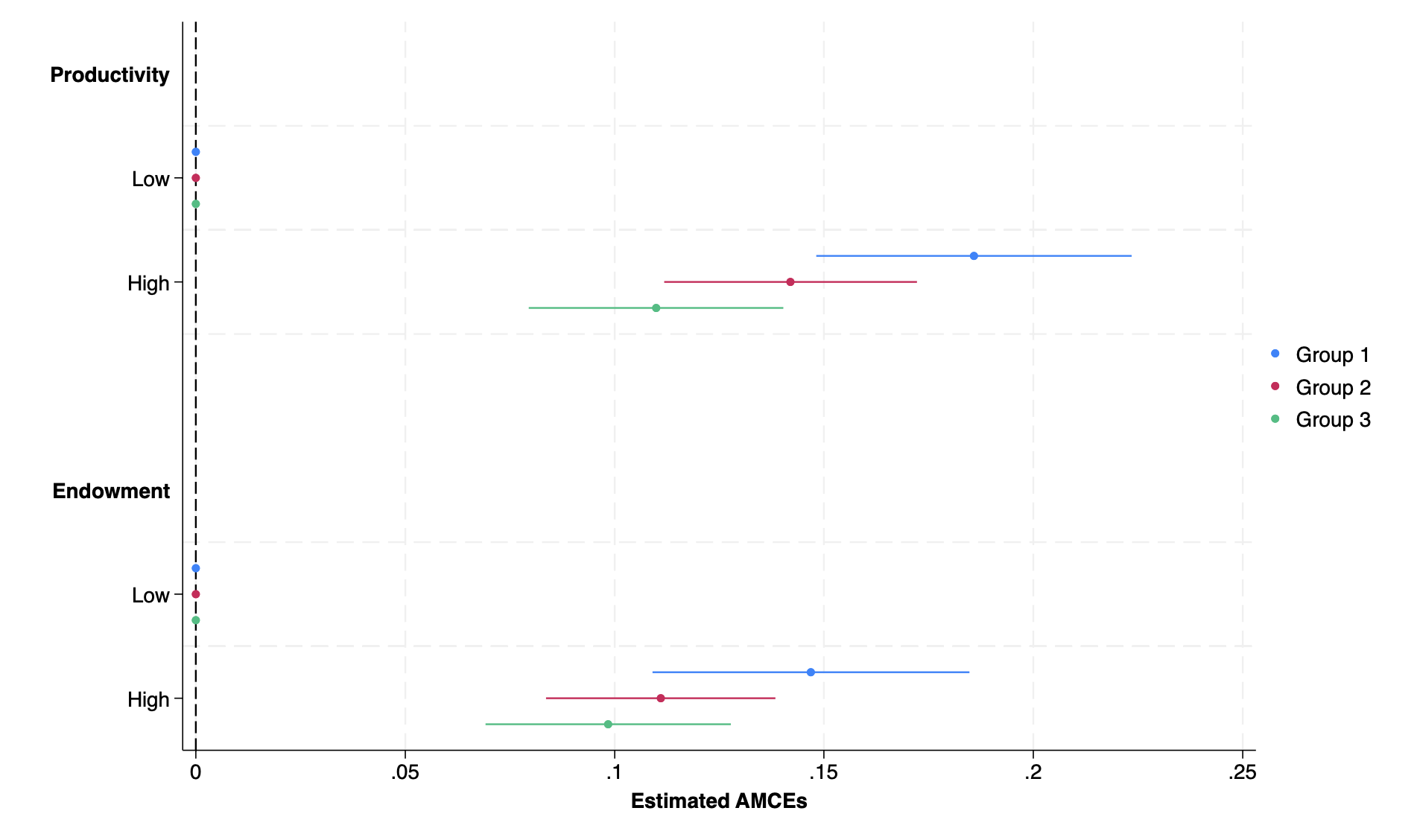
Taste-based discrimination

  • Decrease in the role of economic characteristics in Group 3
  • 8 percentage points decrease for productivity
  • 5 percentage points decrease for endowment 

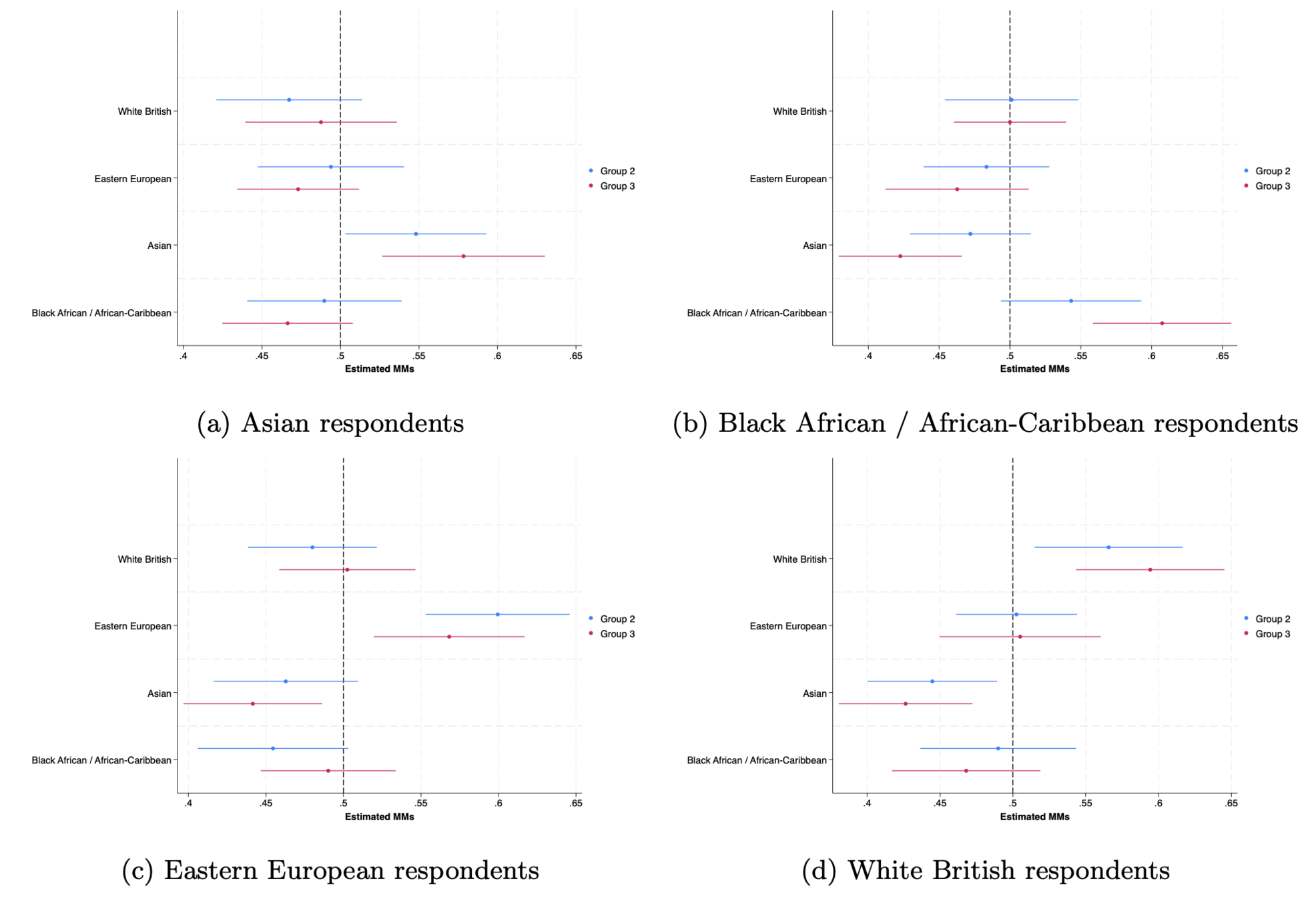
In-group & out-group dynamics

  • In-group favouritism across all ethnicities and experimental groups
    • bar Black African in Group 2
  • Out-group bias towards Asian respondents across all ethnicities in Group 3
    • and among White British in Group 2

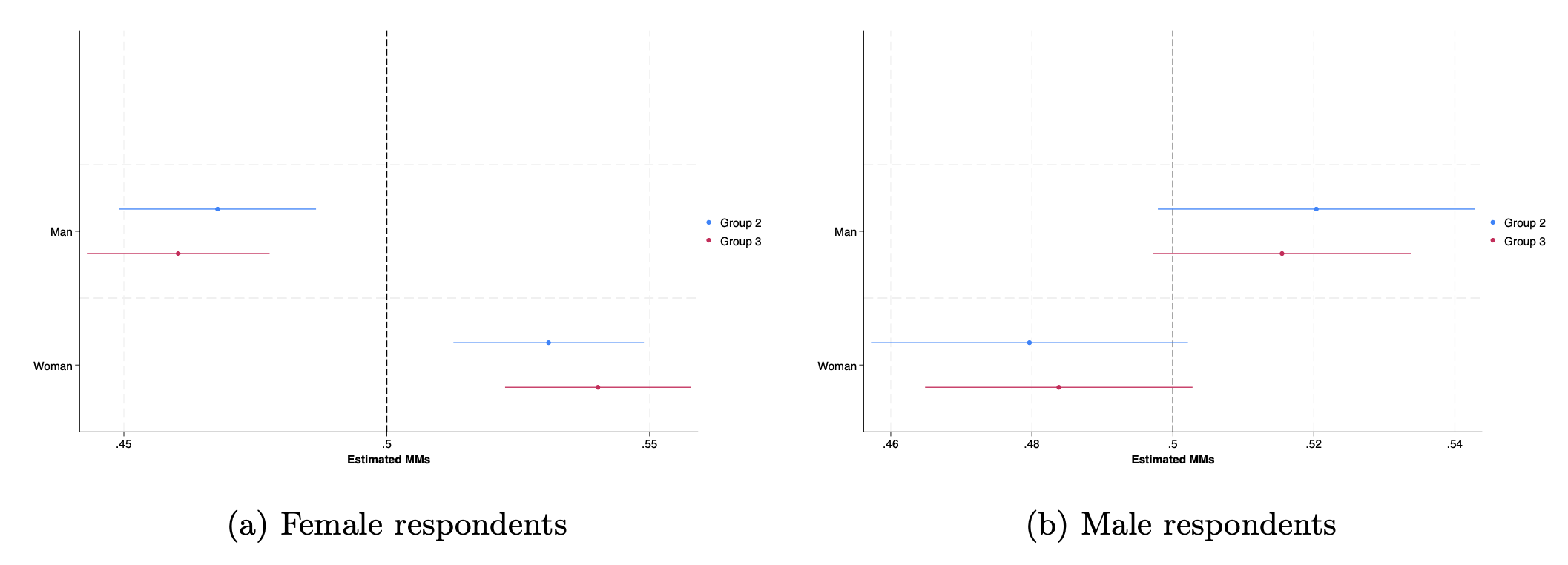
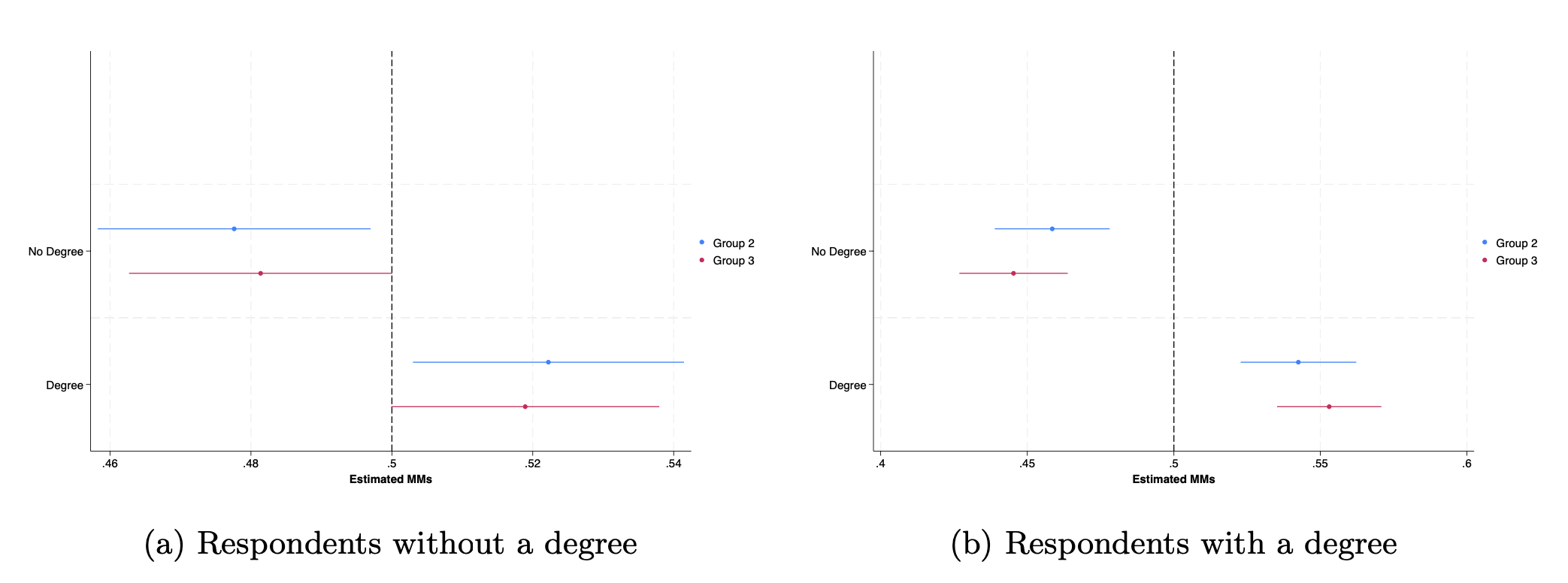
Gender & Education 

  • Further evidence of favouritism
  • Particular effect of higher education

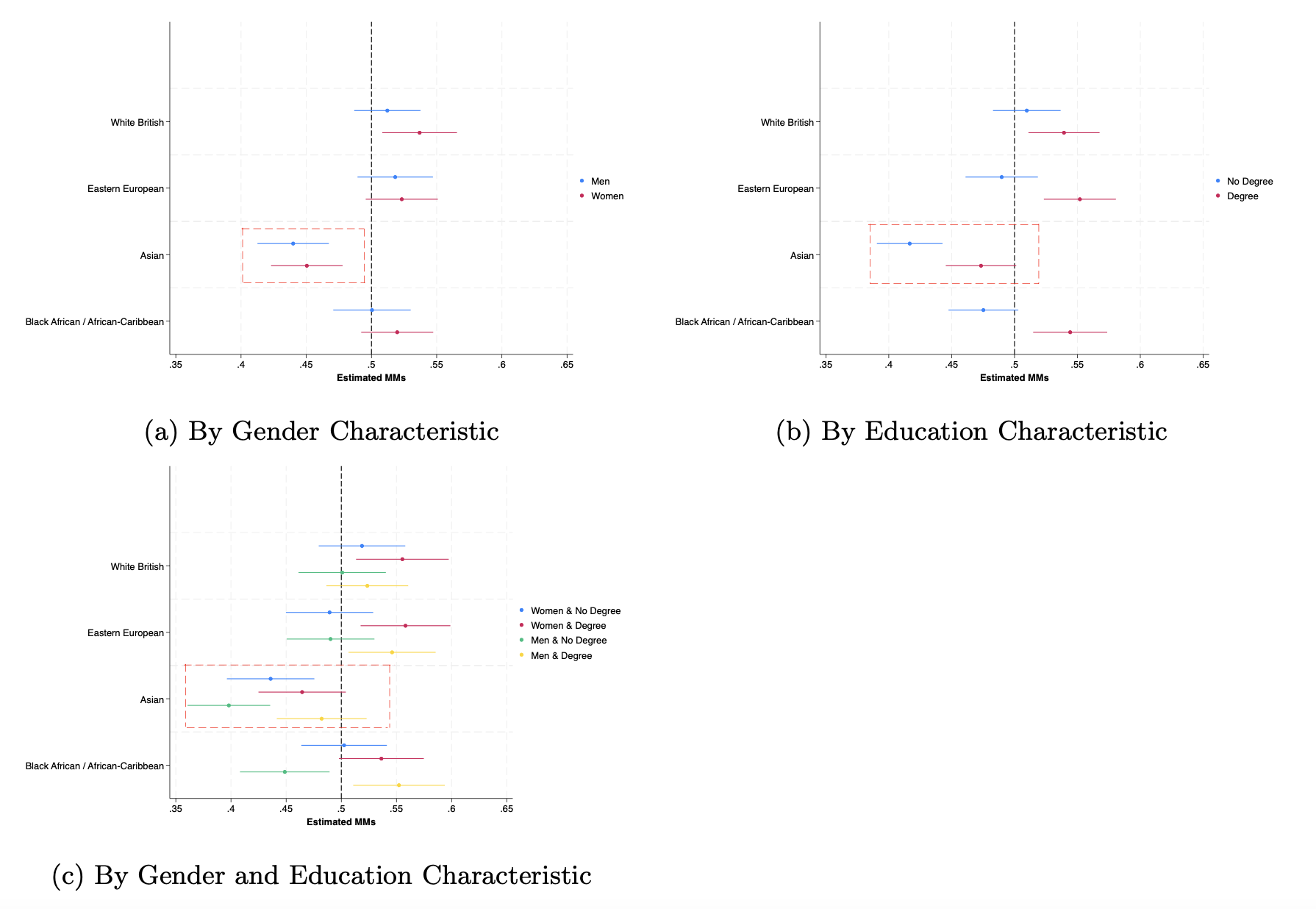
Exploring intersectionality

  • Pooled group 2&3 without Asian respondents
  • Asian respondents without a degree 6 percentage points less likely to be selected
  • Asian men without a degree 8 percentage points less likely to be selected (relative to Asian men with a degree)

Conclusion

  • Conditionality results in discriminatory and economically sub-optimal outcomes
    • Potentially driven by beliefs that other participants follow background cues in their decisions
  • In-group favouritism and out-group bias motivate taste-based discrimination
    • Persistent in-group favouritism & out- group bias targeted only towards Asian participant
    • White British shows both in-group favouritism and out-group bias towards Asian respondents in G2&3

  • Higher education suppresses discrimination towards Asian respondents

Amsterdam EUIdentity Workshop

By Dawid Walentek

Amsterdam EUIdentity Workshop

  • 121