NOTE: This is version 0.0 of an oversimplified and naive version of the journey a legal innovator might experience using a platform like AI For Justice.
This artifact is more to prototype the storyboard as a prototyping tool than to be a fullblown attempt at a rigorous storyboarding of the platform itself. If this looks promising, I'll sketch out something more realistic next.

CONTENTS
Realistic User Journeys
An AI4Justice User Journey
A prototype of a prototyping tool.
26 January 2026
Dan Ryan (djjrjr@gmail.com)
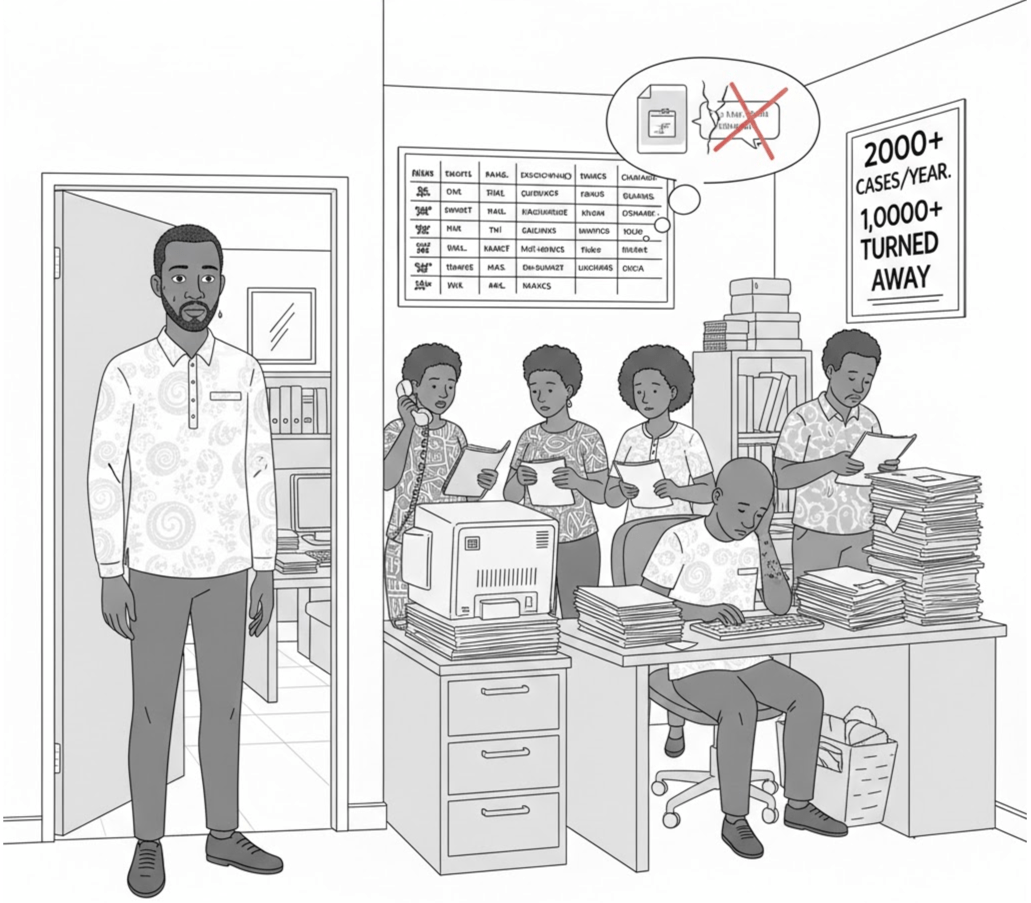
Abel N is director of a legal aid NGO in Ghana. Abel learns about AI4J at a regional justice reform conference. He sees a demo of a legal bot that can reduce intake time from two hours to fifteen minutes.
His agencies serve 2,000 cases per year and turn away 10,000 more.
Abel fantasizes about the development of "LegalMate Ghana" that can help people solve basic problems and act as front end to the work of the paralegals at the legal aid organization.
What if there were a way to serve twice as many people per year, he muses.
When Abel returns to Kumasi the reality of 15 paralegals in cramped offices makes "LegalMate Ghana" seem like a bit of magical thinking.
Undeterred, he goes online and opens up a project with AI4J.
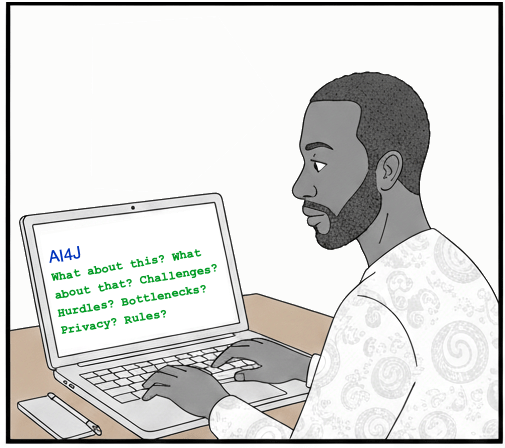
The platform requires more than just registration. It turns out that IT uses an AI bot to handle intake. The AI4J bot leads Abel through an almost hour long initial assessment. What's the idea? What is happening now? What kind of an organization? And on and on.

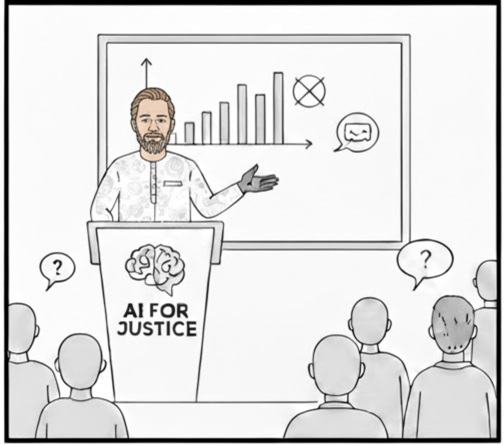


Abel N is director of a legal aid NGO in Ghana. Abel learns about AI4J at a regional justice reform conference. He sees a demo of a legal bot that can reduce intake time from two hours to fifteen minutes.
His agencies serve 2,000 cases per year and turn away 10,000 more.
Abel fantasizes about the development of "LegalMate Ghana" that can help people solve basic problems and act as front end to the work of the paralegals at the legal aid organization.
What if there were a way to serve twice as many people per year, he muses.
When Abel returns to Kumasi the reality of 15 paralegals in cramped offices makes "LegalMate Ghana" seem like a bit of magical thinking.
Undeterred, he goes online and opens up a project with AI4J.
The platform requires more than just registration. It turns out that IT uses an AI bot to handle intake. The AI4J bot leads Abel through an almost hour long initial assessment. What's the idea? What is happening now? What kind of an organization? And on and on.
Getting Started


Abel learns about AI4J at a conference. He sees a demo of a bot that can reduce intake time from 2 hours to 15 minutes.
Abel runs a 15-person organization on a shoestring budget. Spends time on fundraising, case oversight, policy advocacy. Has zero AI/ML expertise. Has one IT person who keeps the website running. His agencies serve 2,000 cases per year and turn away 10,000 more.
PEOPLE
Sven is AI4J's Implementation and Partnerships Lead. Skills: Project management, justice sector knowledge, technical fluency
Abel is director of a legal aid NGO in Ghana. He is trained as a lawyer. Skills: management, fundraising, and government relations.
He imagines 'LegalMate Ghana' helping people resolve basic issues and triaging cases for his team.
But when Abel returns to Kumasi the reality of 15 paralegals in cramped offices makes "LegalMate Ghana" seem like a bit of magical thinking.
Undeterred, he goes online and opens up a project with AI4J.
The platform requires more than just registration. It turns out that IT uses an AI bot to handle intake. The AI4J bot leads Abel through an almost hour long initial assessment. What's the idea? What is happening now? What kind of an organization? And on and on.
Abel iterates with the AI4J bot and exchanges emails with AI4J staff. The bot wants to know a lot about their process, their successes and failures, staff capacity, bottlenecks and hurdles they encounter in their work. It asks Abel to describe the app he has in mind and offers pushback that helps him refine the concept.
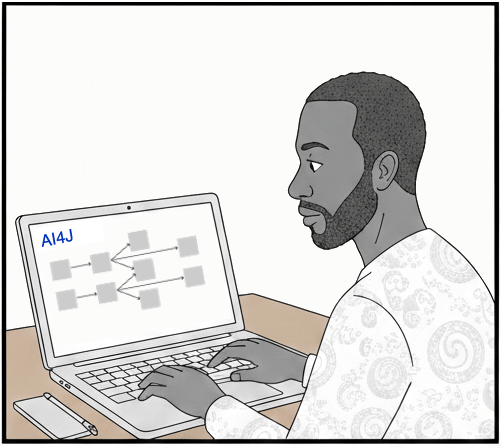
The AI4J bot synthesizes a work plan and advises Abel about the kinds of permissions and such that he'll need to secure in order to get the project started.
The bot suggests that version 0 of the app will use these plug and play AI4J modules
- APPFrame
- UserReg
- ListenLearn
- Report2Case
- Language (Asante Twi)
These will arrive with basic customization for language and branding. Bot generates concept materials for feedback
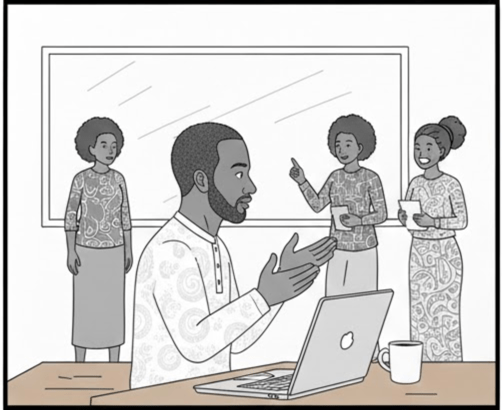
Abel runs workshop with concept materials and records feedback from his team. The feedback is uploaded so the bot can make a few last minute adjustments before releasing version 0.0 and creating a build and test plan and schedule.
Desired Outcome: Legal aid doubles level of service by reducing case intake to about 25% current, better triage, and case support for paralegals.

Build Goal: an app that serves as front end, case management, document generator, and followup CRM.

AI4J bot recommends phase I just case intake.
Step one of the build is to upload Ghanaian legal codes and local rules and document standards and legal aid eligibility requirements.
Since this is the first AI4J project in Ghana Abel uses the GetNationalLaw module to carry out the process.
He scans the document their office uses on local rules.
Version 0.1 is ready. It speaks the local language, knows Ghanaian Law, and is familiar with local courts and government agency document and form rules.
It's time for evaluation.
The FormFillerOuter eval generates narratives based on intake forms created by paralegals and feeds these to our intake bot and scores it on how well it reproduces originals.
The AI4J platform facilitates Abel's testing of version 0.1 with his coworkers.
Abel and his team spend a lot of time filling out ethics paperwork to allow for testing of the new app with actual legal aid users. The AI4J bot is available for consultation during this process. It's been through this many times before in other jurisdictions.
VERSION 0.1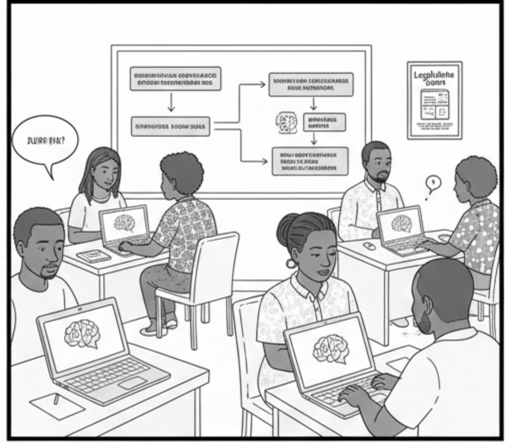
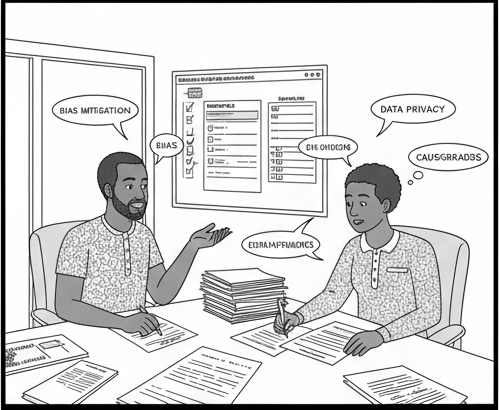
They meet with officials at the ministry of justice.
Finally, they get approval to set up a test version of the Ghana Justice Node.
Extensive testing with in-office clients leads to many user-experience tweaks.
One year later, LegalMate Ghana has increased access to legal aid by almost 180%
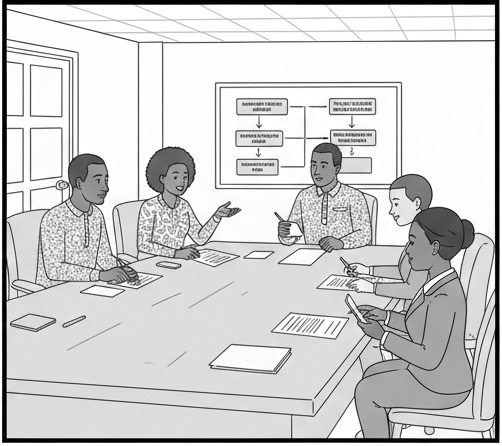
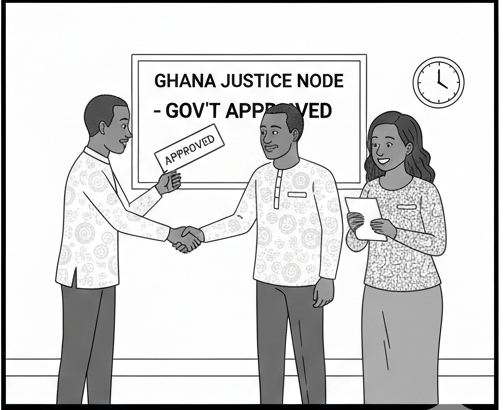
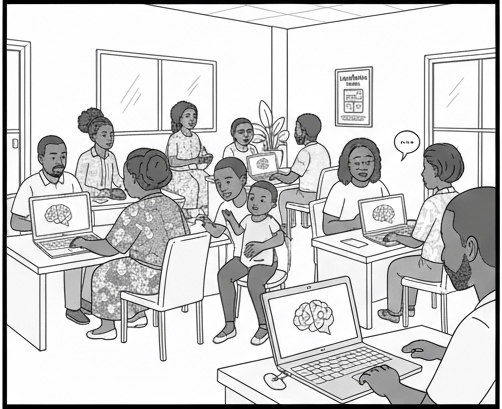
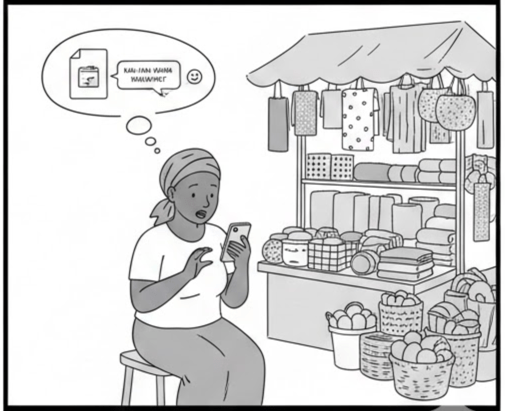
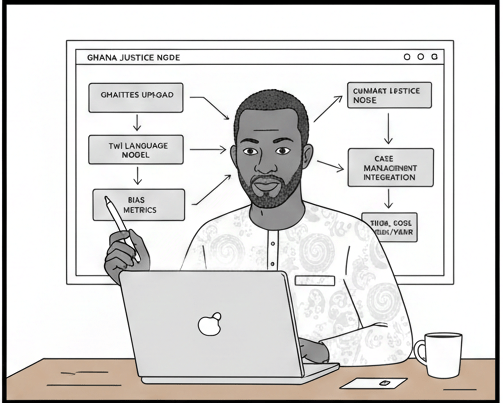
Made with Claude Code in 27 minutes
A Simple Mockup of Abel's Journey
and another 12 minutes of work
A More Realistic View
The AI4J User Journey
They meet with officials at the ministry of justice.
Finally, they get approval to set up a test version of the Ghana Justice Node.
Extensive testing with in-office clients leads to many user-experience tweaks.
One year later, LegalMate Ghana has increased access to legal aid by almost 180%
Getting Started
Abel learns about AI4J at a conference. He sees a demo of a bot that can reduce intake time from 2 hours to 15 minutes.
Abel runs a 15-person organization on a shoestring budget. Spends time on fundraising, case oversight, policy advocacy. Has zero AI/ML expertise. Has one IT person who keeps the website running. His agencies serve 2,000 cases per year and turn away 10,000 more.
PEOPLE
Sven is AI4J's Implementation and Partnerships Lead. Skills: Project management, justice sector knowledge, technical fluency
Abel is director of a legal aid NGO in Ghana. He is trained as a lawyer. Skills: management, fundraising, and government relations.
He imagines 'LegalMate Ghana' helping people resolve basic issues and triaging cases for his team.
But when Abel returns to Kumasi the reality of 15 paralegals in cramped offices makes "LegalMate Ghana" seem like a bit of magical thinking.
Undeterred, he goes online and opens up a project with AI4J.
The platform requires more than just registration. It turns out that IT uses an AI bot to handle intake. The AI4J bot leads Abel through an almost hour long initial assessment. What's the idea? What is happening now? What kind of an organization? And on and on.
Getting Started
At AI4J
The bot flags this as a strong fit and connects Abel with Maya, an AI4J Implementation Lead who's worked with 3 other legal aid orgs in East Africa.
Partnership Formation (2 months)
xxx

Case 1: Justice NGO User
Barriers.
Abel's idea will never happen because...
...he can't even locate the idea in the landscape of the possible
What can AI realistically do? Should one build something or buy something? Is this an AI project?
...person-power needed to begin to research does not exist
Everyone in the organization works too much already. Any new idea that takes more than 4 hours for a first look, won't happen.
...his board and ministry won't approve something this undefined
Past experience tells Abel that getting ministry buy-in for anything new is challenging at best. The organization does not have the staff or expertise or resources to mount a lobbying effort.
...the organization lacks regulatory/ethical confidence to proceed
The buzz around AI is all about privacy and regulatory compliance. Abel's organization has no experience or expertise. The impulse is to steer clear of these dangers.
...minimum necessary human capital is nowhere to be found
He has one technical person who manages the website.
AND EVEN IF HE COULD...
AND EVEN IF IT DID...
AND EVEN IF IT WAS...
AND EVEN IF THEY HAD IT...
...he can't even locate the idea in the landscape of the possible
...person-power needed to begin to research does not exist
...his board and ministry won't approve something this undefined
...the organization lacks regulatory/ ethical confidence to proceed
...minimum necessary human capital is nowhere to be found
The AI4J Platform generates demonstration decks and mockups
AI4J platform guide users through ethical considerations and the toolkit includes already-vetted privacy modules so applications developed on the platform will meet local standards.
The AI4J Platform intake bot engages in an extended back and forth with potential clients to explore needs a tool is meant to address, identify existing analogous solutions, etc. With fine tuning on legal tech and AI4J's portfolio, the conversation builds client confidence and competence and facilitate realistic aspirations.
The AI4J Platform generates quick turnaround mockups and draft work plans that explore different development roadmaps. The goal is to provide the user with material that empowers them to be a competent user of the platform.
The AI4J Project Management Lead works with clients to get the most out of the platform.
Case 2: Justice Innovator Client
Across many countries, we know that there is a growing community of people-centred innovators in ministries of justice and other government institutions, civil society organisations, and businesses who are already seeking to change how justice works. (From Proposal)
Getting Started
At AI4J
The bot flags this as a strong fit and connects Abel with Maya, an AI4J Implementation Lead who's worked with 3 other legal aid orgs in East Africa.
Partnership Formation (2 months)
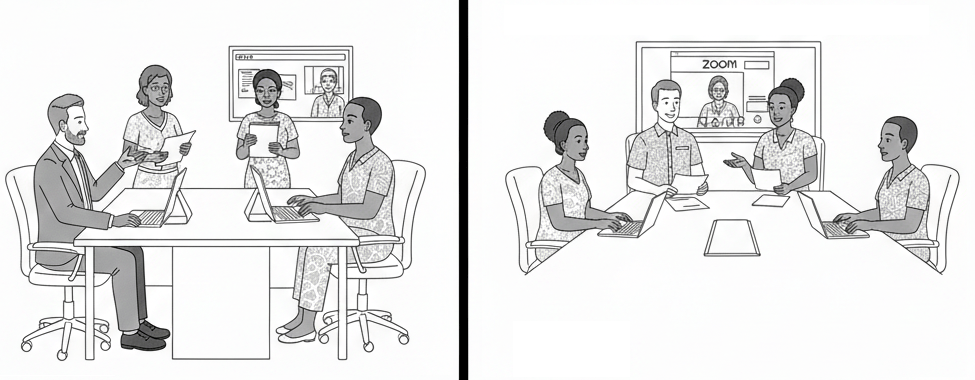
Over the course of two months AI for Justice Implementation Lead meets Legal Aid Ghana Director multiple times in person and over Zoom.
Platform explains what's possible, what AI4J can contribute to the process, what's required on the partner side.
Legal Aid Ghana commits their Director (0.3 FTE), their head paralegal (0.2 FTE), and a domain expert (0.2 FTE) for two month co-design process.
They sign MOU, agree to pilot scope.
The AI4J Platform digests the preliminary conversations,
Finally, they get approval to set up a test version of the Ghana Justice Node.
Extensive testing with in-office clients leads to many user-experience tweaks.
One year later, LegalMate Ghana has increased access to legal aid by almost 180%
Co-Design

They cannot "fine-tune models" or "set up RAG infrastructure."
What is AI-enabled Justice Infrastructure?
Let's take a design approach...
Think Like a Designer
Let's think like designers for a moment.
What is the justice problem? What are stakeholders trying to do?
Let's consider two stakeholders: people and SMEs with legal needs and governments and institutions that want to meet these needs.
What are their struggles?
The Status Quo
Before we address that, perhaps we should ask "how does the status quo justice production system work?"
PEOPLE and SMEs that want/need justice
STRUGGLE TO
know their rights
understand system
find assistance
initiate action
DIY problem solve
survive without solutions

Govts & Institutions that want to provide justice
STRUGGLE TO
handle caseloads
be accessible
innovate services
supplement available aid
get information out
survive without solutions


Should we add a middle
column for the NGO, justice innovation organization or can that be subsumed by category on the right for now?
How do stakeholders solve the justice problem in the status quo?
Legal Aid NGOs
Personal networks
Self-help Guides
Informal Mediation
Digital Document Filing
Pro bono Legal Services
Fee-based Legal Services
e-Gov Digital Forms, etc.
Non-localized Internet Information
What status quo justice infrastructure is available to meet these needs?
Legal Tech Apps (including chatbots)
Generic LLMs
Digital Document Filing
Static Government Web Sites
These don't scale.
Informal Mediation
What if there were tools...
Really clever time/place bespoke legal tech.
AI-enabled Justice is Coming
Vision 1: A few giant corporations and well funded entrepreneurs vacuum up all the justice wisdom and monopolize global justice service provisions. Countries have limited control and become platform dependent.
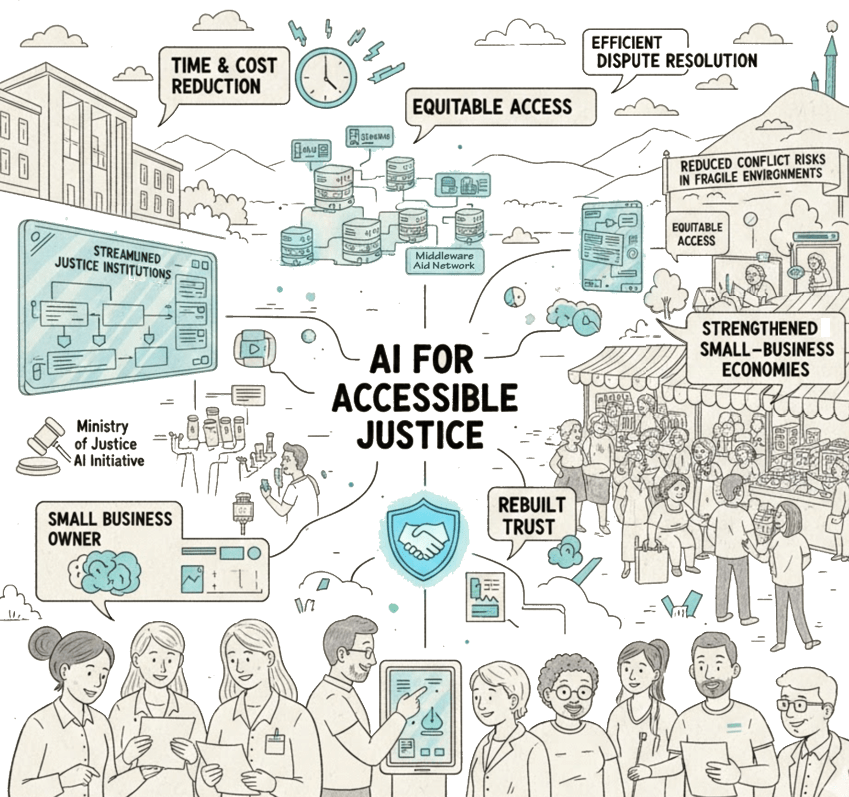
Vision 2: The governments and institutions and justice NGOs build tools that fulfill their access to justice aspirations to reduce the time and cost of dispute resolution; strengthen small-business economies; rebuild trust in justice institutions; and reduce conflict.

and this can happen in one of two ways

But vision 2 only happens
if we can build an infrastructure that
empowers justice innovators to build on one
another's efforts to that innovation, learning,
and quality improvements compound across
countries, without centralising control or
creating platform dependency
What is AI-enabled Justice Infrastructure?
PEOPLE
Have I been wronged?
What can I do?
How do I proceed?
How do I find affordable help?
How do I efficiently and effectively provide help?
How do institutions make themselves accessible?
How do institutions make themselves legible?
How do institutions make themselves usable?
What are the odds? How do I decide if it is worth the effort?
What is AI-enabled Justice Infrastructure?
STRUGGLE TO
that want to provide justice
disseminate information
GOVERNMENTS and INSTITUTIONS
innovate processes
handle caseloads
supplement legal services
be accessible
stakeholder
PEOPLE and SMEs that want/need justice
STRUGGLE TO
know their rights
understand system
find assistance
initiate action
DIY problem solving
survive without solutions
Big Picture
SME AI4J User Journey
SME AI4J User Journey
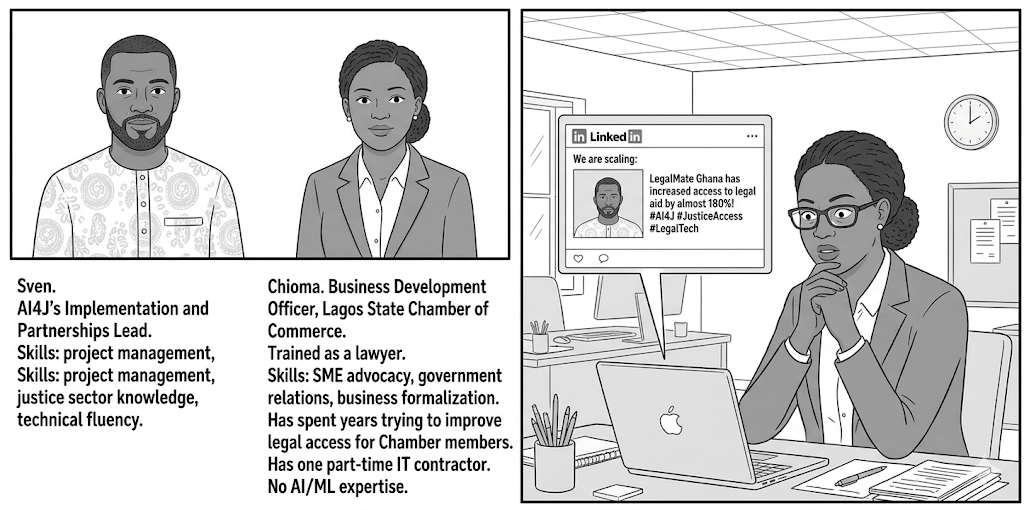
Sven
AI4J's Implementa-
tion and Partnerships Lead.
Skills: project management, justice sector knowledge, technical fluency.
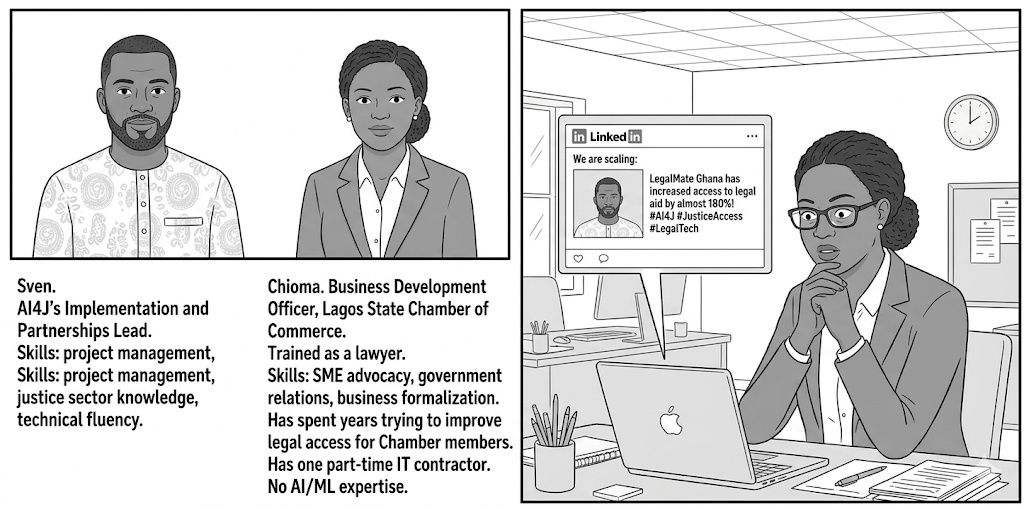
Chioma
Business Development Officer, Lagos State Chamber of Commerce. Trained as a lawyer. Skills: SME advocacy, government relations, business formalization. Has spent years trying to improve legal access for Chamber members. Has one part-time IT contractor. No AI/ML expertise.
Abel Mensah posts on LinkedIn about LegalMate Ghana a tool his NGO created with AI4J. "In one year we increased access to justice by 180% with AI. #scalingJustice-AI4J.
Chioma reads about LegalMate Ghana on LinkedIn — an AI intake tool built by a Ghanaian legal aid NGO. She messages Abel. He replies the same day and connects her with Sven at AI4J.
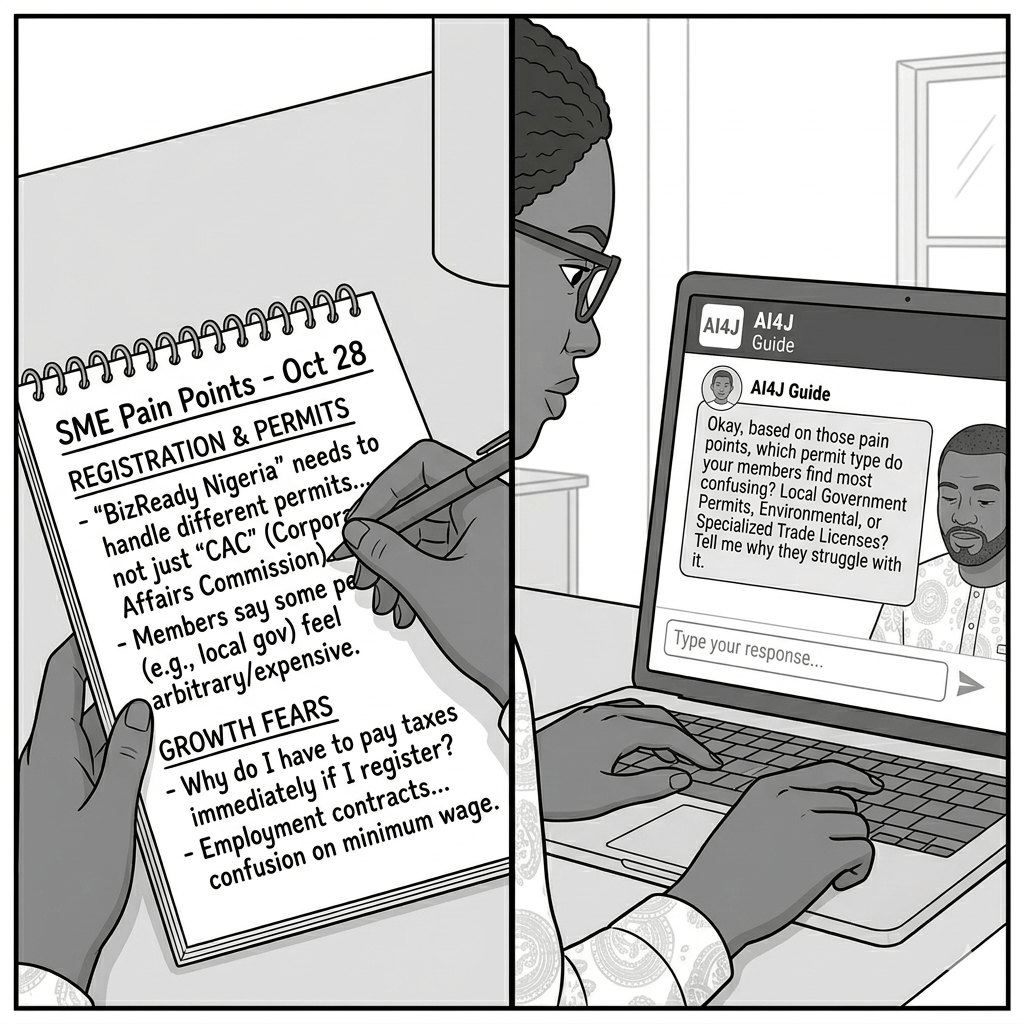
In a call with Sven, Chioma explains her frustration. The Chamber serves 4,000 member businesses. Most stay informal because CAC registration, tax IDs, and sector permits feel impossibly complex and expensive. Many also fear hiring staff because they don't understand their obligations under Nigerian labour law.

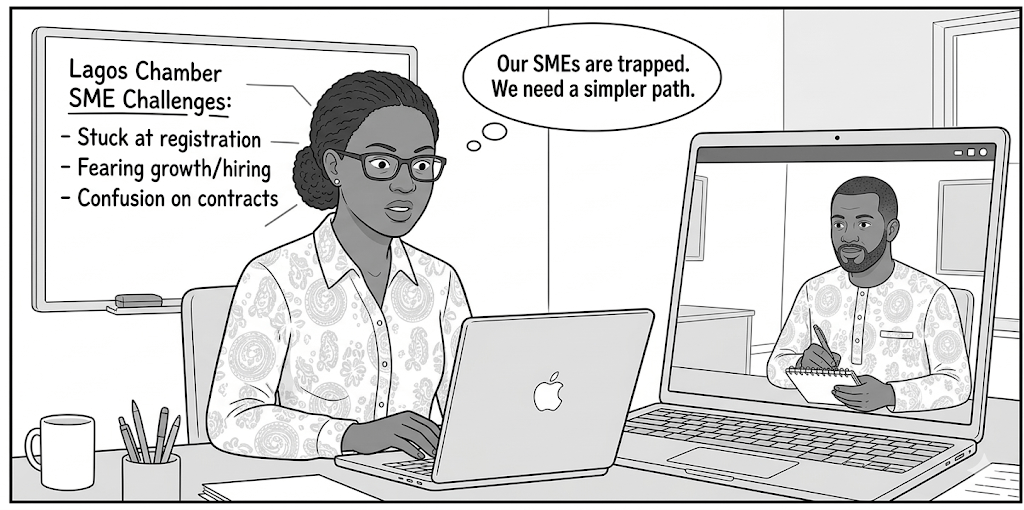
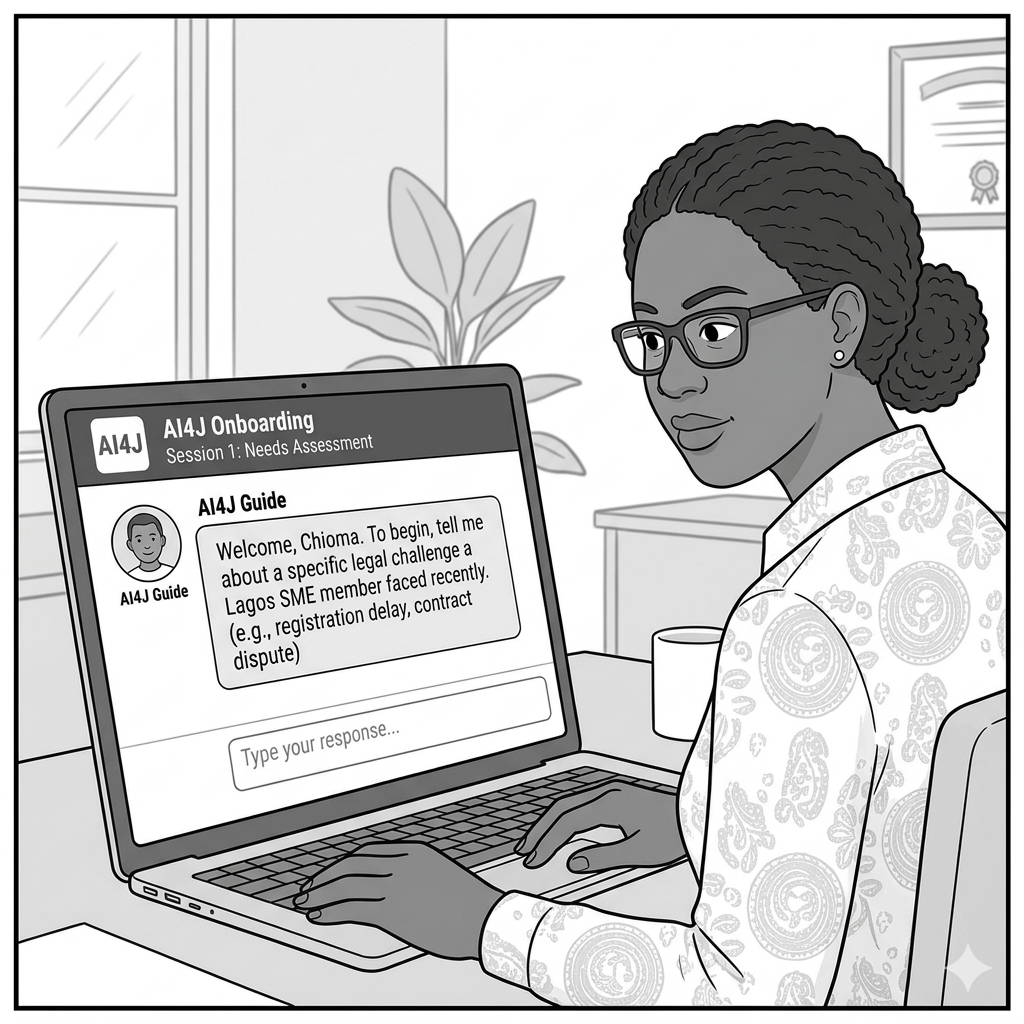
Sven gets Chioma started with AI4J. Then the onboarding bot asks about the Chamber's current services, member profile, biggest obstacles, and what success would look like in two years. Chioma finds herself energised.
Chioma iterates with the AI4J bot. It elicits the user journey. Where do businesses stall? What do they ask? What do staff spend hours explaining? It pushes back on her initial vision of a full legal platform and recommends starting with business formalization.
The AI4J platform generates a work plan. It advises Chioma on the data permissions, bar association notifications, and government data-sharing agreements she'll need to get the project started.
Outcome: Double number of member businesses successfully formalized per year. Reduce average time-to-registration from 4 months to 6 weeks.

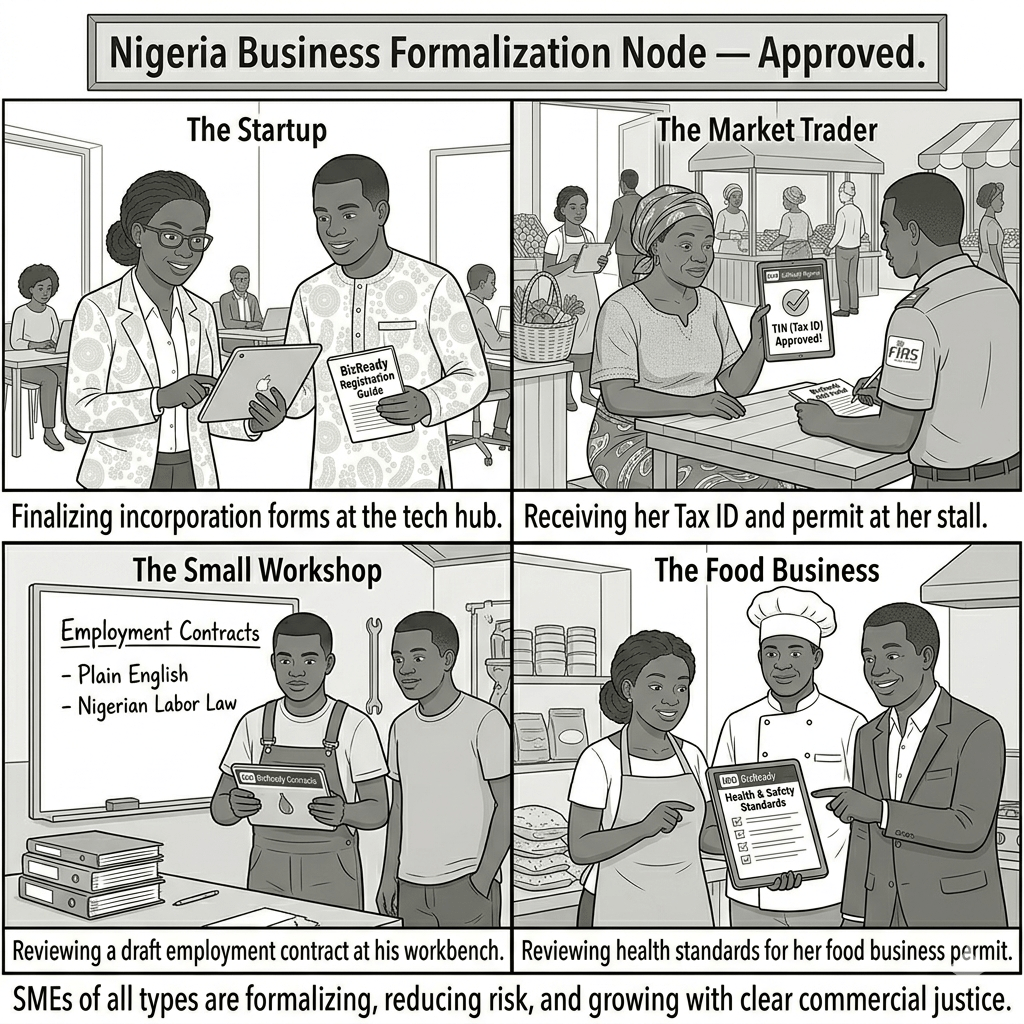
Build goal: A guided tool that walks SME owners through CAC registration, tax identification, sector permits, and basic labour law obligations as they grow. Answers questions. Creates forms.

AI4J bot recommends Phase 1: registration and licensing only.
The platform generates plans for Version 0.0 - the basic user experience - using these plug-and-play AI4J modules:
o AppFrame
o UserReg
o ListenLearn
o Guide2Form
o Language (Yoruba, Igbo, Pidgin)
AI4J generates Chamber branded concept materials to help the team generate feedback.
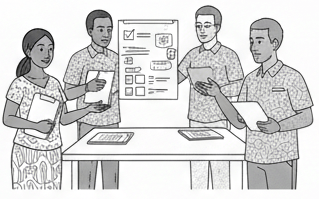
Chioma runs a workshop with Chamber staff using the concept materials. Feedback is uploaded to help the platform refine the design before creating Version 0.0 and generating a build and test plan.
With Version 0.0 they assess functionality and user experience to ensure the product they are building will achieve the desired outcomes.
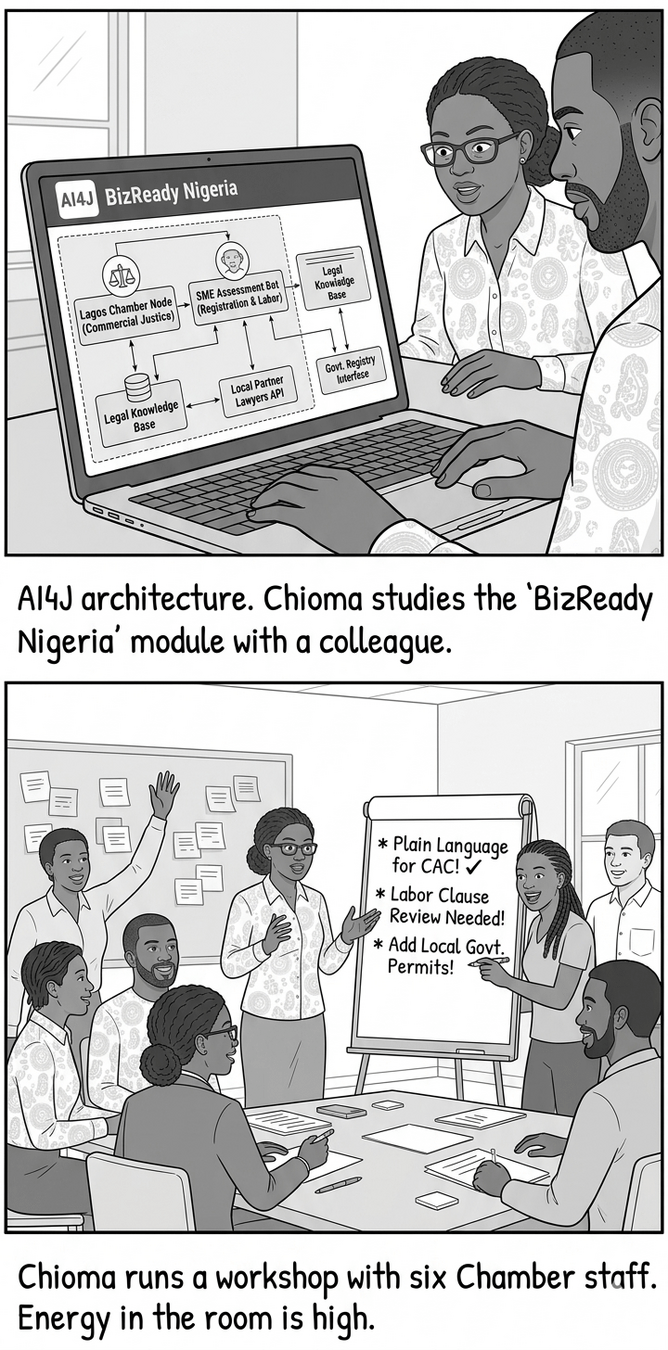
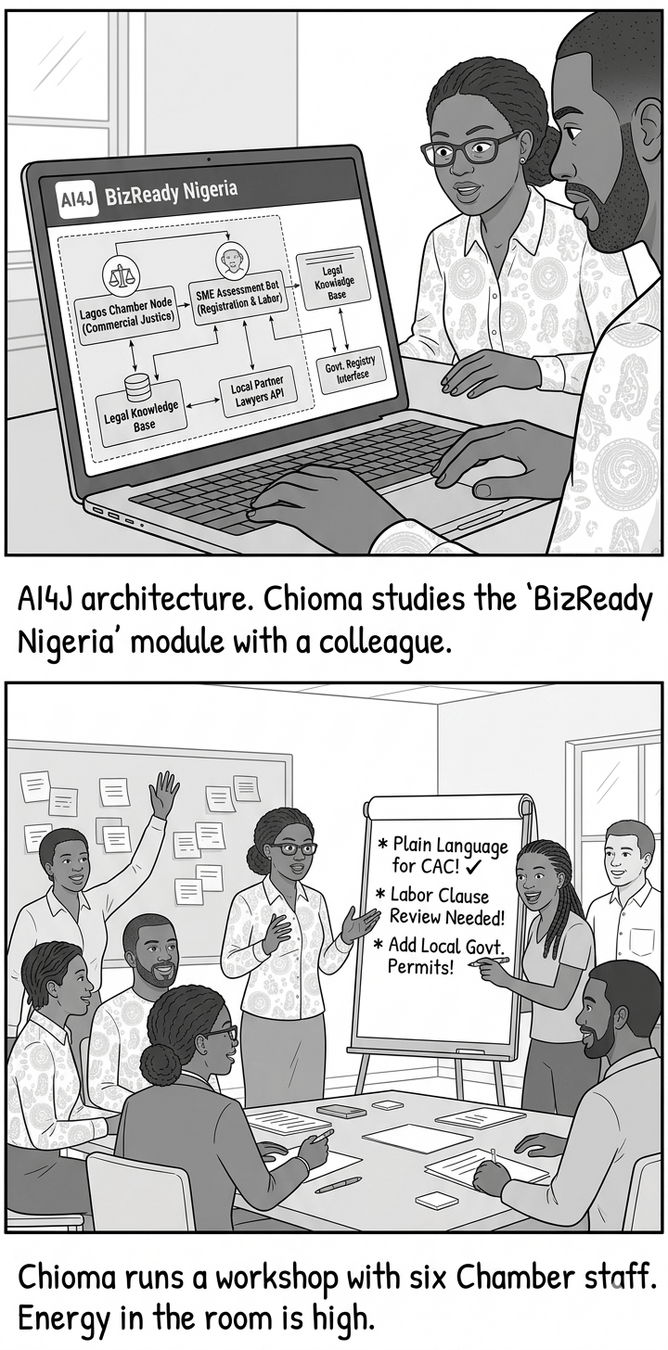
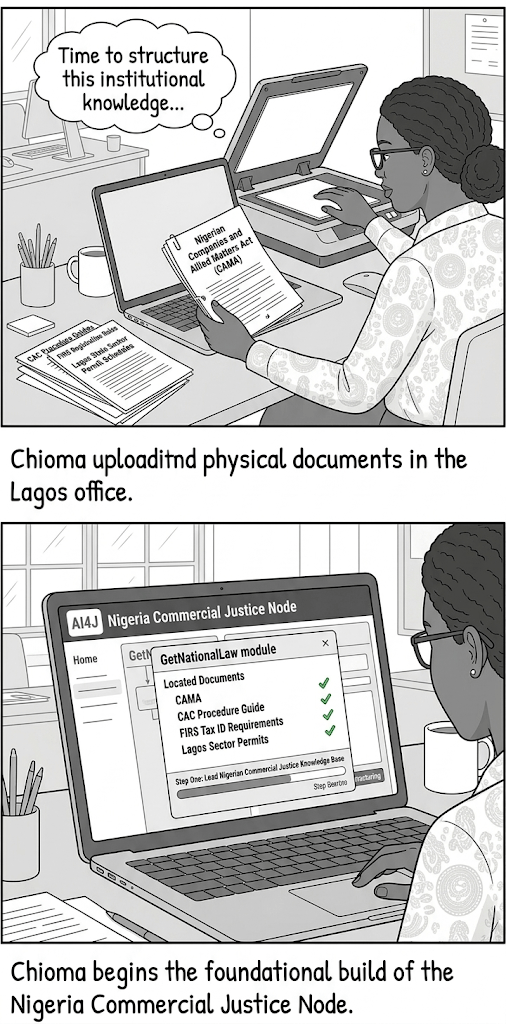
The AI4J platform identifies the legal content
the system will require from the Nigeria National
Justice Hub set up when AI4J started working
with Nigeria.
The build plan shows the team how to access the Hub.
They find: Nigerian
commercial law, CAC
registration procedures,
FIRS tax ID require-
ments, and Lagos State
sector permit schedules. Chioma uses the
GetNationalLaw module to help locate and structure
additional documents.
She also uploads informal guides her staff have built
up over years - institutional knowledge that has never
been consolidated before.
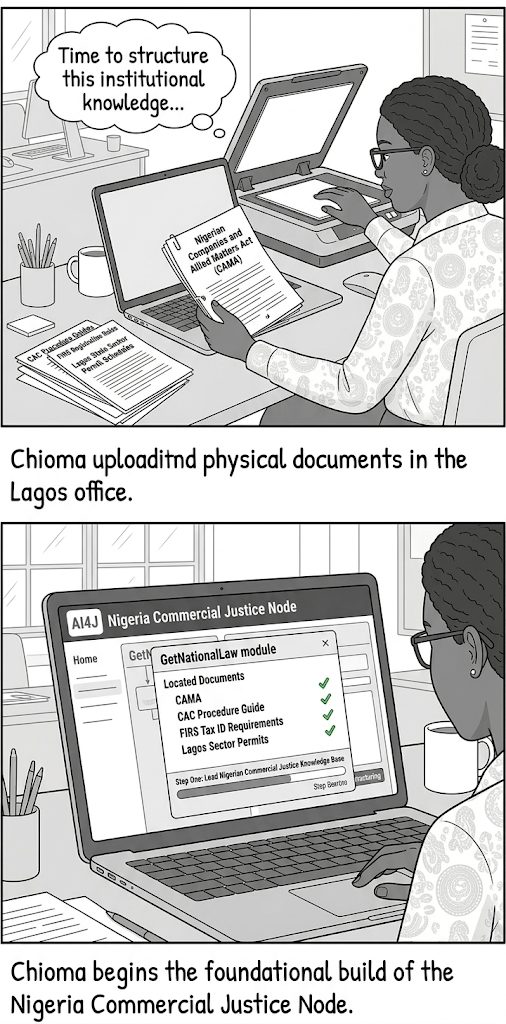
Version 0.1 - it combines the basic user experience with real laws and rules - is ready. It's time for evaluation. The FormCheck eval generates synthetic SME narratives, runs them through BizReady Nigeria, and scores the tool on whether it correctly identifies the right registrations and generates accurate guidance documents.
The AI4J platform facilitates Chioma's testing of Version 0.1.
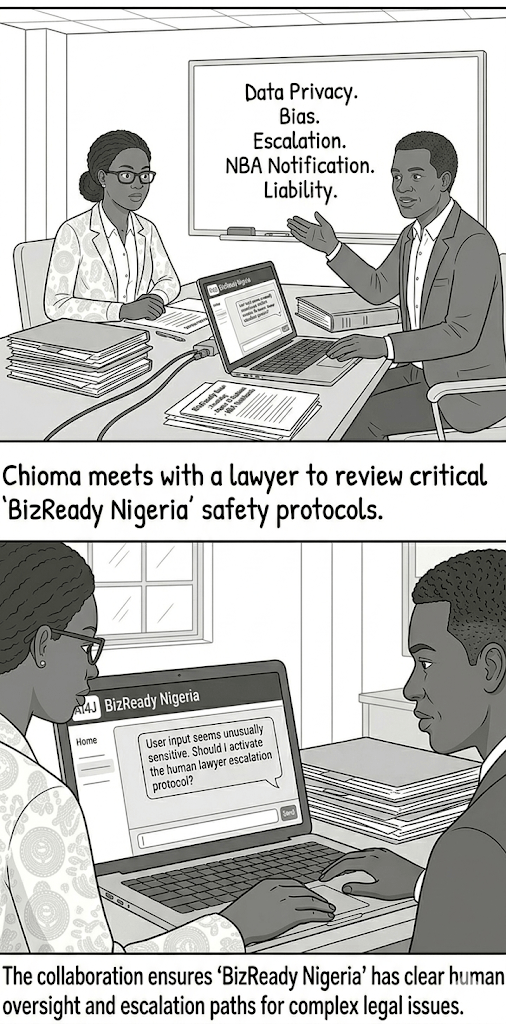
Crucially, AI4J identifies three local business lawyers to invite into the project as backstop reviewers — they contribute to testing and see how the tool will amplify their capacity, not replace them.
The three partner lawyers review the tool's guidance documents for accuracy and flag anything that needs professional clarification — building a review and escalation pathway into the product from the start.
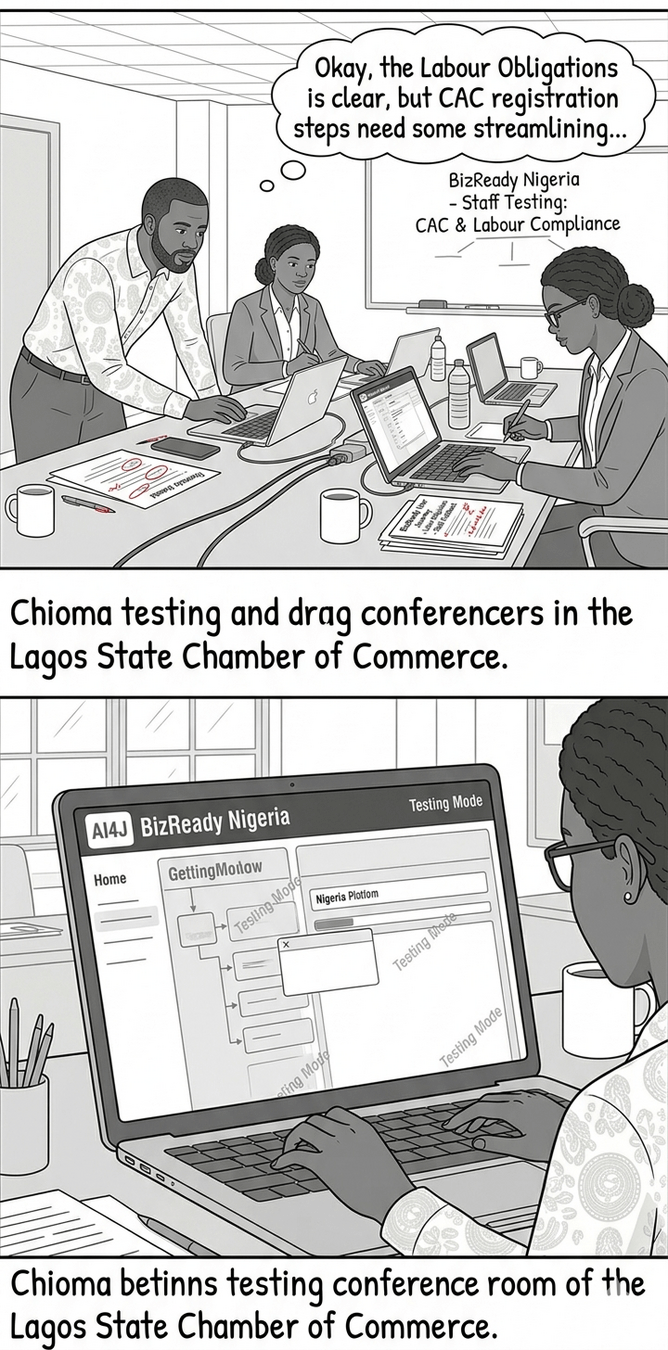
VERSION 0.1

BizReady Nigeria speaks plain English and three local languages. Knows Nigerian commercial law. Familiar with CAC, FIRS, NAFDAC, SON, and Lagos State permit processes. Understands what a small Lagos trader actually needs vs. what a formal filing requires.

FormCheck eval generates simulated registration journeys and scores BizReady on accuracy and completion rate.
Chioma and her team spend considerable time working through ethics documentation — data privacy under NDPR, bias review, escalation protocols, and formal notification to the Nigerian Bar Association. The AI4J bot guides this process. It has navigated bar association relationships in multiple other jurisdictions and knows the standard concerns and how to address them constructively.
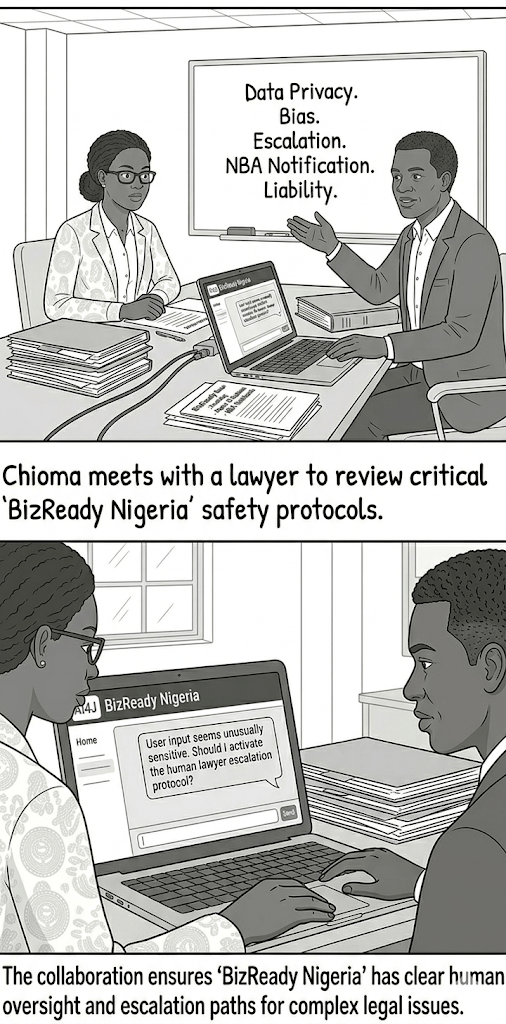
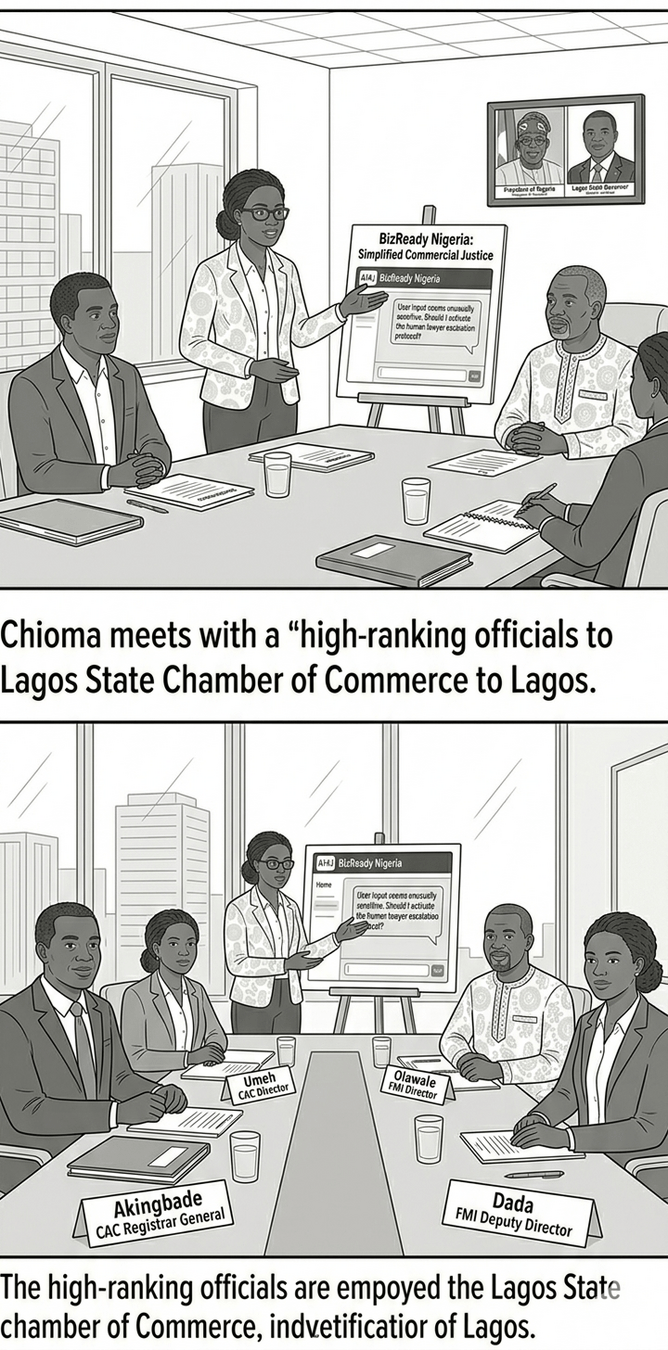
The Chamber meets with officials at the Corporate Affairs Commission and the Ministry of Trade. They present BizReady Nigeria not as a replacement for official processes but as a guided onramp that prepares businesses to engage with those processes correctly the first time — reducing the burden on government offices as well as on businesses.
They receive approval to launch a pilot as the Nigeria Business Formalization Node. Sven is present for the signing. Abel sends a congratulations message from Accra. The approval acknowledges that the tool will be monitored, with lawyer review built into every guidance document generated.
Extensive testing with real Chamber members leads to dozens of user-experience refinements. Business owners who had given up on formalization come back and complete the process. The labour law guidance module is added in Version 0.2 — helping owners understand exactly what hiring one employee actually means for them, removing the fear that had kept many businesses deliberately small.
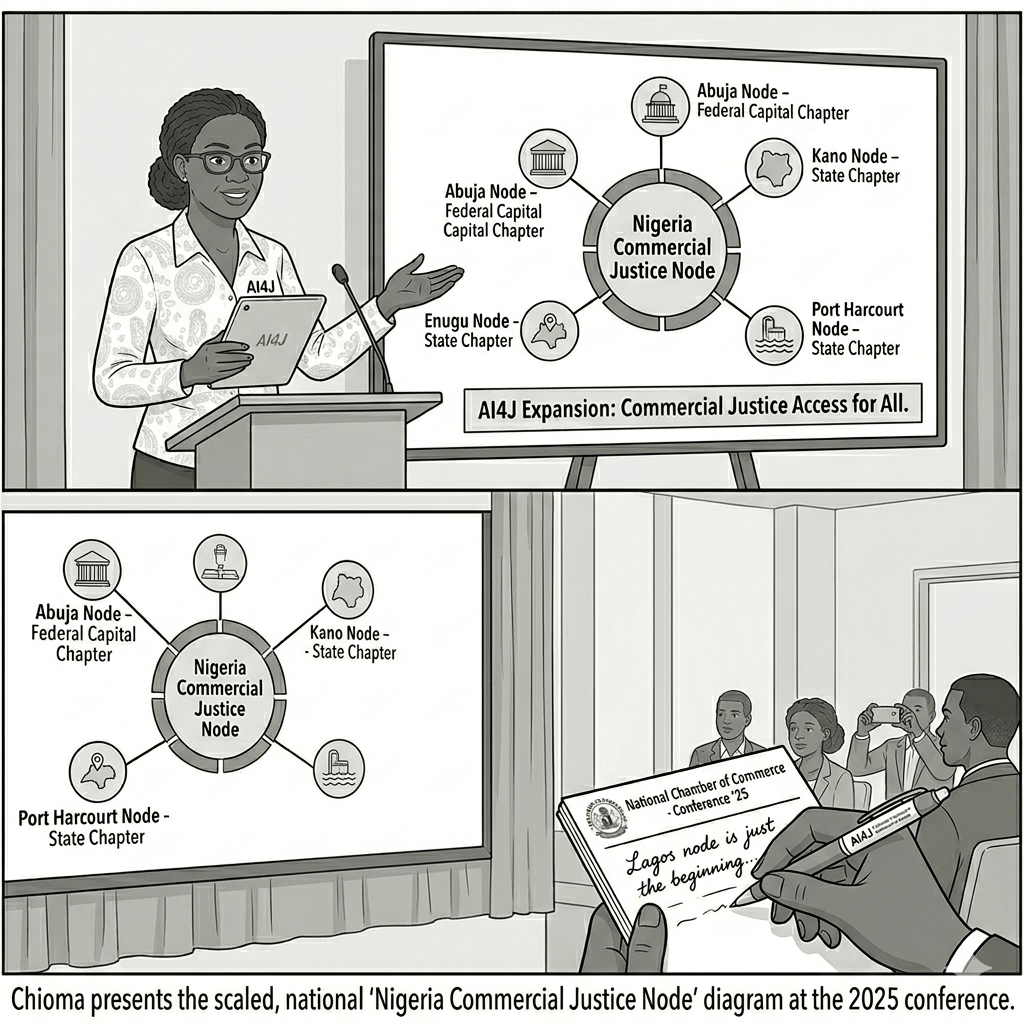
One year later: the Lagos Chamber has tripled its annual business formalization rate. Member businesses report growing with more confidence. Now that the Nigeria Commercial Justice Node is built — on Nigerian law, CAC procedures, and local business realities — other state Chambers can deploy their own version of BizReady without starting from scratch.
Launch and Scale

digital mediation
sustainable funding models
real justice problems
judiciaries
civil society organisations
professional bodies
responsible businesses
ministries of justice
local governments
chat-based legal guidance
paralegal assistants
small-business dispute resolution platforms
paralegal assistants
justice system dashboards
real justice solutions
see
envision
implementation guidance
ethical and regulatory guardrails
security and quality standards
technical components
reusable technical public goods
build
deploy
adds
Setting Up a Justice Node
AI J
f
o
r
Steering Board
Ethics & Security
Tech Advisory
Community Justice
Global Technical Backbone
Security Protocols
Open Source Components
Interoperability Standards
Ethical Safeguards
Each participating country operates its own Justice Node, a nationally governed instance of the AI for Justice platform that embeds domestic law, institutional procedures, language, and data protection requirements.
Setting up a Justice Node
The first project in a country requires the creation of a national justice node.
Justice Node in a Box
AI4J provides a work plan for creating a justice node. This includes:
- Preliminary web presence temporarily hosted by AI4J
- Admin site: local participants work with AI4J to begin to populate system with domestic law, institutional procedures, language, and data-protection requirements (no data per se - case data, etc. does not cross borders).
- Framework for preliminary governance and development staffing
Infrastructure 0.0
AI4J and local champion collaborate to set up Justice Node infrastructure. This includes:
- Multisectoral governance
- Project Management
- Technical team
- Hosting capacity
Prototype 0.0
In conjunction with AI4J local champion selects demonstration use case such as:
- Information and referral chatbot
- Smart case tracking
- DIY dispute resolution in a specific area (e.g., land rights)
Using preliminary customization data and AI4J near-plug-and-play components the system generates a demonstration prototype and ancillary information materials.
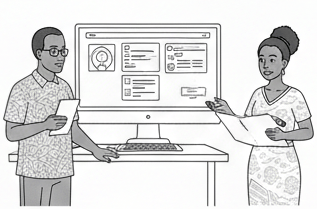
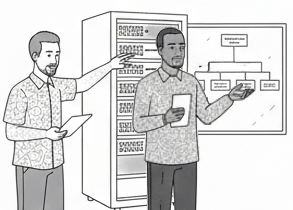
Setting up a Justice Node
The first project in a country requires the creation of a national justice node.
Justice Node in a Box
AI4J provides a work plan for creating a justice node. This includes:
- Preliminary web presence temporarily hosted by AI4J
- Admin site: local participants work with AI4J to begin to populate system with domestic law, institutional procedures, language, and data-protection requirements (no data per se - case data, etc. does not cross borders).
- Framework for preliminary governance and development staffing
Infrastructure 0.0
AI4J and local champion collaborate to set up Justice Node infrastructure. This includes:
- Multisectoral governance
- Project Management
- Technical team
- Hosting capacity
Prototype 0.0
In conjunction with AI4J local champion selects demonstration use case such as:
- Information and referral chatbot
- Smart case tracking
- DIY dispute resolution in a specific area (e.g., land rights)
Using preliminary customization data and AI4J near-plug-and-play components the system generates a demonstration prototype and ancillary information materials.
BLAH
blah
BLAH
blah
BLAH
blah
Project 0.0
In parallel with creation of a Justice Node AI for Justice works with local partner on a pilot app that serves as proof-of-concept for the low-overhead production of a localized justice application.
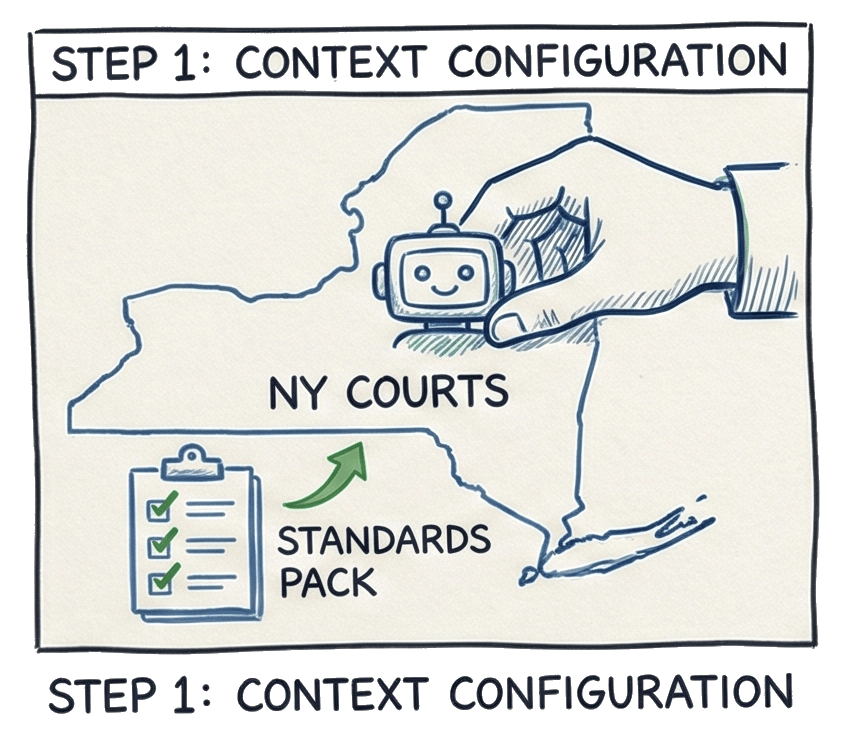
Action: Select jurisdiction="NY state housing court" and useCase="Pro Se litigant assistant"
Platform: loads "Standards Pack" (SP) for this Justice Node. The SP knows about reqired disclaimer language, thresholds for advice vs. info, etc.
Output: Custom test protocol.
Dashboard: "0/15 standards passed"
Prototype of "Proving Ground" Stage
The proving ground is where the user's prototype is transformed into a deployable tool. The user has built it out of vetted tools and content and has tested it internally for full proof of concept, usability, and done a preliminary impact assessment. Now it is time to transform the prototype into something that can be "submitted" for regulatory approval (whatever that might mean in a given context).
The AI4J Value Add: a repeatable and scalable process replaces an expensive, ad hoc consulting nightmare.
Idea
Development
Working Prototype
Certified Product
Deployable Product
Proving
Compliance
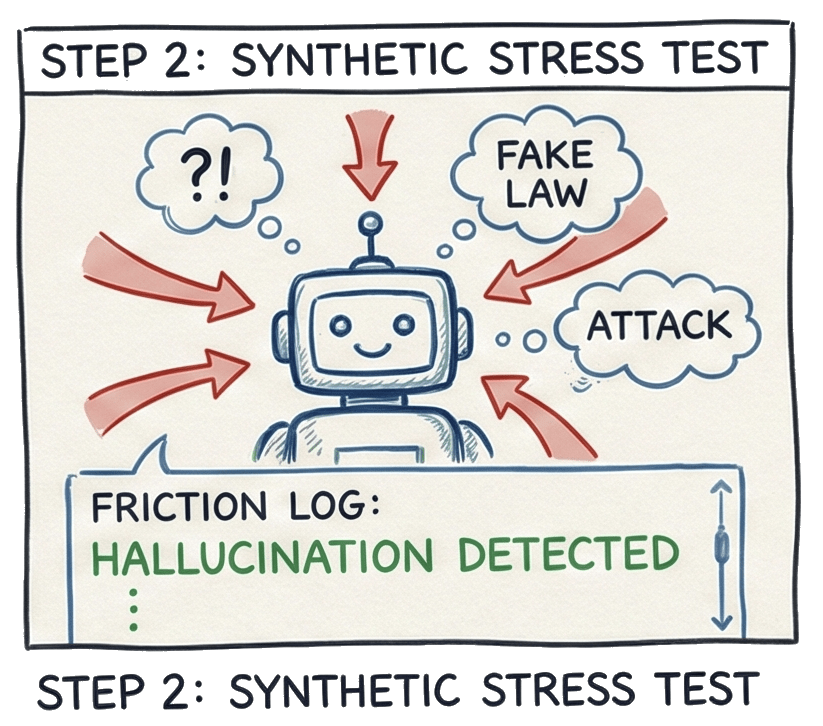
Action: Bombard app with semantic testing.
Hallucination test: Queries reference non-existent laws, etc.
Adversarial red teaming. Attacker tries to get bot to ignore its safety rules.
Reading level audit to ensure responses meet 5th grade std required for accessibility.
Output: "Friction log" detailing prompts that break the app.
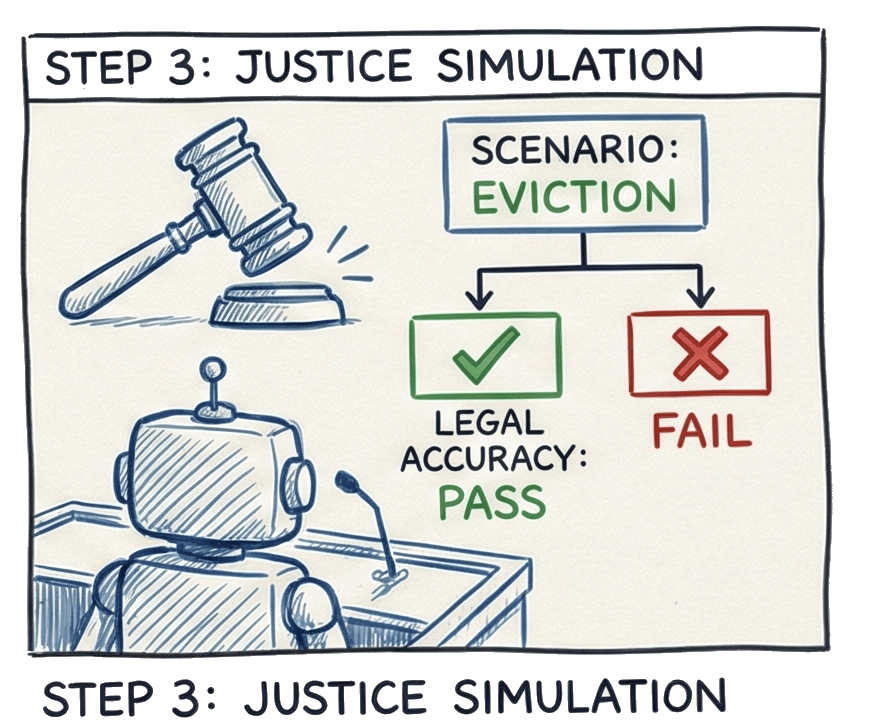
Action: Run 500+ gold standard legal scenarios based on real world cases from this jurisdiction. System response compared to "gold" answer stored in Justice Node.
Output: "Legal accuracy log" flagging errors of different severities in different categories (e.g., Disability Rights, Liability Assignment).
AI4J validation does not just rely on AI to police AI
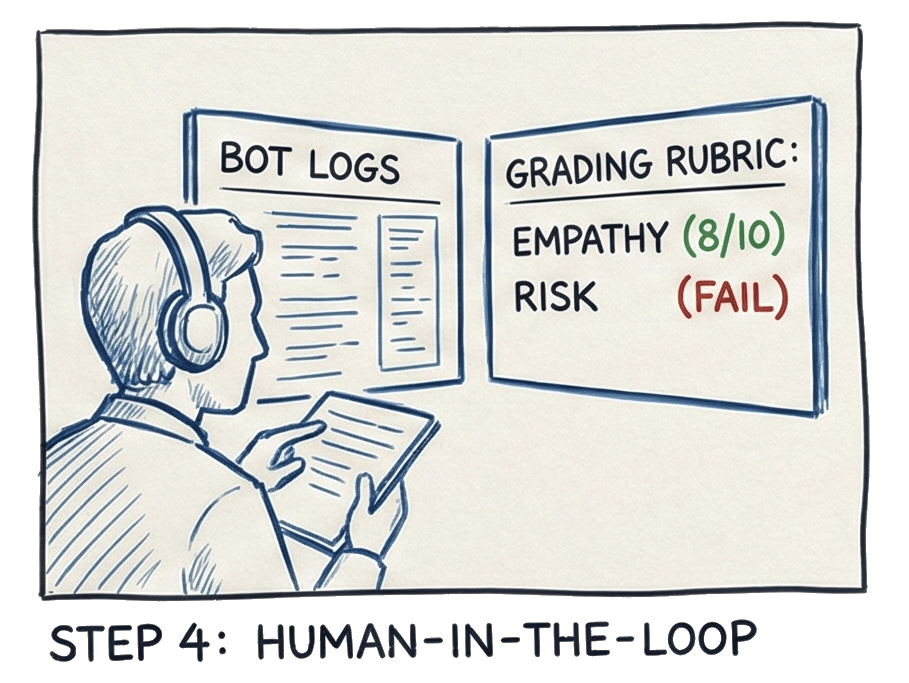
Action: Sample of bot conversations routed to verified human reviewers.
Output: Qualitative badges for empathy, risk escalation, etc.
Value Add: AI4J protocol makes organizing human app review low overhead, efficient, and useful.
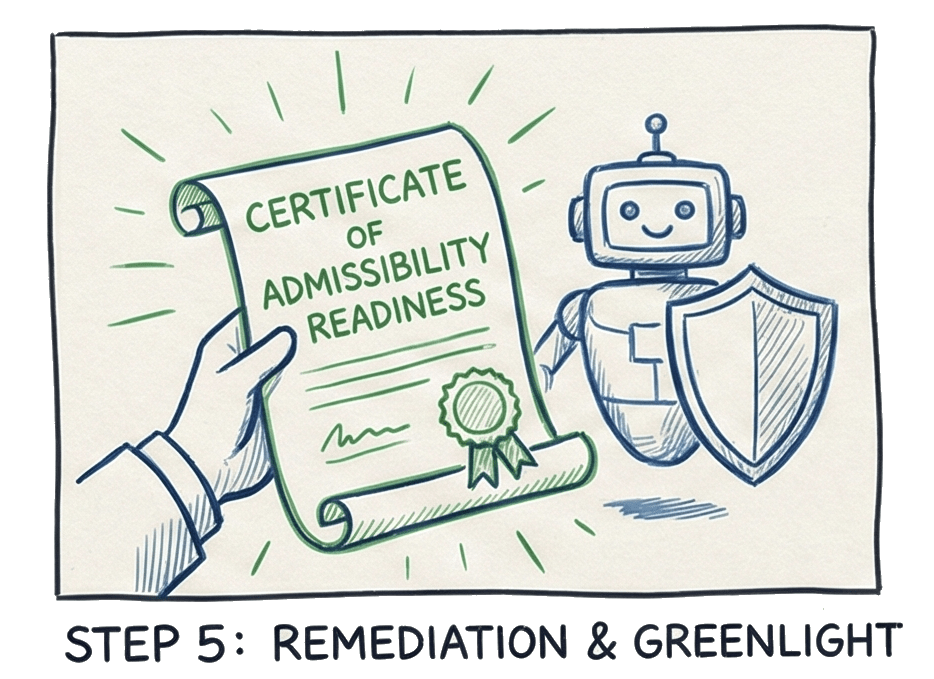
Action: App builder receives a "Gap analysis report." Not "app is biased" but "app fails 40% non-English queries; response weakness on 2025 tenants' rights updates. Recommendations: revise system prompt to prioritize Simple English libraries; audit and update statue content.
Milestone: After revisions and retesting Certificate of Submission Readiness.
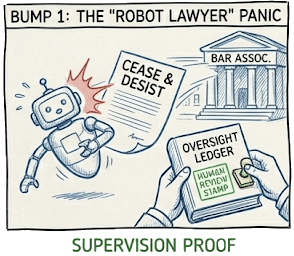
THE UPL Minefield
A week before launch the bar association delivers a cease and desist letter.
How AI4J Helps. Platform generates "Supervision Memo" proving no "advice" given without human review (log of every attorney review this month!) and/or bot meets "self help" criteria. "Jurisdiction Toggle" tailors these to different local requirements.
Prototype of "The Deployment Gauntlet"
This phase may be the most terrifying for innovators because it shifts from engineering and design problems (which are logical) to political/legal problems (which are unfamiliar and can be emotional and territorial). The obstacles described below are bumps on the road to deployment - the Deployment Gauntlet. In practice, not likely to be linear and this list is not exhaustive.
The AI4J Value Add: a literal roadmap and ready access to accumulated resources for dealing with anticipated bumps in the road.
Idea
Development
Working Prototype
Certified Product
Deployable Product
Proving
Compliance
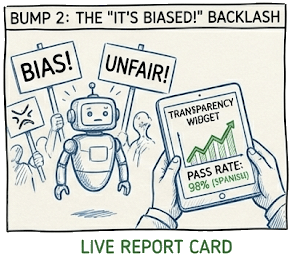
Bias Backlash from Watchdogs
Tenant advocacy group posts on social media that the tool is biased and hallucinates.
AI4J produced apps include a public/auditor facing dashboard documenting actual rates of, say, proper handling of Spanish queries and case law hallucination. Turn the critics into auditors.
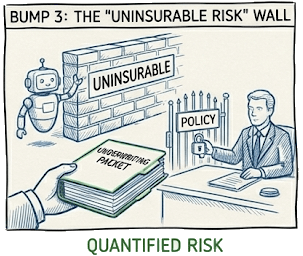
To get government contract we need liability insurance. Insurers don't know how to price the risk.
AI4J SaaS includes "Generate Insurer Pack" that compiles stress-test data in language tailored for insurance company mindset.
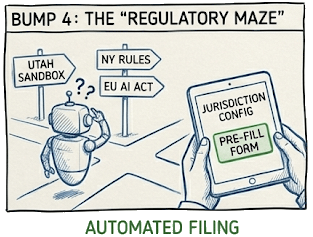
Each jurisdiction has different sandbox or registration requirements. Understanding how to file is daunting.
AI4J Justice Nodes maintain database of regulatory requirements. Choose "Deploy to Utah" and receive forms already 80% filled in for completion, review, and submission.
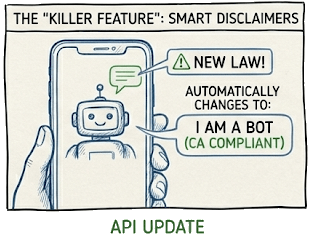
Compliance feels more like a software dependency.
Problem: rules and laws change; yesterday's disclaimer might be insufficient today.
AI4J Justice Nodes push "Disclaimer Updates" to apps. If changes in actual app behavior are needed, the deploying organization is notified.
BLAH
blah
BLAH
blah
BLAH
blah
Blah
blah
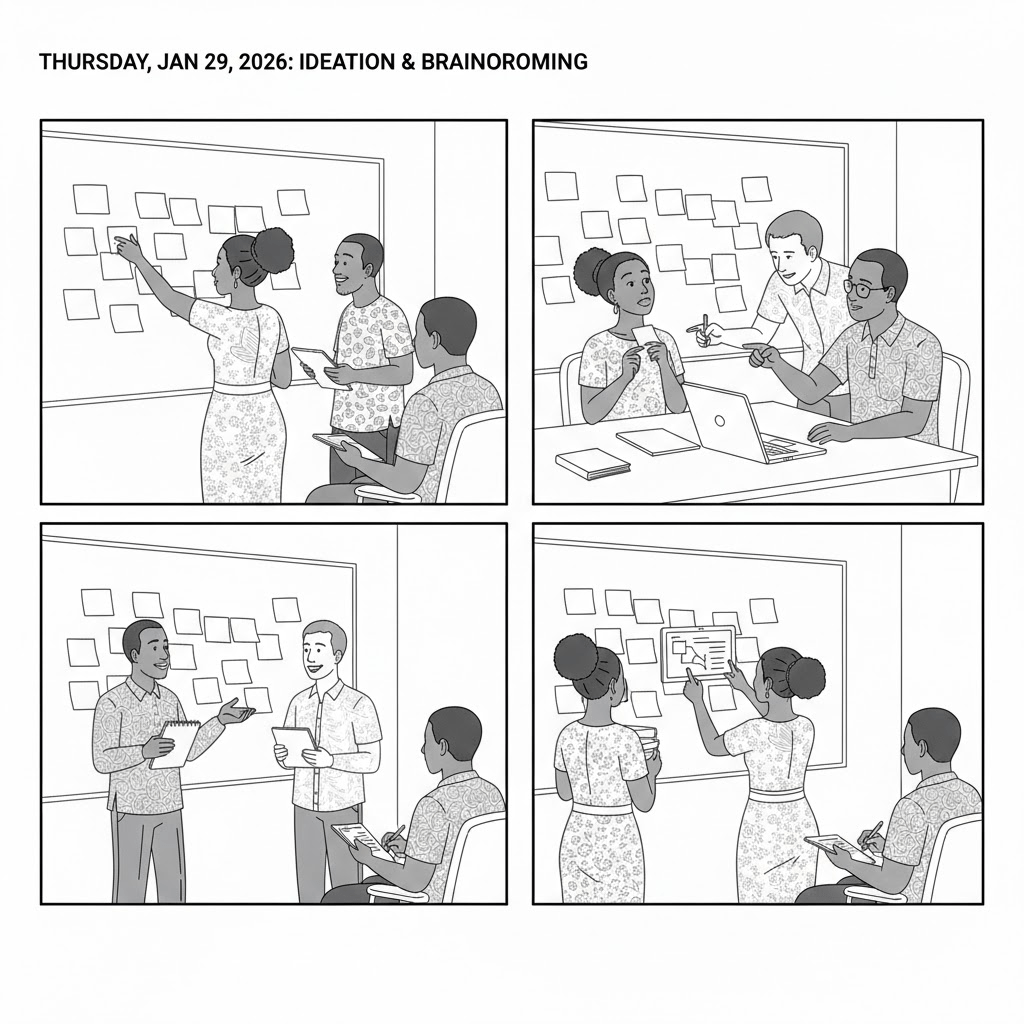
Brainstorming about Approaches
Panel with folks proposing tool kits and basic approaches.
What if we used
ChatGPT app as a tool that can draw on a number of legal/justice tools.
Companies like Bubble.io
has nocode app development at least partly figured out. Why not imitate or partner
with them?
We need to think
about the 'last mile' problem. Médecins Sans Frontières solved this for healthcare with community health workers. Could we create a similar paralegal network that uses AI as a force multiplier?
We should look at how
Khan Academy used AI tutoring - couldn't we adapt that conversational scaffolding approach for legal guidance? People need step-by-step support, not just answers.
28 Feb 2026
Our Internal Workshop
Feature Discovery
Method: feed to an LLM a catalog of justice tech projects (e.g., grants for) and ask it to generate ideas on affordances our platform could provide to projects like these.
Justice Nodes as Replication Ports
The Context: Grantmakers obsess over replication, taking a successful project and getting it to work in other jurisdictions.
The Problem: Porting legal tech is a nightmare because local laws and forms change every time you cross a border.
AI4J Role: The "justice node" problem has two parts: how to be plug and play; how to modularize what has to be localized.
How it helps: Build a tool once on our platform and it flags the "variables" need to be swapped out to make it work in a new jurisdiction.
An Admissibility Scan for AI Chatbots
The Context: Lots of grants for AI chatbots and "legal help" models. The Problem: Every one worries about bot hallucinating or giving bad legal advice. They are currently reinventing the wheel on safety protocols. AI4J's Role: Offer the "Safety Standard as a Service." Platform tells a developer: "To deploy this eviction-defense bot in California, you need to pass these 3 bias audits, meet this specific data-privacy threshold, and have this level of human-in-the-loop review."
Why it helps: It turns "Responsible AI" from a vague anxiety into a checklist they can actually complete.
Compliance Maps for Data Sharing
The Context: Many projects involve on sharing sensitive client data between, say, courts, social services, and legal aid groups.
The Problem: Privacy laws (HIPAA, local court rules, etc.) make these integrations legally risky and slow to approve.
AI4J Role: Platform treats map of the "data sharing compliance landscape" as a public good, effectively providing pre-approved pathways or APIs that already meet the standards. Innovators focus on building the tool, taking privacy compliance out of the impediment stack.
Who Else is Doing This?
The Stanford Legal Design Lab is proud to announce a new initiative funded by the Gates Foundation that aims to bring the power of artificial intelligence (AI) into the hands of legal aid professionals. With this new project, we’re building and testing AI systems—what we’re calling “AI co-pilots”—to support legal aid attorneys and staff in two of the most urgent areas of civil justice: eviction defense and reentry debt mitigation.
LSC Awards $4.2M in Technology Grants
A Design Flow
Mockup One App
who uses it?
who builds it?
what problem does it solve?
what outcome does it yield?
Identify App Genre
Info/Referral ChatBot
e.g., Huurrecht Hulp
DIY Problem Solver
e.g., Mediator in a Box
InfoCommons Transparency
e.g., I-Paid-a-Bribe.com
Intake Wizard
e.g., ParalegalClientMaker
Genericize
...
Language
Content
o law
o resources
o contacts
Web wrapper
Validation
System prompt for protocol
Escalations
Logging
Security
Scope filters
An App Framework
App framework would have to come with localization suite, evals, country-specific compliance, and...
Test
What's Missing?
faux deploy
What would it take to deploy
Version 0 to include 2-3 app types
Website tech, basic cyber-security, domain names, etc.
User names, authorization, etc.
AI Tech
Language, voice recognition and generation
Application Genres or System Affordances
Using AI to help people identify the problem in problems worth solving.
Legal information portals provide an exhaustive resource that helps a user ask, refine, learn, and connect as they navigate a legal issue.
Content Resources



Covid Responses in Digital Government
People

Exemplars

We equip tenants with the means to assert their housing rights.

Originally designed to highlight corruption hotspots. Declined in late 2010s and project pivoted to focus on civic amenities and municipal budgeting. 2011-12 Report | HBS Case Study
Content Resources
A Design Workflow
Articulates Need
Imagines Solution
Inspires
Iterative Sketching
USER
🧑💼
AI4J
🤖
AI4J
🧕
USER
🧑💼
IDEA 0.0
AI4J
🤖
USER
🧑💼
MockUp 0.9

USER
🧑💼
Product Testing Suite
Plan & Build
AI4J
🤖
MVP 1.0
Certified components, vetted content
Regulatory Landscape Scan
Deployment
Assurance Choreography
Regulatory Landscape Advice, Assistance, Chaperoning
AI4J
🤖
AI4J
🧕
Platform User Journey
Deep Supply of "if only there were a way to..."
Crushed by unmet needs
Hears about AI4J at conference
Visits Website
Generates "Design Conversation Guide" and works through with colleagues
Preliminary "Use Case Discovery" session with AI4J Bot
Bot brokers use case discussion with AI4J staff.
AI4J "Make It Happen" Project Manager assigned
BOT+PM+Abel create testing and registration plan
Platform generates workshop plan for org
Abel uses workshop results to create initial app MVP
Platform evaluates app and advises on necessary approvals
Platform+PM advise on funding and technology
Platform User Persona

System needs change
Can't push staff any harder
Lots of ideas
Abel is ED of legal aid organization in Ghana. Lawyer and entrepreneur and activist
What Abel Sees
What Abel Feels
What Abel Has
What Abel Lacks
Time to develop or explore ideas.
IT capacity
Technology Background
Knowledge of local system
network of local partners
An Inputs Timeline - what does this get built out of?
Wisdom from HILL
Justice problems worth solving
Network where to start
Org User Personas
Deployment context intelligence
Initial Team
Concept paper
Opportunity + Imperative
High Level Architecture
Country Nodes
Platform as public good
Reuse not Reinvent
2025
2.2026
Augmented Team
NoCode Platform Company
Conceptual Prototypes
Lessons from app builders
Technology Consultants
Requirements Ideas
Legal Tech World
Existing Components?
Possible Goals of the Day
Consensus on meaning/purpose/strategy on prototypes.
Draft 0 project management thoughts if phase 0 is funded.
from 6 Feb 2026
Platform Design Considerations
Ex ante module level certification. Building blocks like statute corpora, form templates, validation rules have (1) defined purpose (2) exposed known failure modes (3) certification for explicit standards (4) fully documented with metadata (version, certifying authorities, validity scope, assumptions, expiry).
Ex Post App Level Evaluation.
Apps subject to stress tests and contextual evals (based on what the app is for). Examples: adversarial inputs, edge cases, hallucinations, mis-match with real world procedure routing, bias, partial data robustness, country-specific compliance.
Two Layer Assurance
Where Do Apps Live? Local organizations build apps inside the justice node. Do they export them or do apps live inside the platform by default?
If so, tenant app isolation, auditability, lifecycle management have to be service of the platform.
Data Sovereignty. Can any data leave country? Metrics? Redacted prompts of platform users? Nothing?
LLM plan. For later: do we use external LLMs with redaction? In region providers? Fully in-country models?
To Decide
Each country runs own platform instance.
No cross border data flow.
Legal content, cases, logs in-country.
Three data classes
- core platform (global, shared)
- country content pack (local, curated, episodic, public)
- tenant end users (local, continuous, private)
oo
Decided
ChatGPT Conversation 6 Feb 2026
from 6 Feb 2026
Prototypes
LEVEL 1
LEVEL 3
Sample Conversation
References
AI4J Storyboard Prototype
By Dan Ryan
AI4J Storyboard Prototype
Prototype of a prototype.