Instructor: Dan Ryan
Human and Machine Intelligence Alignment
Fall 2025
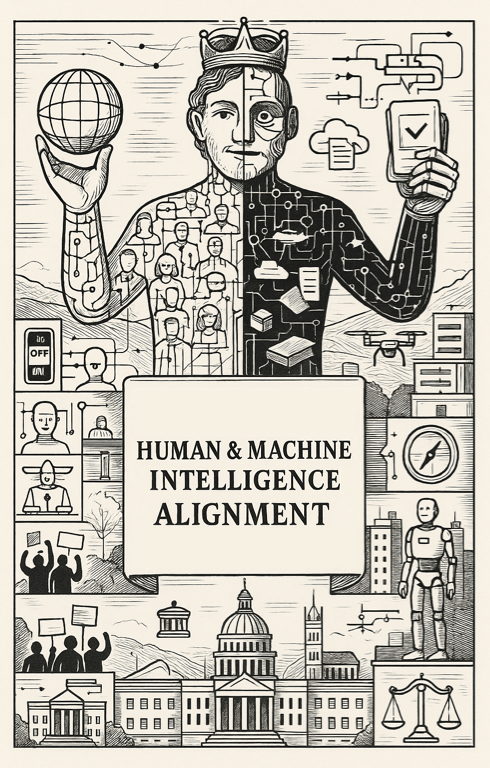
"Alignment" is an evocative term and a polysemous term - it can mean many things.
In this course we will build a broad understanding of alignment. As a starting point, we can say that a system is aligned when it does what it is intended to do, and when its actions are beneficial to other people rather than harmful.
For now, we defer questions about what harmful or beneficial mean and to whom a system might be beneficial or harmful.
Ryan: Human and Machine Intelligence Alignment Fall 2025
The origin of the course was a lightning talk I gave at FOO Camp in 2024.
The gist of the talk was that social theory has always been the study of human intelligence alignment. Social order - practices and structures that support the coordination and cooperation that allow humans to thrive - is alignment.
In the talk I suggest social theory has articulated three big insights about human intelligence alignment: socialization; shared meaning, group life.
Ryan: Human and Machine Intelligence Alignment Fall 2025
Ryan: Human and Machine Intelligence Alignment Fall 2025
Dan Ryan on Social Theory and Alignment [6m]
This
is not our
first rodeo
What This Course Is NOT
Ryan: Human and Machine Intelligence Alignment Fall 2025
Ethics of AI
Computer Science / Engineering Ethics
AI 101
Technical AI Alignment and Safety
AI Policy and Regulation
But here's a course on that...
But here's a course on that...
601.104 COMPUTER ETHICS
Students will examine a variety of topics regarding policy, legal, and moral issues related to the computer science profession itself and to the proliferation of computers in all aspects of society, especially in the era of the Internet. The course will cover various general issues related to ethical frameworks and apply those frameworks more specifically to the use of computers and the Internet. The topics will include privacy issues, computer crime, intellectual property law -- specifically copyright and patent issues, globalization, and ethical responsibilities for computer science professionals. Work in the course will consist of weekly assignments on one or more of the readings and a final paper on a topic chosen by the student and approved by the instructor.
But here's a course on that...
Values and Ethics in Artificial Intelligence - 705.612
Modern artificial intelligence, and the related area of autonomous systems are becoming so powerful that they raise new ethical issues. This course will prepare professional engineers and developers to thoughtfully engage with the moral, ethical, and cultural aspect of these emerging technology. Topics include: safety considerations for autonomous vehicles, algorithm bias, AI explainability, data privacy, ethical considerations of ‘deep fakes’, ethics of artificial life, values advocacy within organizations, technological unemployment, and far-future considerations related to AI safety.
There are a million of these on the web....
But here's a course on that...
EN.705.613. Responsible AI
This course explores the ethical, societal, and policy implications of artificial intelligence (AI) technologies, providing students with a comprehensive understanding of the responsibilities that come with their development and deployment. Through case studies, real-world examples, and critical discussions, students will examine issues related to fairness, transparency, privacy, accountability, and bias in AI systems. The course also delves into the regulatory landscape surrounding AI, exploring frameworks for responsible innovation and the governance structures needed to ensure AI aligns with human values. By the end of the course, students will be equipped with the tools to assess AI systems from an ethical standpoint, design responsible AI solutions, and contribute to the ongoing dialogue around the future of AI and its impact on society.
What This Course IS:
The Four Alignment Problems
Ryan: Human and Machine Intelligence Alignment Fall 2025
The Four Alignment Problems
Ryan: Human and Machine Intelligence Alignment Fall 2025
How to Live with Other Human Intelligences
How to live with Organizational Intelligences
How to Live with Machine Intelligences
How to Live with Expert Intelligences
Machine intelligence alignment problems arise when societies introduce artificial agents that operate at or above human capability and are beyond human control. An aligned machine intelligence does what it is supposed to do and performs in a manner that is humanly beneficial. Because machines lack social context, moral intuition, or an intrinsic understanding of purpose, alignment cannot be assumed to emerge naturally; it must be deliberately engineered through technical design, institutional oversight, and governance structures that keep non-human cognition responsive to human ends rather than allowing the machines to optimize around them.
Organizations are a primitive form of multi-agent super-intelligence. Humans can create structures that amplify collective intelligence while dampening the limits and biases of individuals. From coordinated hunts and village life to modern corporations and state bureaucracies, human intelligence has repeatedly used organizations to create agents capable of acting at scales no single human could achieve.
Organizations pose profound alignment problems. Individuals are not naturally designed to function as interchangeable components, and organizational goals rarely map cleanly onto human values or moral intuitions. And organizations introduce sharp asymmetries of power, knowledge, and coordination into human communities. They can act with speed and reach that exceeds those of the individuals they are meant to serve. The organizational alignment problem is twofold: aligning individuals within organizations and aligning organizations themselves with the interests and values of the societies that authorize their existence.
Experts are super-intelligent agents wielding concentrated portions of collective knowledge. Epistemic asymmetry makes expertise valuable but risky: laypeople must trust judgments they cannot inspect, challenge, or reproduce.
The alignment problem is ensuring the person who is a doctor, witch, or engineer acts as faithful carrier of collective understanding rather than unaccountable intelligence pursuing private goals under expertise's cover. Because experts cannot be directly monitored, societies use indirect alignment mechanisms.
Professional norms, credentialing, peer review, reputation systems, liability, and institutional embedding constrain expert discretion without eliminating it. These mechanisms don't guarantee benevolence; they keep expert power socially accountable rather than self-authorizing. The challenge is not removing asymmetry but governing it: preserving specialized intelligence's benefits while preventing its domination of collective judgment.
Human coexistence is not natural; it is engineered. The achievement of human intelligence is been less about solitary problem-solving than about making life among other intelligent agents tolerable, predictable, and productive. Humans must constantly ask: Are you safe? Will you exploit me? Do we understand the situation the same way? Can we act together? Humans have invented a layered set of tools to manage these risks.
Reputation, reciprocity, and commitment devices generate trust. Language bootstraps shared meaning, allowing people to compress experience into symbols. Norms, rituals, and conventions reduce the cognitive burden of coordination. Institutions such as turn-taking, majority rule, and hierarchy make conflict governable.
The history of human intelligence is a history of alignment technologies, social, cultural, and institutional inventions that make multi-agent life possible.
About the Instructor
Ryan: Human and Machine Intelligence Alignment Fall 2025

Alignment Cards
Ryan: Human and Machine Intelligence Alignment Fall 2025
Why Are We Here?
Ryan: Human and Machine Intelligence Alignment Fall 2025
2015
Do YOU think we should worry about intelligent machines that do exactly what we ask them to do?
Ryan: Human and Machine Intelligence Alignment Fall 2025
Ryan: Human and Machine Intelligence Alignment Fall 2025

Who are you?
Ryan: Human and Machine Intelligence Alignment Fall 2025
Ryan: Human and Machine Intelligence Alignment Fall 2025
Ryan: Human and Machine Intelligence Alignment Fall 2025
2019
What
Is
Value
Alignment?
Ryan: Human and Machine Intelligence Alignment Fall 2025
2019
Ryan: Human and Machine Intelligence Alignment Fall 2025
AI 101
Alignment 101
How to read hard stuff
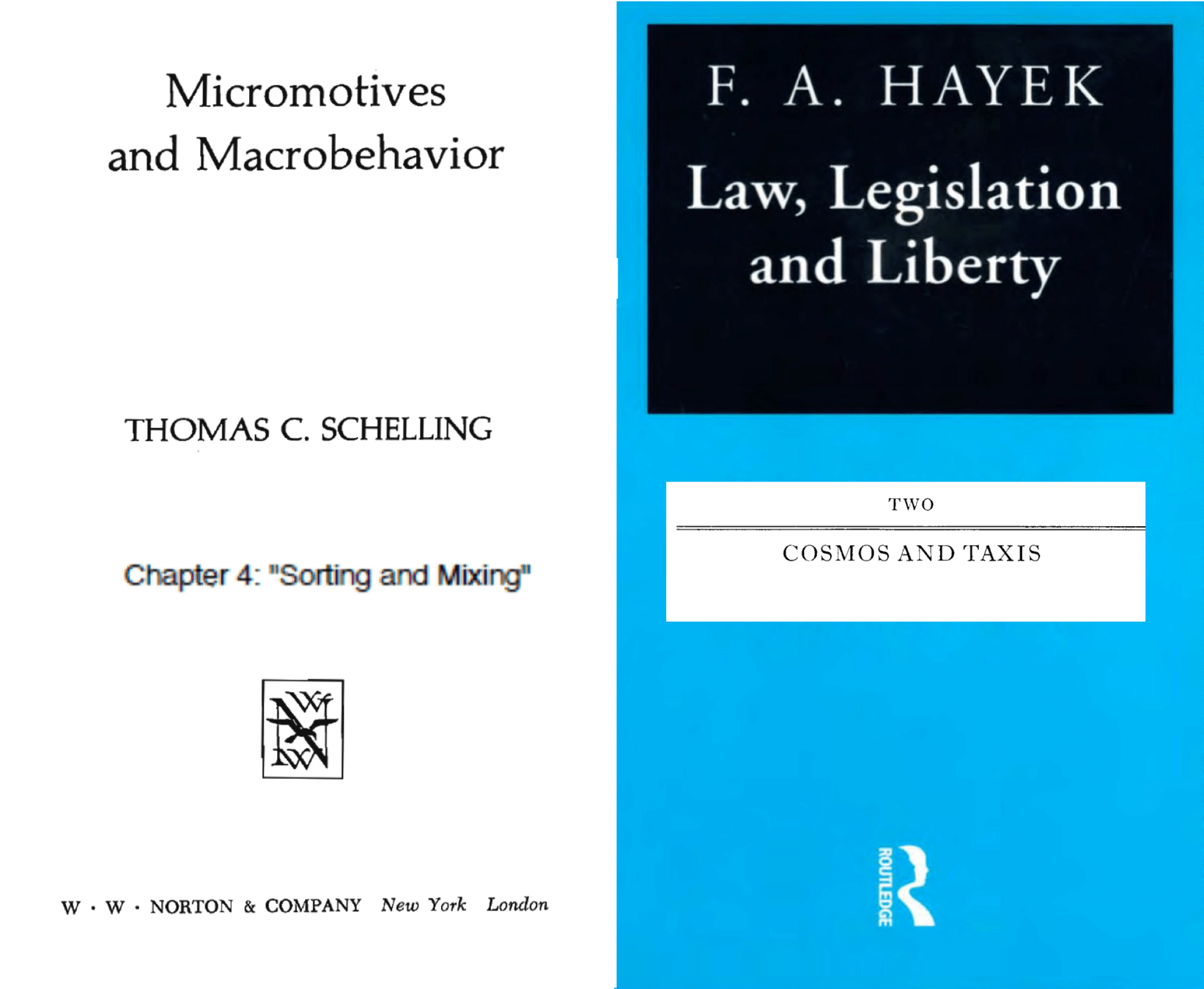
Thinking Analogically
The Four
Alignment
Problems
Isn't It Just "Ethics"?
Principles Are
Not Enough!
Align is a Verb
Shared Meaning
Hierarchy
Groups
Markets
Qualification
Records
Control
Deterrence
Incentives
Safety
Institutions
Foundations
Humans
Have Been Doing Alignment Forever
Traits Are
Not Enough!
Humans +
Humans
Principals + Agents
Normies +
Magicians
Humans +
Machines
Humans
Organizations
Experts
Machines
Humans
Organizations
Experts
Machines
Humans
Organizations
Experts
Machines
Humans
Organizations
Experts
Machines
Humans
Organizations
Experts
Machines
Humans
Organizations
Experts
Machines
Humans
Organizations
Experts
Machines
Basic Requirements
Ryan: Human and Machine Intelligence Alignment Fall 2025
27 class meetings.
~25 pre-class work.
<25 post-class work.
Multiple draft essay.
Alignment card deck.
Oral exam.
Alignment Cards
Ryan: Human and Machine Intelligence Alignment Fall 2025
Alignment Chat
Ryan: Human and Machine Intelligence Alignment Fall 2025

Next Time on...
PostClass Work
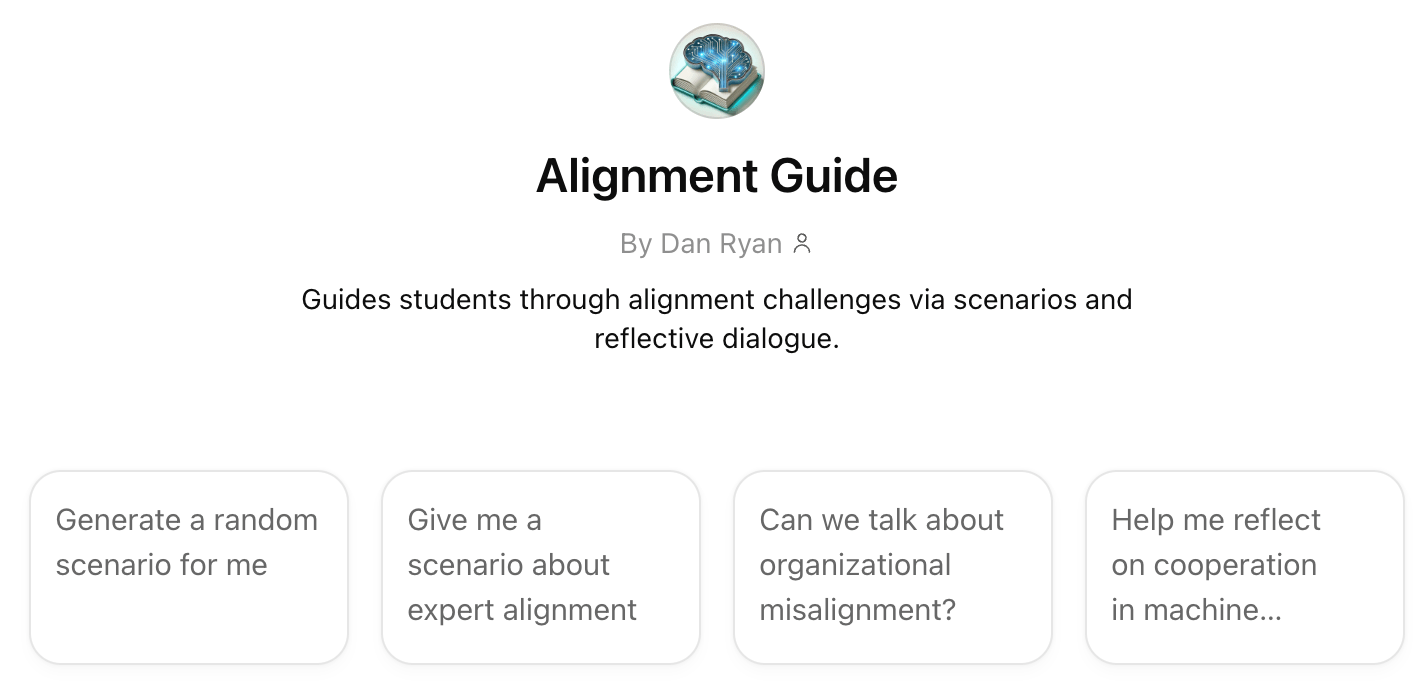
- Play with our Alignment Guide GPT, Lumen
PreClass Work AI Bootcamp
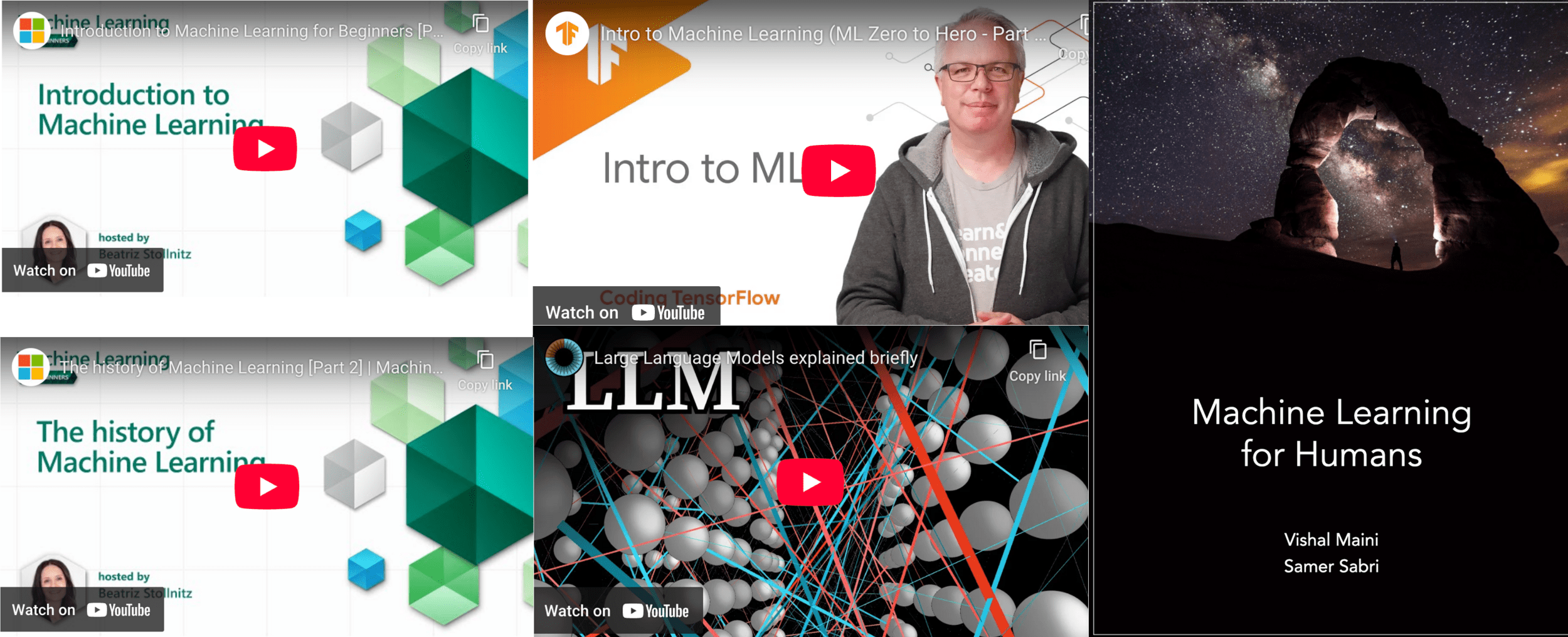
- About 25 minutes of video and skim ebook Machine Learning for Humans
Ryan: Human and Machine Intelligence Alignment Fall 2025
Further Reading on Alignment
-
IBM: "What is alignment?"
- General answer with examples of things IBM is developing
-
Wikipedia. "Al Alignment" 25-30 min read
- Read first three sections and skim the rest for a first reading
-
Vinod Chugani 2024: "What is AI Alignment? Ensuring AI Works for Humanity" on DataCamp blog · 12 min read
- Ignore opening idea (building in values); after that several good break downs of concepts related to alignment
-
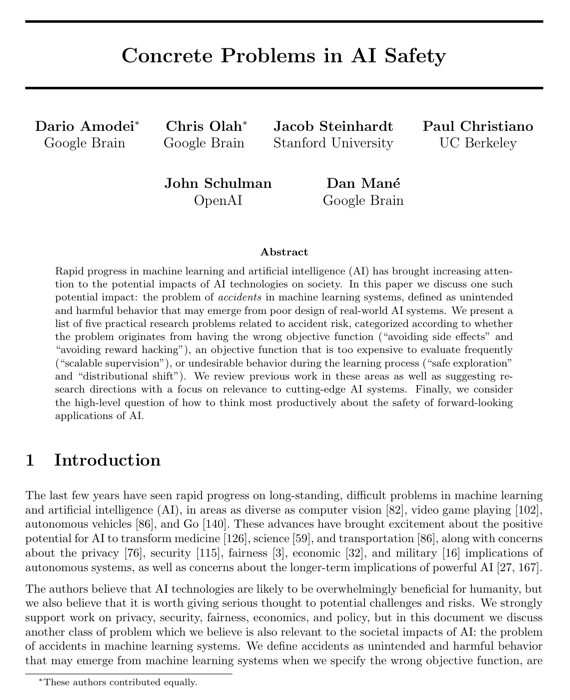
Paul Christiano. 2018. "Clarifying 'AI alignment'." 4 min read
- head of AI safety at the US AI Safety Institute
-
Ji, J. et al. 2024. "AI Alignment: A Comprehensive Survey" 60PP!
- dense text, read from the outside in - look at contents and overall shape
-
Tech AI Digest. 2024. "AI Alignment Explained: Ensuring AI Follows Human Values" (11min podcast)
- 2 person conversation - very beginner friendly
Ryan: Human and Machine Intelligence Alignment Fall 2025
We just learned three terms
maximize a utility function
inverse reinforcement learning
value alignment
Ryan: Human and Machine Intelligence Alignment Fall 2025
and something about a guy named Szilard
HMIA 2025 External Overview
By Dan Ryan