Electrostatics
The Electric Field from The Electric Potential
\ \vec{E}=-\vec{\nabla} V\
Electrostatics
The influence & interaction of electric charges
The Cast - relationship map
\vec{E}
V
\Phi
\ \vec{E}=-\vec{\nabla} V\
\ \Delta V = -\int \vec{E}\cdot d\vec{s}\
\ \Phi = \int \vec{E}\cdot d\vec{A}\
\vec{F}
U
\ \vec{F}=-\vec{\nabla} U\
\ \Delta U = -\int \vec{F}\cdot d\vec{s}\
\ \vec{F} = q_0\ \vec{E}\
\ \vec{E} = \vec{F}/q_0\ \
\ U = q_0\ V\
\ V = U/q_0\ \
q
Electrostatics
The influence & interaction of electric charges
The Cast - relationship map
\vec{E}
V
\ \vec{E}=-\vec{\nabla} V\
\ \Delta V = -\int \vec{E}\cdot d\vec{s}\
Electrostatics
The influence & interaction of electric charges
The Cast - relationship map
Electrostatics
The Electric Potential
The Potential Difference (aka Voltage)
Electrostatics
The Electric Potential
The Electric Potential Difference (aka Voltage)
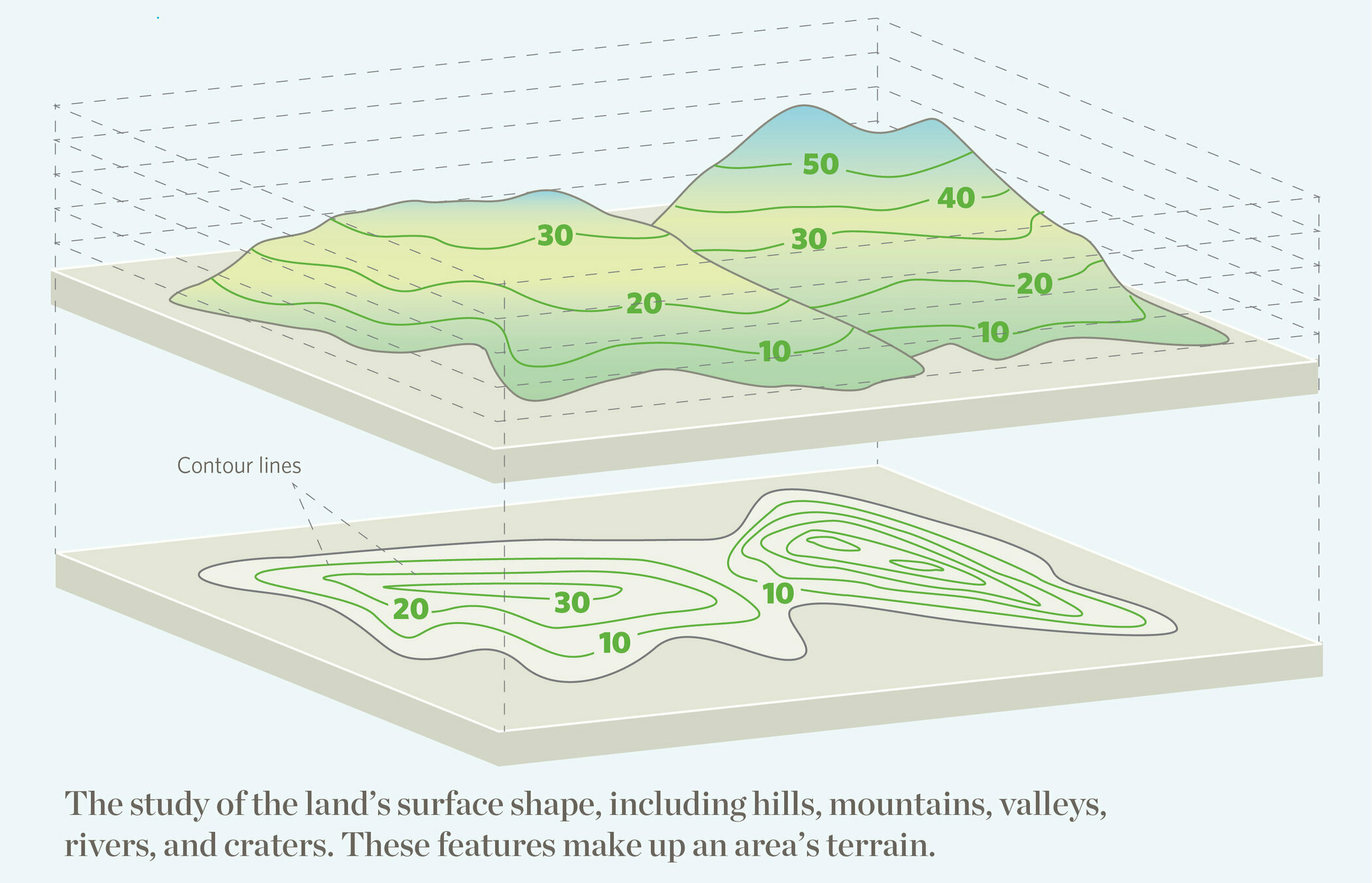
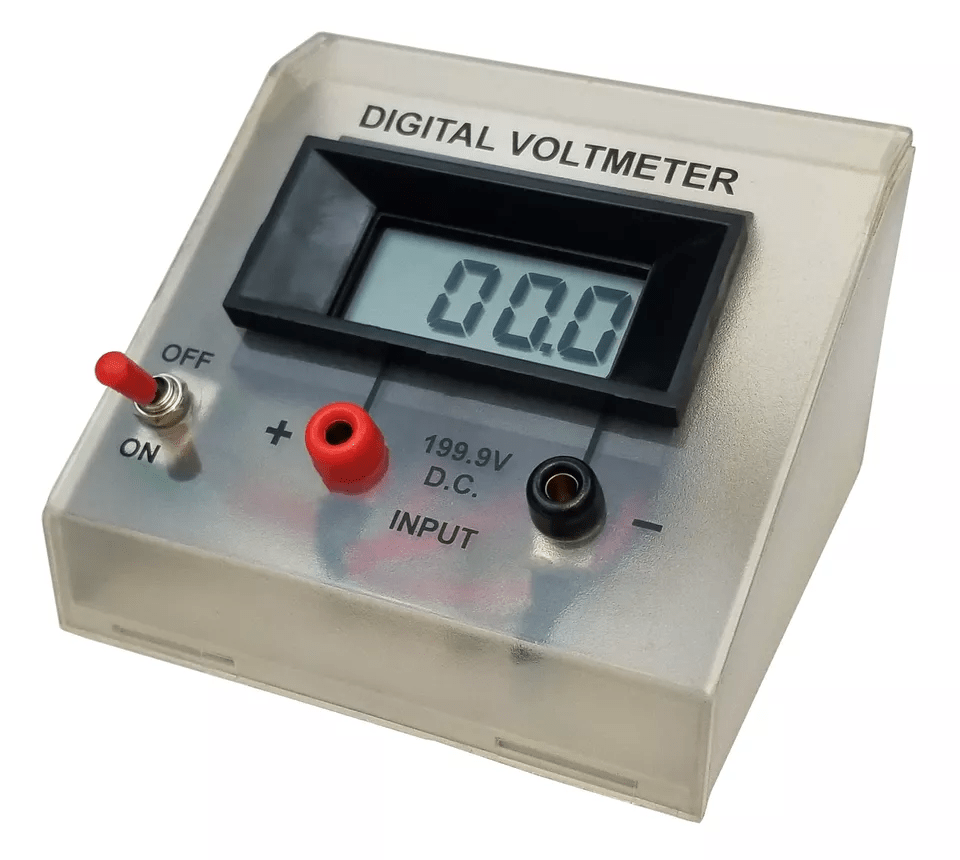
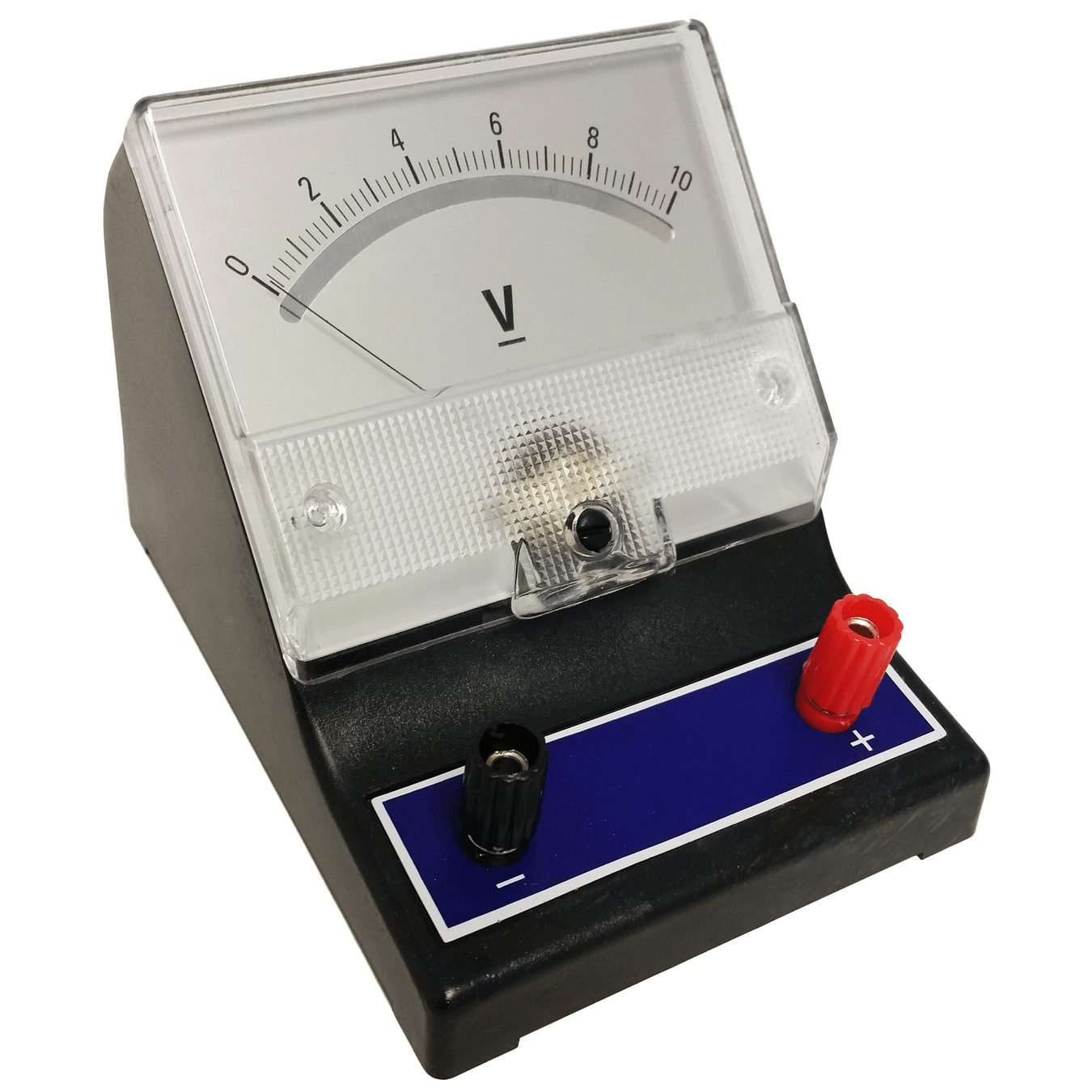
ANALOG VOLTMETER
The Instruments measure the electric potential difference between any two points in space.
Electrostatics
The Electric Potential
The Electric Potential Difference (aka Voltage)
ANALOG VOLTMETER
The Electric Potential is defined up to an arbitrary scalar shift
Therefore, typically, it is the Electric Potential Difference that matters
The Electric Potential Difference between any two points in space, A and B, is given by:
\Delta V= V_B-V_A
Electrostatics
The Electric Potential
The Electric Potential Difference (aka Voltage)
ANALOG VOLTMETER
Typically you think of A as a reference, and you ask:
How much higer (+) or lower (-) is the Electric Potential at point B compared to the reference (at point A)
\Delta V= V_B-V_A
Electrostatics
The Electric Potential
and The Electric Field
Electrostatics
Video walkthrough this stack
The Electric Potential
Relationship to the Electric Field
Electrostatics
\vec{E}
V
The influence
of Electric Charges
The Electric Potential
Relationship to the Electric Field
\ \Delta V = \int \vec{E}\cdot d\vec{s}\
\ \vec{E}=-\vec{\nabla} V\
Electrostatics
The Electric Potential
Relationship to the Electric Field
The Electric Field ~ the slope of the Electric Potential
\Delta V
\Delta s
\Delta V
\Delta s
Electrostatics
The Electric Potential
Relationship to the Electric Field
\vec{E}
V
\ \vec{E}=-\vec{\nabla} V\
\Delta s
\Delta V
V_1
V_2
s_1
s_2
The average Electric Field
\vec{E}_\text{avg}=-\frac{~~~~~~~~}{~~~~~~~}\ \hat{s}
\Delta V
\Delta s
magnitude = Electric Potential Difference per unit length.
direction = from High potential to Low potential
V
s
Electrostatics
The Electric Potential
Relationship to the Electric Field
V
s
s_1
s_2
V_1
V_2
\Delta s
\Delta V
\vec{E}
V
\ \vec{E}=-\vec{\nabla} V\
s_3
\vec{E}=-\ \frac{~~~~~~}{~~~~~}\ \hat{s}
d V
d s
The local Electric Field
\ \vec{E}=-\vec{\nabla} V\
In higher dimensions
Math Interlude
Differential Calculus

\vec{\nabla} f{\small (r,\theta,\phi)}= \tfrac{\partial f}{\partial r}\ \hat{r}
+
\tfrac{1}{r}\tfrac{\partial f}{\partial \theta}\ \hat{\theta}
+
\tfrac{1}{r \sin\theta}\tfrac{\partial f}{\partial \phi}\ \hat{\phi}
Spherical Coordinates
\vec{\nabla} f{\small (x,y,z)}= \tfrac{\partial f}{\partial x}\ \hat{i}
+
\tfrac{\partial f}{\partial y}\ \hat{j}
+
\tfrac{\partial f}{\partial z}\ \hat{k}
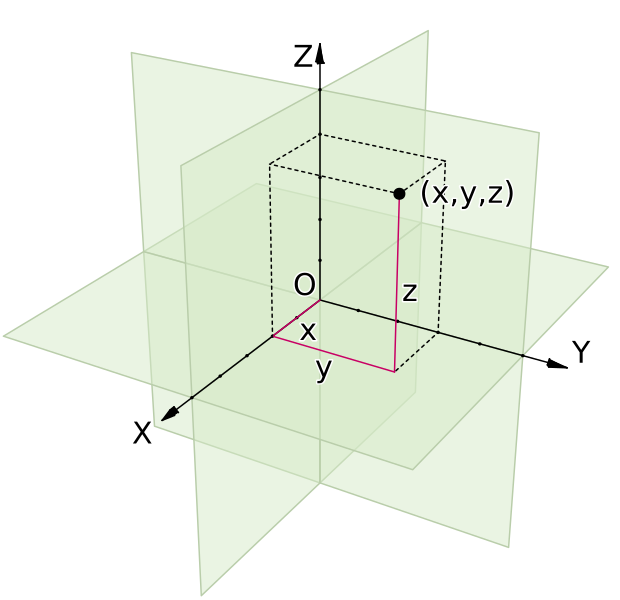
Cartesian Coordinates
\vec{\nabla} f{\small (x,y,z)}= \tfrac{\partial f}{\partial x}\ \hat{i}
+
\tfrac{\partial f}{\partial y}\ \hat{j}
+
\tfrac{\partial f}{\partial z}\ \hat{k}
Cartesian Coordinates

h{\small (x,y,z)}= ay+b
\vec{\nabla} h{\small (x,y,z)}= \tfrac{\partial h}{\partial x}\ \hat{i}
+
\tfrac{\partial h}{\partial y}\ \hat{j}
+
\tfrac{\partial h}{\partial z}\ \hat{k}
= 0\ \hat{i}
~~+~
a\ \hat{j}
~~+~
0\ \hat{k}
f{\small (x,y,z)}= axy^2+x^2 z
\vec{\nabla} f{\small (x,y,z)}=
+
x^2\ \hat{k}
+2axy\ \hat{j}
(ay^2+2xz) \hat{i}
\tfrac{\partial f}{\partial x}\ \hat{i}
+
\tfrac{\partial f}{\partial y}\ \hat{j}
+
\tfrac{\partial f}{\partial z}\ \hat{k}
=
Math Interlude
Differential Calculus
\vec{\nabla} f{\small (r,\theta,\phi)}= \tfrac{\partial f}{\partial r}\ \hat{r}
+
\tfrac{1}{r}\tfrac{\partial f}{\partial \theta}\ \hat{\theta}
+
\tfrac{1}{r \sin\theta}\tfrac{\partial f}{\partial \phi}\ \hat{\phi}
Spherical Coordinates
Math Interlude
Differential Calculus
\vec{\nabla} f{\small (r,\theta,\phi)}=
\tfrac{\partial f}{\partial r}\ \hat{r}
+
\tfrac{1}{r}\tfrac{\partial f}{\partial \theta}\ \hat{\theta}
+
\tfrac{1}{r \sin\theta}\tfrac{\partial f}{\partial \phi}\ \hat{\phi}
{\small \sin\phi}\ \hat{r}
\small +0\ \hat{\theta}
=
-
\tfrac{r\cos\phi}{r \sin\theta}\ \hat{\phi}
\vec{\nabla} V{\small (r,\theta,\phi)}=
\tfrac{\partial V}{\partial r}\ \hat{r}
+
\tfrac{1}{r}\tfrac{\partial V}{\partial \theta}\ \hat{\theta}
+
\tfrac{1}{r \sin\theta}\tfrac{\partial V}{\partial \phi}\ \hat{\phi}
=
-\tfrac{kq}{r^2}\ \hat{r}
\small +0\ \hat{\theta}
\small +0\ \hat{\phi}
\vec{E}=\tfrac{kq}{r^2}\ \hat{r}
V=\tfrac{kq}{r}
\ \vec{E}=-\vec{\nabla} V\
For a point charge
f{\small (r,\theta,\phi)}= r \sin\phi
V{\small (r,\theta,\phi)}= \tfrac{kq}{r} + V_0
Electric Field from Electric Potential
By drmoussaphysics
Electric Field from Electric Potential
The Electric Field is the Gradient of the Electric Potential