Javascript: Programming Language
by: {
  "Name": Engin CAN,
  "KnownAs": engincancan,
  "Email": engincancan@gmail.com,
  "Github": github.com/engincancan
  "Twitter": engincan_can
  "Date": 21.01.2016,
  "License": CC BY-NC-SA
}
@istanbulcoders
Agenda
- Javascript History
- Part 1: First Look of Javascript, Expressions, Variables, Functions, Keywords
- Part 2: One Step Forward: Scope Hoisting IIFE Strict Mode
- Part 3: One Step Backward: Closure Prototypal Inheritance
- Part 4: Others: Transpilers, Automation Tools, Chrome Dev Tools Console, References
JavaScript
- JavaScript is a high-level, dynamic, untyped, and interpreted programming language.
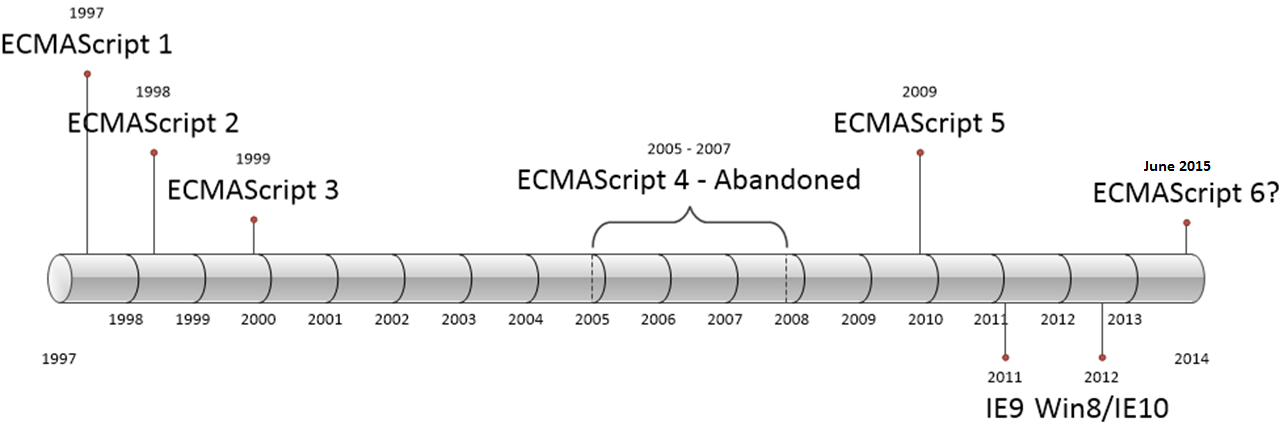
- It has been standardized in the ECMAScript language specification.
JavaScript
JavaScript
- It has an API for working with text, arrays, dates and regular expressions, but does not include any I/O, such as networking, storage or graphics facilities, relying for these upon the host environment in which it is embedded.
- Developed under the name Mocha, officially called LiveScript
-
JavaScript was not developed at Sun Microsystems, the home of Java. JavaScript was developed at Netscape. It was originally called LiveScript, but that name wasn't confusing enough.
- The -Script suffix suggests that it is not a real programming language, that a scripting language is less than a programming language. But it is really a matter of specialization. Compared to C, JavaScript trades performance for expressive power and dynamism.
JavaScript
Douglas Crockford
Part 1
- Expressions - Statements
- Operators
- Values & Types
- Variables
- Blocks
- Loops
- Functions
First Look of Javascript
Part 1: First Look of Javascript
Statements - Expressions
var a = b + 2;- 2 is a literal value expression
- b is a variable expression, which means to retrieve its current value
- b + 2 is an arithmetic expression, which means to do the addition
- a = b + 2 is an assignment expression, which means to assign the result of the b + 2 expression to the variable a
Part 1: First Look of Javascript
Operators
Operator
+
-
*
/
%
++
--
Description
Addition
Subtraction
Multiplication
Division
Modulus
Increment
Decrement
Arithmetic Operators
Part 1: First Look of Javascript
Operators
Operator
==
===
!=
!==
>
<
>=
<=
?
Description
equal to
equal value and equal type
not equal
not equal value or not equal type
greater than
less than
greater than or equal to
less than or equal to
ternary operator
Logical Operators
Part 1: First Look of Javascript
Value Types
Six data types that are primitives:
- Boolean
- Null
- Undefined
- Number
- String
- Symbol (new in ECMAScript 6)
and Object
Part 1: First Look of Javascript
Variables
var amount = 99.99;

amount = amount * 2;

console.log( amount );      // 199.98

// convert `amount` to a string, and
// add "TL" at the end
amount = String( amount ) + " TL";

console.log( amount );      // "199.98 TL"
Part 1: First Look of Javascript
Blocks
var amount = 99.99;

// a general block
{
    amount = amount * 2;
    console.log( amount );  // 199.98
}
var amount = 99.99;

// is amount big enough?
if (amount > 10) {          // <-- block attached to `if`
    amount = amount * 2;
    console.log( amount );  // 199.98
}
Part 1: First Look of Javascript
Loops
var i = 0;

// a `while..true` loop would run forever, right?
while (true) {
    // stop the loop?
    if ((i <= 9) === false) {
        break;
    }

    console.log( i );
    i = i + 1;
}
// 0 1 2 3 4 5 6 7 8 9
for (var i = 0; i <= 9; i = i + 1) {
console.log( i );
}
// 0 1 2 3 4 5 6 7 8 9Part 1: First Look of Javascript
Functions
function printAmount(amt) {
    console.log( amt.toFixed( 2 ) );
}

function formatAmount() {
    return amount.toFixed( 2 ) + " TL";
}

var amount = 99.99;

printAmount( amount * 2 );      // "199.98"

amount = formatAmount();
console.log( amount );          // "99.99 TL"
Part 1: First Look of Javascript
Reserved Words
break	        case		class		catch	    const
continue	debugger        default		delete	    do
else		export		extends		finally	    for
function	if 		import		in	    instanceof
new		return		super		switch	    this
throw		try		typeof		var	    void
while		with		yield
Reserved Words in Strict Mode
implements	package	    protected    static	    let	    interface
private    	public
Part 1: First Look of Javascript
Automatic Semicolon Insertion
How parser looks at it
(function(w) {
    function my(options) {
        var myArr = []
        console.log('test')
        (myArr || []).forEach(function(i) {})
        return
        {
           attr: 'something'
        }
    }
})(window)
(function(w) {
function my(options) {
var myArr = [];// (1) <- inserted
// (2) Not inserted, lines got merged
console.log('test')(myArr || []).forEach(function(i) {});
return;// (3) <- inserted, breaks the return statement
{
attr: 'something'
}; // (4) <- inserted
}
})(window)Part 2
- Scope
- Hoisting
- IIFE
- Strict Mode
One Step Forward
Part 2: One Step Forward
Scopes
function outer() {
    var a = 1;

    function inner() {
        var b = 2;

        // we can access both `a` and `b` here
        console.log( a + b );   // 3
    }

    inner();

    // we can only access `a` here
    console.log( a );           // 1
}

outer();
Part 2: One Step Forward
Hoisting
var a = 2;

foo();                  // works because `foo()`
                        // declaration is "hoisted"

function foo() {
    a = 3;

    console.log( a );   // 3

    var a;              // declaration is "hoisted"
                        // to the top of `foo()`
}

console.log( a );   // 2
Part 2: One Step Forward
IIFE
(function foo(i) {
    if (i === 3) {
        return;
    }
    else {
        foo(++i);
    }
}(0));
Part 2: One Step Forward
Strict Mode
function foo() {
    "use strict";   // turn on strict mode
    a = 1;          // `var` missing, ReferenceError
}

foo();


function foo() {
    arguments.callee; // do something with this function object
    arguments.callee.caller; // and the calling function object
}

function bigLoop() {
    for(var i = 0; i < 100000; i++) {
        foo(); // Would normally be inlined...
    }
}
ES5 Note: undefined in ECMAScript 5 is no longer writable in strict mode, but its name can still be shadowed by for example a function with the name undefined.
Part 3
- Closure
- Prototypal Inheritance
One Step Backward
Part 3: One Step Backward
Closure
function makeAdder(x) {
    // parameter `x` is an inner variable

    // inner function `add()` uses `x`, so
    // it has a "closure" over it
    function add(y) {
        return y + x;
    };

    return add;
}


var plusOne = makeAdder( 1 );

var plusTen = makeAdder( 10 );

plusOne( 3 );       // 4  <-- 1 + 3
plusOne( 41 );      // 42 <-- 1 + 41

plusTen( 13 );      // 23 <-- 10 + 13
Part 3: One Step Backward
Prototypal Inheritance
function myMethod() {
    return this.value;
}

var object1 = {
    get: myMethod,
    value: 42
};

var object2 = {
    get: myMethod,
    value: 3.14159
};

object1.get(); // 42
object2.get(); // 3.14159
myMethod(); // undefined
Part 3: One Step Backward
Prototypal Inheritance
//Why myMethod returns undefined ?
function myMethod() {
    return this.value;
}

myMethod(); // undefined
//If I set an value on window object
window.value = 123;
myMethod(); // 123
//Alter the method with Stric Mode
function myMethod() {
"use strict";
return this.value; //Uncaught TypeError
}Part 3: One Step Backward
Prototypal Inheritance
var parent = {
    get: function() {
        return this.value;
    },
    value: 42
};

var child = Object.create(parent);
child.value = 3.14159;

var grandChild = Object.create(child);

parent.get();     //42
child.get();      //3.14159
grandChild.get(); //3.14159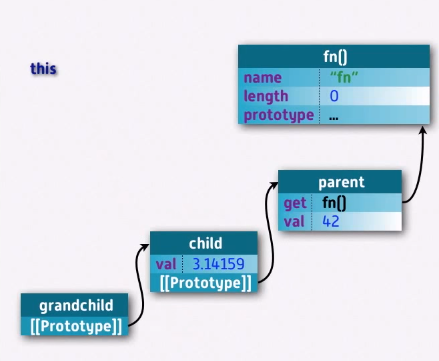
Part 3: One Step Backward
Prototypal Inheritance
var answer = {
    get: function() {
        return this.value;
    },
    value: 42
};

var answer1 = Object.create(answer);
answer1.get = function() {
    return this.value + "!!";
}

answer1.value = 3.14159;
answer1.get(); // 3.14159!!
var answer = {
get: function() {
return this.value;
},
value: 42
};
var answer1 = Object.create(answer);
answer1.get = function() {
return answer.get.call(this) + "!!";
}
answer1.value = 3.14159;
answer1.get(); // 3.14159!!Part 3: One Step Backward
Classical Inheritance
function Answer(value) {
    this.value = value;
}

Answer.prototype.get = function() {
    return this.value;
}


function answer1(value) {
    Answer.call(this, value);
}

answer1.prototype = Object.create(Answer.prototype);
answer1.prototype.constructor = answer1;

answer1.prototype.get = function(){
    return Answer.prototype.get.call(this) + "!!";
};
Part 3: One Step Backward
Proto vs Classic
function Answer(value) {
    this.value = value;
}

Answer.prototype.get = function() {
    return this.value;
}

var answer1 = new Answer(3.14159);

answer1.get();
var Answer = {
get: function() {
return this.value;
},
constructor: function(){
this.value = value;
}
};
var answer1 = Object.create(Answer);
answer1.constructor(3.14159);
answer1.get(); // 3.14159!!Part 4
- Transpilers
- Automation Tools
- Chrome Dev Tools Console
- References
Others
Part 4: Others
Transpilers - Supersets




Part 4: Others
Transpilers - Supersets


Part 4: Others
Automation Tools




Part 4: Others
Scaffolding Tools


Part 4: Others
Dev Tools
console.log(object [, object, …]);

console.log('This is a string', { foo: 'bar' }, { bar: 'foo' });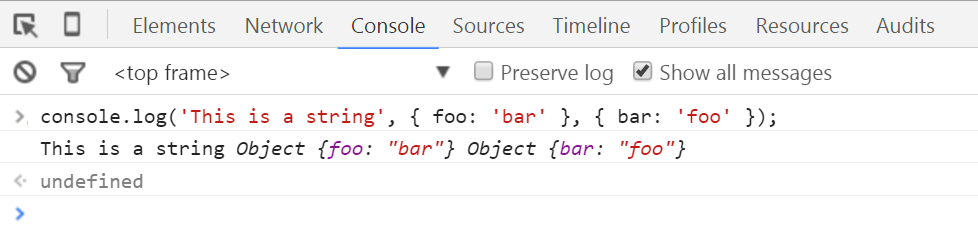
Part 4: Others
Dev Tools
console.log('%cThis text is styled!',
'color: #86CC00; background-color: blue; font-size: 20px; padding: 3px;');
Part 4: Others
Dev Tools
console.assert(expression, object)

var count = 5;
console.assert(count > 10, 'count is not larger than 10');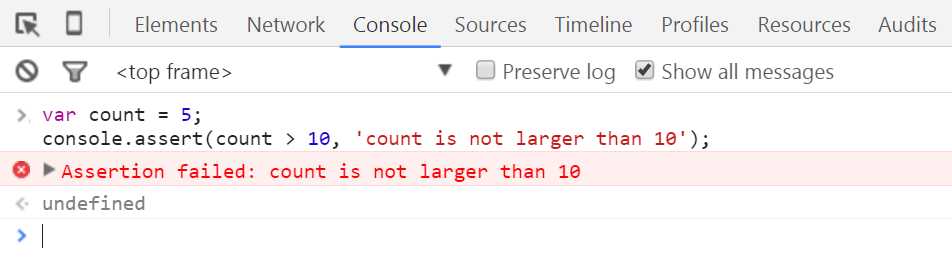
Part 4: Others
Dev Tools
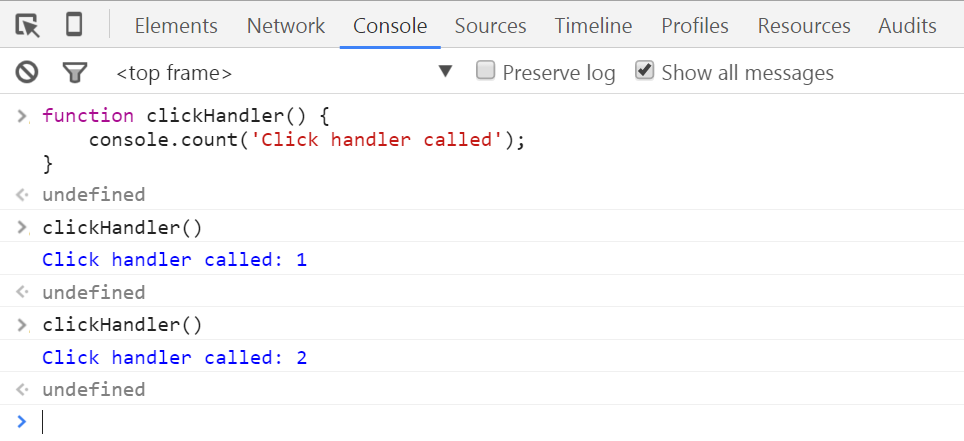
console.count(label)

function clickHandler() {
    console.count('Click handler called');
}
Part 4: Others
Dev Tools
console.group(object[, object, …]) & console.groupEnd()

console.group("Getting Data");

console.log("Show Loader");

console.log("Get Data Success");

console.log("Hide Loader");

console.groupEnd();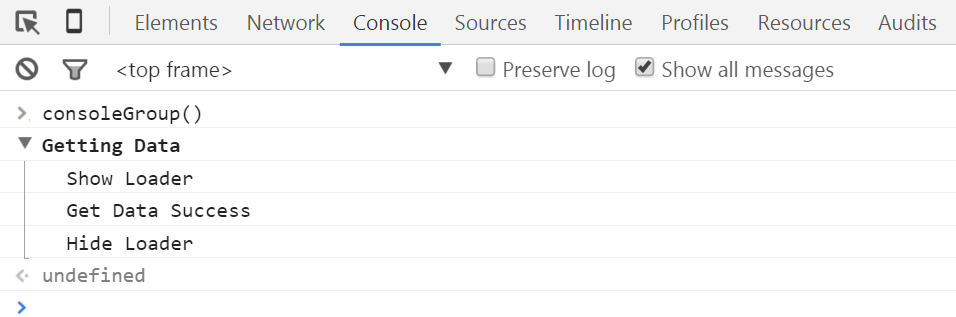
Part 4: Others
Dev Tools
console.table(data)

var data = [
    {first_name: 'John', last_name: 'Doe'},
    {first_name: 'Jane', last_name: 'Doe'}
];

console.table(data);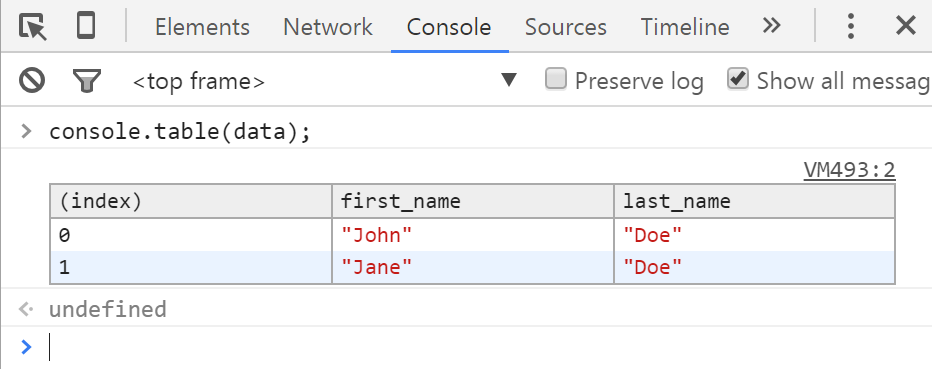
Part 4: Others
Dev Tools
console.time(label) & console.timeEnd(label)

console.time('Calculate a');

var a = b + 2;

console.timeEnd('Calculate a');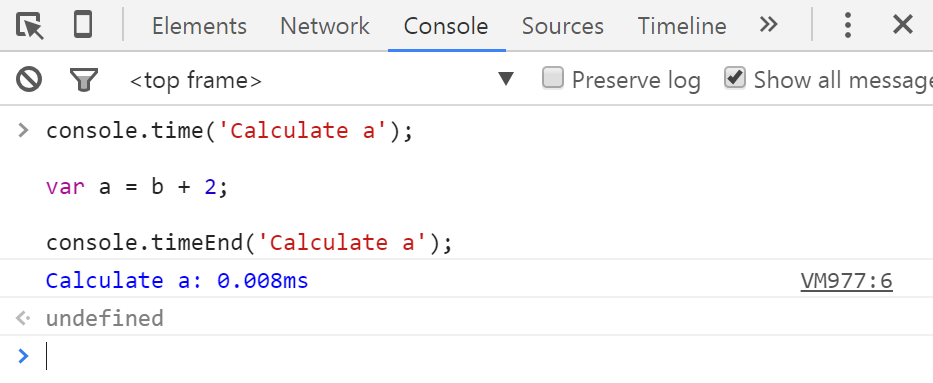
Part 4: Others
Dev Tools
console.trace()

function foo() {
    console.trace();
}

foo();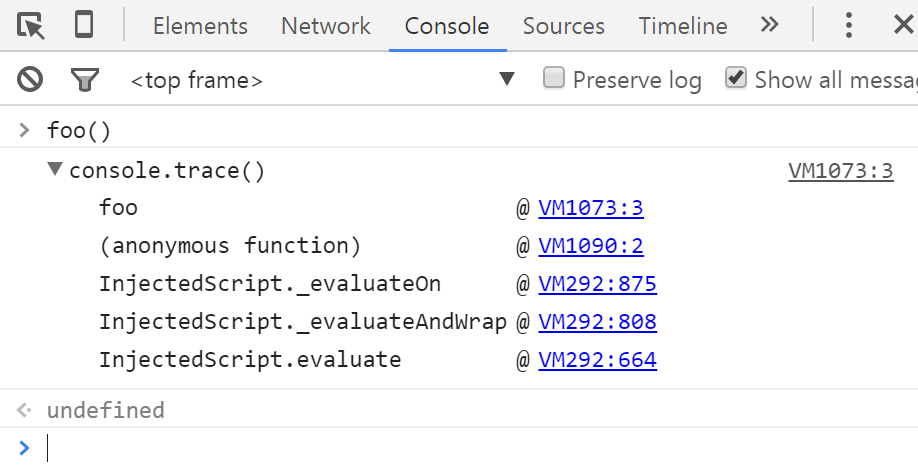
At the End
References
- https://en.wikipedia.org/wiki/JavaScript
- http://javascript.crockford.com/javascript.html
- https://developer.mozilla.org/en-US/docs/Web/JavaScript
- https://www.udemy.com/understand-javascript
- http://slides.com/concise/js
- http://bonsaiden.github.io/JavaScript-Garden
- http://davidshariff.com/blog/what-is-the-execution-context-in-javascript
- http://eloquentjavascript.net/
- http://jsforcats.com/
- https://github.com/feross/standard
- http://www.letscodejavascript.com
At the End
Thank you
Javascript: Programming Language
By Engin CAN
Javascript: Programming Language
Bu sunumda javascript hakkında genel, başlangıç seviyesinde anlatımlar mevcuttur. Sunum dili İngilizcedir.