Instrumenting android apps: Reverse engineering and injecting code. 


Gaurav Lochan
Little Eye Labs

Outline

  • Why?
  • Instrumentation
  • Guts of an android app
  • Reverse engineering tools
  • Instrumentation options
  • Chosen approach

Why?

  • Little Eye Measures, Analyzes and helps Optimize app resource usage on Android
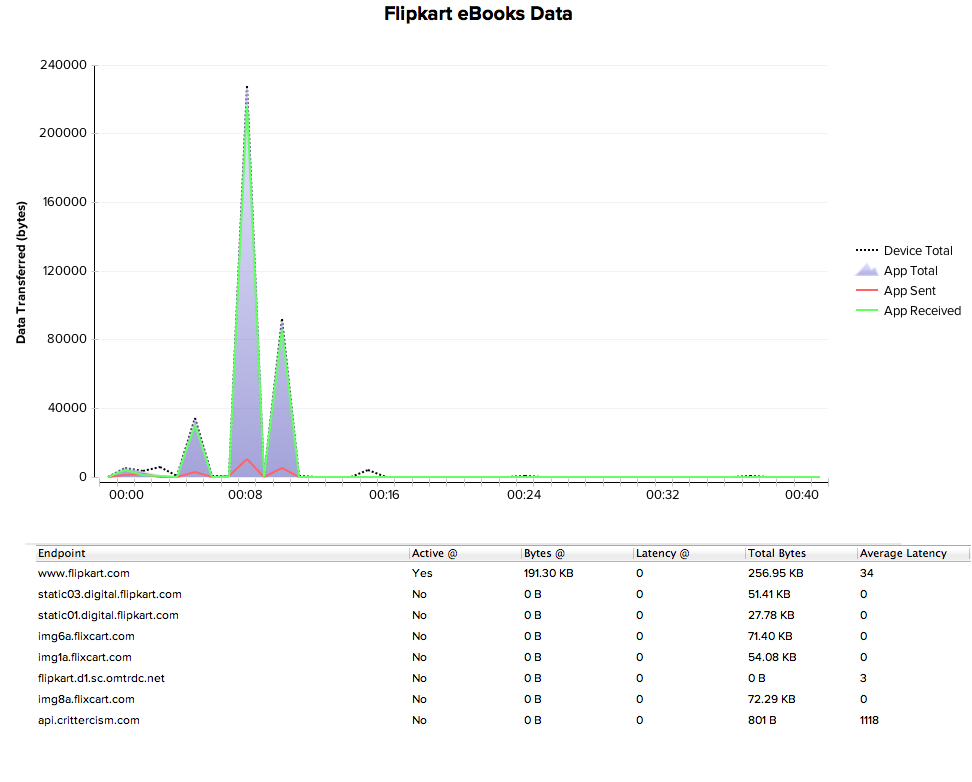
  • Network usage is just an aggregate number of bytes  

Why?

  • Need granular Network stats - each endpoint/url, latency, data transferred
  • Considered various approaches:
    • VPN
    • Proxy
    • OS stats
    • JDWP
    • Instrumentation

Instrumentation

Rewriting parts of a binary (in this case, an android app)
  • Allows us to intercept http calls, with code-level context on each call
  • Works on any released app
  • Works on practically any android version / phones
  • Opens up a lot of exciting possibilities... 

Real reason - Putting my "Instrumentation engineering" degree into practice :-)

Instrumentation (2)

Two modes:
  • Static
  • Runtime

Examples:
  • Android TraceView  (android.os.Debug.startMethodTracing)
  • Android Instrumentation (android.app.instrumentation)
  • iOS instruments
  • Purify (rational, now IBM)
  • JVM javaAgent
  • AspectJ


Guts of an app


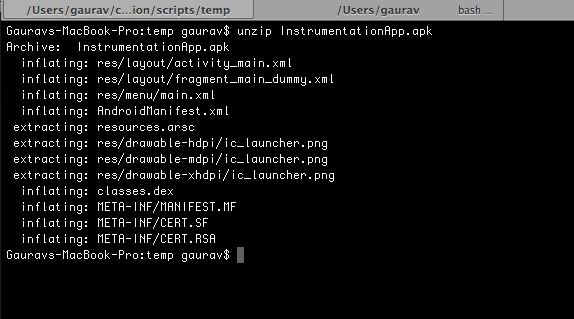
Non-Code

  • AndroidManifest.xml
  • Resources
  • Certificates + Signatures
  • Other Assets

Code: classes.dx

  • Dex = Dalvik EXecutable format.  
    • A custom bytecode format for android
  • Dalvik is the android VM (and differs from JVM)

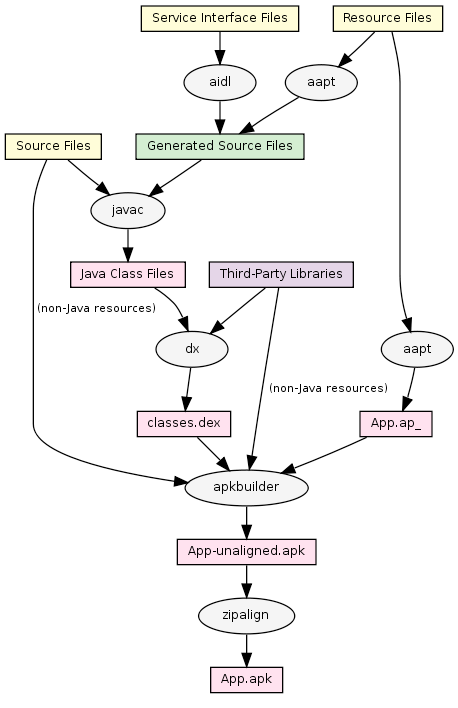
Build Process:
  • compile .java code into .class files
  • dx converts .class files into dex representation.  
  • All the dex's are then stored in classes.dex

Even any library code (e.g. from jars) goes in this classes.dx

Build Process


Reverse Engineering tools


  • Smali (JesusFreke)
    • Dex disassembler - also name of format. 
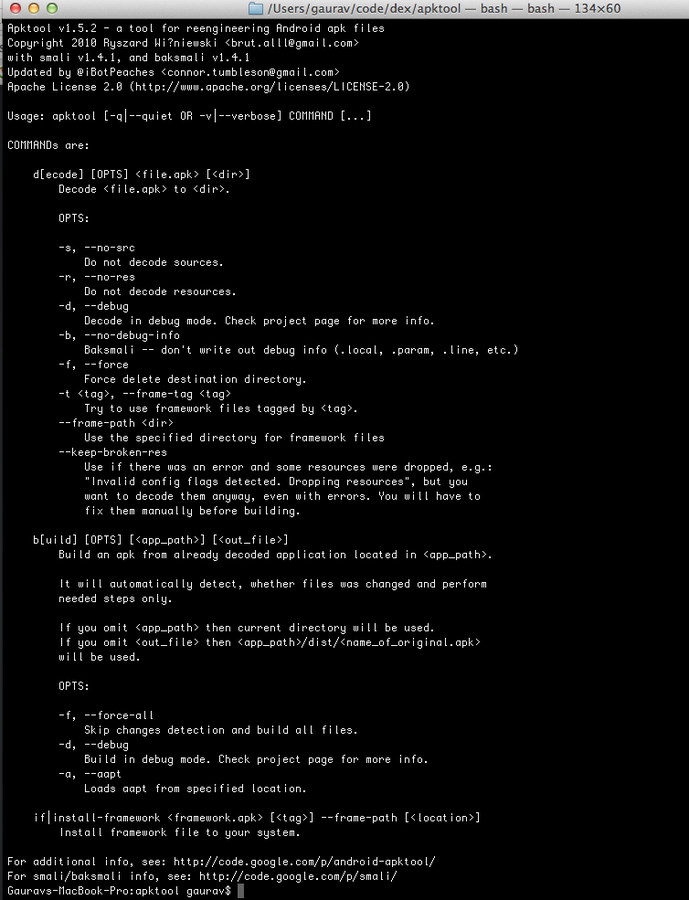
  • ApkTool
    • Decodes resources, debug binary, repackage app
  • dex2jar
    • Converts dex to .class format 
  • JD-GUI
    • Java decompiler - convert .class to .java
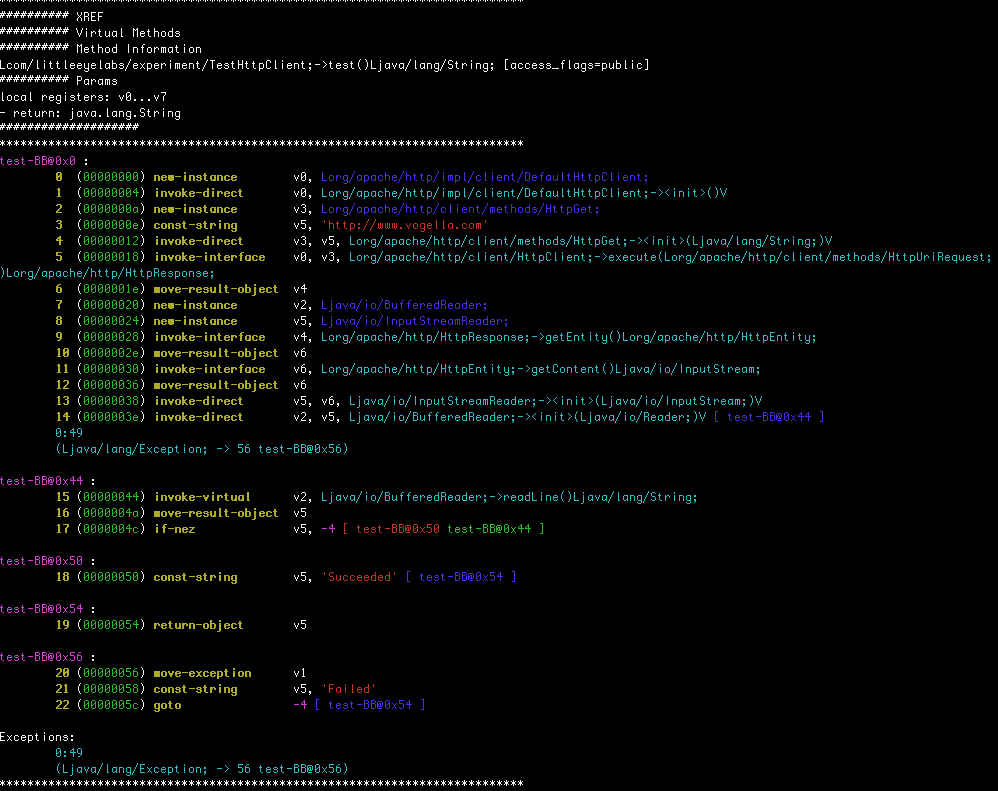
  • Androguard
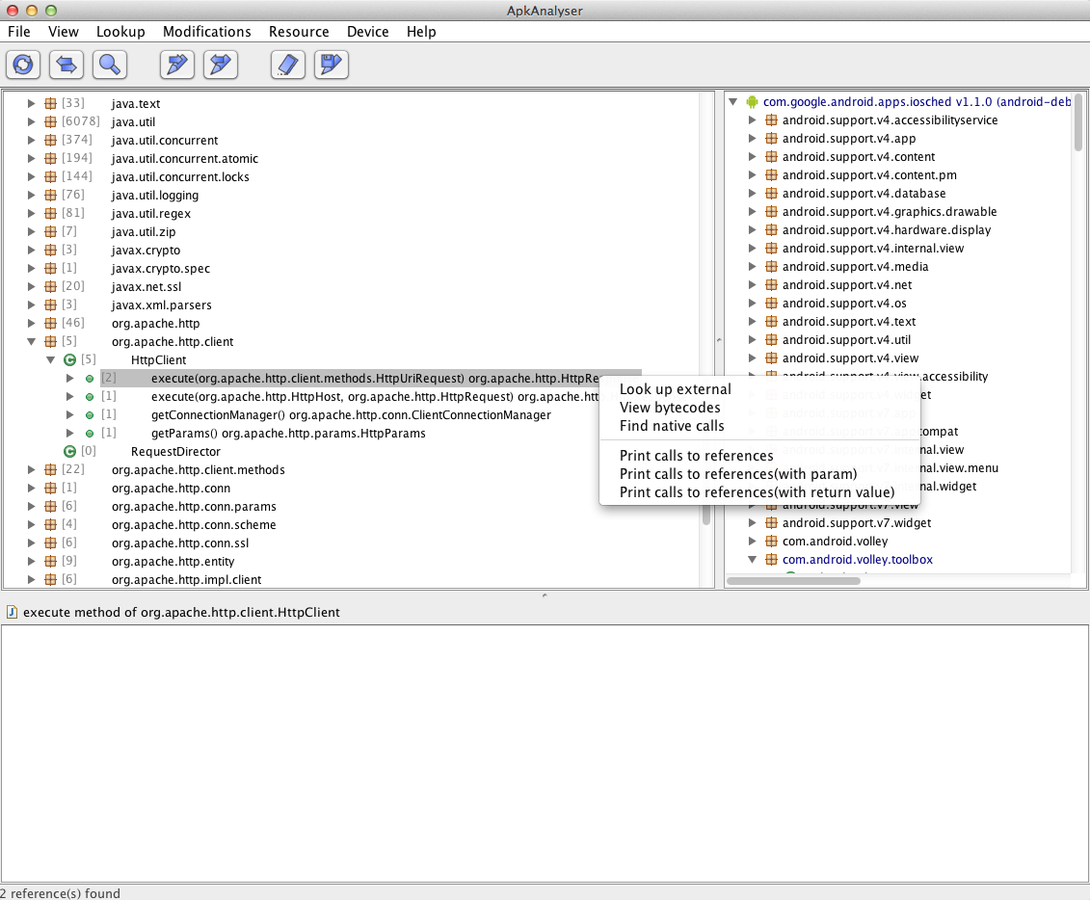
  • ApkAnalyzer


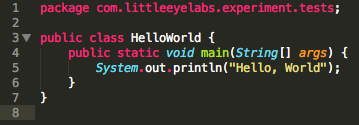
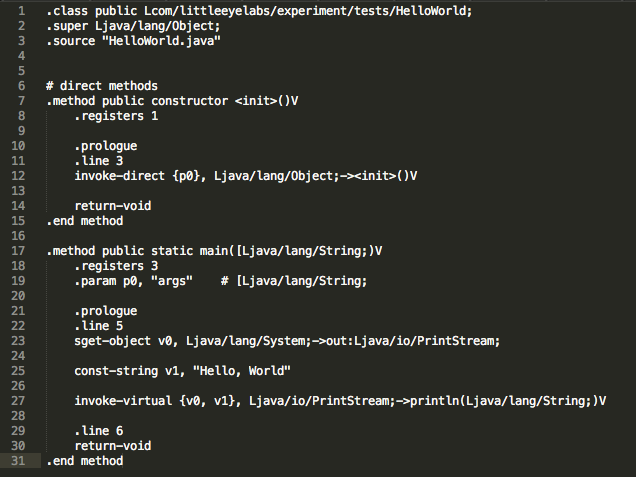
Smali example


Smali example (2)


ApkTool

Androguard

ApkAnalyzer


Instrumentation 

approaches

1- Runtime instrumentation


A regular JVM allows passing in a java.lang.instrumentation (through the -javaAgent flag) which can transform classes at class-load.

Dalvik doesn't support that.

It supports android.app.Instrumentation, but that has a limited set of methods, more suited for testing


2- Instrument class files


We considered modifying .class files.
  • JavaAssist - instrument JVM bytecode
  • AspectJ
Well-understood tools, but need to be done during build.

Requires a dev process change, plus our users don't always have build-level access (e.g. outsourced QA)

Tried dex2jar to convert .dex into .class, but isn't reliable


3- Instrument dex

  • dexpler - research project (.dex -> Jimple)
  • redexer - research project (OCaml, Ruby)
  • apkil - GSOC project (python, smali)
  • dex-tools - part of dex2jar (.dex ->jasmin)
None looked good enough.

Smali
  • Simple and popular format  (used in ApkTool, ApkAnalyzer and apkil)
  • Active project, well supported by JesusFreke (@google)

Disassembled, modified smali code by hand, and re-packaged app, and it just worked!

 Instrumenting Smali

Challenges:
  • Need a way to find all the calls in the app to replace
  • Need to do it without side-effects (e.g. register count)

Tried many failed/hacky approaches to do this (ask me later), but the Smali author pointed me to MutableMethod.

Figured out a good way to use it (with him) - and planning to clean it up and make the source available. 

Voila!


Understand android better through reverse engineering

By Gaurav Lochan

Understand android better through reverse engineering

  • 4,416